
Reviewed · GO-KARTS
Official Street Go-Kart Tour – Akihabara
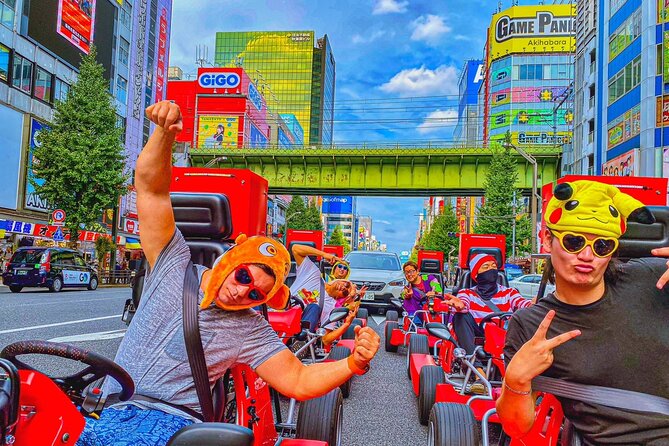
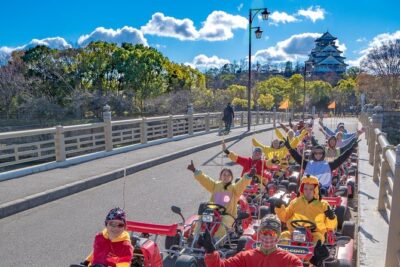
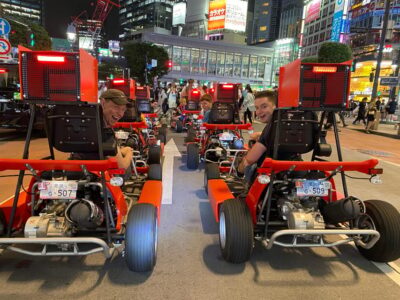
Tokyo traffic becomes your playground. This one-hour to 90-minute go-kart tour offers a lively way to see Akihabara, Tokyo Station, and Ginza from street level, with a guide leading the small group. I like the chance to cover several districts in one outing, and I like the added fun of choosing a comic, game, or anime-inspired costume. The main drawback is simple: driving in Tokyo can feel stressful at first, especially if you are not comfortable around city traffic.
The tour costs about $61.02 per person, before the optional ¥1,000 full-coverage insurance. That is fair value for a kart rental, fuel, costume rental, guide, taxes, and photos taken along the way. Still, this is not a sightseeing bus with a relaxed view. You need to drive, carry the correct documents, and meet Japan’s licensing rules before you arrive.
In This Review
- Key points before you book
- What the Akihabara starting point is like
- The safety briefing and first few minutes
- Tokyo Station and the Marunouchi view
- Ginza by kart, with lights and polished streets
- Returning to Akihabara, the heart of the route
- What the guide adds to the experience
- Is $61.02 good value?
- Documents, clothing, and who should skip it
- Choosing the best departure time
- Who will enjoy this most?
- Should you book the Akihabara street kart tour?
- FAQ
- How long does the Akihabara go-kart tour last?
- Where does the tour start and finish?
- What is included in the price?
- Is insurance included?
- Can I drive with only my home-country license?
- Can children or passengers join the ride?
- Can I wear a Mario or Nintendo costume?
Key points before you book
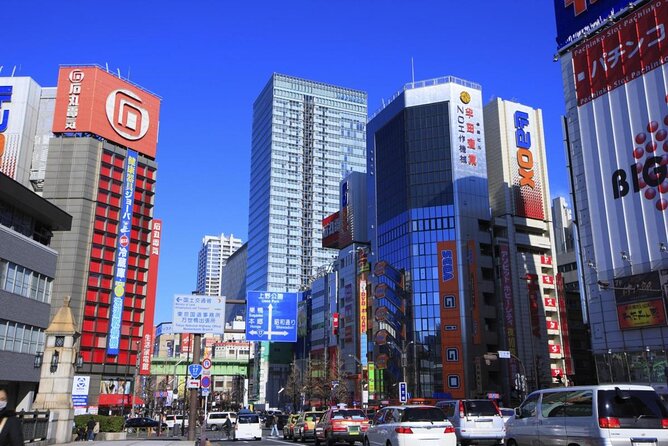
- Drive through three very different Tokyo districts: The route links the red-brick Tokyo Station building, polished Ginza, and anime-packed Akihabara.
- Bring the exact driving documents: Most drivers need a physical International Driving Permit issued under the 1949 Geneva Convention, plus a physical passport.
- Expect a small group: The tour has a maximum of six people, which helps the guide keep the line together.
- Night rides add atmosphere: Akihabara and Ginza look especially striking under their lights, though the roads may feel more demanding after dark.
- Choose practical clothing: Closed shoes are required, and skirts or long dresses are not advised.
- All drivers must be adults: The minimum age is 18, and the karts are single-seaters, so children and non-drivers cannot ride along.
What the Akihabara starting point is like
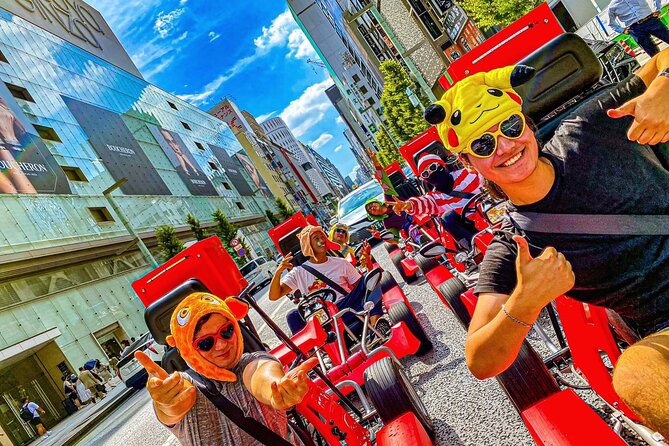
You meet at 4-12-9 Sotokanda, Chiyoda City, near Akihabara. The building address is worth copying carefully into your phone because one booking note warns that more than one meeting location may be used. Arriving late can create trouble, even though one participant was allowed to join after arriving behind schedule.
The tour ends back at the same meeting point. Public transportation is nearby, so you can reach the start without arranging a private transfer. Hotel pickup and drop-off are not included, and you should allow time to find the building rather than racing in at the last minute.
Before you drive, staff handle the practical setup. The kart rental, fuel surcharge, costume rental, and taxes are included in the advertised price. There are also lockers for belongings, along with protective bags or pouches for items such as your passport, driving documents, and phone.
The costumes add some theater to the outing, but pay attention to the restrictions. Mario and Nintendo-themed costumes, clothing, and items suggesting those characters are not permitted because of copyright rules. You can still choose from other comic, game, or anime-style options, but do not arrive expecting a specific Nintendo character.
More anime and Akihabara tours:
- Tokyo Go Kart: Asakusa, Skytree, and Akihabara **IDP MUST**
★ 5.0 · 988 reviews - Tokyo Studio Ghibli Museum and Ghibli Film Appreciation Tour
★ 4.5 · 421 reviews - Akihabara Anime & Game Adventure Walking Tour (Group or Private)
★ 5.0 · 404 reviews
The safety briefing and first few minutes
The first part may feel less carefree than the cheerful photos suggest. You receive instructions before joining Tokyo traffic, and several people describe the opening period as a little nerve-racking. That makes sense: driving a single-seat kart on public roads is a very different experience from driving around an enclosed amusement-park track.
The guide leads from the front and keeps the group together. Names praised in the supplied feedback include Khan, Sam, Billy, Julian, Johnny, Gyula, and Mada. Guide assignments can change, but the repeated pattern is clear: the lead driver is an important part of the experience, giving instructions, managing the group, and taking photographs.
Many people settle down once they leave the starting area. The karts are described as easy to drive, and the guide’s position at the front gives you a clear person to follow. At traffic lights, guides may give directions and point out nearby sights, which makes the ride more than just a motorized costume parade.
You still need ordinary road awareness. Pay attention to traffic, keep your place, and follow the guide rather than treating the street like a race course. The experience can deliver a pleasant jolt of adrenaline, but it is not ideal if city driving makes you anxious or if you want a quiet sightseeing hour.
Tokyo Station and the Marunouchi view
One major sight on the route is Tokyo Station’s Marunouchi Station building. Its restored red-brick facade gives the ride a strong opening image, especially because it feels so different from Akihabara’s electronic signs and cartoon storefronts.
From a kart, you see the station as part of the working city rather than as a single photo stop. You may not have much time to examine architectural details, so think of this portion as a quick visual introduction. If Tokyo Station is high on your sightseeing list, plan a separate visit on foot for the interior, surrounding plazas, and nearby shopping areas.
That is one of the tour’s strengths and limitations. You get to connect several major areas without changing trains or planning a route, but the ride is not designed for long stops or museum-style visits. It gives you orientation and atmosphere, then moves on.
Ginza by kart, with lights and polished streets
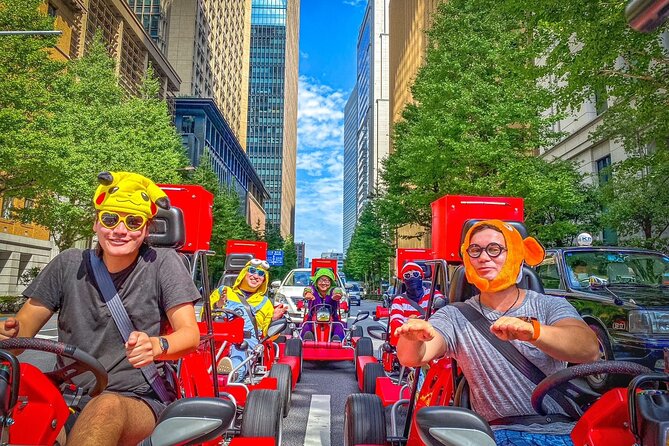
The route continues through Ginza, Tokyo’s best-known district for department stores, boutiques, restaurants, galleries, cafes, and evening entertainment. Ginza offers a cleaner, more formal visual contrast to Akihabara, and the change of mood is part of what makes the route worthwhile.
A night departure is especially appealing here. The signs and shopfronts create the kind of city view that is hard to appreciate from a subway platform. Several people recommend going after dark for the lights, while one four-star assessment specifically praises the ride as a good way to see Tokyo at night.
You should not expect a guided walking tour of Ginza. The value is in passing through the district and seeing how its broad streets, commercial buildings, and bright displays fit into central Tokyo. If you are visiting Tokyo for the first time, this quick circuit helps you place Ginza in relation to the station and Akihabara.
Traffic conditions can affect the mood. The route may feel smooth at one time and more demanding at another, so the exact pace is not guaranteed. A guide can help you stay organized, but the experience remains a real road outing rather than a controlled attraction.
More go-kart sessions in Tokyo:
- Flagship 2-Hours Official Street Go-Kart Tour – Tokyo Bay Shop
★ 5.0 · 4,974 reviews - Official Street Go-Kart in Shibuya
★ 5.0 · 3,435 reviews - Tokyo: Street Kart Experience in Shibuya
★ 4.9 · 1,484 reviews - FAST&FURIOUS EXPERIENCE Tokyo Car Club membership
★ 4.7 · 1,145 reviews
Returning to Akihabara, the heart of the route
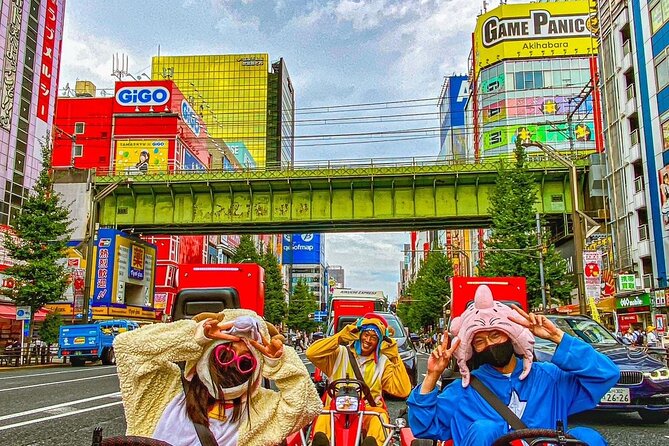
Akihabara is the natural finale. The district is known as a major center for anime, games, electronics, themed shops, and pop culture. Driving through it in costume gives you a playful view of an area already built for visual spectacle.
The ride does not replace walking around Akihabara. On foot, you can enter shops, inspect displays, visit arcades, and take your time with the district’s details. From the kart, you get a fast sweep through the streets and a sense of how the neighborhood looks from the road.
The costume changes how people see you. Several accounts describe passersby waving or reacting as the group goes by, creating a brief celebrity feeling. That attention is part of the fun, but it also means you should be comfortable being noticed and photographed.
Free photos are another useful touch. Guides such as Sam, Khan, Billy, and others are praised for taking plenty of pictures during the outing, so you can focus on driving instead of trying to handle a phone at the same time. The photos may become the best record of the day because the experience is difficult to capture safely from behind the wheel.
What the guide adds to the experience
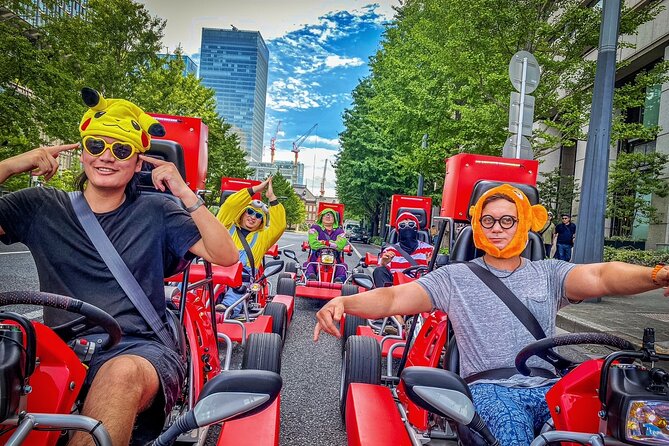
A weak guide would make this activity feel disorganized. A good one makes the difference between nervous concentration and controlled fun. The guide has to lead the line, communicate clearly, watch the group, and help you understand what is around you.
The most praised guides are described as safe, professional, attentive, friendly, and easy to follow. Billy is singled out for clear instructions and useful comments at stops. Sam receives particular praise for taking photographs and pointing out city sights while the group waited at red lights. Khan is repeatedly described as a reassuring instructor.
You cannot request that a named guide will definitely lead your tour based on the information provided. Still, those names give you a sense of the service standard to hope for. The guide is not just there to show the route. The guide helps first-time drivers calm down and keeps a small, moving group under control.
The six-person limit matters here. A large line of karts would be harder to manage, while a maximum of six allows the lead driver to keep better track of each person. A smaller group may also mean more direct attention, especially if only a few people are booked for your departure.
Is $61.02 good value?
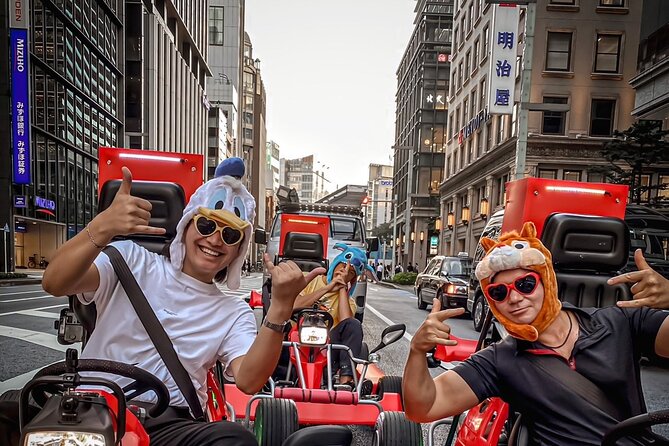
At roughly $61.02, this is not the cheapest way to see Tokyo. A train ride costs far less, and walking through Akihabara, Ginza, and Tokyo Station can be free. The tour earns its price through the unusual format, the guide, the kart, the costume, and the chance to cover several areas in a short time.
The value is strongest if you want an activity rather than simple transport. You are paying for the novelty of driving through Tokyo, the shared fun of moving in a small group, and the photographs taken along the way. The price also includes fuel and taxes, so the advertised amount is not just a starting rental fee.
The optional full-coverage insurance costs ¥1,000 per person and is not included. You should consider that extra cost when setting your budget. Food and drinks are also excluded, though the route passes through districts where you can eat before or after the ride.
For a repeat visitor, the value may be better than for a first-time visitor with a packed sightseeing schedule. Someone who has already explored Tokyo’s major attractions may appreciate a fresh way to connect familiar areas. A first-time visitor can enjoy it too, but should not use it as a substitute for exploring each district on foot.
Documents, clothing, and who should skip it
The licensing rules are the most important part of booking. Most participants need an International Driving Permit issued in the format of the 1949 Geneva Convention by a government-authorized association. You must carry the physical permit, not just a digital copy, along with your physical passport.
There are special rules for licenses from Switzerland, Germany, France, Taiwan, Belgium, and Monaco. Drivers from those places need a Japanese translation from the Japan Automobile Federation, known as JAF, and must bring the physical domestic license plus the official translation.
Licenses from countries outside the permitted arrangements, including China, Indonesia, Mexico, Qatar, and Saudi Arabia, are not accepted for driving in Japan under the stated rules. Do not assume that a valid home license is enough. The answer is no for a standard home-country license by itself.
You must be at least 18. The karts are single-seaters, so a child or non-driver cannot sit beside you or ride as a passenger. You also need a moderate level of physical fitness, closed footwear, and clothing that will not get in the way of driving. Skirts and long dresses are not advised.
Tell the operator in advance about any hearing or mobility impairment. The information specifically requires this notice, so do not leave it until the arrival briefing.
Choosing the best departure time
Several departure times are available, which makes it easier to fit the outing around meals and sightseeing. If you want the bright-city effect, choose an evening slot if one works with your plans. Ginza and Akihabara are especially suited to night viewing, and the darker setting may make the costume and kart experience feel more theatrical.
Night driving is not automatically better for everyone. If you are a cautious driver, daylight may help you feel more comfortable at the start. Traffic and visibility can change the character of the outing, so choose the time that matches your confidence, not just the best-looking photographs.
Weather also matters. The experience requires good weather, and poor conditions can lead to a different date or a full refund. Since you must book around a fixed schedule, avoid placing this activity on the most tightly packed day of your trip.
Book everyone in your party together. The operator specifically warns against separate bookings for group members because there is no guarantee that individually booked people will join the same departure. That is an easy problem to prevent.
Who will enjoy this most?
I would recommend the tour to adults who enjoy novelty, mild adrenaline, costumes, and the idea of taking part in the city rather than simply looking at it. It also suits repeat visitors who want a different view of familiar Tokyo districts.
It is a good choice for couples, friends, and small family groups with adult drivers. The small maximum group size helps, and the guide-led format provides structure for people who feel unsure at first.
I would be more cautious about booking it for anyone who dislikes public-road driving, crowded city traffic, or being the center of attention. It is also a poor fit if you want long photo stops, detailed history, or a slow look at Tokyo’s architecture.
The strongest reason to book is the combination of fun and access. You can see Tokyo Station, Ginza, and Akihabara in one compact outing, then return to the starting point without planning the route yourself. The strongest reason not to book is that the legal and practical requirements are strict, and the ride demands active participation.
Should you book the Akihabara street kart tour?
Book it if you already have the correct driving permit, can handle city traffic, and want a memorable break from temples, department stores, and train stations. The guide support, small group, costumes, and free photos make this more than a basic kart rental.
I would choose an evening departure for the lights, confirm the exact meeting address, wear closed shoes, and carry the required physical documents. If your group is booking, make one group reservation rather than splitting it into separate purchases.
Skip it if you want a calm sightseeing experience or cannot meet Japan’s licensing rules. For the right driver, though, this is a distinctive Tokyo activity with real entertainment value and a route that gives you three very different parts of the city in one short ride.
FAQ
How long does the Akihabara go-kart tour last?
The experience lasts approximately one hour to one hour and 30 minutes.
Where does the tour start and finish?
It starts at Japan, 101-0021 Tokyo, Chiyoda City, Sotokanda, 4-chōme 12-9, Hulik Akihabara Building. The activity ends back at the meeting point.
What is included in the price?
The price includes the lead guide in a kart, fuel surcharge, costume rental, kart rental, and all taxes, fees, and handling charges.
Is insurance included?
Full-coverage insurance is not included. It is available for an additional ¥1,000 per person.
Can I drive with only my home-country license?
No. Most drivers need a physical International Driving Permit issued under the 1949 Geneva Convention, plus a physical passport. Drivers from Switzerland, Germany, France, Taiwan, Belgium, or Monaco need a physical domestic license and an official Japanese translation from JAF.
Can children or passengers join the ride?
No. All participants must be at least 18 years old and hold a valid license for driving in Japan. The karts are single-seaters.
Can I wear a Mario or Nintendo costume?
No. Mario, Nintendo-themed costumes, and clothing or items that suggest those characters are not permitted because of copyright restrictions.
Just added around Tokyo
- Tokyo 6hr Instagram Highlights Private Tour with Licensed Guide★ 5.0 · 38 reviews
- Tokyo Small Group Tour with Guide★ 4.5 · 38 reviews
- Tokyo Sumo Experience with Live Show & Audience Challenge★ 5.0 · 38 reviews
- Very popular in Harajuku♡Animal petting zoo★ 4.6 · 39 reviews
- Japanese Food Cooking Class in Asakusa, Tokyo★ 5.0 · 39 reviews
- Ramen Making from Scratch with Tokyo Mom(Vegan Option Available)★ 5.0 · 39 reviews
- Tokyo: Kimono Rental inside Shinjuku Gyoen National Garden★ 4.9 · 39 reviews
- Tokyo JDM Night: 600hp C63s AMG Edition 1 (Private)★ 4.9 · 39 reviews
Go-Karts, compared.
Flagship 2-Hours Official Street Go-Kart Tour – Tokyo Bay Shop
Read our review →
FAST&FURIOUS EXPERIENCE Tokyo Car Club membership
Read our review →
Tokyo Go Kart: Asakusa, Skytree, and Akihabara **IDP MUST**
Read our review →
Shibuya Official Street Go-Kart in Shibuya Annex
Read our review →
Fast & Furious Tokyo Drift 3 Experience (Kaila Yu SP)
Read our review →Browse the lists this tour appears in