
Reviewed · COOKING CLASSES
Japanese Food Cooking Class in Asakusa, Tokyo
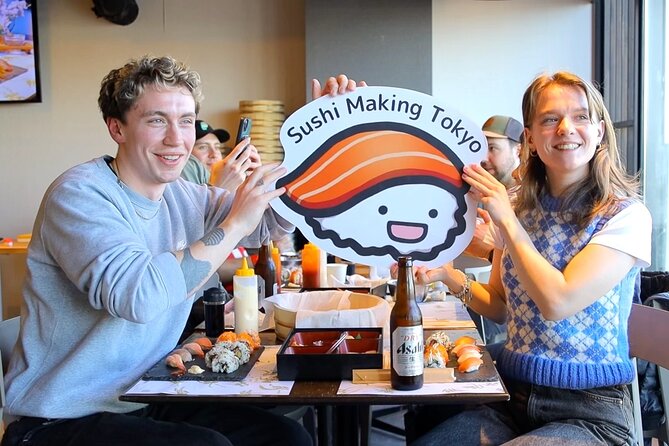
Make sushi, then make matcha. This three-hour Asakusa class pairs two hands-on Japanese traditions in one easy cultural stop near Sensoji Temple. I like the clear, step-by-step teaching and the chance to prepare both maki and nigiri. I also like that English-speaking instructors keep the class open to beginners, families, and solo visitors. The main drawback is the unusual listed price of $85.87 per group of up to one person, so you should confirm the final cost carefully if you are booking for more than one person.
The class meets at 2-chōme-17-9 Kaminarimon, a few minutes from Sensoji Temple. That location makes it simple to fit the lesson between Asakusa sights, though you will need to arrange your own way there and back. The group can include up to 15 people, so the atmosphere may feel social rather than private.
In This Review
- Key points before you book
- Starting near Kaminarimon in Asakusa
- Matcha first: one hour with Japanese tea
- Sushi making with maki and nigiri
- Friendly instruction makes the difference
- How the timing fits an Asakusa day
- Is $85.87 a fair price?
- Who will enjoy this class most?
- Should you book the Asakusa sushi and matcha class?
- FAQ
- Where does the Japanese food class meet?
- Where does the activity end?
- How long does the class last?
- How much time is spent making matcha?
- How long is the sushi-making lesson?
- Is an English-speaking instructor included?
- Is hotel transportation provided?
- How many people can join the activity?
Key points before you book
- Two Japanese skills in one visit: You make sushi and learn to whisk matcha in the traditional way.
- A beginner-friendly format: Instructors guide you through each stage, with no previous cooking experience required.
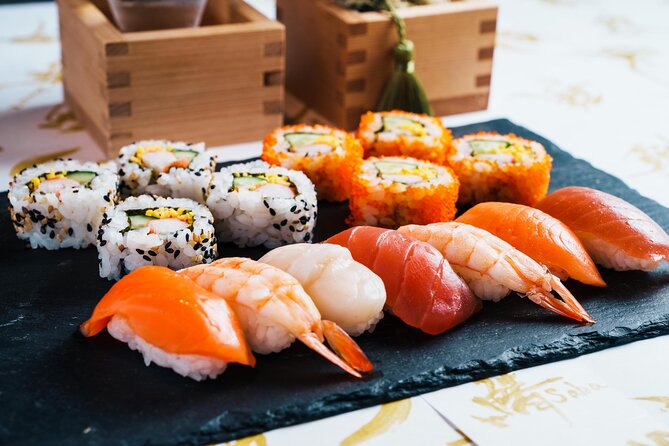
- Real food to eat afterward: Ingredients and the meal are included, so the class is both a lesson and lunch or dinner.
- Near Sensoji Temple: The Kaminarimon meeting point works well with an Asakusa sightseeing day.
- Strong praise for the teaching: Jun and Kazu are singled out for patient, funny, clear instruction.
- A manageable three-hour plan: The matcha portion takes one hour, followed by about one hour and 40 minutes of sushi making.
Starting near Kaminarimon in Asakusa
Asakusa is one of the best parts of Tokyo for connecting food with place. The class begins at 2-chōme-17-9 Kaminarimon, in the area around the famous Kaminarimon gate and Sensoji Temple. You are not being sent out to an isolated suburban kitchen. The setting puts you close to one of Tokyo’s most recognizable traditional districts.
That location matters for planning. You can visit Sensoji before class, stop for photographs around Kaminarimon, or continue exploring after the lesson ends. The activity returns to the same meeting point, so you do not have to learn a second drop-off location.
The exact route from the nearest station is not provided, but the class is near public transportation. Give yourself enough time to find the address, especially if you are navigating Asakusa for the first time. A mobile ticket is accepted, which keeps your booking details on your phone rather than requiring a printed voucher.
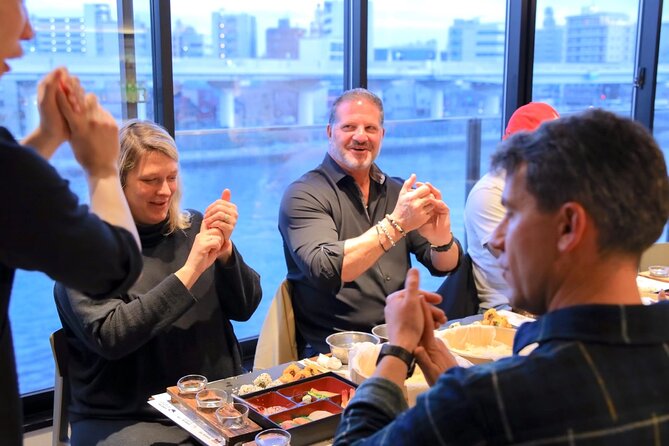
The class is capped at 15 people. That is small enough for a shared lesson, but it is not a private kitchen session. If you prefer personal attention at every moment, a larger class may feel less intimate. For most beginners, the group size should create a friendly setting without making the activity too formal.
More Cooking Classes in Tokyo
- Ramen & Gyoza Cooking Class in Tokyo with Local Supermarket Visit
★ 5.0 · 823 reviews - Tokyo: Easy Ramen Cooking Experience in Kabukicho, Shinjuku
★ 4.6 · 321 reviews - Ramen and Sushi Cooking Class with Sake Pairing Set in Tokyo
★ 5.0 · 291 reviews
Matcha first: one hour with Japanese tea
The first portion lasts about one hour and focuses on matcha making. You learn how to prepare the powdered green tea and whisk it in the traditional manner. This is more than a quick cup handed to you at the end of a meal. You get to handle the process yourself.
Matcha is a useful introduction to Japanese food culture because the method matters as much as the ingredient. The class gives you a chance to slow down and pay attention to preparation, texture, and technique. You should not expect a full tea ceremony based on the information provided. This is specifically a matcha-making lesson, presented as one part of a broader cooking class.
I like the order of the session. Starting with matcha gives you a quieter opening before moving into the more active sushi portion. It also lets you try a Japanese tradition that many short food tours skip.
The class is taught in English, and no experience is needed. That makes the matcha segment suitable even if you know little about Japanese tea. The instructor is there to guide you through the method rather than expect you to arrive with specialist knowledge.
One practical point: the matcha portion is listed as one hour, while the full activity is described as approximately three hours. The sushi section takes about one hour and 40 minutes, leaving roughly 20 minutes for transitions, explanations, or finishing the food. Keep your schedule flexible rather than booking a tight appointment immediately afterward.
Sushi making with maki and nigiri
The main food lesson takes about one hour and 40 minutes. You learn how to prepare sushi using fresh ingredients, with instruction on both rolled sushi and nigiri. The distinction makes this more useful than a class focused only on pressing ingredients into a simple roll.
Maki gives you the familiar rolled format. You work with the ingredients and learn how to shape the sushi so it holds together. Nigiri requires a different approach, since the rice and topping need to be formed by hand. The available details do not list the exact fish, vegetables, or other ingredients, so you should not book expecting a particular menu.
The teaching style is the strongest part of this class. Jun is praised for being patient, funny, and clear, with careful guidance through each step. Kazu receives similar praise for giving a family with children ages seven and nine easy, step-by-step help. Those details suggest an instructor-led format where you watch a demonstration and then copy the technique yourself.
That matters with sushi. Small errors in rice shape, filling placement, or rolling pressure can make the finished piece fall apart. A good teacher can correct those problems before you sit down to eat. The feedback about easy instruction and successful maki and nigiri suggests that beginners are not left to guess their way through the process.
The food is included, so you eat what you prepare. That gives the activity a satisfying finish, but it also means the meal is part of the lesson rather than a separate restaurant tasting. If you are seeking a chef-led meal with many courses, this is not that kind of outing. If you want to learn a skill and enjoy a meal you helped make, the format makes good sense.
Several comments praise the sushi as delicious, with particular approval for the maki and nigiri. The ingredients are described as good and fresh, though no detailed menu or sourcing information is supplied. People with allergies or strict dietary needs should ask the provider about ingredients before booking, since the available details do not explain substitutions.
Friendly instruction makes the difference
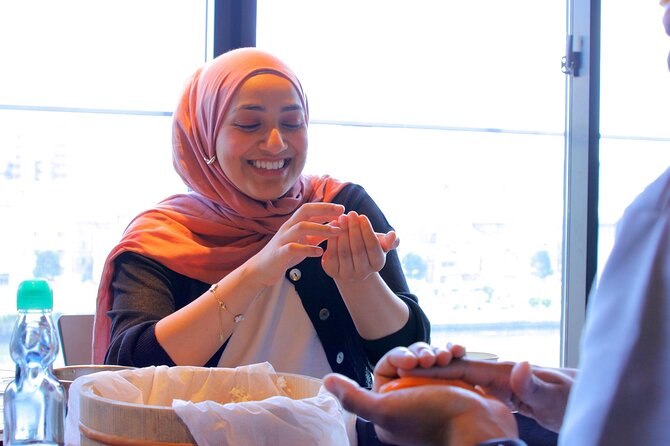
A cooking class can be either a warm cultural activity or a stressful exercise in trying to keep up. Here, the repeated praise centers on the instructors’ friendliness, humor, patience, and clear explanations. That is important because the class is conducted in English, and the ability to explain hand movements plainly can matter more than a fancy setting.
Jun is specifically associated with patient instruction and explanations of both sushi rolls and nigiri. Kazu is praised for working well with children. Other comments describe the teaching team as friendly and funny, with a relaxed atmosphere.
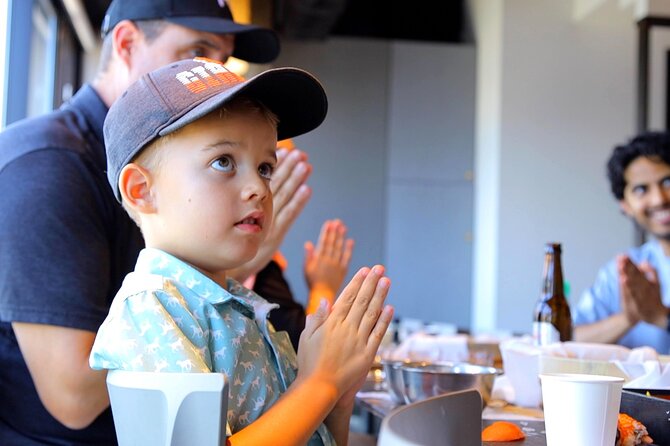
I would place this class high on the list for families. Children ages seven and nine were able to take part and were excited to eat the sushi they made. The hands-on format gives younger participants something concrete to do, though parents should still decide if their children can follow a food-preparation lesson for nearly three hours.
It also suits adults who want a social activity. You are likely to share the space with other people, and the maximum group size is 15. Solo participants can join, while friends and families have enough room to work together without needing any previous cooking skill.
The class is less suitable if you want complete independence. The value comes from being shown each step, not from wandering through a market or designing your own menu. You should choose it for instruction and participation, not for a long discussion of regional Japanese cuisine.
More Food Tours in Tokyo
- Tokyo: Shinjuku Food Tour (13 Dishes at 4 Local Eateries)
★ 5.0 · 6,603 reviews - Tokyo Tsukiji Fish Market Food and Culture Walking Tour
★ 5.0 · 3,184 reviews - Tokyo: Shinjuku Food Tour (15 Dishes and 4 Eateries)
★ 4.9 · 2,033 reviews - Best of Shinjuku: Izakaya Food Tour (4 Stops, 14+ Tastings)
★ 5.0 · 1,863 reviews
How the timing fits an Asakusa day
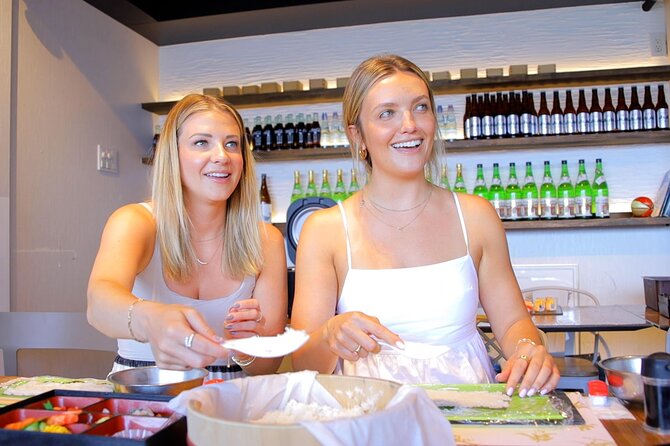
The total duration is about three hours. Matcha takes one hour, sushi takes one hour and 40 minutes, and the remaining time appears to cover movement and the change between activities. Since the class begins and ends at the same address, it is easy to build into a morning or afternoon in Asakusa.
A sensible plan is to visit Sensoji and the Kaminarimon area before the class, then attend the lesson and continue sightseeing afterward. You could also schedule the class before an evening walk around Asakusa. The provider does not include hotel pickup or drop-off, so you must handle transportation on your own.
That lack of transfers is not a serious issue in central Tokyo, especially because the meeting point is near public transportation. It does mean you should not treat the listed duration as door-to-door time. Add your own travel time from your hotel and allow a cushion for locating the address.
The class ends back at the meeting point. This is useful if you have left bags or planned another activity nearby, though no storage service is mentioned. Keep your phone charged since the ticket is mobile.
Is $85.87 a fair price?
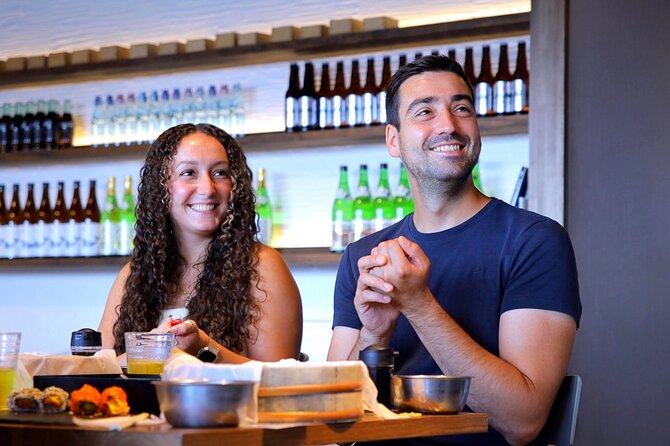
The listed price is $85.87 per group of up to one person. That wording is unusual, so I would check the booking screen carefully before paying, especially if you are booking for a couple or family. The stated group limit for the activity is 15 people, but the price presentation does not explain how additional participants are charged.
In value terms, you are paying for about three hours of instruction, ingredients, the food you prepare, an English-speaking instructor, and two different activities. A sushi lesson alone would give you one skill. Adding matcha makes the session feel more like a compact introduction to Japanese food culture.
The value is strongest if you would otherwise pay separately for a meal and a cultural activity. You do not simply watch a demonstration. You prepare sushi yourself, learn the matcha technique, and eat the result. The class also saves planning time because both activities take place through the same provider and return to the same meeting point.
The value is weaker if you are mainly looking for a cheap meal. This is a lesson first. You are paying for guidance, practice, and the social setting. The exact menu is not stated, so you should not compare the cost to a restaurant meal based on the hope of receiving premium seafood.
The strong 5-star score from 39 ratings and the 100 percent recommendation figure support the price for people who want an active experience. Still, the unusual per-group wording deserves attention before you finalize payment. Free cancellation is available if you cancel at least 24 hours before the start time. Cancellations made less than 24 hours ahead are not refunded, and late changes are not accepted.
Who will enjoy this class most?
I would recommend this activity to you if you want to do more than photograph Japanese food. You will get the most from it if you like hands-on lessons, do not mind following instructions, and enjoy eating the result of your work.
It is especially well suited to:
- Families with children who can follow a guided activity
- First-time sushi makers
- Solo visitors looking for a social class
- Couples or friends who want a shared food activity
- People already planning to visit Sensoji Temple
- Anyone curious about both sushi and matcha
You may want to choose another activity if you have a very restricted diet, since ingredients and substitutions are not described. It may also disappoint you if you expect a private chef, a market visit, hotel transfers, or a full tea ceremony. None of those features is included in the available details.
The class works best as one part of an Asakusa day, not as your only food experience in Tokyo. It teaches basic preparation and gives you a meal, while the surrounding neighborhood supplies the wider atmosphere.
Should you book the Asakusa sushi and matcha class?
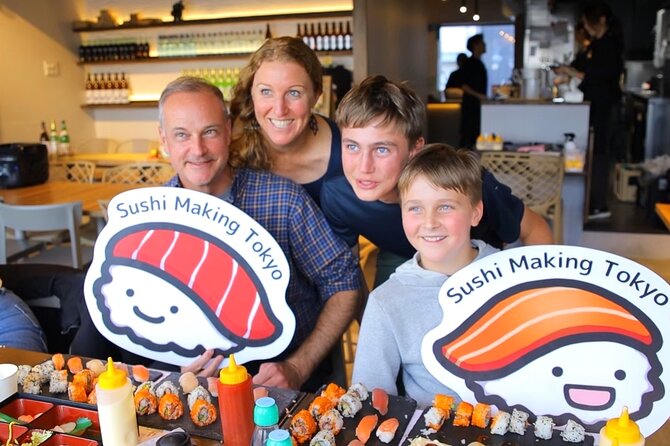
I would book this class if you want a friendly, practical introduction to two well-known Japanese traditions. The combination of maki, nigiri, and matcha gives you more variety than a single-topic cooking lesson, and the instructors’ patient approach should help you finish with food you are proud to eat.
Before booking, confirm the price for your party, check any ingredient concerns, and leave time to reach the Kaminarimon meeting point. If those details work for you, this is a worthwhile choice for families, beginners, and anyone who wants an active stop near Sensoji rather than another passive sightseeing hour.
FAQ
Where does the Japanese food class meet?
The class starts at 2-chōme-17-9 Kaminarimon, Taito City, Tokyo 111-0034, Japan.
Where does the activity end?
The activity ends back at the meeting point.
How long does the class last?
The full experience lasts approximately three hours.
How much time is spent making matcha?
The matcha-making portion lasts one hour.
How long is the sushi-making lesson?
The sushi-making portion lasts about one hour and 40 minutes.
Is an English-speaking instructor included?
Yes. An English-speaking instructor is included, along with the cooking ingredients and the meal.
Is hotel transportation provided?
No. Hotel pickup and drop-off are not included. The class meeting point is near public transportation.
How many people can join the activity?
The activity has a maximum of 15 participants. The listed price is $85.87 per group of up to one person, so confirm the charge for your party when booking.
Just added around Tokyo
- Tokyo Small Group Tour with Guide★ 4.5 · 38 reviews
- Tokyo 6hr Instagram Highlights Private Tour with Licensed Guide★ 5.0 · 38 reviews
- Tokyo Sumo Experience with Live Show & Audience Challenge★ 5.0 · 38 reviews
- Very popular in Harajuku♡Animal petting zoo★ 4.6 · 39 reviews
- Ramen Making from Scratch with Tokyo Mom(Vegan Option Available)★ 5.0 · 39 reviews
- Tokyo: Kimono Rental inside Shinjuku Gyoen National Garden★ 4.9 · 39 reviews
- Tokyo JDM Night: 600hp C63s AMG Edition 1 (Private)★ 4.9 · 39 reviews
- Asakusa: 3.5-hour Big-picture History Walk★ 4.7 · 39 reviews
Cooking Classes, compared.
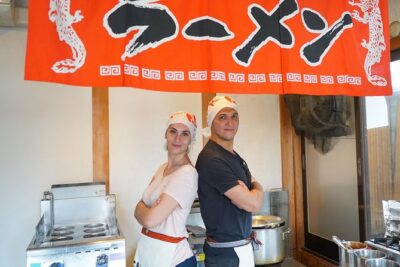
Ramen Cooking Class at Ramen Factory in Kyoto
Read our review →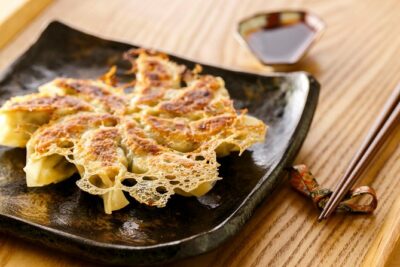
Ramen & Gyoza Cooking Class in Tokyo with Local Supermarket Visit
Read our review →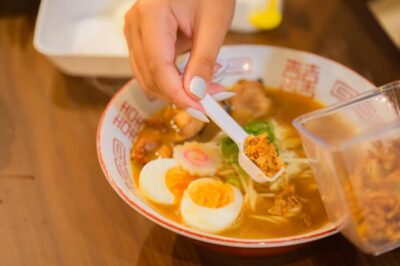
Ramen Cooking Class at a Ramen Factory with Souvenir
Read our review →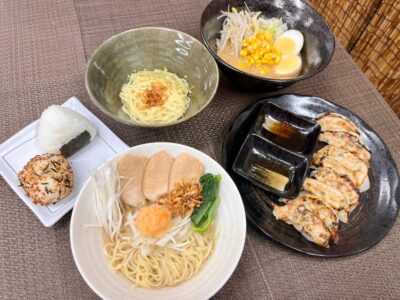
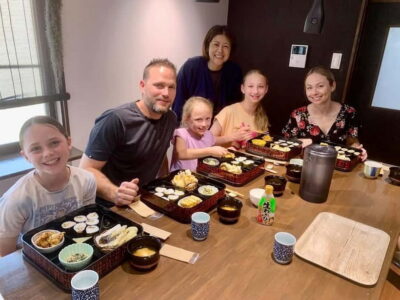
Japanese Washoku Bento Small Group Cooking Class
Read our review →
Easy Ramen Cooking Experience in Kabukicho, Shinjuku
Read our review →
Ramen and Sushi Cooking Class with Sake Pairing Set in Tokyo
Read our review →Browse the lists this tour appears in