
Reviewed · RAMEN & NOODLE TOURS
Osaka: Ramen and Gyoza Cooking Class in Dotonbori
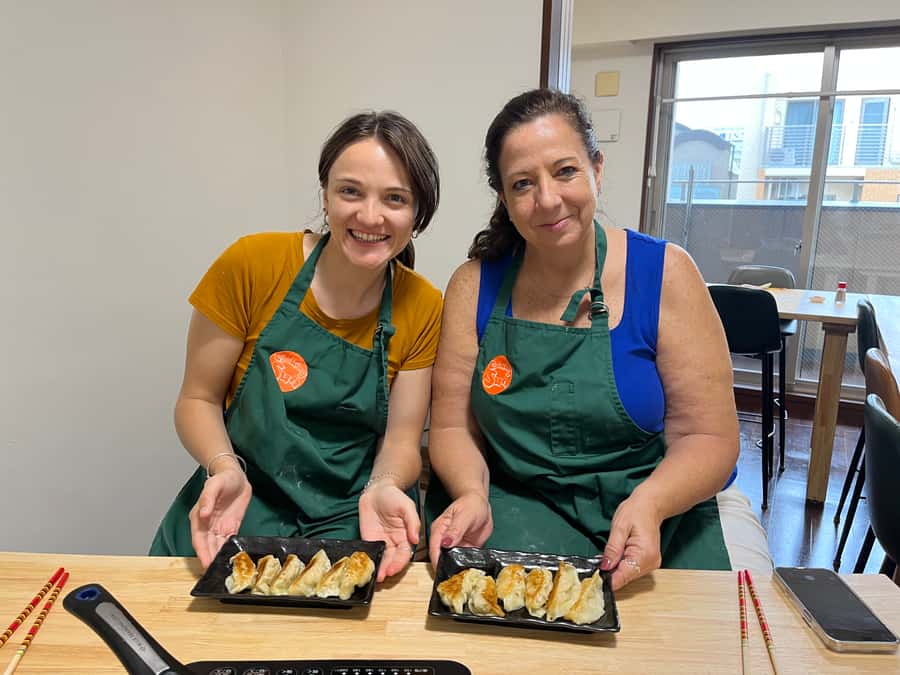
Osaka tastes better when you make it yourself. This hands-on class takes you from wheat flour to fresh ramen noodles, then adds homemade chicken gyoza for a full Japanese meal. I especially like the small-group format and the patient instruction from guides such as Miki, June, Yoshi, and Kasa, though the exact teaching team may vary.
I also like that you get recipes to take home, so the class continues after your Osaka visit. The main consideration is time: allow roughly two to three hours, and give yourself extra time to find the building entrance at Cooking Sun Osaka.
In This Review
- Key points to know before booking
- Why ramen and gyoza make such a good Osaka class
- Starting at Cooking Sun Osaka in Dotonbori
- Kneading wheat and cutting fresh ramen noodles
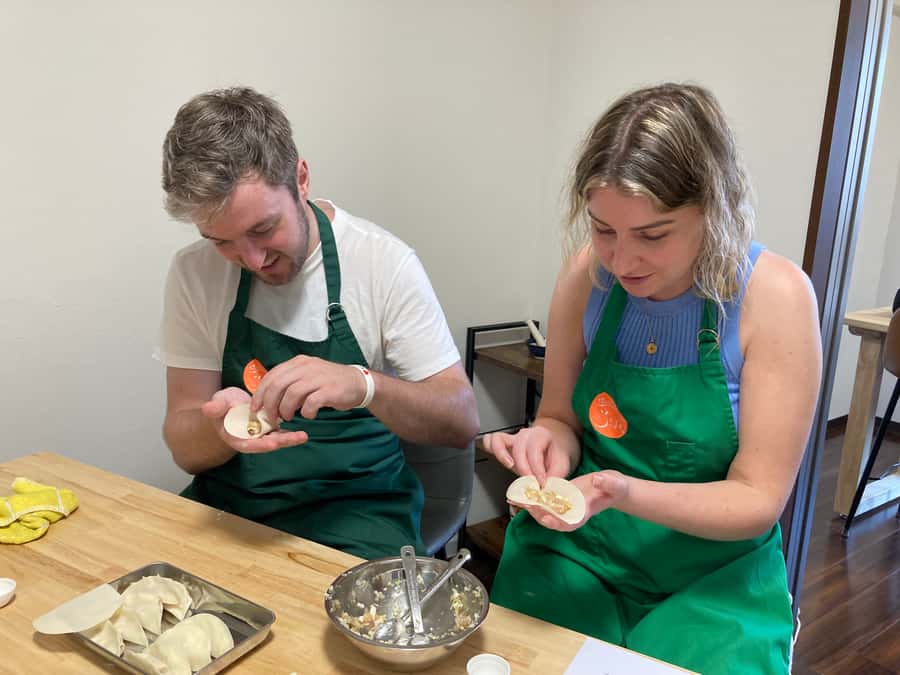
- Making chicken gyoza by hand
- Building soy sauce ramen with a Japanese broth
- English instruction and the teaching style
- Dietary requests and possible substitutions
- How long the class takes and who will enjoy it
- Is the $70 price good value?
- Useful tips for a smooth visit
- Should you book the Dotonbori ramen class?
- FAQ
- Where does the ramen and gyoza class meet?
- Is hotel pickup included?
- What language is the class taught in?
- What food do you make?
- Can the class accommodate vegan or other dietary needs?
- How long should I allow for the activity?
Key points to know before booking
- Make ramen noodles from wheat: Knead the dough yourself, rest it, then cut it with a noodle machine.
- Build a full ramen-and-gyoza meal: Prepare soy sauce ramen, chicken dumpling filling, toppings, and soup before sitting down to eat.
- Small classes mean useful help: Classes have been described as intimate, with two instructors and around seven or eight participants.
- English instruction is included: The cooking steps, ingredients, and Japanese food customs are explained in English.
- Dietary changes may be possible: Plant-based options and substitutes for fish broth have been provided when requested.
- The meeting point takes care: Go to room 807 and press 807 followed by 呼出, the call button, at the entrance.
Why ramen and gyoza make such a good Osaka class
Ramen and gyoza are a natural pair in Japan. At many ramen shops, ordering both as a set is standard, so this class teaches you two dishes you will see together all over the country.
The experience is useful because it shows what sits behind a quick bowl of noodles. Ramen may arrive at your table in minutes, but the dish involves broth, seasoning, noodles, toppings, and timing. Here, you get to handle each part instead of simply watching someone cook behind a counter.
The ramen begins with wheat flour. You knead the dough, work it into shape, and use a noodle machine to cut it. That part gives you a real feel for the texture of fresh noodles. It is also the sort of step that looks simple until you try to make noodles of an even thickness.
The gyoza adds a different skill. You prepare a filling with minced chicken, place it into wrappers, and shape the dumplings. The result is personal in a way a restaurant meal cannot be. Your folds may not look perfect, but they are yours, and that makes the final plate more satisfying.
More Cooking Classes in Osaka
- Osaka Cooking Class: Okonomiyaki &Japanese cuisines experience
★ 5.0 · 261 reviews - Ramen and Gyoza Cooking Class in Osaka
★ 5.0 · 202 reviews - Osaka Sake Tasting with Takoyaki Cooking
★ 5.0 · 156 reviews
Starting at Cooking Sun Osaka in Dotonbori
The class meets at Cooking Sun Osaka, in room 807. The arrival instructions are important: at the entrance, press 807 and then the button marked 呼出, which means call.
The building can be hard to spot, so do not leave this part until the last minute. Dotonbori is a busy part of Osaka, and a quick walk can take longer when you are checking signs, entrances, and room numbers. Save the meeting details on your phone before setting out.
There is no hotel pickup or drop-off. You make your own way to the meeting point, and the class finishes there as well. That is simple if you are already exploring Dotonbori, but it means you should plan the class around your Osaka sightseeing rather than expecting transport to be arranged.
The kitchen has been described as spacious and clean, with enough room for everyone to cook without feeling crowded. The class size is a real plus. Several participants described groups of no more than seven or eight people, with two instructors available to explain steps and help anyone who falls behind.
Kneading wheat and cutting fresh ramen noodles
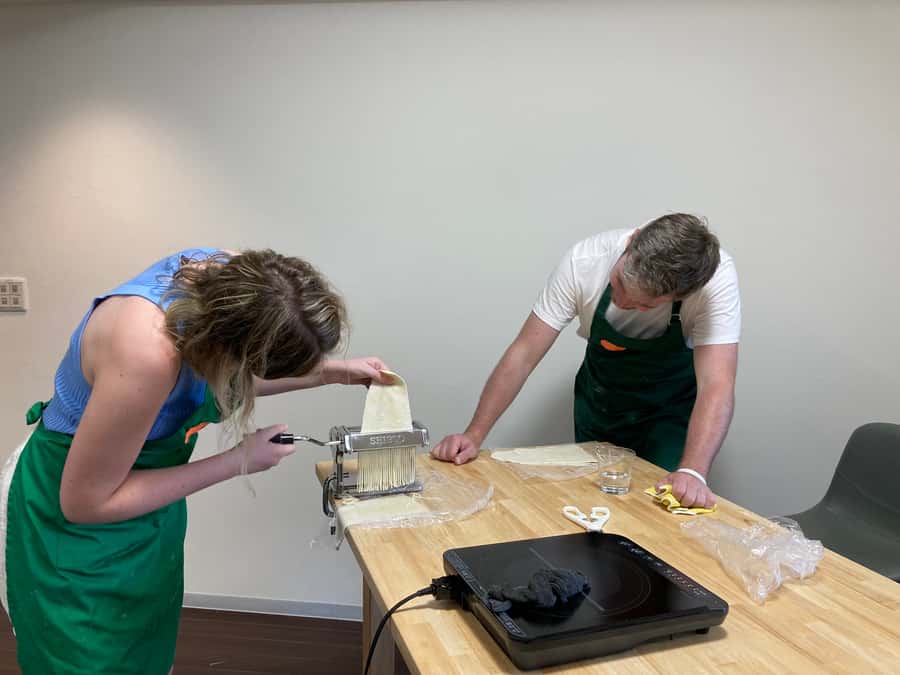
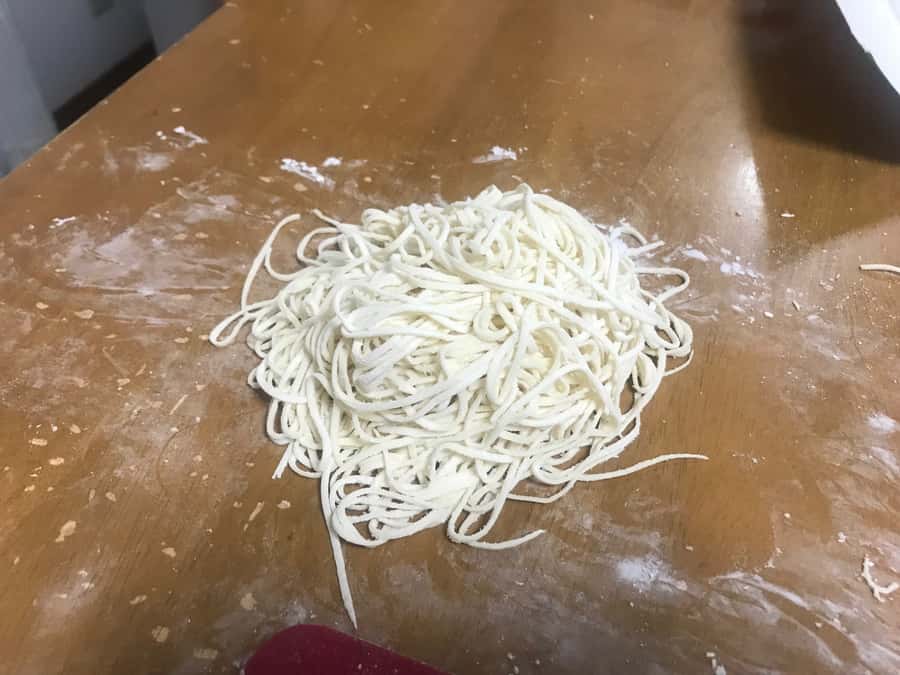
The most memorable part for many people is making the ramen noodles. You start with wheat and knead the mixture by hand, turning a basic dough into something ready for the noodle machine.
This is not a quick demonstration where you watch a chef do the important work. You take part in the process. The instructors guide you through the stages and explain how the dough changes as you work it.
Once the dough is ready, you cut it with a noodle machine. The machine makes the process more manageable, but you still see how much precision goes into creating noodles that cook evenly. It is a good lesson in why fresh noodles have a different texture from dried noodles.
The dough needs time to rest, and that helps shape the rhythm of the class. Instead of standing around, you move on to the gyoza preparation while the noodles are waiting. This keeps the session moving without making it feel hurried.
The pacing gets frequent praise. Miki and June, in particular, have been described as clear and quick to help when someone was falling behind. That matters in a class with several moving parts. You can enjoy the hands-on work without worrying that one slow step will throw off the whole meal.
Making chicken gyoza by hand
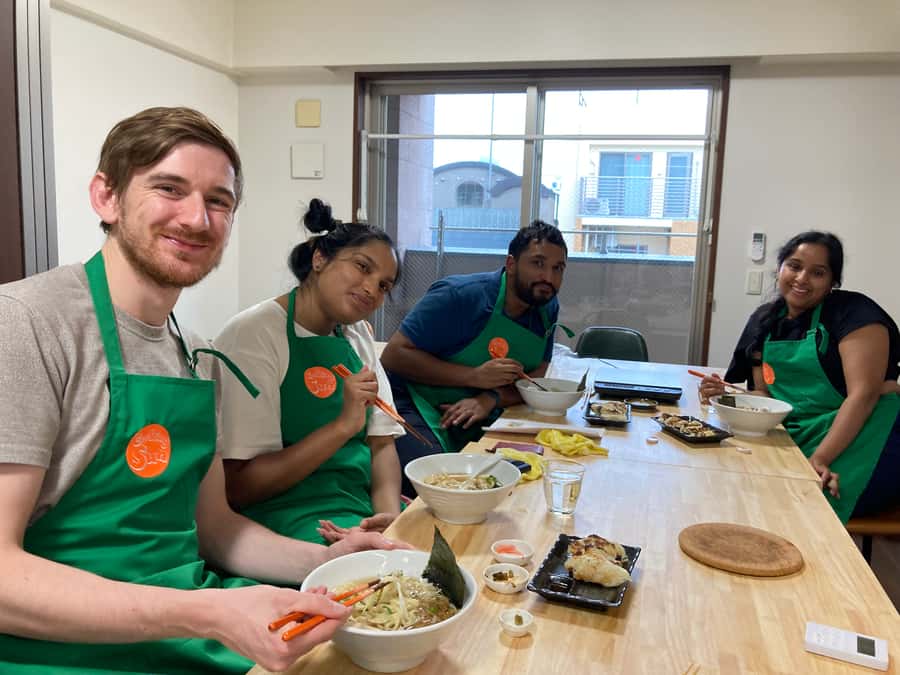
While the noodle dough rests, you prepare the gyoza. The filling uses minced chicken, and you learn how to portion it into the wrappers before shaping the dumplings.
This is where the class becomes pleasantly practical. Gyoza folding is easy to understand but takes a little care. Too much filling can make the wrapper difficult to close. Too little leaves a flat dumpling. You get the chance to adjust your technique as you go.
The instructors help with the details and keep the process friendly. Families and couples have found this part easy to enjoy together, and an 11-year-old participant was able to take part in the full class. You do not need to arrive as an experienced cook.
The dumplings are also a good reminder that Japanese cooking is not only about recipes. Shape, texture, and timing matter. The class gives you enough explanation to repeat the dish at home, rather than leaving you with a pleasant meal but no idea how to make it again.
More Ramen Tours in Osaka
- Osaka: Five Must-See Highlights Walking Tour & Ramen Lunch
★ 4.7 · 411 reviews - Walking Tour of Osaka’s 5 Must-See Sights, with Ramen for Lunch
★ 5.0 · 158 reviews - Cooking Ramen&Gyoza/KatsuCurry/Bento/Okonomiyaki+Store Tour@Osaka
★ 5.0 · 138 reviews - Three Types of Ramen Cooking Class in Osaka
★ 5.0 · 119 reviews
Building soy sauce ramen with a Japanese broth
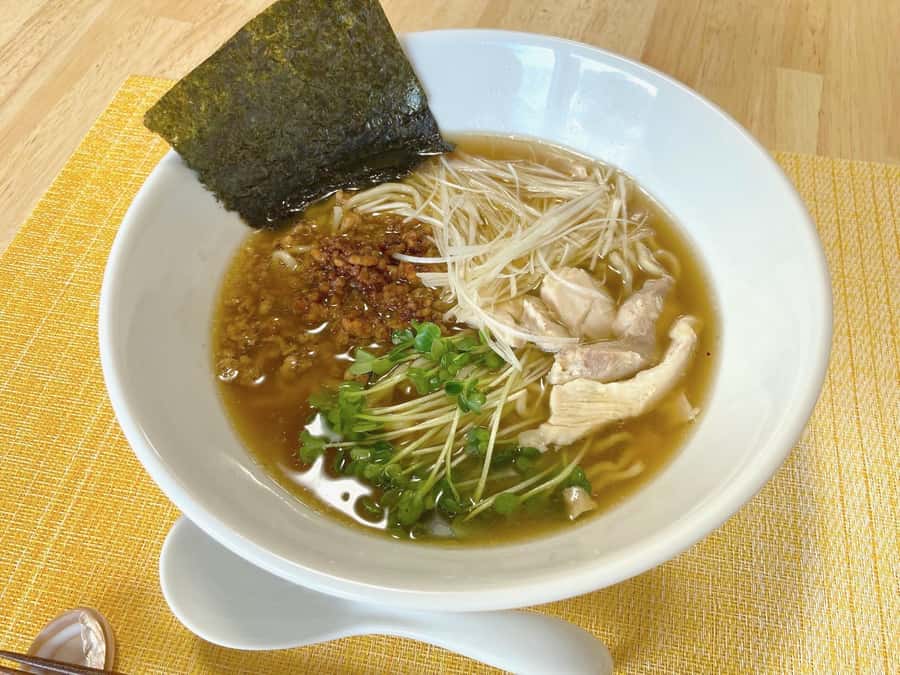
The standard ramen in this class is soy sauce ramen. The soup uses chicken bones and dried sardines, creating a savory base before you add the noodles and toppings.
The broth is an important part of the lesson. You learn about the ingredients and how the soup is seasoned, rather than treating ramen as noodles with a sauce poured over them. Some instruction also covers miso, including different kinds and when they are useful.
You can add toppings to create your own bowl. You may also add miso to the soup to turn it into a miso-style ramen. That gives you room to adjust the final taste instead of producing an identical bowl to everyone else.
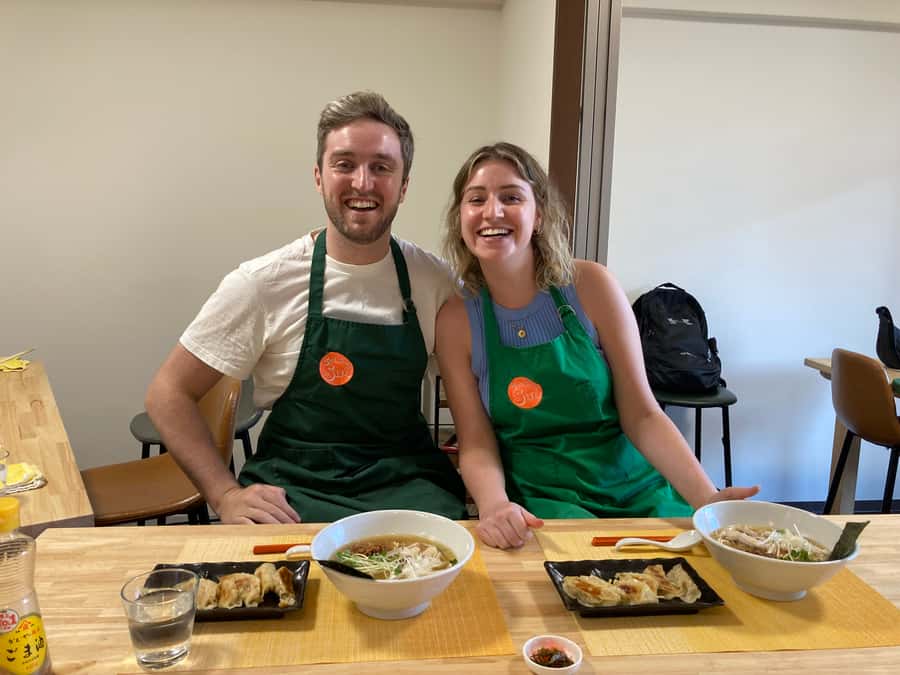
The finished meal is the payoff for all the preparation. The ramen is served with the gyoza you made, and you sit down to eat your work. Several people found the food better than expected, especially the noodles and dumplings. I would plan to arrive hungry, since this is a proper meal rather than a small tasting.
The dish is also a useful comparison with ramen outside Japan. Freshly made noodles, a carefully prepared broth, and Japanese seasonings create a result that can be quite different from the ramen commonly served abroad.
English instruction and the teaching style
The class is conducted in English. That makes a difference when you are learning techniques that depend on small details, such as noodle thickness, filling amounts, and dumpling folds.
The teaching style is patient and personal. Instructors have been praised for checking in with individuals, explaining ingredients clearly, and stepping in when someone needs help. Guides have also taken photos when requested, which is a nice touch during a very hands-on activity.
Names that have come up from different classes include Yoshi, Kasa, Miki, and June. The specific instructors may change, but the pattern is consistent: friendly teaching, clear explanations, and enough attention to keep the group together.
You also learn about Japanese eating culture along the way. The class explains the dishes and their ingredients, including the relationship between ramen and gyoza in everyday restaurant ordering. That context makes the meal more meaningful than a cooking lesson focused only on measurements.
Dietary requests and possible substitutions
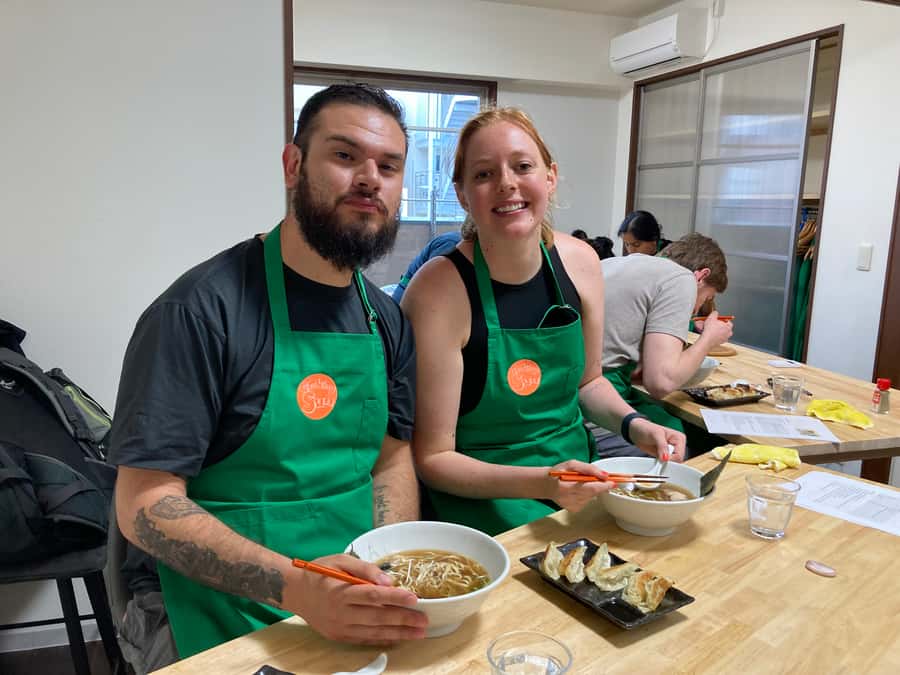
The standard dishes include chicken gyoza and a broth made with chicken bones and dried sardines. If you are vegetarian or vegan, you should communicate your needs when booking or as early as possible.
Plant-based adjustments have been made for vegan participants, and a fish-broth substitute has been provided for people who did not want that ingredient. These examples are encouraging, but you should still confirm your own requirements before arriving. The information provided does not promise that every allergy or dietary restriction can be handled.
This is one area where early notice matters. The class includes a number of prepared ingredients and cooking stages, so the instructors need to know what you cannot eat before the work begins.
How long the class takes and who will enjoy it
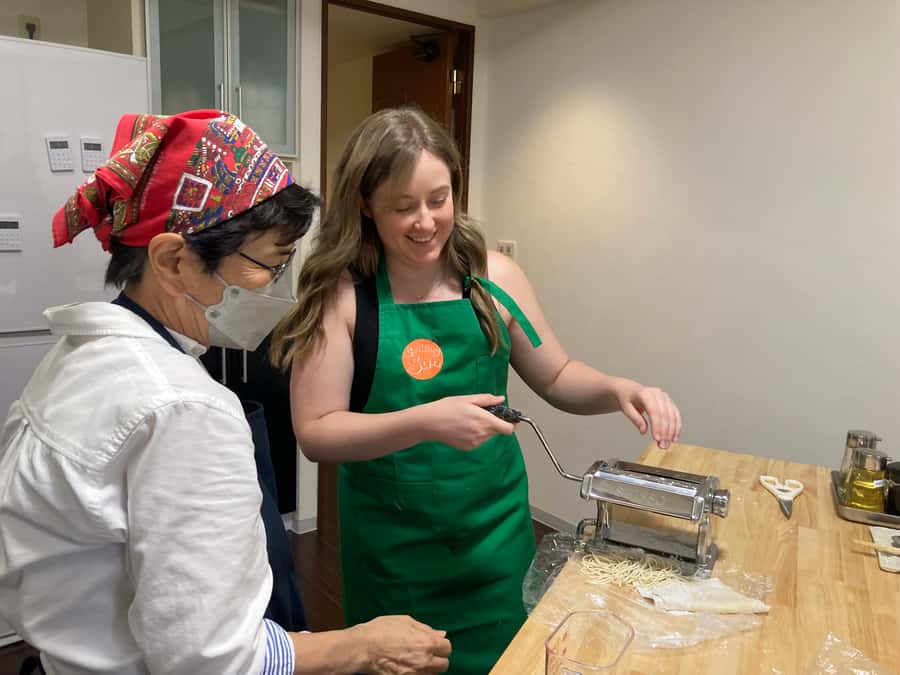
The timing appears to vary a little by class. One participant described a three-hour session, while another said it took about two hours. I would allow a comfortable two to three hours rather than trying to fit it between tight sightseeing plans.
That length is reasonable for the amount of work involved. You are making noodles from flour, preparing gyoza, working on the broth, cooking the food, and eating the finished meal. A rushed version would take away much of the fun.
This class suits:
- Couples looking for a shared activity in Osaka
- Families with older children who enjoy practical tasks
- First-time visitors who want more than a restaurant meal
- Home cooks who want recipes and techniques to repeat later
- Anyone interested in Japanese ingredients and food customs
It may be less suitable if you want a short, passive activity or if you dislike kneading, shaping, and cooking with a group. The class is hands-on from beginning to end.
Is the $70 price good value?
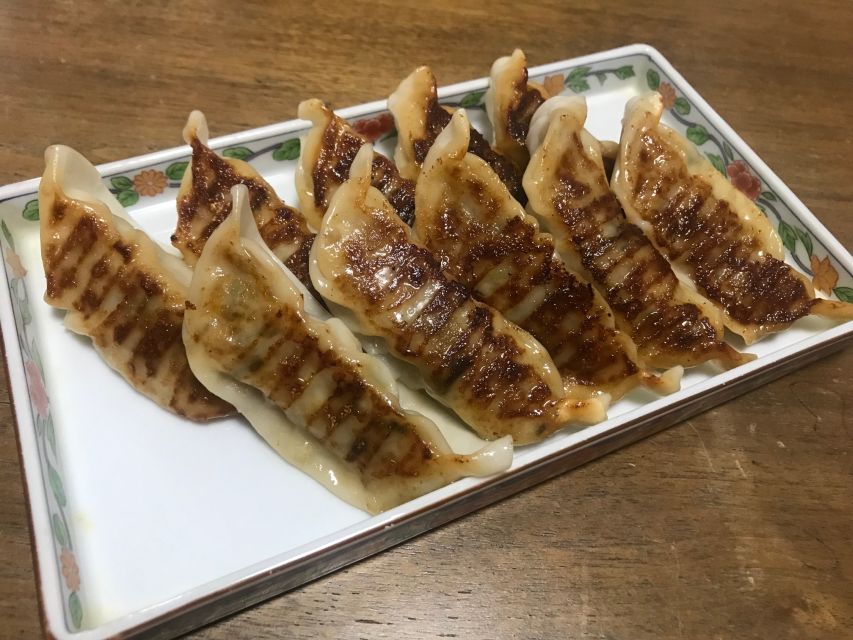
At $70 per person, the class costs more than a bowl of ramen and a plate of gyoza at a casual restaurant. That comparison is fair, but it does not tell the whole story.
You are paying for all ingredients, instruction in English, use of the cooking equipment, and a full meal at the end. You also receive recipes to take home, giving the class value after your holiday. For someone who wants to learn how ramen noodles and gyoza are actually made, that is a better deal than paying only for dinner.
The small group also matters. With two instructors and around seven or eight people, you are not left to figure out every stage alone. Several participants specifically valued the help when they fell behind and the unhurried pace of the lesson.
I would consider the price worthwhile if you want a memorable food activity and plan to recreate the dishes at home. If your main goal is simply to eat inexpensive ramen in Osaka, a restaurant will cost less and take less time.
Useful tips for a smooth visit
Keep the meeting instructions ready on your phone. The room is 807, and you need to press 807 and 呼出 at the entrance.
Plan extra time to find the building. One participant specifically found the building difficult to locate, so arriving early is sensible.
Wear something comfortable for a hands-on kitchen session. You will knead dough, use a noodle machine, prepare filling, shape dumplings, and work through several stages before eating.
Tell the provider about dietary needs in advance. Vegan adjustments and fish-broth substitutions have been possible, but early communication gives the instructors a better chance to prepare.
Leave room in your schedule after class. The official end point is the meeting location, and the meal can take the better part of an afternoon.
The booking terms are flexible: you can reserve and pay later, and cancellation up to 24 hours in advance allows a full refund. That is useful if your Osaka plans are still shifting.
Should you book the Dotonbori ramen class?
I would book it if you want to understand Japanese food by making it. The class combines two dishes you are likely to encounter together in Japan, gives you real kitchen work, and ends with a filling meal.
Its strongest points are the patient English instruction, small groups, useful recipes, and the chance to make ramen noodles from scratch. It also works well for families and couples, with enough support for beginners.
Skip it if you only have a short window in Dotonbori or want the cheapest possible meal. Otherwise, the $70 fee buys more than dinner. It gives you a practical memory of Osaka, plus the skills to make your own ramen and gyoza after you return home.
FAQ
Where does the ramen and gyoza class meet?
It meets at Cooking Sun Osaka, room 807. At the building entrance, press 807 and then the 呼出 call button.
Is hotel pickup included?
No. Hotel pickup and drop-off are not included. You travel to the meeting point yourself, and the activity ends there.
What language is the class taught in?
The class is conducted in English.
What food do you make?
You make ramen noodles from wheat and prepare soy sauce ramen with a broth based on chicken bones and dried sardines. You also make gyoza with minced chicken filling.
Can the class accommodate vegan or other dietary needs?
Plant-based options and a substitute for fish broth have been provided in some cases. Contact the provider about your dietary needs before the class so suitable arrangements can be discussed.
How long should I allow for the activity?
Allow roughly two to three hours. The exact length can vary, with class participants describing sessions of about two hours and others lasting three hours.
Just added around Osaka
- Osaka Food Tour with 10 Classic Japanese Tastings & Drinks★ 5.0 · 38 reviews
- Osaka: Highlights & Hidden Gems Private Walking Tour★ 4.7 · 38 reviews
- Kyoto private tour (Shore excursion available from Osaka or Kobe port)★ 5.0 · 39 reviews
- Osaka Private Day Trip – Enjoy Your First-Time Visit to Osaka!★ 5.0 · 39 reviews
- Kyoto & Nara & Uji: Full Day Sightseeing Tour from Osaka or Kyoto★ 4.5 · 39 reviews
- Authentic SUSHI Course Cooking Class★ 5.0 · 39 reviews
- Osaka: Mind & Spirit Balance Temple Reiki Healing★ 5.0 · 41 reviews
- Osaka: Gluten-Free Ramen and Gyoza Cooking Class★ 5.0 · 42 reviews
Ramen & Noodle Tours, compared.
Ramen Cooking Class at Ramen Factory in Kyoto
Read our review →
Eat and Drink Like a Local: Tokyo Ueno Food Tour-Taverns&Ramen
Read our review →
Ramen & Gyoza Cooking Class in Tokyo with Local Supermarket Visit
Read our review →
Ramen Cooking Class at a Ramen Factory with Souvenir
Read our review →
Five Must-See Highlights Walking Tour & Ramen Lunch
Read our review →
Easy Ramen Cooking Experience in Kabukicho, Shinjuku
Read our review →Browse the lists this tour appears in