
Reviewed · RAMEN & NOODLE TOURS
Ramen Cooking Class at Ramen Factory in Kyoto
Ramen tastes better when you make it yourself. This lively 90-minute cooking class turns a familiar Japanese comfort food into a hands-on meal, with noodle making, broth mixing, toppings, and lunch all included. I like the practical format, which gives you something to eat and a skill to take home. I also like the friendly instructors, including teachers such as Mahiro, Moeka, Haruka, Fuku, Akemi, and Hiro, who are often praised for keeping the class clear and amusing.
The main consideration is price. At $131.32 per person, this is not a cheap lunch. You are paying for instruction, ingredients, a small-group activity, and a meal, so the value makes more sense if you want an experience rather than simply a bowl of noodles. Drinks cost extra, and special dietary needs must be arranged in advance.
In This Review
- Key things to know before booking
- What happens inside the 90-minute ramen class
- Mixing broth and choosing your ramen style
- The best part: eating your own bowl
- Why the instructors matter
- Family fun, couples, and solo visitors
- What makes the price worthwhile
- Timing, meeting point, and practical planning
- The limits of the experience
- Who should book this Kyoto food activity?
- Should you book the Ramen Factory Kyoto class?
- FAQ
- Where does the ramen cooking class take place?
- How long does the experience last?
- What do you make during the class?
- Is lunch included?
- Can I choose my ramen flavors and toppings?
- Are vegetarian and vegan options available?
- Is the class Halal-certified?
- How many people can join the class?
- Can I cancel for a refund?
Key things to know before booking
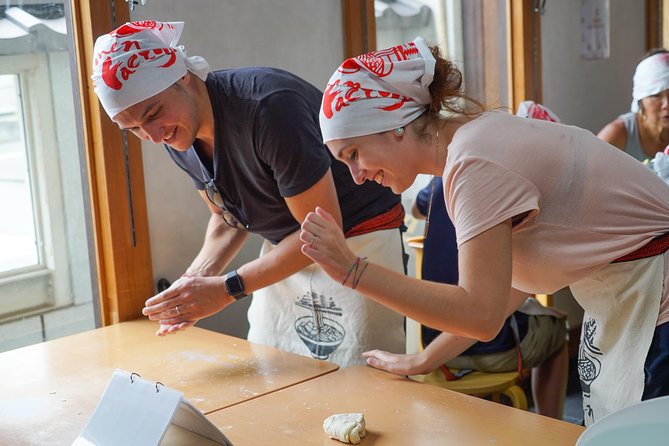
- You make the noodles from scratch: Knead and roll the dough, then shape it into noodles for your own bowl.
- The meal is part of the class: After cooking, you eat the ramen you prepared, making this both a lesson and a filling lunch.
- Your bowl can be personalized: Pick from different broth flavors and toppings, with vegetarian, vegan, and Halal options available by request.
- The instructors drive the fun: Mahiro, Moeka, Haruka, Fuku, Akemi, Hiro, and others are praised for being warm, funny, and helpful.
- The class is family-friendly: Children can take part, and the maximum group size is 20 people.
- You meet at the factory: The activity begins and ends at Ramen Factory Kyoto in Kamigyo Ward, rather than including hotel pickup.
What happens inside the 90-minute ramen class
You make your own way to Ramen Factory Kyoto, located at 44714 Kajiicho, BF1, in Kyoto’s Kamigyo Ward. The venue is near public transportation, and several start times are offered during the day, so you can fit the class around sightseeing.
The format is straightforward. You arrive, meet your instructor, and begin working through the main parts of a ramen bowl. The class is designed for participation, not just watching a chef work. You should expect to handle the dough, prepare the soup, and help assemble the toppings.
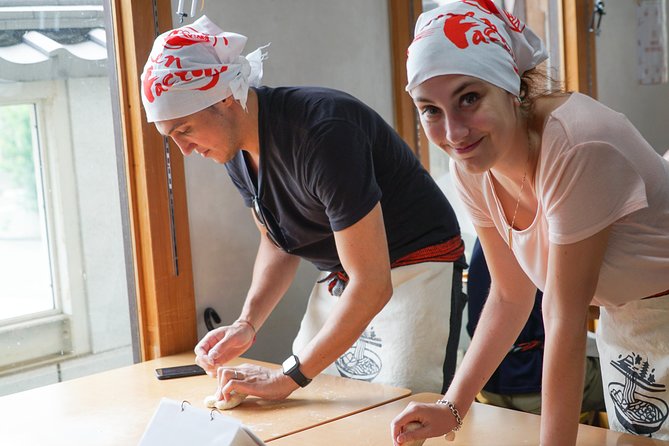
The first important step is the noodle dough. You knead it, work it into shape, and roll it out before pressing or cutting it into noodles. Some class feedback describes pounding the dough by hand, which adds a playful, physical element. It is not difficult in a technical cooking-school sense, but it is more work than ordering a bowl at a restaurant.
That is part of the appeal. Ramen often arrives at the table looking simple: noodles, soup, meat, and toppings. Here, you see how much handling goes into that simple bowl. You also learn why texture matters. Fresh noodles feel different from packaged noodles, and you get a direct sense of how thickness and cooking affect the final bite.
The noodle-making segment is especially good for families and groups of friends. Everyone has a task, so there is less chance of one person doing all the work while everyone else watches. Younger children may need help with the dough, but the activity is structured as a shared cooking project.
More Cooking Classes in Kyoto
- Kyoto: Ramen Cooking Class at a Ramen Factory with Souvenir
★ 4.9 · 532 reviews - Kyoto: Ramen, Gyoza, and Onigiri Cooking Class
★ 5.0 · 445 reviews - Kyoto: Japanese Washoku Bento Small Group Cooking Class
★ 5.0 · 380 reviews
Mixing broth and choosing your ramen style
Once the noodles are ready, you work on the soup. The class lets you choose from several flavors and toppings, giving you room to build a bowl that suits your taste. The supplied information does not provide a full menu of broth choices, so do not book expecting a specific flavor unless the factory confirms it directly.
This customization is useful if your group has mixed preferences. One person can choose a different style from another, rather than everyone receiving the same finished dish. It also makes the final meal feel personal. You are not simply eating a standard demonstration bowl. You are tasting the result of your own decisions.
The class can accommodate vegetarian and Halal preferences, and vegan preparation is available if requested after booking. Make that request early. The cooking session includes meat and other toppings in its general format, so you should not assume a vegan arrangement will be ready without advance notice.
One especially interesting preparation described by participants involves chicken thigh. You may roll and tie the chicken, cook it in broth, and finish it with a small torch to add color. This is the kind of detail that gives the class more range than a simple noodle workshop. It also adds a bit of theater, although the exact ingredients and steps may vary by session.
The class is Halal-certified, which gives Muslim visitors a clearer option for a Japanese cooking experience. Still, dietary requests should be confirmed after booking, especially for strict allergies or vegan requirements.
The best part: eating your own bowl
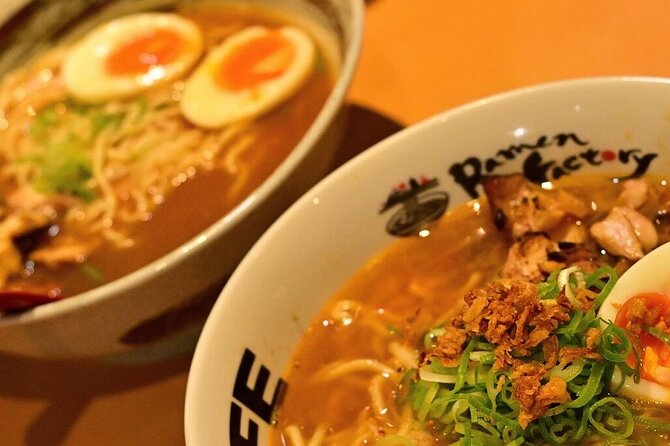
After the preparation, you sit down to eat your ramen. The lunch is included in the price, while drinks are not. I consider this a real advantage because the activity finishes with a proper meal instead of a tiny sample that leaves you searching for lunch afterward.
The final bowl is the payoff for the work. You have made the noodles, mixed the broth, selected toppings, and helped prepare the protein. Even if your bowl is not restaurant-perfect, it has a story behind it. That makes the meal more memorable than an ordinary stop at a ramen counter.
Many people describe the finished ramen as delicious, and some say it was among the best ramen they ate in Japan. That is a personal judgment, of course, and you should not expect a 90-minute class to replace the work of a specialist ramen chef. The fairer point is that the food is meant to be both tasty and educational. You are learning while producing a satisfying lunch.
If you are booking around meals, choose a time that lines up with lunch or dinner. This avoids eating immediately before class and makes the included bowl more useful. The exact departure times vary, but the availability of multiple sessions gives you some planning flexibility.
Why the instructors matter
The instructors receive unusually strong praise for their energy and patience. Mahiro is often singled out for humor and clear demonstrations. Moeka is praised for making the process comfortable and enjoyable, while Haruka is described as friendly and easy to follow. Fuku, Akemi, Hiro, and others also receive warm comments for being helpful and entertaining.
Instructor quality matters in a short cooking class. Ninety minutes can feel rushed if instructions are unclear. Here, the teaching style appears to be informal and encouraging, with staff stepping in when someone needs help. That is useful when you are handling dough, preparing toppings, or working through unfamiliar kitchen steps.
The teachers are not all senior culinary professionals. One participant was impressed by an 18-year-old instructor who was poised, funny, and enthusiastic. For some people, that youthful energy will add to the fun. If you want a serious chef-led technical lesson, this may feel more like an entertaining food activity than formal culinary training.
The class also has a social side. You cook alongside other people, compare your noodles, and share the final meal in the same setting. A small group can make the experience feel personal, although the advertised maximum is 20 people. If your session is full, expect a lively class rather than a private lesson.
Some feedback describes an empty time slot becoming a private lesson. That can happen when demand is low, but it should not be treated as something you can count on. Book this for the planned group format, and consider a smaller class an unexpected bonus.
More Ramen Tours in Kyoto
- Kyoto Ramen and Gyoza Cooking Class with Professional Chefs
★ 5.0 · 282 reviews - Home style Ramen and Homemade Gyoza in Kyoto
★ 5.0 · 152 reviews - Kyoto Ramen & Gyoza Cooking Class with Professional Chefs
★ 4.8 · 100 reviews - Kyoto Michelin Ramen Workshop or Painting Ramen Essentials
★ 4.9 · 100 reviews
Family fun, couples, and solo visitors
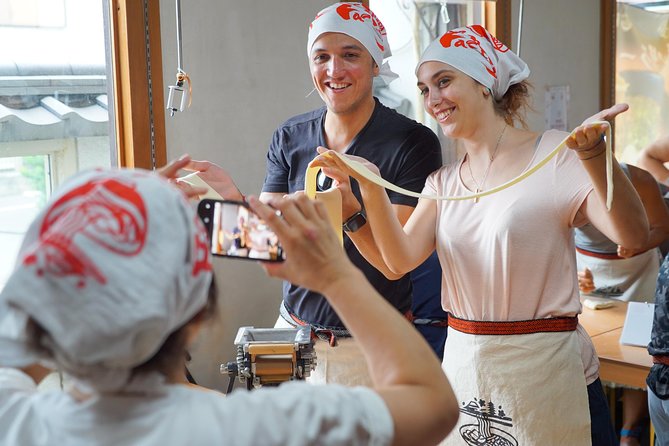
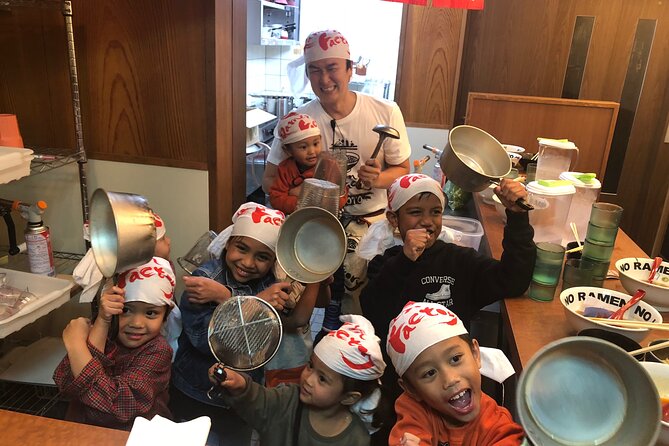
This experience fits families particularly well. Children can take part in kneading, rolling, shaping, and choosing toppings, and the process creates a shared activity without requiring advanced cooking skills. Parents should still expect to assist younger children with hot ingredients and kitchen tasks.
Couples also have a good reason to choose it. You work side by side, then eat the results together. One couple described the class as a honeymoon highlight, which makes sense: it is relaxed, interactive, and less formal than a special restaurant meal.
For solo visitors, the class offers an easy way to meet people through food. The group setting gives you a natural activity to focus on, and the instructor keeps the pace moving. You will not need to arrive with cooking experience or a partner.
Ramen fans will get the most from the class, but you do not need to be an expert. In fact, the experience works partly because it shows that ramen is harder to make well than it looks. The dough takes effort, the toppings need preparation, and the finished bowl depends on timing.
What makes the price worthwhile
The listed price is $131.32 per person. That is high compared with buying ramen in Kyoto, where a restaurant bowl can cost far less. If your only goal is to eat noodles, skip the class and spend the difference on several meals.
The value changes when you count what is included. You receive a host or tour escort, local taxes, food tasting, and lunch. More important, you get guided preparation from raw dough to finished bowl, plus the social value of a planned activity that takes about an hour and a half.
I would compare it with other paid Kyoto activities rather than with lunch alone. For a family, the class can replace a meal and provide a memory that a quick restaurant visit will not. For a couple, it offers a break from temples and train rides. For a dedicated food lover, the chance to learn a useful recipe may justify the cost.
You should also budget for drinks. They are not included. The class price covers the food and lesson, not every item you might want at the table.
The class sometimes provides an apron and a complimentary photo, and some participants have also described receiving a T-shirt or other souvenirs. Treat these as possible extras, not guaranteed parts of the published package. The included features you can safely count on are the instruction, food tasting, lunch, and local taxes.
Timing, meeting point, and practical planning
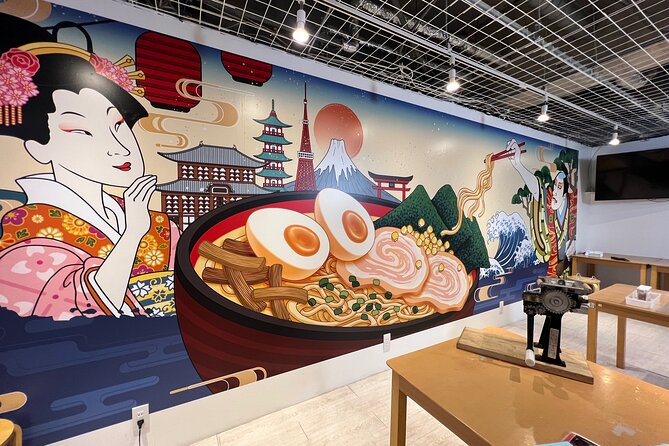
The class begins and ends at Ramen Factory Kyoto. There is no hotel pickup or sightseeing transfer listed, so plan your route before leaving your hotel. The address is Japan, 602-0841 Kyoto, Kamigyo Ward, Kajiicho, 44714 BF1 Ramen Factory Kyoto.
The venue is near public transportation, which helps, but the supplied address includes BF1, meaning you should look for the lower-level entrance rather than assuming the activity is at street level. Allow enough time to find the building, especially if you are arriving with children or carrying luggage.
A mobile ticket is provided, and booking confirmation is issued at the time of booking. Several departure times operate through the day. I would choose a slot that leaves room before and after the class, since the cooking and meal are the focus rather than a quick drop-in stop.
The maximum group size is 20. That is small enough for an organized activity but not necessarily intimate. If you prefer personal instruction, request a less popular time if possible, but there is no promise that you will receive a private or very small session.
The factory may photograph or film the class for promotional shoots, professional productions, or 360-degree recordings. These images can be used worldwide without compensation. If you do not want to appear, tell a staff member before the class begins. The staff will try to accommodate the request.
Free cancellation is available when you cancel at least 24 hours before the local start time. Cancellations or changes made inside that window are not accepted for a refund.
The limits of the experience
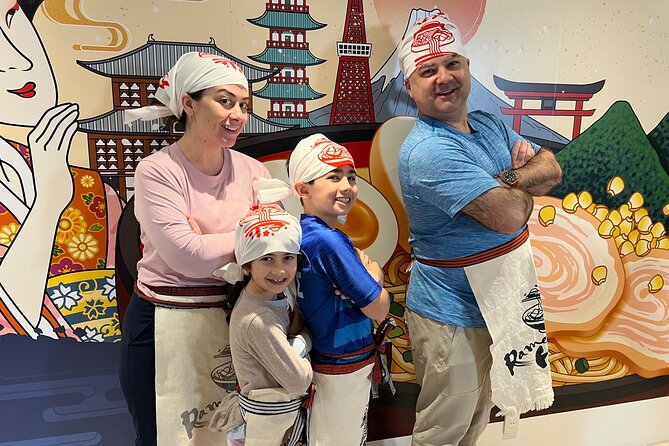
The class is fun, but it is not a full course in Japanese ramen culture. You learn the practical steps for producing one bowl, not the long process behind every regional ramen tradition. The session also does not include a broader food tour or a visit to several restaurants.
The 90-minute duration keeps the experience manageable, but it limits how much technique can be covered. You will learn the basic process, yet you may not leave ready to reproduce a restaurant-level bowl without practice.
The price may also feel steep for budget-minded visitors. Even enthusiastic feedback notes that the noodle-making process is not extremely intricate. The entertainment, friendly teaching, and meal are a major part of what you are paying for.
Finally, exact ingredients, toppings, and instructor assignments can vary. The names associated with the class include Mahiro, Moeka, Haruka, Fuku, Reika, Akemi, Moe, Hiro, and others, but you should not book expecting one particular teacher unless the provider confirms it.
Who should book this Kyoto food activity?
I would recommend the class to families, couples, ramen fans, and anyone who wants an indoor activity with a meal built in. It is especially useful on a hot day or when you need a break from walking between Kyoto’s temples and shrines.
It is also a good choice for people who like active experiences. You will not simply sit through a cooking demonstration. You will work with the dough, prepare ingredients, make choices, and eat the result.
I would be more cautious if you are watching every yen, have a very short Kyoto schedule, or only want the cheapest possible ramen. In those cases, a restaurant meal offers better financial value. If you have strict dietary restrictions, contact the provider after booking before relying on the class.
Should you book the Ramen Factory Kyoto class?
Book it if you want a cheerful, hands-on food activity and appreciate ending with a full lunch. The friendly instructors, customizable bowl, family appeal, and practical noodle-making lesson give it more substance than a quick tasting.
Skip it if $131.32 feels too high for a 90-minute activity or if your priority is ramen quality alone. Kyoto has plenty of excellent restaurants. But for a shared experience that lets you make, customize, and eat your own bowl, this class is a solid choice, especially when scheduled at lunchtime and booked with dietary needs clearly stated.
FAQ
Where does the ramen cooking class take place?
The class takes place at Ramen Factory Kyoto in Kyoto’s Kamigyo Ward. The listed address is Japan, 602-0841 Kyoto, Kamigyo Ward, Kajiicho, 44714 BF1 Ramen Factory Kyoto.
How long does the experience last?
The activity lasts approximately 1 hour and 30 minutes.
What do you make during the class?
You learn to make ramen noodles from scratch, mix the soup, prepare toppings, and assemble your own bowl. The class ends with eating the ramen you prepared.
Is lunch included?
Yes. Lunch and food tasting are included in the price. Drinks are not included.
Can I choose my ramen flavors and toppings?
Yes. The class offers a variety of flavors and toppings so you can personalize your bowl.
Are vegetarian and vegan options available?
A vegetarian option is available. Vegan preparation can be arranged if you contact the provider after booking.
Is the class Halal-certified?
Yes. Ramen Factory Kyoto is Halal-certified.
How many people can join the class?
The activity can have a maximum of 20 participants.
Can I cancel for a refund?
Yes, you can receive a full refund if you cancel at least 24 hours before the experience begins. Cancellations and changes made less than 24 hours before the start time are not accepted.
Just added around Kyoto
- Kyoto: Private Customizable Day Trip by Car★ 5.0 · 38 reviews
- Kyoto: Gion Night Walking Tour with Geisha Insight★ 5.0 · 39 reviews
- Kyoto: Full Day Bike Tour★ 4.9 · 39 reviews
- Private Japanese Calligraphy in Kyoto – Learn Shodō with a Master★ 5.0 · 39 reviews
- Kyoto: Gion Evening Walk with Hidden Gems, Geisha & Sake★ 5.0 · 41 reviews
- Experience a tea ceremony in an authentic tearoom, in Kyoto!★ 4.5 · 41 reviews
- Kyoto Private Photo Shoot & Tour by SnapKyoto★ 5.0 · 41 reviews
- The Way of Tea: Kyoto Crafts, Hidden Temples & Wabi-Sabi Walk★ 5.0 · 41 reviews
Ramen & Noodle Tours, compared.

Eat and Drink Like a Local: Tokyo Ueno Food Tour-Taverns&Ramen
Read our review →
Ramen & Gyoza Cooking Class in Tokyo with Local Supermarket Visit
Read our review →
Ramen Cooking Class at a Ramen Factory with Souvenir
Read our review →
Five Must-See Highlights Walking Tour & Ramen Lunch
Read our review →

Easy Ramen Cooking Experience in Kabukicho, Shinjuku
Read our review →Browse the lists this tour appears in