
Reviewed · GEISHA & GION DISTRICT TOURS
Kyoto: Gion Night Walking Tour with Geisha Insight
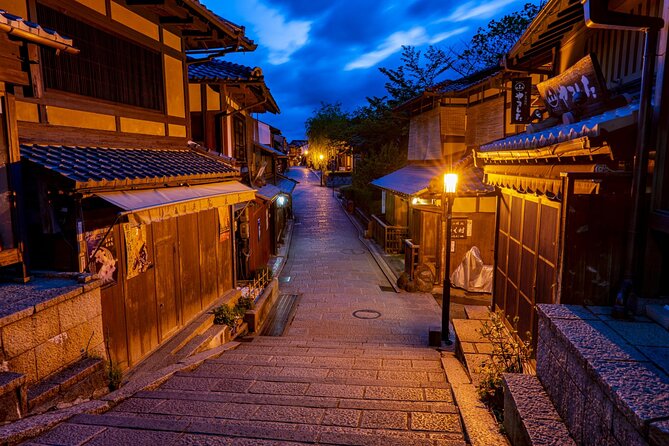
Kyoto after dark has a different rhythm. This two-hour walk through Gion and Kawaramachidori gives you a guide, a manageable route, and a closer look at Kyoto’s traditional streets without asking you to decode a map on your own. I like the small-group format, capped at 15 people, and the useful food suggestions included along the way. I also like that the walk reaches quiet lanes, shrines, wooden townhouses, and the Shirakawa Canal area rather than sticking only to the main tourist streets.
The main caution is the geisha promise. You may learn how to recognize geisha and maiko, but seeing one is only a possibility. The route can also be quite dark, and one poor rating came from a participant who expected more direct geisha contact and photography. Go for the history, atmosphere, and local orientation first. Treat a geisha sighting as luck.
In This Review
- Key points at a glance
- Why a night walk makes sense in Gion
- Meeting at Tanaka Coffee Gion
- Hanamikoji Street and the heart of Gion
- Shirakawa Canal and Tatsumi Daimyojin Shrine
- Seeing geisha responsibly
- From old Gion to Shijo-Kawaramachi
- What the $25 price really buys you
- Who will enjoy this Kyoto evening
- Should you book the Gion night walk?
- FAQ
- How long does the Kyoto Gion night walking tour last?
- Where does the tour begin?
- Where does the tour end?
- What areas does the route visit?
- Can I take photos of geisha or maiko?
- Is seeing a geisha guaranteed?
- What happens if I cancel?
Key points at a glance
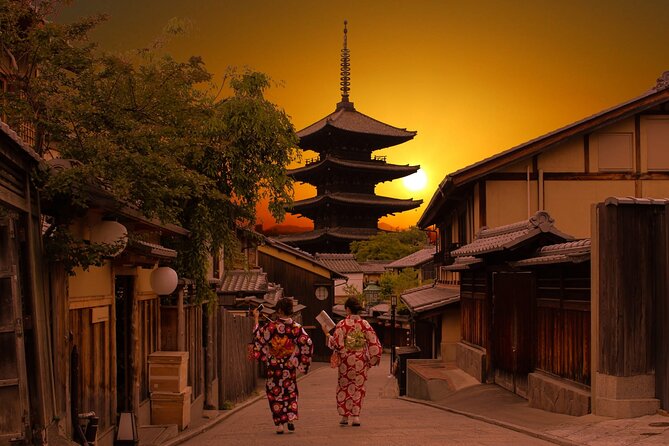
- Hanamikoji Street after dark: Walk through Gion’s best-known geisha quarter, lined with traditional wooden teahouses.
- Shirakawa Canal and Tatsumi Daimyojin: See a quieter side of the district, with stone lanes, red bridges, willow trees, and a small shrine.
- Geisha etiquette explained: Learn how to tell a geisha from a maiko and why photography or conversation may not be appropriate.
- Gion to Kawaramachidori: The route shifts from old Kyoto to the modern energy around Shijo-Kawaramachi.
- Food advice included: Use the guide’s suggestions to find places to eat after the walk.
- Good price for a two-hour orientation: At $25 per person, the tour offers a practical introduction without the cost of a long private outing.
Why a night walk makes sense in Gion
Gion is easy to reach but not always easy to understand. Its main streets can look simple on a map, while the most attractive corners sit along narrow lanes and canal paths. A guide helps you connect the polished facades with the working district behind them.
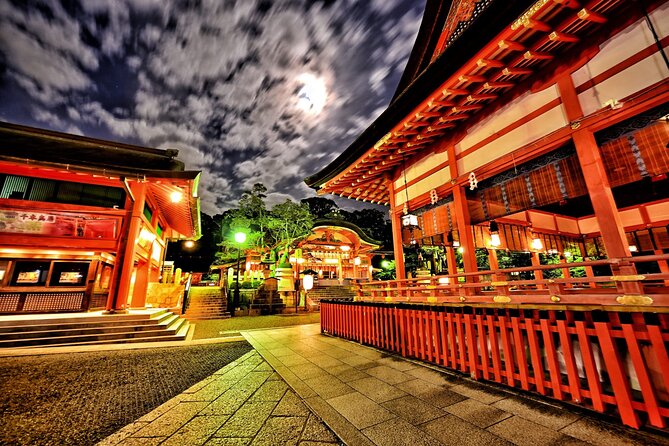
The evening timing is useful for two reasons. First, you avoid the heat and daytime crowds that can make Gion feel more like a photo stop than a neighborhood. Second, lanterns and low light change the mood of the wooden teahouses and stone streets. You will see less detail than you would in full daylight, but the district feels more in keeping with its evening purpose.
This is not a performance, dinner, or staged encounter. It is a walking tour through a district where traditional arts and evening appointments still shape the streets. That distinction matters. If you want guaranteed entertainment, this is the wrong choice. If you want context before exploring Gion on your own, the format makes sense.
The tour is priced at $25, which is fair for two hours with a guide and a small group. You are paying mainly for navigation, explanations, and local food suggestions. There are no listed admission charges to major paid sights, so the value depends on how much you want help interpreting the neighborhood rather than collecting tickets.
More Walking Tours in Kyoto
- Kyoto Geisha Walking Tour: Gion District & Hidden Gems
★ 4.7 · 3,273 reviews - Kyoto: Gion Magical Night Walking Tour with Geisha Trivia
★ 4.9 · 2,393 reviews - Kyoto: Gion Geisha District Walking Tour – Stories of Geisha
★ 4.7 · 2,187 reviews
Meeting at Tanaka Coffee Gion
The walk begins at Tanaka Coffee Gion in Kyoto’s Higashiyama Ward, at 993 Shinchisuikicho, postal code 605-0085. The meeting point matters because Gion has many small streets and several similarly named locations. Check the address carefully and arrive with your mobile ticket ready.
The tour ends back at the same meeting point. That makes the evening easier to plan, since you are not left in an unfamiliar neighborhood at the end of the walk. It also lets you decide what to do next, including using the guide’s recommendations for food around the Gion or Kawaramachidori areas.
A mobile ticket is included, and confirmation comes when you book. The group can include up to 15 people. That is not a private walk, but it is still small enough for a guide to keep the group together and answer some questions. If every place is filled, the experience may feel more like a standard group tour than a personal stroll.
Hanamikoji Street and the heart of Gion
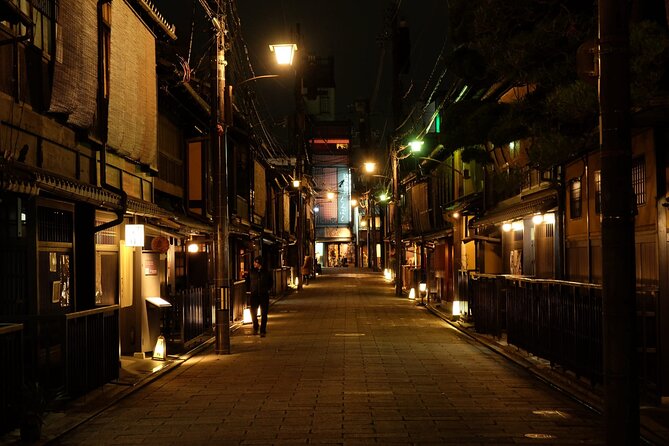
The first hour focuses on Gion, beginning along Hanamikoji Street. This is the district’s best-known route, with traditional wooden teahouses called ochaya. These are not ordinary restaurants open for casual drop-in meals. They are tied to Kyoto’s geisha culture and evening entertainment traditions, which helps explain why the street can feel both public and private at once.
A guide adds value here by explaining what you are looking at. Without context, a row of handsome wooden buildings can blur into scenery. With background, you can better understand why the facades are carefully preserved and why visitors are expected to behave quietly and respectfully.
Do not assume that a walk down Hanamikoji means you will enter a teahouse. This experience is a street-level tour. The stated route includes walking past the buildings, not visiting inside them. That keeps the price low, but it also means the cultural explanation is the main attraction.
The guide also discusses how to identify a real geisha and maiko. That can help you avoid confusing costumed sightseers with working performers. The distinction is useful, but the practical lesson is more important: do not treat anyone heading to an appointment as a public attraction.
A specific guide named Ryu received strong praise for explaining geisha tradition and practice clearly. That gives you a useful expectation for the best version of this walk. The quality of a neighborhood tour depends heavily on the person leading it, and Ryu’s name suggests that the cultural explanation can be more than a quick list of facts.
Shirakawa Canal and Tatsumi Daimyojin Shrine
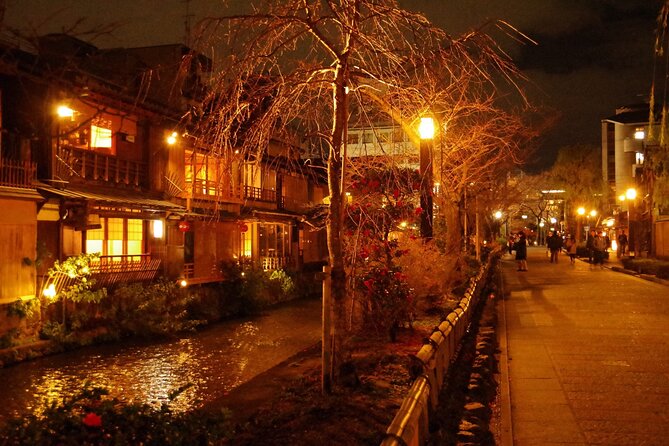
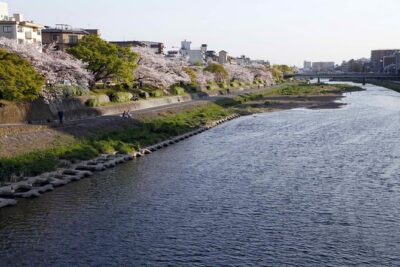
From Hanamikoji, the route moves toward the Shirakawa Canal area. This is one of the most scenic parts of Gion, with stone-paved lanes, red bridges, willow trees, and water running alongside the streets. It offers a softer contrast to the wider roads and busier crossings nearby.
This section is especially good for understanding why Gion is so popular. The setting is compact, photogenic, and distinctly Kyoto, but it is also easy to rush through while hunting for a famous angle. A guide can point out the relationship between the canal, the old houses, and the alleys that branch away from the main route.
The low light is part of the appeal, but it is also a limitation. One participant found the walk too dark for photography and felt disappointed after learning that a geisha sighting was unlikely. If taking clear nighttime photos is central to your plan, adjust your expectations. You may get atmosphere rather than sharp images.
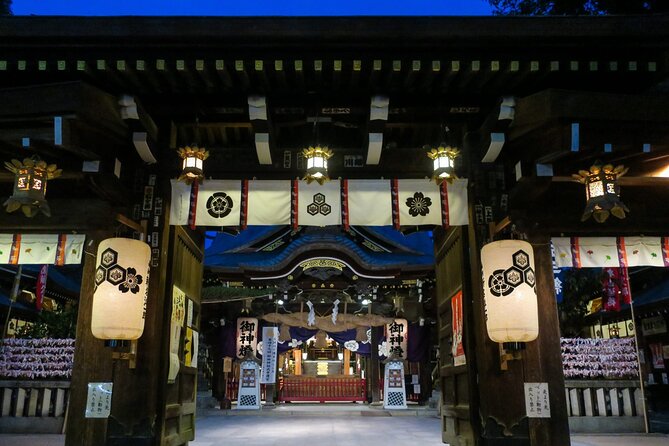
Tatsumi Daimyojin Shrine provides a quieter pause. It is a small shrine tucked into the backstreets, and the tour describes it as culturally significant. Its importance here is not size or grand architecture. It shows how a major tourist district can contain modest local religious sites that are easy to miss when you stay on the main road.
The shrine stop also gives the guide a natural place to explain the area beyond geisha culture. Gion is not just a backdrop for evening photographs. It includes religious sites, homes, businesses, and old lanes used by people who live and work there.
More geisha district walks in Kyoto:
- Best of Kyoto: Gion, Geisha, Pagodas & Cobblestones
★ 4.9 · 2,058 reviews - Night Walk in Gion: Kyoto’s Geisha District
★ 4.5 · 2,003 reviews - Kyoto Night Foodie Tour in Gion (9+ dishes + 6 Sake tastings)
★ 5.0 · 1,762 reviews - Kyoto Gion Geisha District Walking Tour – The Stories of Geisha
★ 5.0 · 1,441 reviews
Seeing geisha responsibly
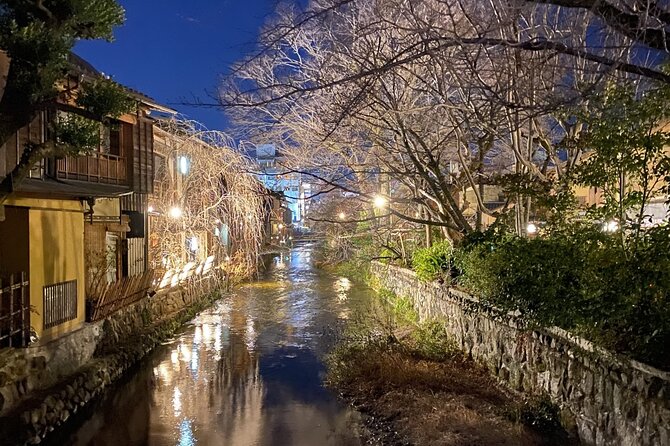
The geisha portion needs the clearest explanation before you book. The tour can teach you what to look for and where you might have a chance of seeing a geisha or maiko traveling to an evening appointment. It cannot promise that one will appear.
That uncertainty is not a flaw in itself. Working performers do not operate on a schedule designed for sightseeing. The problem comes when a visitor books expecting a guaranteed encounter, a close-up photograph, or a conversation. The tour’s own practical guidance makes clear that you should not take photos or talk to them.
I see this as an important part of the experience, even if it disappoints some people. The guide is not promising a show. You are learning how to observe without interrupting. If a geisha or maiko appears, the respectful approach is to give space and follow the guide’s instructions.
One rating of this experience was very poor because the participant felt the geisha element was advertised too strongly. That warning is worth taking seriously. Book this for an explanation of the culture and the chance of a sighting, not for a guaranteed photo opportunity.
From old Gion to Shijo-Kawaramachi
The second hour moves toward Kawaramachidori and the area around the Shijo-Kawaramachi intersection. This changes the mood of the walk. You leave the quieter lanes of Gion and reach a major urban crossroads where modern Kyoto’s shops, restaurants, and evening activity come into view.
That contrast is one of the tour’s strongest ideas. Kyoto is not a museum city frozen in the past. Old machiya houses and traditional alleys exist beside busy streets, modern businesses, bars, and eateries. Seeing both sides in one evening gives you a more useful picture of the city than visiting a historic district in isolation.
The route also includes less obvious backstreets around Kawaramachidori. These lanes are described as places with cozy bars, restaurants, and old machiya houses. You may find the atmosphere more relaxed than on the main crossing, though the tour does not include food, drinks, or restaurant admission.
The guide’s local eating suggestions are a practical bonus. You can ask for ideas before the walk ends, then use the information to choose your own meal. Since the tour returns to Tanaka Coffee Gion, you can also decide whether to eat near the starting point or continue toward the Kawaramachidori area.
What the $25 price really buys you
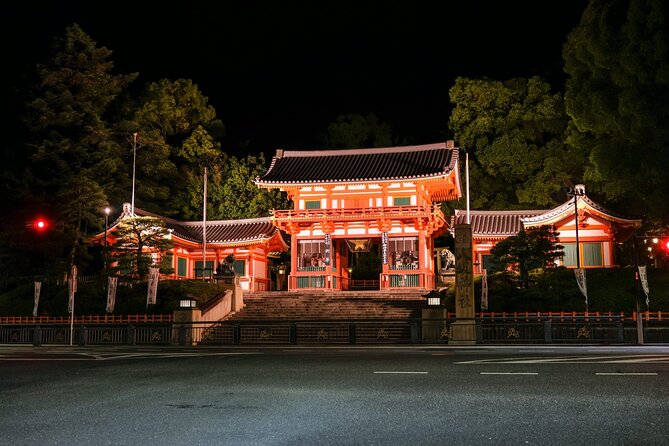
At $25, this is a low-cost way to get your bearings in one of Kyoto’s most complicated sightseeing districts. The price includes the walking tour and insider recommendations for local eateries. It does not include gratuity, so plan to thank the guide separately if you feel the service deserves it.
The value is strongest for first-time visitors who might otherwise wander past the same streets without knowing what they mean. You get a route, a cultural introduction, and a chance to ask questions. A 4.8 rating from 39 ratings and a 97 percent recommendation rate also suggest that the basic format works well for most people.
The value is weaker if you already know Gion well or mainly want photographs. Nighttime conditions can make photography difficult, and no paid attraction or guaranteed encounter is part of the walk. You are buying interpretation and orientation, not access behind closed doors.
The tour is usually booked about 31 days ahead, which is a useful sign for planning. If your Kyoto schedule is fixed, reserve early rather than assuming you can add it at the last moment. Free cancellation is available until 24 hours before the start time. Cancellations or changes made inside that window are not refunded or accepted, and the tour may be canceled if its minimum group size is not reached.
Who will enjoy this Kyoto evening
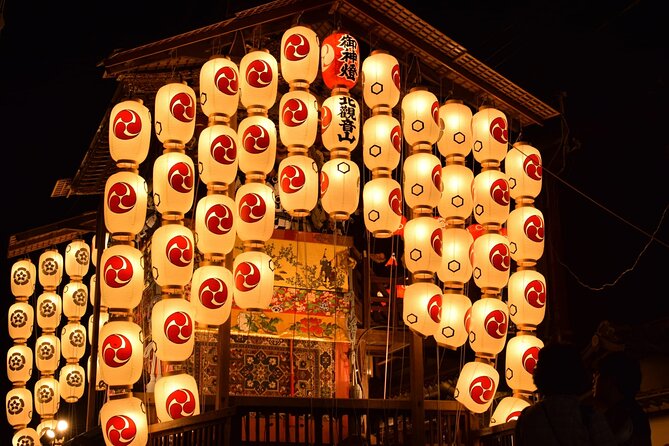
I would choose this walk if you are visiting Gion for the first time, want a short evening activity, or prefer local context to a self-guided route. It also suits anyone who wants food suggestions before deciding where to eat.
It is a good match for readers interested in traditional wooden architecture, shrine culture, geisha customs, and the way old and modern Kyoto meet. Most people can participate, according to the tour information, and the two-hour length is easy to fit around dinner plans.
I would think twice if your priority is guaranteed geisha viewing. I would also be cautious if photography is the main reason you want to visit Gion at night. The streets may be dim, and respectful rules limit close interaction.
The small group maximum of 15 offers a reasonable middle ground. You will not have the flexibility of a private guide, but you should have more opportunity to hear the explanation than on a large coach outing. The experience is best approached as a guided introduction, followed by your own return visit in daylight if you want more photographs.
Should you book the Gion night walk?
Book it if you want an affordable, guided introduction to Gion’s streets, shrine, canal, wooden teahouses, and geisha customs. The route is varied, the return to the meeting point is convenient, and the food tips can help you make better use of the rest of your evening.
Skip it if you need a guaranteed geisha sighting, direct interaction, or bright conditions for photography. The most sensible expectation is a calm, informative walk with a chance of seeing a geisha, not a scheduled encounter. At $25, that is a fair deal for first-time visitors who value explanation and local orientation.
FAQ
How long does the Kyoto Gion night walking tour last?
The tour lasts approximately two hours, with about one hour in Gion and one hour around Kawaramachidori.
Where does the tour begin?
It begins at Tanaka Coffee Gion, 993 Shinchisuikicho, Higashiyama Ward, Kyoto, Japan, postal code 605-0085.
Where does the tour end?
The walk ends back at the same meeting point where it begins.
What areas does the route visit?
The route includes Hanamikoji Street, the Shirakawa Canal area, Tatsumi Daimyojin Shrine, and the area around the Shijo-Kawaramachi intersection and Kawaramachidori.
Can I take photos of geisha or maiko?
The tour guidance states that you should not take photos or talk to geisha or maiko encountered during the walk.
Is seeing a geisha guaranteed?
No. The tour explains how to spot real geisha and maiko and offers a chance of seeing one heading to an evening appointment, but no sighting is guaranteed.
What happens if I cancel?
You can cancel up to 24 hours before the start time for a full refund. Cancellations or changes made less than 24 hours before the start time are not refunded or accepted.
Just added around Kyoto
- Kyoto: Private Customizable Day Trip by Car★ 5.0 · 38 reviews
- Kyoto: Full Day Bike Tour★ 4.9 · 39 reviews
- Private Japanese Calligraphy in Kyoto – Learn Shodō with a Master★ 5.0 · 39 reviews
- Experience a tea ceremony in an authentic tearoom, in Kyoto!★ 4.5 · 41 reviews
- Kyoto: Gion Evening Walk with Hidden Gems, Geisha & Sake★ 5.0 · 41 reviews
- Kyoto Private Photo Shoot & Tour by SnapKyoto★ 5.0 · 41 reviews
- The Way of Tea: Kyoto Crafts, Hidden Temples & Wabi-Sabi Walk★ 5.0 · 41 reviews
- Bamboo Grove Temple and Garden Views Tour★ 5.0 · 41 reviews
Geisha & Gion District Tours, compared.
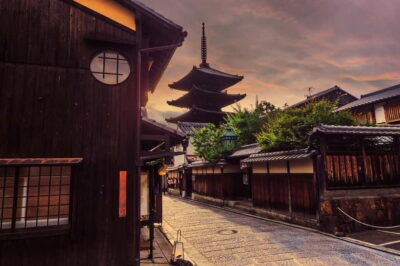
Kyoto Geisha Walking Tour: Gion District & Hidden Gems
Read our review →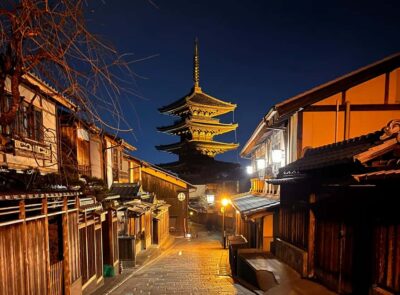
Gion Magical Night Walking Tour with Geisha Trivia
Read our review →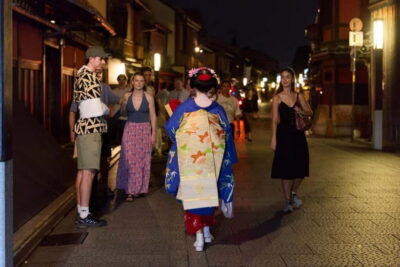
Gion Geisha District Walking Tour – Stories of Geisha
Read our review →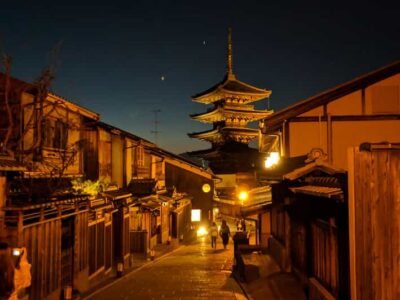
Best of Kyoto: Gion, Geisha, Pagodas & Cobblestones
Read our review →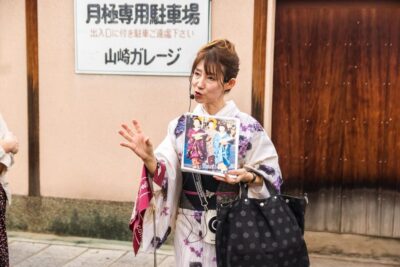
Kyoto Night Foodie Tour in Gion (9+ dishes + 6 Sake tastings)
Read our review →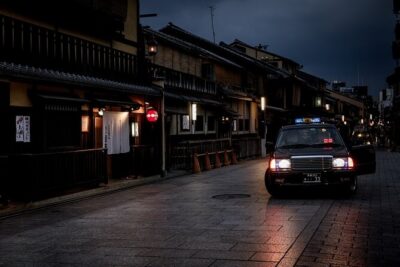
Kyoto Gion Geisha District Walking Tour – The Stories of Geisha
Read our review →
Kyoto Gion: 2-Hour Geisha Culture & History Walking Tour
Read our review →Browse the lists this tour appears in