
Reviewed · GEISHA & GION DISTRICT TOURS
Kyoto: Gion Magical Night Walking Tour with Geisha Trivia
Gion reveals its quieter side after sunset. This 100-minute walk combines Hanamikoji’s geisha traditions with glowing shrines, a Buddhist pagoda, narrow lanes, and stories that help you read Kyoto’s old streets. I like the small groups, limited to 10 people, and I like the guides’ friendly, personal approach. The main drawback is the route’s stairs, which make it unsuitable for wheelchairs, baby carriages, and people with limited mobility.
At $24 per person, this is a sensible way to get oriented in Gion without paying for a long dinner show or formal cultural performance. Guides such as Hina, Shino, Masami, Sho, Pam, Kevin, and Yuri have been praised for clear English, patience, humor, and useful local suggestions. Just remember that the advertised time is when the walk leaves, not when you should arrive.
In This Review
- Key points at a glance
- Meeting at Minamiza Theatre in central Gion
- Hanamikoji and the rules of geisha culture
- Shrines, prayers, and the spiritual side of Gion
- The illuminated pagoda and quieter lanes
- Ending at a shrine more than 1,000 years old
- What the small group adds for $24
- Nighttime atmosphere, crowds, and the February afternoon option
- Guide quality and the human touch
- Practical limits before you book
- Should you book the Gion Magical Night Walking Tour?
- FAQ
- Where does the Gion walking tour meet?
- Is the listed time the meeting time?
- How long does the tour last?
- How many people can join the tour?
- What language is the tour conducted in?
- Does the tour guarantee a geisha sighting?
- What places are included along the route?
- Is photography included?
- Is the tour suitable for wheelchair users or baby carriages?
- Can I cancel the booking for a refund?
Key points at a glance

- Small groups up to 10: You can ask questions without trying to catch a guide’s attention across a crowd.
- Hanamikoji after dark: Learn about maiko, geiko, lanterns, private clubs, and local etiquette in Kyoto’s best-known geisha district.
- More than geisha trivia: The route also includes a matchmaking shrine, an illuminated Buddhist pagoda, quiet paths, and a shrine more than 1,000 years old.
- Real geisha sightings are possible: You may see a maiko or geiko moving through Gion, but meeting one is not part of the tour.
- Photography is included: The guide provides a photography service during the walk.
- February afternoon option: Some February departures begin at 3 p.m., useful if you have evening plans or prefer daylight.
Meeting at Minamiza Theatre in central Gion
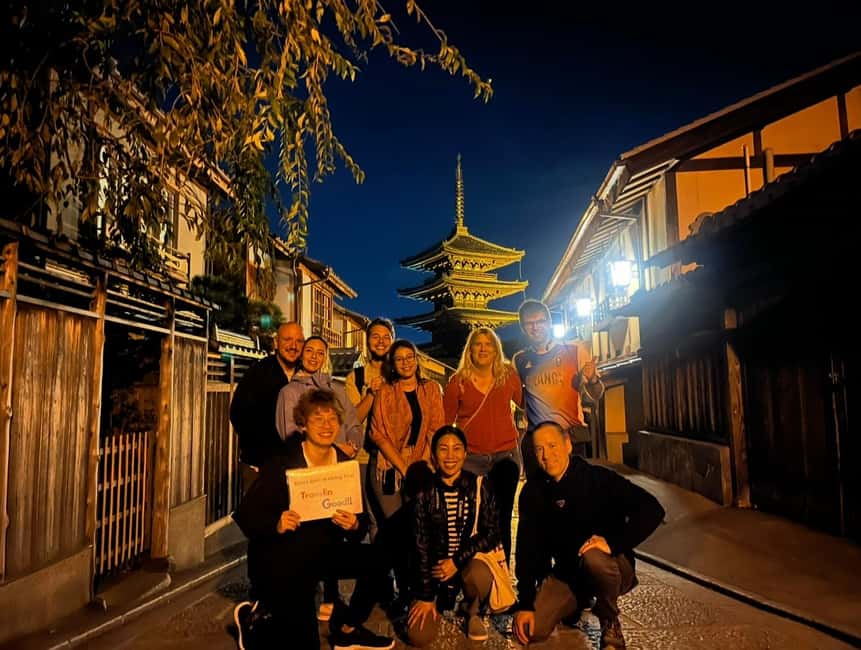
The tour begins in front of Minamiza Theatre, one of Gion’s clearest landmarks. Meet on the front side of the theater, where the guide carries a sign marked TravelinGood.
The practical rule is simple: arrive at least five minutes early. The posted start time is the departure time, so the group will begin walking then. If you reach Minamiza by bus or taxi, allow extra time for traffic. Kyoto’s central streets can slow down, particularly when you are trying to make a fixed departure.
This is a good meeting point because it puts you directly into Gion rather than wasting time on a long transfer. You should use the bathroom and adjust your clothing before arriving, since the tour is a continuous walk through streets, lanes, shrine grounds, and areas with stairs.
The guide speaks English, and the group is normally capped at 10. That number matters here. Gion’s streets are atmospheric but not especially wide, and a large crowd would make it harder to hear explanations or pause without blocking people who live and work in the district.
More Walking Tours in Kyoto
- Kyoto Geisha Walking Tour: Gion District & Hidden Gems
★ 4.7 · 3,273 reviews - Kyoto: Gion Geisha District Walking Tour – Stories of Geisha
★ 4.7 · 2,187 reviews - Night Walk in Gion: Kyoto’s Geisha District
★ 4.5 · 2,003 reviews
Hanamikoji and the rules of geisha culture
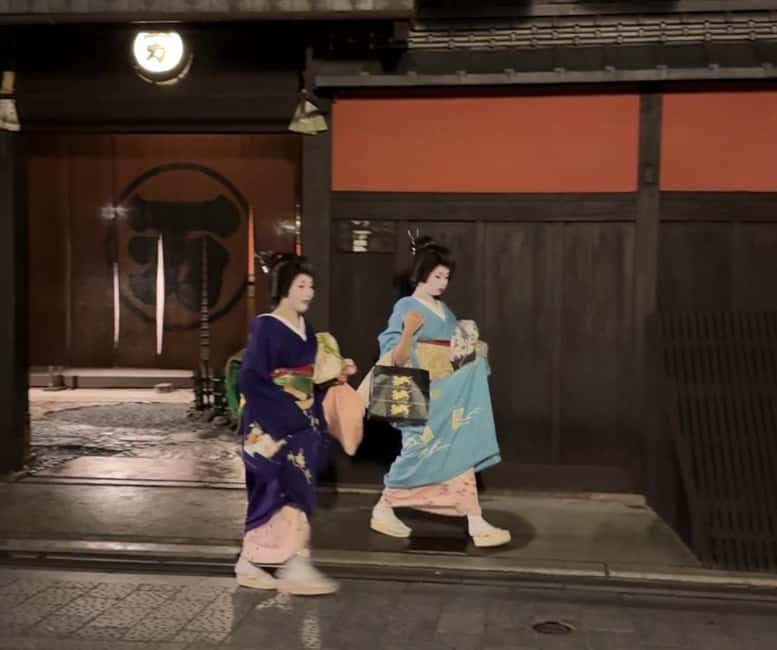
The first major part of the walk leads toward Hanamikoji, the traditional street most closely associated with Gion’s geisha district. In the evening, wooden facades and paper lanterns give the area a softer look than it has during the day. The mood is quiet and restrained, not theatrical.
Your guide explains the difference between maiko and geiko, including the fact that maiko are geisha in training. Guides have used photographs and videos to make those differences easier to understand, which is useful because the costumes, hairstyles, and makeup can look similar at first glance.
The discussion also covers the customs of Gion. You may hear about lanterns, private clubs, the working life of geiko and maiko, and the rules that help protect this traditional neighborhood. The value here is not simply learning a few costume facts. You begin to understand why respectful behavior matters when people are commuting to work rather than posing for tourists.
You might spot a real maiko or geiko entering or leaving a taxi. Several recent outings included such sightings, but you should treat one as luck, not a promise. This is not a meet-the-geisha experience, and the tour does not arrange photographs or introductions with them.
That distinction is important. Gion is a living district, not a stage set. A good guide helps you observe without chasing, blocking, or photographing people carelessly. The best part of this section is the context, since it replaces the usual vague image of geisha with a clearer picture of their training, work, traditions, and place in Kyoto culture.
Shrines, prayers, and the spiritual side of Gion
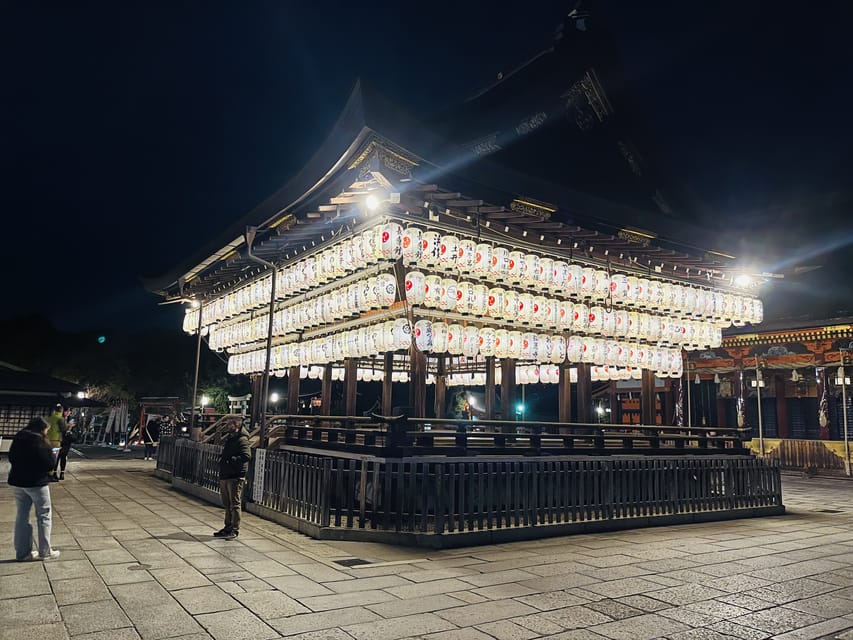
The walk then moves beyond the geisha streets to shrines and temples. This change of subject keeps the experience from becoming a narrow geisha-themed stroll. You get a broader look at how religion, local stories, and daily customs shape Kyoto.
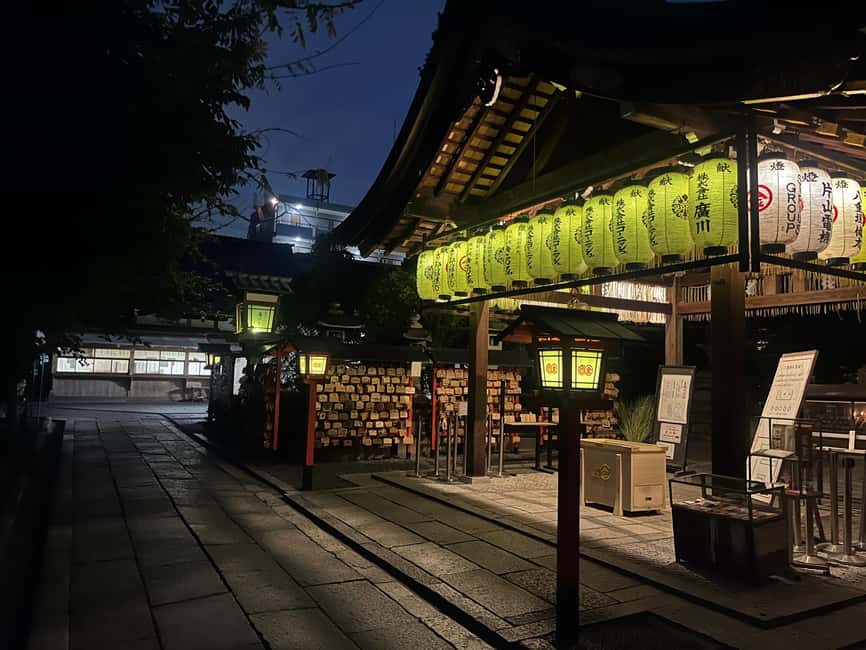
One stop is a shrine associated with matchmaking. The guide explains its purpose and the kind of wishes people bring there. Another part of the route introduces the difference between Shinto and Buddhism, a point that can be confusing when you see shrines and Buddhist sites close together.
Guides have also demonstrated how to pray at a Shinto shrine. This is one of the most useful parts for a first visit to Japan because the ritual can feel uncertain when you are standing in front of a shrine on your own. Shino, in particular, has been praised for helping the group practise the steps clearly and encouraging everyone to take part.
The explanations are not limited to formal facts. You may hear legends, local stories, and small details about the places you pass. Masami has been praised for answering repeated questions patiently, while other guides have added suggestions about current festivals and nearby restaurants.
Because the walk takes place at night, some shrines and temple features are illuminated. That lighting changes the experience. You are not seeing every architectural detail, but you are getting a calm, atmospheric view with fewer people around. If you have already walked Gion during daylight, the evening route can still feel different enough to justify the time.
The illuminated pagoda and quieter lanes
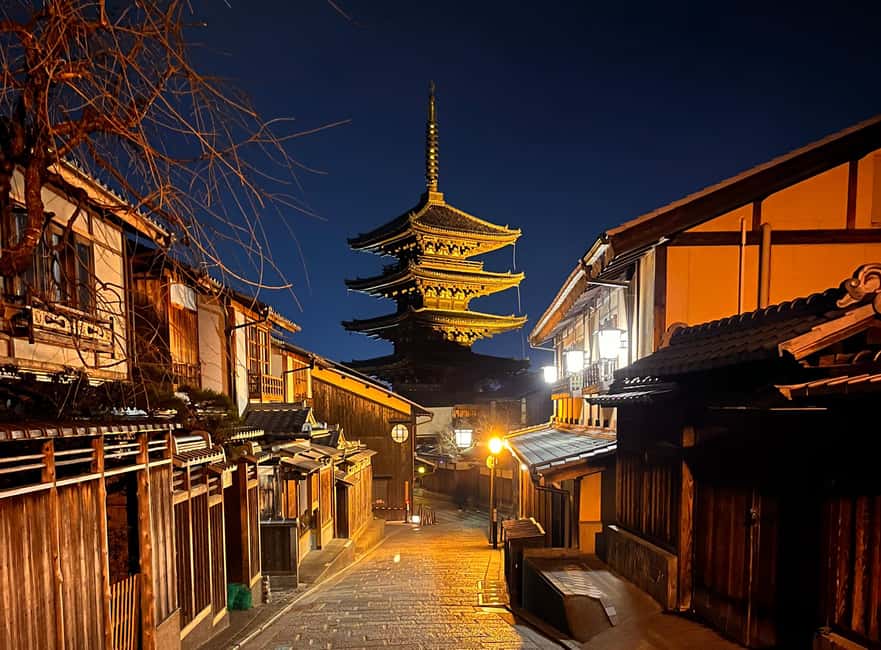
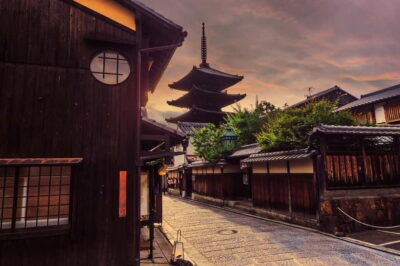
The Buddhist pagoda is one of the route’s most memorable visual stops. It is seen from outside the geisha district and looks especially striking after dark, when its form is picked out against the surrounding streets.
Several guides have made the pagoda a high point of the walk, and I can understand why. It gives the tour a strong visual pause after the narrower geisha lanes. You get a chance to take photographs, listen to the guide, and appreciate how religious buildings and ordinary neighborhood streets sit side by side in Kyoto.
The route also uses smaller paths and less obvious lanes. This is where a guide adds real value. You can wander through Gion independently, but it is easy to follow only the main roads and miss the connections between the district’s cultural sites. A local guide can point out details you would likely pass without noticing, then explain why they matter.
The pace is generally described as slow and comfortable. David, an older participant, found the amount of walking manageable, and Carrie described the group as moving slowly through Gion while hearing stories and anecdotes. Still, do not confuse a relaxed pace with a fully step-free route. Stairs are present, and the company specifically excludes people with mobility impairments, wheelchair users, and those using baby carriages.
More geisha district walks in Kyoto:
- Best of Kyoto: Gion, Geisha, Pagodas & Cobblestones
★ 4.9 · 2,058 reviews - Kyoto Night Foodie Tour in Gion (9+ dishes + 6 Sake tastings)
★ 5.0 · 1,762 reviews - Kyoto Gion Geisha District Walking Tour – The Stories of Geisha
★ 5.0 · 1,441 reviews - Kyoto Gion: 2-Hour Geisha Culture & History Walking Tour
★ 5.0 · 1,186 reviews
Ending at a shrine more than 1,000 years old
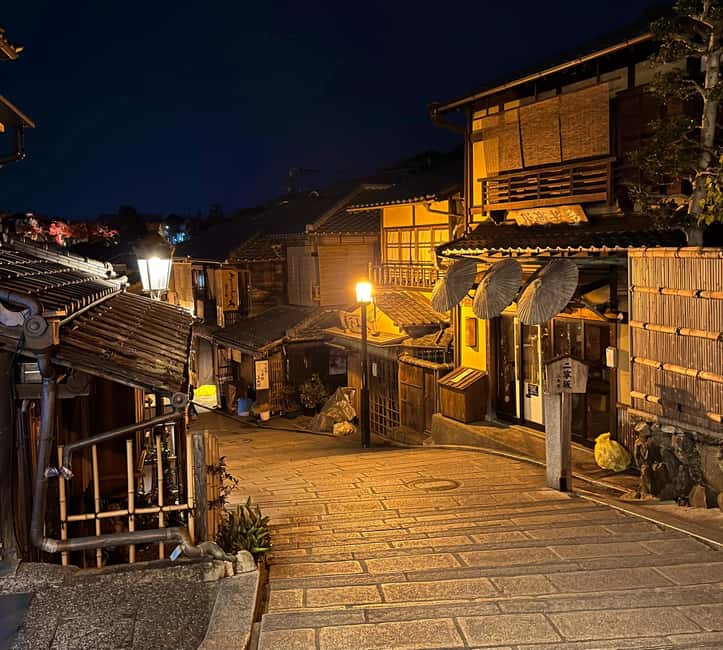
The final stop is a shrine more than 1,000 years old. It gives the tour a fitting finish, moving from Gion’s entertainment district to a place of long religious continuity.
The exact feeling of this ending will depend on the season, lighting, and group pace, but the structure of the walk is well judged. You begin with the most recognizable part of Gion, then add cultural explanation, religious sites, a pagoda, side streets, and a quieter shrine. The route grows wider in meaning as it goes.
This also makes the experience useful early in a Kyoto stay. You get an overview of Gion’s main themes, then can return later to explore particular streets or sites at your own speed. Shino and other guides have also offered daytime sightseeing suggestions and restaurant recommendations at the end, which can help you plan the next part of your visit.
What the small group adds for $24
At $24, the price is low enough that the tour works as a practical introduction rather than a major splurge. You are not paying for a meal, a performance, or entry to a private geisha house. You are paying for an English-speaking guide, a planned route, local explanation, and photography service.
The strongest value comes from the small-group format. A group of four, as one outing had, feels almost like a private walk. Even with 10 people, you have a better chance to ask about geisha customs, shrine rituals, food, or places you see along the way.
The guides also appear to bring different personalities to the route. Hina has been praised for warmth and a welcoming manner. Yuri has been described as both entertaining and well informed. Kevin’s clear English helped some groups follow detailed explanations, while Pam brought strong energy and local suggestions. That variety can make the same route feel different from one departure to the next.
The tradeoff is that this is still a short walking tour. One participant felt the information was most useful for a first-time visitor and less new for someone who already knew Gion well. If you have spent several days studying Kyoto’s geisha districts, temples, and shrine customs, you may find parts familiar.
For most first-time visitors, though, $24 is good value. The guide saves you from doing the background reading yourself and leads you to several cultural sights in one compact evening.
Nighttime atmosphere, crowds, and the February afternoon option
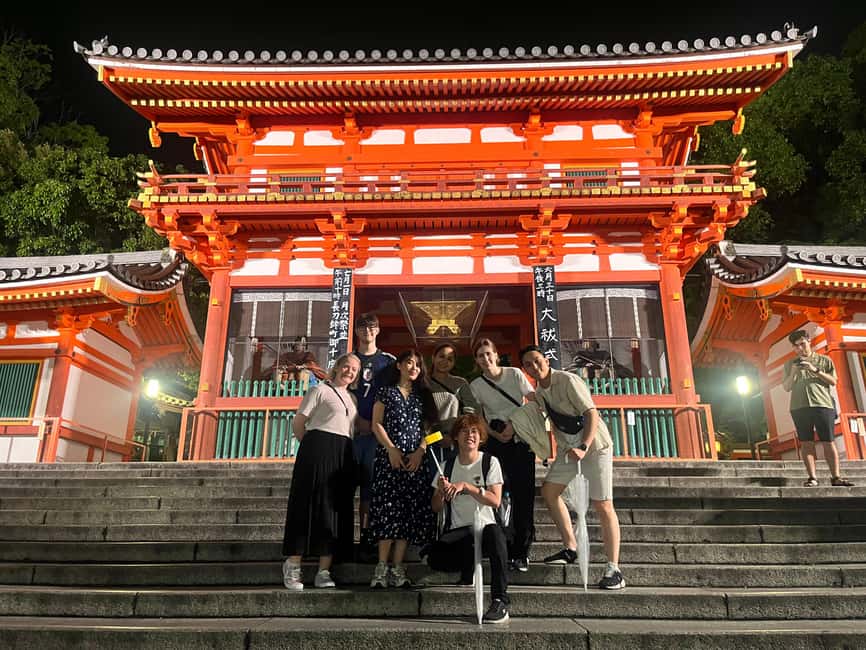
Night is the reason to choose this tour instead of simply walking Gion during the day. The streets can be quieter, and the illuminated shrines and pagoda give the area a more subdued character. Several people specifically enjoyed seeing Gion without the daytime crowds.
The word magical in the tour title is a little promotional, but the evening setting does provide something real: fewer distractions. You can focus on the wooden facades, lantern light, shrine grounds, and the guide’s stories rather than navigating a packed street.
There is one wrinkle. A popular February option begins at 3 p.m. This departure is useful if you have dinner plans or prefer to explore before full darkness. It may not deliver the same nighttime mood as a later departure, but it offers a gradual change from daylight into evening and can be easier for families or visitors who do not want a late finish.
The tour has also worked well for families with older children. One group said its 9 and 11 year olds enjoyed the stories and cultural explanations. Children under 6 do not need tickets, although the stairs and walking route still matter when deciding if the outing suits your family.
Guide quality and the human touch
The most consistent strength is the guiding. The best guides do not simply point at a building and recite dates. They explain how geisha culture fits into Gion, show visual examples, answer questions, and help you understand shrine etiquette.
Hina, Shino, Masami, Sho, Kevin, Yuri, Pam, Sora, Ricky, Wasabi, and Liki have all been singled out for different strengths. Wasabi’s Kyoto background helped with local context. Sho used photos and offered explanations about temples and shrines. Shino has been praised for clear spoken English, shrine demonstrations, food recommendations, and an engaging style.
You should still allow for some variation between guides. A walking tour depends partly on the person leading it, and the experience may feel more conversational with one guide and more lecture-based with another. The broad pattern is reassuring: the guides are friendly, patient, and willing to answer questions.
If you want the most from the walk, come with a few questions ready. Ask about maiko and geiko, the role of lanterns, shrine customs, or places to eat nearby. The small group makes those conversations possible.
Practical limits before you book
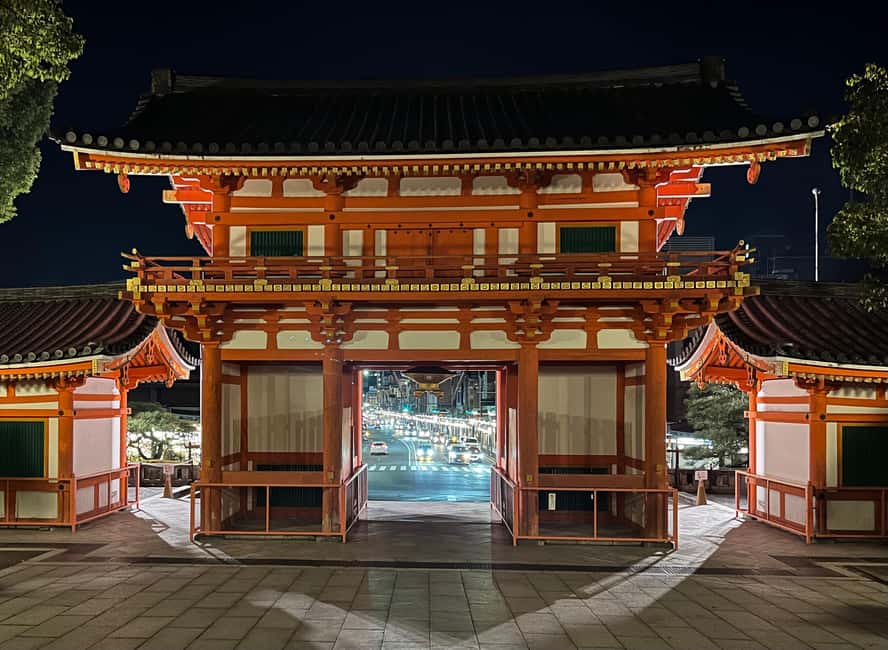
The route includes stairs, so it is not suitable for wheelchair users, baby carriages, or people with limited mobility. Babies under 1 year are also listed as unsuitable, and people with a cold should not join.
Wear shoes you can walk in comfortably and bring an extra layer in winter. One participant appreciated receiving a hand warmer, but you should not depend on that being provided. Evening temperatures can change the feel of a 100-minute walk.
Your ticket is valid only for the booked date and time. Do not simply join another departure without confirmation, since the company uses fixed group sizes. You can cancel up to 24 hours before the start for a full refund, and the reserve-now, pay-later option keeps your plans flexible.
Remember that the guide will not arrange a meeting with geisha. You may see one, but the respectful choice is to let her pass without pursuit or obstruction.
Should you book the Gion Magical Night Walking Tour?
I would book it if this is your first Kyoto visit, especially during your first few days. The tour gives you a useful reading of Gion: geisha traditions, shrine customs, Buddhist architecture, local stories, and the visual pleasure of quiet streets after dark.
It is also a good choice if you have already seen Hanamikoji by day and want a different mood. The illuminated pagoda, old shrine, and near-empty lanes can make familiar places feel new.
I would skip it if you want a formal geisha performance, a meal, or a completely step-free route. I would also think twice if you already know Gion very well and prefer wandering alone.
For $24, a 100-minute walk with an English-speaking guide, photography service, and a group capped at 10 is a strong deal. Book it for the stories and setting, not for a guaranteed geisha sighting. The real reward is learning how to look at Gion with more care.
FAQ
Where does the Gion walking tour meet?
Meet in front of Minamiza Theatre in Gion. Use the front side of the theater and look for a guide holding a TravelinGood sign.
Is the listed time the meeting time?
No. The listed time is when the group leaves the meeting point. Arrive at least five minutes before the stated start time.
How long does the tour last?
The walking tour lasts 100 minutes.
How many people can join the tour?
The tour is limited to a small group of up to 10 participants.
What language is the tour conducted in?
The live tour guide speaks English.
Does the tour guarantee a geisha sighting?
No. You might see a real geiko or maiko, but the tour is not intended for meeting geisha and no sighting is guaranteed.
What places are included along the route?
The route begins near Minamiza Theatre and includes Hanamikoji, the geisha district, a matchmaking shrine, an illuminated Buddhist pagoda, quiet paths, and a shrine more than 1,000 years old.
Is photography included?
Yes. A photography service is included.
Is the tour suitable for wheelchair users or baby carriages?
No. Stairs along the route mean it is not accessible for wheelchair users, baby carriages, or people with limited mobility.
Can I cancel the booking for a refund?
Yes. You can cancel up to 24 hours in advance for a full refund. You can also reserve now and pay later.
Just added around Kyoto
- Kyoto: Gion Night Walking Tour with Geisha Insight★ 5.0 · 39 reviews
- Kyoto: Private Customizable Day Trip by Car★ 5.0 · 38 reviews
- Kyoto: Full Day Bike Tour★ 4.9 · 39 reviews
- Private Japanese Calligraphy in Kyoto – Learn Shodō with a Master★ 5.0 · 39 reviews
- Kyoto: Gion Evening Walk with Hidden Gems, Geisha & Sake★ 5.0 · 41 reviews
- Experience a tea ceremony in an authentic tearoom, in Kyoto!★ 4.5 · 41 reviews
- Kyoto Private Photo Shoot & Tour by SnapKyoto★ 5.0 · 41 reviews
- The Way of Tea: Kyoto Crafts, Hidden Temples & Wabi-Sabi Walk★ 5.0 · 41 reviews
Geisha & Gion District Tours, compared.
Kyoto Geisha Walking Tour: Gion District & Hidden Gems
Read our review →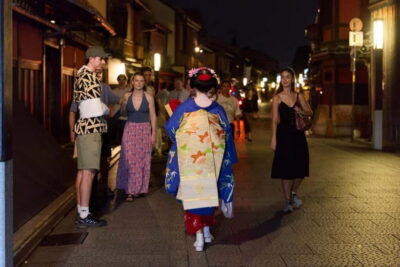
Gion Geisha District Walking Tour – Stories of Geisha
Read our review →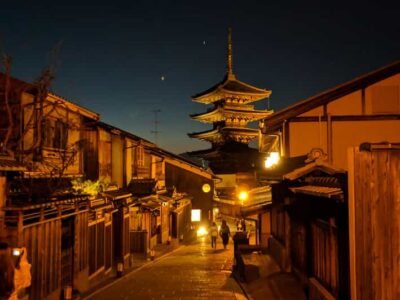
Best of Kyoto: Gion, Geisha, Pagodas & Cobblestones
Read our review →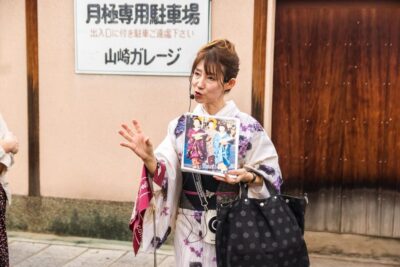

Kyoto Night Foodie Tour in Gion (9+ dishes + 6 Sake tastings)
Read our review →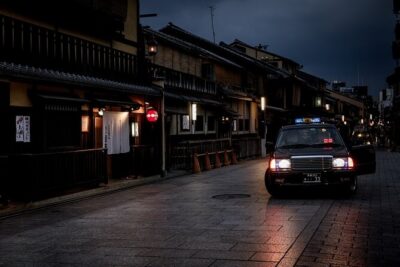
Kyoto Gion Geisha District Walking Tour – The Stories of Geisha
Read our review →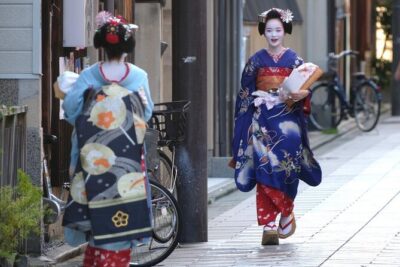
Kyoto Gion: 2-Hour Geisha Culture & History Walking Tour
Read our review →
Chopsticks Making Workshop in Gion with Engraving Option
Read our review →Browse the lists this tour appears in