
Reviewed · GEISHA & GION DISTRICT TOURS
Night Walk in Gion: Kyoto’s Geisha District
Gion changes after sunset. This 100-minute walk gives you a respectful introduction to Kyoto’s geiko and maiko culture while leading you through the district’s old streets, canals, and tea-house lanes. I especially like the local insight from guides such as Mia, Mie, Chako, and Mai, plus the clear advice on how to behave when you encounter geiko or maiko. The main consideration is that sightings are never guaranteed, and the walk is not a good fit for anyone with mobility limitations.
The $21 price is fair for a licensed English-speaking guide and a focused look at one of Kyoto’s most confusing districts. I also like that the tour begins near Gion Shijo Station, so you can reach it easily without paying for a separate transfer. Just remember that this is an outdoor walking experience, not a visit inside a geisha house, and video recording is not allowed.
In This Review
- Key points before you book
- Meeting near Gion Shijo Station
- Walking Gion’s classic lanes after dark
- Understanding geiko, maiko, and the work behind the appearance
- Sightings are possible, but keep your expectations sensible
- Why the guide matters so much
- The $21 price and what you receive
- Choosing the right starting time and pace
- Who will enjoy this walk most?
- Practical details for a respectful evening
- Should you book Night Walk in Gion?
- FAQ
- How long does the Night Walk in Gion last?
- What language is the tour conducted in?
- Where does the tour meet?
- Is transportation included?
- Will I definitely see a geiko or maiko?
- Can I record video during the walk?
- Is the walk suitable for people with mobility impairments?
- Can I cancel the booking?
Key points before you book
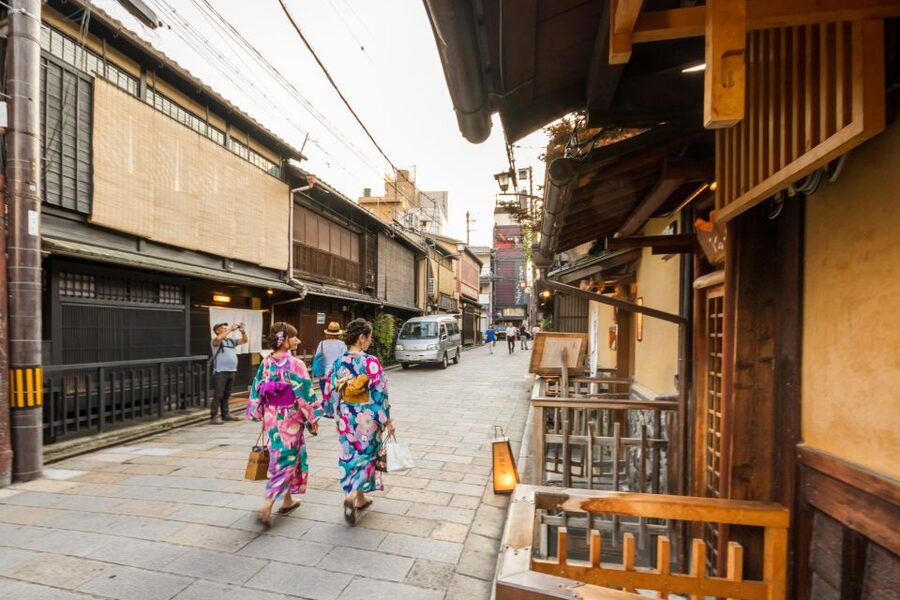
- Nighttime Gion feels more atmospheric: Classic lanes, a stream, wooden facades, and softly lit streets create a memorable setting after dark.
- The cultural explanation is the real prize: You learn about geiko and maiko training, kimono, hairstyles, rules, tea-house life, and daily routines.
- Sightings can be excellent but are not promised: Some groups see several geiko and maiko, while others may see none.
- Respect is built into the experience: Guides explain how to observe quietly, bow, greet, and avoid blocking or photographing people.
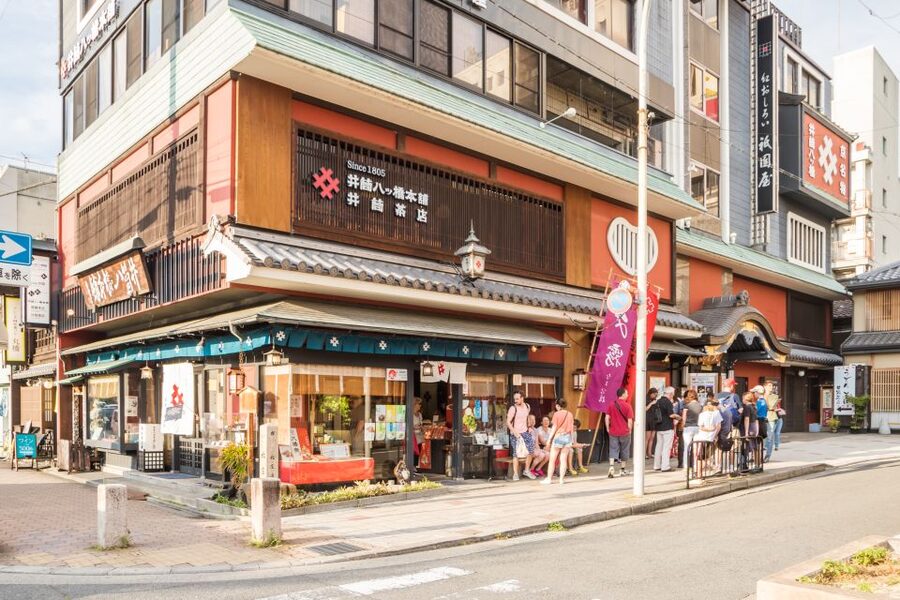
- The meeting point is easy to find: Start in front of Gion Omoide Museum, connected to the Izutsu Yatsuhashi pastry shop.
- It suits curious walkers: You need to cover old streets on foot for about 100 minutes, often at an easy but steady pace.
Meeting near Gion Shijo Station
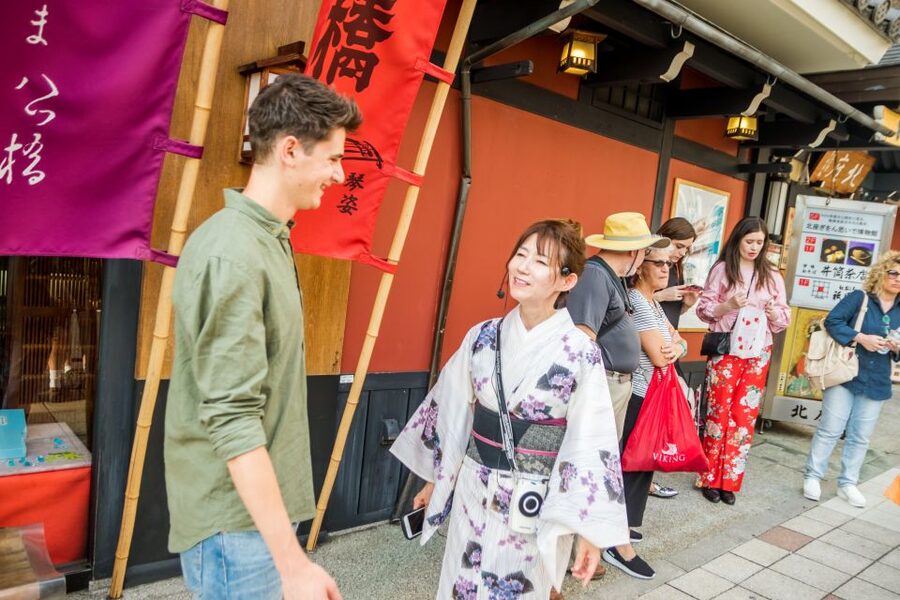
The tour starts in front of Gion Omoide Museum, which is connected to the Izutsu Yatsuhashi pastry shop. The coordinates are 35.0044519, 135.7723814. That detail matters because Gion has many small lanes and several places that look alike, especially after dark.
I would arrive a little early and use the station area for a quick bathroom stop or snack. Transportation to the meeting point is not included, and there is no hotel pick-up or drop-off, so you need to make your own way there.
The opening moments are useful for getting oriented. Gion is not simply one street lined with attractions. It is a working district with private homes, restaurants, tea houses, and narrow passages where people go about their evening business. A guide helps you understand which places are meant for public viewing and which are not.
That distinction is central to this walk. You are not being promised access to a boarding house or tea house. Instead, you are being shown how the district works from its public streets.
More Walking Tours in Kyoto
- Kyoto Geisha Walking Tour: Gion District & Hidden Gems
★ 4.7 · 3,273 reviews - Kyoto: Gion Magical Night Walking Tour with Geisha Trivia
★ 4.9 · 2,393 reviews - Kyoto: Gion Geisha District Walking Tour – Stories of Geisha
★ 4.7 · 2,187 reviews
Walking Gion’s classic lanes after dark
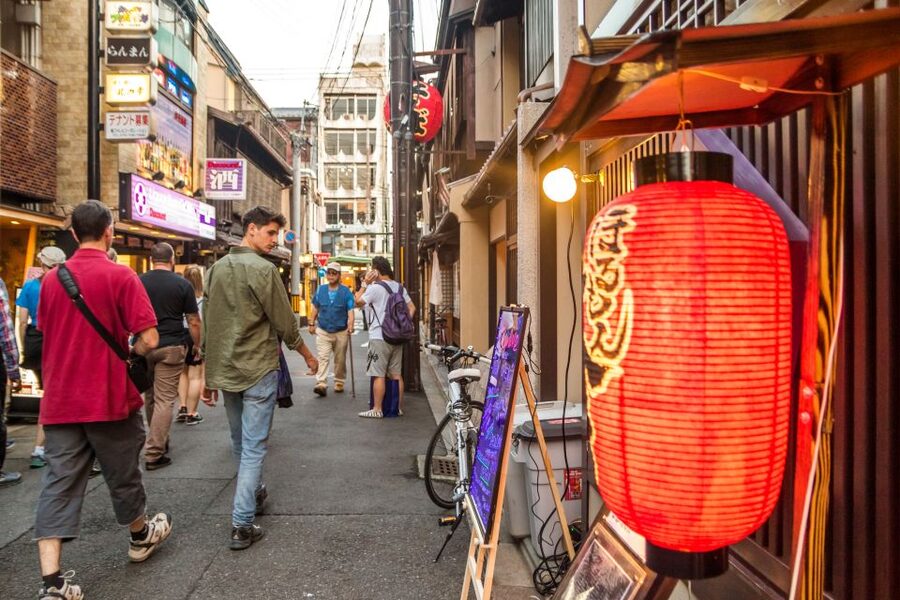
The route takes you along traditional streets in the geisha districts, including picturesque stretches beside a stream. This is the part of the experience that connects the real Gion with the image many people know from Memoirs of a Geisha. The scenery has the same broad ingredients: wooden architecture, water, lanterns, and narrow lanes, though the district is a living neighborhood rather than a film set.
At night, the details are easier to appreciate. You are less distracted by the daytime rush, and the soft light makes the old streets feel more intimate. The trade-off is that low light can make uneven paving and narrow sidewalks harder to manage.
The guide does more than point out pretty buildings. You learn how to read the area, including the difference between an ordinary tea shop and a formal Tea House connected to geiko and maiko entertainment. That distinction is easy to miss on your own, since the most important places are often discreet and marked in ways that do not make sense to first-time visitors.
Some walks also include a quieter part of the district or nearby Pontocho. The exact experience can vary with the evening’s conditions and local activity, but the idea is consistent: move away from the thickest crowds and see the streets where the district’s character is easier to notice.
Understanding geiko, maiko, and the work behind the appearance
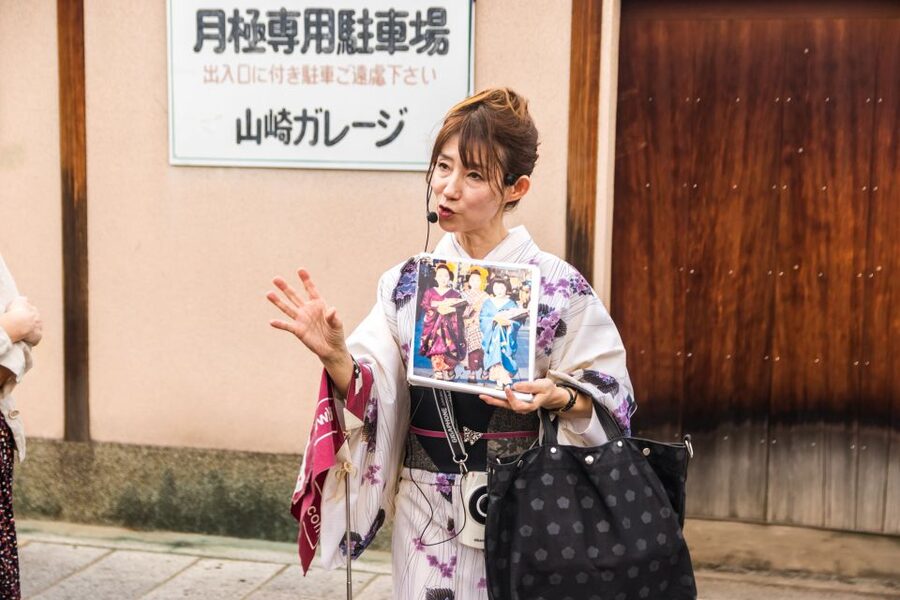
The strongest part of the walk is the explanation of geiko and maiko life. In Kyoto, geiko is the local term commonly used for a professional entertainer trained in traditional arts, while maiko are apprentices. The guide explains this world in practical terms rather than reducing it to costumes and makeup.
You learn about:
- Kimono and accessories: How clothing, colors, and ornaments help show a maiko’s stage of training.
- Hairstyles: Why the elaborate hair arrangements are part of the visual language of the profession.
- Training: The long preparation involved in music, dance, conversation, and traditional etiquette.
- Daily life: How geiko and maiko move between their boarding houses and evening appointments.
- Tea-house culture: Why these private venues are different from ordinary restaurants or cafés.
- Rules of conduct: How to keep a respectful distance and avoid treating people as scenery.
Guides often bring visual aids or photographs to make these details easier to follow. Mie, for example, was praised for carrying a file of photographs and charts, along with small cultural facts and even Japanese slang. That kind of preparation can make a big difference, especially if you have only seen geisha culture through movies or photographs.
The best guides also add a human element. Mia was repeatedly described as funny, warm, and deeply respectful of geiko and maiko. Chako was noted for her passion and care with questions, while Mai kept children engaged with humor. The guide you receive will vary, but the experience depends heavily on that person’s ability to explain sensitive customs clearly.
Sightings are possible, but keep your expectations sensible
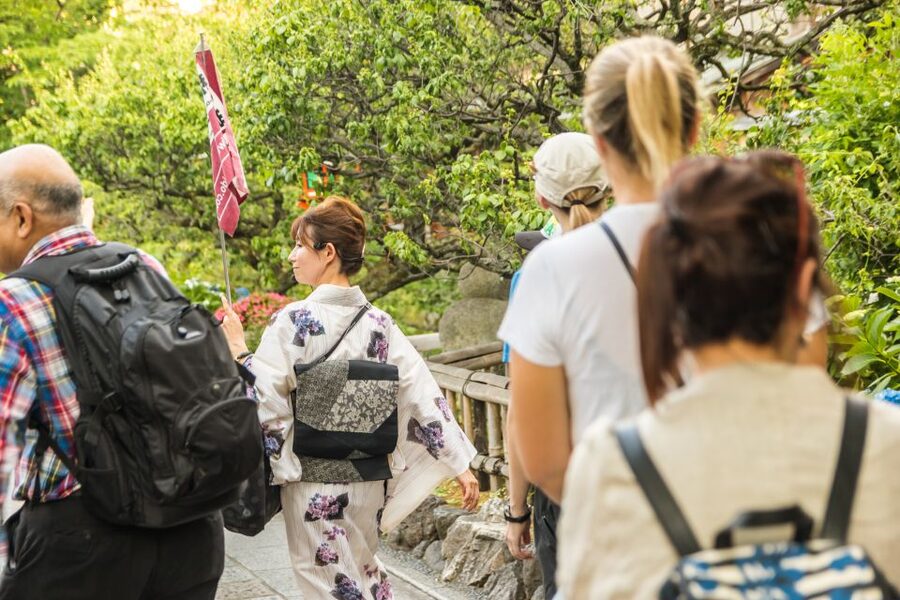
Many evenings produce memorable encounters. Some groups have seen three geiko, several maiko, or even more than eight people in one night. One group saw six maiko and one geiko, while another saw four maiko and one geiko. A few people even saw a maiko stop briefly to speak with the guide.
Those are lucky outcomes, not a promise. Geiko and maiko have appointments to reach, and their schedules are private. They may pass quickly, travel by taxi, or use side streets. On some evenings, you might see no one at all.
This is why I would not book the walk as a guaranteed photo opportunity. Book it to understand Gion, then treat an encounter as an extra gift. You will have a better evening and behave more appropriately.
The guide’s local connections may help. Several guides, including Mia and Mie, were described as knowing geiko or maiko personally or recognizing them by name. That can add context when someone passes by, but it does not mean the guide can arrange a meeting or interrupt an appointment.
If you do see someone, follow the instructions carefully. The group may be asked to stand aside, greet quietly, bow, and watch without crowding the street. Avoid calling out, touching clothing, blocking the way, or raising your phone directly in someone’s face. Video recording is specifically not allowed, and the guidance around still photography is deliberately cautious because the district has dealt with repeated tourist harassment.
The respectful approach is not a minor side note. It is one of the main reasons this tour works better than wandering through Gion with a phone held up like a hunting license.
More geisha district walks in Kyoto:
- Best of Kyoto: Gion, Geisha, Pagodas & Cobblestones
★ 4.9 · 2,058 reviews - Kyoto Night Foodie Tour in Gion (9+ dishes + 6 Sake tastings)
★ 5.0 · 1,762 reviews - Kyoto Gion Geisha District Walking Tour – The Stories of Geisha
★ 5.0 · 1,441 reviews - Kyoto Gion: 2-Hour Geisha Culture & History Walking Tour
★ 5.0 · 1,186 reviews
Why the guide matters so much
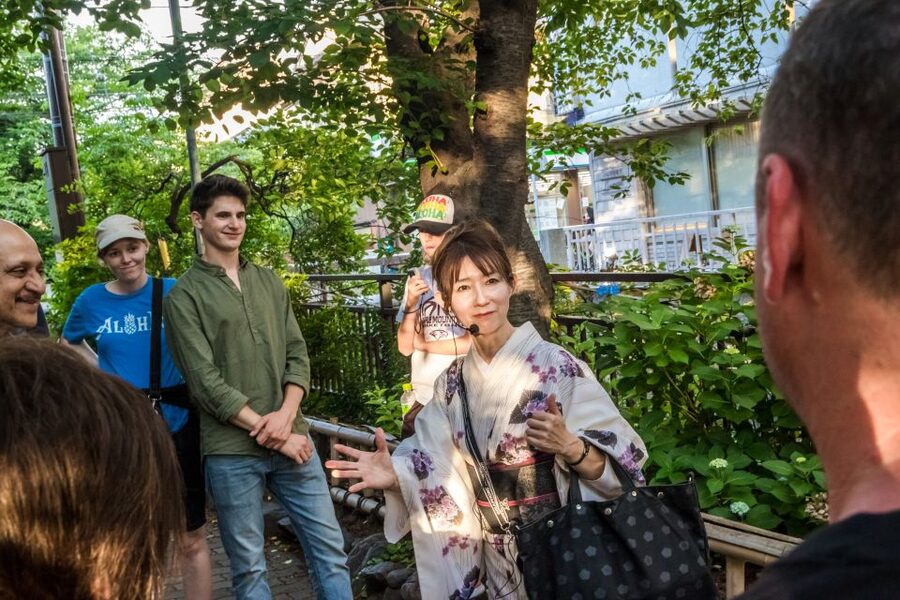
Gion is easy to visit and hard to understand. You can walk its streets alone, but you may not know what you are seeing or how much of the district is private. A good English-speaking guide supplies the missing context without turning the evening into a lecture.
The best feedback centers on guides who combine facts with personality. Mia was praised for her humor and detailed cultural explanations. Mie was noted for polished English, personal anecdotes, photos, and a lively conversational style. Chako was appreciated for patience, passion, and clear answers. Toko was singled out for explaining both the district’s past and its current situation.
That range tells you something useful: this is not a fully automated audio walk. The guide shapes the experience. If your guide is engaging, the 100 minutes pass quickly. If you are hoping to ask questions, this format is much more useful than a self-guided route.
The content also works for families. Children who were initially unsure about the subject reportedly became interested once the guide used humor and stories. Another family brought three children, including one in a stroller, and found the outing manageable. Still, the official information says the activity is not suitable for people with mobility impairments, so families should judge their own needs rather than assume every stroller or walking aid will work comfortably on old streets.
The $21 price and what you receive
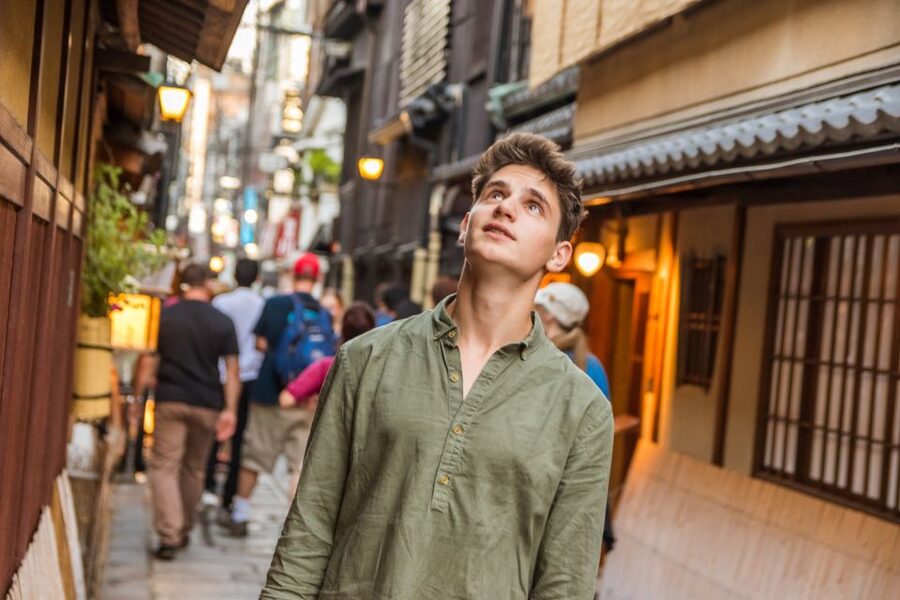
At $21 per person, this is a modestly priced cultural walk. You receive a professional English-speaking guide for about 100 minutes, but no transport, food, drinks, admission tickets, or private access to a tea house.
I think the value is strongest if you are already planning to visit Gion. You can walk the district for free, but the guide gives you background that would be difficult to gather from signs or casual observation. You also get practical etiquette advice, which helps you avoid the most common mistakes around geiko and maiko.
The value is less clear if you want an exclusive or luxurious evening. This is not a private tour, and the price does not include a performance, a meal, or a meeting with a geiko. It is a walking lesson in place and culture.
The tour has a 4.5 rating from more than 2,000 bookings, which suggests strong overall satisfaction. The praise is especially consistent around the guides’ English, humor, cultural detail, and respectful handling of sightings. The occasional reservation is also clear: some people felt the guide kept the group too far from geiko and maiko. I see that distance as a necessary part of responsible tourism, but it may disappoint anyone expecting a close-up encounter.
Choosing the right starting time and pace
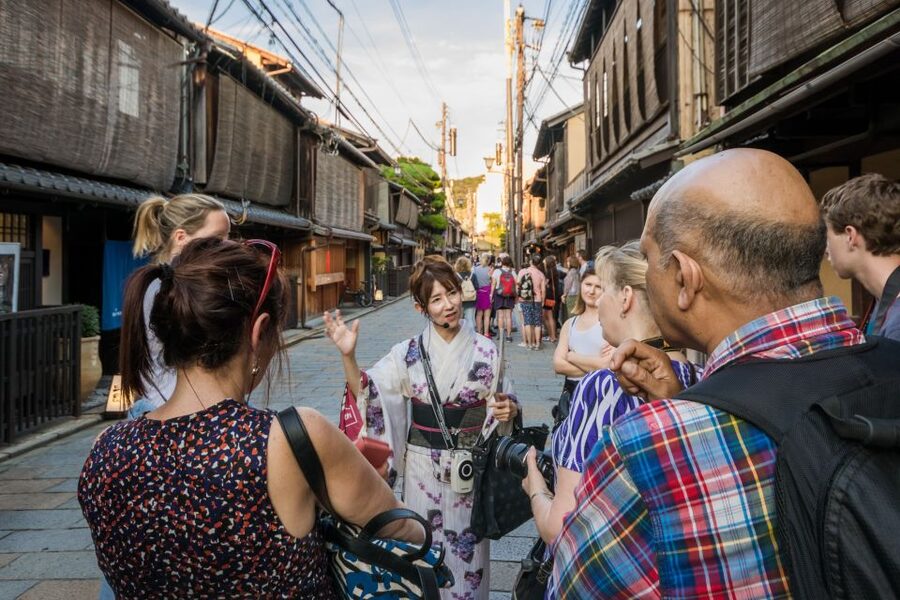
The duration is listed as 100 minutes, although the description also refers to it as a two-hour guided walk. Plan for roughly an hour and forty minutes, with a little flexibility around crossings, group movement, and encounters along the way.
Starting after dark helps with the mood and can make summer sightseeing more comfortable. One evening began at 5:30 p.m., which was appreciated as a way to avoid the heat and daytime crowds. Exact starting times vary, so check availability for your date.
Wear comfortable shoes. You will be outside for the full activity, and the route includes traditional streets rather than smooth indoor corridors. Bring rain protection if the forecast is poor. Guides such as Chako and Mia kept groups going during rainy walks, but wet weather can still reduce visibility and make paving slippery.
The walk is conducted in English. That is useful not only for the facts but also for the small instructions that matter when the group encounters someone heading to an appointment.
Who will enjoy this walk most?
I would recommend it to you if:
- You want cultural context instead of only scenic photographs.
- You are curious about the difference between geiko and maiko.
- You want to visit Gion without acting like an intrusive photographer.
- You enjoy walking through historic neighborhoods at a relaxed pace.
- You are visiting Kyoto for the first time and want help reading the district.
- You are traveling with older children who enjoy stories, costumes, and unusual traditions.
It may not suit you if you need step-free access or find 100 minutes of outdoor walking difficult. It is also a poor match if your main goal is a guaranteed geisha sighting, a private performance, or close-up pictures.
I would place this near the start of a Kyoto stay if possible. The explanations can help you make sense of later visits to Gion and Pontocho. It also works well on a final evening, when the lit streets provide a memorable farewell to the city.
Practical details for a respectful evening
Reserve online with the option to pay later if you want to keep your plans flexible. Free cancellation is available up to 24 hours before the activity for a full refund. A valid ID is required for a child discount.
The guide is the only included service, so arrange your route to and from Gion Shijo Station yourself. There is no hotel collection or return transfer.
Most important, listen when the guide explains local etiquette. Do not record video, and be prepared for the group to keep its distance from geiko and maiko. The tour’s purpose is to help you understand the district, not to turn working people into a street show.
Should you book Night Walk in Gion?
Yes, if you want an affordable, well-explained introduction to Kyoto’s geiko and maiko culture. The strongest reasons to book are the enthusiastic English-speaking guides, the atmospheric evening setting, and the clear advice on respectful behavior.
Book it with realistic expectations. You may see several geiko and maiko, or you may see none. You will not enter a boarding house or receive a guaranteed performance. At $21, though, the cultural explanation and guided walk offer solid value, especially for first-time visitors who want more than a pretty stroll through Gion.
FAQ
How long does the Night Walk in Gion last?
The activity lasts 100 minutes. The description also refers to it as a two-hour guided walk, so allow a little flexibility around the scheduled duration.
What language is the tour conducted in?
The tour is conducted in English by a live, professional English-speaking guide.
Where does the tour meet?
The meeting point is in front of Gion Omoide Museum, connected to the Izutsu Yatsuhashi pastry shop. The coordinates are 35.0044519, 135.7723814.
Is transportation included?
No. Transportation to and from the attractions is not included, and there is no hotel pick-up or drop-off.
Will I definitely see a geiko or maiko?
No. Encounters often happen, but sightings are not guaranteed because geiko and maiko follow private schedules.
Can I record video during the walk?
No. Video recording is not allowed. You should also follow the guide’s instructions about respectful observation and photography during any encounter.
Is the walk suitable for people with mobility impairments?
No. The activity is listed as unsuitable for people with mobility impairments because it involves walking through Gion’s traditional streets.
Can I cancel the booking?
Yes. You can cancel up to 24 hours in advance for a full refund. A reserve-now, pay-later option is also available.
Just added around Kyoto
- Kyoto: Private Customizable Day Trip by Car★ 5.0 · 38 reviews
- Kyoto: Gion Night Walking Tour with Geisha Insight★ 5.0 · 39 reviews
- Kyoto: Full Day Bike Tour★ 4.9 · 39 reviews
- Private Japanese Calligraphy in Kyoto – Learn Shodō with a Master★ 5.0 · 39 reviews
- Kyoto: Gion Evening Walk with Hidden Gems, Geisha & Sake★ 5.0 · 41 reviews
- Experience a tea ceremony in an authentic tearoom, in Kyoto!★ 4.5 · 41 reviews
- Kyoto Private Photo Shoot & Tour by SnapKyoto★ 5.0 · 41 reviews
- The Way of Tea: Kyoto Crafts, Hidden Temples & Wabi-Sabi Walk★ 5.0 · 41 reviews
Geisha & Gion District Tours, compared.

Kyoto Geisha Walking Tour: Gion District & Hidden Gems
Read our review →
Gion Magical Night Walking Tour with Geisha Trivia
Read our review →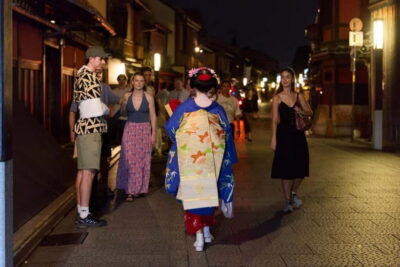
Gion Geisha District Walking Tour – Stories of Geisha
Read our review →
Best of Kyoto: Gion, Geisha, Pagodas & Cobblestones
Read our review →
Kyoto Night Foodie Tour in Gion (9+ dishes + 6 Sake tastings)
Read our review →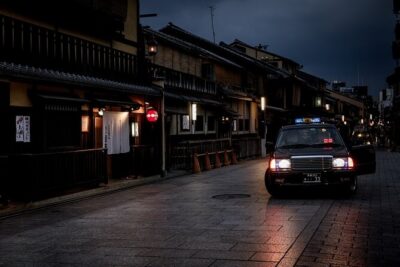
Kyoto Gion Geisha District Walking Tour – The Stories of Geisha
Read our review →
Kyoto Gion: 2-Hour Geisha Culture & History Walking Tour
Read our review →
Chopsticks Making Workshop in Gion with Engraving Option
Read our review →Browse the lists this tour appears in