
Reviewed · JAPANESE CALLIGRAPHY CLASSES
Private Japanese Calligraphy in Kyoto – Learn Shodō with a Master
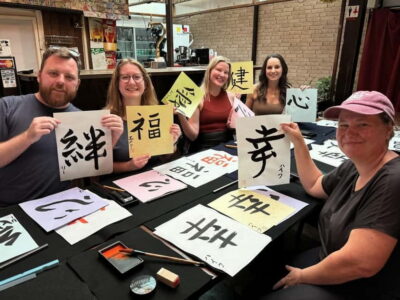
Brushes make quiet music. This private Kyoto calligraphy class brings you into a local home near Nijo Castle, where Aya, a teacher with more than 55 years of practice, guides you through the basics of Shodō. I especially like the one-group-only format, which gives you direct help instead of making you follow a crowded demonstration. I also like that you leave with artwork you created yourself, not a factory-made souvenir.
The main drawback is the short one-hour format. Beginners who want to write both a favorite kanji and a Japanese version of their name may feel pressed for time. You also need clean socks for the tatami room, and the meeting point can be confusing if you follow the wrong Google Maps street-view image.
In This Review
- Quick reasons to consider this Kyoto calligraphy class
- What Shodō means beyond writing Japanese characters
- Arriving near Nijo Castle
- Entering the private Kyoto home
- The one-hour lesson, step by step
- Why the private format is worth paying for
- Language, children, and group suitability
- The keepsake is the real souvenir
- What could be improved
- Booking advice for a better session
- Should you book this Kyoto calligraphy experience?
- FAQ
- Where does the calligraphy class take place?
- How long does the experience last?
- Is the class private?
- What does the price include?
- Do I need previous calligraphy experience?
- Can I write my name in Japanese?
- Are children allowed to participate?
- What should I wear?
- What languages are available?
- What happens if I arrive late?
Quick reasons to consider this Kyoto calligraphy class
- A true private lesson: Only your group participates, so Aya can adjust her guidance to your pace and brush control.
- A master teacher: Aya has practiced calligraphy for over 55 years and explains both technique and the meaning behind the art.
- A home setting near Nijo Castle: The class takes place in a private Kyoto home about 200 meters west of the castle.
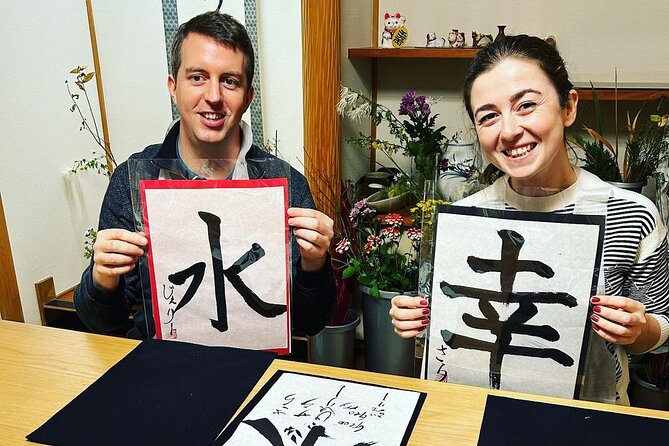
- Personal artwork to keep: You choose a kanji character and can write your name in Japanese, creating a useful souvenir.
- Good for first-timers: The class supplies the brushes, ink, paper, and other tools, so you need no prior experience.
- A practical rainy-day plan: The indoor activity lasts about an hour and is easy to add between sightseeing stops in central Kyoto.
What Shodō means beyond writing Japanese characters
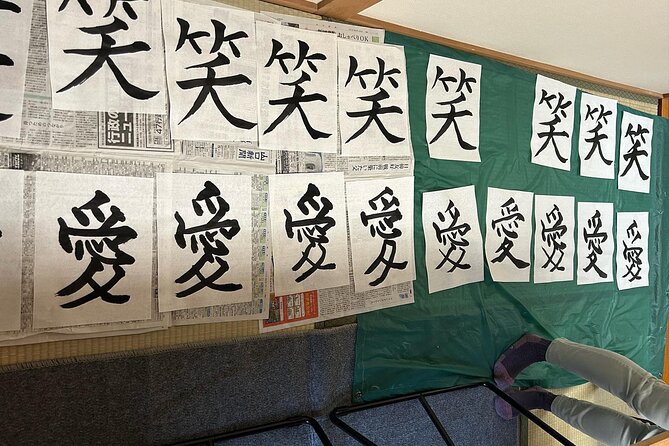
Japanese calligraphy is called Shodō, which means the way of writing. It is not simply a matter of copying symbols until they look attractive. Brush pressure, speed, pauses, balance, and the order of each stroke all affect the final character.
That makes this class more interesting than a quick craft session. You learn that the brush carries your movement and state of mind onto the paper. Even a simple kanji can look stiff, light, forceful, calm, or expressive depending on how you handle it.
Aya’s long experience matters here. You are not just handed a brush and told to copy a sample. She demonstrates the correct movements, watches your attempts, and offers patient corrections. Several people particularly valued her calm encouragement, which is important when your first characters look more like nervous black grass than elegant Japanese writing.
You do not need artistic confidence. In fact, this is best approached with modest expectations. Your finished work may not look like a master’s piece, but that is part of its value. It records your own hand at a specific moment in Kyoto.
More Calligraphy Classes in Kyoto
- Kyoto: Calligraphy class at Buddhist temple in city center
★ 5.0 · 167 reviews - Kyoto: Japanese Calligraphy Class
★ 4.8 · 89 reviews - Kyoto: Japanese Calligraphy Workshop
★ 4.7 · 84 reviews
Arriving near Nijo Castle
The class takes place at SAKURA Experience Japanese Culture Nijo Home in Nakagyo Ward, central Kyoto. The address is 660 Izumicho, and the home is about 200 meters straight west from the front of Nijo Castle.
That location is useful if you already plan to visit the castle. You can combine the calligraphy session with sightseeing in the surrounding area rather than crossing the city for a one-hour activity. The meeting point is near public transportation, and the activity begins and ends at the same location.
Allow extra time to find the house. The map pin is reported to be accurate, but the street-view image may show a different place. This has caused confusion for some people, especially those trying to match building photos while walking.
My practical advice is simple: use the exact map pin, check the address before leaving, and keep the host’s contact information available. The provider sends a Google Maps link and, in some cases, a photo of the entrance. Do not wait until the scheduled start time to begin searching.
Late arrival is a real concern. If you arrive more than 15 minutes late, the class may not be able to begin and a refund is not offered. Public transportation delays and bad weather should be reported as soon as possible.
Entering the private Kyoto home
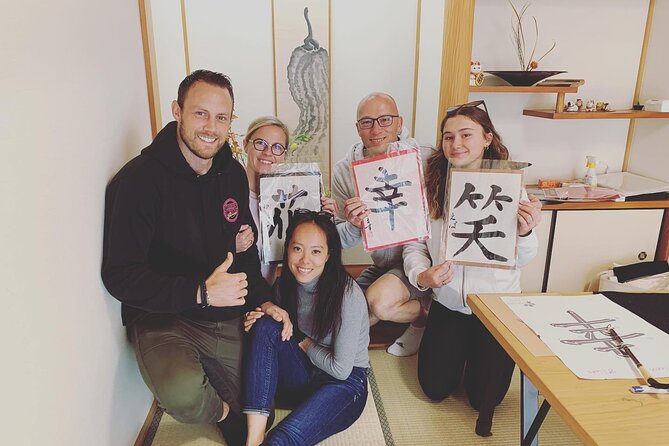
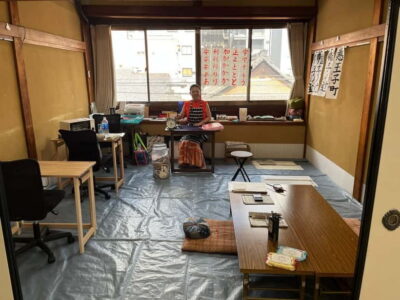
The home setting gives the class a different feel from an activity held in a large commercial studio. You enter a tatami room arranged for calligraphy, remove the sense of being in a tourist production line, and settle into a quieter space.
You must wear or bring clean socks. Bare feet are not permitted on the tatami, and this small rule is part of showing respect for the room and Japanese customs. Pack a pair in your day bag if you are wearing sandals.
Aya’s husband, Manabu, sometimes helps welcome participants and take photographs. Several people appreciated the friendly hosting, tea, traditional Japanese sweets, and relaxed conversation. The setting can feel personal, particularly if you enjoy meeting local residents as much as learning the craft.
That intimacy has a tradeoff. A private home is not the same as a museum or formal cultural center. The experience depends heavily on the hosts and on how actively you ask questions. If you want a polished lecture with a long presentation on Japanese art, this one-hour visit may feel light.
The one-hour lesson, step by step
The session begins with an introduction to Japanese calligraphy and its background. You learn about the art, the role of brush movements, and the way Japanese students practice characters.
The exact balance between explanation and practice can vary. Some people received a clear history lesson, while one participant felt the class moved quickly and relied too much on written information in a leaflet. If the cultural background matters to you, ask questions early rather than waiting until the last few minutes.
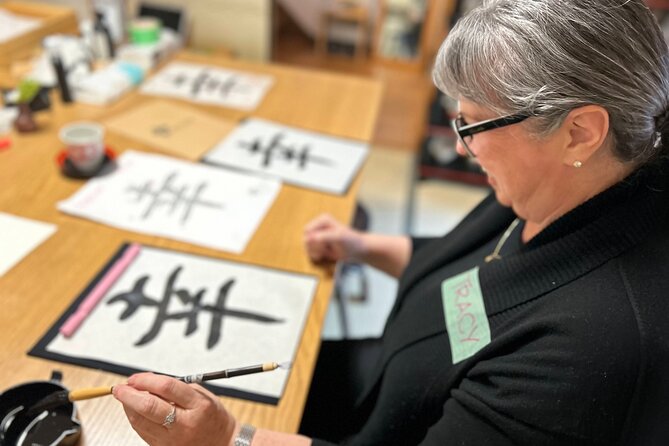
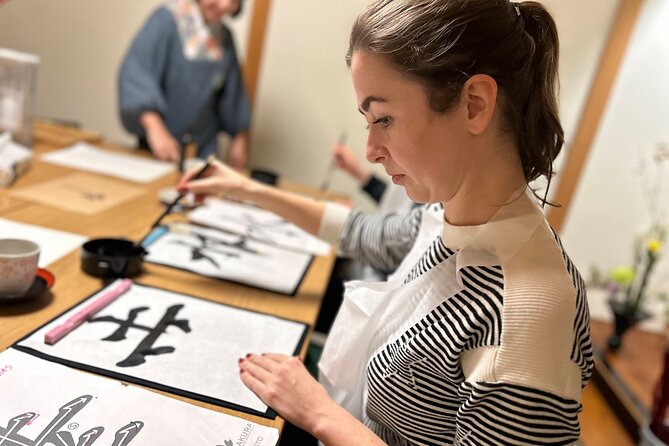
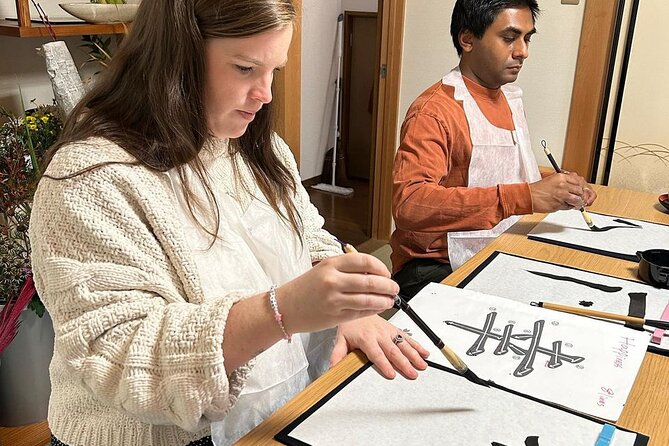
Next comes brush instruction. You learn how to hold the brush and make the basic strokes with the right pressure and direction. The teacher demonstrates, then lets you try. This hands-on format is helpful because calligraphy is difficult to understand from explanation alone.
You usually practice before making the final pieces. That practice is not wasted paper. It lets you find the brush’s movement, see how much ink it holds, and get used to the fact that you cannot erase a stroke once it lands.
The personal choice comes after you understand the basics. You select a favorite kanji character, with guidance on choosing and writing it. You can also write your name in Japanese, although the hour may not allow enough time for a long name plus several polished kanji pieces.
This is the point where time matters most. Some participants completed several pieces, including work intended as gifts for grandchildren. Others felt rushed and wished the class were longer. If you have a specific goal, tell Aya at the beginning: perhaps one carefully finished character matters more to you than a larger stack of practice sheets.
At the end, you take your artwork home. The finished pieces become a more personal souvenir than a purchased print because you remember the struggle behind each stroke. Aya may also take photographs during the class and share them with you, which gives you a record of the activity as well as the paper artwork.
A completely different kind of day out in Kyoto:
- PERFECT KYOTO 1-Day Bus Tour
★ 5.0 · 13,518 reviews - Kyoto: Fushimi Inari, Kinkakuji, Bamboo Grove 1 Day Bus Tour
★ 4.8 · 4,316 reviews - Kyoto: Tea Ceremony in a Traditional Tea House in Kiyomizu
★ 4.9 · 3,519 reviews - Kyoto Geisha Walking Tour: Gion District & Hidden Gems
★ 4.7 · 3,273 reviews
Why the private format is worth paying for
The listed price is $77.51 per person. For an activity lasting about an hour, that is not the cheapest cultural lesson in Kyoto. The price makes more sense when you consider what is included: a private teacher, all brushes and materials, personal help, a home setting, and finished work to keep.
A large group class might lower the cost, but you would likely spend more time waiting for the instructor to reach your table. Here, your companions share the teacher’s attention. That is especially useful when someone in your group is nervous, left-handed, completely new to brush writing, or eager to ask questions.
The private structure also gives you room to enjoy the social side of the visit. Couples, families with older children, and small groups can work at their own pace. People who arrived unsure of their artistic ability often found Aya patient and positive.
Still, value depends on what you want. If you mainly want to scribble a few characters and take a quick photograph, the price may feel high. If you want a focused introduction with personal instruction and a handmade keepsake, it is easier to justify.
The activity is booked an average of 54 days in advance, which suggests you should not leave it until the last day of a Kyoto stay. I would reserve it early, especially if you need a particular date or are coordinating it with a Nijo Castle visit.
Language, children, and group suitability
The class is offered in English and Japanese. English-language support has been praised as helpful, and the experience is designed for people with no previous calligraphy training.
Children under 12 cannot be accommodated under the stated policy because the class aims to maintain a quiet learning environment. Older children can enjoy it if they are motivated and able to concentrate. Families with teenagers found it a pleasant shared activity, while a younger child may find the careful pace and one-hour concentration difficult.
I would recommend it most for:
- Couples wanting a quieter cultural activity
- Solo visitors who prefer personal instruction
- Families with children aged 12 and older
- Small groups seeking a shared souvenir
- First-time visitors curious about Japanese customs
- Anyone needing an indoor plan on a rainy afternoon
I would be more cautious if your group wants a long, formal art workshop, extensive time for every member to write a name, or a fully structured lecture. This is an introduction, not a professional training course.
The keepsake is the real souvenir
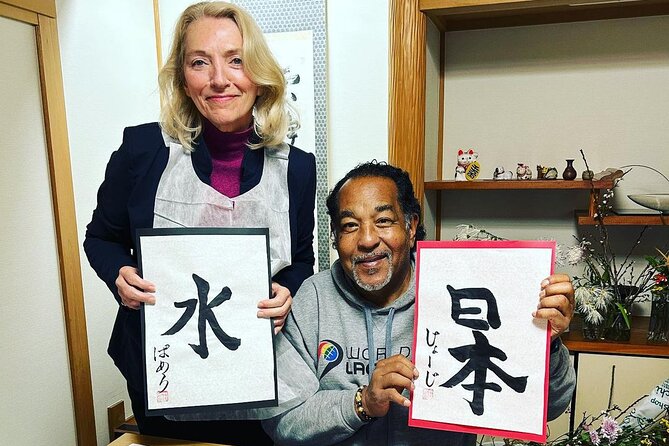
Kyoto has no shortage of shops selling attractive crafts. A calligraphy piece made during this class has a different advantage: you remember making it.
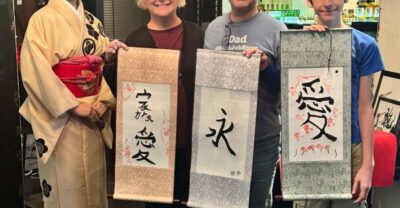
You choose a kanji with help, practice its form, and then create your own version. You may also write your name in Japanese. Some people produced several pieces for family members, while others planned to frame their work at home.
Keep your expectations realistic. Japanese calligraphy is hard, even for people familiar with the writing system. You are learning brush control in a short session, not becoming an expert. The finished result will probably show your beginner’s hand, but that can make it more meaningful.
If you want a particular phrase, research it before class and be ready to discuss it. One person chose Wabi Sabi, a difficult idea and a challenging expression to write. The teacher explained that this phrase is not necessarily displayed in Japanese homes in the same way many international visitors expect, and that other expressions may be more natural in traditional settings.
That kind of cultural correction is useful. It helps you avoid treating kanji as decorative symbols without understanding their context. Ask what your chosen character means and how it is normally used before you commit it to paper.
What could be improved
The strongest concern is time. One hour is enough for an introduction, practice, and a few finished attempts, but it leaves little margin for late arrival, long names, translation questions, or extended cultural discussion.
The experience can also feel more tourist-oriented than artistic if you expect a serious studio lesson. One person felt the class gave too little spoken background and that the hosts were ready to finish quickly once the writing stopped. That criticism is worth considering, even though most people found the instruction warm and satisfying.
The meeting point needs care. The house is close to a major landmark, but the mismatch between map pin and street-view imagery can send you in circles. This is a small problem with a simple fix: use the map location, read the directions in advance, and arrive early.
Finally, the provider’s strict late-arrival policy means this is not a good appointment to place immediately after a long train journey or a tightly timed attraction. Give yourself a buffer.
Booking advice for a better session
I would choose a time when you are not racing to another reservation. Arrive at least 10 to 15 minutes early, with clean socks and your phone ready to use the correct map link.
Think about your goal before you sit down. Do you want one beautiful kanji, your name, several gifts, or a basic cultural lesson? Tell Aya at the start so she can help you use the hour wisely.
If you are traveling with children, confirm that everyone meets the minimum age requirement. If one member of your group is especially interested in calligraphy, let that person have enough practice time rather than treating the class as a quick photo stop.
The activity has free cancellation up to 24 hours before the start time. Changes or cancellations within 24 hours are not refunded, so keep that deadline in mind when planning around Kyoto weather and transportation.
Should you book this Kyoto calligraphy experience?
I would book it if you want a personal, low-key cultural activity with something handmade to carry home. Aya’s patience, long experience, English ability, and one-group format are the main reasons this class earns its strong 4.8 rating and 97 percent recommendation level.
I would skip it if you want a longer art course or if your schedule allows no room for finding the house. For most couples, small groups, and families with older children, the $77.51 price is reasonable because you receive instruction, materials, private attention, and a personal souvenir.
Book ahead, arrive early, bring socks, and decide what you want to write. With those simple preparations, this can become one of the calmer and more memorable hours in central Kyoto.
FAQ
Where does the calligraphy class take place?
The class takes place at SAKURA Experience Japanese Culture Nijo Home, at 660 Izumicho, Nakagyo Ward, Kyoto, Japan. It is about 200 meters west of the front of Nijo Castle.
How long does the experience last?
The class lasts approximately one hour.
Is the class private?
Yes. Only your group participates, and no other guests join the activity.
What does the price include?
The price includes a private lesson with an experienced calligraphy master, use of calligraphy tools and paper, help choosing and writing a kanji character, and your finished artwork to take home.
Do I need previous calligraphy experience?
No. The class is suitable for beginners, and the teacher explains brush movements and basic techniques.
Can I write my name in Japanese?
The activity includes the option to write your name in Japanese. Because the class lasts about one hour, a long name may leave less time for other practice or finished pieces.
Are children allowed to participate?
Children under 12 cannot be accommodated. Children aged 12 and older may participate under the stated class policy.
What should I wear?
You should wear or bring clean socks. Bare feet are not permitted in the tatami room.
What languages are available?
The class is offered in English and Japanese.
What happens if I arrive late?
If you arrive more than 15 minutes late, the class may not be able to start and a refund is not available. Contact the provider as soon as possible if public transportation or weather causes a delay.
Just added around Kyoto
- Kyoto: Private Customizable Day Trip by Car★ 5.0 · 38 reviews
- Kyoto: Gion Night Walking Tour with Geisha Insight★ 5.0 · 39 reviews
- Kyoto: Full Day Bike Tour★ 4.9 · 39 reviews
- Kyoto: Gion Evening Walk with Hidden Gems, Geisha & Sake★ 5.0 · 41 reviews
- Experience a tea ceremony in an authentic tearoom, in Kyoto!★ 4.5 · 41 reviews
- Kyoto Private Photo Shoot & Tour by SnapKyoto★ 5.0 · 41 reviews
- The Way of Tea: Kyoto Crafts, Hidden Temples & Wabi-Sabi Walk★ 5.0 · 41 reviews
- Bamboo Grove Temple and Garden Views Tour★ 5.0 · 41 reviews
Japanese Calligraphy Classes, compared.
Calligraphy class at Buddhist temple in city center
Read our review →
Let’s experience calligraphy in YANAKA, Taito-ku, TOKYO !!
Read our review →
Calligraphy Workshop & Original T-Shirt Creation
Read our review →
Calligraphy Workshop & Original T-Shirt Creation
Read our review →Browse the lists this tour appears in