
Reviewed · JAPANESE CALLIGRAPHY CLASSES
Kyoto: Japanese Calligraphy Class
Brushes down, phones away, and Kyoto gets quieter.
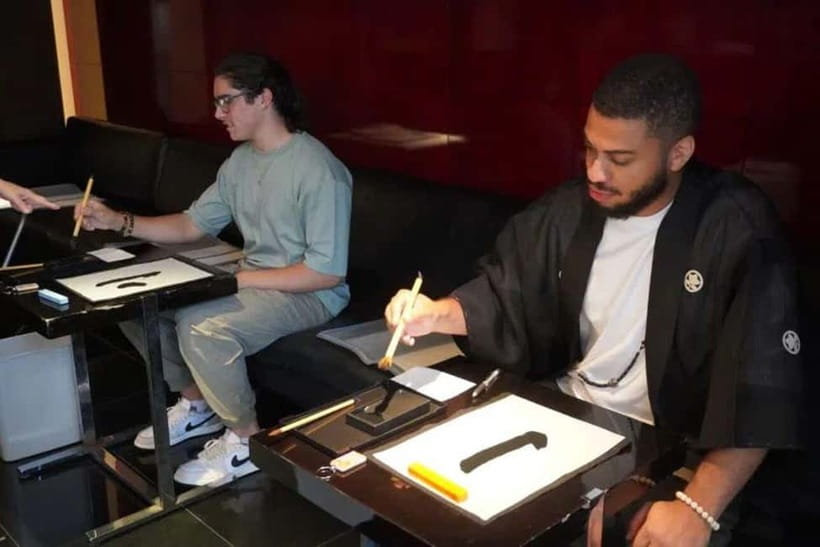
This one-hour Japanese calligraphy class offers a gentle way to meet Japanese writing up close, right in front of Kyoto Station. I like the English instruction and the chance to turn your practice into a scroll, fan, postcard, picture frame, or other souvenir. I also like that instructors such as Rena, Lana, Waka, Yoshia Kobayashi, and Kou have been praised for patient, one-to-one help.
The main consideration is the short length. You will learn the basics and make keepsakes, but this is an introduction rather than a full study of Japanese calligraphy. At $51 per person, the value depends on how much you care about personal guidance and handmade souvenirs.
In This Review
- Key points at a glance
- A calm creative stop in front of Kyoto Station
- First lesson: handling the brush and ink
- Practicing basic characters before making a souvenir
- Turning your name into Japanese characters
- Making a fan, card, frame, or scroll
- The instructors are the heart of the hour
- Who will get the most from this class?
- What $51 means in practical terms
- Booking, timing, and cancellation
- Should you book the Kyoto calligraphy class?
- FAQ
- Where is the Japanese calligraphy class held?
- How long does the class last?
- Is English instruction included?
- Do I need previous calligraphy experience?
- Can I write my own name?
- Can I take my work home?
- What kinds of souvenirs can I make?
- Are brushes, ink, and paper provided?
- Can children join the class?
- Can I cancel for a full refund?
Key points at a glance
- The class is in front of Kyoto Station, making it easy to fit around trains, shopping, or a day trip.
- English-speaking instructors explain brush use and ink application, so you do not need Japanese language skills.
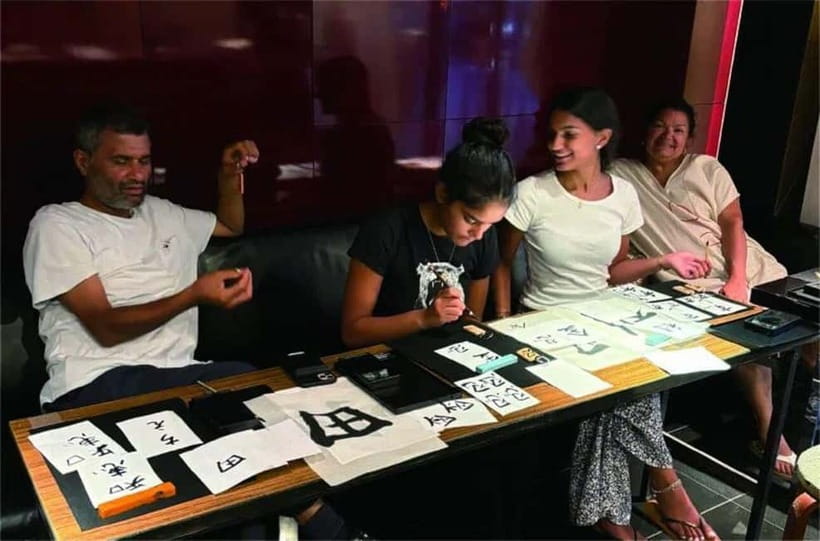
- You practice basic characters before writing your own name and favorite word in kanji and alphabets.
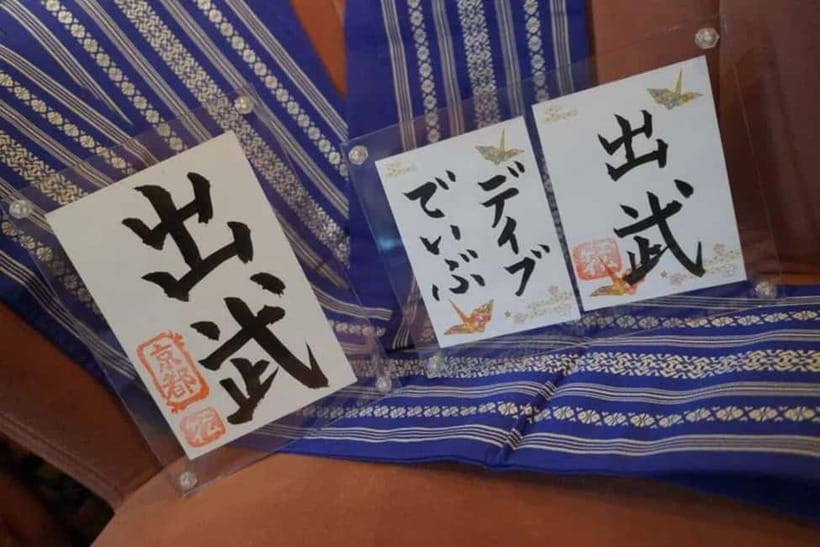
- Your name can be given a creative kanji meaning, such as Brian becoming 武礼安, linked with bravery, courtesy, and peace.
- Souvenirs are part of the activity, with options such as a Japanese fan, picture frame, postcard, stationery, or scroll.
- The one-hour format suits first-timers, families, and anyone wanting a calm break from Kyoto sightseeing.
A calm creative stop in front of Kyoto Station
Kyoto Station can feel like a small city. Trains arrive, buses leave, department stores surround you, and the large building can be a lot to take in. This class gives you a slower hour close to the station, without asking you to cross the city for a cultural activity.
The exact meeting point can vary according to the option you book, so check your confirmation carefully. The important practical point is the location: you are near Kyoto Station, not at a remote temple or workshop outside the central sightseeing area.
That makes the class useful on several kinds of days. You can schedule it before a train, after arriving in Kyoto, or during a gap between major sights. Allow time to find the correct meeting point, since being in front of the station does not necessarily mean every option meets at the same door.
The setting also helps if your itinerary is already full. A one-hour class is easier to fit in than a half-day cultural program. It gives you a real activity rather than another stop where you simply look, take a picture, and move on.
More Calligraphy Classes in Kyoto
- Kyoto: Calligraphy class at Buddhist temple in city center
★ 5.0 · 167 reviews - Kyoto: Japanese Calligraphy Workshop
★ 4.7 · 84 reviews - Kyoto: Local Home Visit and Japanese Calligraphy Class
★ 5.0 · 66 reviews
First lesson: handling the brush and ink
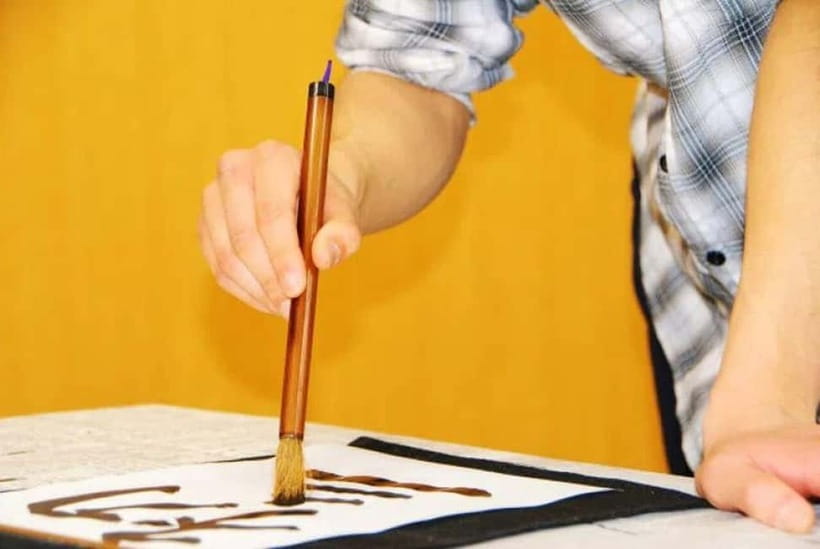
The class begins with a basic explanation of how to use the brush and apply ink. That first lesson matters more than it may sound. For a beginner, the brush does not behave like a ballpoint pen, and the amount of ink affects the appearance of every stroke.
You will be shown the fundamentals before being asked to create something for yourself. This is a good approach for people who have never tried calligraphy. The instruction is designed to make the first attempt manageable, not to assume that you already understand Japanese writing.
English guidance is included throughout. You can ask about the writing system, the meaning of characters, and how to set individual strokes. Several participants have particularly valued one-to-one correction, with Rena praised for a patient and encouraging teaching style, and Lana and Waka noted for clear explanations and close support.
Do not expect a long technical lecture. The class takes about an hour, and the schedule depends partly on how quickly your group completes each activity. The goal is to get your brush moving, not to train you as a professional calligrapher.
Practicing basic characters before making a souvenir
After the introduction, you practice basic characters. This stage gives you room to make mistakes before your work goes onto a final item. That is helpful, since the first few strokes may look less controlled than you hoped.
The practice also shows why Japanese calligraphy is more than simply copying a symbol. Stroke order, pressure, spacing, and the amount of ink all affect the final shape. You may begin by concentrating on where the brush touches the paper, then gradually pay more attention to rhythm and balance.
The activity has a quiet quality that can be welcome after Kyoto sightseeing. One participant described working at a personal pace as a useful contrast to the rush of a busy trip. You are still learning, but the task gives you something simple to focus on for a while.
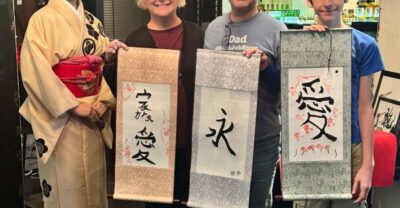
Your practice can then become a scroll featuring the kanji characters you write. The scroll gives the activity a clear finish and makes the result feel more substantial than a loose sheet of paper. Your work will still look like a beginner’s work, of course, but that is part of its charm. It records your own first attempt.
Turning your name into Japanese characters
The most personal part of the class is writing your own name and favorite word in kanji characters and alphabets. The instructors help suggest possible kanji and explain their meanings.
This is not a direct sound-for-sound translation in the same way you might write a foreign name in another alphabet. Instead, the staff can build a set of characters that reflects pronunciation and selected meanings. The examples provided show how imaginative this can be.
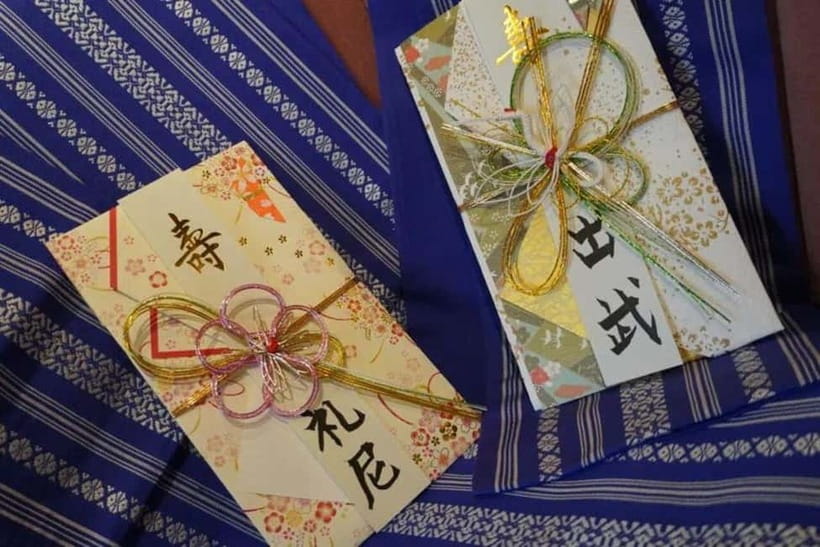
Brian may become 武礼安. The characters connect with ideas such as bravery or a martial spirit, courtesy or gratitude, and peace. Liz may become 梨図, using characters associated with a pear and a picture or drawing. These choices give you an opening to ask questions about Japanese language and culture.
I like this part because it turns a standard souvenir into something tied to you. You are not simply buying a character printed on a fan. You are discussing why certain characters may suit your name or preferred word, then writing them yourself.
Keep in mind that kanji suggestions can carry several shades of meaning. The class gives you an accessible introduction, but you should treat the result as a creative name interpretation rather than an official Japanese name. That distinction does not make it less enjoyable. It simply helps you understand what you are receiving.
A completely different kind of day out in Kyoto:
- PERFECT KYOTO 1-Day Bus Tour
★ 5.0 · 13,518 reviews - Kyoto: Fushimi Inari, Kinkakuji, Bamboo Grove 1 Day Bus Tour
★ 4.8 · 4,316 reviews - Kyoto: Tea Ceremony in a Traditional Tea House in Kiyomizu
★ 4.9 · 3,519 reviews - Kyoto Geisha Walking Tour: Gion District & Hidden Gems
★ 4.7 · 3,273 reviews
Making a fan, card, frame, or scroll
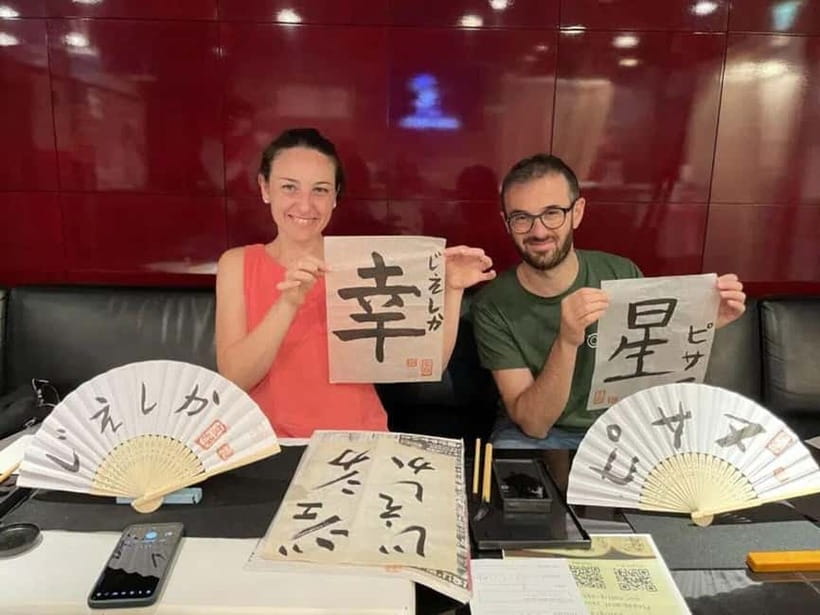
The final stage is making souvenirs to take home. The exact selection can vary, but the supplied options include a Japanese fan, picture frame, postcard, stationery, and a scroll.
This is where the $51 price needs a closer look. You are paying more than you would for a basic souvenir from a shop, but the fee includes the use of brushes, ink, and washi paper, plus some finished items. You also get instruction and help shaping your own work.
For me, the value is strongest if you prefer an activity over a purchase. A shop-bought fan may be more polished, but it will not carry the memory of learning each stroke. A handmade card or framed piece can remind you of Kyoto long after the trip, even if the writing is not perfect.
The souvenir format also makes the class work well for families. Children can see a finished result within a short session, and the keepsake gives them something concrete to carry home. The activity is not suitable for children under five, so families with younger children should plan another option.
You should also think about how carefully you need to pack the items. The information confirms that you can take the products home, but it does not specify protective packaging or luggage arrangements. If you make a scroll, fan, or frame, leave suitable space in your bag.
The instructors are the heart of the hour
The repeated praise for the staff centers on kindness, patience, and individual attention. Those qualities matter in a hands-on class, especially when you are trying something that feels unfamiliar.
Rena is specifically praised for balancing the difficult parts of the language with a friendly, accessible lesson. Lana and Waka are noted for clear explanations and one-to-one help with stroke placement. Yoshia Kobayashi and Kou are also named as instructors who helped make a session enjoyable.
You can expect encouragement as well as correction. That balance is important. Too much correction would make a short creative activity feel like a school test, while too little guidance would leave you wondering if you were doing anything correctly.
English is the stated teaching language, which removes a major barrier for international visitors. You can ask about meanings and writing without relying only on gestures. The staff may also discuss the background of calligraphy and Japanese culture, according to the experience details and participant accounts, but the main focus remains practical brushwork.
Group size can be private or small. The smaller format is especially useful if you want to ask several questions or need help with each stroke. It may also feel more relaxed for families and couples than a large class.
Who will get the most from this class?
This activity is a good match for first-time visitors who want a simple introduction to Japanese culture. You do not need previous knowledge, and the class is designed to get beginners started quickly.
It also suits people who like hands-on souvenirs. If your favorite travel memories are things you made, not only things you bought, the fan, card, stationery, frame, or scroll adds real value.
Families with children aged five and over can find it appealing, particularly if the children enjoy drawing, crafts, or learning how names work in another language. One family of four described the staff as patient and helpful throughout the session, and children have been especially pleased to take their writing home.
Couples and small groups may enjoy the personal-name activity. Each person can choose a word or name and end up with something different. It is also a thoughtful option for a rainy hour, though the available starting times should be checked before booking.
This is less suitable if you want a serious, multi-session calligraphy course. One hour allows for an introduction, practice, name writing, and souvenirs. It cannot cover the full range of Japanese scripts or develop advanced brush technique.
What $51 means in practical terms
At $51 per person, the class is not the cheapest way to spend an hour in Kyoto. You could visit many public places for less, and you can buy Japanese stationery without taking a lesson.
The price makes more sense when you count what is included: brush, ink, washi paper, English instruction, staff assistance, and some souvenirs. You are paying for the setting, the guidance, and the chance to produce an item yourself.
The strongest value comes from the personal help. A quick demonstration without correction would be easy to forget. Here, the staff can help you with the brush and explain possible kanji for your name, which makes the experience feel tailored rather than generic.
I would book it if you want a compact cultural activity near the station and care about bringing home something you made. I would skip it if your priority is the lowest possible cost or a long, serious lesson in calligraphy.
The rating of 4.8 from 89 reviews points to a very consistent experience, with particular praise for the instructors and souvenirs. Still, ratings cannot tell you how your own group will respond to the one-hour pace. If you need lots of time to work slowly, remember that the schedule may vary depending on how quickly the activities are completed.
Booking, timing, and cancellation
The class lasts about one hour, though the time can vary as activities are completed. Starting times depend on availability, so check the date and time before you build the rest of your Kyoto plans around it.
Private and small-group options are available. The meeting point may vary by option, even though the general location is in front of Kyoto Station. Read the booking details closely so you go to the right place.
You can cancel up to 24 hours in advance for a full refund. A reserve-now, pay-later option is also available, which is useful if your train plans or sightseeing schedule are still changing.
English is the listed language. Children under five are not suitable for the class.
Should you book the Kyoto calligraphy class?
Book this class if you want a friendly, low-pressure introduction to Japanese writing with a souvenir at the end. The station-front location, English instruction, and small-group or private format make it easy to add to a busy Kyoto plan.
I would especially recommend it for families with older children, couples, and first-time visitors who want more than a passive cultural display. The name-in-kanji activity gives the hour a personal touch, while the fan, card, stationery, picture frame, or scroll gives you something useful to take home.
Skip it if you are looking for advanced calligraphy training or a very long workshop. For everyone else, $51 is a fair price for an hour of instruction, individual encouragement, materials, and a handmade reminder of Kyoto.
FAQ
Where is the Japanese calligraphy class held?
The location is in front of Kyoto Station in Kyoto, Japan. The exact meeting point may vary depending on the option booked.
How long does the class last?
The class takes about one hour. The duration may vary depending on how quickly the activities are completed.
Is English instruction included?
Yes. English is the listed teaching language.
Do I need previous calligraphy experience?
No previous knowledge is required. The staff first explain how to use the brush and apply ink, then guide you through basic characters.
Can I write my own name?
Yes. You can write your name and a favorite word in kanji characters and alphabets. Staff can suggest possible kanji and explain their meanings.
Can I take my work home?
Yes. You can take your finished products home as souvenirs.
What kinds of souvenirs can I make?
Possible souvenirs include a Japanese fan, picture frame, postcard, stationery, and a scroll made with the kanji characters you write.
Are brushes, ink, and paper provided?
Yes. The class includes the use of brushes, ink, and washi paper.
Can children join the class?
Children under five are not suitable for this activity. The provided information does not set a maximum age.
Can I cancel for a full refund?
Yes. You can cancel up to 24 hours in advance for a full refund. A reserve-now, pay-later option is also available.
Just added around Kyoto
- Kyoto: Gion Night Walking Tour with Geisha Insight★ 5.0 · 39 reviews
- Kyoto: Private Customizable Day Trip by Car★ 5.0 · 38 reviews
- Kyoto: Full Day Bike Tour★ 4.9 · 39 reviews
- Private Japanese Calligraphy in Kyoto – Learn Shodō with a Master★ 5.0 · 39 reviews
- Kyoto: Gion Evening Walk with Hidden Gems, Geisha & Sake★ 5.0 · 41 reviews
- Experience a tea ceremony in an authentic tearoom, in Kyoto!★ 4.5 · 41 reviews
- Kyoto Private Photo Shoot & Tour by SnapKyoto★ 5.0 · 41 reviews
- The Way of Tea: Kyoto Crafts, Hidden Temples & Wabi-Sabi Walk★ 5.0 · 41 reviews
Japanese Calligraphy Classes, compared.
Calligraphy class at Buddhist temple in city center
Read our review →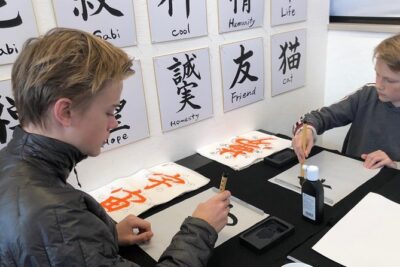
Let’s experience calligraphy in YANAKA, Taito-ku, TOKYO !!
Read our review →
Calligraphy Workshop & Original T-Shirt Creation
Read our review →
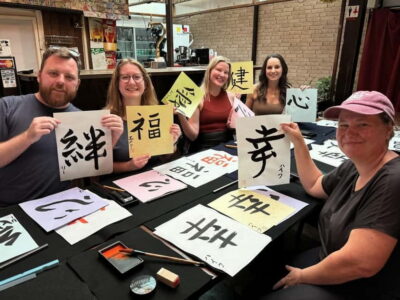
Calligraphy Workshop & Original T-Shirt Creation
Read our review →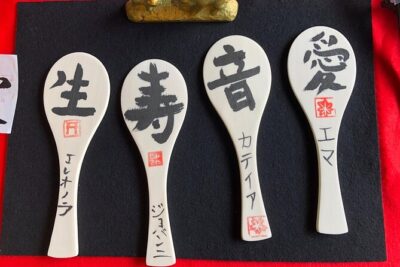
An Amazing set of Cultural experience: Kimono, Tea Ceremony and Calligraphy
Read our review →Browse the lists this tour appears in