
Reviewed · JAPANESE CALLIGRAPHY CLASSES
Kyoto: Japanese Calligraphy Workshop
Brush, ink, and a little patience go a long way. This Kyoto calligraphy workshop turns a quiet art lesson into a hands-on look at Japanese culture, with step-by-step help from an English-speaking instructor. I like the small group size, limited to 10 people, and the chance to leave with your own finished work on rice paper.
I also like the personal touch of learning to write your name in kanji, along with a calm setting at Gojo Paradiso beside the Takase River. The main consideration is time: the session lasts only one to two hours, so you will get a friendly introduction rather than a full course in shodo.
In This Review
- Key points to know
- What makes this Kyoto calligraphy class worth your time
- Arriving at Gojo Paradiso beside the Takase River
- The opening lesson: culture before technique
- Practicing basic strokes before the kanji
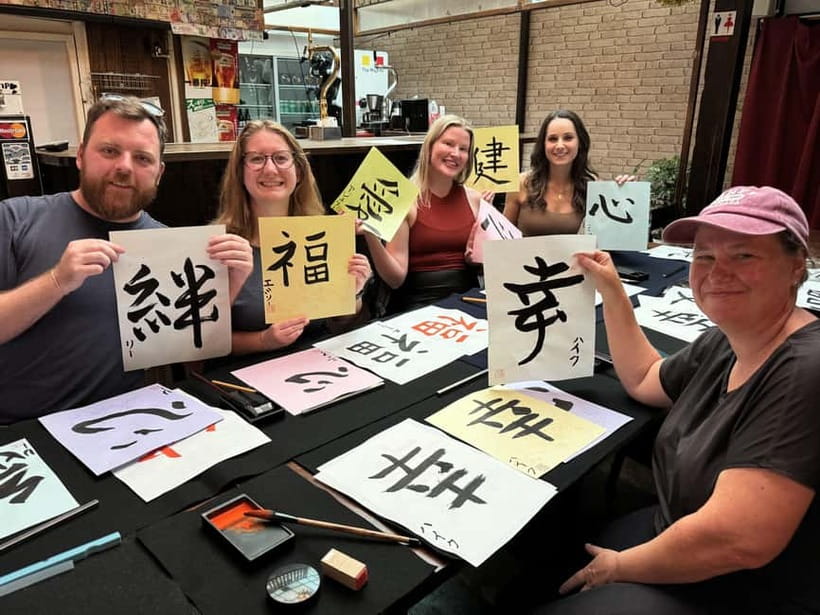
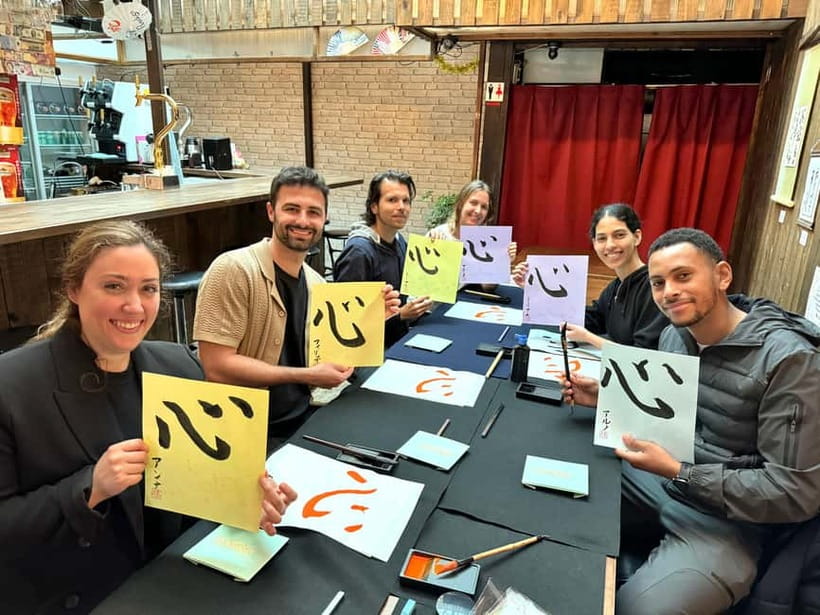
- Creating your own kanji artwork
- Writing your name in kanji
- The final piece, photos, and gallery time
- How the $32 price compares with the experience
- Who should book this workshop
- Booking, language, and timing tips
- Should you book the Gojo Paradiso calligraphy workshop?
- FAQ
- Where does the Kyoto calligraphy workshop take place?
- How far is Gojo Paradiso from the nearest station?
- How long does the calligraphy class last?
- What languages does the instructor speak?
- Is equipment included in the price?
- Can I take my calligraphy home?
- Are children allowed to join?
Key points to know
- Practice before creating: You learn basic brush strokes first, so the final kanji piece feels earned rather than rushed.
- Patient English-speaking instruction: Takako is known for clear explanations, encouragement, and individual help during each exercise.
- A personal Kyoto souvenir: You can take home your own calligraphy on beautiful rice paper, and may also receive a small handmade piece.
- Central riverside meeting point: Gojo Paradiso is along the Takase River on Kiyamachi Street, close to Keihan Kiyomizu Gojo Station.
- Small and manageable group: With no more than 10 participants, the teacher has room to offer one-on-one corrections.
- Good value at $32: Supplies, instruction, and the cultural experience are included, making this a modest-cost activity in central Kyoto.
What makes this Kyoto calligraphy class worth your time
Kyoto offers plenty of temples, gardens, and traditional streets. A calligraphy workshop gives you something different: a chance to slow down and handle the tools of a Japanese art form yourself.
Shodo is not simply writing with a brush. The movement, pressure, spacing, and order of each stroke all matter. You will not become a calligraphy master in a single class, but you can begin to see why a simple kanji character takes care and control.
I like this kind of activity because it gives you a cultural memory you made with your own hands. Your finished piece may not look perfect, and that is part of its charm. It carries the marks of your first attempt in Kyoto, not a factory-made souvenir.
The class is also practical for a busy sightseeing schedule. At roughly one to two hours, it fits neatly between visits to nearby sights, a meal, or an afternoon walk through central Kyoto. The exact length and starting time depend on availability, so check the schedule before you build your day around it.
More Calligraphy Classes in Kyoto
- Kyoto: Calligraphy class at Buddhist temple in city center
★ 5.0 · 167 reviews - Kyoto: Japanese Calligraphy Class
★ 4.8 · 89 reviews - Kyoto: Local Home Visit and Japanese Calligraphy Class
★ 5.0 · 66 reviews
Arriving at Gojo Paradiso beside the Takase River
The meeting point is Gojo Paradiso, located on Kiyamachi Street beside the Takase River. From Keihan Kiyomizu Gojo Station, the walk takes about five minutes. From Keihan Shichijo Station, allow about 10 minutes.
The location matters because it is easy to combine with other Kyoto plans. You are not being sent far outside the city center for a short activity. The riverside setting should also make the arrival feel less hectic than a meeting point on a major road.
The supplied directions place the venue about 386 meters from Kiyomizu Gojo Station. Still, give yourself a little extra time to find the entrance, especially if you are walking while checking a phone map. The class requires a reservation at least one day in advance, so this is not a stop-in activity you can add casually after breakfast.
Gojo Paradiso also has a gallery area. After the lesson, you can take photos, look around, and place special orders if something catches your eye. That gives the ending a little more breathing room instead of sending you straight back onto the street.
The opening lesson: culture before technique
The workshop begins with an introduction to the history and meaning of Japanese calligraphy. This is important for beginners. Without context, the lesson could feel like copying unfamiliar symbols. With a little explanation, the brushwork has a clearer purpose.
Your instructor then introduces the materials and shows how to hold and use the brush. You will learn that the brush is not treated like a ballpoint pen. Pressure and direction change the appearance of the line, and a controlled pause can matter as much as the stroke itself.
The teacher explains the basic movements step by step. That pace suits people who have never tried calligraphy, while participants with some previous experience can use the practice period to improve their control.
The instructor, Takako, has been praised for being patient, encouraging, and clear in English. One especially useful part of the lesson is the individual attention. Instead of giving one demonstration and leaving you to struggle alone, she works with participants during the exercises. Two helpers may also assist, which can make corrections easier in a small class.
That personal guidance is one of the strongest reasons to choose this workshop over trying to copy a few brush strokes from a book or video. You can ask for help at the moment your brush goes wrong.
Practicing basic strokes before the kanji
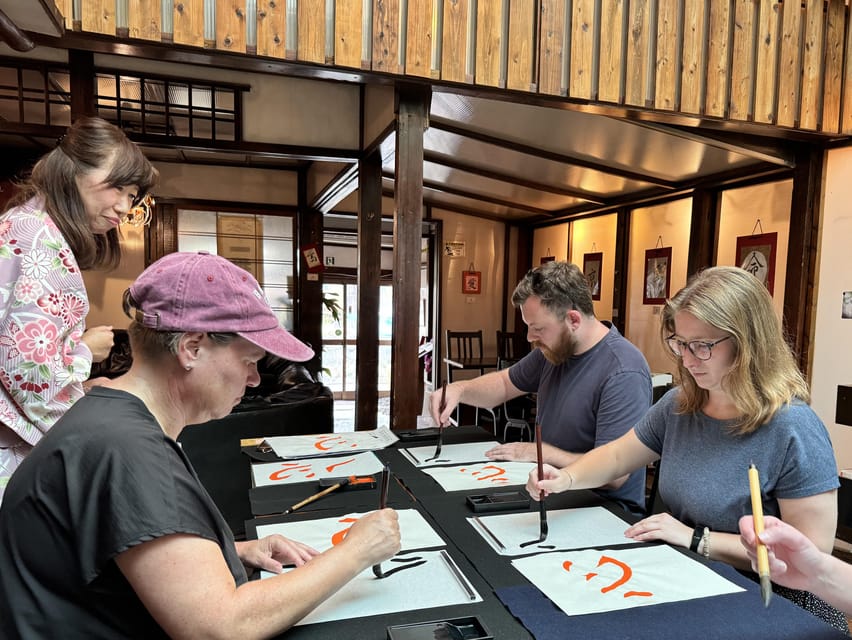
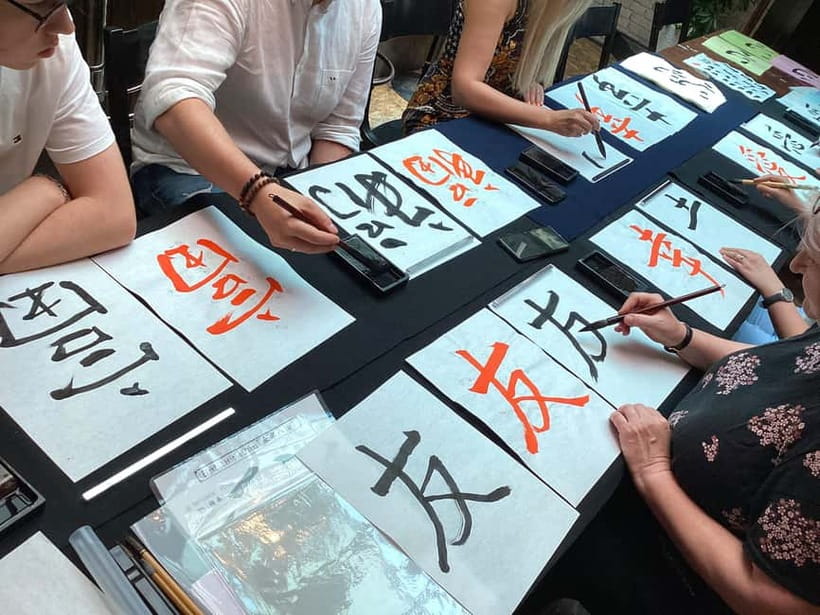
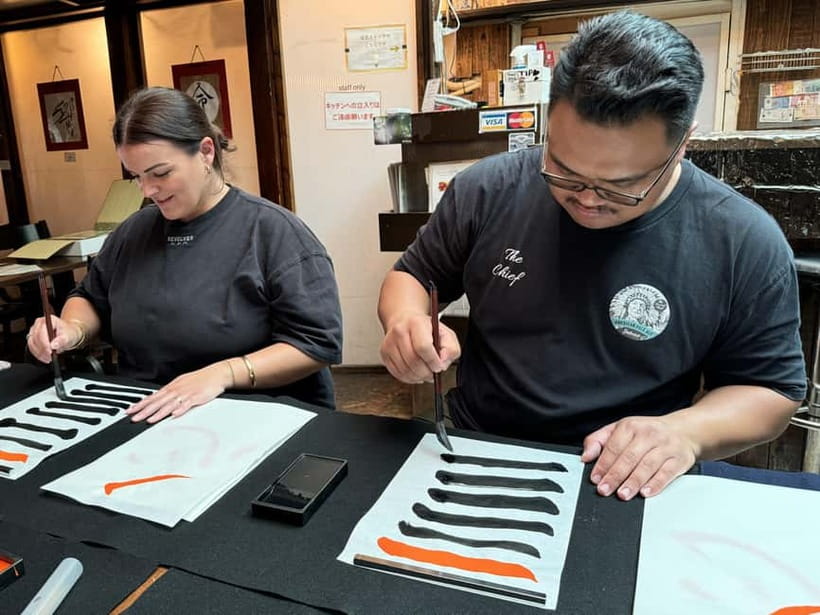
The practice section is where you learn what the brush can do. You work through basic strokes before moving to a complete character. This may sound simple, but it is the part that helps you understand spacing, balance, and the flow of ink.
Expect to repeat movements. The class is interactive, but it is not a fast entertainment show. You will need to concentrate, and your first lines may wobble. That is normal. The point is to learn how the brush responds to your hand.
I appreciate that the lesson does not push you straight into making a final artwork. Beginners can feel pressure when they see a finished piece made by a trained artist. Practicing first lowers the stakes and gives you a chance to settle into the rhythm.
The class is also described as relaxing. That makes sense: the work demands focus, but the setting and pace are quiet. If you have spent the morning navigating crowded sightseeing areas, an hour of careful brushwork can be a welcome change.
You should not expect to master every stroke in one visit. Instead, treat this as a well-organized introduction. You get enough technique to understand the art and enough practice to create something personal.
A completely different kind of day out in Kyoto:
- PERFECT KYOTO 1-Day Bus Tour
★ 5.0 · 13,518 reviews - Kyoto: Fushimi Inari, Kinkakuji, Bamboo Grove 1 Day Bus Tour
★ 4.8 · 4,316 reviews - Kyoto: Tea Ceremony in a Traditional Tea House in Kiyomizu
★ 4.9 · 3,519 reviews - Kyoto Geisha Walking Tour: Gion District & Hidden Gems
★ 4.7 · 3,273 reviews
Creating your own kanji artwork
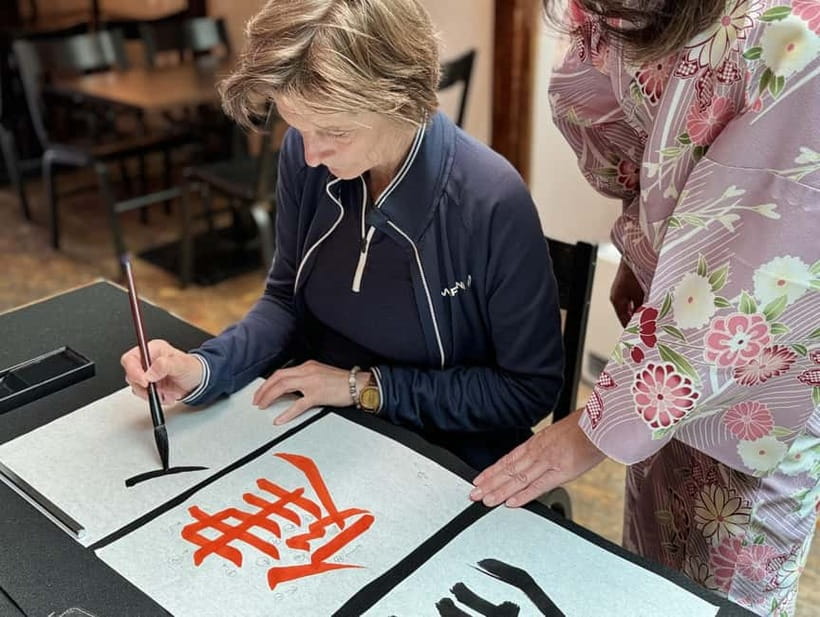
Once you have practiced, you move on to writing a kanji character. The exact character may depend on the format of your session and the guidance you receive, but the purpose is clear: turn your practice into a finished piece.
This is the point when the earlier exercises start to make sense. You have already tested the brush, learned the basic marks, and watched the instructor demonstrate. Now you must decide how to place the character on the paper.
The teacher continues to offer support, which is especially helpful if you are worried about making one wrong stroke. Calligraphy does not allow much erasing, so the calm instruction matters. You are encouraged to keep trying rather than treat a small mistake as a disaster.
A strong detail is the use of quality materials. You are supplied with the brush, ink, and paper needed for the lesson, so you do not need to arrive with specialist equipment. The finished work is created on rice paper, giving it a more traditional feel than a standard sheet from a school notebook.
For many people, this will be the most meaningful part of the activity. You are not just watching Japanese calligraphy. You are taking home proof that you tried it.
Writing your name in kanji
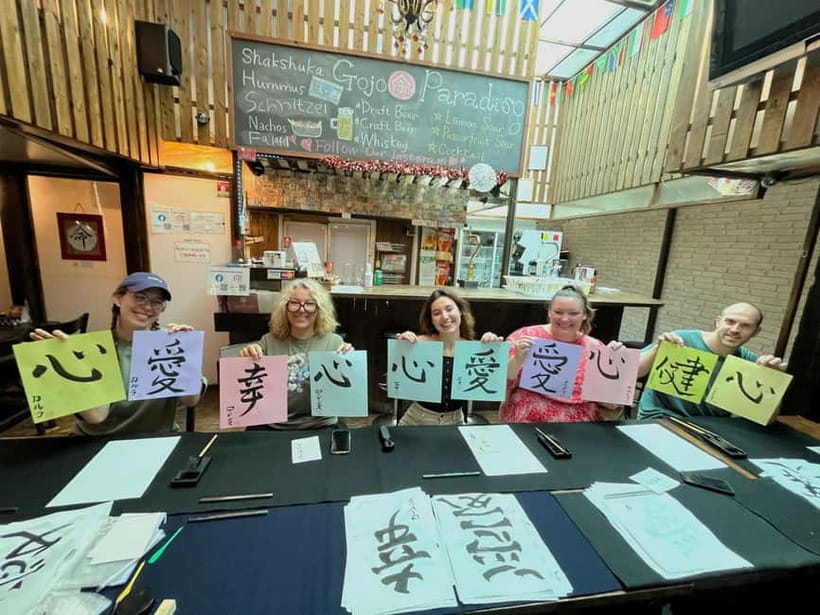
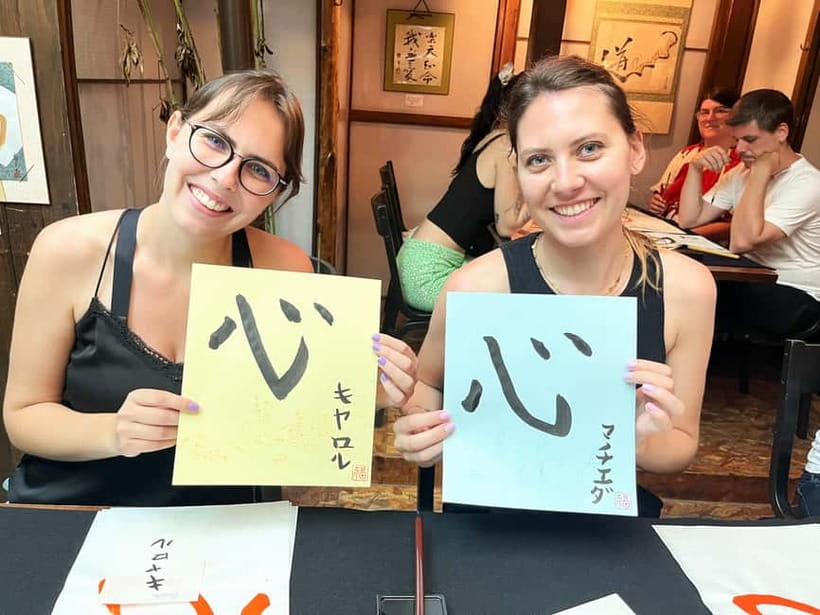
The workshop may also show you how to write your name in kanji. This adds a personal layer to the activity and gives you another finished element to remember.
Your name does not simply translate letter for letter from English or another language into Japanese. The instructor helps choose kanji that can represent the sound or meaning in a suitable way. The lesson gives you a glimpse of how written language can carry both sound and symbolism.
This is also a good moment to ask questions. If you are curious about the meaning of your chosen characters, the English and Japanese language support should make the explanation easier to follow.
The name exercise can be particularly appealing if you want a souvenir connected directly to you rather than a general Kyoto design. It is also a pleasant option for couples or friends who want to compare their finished pieces.
The final piece, photos, and gallery time
At the end, you can keep your calligraphy creation as a one-of-a-kind souvenir. Some participants receive their artwork on attractive rice paper, with their name written in kanji and the teacher’s stamp added. A handmade calligraphy gift accented with gold may also be included.
Because these details can depend on the session, I would treat the personal artwork as the main included souvenir and any additional gift as a welcome extra. The important value is that you made the piece during the class.
You can take photos at the end and look through the gallery at Gojo Paradiso. Special orders are also possible. This may suit you if you want a more polished calligraphy item than your beginner work, though the workshop itself is focused on learning and making your own piece.
The ending is not overproduced. It gives you time to look at what you made, photograph it, and collect your materials. If your artwork is still drying or needs careful handling, follow the teacher’s instructions before carrying it around Kyoto.
How the $32 price compares with the experience
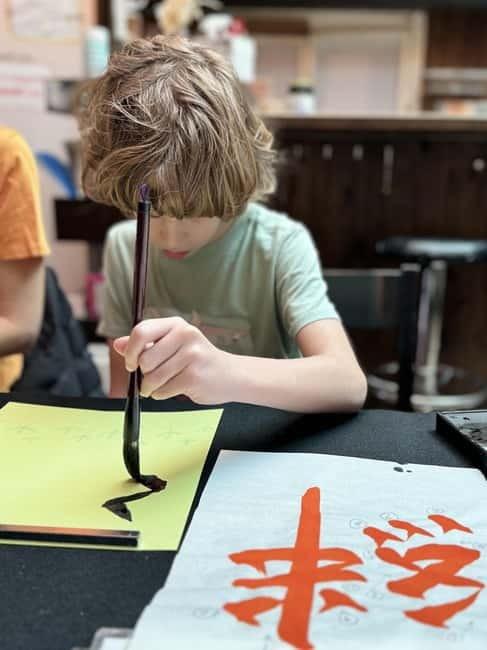
At $32 per person, this is a fair price for a central Kyoto cultural activity. The fee includes an expert instructor and all necessary supplies. You are paying for instruction, materials, a small class, and a personal work of art, not just admission to a demonstration.
The small group limit improves the value. A class of up to 10 people gives the instructor a reasonable chance to correct your hand position and brush movement. That matters more here than it would in a lecture, since calligraphy is learned through physical practice.
The value is strongest for beginners who would otherwise have no idea how to start. You receive a structured lesson, high-quality materials, and enough help to complete a character. If you already study shodo seriously, the short format may feel basic for your level.
The price also compares well with the time commitment. You can fit the class into a Kyoto day without giving up an entire afternoon. Just remember that the experience is an introduction, not a long masterclass with advanced composition work.
Who should book this workshop
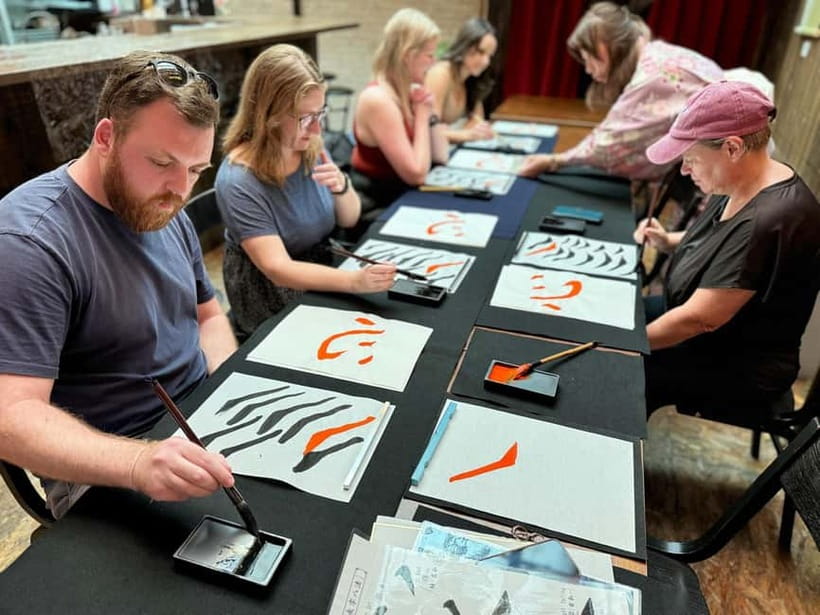
I would recommend this experience to adults and children aged 10 or older who want a quieter cultural activity. It suits solo visitors, couples, families with older children, and friends looking for something more hands-on than another temple visit.
It is a good choice if you enjoy crafts, drawing, language, or learning how traditional objects are made. You do not need prior calligraphy experience. The instruction begins with the basics, and the teacher’s patient approach helps take the pressure off.
It may also suit you if you want a meaningful souvenir but have limited luggage space. A flat rice-paper artwork is easier to carry than a larger craft item, though you should still protect it from rain and creasing.
This is less suitable for children under 10, who may find the controlled brushwork too demanding. It may also disappoint anyone hoping for a long, advanced course or a broad tour of Kyoto culture. The focus stays on learning basic strokes and making calligraphy.
The workshop is wheelchair accessible, which is useful for visitors who need an accessible activity. Since the venue is reached from nearby stations by walking, check your route and allow enough time for the approach.
Booking, language, and timing tips
The instructor speaks English and Japanese. English-language guidance is especially helpful during the stroke demonstrations and the explanation of kanji meanings.
Reserve at least one day ahead. You can cancel up to 24 hours before the activity for a full refund, and the reserve-now, pay-later option helps if your Kyoto schedule is still shifting. Availability controls the starting times, so check before booking a restaurant or timed attraction immediately afterward.
Keep your group small if possible. The class accepts up to 10 participants, and a smaller session may feel more personal simply because there are fewer brushes moving at once.
I would also avoid scheduling this immediately before a distant attraction. The class may last up to two hours, and you will want a little flexibility for the walk back to the station, photographs, and handling your artwork.
Should you book the Gojo Paradiso calligraphy workshop?
Book it if you want a calm, affordable Kyoto activity where you make something yourself. The strongest features are the patient instruction from Takako, the chance to practice before producing a final character, and the personal rice-paper artwork you take home.
Skip it if you need a high-level shodo course, dislike careful repetitive practice, or are traveling with a child under 10. For most first-time participants, though, $32 buys a friendly introduction, useful cultural context, and a souvenir with a personal story behind it.
FAQ
Where does the Kyoto calligraphy workshop take place?
The workshop takes place at Gojo Paradiso along the Takase River on Kiyamachi Street in Kyoto.
How far is Gojo Paradiso from the nearest station?
It is about a five-minute walk from Keihan Kiyomizu Gojo Station and about a 10-minute walk from Keihan Shichijo Station. The venue is listed as 386 meters from Kiyomizu Gojo Station.
How long does the calligraphy class last?
The activity lasts between one and two hours. Starting times depend on availability.
What languages does the instructor speak?
Instruction is available in English and Japanese.
Is equipment included in the price?
Yes. The workshop provides all necessary supplies, along with instruction from a calligraphy teacher.
Can I take my calligraphy home?
Yes. You can take home your own calligraphy creation as a personal souvenir from Kyoto.
Are children allowed to join?
Children under 10 are not suitable for this activity. Participants aged 10 and older may join, subject to the booking conditions.
Just added around Kyoto
- Kyoto: Gion Night Walking Tour with Geisha Insight★ 5.0 · 39 reviews
- Kyoto: Private Customizable Day Trip by Car★ 5.0 · 38 reviews
- Kyoto: Full Day Bike Tour★ 4.9 · 39 reviews
- Private Japanese Calligraphy in Kyoto – Learn Shodō with a Master★ 5.0 · 39 reviews
- Experience a tea ceremony in an authentic tearoom, in Kyoto!★ 4.5 · 41 reviews
- Kyoto: Gion Evening Walk with Hidden Gems, Geisha & Sake★ 5.0 · 41 reviews
- Kyoto Private Photo Shoot & Tour by SnapKyoto★ 5.0 · 41 reviews
- The Way of Tea: Kyoto Crafts, Hidden Temples & Wabi-Sabi Walk★ 5.0 · 41 reviews
Japanese Calligraphy Classes, compared.
Calligraphy class at Buddhist temple in city center
Read our review →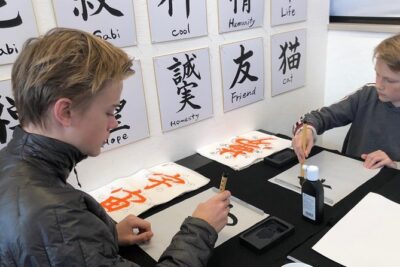
Let’s experience calligraphy in YANAKA, Taito-ku, TOKYO !!
Read our review →
Calligraphy Workshop & Original T-Shirt Creation
Read our review →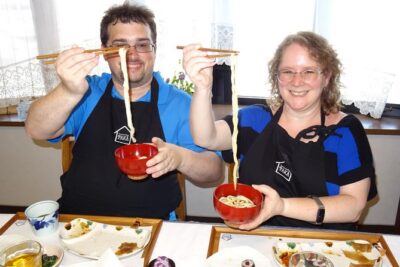
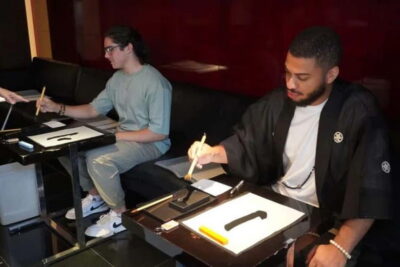
Calligraphy Workshop & Original T-Shirt Creation
Read our review →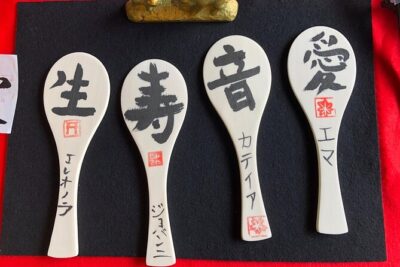
An Amazing set of Cultural experience: Kimono, Tea Ceremony and Calligraphy
Read our review →Browse the lists this tour appears in