
Reviewed · TEA CEREMONY EXPERIENCES
Kyoto: Tea Ceremony in a Traditional Tea House in Kiyomizu
Quiet moments are rare in Kiyomizu. This 45-minute tea ceremony gives you one. Tucked behind busy Sannenzaka, the traditional tea house looks onto a garden created by landscape artist Ogawa Jihei VII. I love the peaceful setting, and I like that you do more than watch: you learn to prepare your own matcha. The main consideration is price. At $49 per person, it is not a cheap cup of tea, though the instruction, sweets, second bowl of matcha, and photo make it a fuller cultural experience.
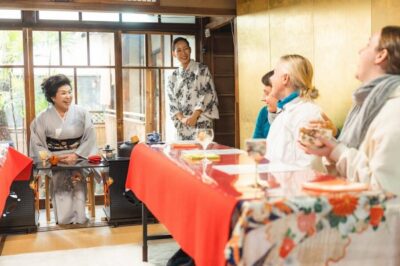
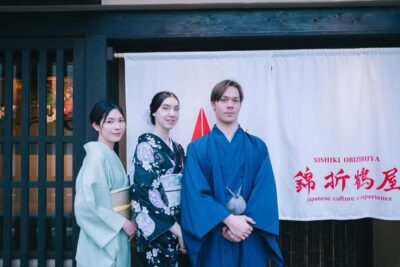
You begin with an explanation of the ceremony’s 500-year background, then watch a tea master work through the careful preparation before trying it yourself. Small groups and clear English instruction make the activity easy to follow. It is also less formal than a kimono-focused photo session, since kimono rental is not included and most people come in ordinary clothes.
In This Review
- Key points to know before booking
- Finding the tea house on Sannenzaka
- The garden changes the mood
- A short introduction to 500 years of tea tradition
- Watching the tea master work
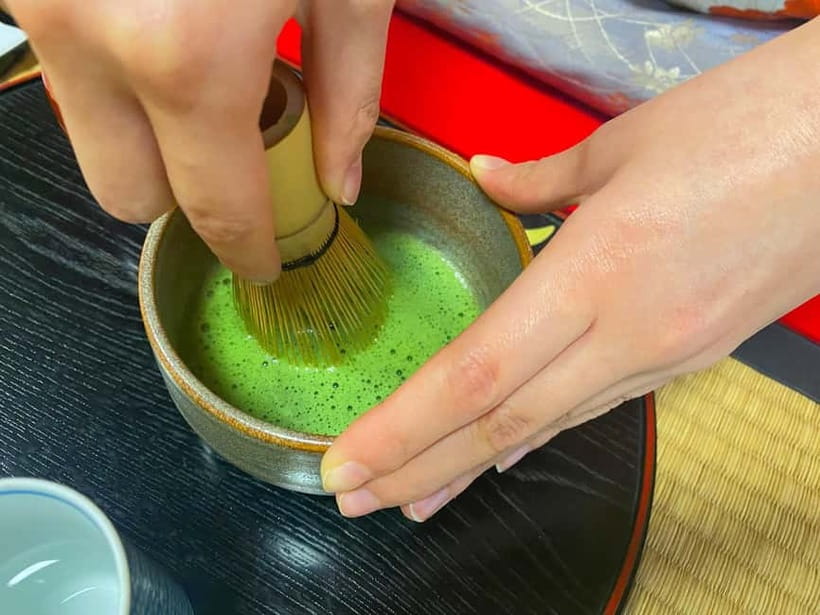
- Making your own bowl of matcha
- A small group makes the lesson easier
- What the ceremony does not include
- Is $49 a fair price?
- Planning this between Kiyomizu and Kodaiji
- The best reasons to book
- Should you book the Sakaguchian tea ceremony?
- FAQ
- How long does the Kyoto tea ceremony last?
- What is included in the price?
- Is the activity offered in English?
- Where do I meet the tea house?
- Can children join the ceremony?
- Can I cancel the booking?
Key points to know before booking
- A quiet garden behind Sannenzaka: The tea house sits close to Kiyomizu-Dera, but its garden view helps shut out the noise of the street.
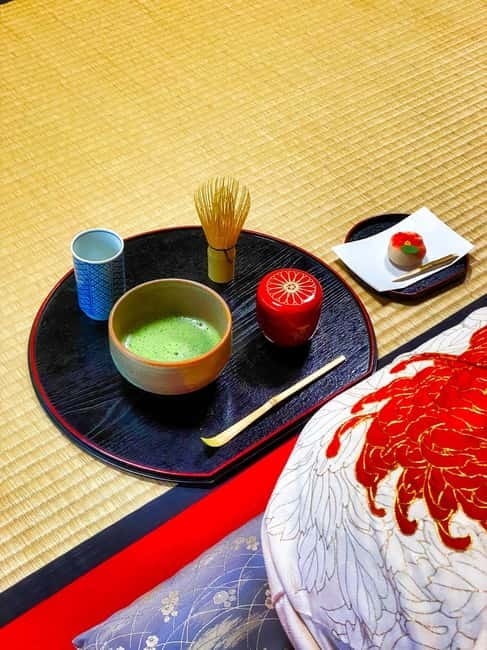
- Two bowls of matcha are included: You receive tea prepared by the tea master and another bowl that you whisk yourself.
- A real demonstration, not just a tasting: You watch the graceful movements first, then learn the basic method for making matcha.
- English instruction is available: Guides explain the ceremony, its meaning, and the steps for brewing your tea.
- A short, useful break in a busy sightseeing day: The 45-minute session fits neatly between visits around Kiyomizu.
- Bring only what you need: Large bags and luggage are not allowed, and the activity runs rain or shine.
Finding the tea house on Sannenzaka
The meeting point takes a little care, especially when Kiyomizu’s lanes are crowded. Walk down Sanneizaka from the direction of Kiyomizu-Dera. After about 50 meters, look for a large gate on the right. You can see the Japanese garden through this entrance.
Go through the large gate, continue about 10 meters, and then use the white gate on your left. The tea house is called Sakaguchian. A long lane with lanterns also helps identify the entrance, so keep an eye out rather than relying only on a broad map pin.
If you arrive by cab, ask the driver to head toward Kodaiji Temple and get out at the intersection of Sanneizaka and Ishin-no-michi. The Japanese address is Kyoto-shi Higashiyama-ku Kiyomizu 3-334. I would allow extra time for the final walk. The Kiyomizu area is easy to reach but not always easy to navigate quickly.
Leave large luggage at your accommodation. The rules specifically exclude luggage and large bags, and this is not the place to show up with a full suitcase or an oversized daypack.
More Tea Ceremonies in Kyoto
- Kyoto: Tea Ceremony Ju-An at Jotokuji Temple
★ 4.9 · 3,207 reviews - Kyoto: 45-Minute Tea Ceremony Lesson Experience
★ 4.3 · 2,378 reviews - Kyoto: Table-Style Tea Ceremony at a Kyo-Machiya
★ 4.9 · 1,211 reviews
The garden changes the mood
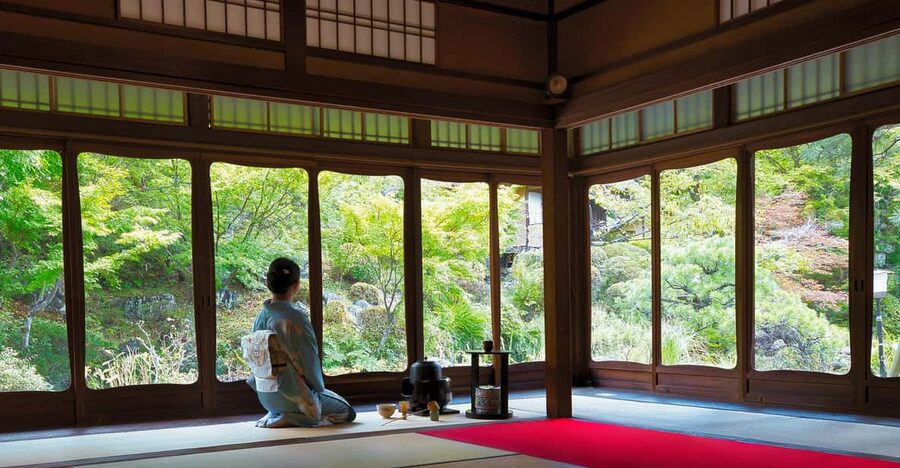
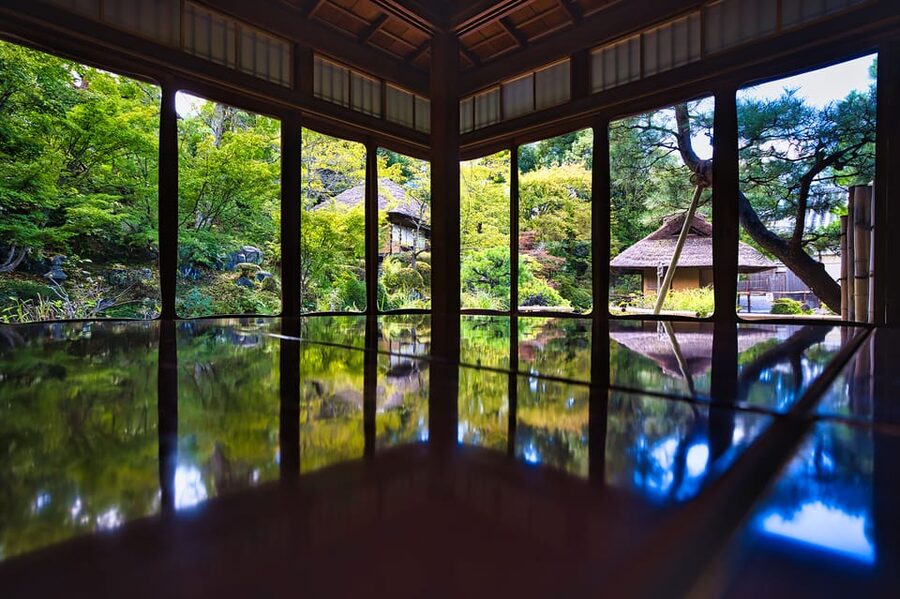
The first pleasant surprise is the contrast. Sannenzaka is one of Kyoto’s busiest sightseeing streets, yet the tea house opens onto a calm garden. The setting was created by Ogawa Jihei VII, a noted Japanese garden designer, and it gives the ceremony much of its appeal.
You do not simply sit in a plain room and drink powdered tea. The garden becomes part of the experience. Its greenery provides a still backdrop while the guide explains what you are about to see. Several sessions describe the view as the favorite part, and that makes sense: the garden gives your eyes somewhere restful to go while you slow down and pay attention.
The setting also makes this a good activity during a packed day. After the crowds, stairs, and temple grounds around Kiyomizu, 45 quiet minutes can feel like a useful reset. You are still in one of Kyoto’s main sightseeing districts, but the tea house creates a different pace.
Rain does not cancel the activity. The ceremony takes place rain or shine, and wet weather may change how the garden looks without removing the garden view altogether.
A short introduction to 500 years of tea tradition
The session begins with an introduction to the ceremony and its long development. You learn why the movements matter and how the preparation of tea connects with Japanese manners and attention to detail.
The introduction is brief, not a full academic lecture. That suits the format. You have enough context to understand what follows, but the session does not spend the entire 45 minutes talking. If you want a detailed study of tea schools, utensils, or Japanese cultural history, this will feel too short. If you want a clear starting point before seeing and making matcha, the balance works well.
The English instruction is one of the experience’s strongest practical features. Guides explain each stage in accessible terms, and several sessions have been led by warm, theatrical hosts who keep the talk engaging. May is one host specifically praised for her clear English, thoughtful explanations, and welcoming manner.
This matters because a tea ceremony can otherwise seem mysterious. Without context, you might notice only the formal gestures. With a little explanation, you begin to understand that the pace, posture, utensils, and order of service are part of the meaning.
Watching the tea master work
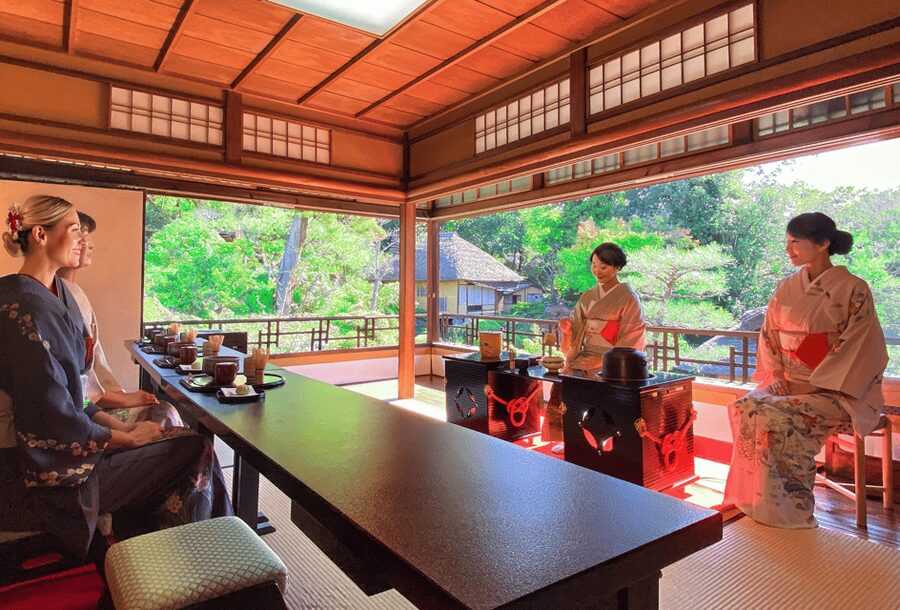
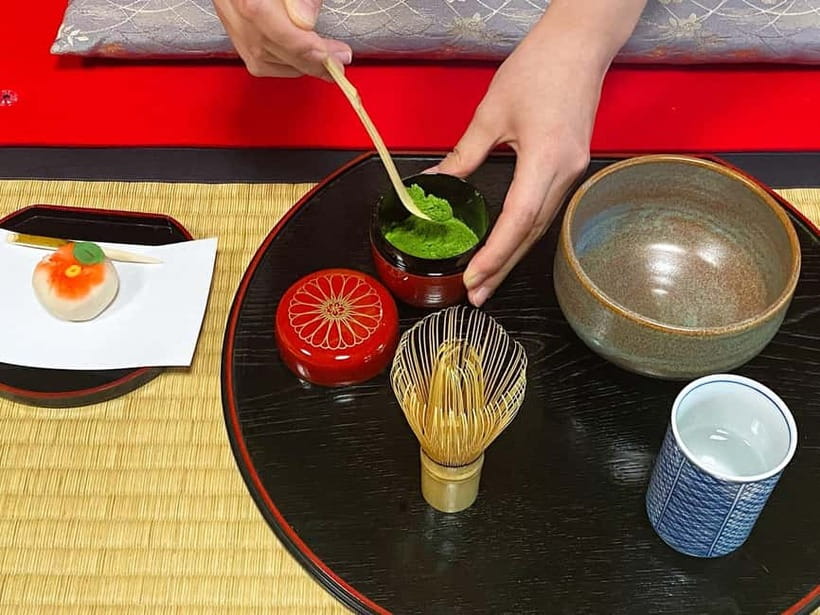
The tea master’s demonstration is the visual center of the session. You watch an experienced practitioner prepare matcha with controlled, deliberate movements. The ceremony is formal, but the English-speaking guide helps you understand what you are seeing instead of leaving you to guess.
The performance is not rushed. That is the point. The measured motions draw attention to small actions that you would normally overlook, from handling the tools to whisking the tea. The tea master’s skill is especially apparent in the calm rhythm and precision of the preparation.
You should treat this part with respect. One useful practical tip is to avoid walking around while the ceremony is in progress. Keep your phone and body still, watch the demonstration, and let the room remain quiet. You will get better photos at the end, when the formal part is over.
The tea master also answers questions after the demonstration. This gives you a chance to ask about the preparation, the ceremony, or the meaning behind particular actions. The experience feels more personal when you take advantage of that moment rather than treating it as a quick stage show.
More Temple & Shrine Tours in Kyoto
- Kyoto: Fushimi Inari, Kinkakuji, Bamboo Grove 1 Day Bus Tour
★ 4.8 · 4,316 reviews - Fushimi Inari Hidden Hiking Tour (Private Option Available)
★ 5.0 · 1,750 reviews - Osaka/Kyoto:Kinkakuji,Arashiyama,FushimiInariShrine,NaraPark
★ 4.1 · 1,596 reviews - Kyoto/Osaka: Nara, Fushimi Inari Taisha, Arashiyama Bus Tour
★ 4.7 · 1,275 reviews
Making your own bowl of matcha
After watching the professional demonstration, you get to prepare your own tea. This is where the activity becomes more than a cultural display.
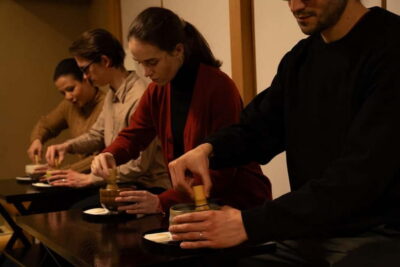
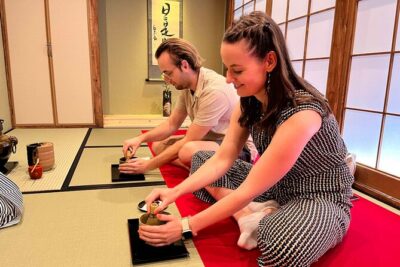
You receive instruction on how to brew matcha and then try the process yourself. Do not worry about producing a perfect bowl on your first attempt. The value is in learning the basics and feeling the difference between watching a practiced hand and using the whisk yourself.
The session includes two cups of matcha. One is prepared for you by the tea master, and the other is your own creation. That makes the tasting more useful. You can experience the smooth result of expert preparation, then compare it with the tea you make after following the instructions.
Matcha can taste bitter if it is prepared poorly, and some people arrive convinced they do not like it. The guided method seems to win over at least a few skeptics. You learn how the tea is whisked and served, rather than simply receiving a bright green drink without explanation.
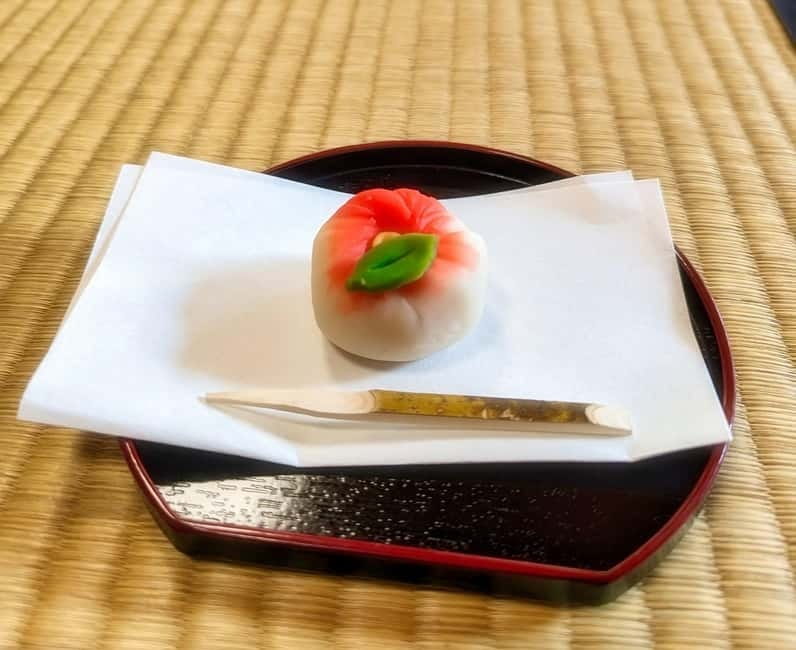
A traditional Japanese sweet is served with the tea. Its role is practical as well as pleasant, since the sweetness balances the earthy flavor of matcha. The sweet is small, so do not expect a full snack or meal. Think of it as part of the ceremony.
A small group makes the lesson easier
The sessions can be intimate. Group sizes described in the experience include about eight to ten people, and that scale works well for a demonstration. You can see the tea master’s movements, hear the guide, and get your turn making matcha without the room feeling like a large classroom.
A smaller group also helps if you have questions. The guide can explain the process at a comfortable pace and help with photos afterward. Families have enjoyed the session with children aged nine and thirteen, and the activity can work well for older children who can sit quietly and follow instructions.
Children under seven are not suitable for this experience. That restriction makes practical sense. The ceremony requires attention and respect for a formal setting, and younger children may find 45 minutes difficult.
The activity also suits couples and solo visitors. It gives couples something to do together beyond taking photos, while solo visitors can join a shared cultural activity without needing a private booking.
What the ceremony does not include
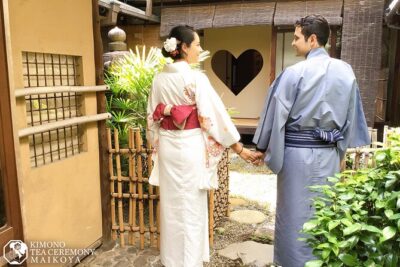
Kimono rental is not part of the price. That is worth knowing before you book, particularly if you have seen photos of Kyoto tea experiences featuring elaborate clothing.
The absence of kimono rental can actually be a plus. You avoid spending extra time changing, and the session focuses on tea rather than costume. Coming in normal clothes may also feel more natural and less like a staged photo appointment.
You still receive a group photo with the garden behind you. It is a simple souvenir, but it helps mark the occasion without turning the whole session into a photography package.
The experience is not a full-day lesson in tea ceremony. It covers the background, a demonstration, your own preparation, tasting, and a photo within 45 minutes. That is enough for a first encounter, but not enough to teach every rule or variation.
Is $49 a fair price?
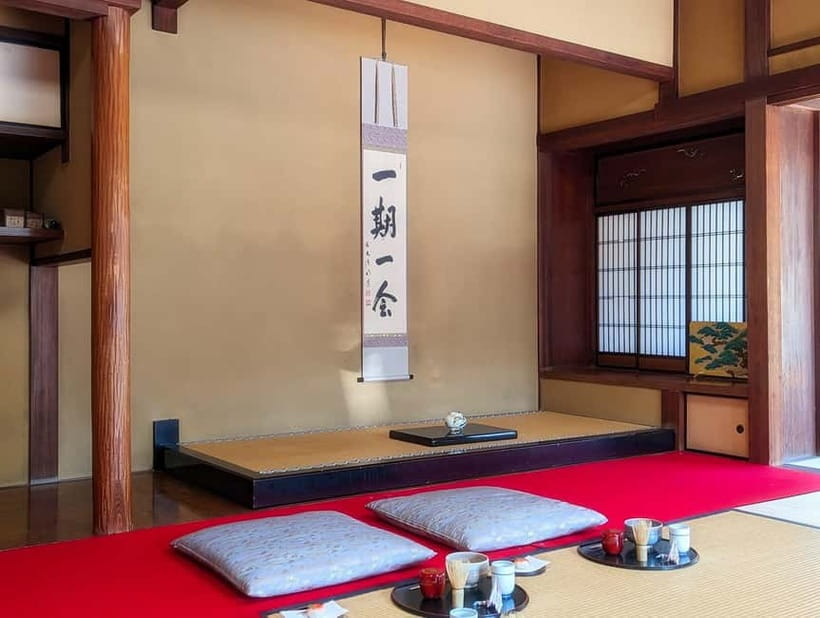
At $49, this is a midrange cultural activity rather than a casual refreshment stop. You are paying for access to a traditional tea house, the garden setting, an English-speaking instructor, a formal demonstration, two servings of matcha, a Japanese sweet, and a photo.
The value depends on what you want from Kyoto. If you only want to taste matcha, $49 is too much. Kyoto has cheaper places for tea and sweets. If you want to understand the ritual and take part in making the tea, the price is easier to justify.
I see the garden and the tea master’s demonstration as the main reasons to book. The lesson also removes the uncertainty that comes with trying matcha on your own. You leave with a better sense of the ingredients, tools, and careful pace behind the drink.
The strongest sessions seem to come from the combination of host and tea master. A guide such as May can provide the history and cultural explanation, while the tea master shows the tradition through movement. That partnership gives the short session more depth than a simple demonstration.
Free cancellation is available up to 24 hours before the start time, and you can reserve now and pay later. Those terms are useful when your Kyoto schedule is still shifting, though you should still check the available starting times before fixing the rest of your day.
Planning this between Kiyomizu and Kodaiji
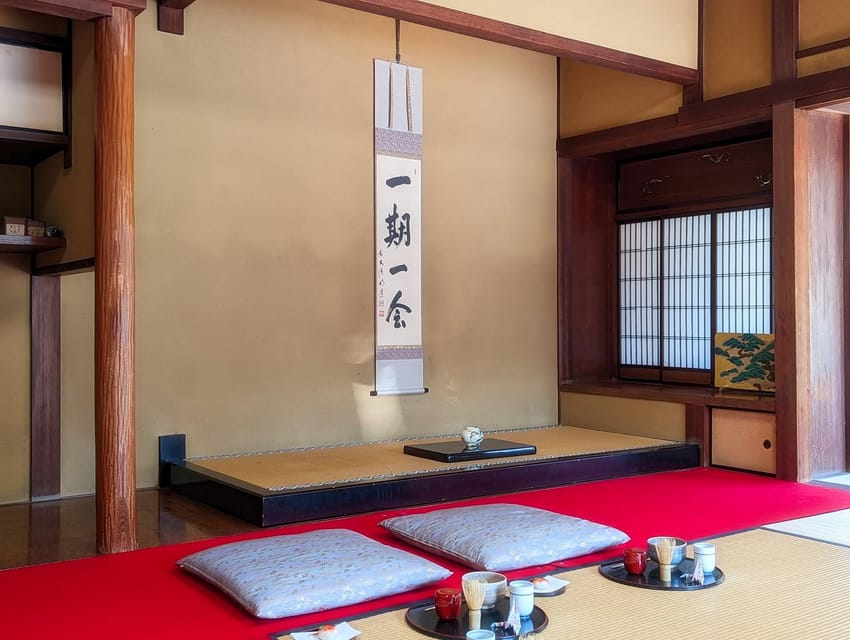
The location makes this easy to combine with nearby sights. You can visit Kiyomizu-Dera and then walk down Sanneizaka to the tea house, or schedule the ceremony as a quiet pause before continuing toward Kodaiji Temple.
Do not cut the timing too close. The directions involve finding a gate, entering a lane, and locating a second white gate. The streets around Kiyomizu can be crowded, so arrive with enough time to find Sakaguchian without rushing.
The 45-minute duration is useful for planning. It is long enough to feel substantial, but short enough to fit into a morning or afternoon of temple visits. You will not need to give up half a day.
Wear something comfortable and bring a small bag only. Since large bags are not allowed, this is best done after leaving shopping or overnight luggage at your hotel.
The best reasons to book
I would choose this experience if you want a calm cultural activity with genuine participation. You do not just watch a tea master. You learn the basic method, drink the result, enjoy a sweet, and take home a photo.
It is also a strong choice for first-time visitors who want a simple explanation of Japanese tea culture. The ceremony has centuries of background, but the guide presents it in a way that is manageable within a short visit.
The setting is a major part of the appeal. If your Kyoto plans already include Kiyomizu, adding a garden-facing tea ceremony gives you a change of pace without a long trip across the city.
I would hesitate only if you want a highly formal, extended tea-school lesson, or if $49 feels too high for a 45-minute activity. You should also skip it if you are looking specifically for kimono rental, since that is not included.
Should you book the Sakaguchian tea ceremony?
For most first-time visitors to Kyoto, I would book it, especially if you value atmosphere, clear English guidance, and a chance to take part. The 4.9 rating from 3,519 bookings reflects unusually strong satisfaction, and the praise centers on the same practical strengths: the peaceful garden, graceful tea master, friendly host, and easy-to-follow lesson.
Book it as a thoughtful break from Kiyomizu’s crowds, not as a meal or a costume session. Arrive early enough to find the entrance, leave large bags behind, and keep the ceremony quiet while the tea master works. If you do that, $49 buys a memorable introduction to one of Japan’s most careful and beautiful traditions.
FAQ
How long does the Kyoto tea ceremony last?
The experience lasts 45 minutes. It includes an introduction, a tea master’s demonstration, your own matcha preparation, tasting, a traditional sweet, and a photo.
What is included in the price?
The price includes the tea ceremony, two cups of matcha, traditional Japanese sweets, and a photo. Kimono rental is not included.
Is the activity offered in English?
Yes. The instructor language is English, and the guide explains the ceremony, its background, and how to prepare matcha.
Where do I meet the tea house?
Walk down Sanneizaka near Kiyomizu-Dera Temple for about 50 meters and enter the large gate on the right. Continue 10 meters, then use the white gate on the left to find Sakaguchian.
Can children join the ceremony?
Children under seven are not suitable for the activity. Older children can attend, and children aged nine and thirteen have enjoyed the experience.
Can I cancel the booking?
You can cancel up to 24 hours in advance for a full refund. You can also reserve now and pay later, subject to the booking terms.
Just added around Kyoto
- Kyoto: Gion Night Walking Tour with Geisha Insight★ 5.0 · 39 reviews
- Kyoto: Private Customizable Day Trip by Car★ 5.0 · 38 reviews
- Kyoto: Full Day Bike Tour★ 4.9 · 39 reviews
- Private Japanese Calligraphy in Kyoto – Learn Shodō with a Master★ 5.0 · 39 reviews
- Kyoto: Gion Evening Walk with Hidden Gems, Geisha & Sake★ 5.0 · 41 reviews
- Experience a tea ceremony in an authentic tearoom, in Kyoto!★ 4.5 · 41 reviews
- Kyoto Private Photo Shoot & Tour by SnapKyoto★ 5.0 · 41 reviews
- The Way of Tea: Kyoto Crafts, Hidden Temples & Wabi-Sabi Walk★ 5.0 · 41 reviews
Tea Ceremony Experiences, compared.
Browse the lists this tour appears in