
Reviewed · TEMPLE & SHRINE TOURS
The Way of Tea: Kyoto Crafts, Hidden Temples & Wabi-Sabi Walk
Tea reveals Kyoto’s quiet side. This three-and-a-half-hour walk links Gion, Kennin-ji Temple, local craft shops, a garden temple, and a traditional tea house, giving you a compact introduction to the city’s artistic and spiritual life. I especially like the small maximum group of seven and the way the tour ends with a hands-on matcha ceremony rather than stopping at sightseeing alone.
I also like that temple admission is included and that a guide handles the route through several Kyoto neighborhoods. The main concern is communication: one low-scoring report describes a guide who spoke very softly and was difficult to understand in English. That is worth considering if clear spoken explanation is central to your enjoyment.
In This Review
- Key points at a glance
- Starting beside the Izumo-no-Okuni statue
- Gion and the first taste of matcha culture
- Kennin-ji after the Gion streets
- Kyoto crafts and the meaning of a tea bowl
- A quieter temple and garden stop
- The traditional tea house finale
- What the $94.45 price delivers
- Group size, weather, and practical comfort
- Who will enjoy this Kyoto walk most?
- Should you book The Way of Tea?
- FAQ
- How long does The Way of Tea tour last?
- Where does the tour begin?
- How do I identify the guide?
- Where does the tour end?
- Is temple admission included?
- Is the tea ceremony included?
- Can children join the tea ceremony?
- What is the maximum group size?
- What happens if I arrive late?
- Can I cancel for a full refund?
Key points at a glance
- Gion begins the story: You start near Gion Shijo Station and learn how Japanese tea is made while walking through one of Kyoto’s best-known historic districts.
- Kennin-ji adds temple calm: The visit includes admission to Kennin-ji, a centuries-old temple with a quieter feel than many major Kyoto sights.
- Crafts make wabi-sabi practical: A tea bowl shop introduces raku cups, each with its own shape, character, and meaning.
- The group stays small: With no more than seven participants, you have a better chance to ask questions and keep up with the guide.
- The finish is hands-on: You make matcha under a tea master’s instruction inside a traditional Japanese house.
- Plan for a punctual, weather-sensitive walk: Late arrivals cannot join, and extreme Kyoto temperatures can make the route much harder without suitable clothing.
Starting beside the Izumo-no-Okuni statue
The meeting point is the Statue of Izumo-no-Okuni, directly outside Exit 5 of Gion Shijo Station on the Keihan Line. Look for a guide holding an orange sign marked Magical Trip Tour.
This is a useful meeting place because it sits near public transportation and places you at the edge of Gion from the start. Still, do not treat the meeting time casually. The group leaves on time, and if you arrive late and miss it, you cannot join later, reschedule, or receive a refund.
The tour ends at the tea experience location in the Kiyomizu area, at 4-chōme-172-7 Kiyomizu. That one-way route matters. You finish in a different part of eastern Kyoto, rather than returning to Gion Shijo Station, so plan your next stop from Kiyomizu.
The total time is about three hours and 30 minutes. The walking portions are divided into short sections of roughly 30 minutes, followed by an hour-long tea ceremony. You should wear comfortable shoes and prepare for the season. Kyoto can reach about 40°C in summer and fall to around -5°C in winter.
More Temple & Shrine Tours in Kyoto
- Kyoto: Fushimi Inari, Kinkakuji, Bamboo Grove 1 Day Bus Tour
★ 4.8 · 4,316 reviews - Kyoto: Tea Ceremony in a Traditional Tea House in Kiyomizu
★ 4.9 · 3,519 reviews - Kyoto: Tea Ceremony Ju-An at Jotokuji Temple
★ 4.9 · 3,207 reviews
Gion and the first taste of matcha culture
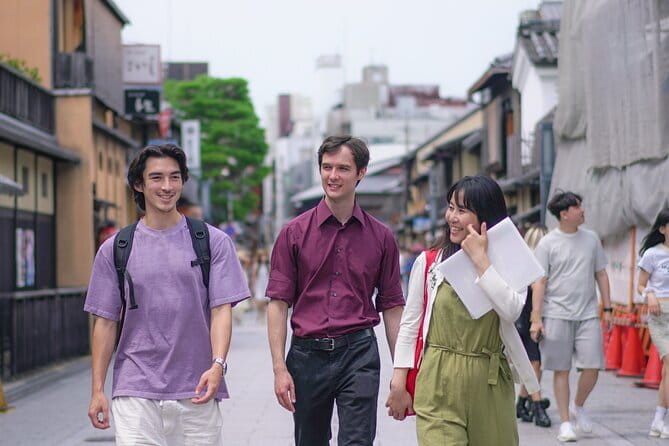
The first stop takes you through Gion, Kyoto’s famous historic entertainment district. Here, the focus is Japanese tea: how it is made and why it matters to daily life and ceremony.
You also visit a well-known matcha shop. The listed stop lasts about 30 minutes and has no separate admission fee. This opening works well because it gives you a cultural frame before the more formal tea ceremony later in the afternoon.
Do not expect a long food tour. Extra food and drinks are not included, and the tour description only promises the matcha culture introduction and later tea experience. If you need a snack, handle that before the meeting or ask the guide about a suitable break.
Gion is best appreciated slowly. You may see traditional wooden facades, narrow lanes, and small businesses, but the tour is not designed as a broad city tour. Its purpose is to connect tea with the places, materials, and habits that shaped Kyoto’s traditional culture.
Kennin-ji after the Gion streets
After Gion, you visit Kennin-ji Temple, with admission included. The temple has stood for centuries and gives the walk a change of pace after the commercial and street-based opening.
A 30-minute stop is enough for an introduction, a look at the grounds, and some context from the guide. It is not enough for every corner or a leisurely, unhurried temple visit. If you want to study temple architecture in detail or spend a full morning with the art, this tour will feel brief.
That shorter visit is also part of the appeal. Kyoto has many temples, and planning a route through them can become a map-reading exercise. Here, you get one significant temple without sacrificing the tea and craft portions that make this experience different from a standard temple walk.
The guide’s explanations matter most here. The tour promises an English-speaking local guide, but the quality of spoken communication can affect how much you gain. A low-rated account specifically describes a guide who spoke very softly and seemed uncertain about some locations. I would treat that as a warning, not a universal verdict, especially since the overall score is 4.9 from 41 ratings and the recommendation rate is 98 percent. Still, if you have hearing difficulties or want a lecture-style temple tour, ask yourself how important perfectly clear commentary will be.
Kyoto crafts and the meaning of a tea bowl
The next section shifts from buildings to objects. You visit craft shops and then stop at a tea bowl shop where raku ware receives special attention.
This is one of the most useful parts of the route because it gives wabi-sabi a physical form. Instead of treating the idea only as an abstract lesson about simplicity and imperfection, you look at a bowl made for use, handling, and appreciation.
The guide explains that each raku teacup has its own character, history, and meaning. The supplied details do not promise a purchase or a shopping discount, so think of this as a cultural stop rather than a guaranteed buying opportunity.
For you, the value is in seeing why a tea bowl is not just a container. Shape, texture, irregularity, and the marks left by the making process all affect the experience of tea. That connection becomes clearer when you later hold a bowl and prepare matcha yourself.
The craft portion lasts about 30 minutes. It may feel short if you want to browse every shop, but it keeps the experience moving. I like the balance: you see the objects in context, then move on before the walk turns into a shopping expedition.
More Walking Tours in Kyoto
- Kyoto Geisha Walking Tour: Gion District & Hidden Gems
★ 4.7 · 3,273 reviews - Kyoto: Gion Magical Night Walking Tour with Geisha Trivia
★ 4.9 · 2,393 reviews - Kyoto: Gion Geisha District Walking Tour – Stories of Geisha
★ 4.7 · 2,187 reviews - Night Walk in Gion: Kyoto’s Geisha District
★ 4.5 · 2,003 reviews
A quieter temple and garden stop
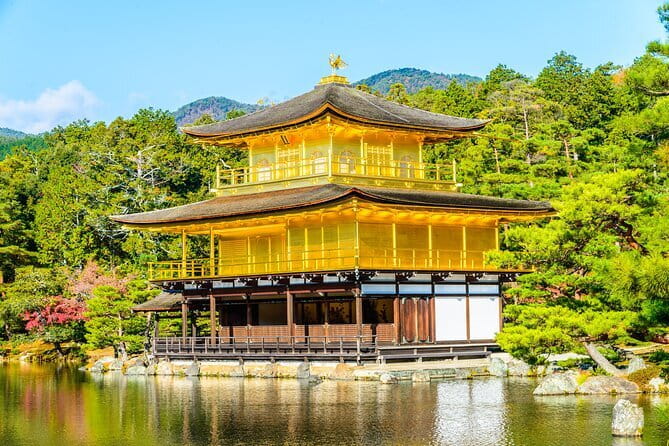
The itinerary also includes a hidden temple and garden in Kyoto Prefecture. The supplied details do not name this temple, so you should not book expecting a specific landmark with a clearly defined collection or garden feature.
What you can expect is a quieter counterpoint to Kennin-ji and the better-known streets of Gion. The stop lasts about 30 minutes and is intended to help you notice the restrained design associated with wabi-sabi.
This is a good reason to choose the tour over a simple tea ceremony. You do not arrive at the tea house cold, with no context. The city walk gradually introduces the visual language of tea: modest materials, careful presentation, and beauty that does not depend on perfect symmetry.
The word hidden should not make you expect a secret place accessible only to a few people. It means the stop is presented as less obvious than Kyoto’s major temple sights. The exact character of the visit can also depend on the guide’s explanation, the day’s pace, and weather.
The traditional tea house finale
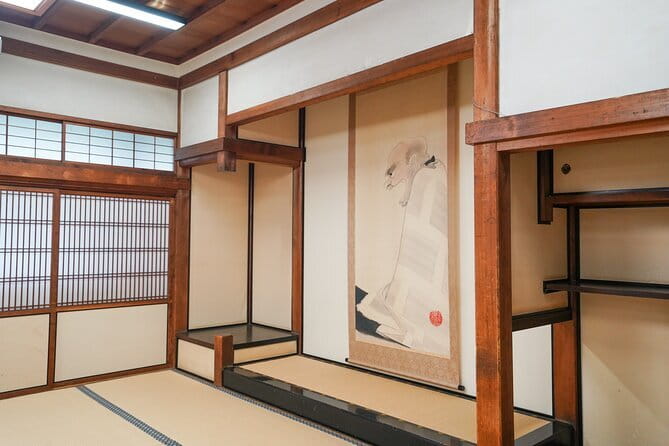
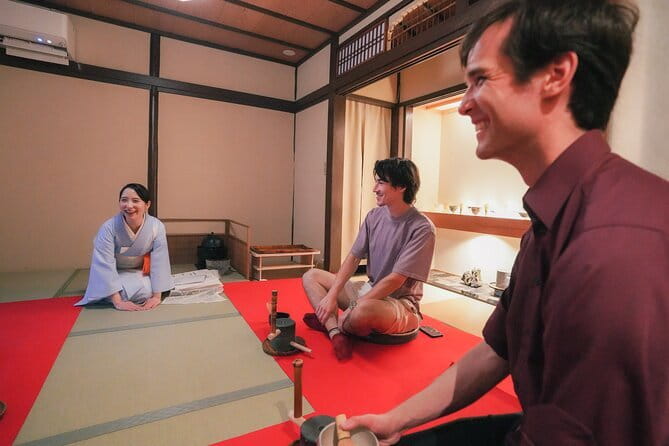
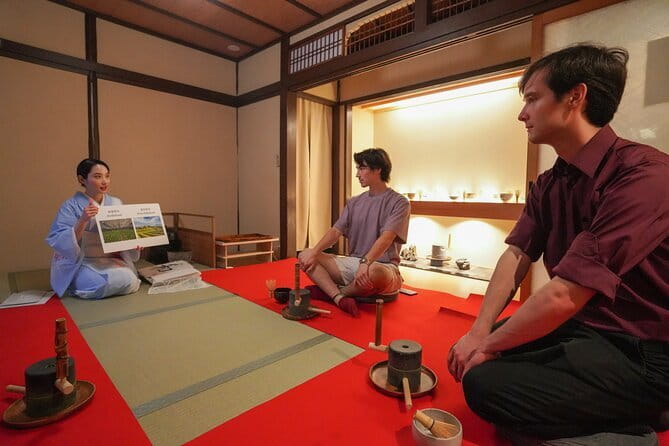
The final hour takes place at a real tea house in a traditional Japanese house. This is the heart of the experience.
You receive matcha and take part in a tea ceremony under the instruction of a tea master. The wording suggests participation rather than a performance you simply watch. That distinction is important. You get to connect the earlier discussion of bowls, craft, and wabi-sabi with the movements and tools used to prepare the drink.
The ceremony is limited to people aged six and older. Younger children may come along, but one adult must accompany them outside the facility during the tea experience. Families should factor this into their plans before booking.
The tea ceremony is also where the tour’s pace slows down. After the walking and temple visits, the one-hour session gives you time to focus on the ritual. Matcha can be bitter and earthy, and the experience is about preparation and attention as much as taste.
Tea ceremony customs can feel formal if you do not know what to do. That is exactly why instruction helps. You are not expected to arrive as an expert. The tea master’s guidance provides the structure, while the earlier city walk gives the ceremony more meaning.
Photos are included during the tour, so you should receive pictures taken along the way. The information does not specify how many photos you get or when they are delivered, so do not assume a large edited gallery.
What the $94.45 price delivers
At $94.45 per person, this is not the cheapest way to see a Kyoto temple or drink matcha. Its value comes from combining several separate activities into one guided route.
Your price includes an English-speaking local guide for about three hours, entrance fees for two temples, the matcha tea ceremony in a traditional Japanese house, and photos taken during the walk. You are also paying for route planning in a part of Kyoto where it is easy to lose time moving between Gion, temple grounds, craft shops, and Kiyomizu.
I think the price makes the most sense if you want a ready-made cultural introduction and do not want to arrange a temple visit, a craft stop, and a tea ceremony separately. The small group limit of seven improves the value because you can ask questions without competing with a large crowd.
It makes less sense if your main goal is a long temple visit, extensive shopping, or a full meal. Additional food and drinks cost extra, and each sight receives a short visit. Independent visitors who already know Kyoto and feel comfortable arranging their own tea ceremony may find the package less necessary.
Group size, weather, and practical comfort
A maximum of seven people is one of the strongest practical features. Small groups usually make it easier to hear the guide, pause for questions, and stay together on narrow streets. They also make the tea ceremony feel less like a mass activity.
The group can include other participants, so you are not guaranteed a private tour. If you want a completely personal schedule, this is not the right format.
Weather can cancel the activity when conditions are unsafe. Kyoto’s temperature range is serious, not a minor footnote. Summer heat can reach 40°C, while winter temperatures can fall to about -5°C. Bring suitable clothing, water for the walking sections, and shoes that can handle several stops.
The tour is near public transportation at the start, and most people can participate. The information does not list special accessibility arrangements, so anyone with mobility concerns should confirm details before booking.
Free cancellation and rescheduling are available until 24 hours before the start time. Inside that window, changes are not accepted and the amount paid is not refunded. Cutoff times follow local Kyoto time.
Who will enjoy this Kyoto walk most?
I would recommend this experience to first-time Kyoto visitors who want more than a quick matcha tasting. It offers a clear story: tea begins in Gion, gains meaning in temple and garden settings, takes shape in a raku bowl, and ends with preparation in a tea house.
It also suits couples, solo visitors, and small families with children aged six and older. The group size gives solo participants some company without the feel of a large bus tour.
You may want another option if you prefer a slow, academic temple visit, a food-focused outing, or a completely private guide. You should also think carefully about the language concern if you need every explanation delivered loudly and in detailed English.
Should you book The Way of Tea?
Book it if you want a compact, well-organized introduction to Kyoto’s tea culture, with temples and crafts included rather than treated as unrelated stops. The best feature is the progression from city walk to tea bowl to hands-on ceremony, and the two included temple admissions help justify the price.
Skip it if you already have a detailed Kyoto plan, want substantial time at each temple, or dislike fixed schedules. Arrive early, dress for the weather, wear good walking shoes, and keep your afternoon open after the Gion meeting point. For the right visitor, this is a thoughtful way to see how Kyoto’s tea tradition connects places, objects, and everyday actions.
FAQ
How long does The Way of Tea tour last?
The experience lasts approximately three hours and 30 minutes. The tea ceremony itself takes about one hour.
Where does the tour begin?
It begins at the Statue of Izumo-no-Okuni outside Exit 5 of Gion Shijo Station on the Keihan Line, in Kawabatacho, Higashiyama Ward, Kyoto.
How do I identify the guide?
The guide will be holding an orange signboard marked Magical Trip Tour.
Where does the tour end?
It ends at the tea experience location at 4-chōme-172-7 Kiyomizu, in Kyoto’s Higashiyama Ward.
Is temple admission included?
Yes. Entrance fees for two temples are included in the experience.
Is the tea ceremony included?
Yes. The tour includes a matcha tea ceremony in a traditional Japanese house, with instruction from a tea master.
Can children join the tea ceremony?
The tea ceremony can accommodate children aged six and older. Younger children may come along, but one adult must stay outside the facility with them during the ceremony.
What is the maximum group size?
The activity has a maximum of seven participants. Other participants may be part of your group.
What happens if I arrive late?
The tour starts on time. If you arrive late and miss the group, you cannot join the tour, reschedule, or receive a refund.
Can I cancel for a full refund?
Yes, if you cancel at least 24 hours before the experience starts. Cancellations or changes made less than 24 hours before the start time are not accepted and are not refunded.
Just added around Kyoto
- Kyoto: Private Customizable Day Trip by Car★ 5.0 · 38 reviews
- Kyoto: Gion Night Walking Tour with Geisha Insight★ 5.0 · 39 reviews
- Kyoto: Full Day Bike Tour★ 4.9 · 39 reviews
- Private Japanese Calligraphy in Kyoto – Learn Shodō with a Master★ 5.0 · 39 reviews
- Kyoto: Gion Evening Walk with Hidden Gems, Geisha & Sake★ 5.0 · 41 reviews
- Experience a tea ceremony in an authentic tearoom, in Kyoto!★ 4.5 · 41 reviews
- Kyoto Private Photo Shoot & Tour by SnapKyoto★ 5.0 · 41 reviews
- Bamboo Grove Temple and Garden Views Tour★ 5.0 · 41 reviews
Temple & Shrine Tours, compared.
Fushimi Inari, Kinkakuji, Bamboo Grove 1 Day Bus Tour
Read our review →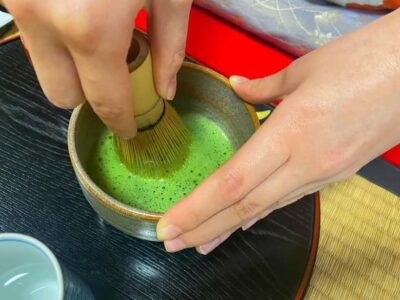
Tea Ceremony in a Traditional Tea House in Kiyomizu
Read our review →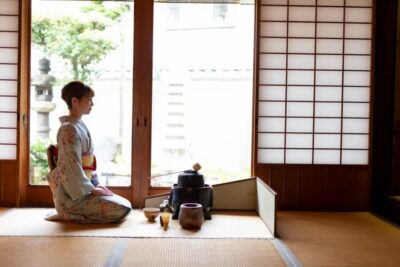

Meiji Shrine, Asakusa, Skytree Bus Tour and Cruise
Read our review →
Fushimi Inari Hidden Hiking Tour (Private Option Available)
Read our review →
Osaka/Kyoto:Kinkakuji,Arashiyama,FushimiInariShrine,NaraPark
Read our review →
Asakusa Walking Tour with Sensoji Temple Visit
Read our review →
Nikko: Kegon Falls, Lake Chuzenji & Toshogu Temple
Read our review →Browse the lists this tour appears in