
Reviewed · TEA CEREMONY EXPERIENCES
Experience a tea ceremony in an authentic tearoom, in Kyoto!
Slow down in Kyoto for 45 minutes. This tea ceremony takes place in an authentic tearoom inside a 130-year-old townhouse, giving you a calm setting far from the city’s busiest sights. You watch a formal demonstration, taste matcha with traditional dried sweets, then prepare your own bowl of tea.
I especially like the hands-on lesson and the small group size, which is limited to 10 people and may feel private when numbers are low. The host, Kaori, is praised for her clear English, patience, and warm manner. The main drawback is value: at $39.63 per person for less than an hour, this is a short introduction rather than a full study of tea ceremony, and some people may find the price high.
In This Review
- Key points at a glance
- Entering a Kyoto townhouse near Nishinokyo
- Watching the demonstration and learning the custom
- Sweets from Shioyoshi-ken and the first taste of matcha
- Making your own bowl of matcha
- A personal setting, with group size kept small
- Sitting comfort and the pace of the ceremony
- Is $39.63 a fair price?
- Who will enjoy this tea ceremony most?
- Should you book it?
- FAQ
- Where does the tea ceremony take place?
- How long does the experience last?
- What happens during the tea ceremony?
- Is the activity suitable for beginners?
- Is the experience conducted in English?
- How many people can join?
- Is a kimono included?
- Can I cancel for a full refund?
Key points at a glance
- Enter through the garden: The experience begins by entering the tearoom from the garden, adding a small sense of ceremony before the lesson even starts.
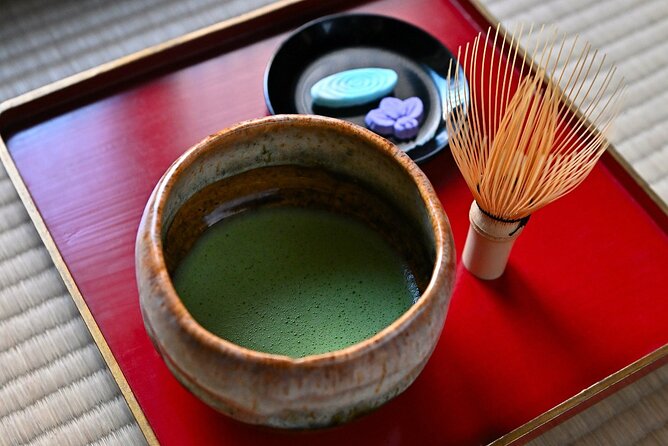
- Learn by making matcha: You do not only watch. You receive instructions and whisk your own matcha tea.
- Taste Kyoto sweets: The dried sweets come from Shioyoshi-ken, a long-established confectionery shop, and are made with Japanese wasanbon sugar.
- Meet Kaori: Her English, patience, humor, and careful explanations receive repeated praise.
- Expect a brief introduction: The session lasts about 45 minutes, though several descriptions place it closer to an hour.
- Plan for floor seating: Traditional sitting can be difficult with bad knees, but a stool is available if needed.
Entering a Kyoto townhouse near Nishinokyo
The meeting point is at 22-26 Nishinokyo Ikenouchicho in Nakagyo Ward, Kyoto, near public transportation. The activity begins and ends at the same address, so you do not need to arrange a separate return transfer or find your way to a different neighborhood afterward.
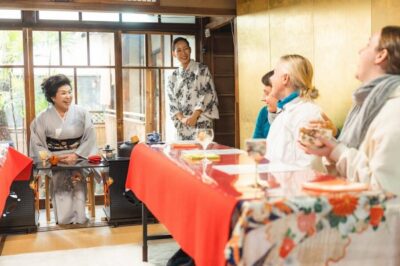
The setting does much of the work here. Rather than holding the lesson in a modern studio or a large visitor center, the tea ceremony takes place in the tearoom of a Kyoto townhouse about 130 years old. You enter from the garden, which gives the start a quieter, more traditional feel.
That detail matters because tea ceremony is not simply about drinking green tea. The room, garden, movements, utensils, sweets, and manner of serving all form part of the experience. Even in a short session, the old house helps you understand why the surroundings receive as much attention as the tea itself.
The address is slightly away from Kyoto’s best-known tourist spots. That is useful if you want a break from crowded temple approaches and packed shopping streets. At the same time, you should allow enough time to locate the townhouse, especially if you are coming from another part of the city.
More Tea Ceremonies in Kyoto
- Kyoto: Tea Ceremony in a Traditional Tea House in Kiyomizu
★ 4.9 · 3,519 reviews - Kyoto: Tea Ceremony Ju-An at Jotokuji Temple
★ 4.9 · 3,207 reviews - Kyoto: 45-Minute Tea Ceremony Lesson Experience
★ 4.3 · 2,378 reviews
Watching the demonstration and learning the custom
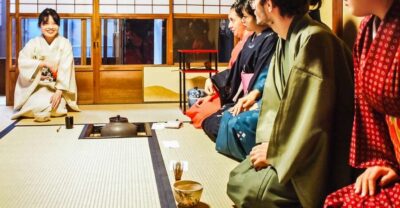
Your host first explains the history and culture of tea ceremony. You learn how to appreciate matcha, how it is properly drunk, and why the ceremony follows a set sequence.
The demonstration is an important part of the session. You watch the host prepare tea before trying it yourself, so you can see the pace, hand movements, and attention to detail. The aim is not to make you perform a difficult ritual perfectly. It is to show you the meaning behind the actions.
The strongest part of the experience is the way the lesson combines explanation with observation. Tea ceremony can look mysterious if you only see it from a distance. Here, you can ask questions and learn why the tea is presented in a particular way, how to receive it, and how to show appreciation.
Kaori is often singled out for her English and her calm, friendly teaching style. That makes a real difference. Cultural activities can be awkward when instructions are unclear, but the available information indicates that English-speaking participants can follow the process comfortably.
The session also explains how to enjoy matcha without traditional tea utensils at home. That practical touch gives the activity a life beyond Kyoto. You may not recreate a formal ceremony in your kitchen, but you can take home the basic method and make matcha with ordinary equipment.
Sweets from Shioyoshi-ken and the first taste of matcha
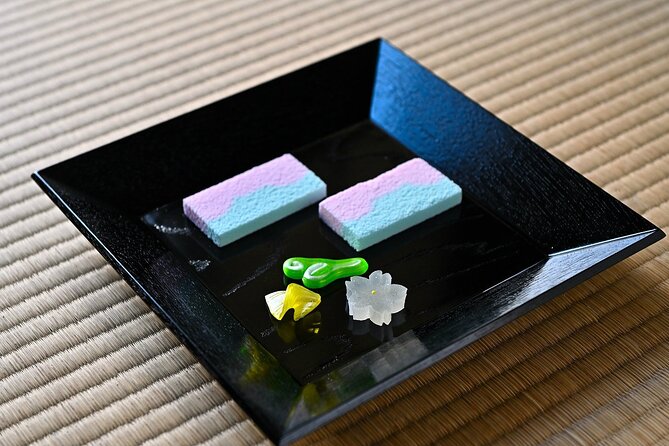
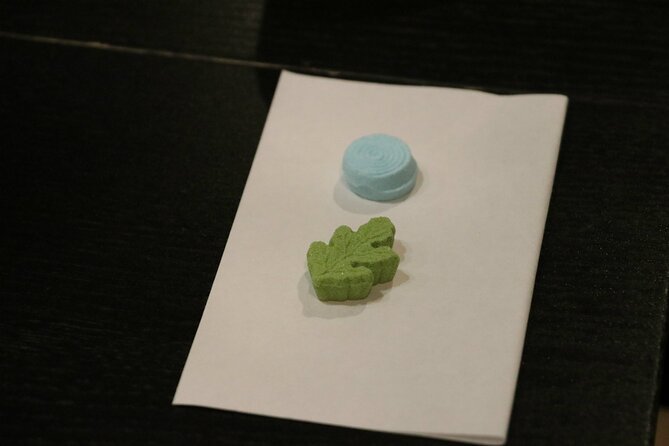
During the demonstration, you enjoy dried sweets from Shioyoshi-ken, a long-established Japanese confectionery shop in Kyoto. These are small sweets, not a substantial snack, but they have a clear purpose in the ceremony.
The sweets are made with wasanbon, a fine Japanese sugar associated with traditional confectionery. Their sweetness balances the bitter edge of matcha and prepares your palate for the tea. If you expect a large dessert or a tasting menu, you may be disappointed. Think of the sweets as part of the ritual, not as the main food offering.
This is also where the experience may divide opinion. Some people appreciate the cultural detail and the quality of the sweets. Others may see two small sugary pieces and a bowl of tea as too little for the price. I think your expectations matter. If you are paying for refreshments, this is not a strong bargain. If you are paying for a guided cultural lesson in an old tearoom, the sweets make more sense.
The matcha itself comes from a historic shop in Kyoto. You taste it as part of the ceremony, then learn how to prepare your own bowl. One particularly useful detail is that the lesson does not stop at tasting. You handle the process yourself, which makes the flavor and texture easier to understand.
Making your own bowl of matcha
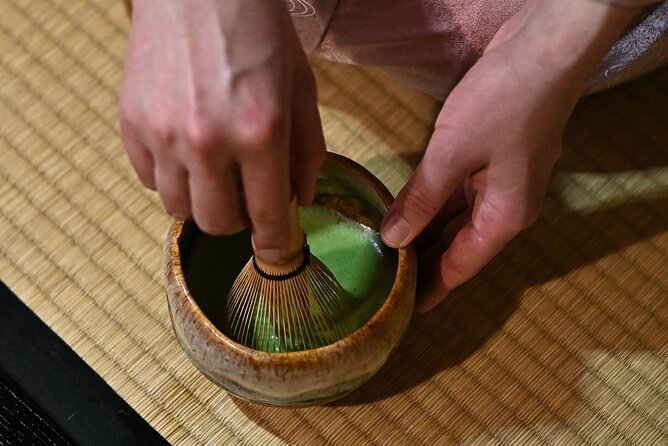
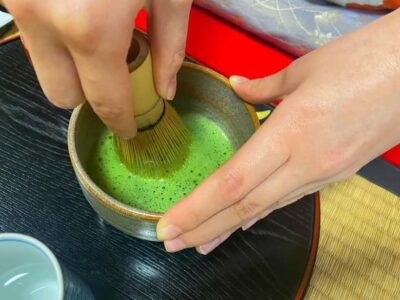
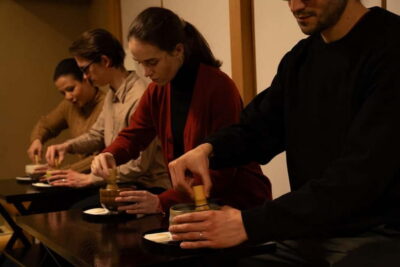
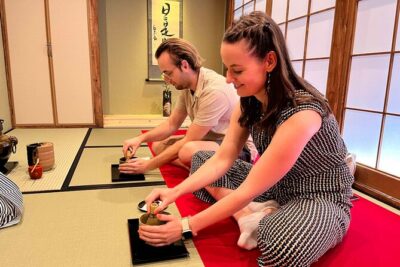
After watching the demonstration, you prepare your own matcha under instruction. This is the most active part of the experience and the reason I would choose it over a purely theatrical tea presentation.
You receive step-by-step guidance, so beginners do not need previous experience. The host shows you how to make the tea, how to hold and use the whisk, and how to serve and drink the matcha in the proper way. You can expect the focus to be on learning and participation rather than on producing a flawless bowl.
That distinction is worth keeping in mind. A formal tea ceremony can take years to study, and a 45-minute session cannot cover every school, utensil, gesture, or seasonal detail. What you get is a friendly introduction with a practical lesson attached.
Several people have found the instructions useful enough to continue making matcha at home. One participant bought a matcha brush after the session. That is a good sign for anyone who likes taking a small, usable skill home from a trip.
The atmosphere also appears forgiving. The host is described as patient and willing to explain each step carefully. If you are nervous about making a mistake, this should feel more like a lesson than a test.
A completely different kind of day out in Kyoto:
- PERFECT KYOTO 1-Day Bus Tour
★ 5.0 · 13,518 reviews - Kyoto: Fushimi Inari, Kinkakuji, Bamboo Grove 1 Day Bus Tour
★ 4.8 · 4,316 reviews - Kyoto Geisha Walking Tour: Gion District & Hidden Gems
★ 4.7 · 3,273 reviews - Kyoto: Gion Magical Night Walking Tour with Geisha Trivia
★ 4.9 · 2,393 reviews
A personal setting, with group size kept small
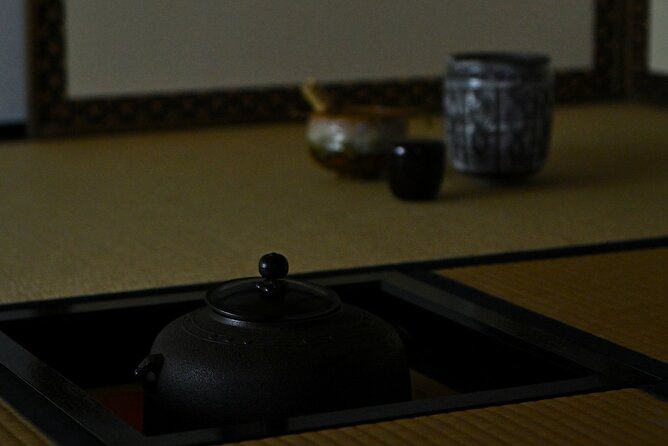
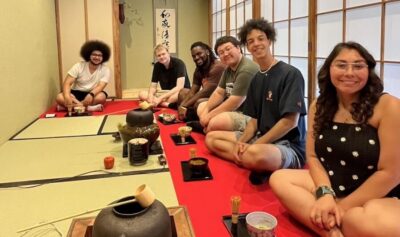
The maximum group size is 10 people. That is small enough for the host to answer questions and watch each person prepare tea. It does not guarantee a private booking, however.
Several descriptions refer to groups of three or four receiving a private-feeling ceremony. That can make the setting especially appealing for families, couples, or a small group of friends. If the full group of 10 is present, the room will naturally feel less intimate, but the limit still keeps the class from becoming a large demonstration.
The host’s personality is central to the experience. Kaori is repeatedly described as welcoming, kind, funny, and patient. She wears a kimono for the ceremony, according to one detailed account, but you should not expect to wear one yourself. A kimono experience is not included in the information provided.
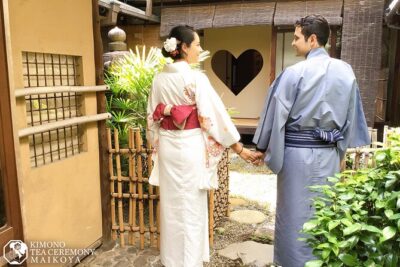
That point is important because some Kyoto cultural activities combine tea with dressing up. This one focuses on the tea, the room, the sweets, and the preparation lesson. If you want photographs in a rented kimono, you will need a different activity or a separate booking.
Sitting comfort and the pace of the ceremony
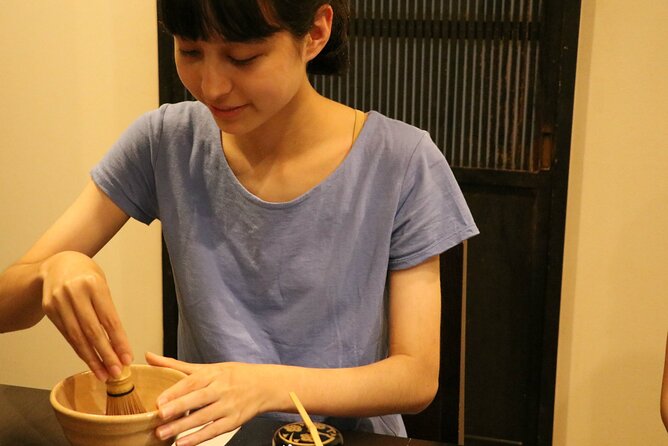
Traditional tea ceremony often involves sitting on the floor. One person found this difficult with bad knees but managed with a stool. If you have mobility concerns, contact the provider before booking and ask about seating arrangements.
The experience is short, lasting approximately 45 minutes, although some descriptions call it about an hour. That makes it easy to fit between sightseeing plans. You can learn the main steps without giving up half a day.
The short format is both a strength and a limitation. It suits families, first-time visitors, and anyone who wants a taste of Japanese culture without committing to a long formal lesson. It may feel too brief if you already study tea ceremony or want a slower, more detailed presentation.
I would avoid scheduling it immediately before a major timed attraction. Confirmation is sent within 48 hours and depends on availability, and one reported scheduling dispute led to a missed appointment and a request for a refund. The provider and booking platform gave different accounts of that incident, so the practical lesson is simple: check the confirmed time carefully, save the confirmation, and arrive at the stated meeting point with time to spare.
Is $39.63 a fair price?
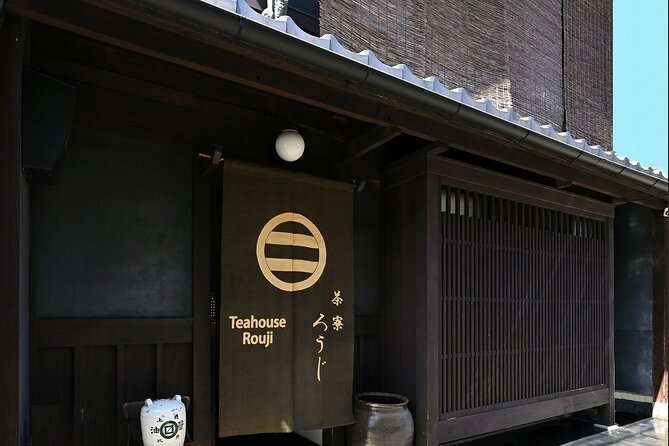
At $39.63 per person, this is not the cheapest way to drink matcha in Kyoto. You can find tea and sweets elsewhere for much less.
The price becomes easier to justify when you count the setting, the instruction, the historic confectionery, the guided demonstration, and the chance to prepare tea yourself. You are paying for access to a traditional room and for a teacher who explains the ceremony in English, not just for a beverage.
Still, the experience lasts less than an hour. If you want a long cultural workshop, a full meal, a kimono rental, or an elaborate performance, this will not meet those expectations. One person considered it expensive for the length and felt the activity was only a short taste of the tradition.
I see it as a reasonable mid-range cultural activity for someone who values context and personal guidance. It is less convincing for a visitor who only wants to sample matcha or take a quick photograph in a traditional room.
The free cancellation policy allows a full refund if you cancel at least 24 hours before the local start time. Changes or cancellations made less than 24 hours in advance are not accepted for a refund. The activity also requires a minimum number of participants, so a provider cancellation for that reason brings an offer of another date or a full refund.
Who will enjoy this tea ceremony most?
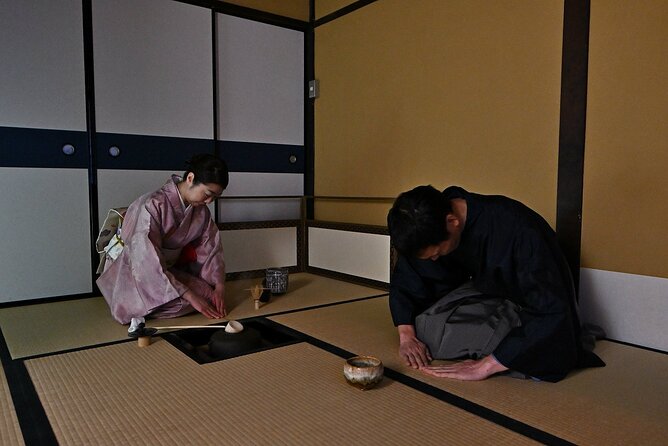
I would recommend this experience to first-time visitors who want a clear introduction to tea ceremony without a full day of study. It is also a good fit for families, since the session is brief and hands-on rather than purely formal.
Couples and small groups should like the old townhouse and the private-feeling setting when attendance is low. English speakers benefit from the host’s strong communication and willingness to answer questions.
This is also a smart choice if you are curious about matcha itself. You will learn enough to understand the basic preparation and can try making it at home afterward.
I would hesitate if you dislike sitting on the floor, expect a large serving of food, or want to dress in a kimono. I would also think twice if you have already taken several tea ceremony lessons. The session is designed as an introduction, not an advanced class.
Should you book it?
Book this Kyoto tea ceremony if you want a personal, well-explained first look at Japanese tea culture in an old townhouse. The best reasons are the authentic tearoom, the small-group format, the traditional sweets from Shioyoshi-ken, and the chance to make your own matcha.
Skip it if $39.63 feels high for a 45-minute activity or if you want more than a short cultural sampler. Check the appointment time carefully, ask about a stool if needed, and arrive ready to sit quietly, listen, taste, and take your turn with the whisk. For many people, that simple hands-on moment will be the part they remember.
FAQ
Where does the tea ceremony take place?
It takes place at 22-26 Nishinokyo Ikenouchicho in Nakagyo Ward, Kyoto, Japan. The activity is held in the tearoom of a 130-year-old Kyoto townhouse.
How long does the experience last?
The stated duration is approximately 45 minutes. Some descriptions characterize it as about an hour.
What happens during the tea ceremony?
You learn about the history and culture of tea ceremony, watch the host demonstrate the process, taste matcha with dried sweets, and prepare your own matcha.
Is the activity suitable for beginners?
Yes. Detailed instructions are provided, including guidance on how to make matcha and how to enjoy it without traditional tea utensils at home.
Is the experience conducted in English?
The host, Kaori, is described as speaking very good English, and the instructions and explanations are intended to be accessible to English-speaking participants.
How many people can join?
The maximum group size is 10 people. Smaller groups may have a more private-feeling experience.
Is a kimono included?
No kimono rental or dressing experience is stated as part of the activity. The host may wear a kimono, but participants should not expect to wear one.
Can I cancel for a full refund?
You can cancel for a full refund at least 24 hours before the experience start time. Cancellations or changes made less than 24 hours in advance are not accepted for a refund.
Just added around Kyoto
- Kyoto: Gion Night Walking Tour with Geisha Insight★ 5.0 · 39 reviews
- Kyoto: Private Customizable Day Trip by Car★ 5.0 · 38 reviews
- Kyoto: Full Day Bike Tour★ 4.9 · 39 reviews
- Private Japanese Calligraphy in Kyoto – Learn Shodō with a Master★ 5.0 · 39 reviews
- Kyoto: Gion Evening Walk with Hidden Gems, Geisha & Sake★ 5.0 · 41 reviews
- Kyoto Private Photo Shoot & Tour by SnapKyoto★ 5.0 · 41 reviews
- The Way of Tea: Kyoto Crafts, Hidden Temples & Wabi-Sabi Walk★ 5.0 · 41 reviews
- Bamboo Grove Temple and Garden Views Tour★ 5.0 · 41 reviews
Tea Ceremony Experiences, compared.
Tea Ceremony in a Traditional Tea House in Kiyomizu
Read our review →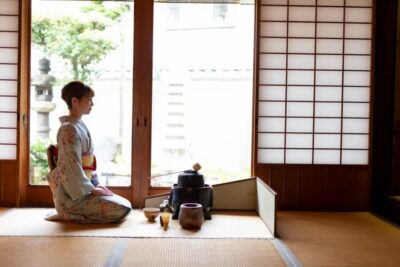
Browse the lists this tour appears in