
Reviewed · TEA CEREMONY EXPERIENCES
Kyoto: 45-Minute Tea Ceremony Lesson Experience
Kyoto’s quietest lesson may be its best. This 45-minute tea ceremony near Kinkakuji gives you a chance to sit on tatami, watch a licensed Urasenke tea master prepare matcha, and then make the tea yourself. I like the serious, traditional approach, especially since this is taught as it would be for Japanese beginners rather than trimmed into a quick tourist show. I also like the price: at $22 per person, it is one of Kyoto’s more affordable ways to learn a major part of Japanese culture.
The main consideration is the pace. Forty-five minutes passes quickly, and the ceremony follows real rules. You will need to stay attentive and respectful, and the experience may feel rushed at the beginning and end. That is part of its appeal for some people, but it is not a loose, drop-in activity where you can wander in and out.
In This Review
- Key points before you book
- Sitting down at the tea house near Kinkakuji
- Watching a tea master prepare matcha
- Making your own tea according to the rules
- Two teas, Japanese sweets, and the question of matcha
- Choosing between public, private, and candlelight sessions
- Adding a kimono, and what the photos are like
- Why the $22 price is good value
- Who will enjoy this tea ceremony most
- Practical advice for a smooth visit
- Should you book this Kyoto tea ceremony?
- FAQ
- How long does the tea ceremony lesson last?
- How much does the experience cost?
- What is included in the basic experience?
- Is the tea ceremony taught in English?
- Can I make my own matcha?
- Is a kimono included?
- Can I take photos during the activity?
- Where does the activity meet?
- Can I sit on a chair instead of the tatami floor?
Key points before you book
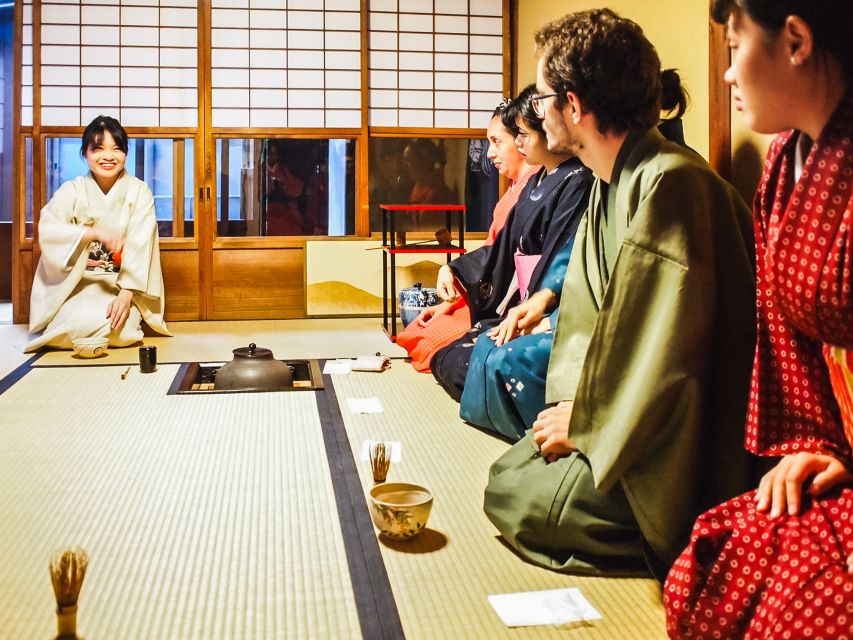
- A real Urasenke tea master leads the lesson: Urasenke is Japan’s largest tea ceremony school, and the instruction covers manners, gestures, history, and preparation.
- You make your own matcha: After watching the demonstration, you whisk your own tea and learn how each method affects the flavor.
- Two green teas and Japanese sweets are included: The tasting gives you more than one chance to decide what you think of matcha.
- The location is beside Kinkakuji: The tea house is a one-minute walk from the temple gate and Kinkakuji-Michi bus stop.
- Kimono and candlelight options change the mood: A kimono can be added for photos, while the candlelight session offers a quiet evening setting.
- This is a rule-based ceremony: Video recording is not allowed, and you should watch the provider’s etiquette video before arriving.
Sitting down at the tea house near Kinkakuji
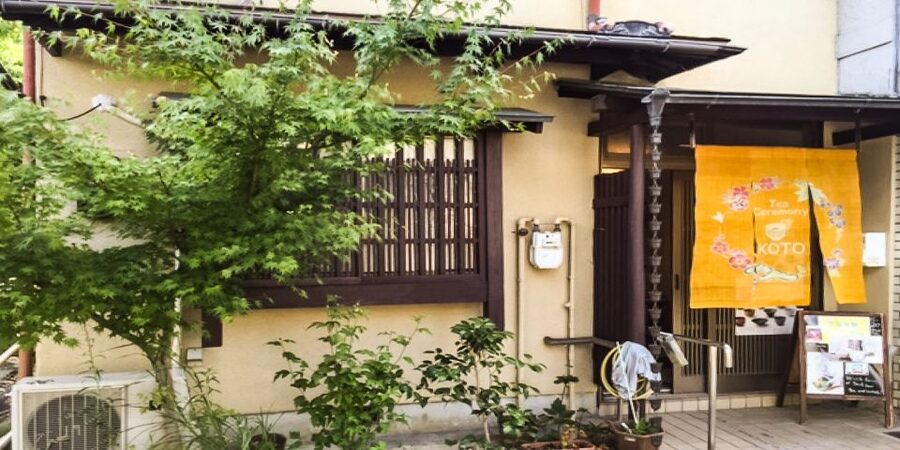
The meeting point is easy to reach once you know what to look for. Enter through the sliding door with the orange curtain. The tea house is a one-minute walk from Kinkakuji-Michi city bus stop and about one minute from the gate of Kinkakuji Temple, next to the bicycle parking area.
That location makes this a useful pairing with the Golden Pavilion. You can visit Kinkakuji first, then walk directly to the lesson. It also means you do not need to spend extra time crossing Kyoto for a short activity. From Kitaoji Subway Station or JR Enmachi Station, city buses 204 and 205 take about 10 to 15 minutes.
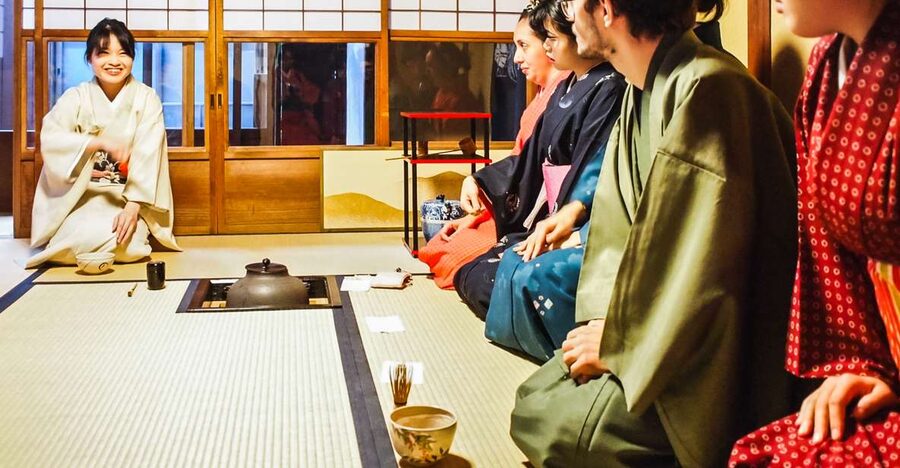
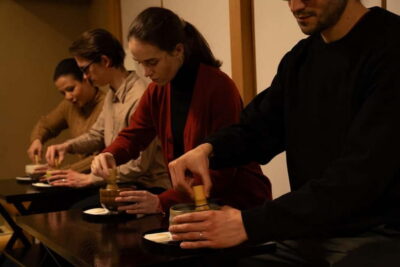
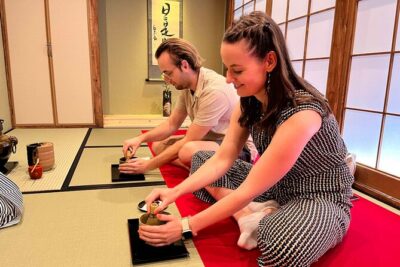
Inside, you take your place on a tatami mat. The floor setting matters. Tea ceremony is not simply about drinking powdered green tea. The way you sit, receive the bowl, turn it, and handle the utensils forms part of the lesson. The setting asks you to slow down, even if Kyoto’s buses and sightseeing schedule are doing the opposite.
There is no dress code. If sitting on the floor could be difficult, tell the supplier in advance. Chairs can be provided, which makes the activity more practical for people with mobility concerns.
More Tea Ceremonies in Kyoto
- Kyoto: Tea Ceremony in a Traditional Tea House in Kiyomizu
★ 4.9 · 3,519 reviews - Kyoto: Tea Ceremony Ju-An at Jotokuji Temple
★ 4.9 · 3,207 reviews - Kyoto: Table-Style Tea Ceremony at a Kyo-Machiya
★ 4.9 · 1,211 reviews
Watching a tea master prepare matcha
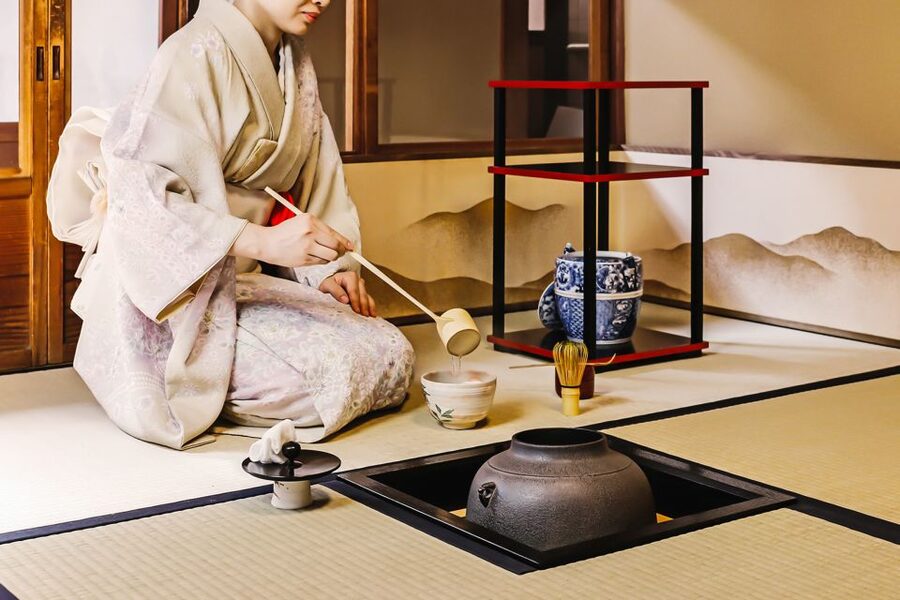
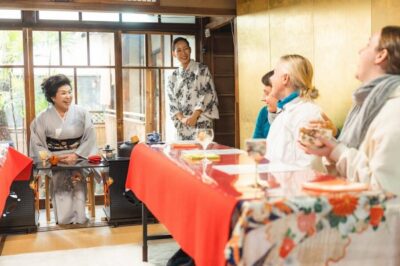
The lesson begins with a demonstration. Your English-speaking host, also able to teach in Japanese, carries out the ceremonial preparation of matcha. Each motion is deliberate, and the point is not speed. You watch how the tea is measured, mixed, presented, and received.
The instructor also explains the spiritual role of the ceremony. The subject is not treated as a simple explanation of green tea. You learn why the ceremony has rules and how the host’s movements show care for the person receiving the tea.
The presentation is one of the strongest parts of the activity. Several people who have taken the class found the English easy to follow, and one guide named Joseph was praised for being friendly and helpful. The teaching style can vary with the individual host, though. Most descriptions point to polite, clear instruction, but a few people found the manner a little abrupt. If you expect a playful performance, you may find the formal tone unusual. If you want instruction with fewer shortcuts, it fits well.
Pay attention to the explanation of flavor. The host discusses how different tea-making methods affect the taste. That is useful because matcha can be bitter, grassy, sweet, creamy, or mild depending on its quality and preparation. The class gives you a better sense of why one bowl tastes smoother than another.
Making your own tea according to the rules
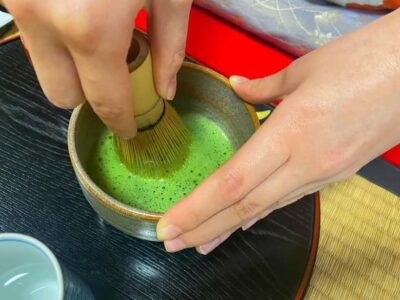
After watching, you get your turn. The host guides you through making matcha and explains what to say and do during the ceremony. You are not left to guess how to hold the whisk or how to participate.
This hands-on part gives the activity its value. A demonstration alone can be pleasant, but preparing your own tea forces you to notice the small details. You see how much movement is involved in whisking, how the foam develops, and how the ceremony’s structure shapes the experience.
The goal is not to become a tea master in 45 minutes. You are learning the basic sequence and the etiquette that surrounds it. The supplier describes this as the full thin-tea ceremony rather than a simplified version made only for foreign visitors. That means you should be ready to follow instructions carefully.
The ceremony can be quiet. Phones may be used for photos, but video recording is not allowed. I consider that a benefit here. Without a phone held up for filming, you can watch the bowl, the whisk, and the host’s hands. It also shows respect for a practice that is being taught as a living tradition, not just staged as a photo opportunity.
You will likely make a few small mistakes. That is normal and part of the lesson. The host is there to guide you, and the rules are explained to help prevent misunderstandings. Before your visit, watch the short Do’s and Don’ts videos at the provider’s information page. This is especially important if you have never attended a tea ceremony.
Two teas, Japanese sweets, and the question of matcha
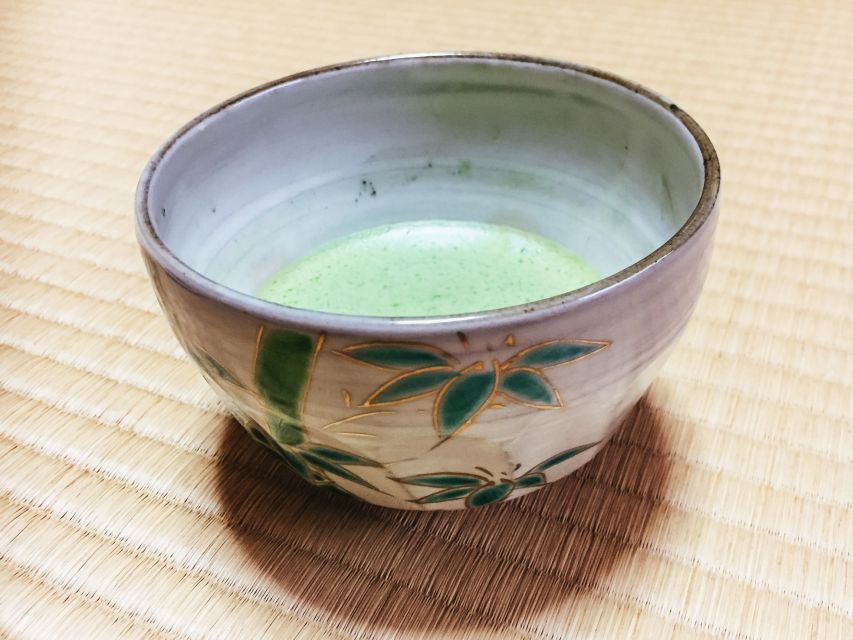
The experience includes two flavors of Japanese green tea and traditional Japanese sweets. The sweets are not just a snack. Their sweetness balances the sharpness of matcha and helps you notice the tea’s character.
If you normally avoid matcha, keep an open mind. Some people who dislike its bitterness found the tea here smooth and sweet. Others may still find the flavor strong. Your reaction will depend on the tea itself and your usual taste, but the chance to try two versions makes the $22 fee easier to justify.
The class also gives you a small lesson in presentation. The bowl, the sweets, and the gestures around them all have a role. You may hear about the ceramics used for drinking, not only the tea. That extra attention to the serving ware helps explain why Japanese tea ceremony is treated as an art form involving objects, movement, and hospitality.
There is no large meal. Plan to eat before or after if you need lunch or dinner. The included sweets are best understood as part of the ritual rather than a substantial refreshment.
A completely different kind of day out in Kyoto:
- PERFECT KYOTO 1-Day Bus Tour
★ 5.0 · 13,518 reviews - Kyoto: Fushimi Inari, Kinkakuji, Bamboo Grove 1 Day Bus Tour
★ 4.8 · 4,316 reviews - Kyoto Geisha Walking Tour: Gion District & Hidden Gems
★ 4.7 · 3,273 reviews - Kyoto: Gion Magical Night Walking Tour with Geisha Trivia
★ 4.9 · 2,393 reviews
Choosing between public, private, and candlelight sessions
You can select the format that suits your group.
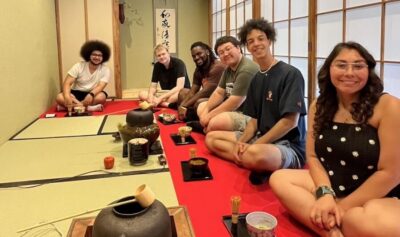
The public ceremony places you with a small group. This is a good choice if you like sharing a cultural lesson with other people and want the standard experience at the lowest stated price. It may feel less personal than a private booking, but the group setting reflects how beginners can learn together.
The private ceremony is designed for couples, families, or anyone who wants closer attention from the tea master. You get a quieter setting and can move at a pace suited to your group. The private option is likely the better choice if you have many questions, are bringing older relatives, or want a more intimate memory. Check the booking price for the private format, since the stated $22 price is per person for the activity and options can differ.
The candlelight ceremony is available as a special evening session. Traditional candlelight changes the mood at once. It recalls an older Kyoto atmosphere and makes the room feel quieter and more sheltered from the city outside.
Families have used the candlelight option successfully, including groups who also wore kimonos. It is a particularly good pick if you have already spent the day visiting temples and want something calm after sunset. Note that the taxi situation matters in the evening. Calling a taxi immediately after the activity may be difficult because taxi companies do not answer at once, but a large taxi stand is in front of the location and usually opens around 5:30 PM.
Adding a kimono, and what the photos are like
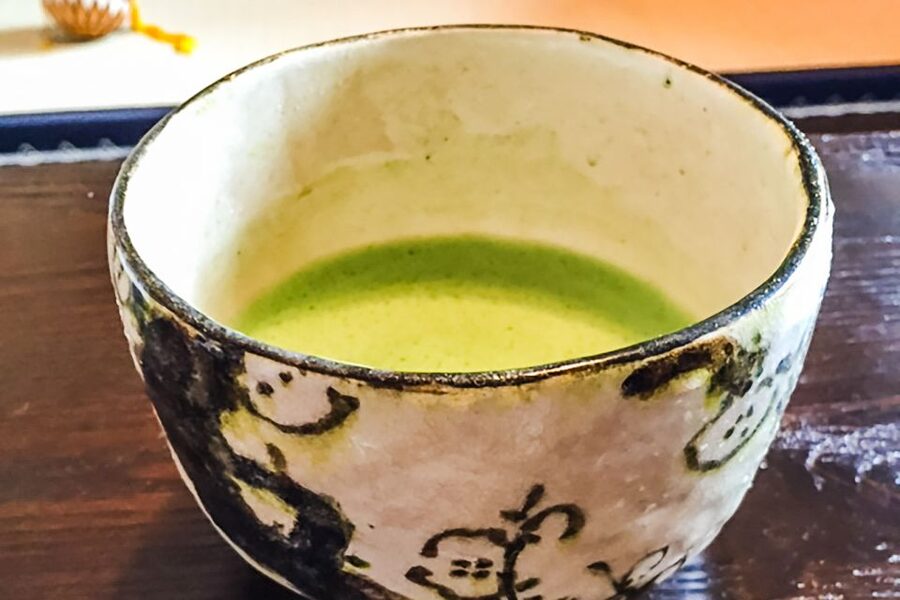
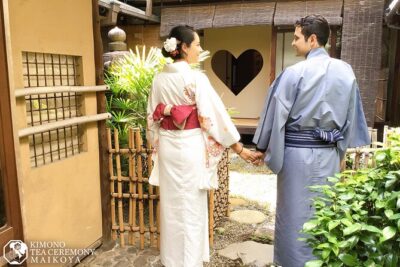
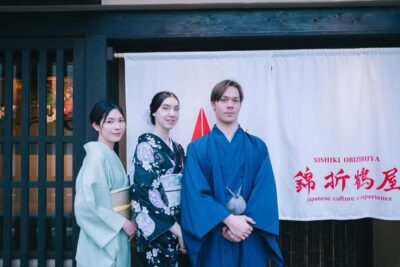
A kimono can be selected as an add-on during booking. It is not included in the basic price, and you need to arrive 20 minutes early for changing and preparation. You cannot reliably add it at the last minute, so decide when you reserve.
The kimono adds visual appeal, but its value is not only photographic. Sitting in traditional clothing helps you understand how posture and movement affect the ceremony. Several people found this made the experience feel more complete, while others noted that the dressing portion was quick. Keep your expectations realistic: this is a tea lesson with kimono rental, not a long fashion or styling session.
Hair setting is not included. If you want a particular hairstyle, arrange that separately. The activity permits photos, and the host may help take pictures after the ceremony. Video is not allowed.
After the ceremony, you can see examples of kimonos and woven textiles made in Kyoto’s Nishijin district. This is a worthwhile closing detail because it connects the tea room to another local craft tradition. You can take photos and look at the textiles without turning the entire lesson into a costume shoot.
Why the $22 price is good value
At $22 per person, this is inexpensive for Kyoto, especially considering that the lesson includes an English-speaking licensed tea master, two green teas, sweets, and the chance to prepare matcha yourself. You also get a cultural explanation rather than only a staged serving.
The short duration keeps the cost and time commitment low. You can fit it around Kinkakuji, a bus ride from northern Kyoto, or another afternoon plan. The tradeoff is that you do not have much time for lingering conversation, extended dressing, or a long photo session.
I would call it strong value for a first introduction. It gives you enough structure to understand the ceremony and enough participation to remember it. If you already study tea ceremony or want a lengthy private lesson, you may find 45 minutes too brief.
Free cancellation is available up to 24 hours before the start time, and you can reserve now and pay later. Still, arrive on time. A few people were allowed to join after arriving late, but missing the first part means losing the demonstration and the explanation that make the class work.
Who will enjoy this tea ceremony most
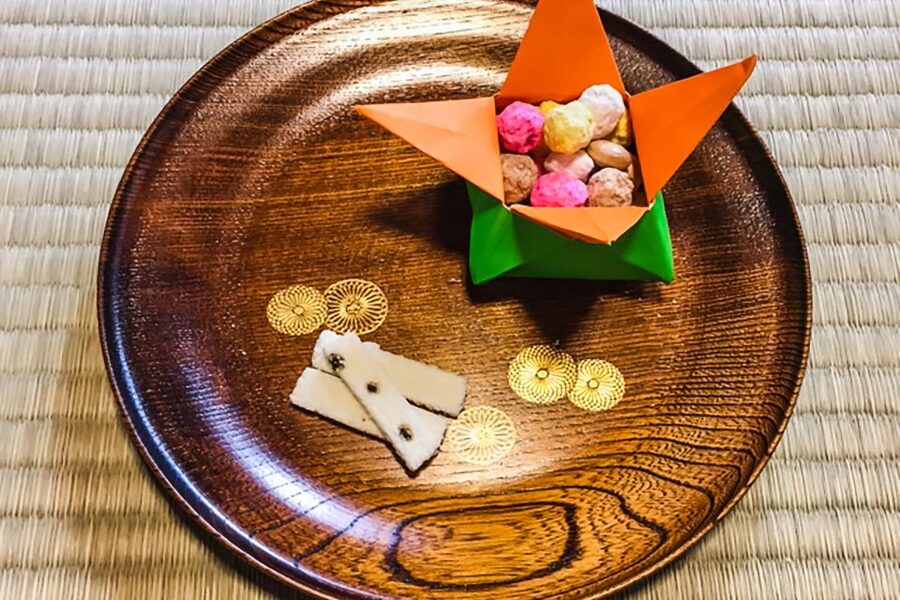
I would recommend it to you if you want more than a quick matcha tasting. It suits first-time visitors to Japan, couples, families, and anyone curious about how Japanese manners are built into daily actions.
It is also a good choice for people who prefer calm activities. The lesson is peaceful and quiet, with a clear focus on the tea master’s movements. The candlelight format works especially well for an evening memory, while the kimono add-on suits anyone who wants traditional photos.
You may want to choose another activity if you dislike sitting on the floor, though chairs can be arranged, or if you want a lively, highly casual performance. This ceremony expects attention. The rules are part of the experience, not an obstacle to it.
The lesson is also suitable for people who are unsure about matcha. You try two flavors, learn how preparation affects taste, and receive sweets to balance the tea. Do not expect to leave full, but do expect to understand the drink better.
Practical advice for a smooth visit
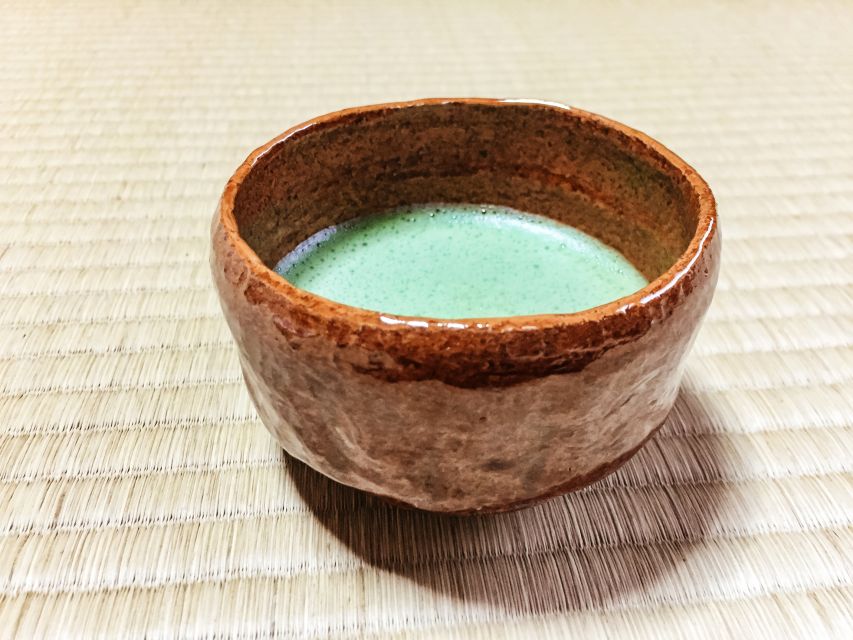
Arrive early if you have selected the kimono, since you must be there 20 minutes before the tea ceremony. For the standard session, aim to arrive with enough time to find the orange-curtained sliding door and settle on the tatami.
Wear clothing that allows comfortable sitting. There is no formal dress code, but very tight clothing or a short skirt may make floor sitting less pleasant. If you need a chair, contact the supplier before the activity rather than waiting until the start.
Watch the etiquette videos before you go. They explain what not to do and help you avoid accidental mistakes. You will enjoy the lesson more if you already know that the ceremony is formal and that video recording is prohibited.
Plan your transport after the class. The bus stops are close, and the Kinkakuji area is easy to combine with sightseeing. For evening sessions, do not assume you can call a taxi at once. Use the taxi stand in front of the activity when it is open.
The overall rating is 4.3 from 2,378 ratings, and the most consistent praise focuses on the host’s explanations, the calm setting, the chance to make matcha, and the sense that the ceremony is being treated with respect. Those are the reasons I would give this activity a place in a Kyoto itinerary.
Should you book this Kyoto tea ceremony?
Book it if you want an affordable, focused lesson led by a real Urasenke tea master. The combination of demonstration, hands-on preparation, history, sweets, and two green teas offers much more than a photo stop.
Choose the private or candlelight option if atmosphere matters most. Add the kimono if traditional photos are important, but arrive early and remember that hair styling is separate.
Skip it only if you want a casual tasting with no rules, or if 45 minutes feels too short for the kind of cultural lesson you have in mind. For most first-time visitors, this is a respectful and practical introduction to Kyoto’s tea tradition, especially when combined with nearby Kinkakuji.
FAQ
How long does the tea ceremony lesson last?
The activity lasts 45 minutes.
How much does the experience cost?
The listed price is $22 per person. Kimono rental and other selected options may cost extra.
What is included in the basic experience?
Two flavors of Japanese green tea and traditional Japanese sweets are included.
Is the tea ceremony taught in English?
Yes. The instructor can teach in English and Japanese.
Can I make my own matcha?
Yes. You first watch the tea master prepare matcha, then make tea yourself while receiving guidance on the correct method and manners.
Is a kimono included?
No. Kimono rental is an optional add-on that must be selected when booking. You need to arrive 20 minutes early if you reserve it.
Can I take photos during the activity?
Photos are allowed, including after the ceremony. Video recording is not allowed.
Where does the activity meet?
Enter through the sliding door with the orange curtain. The location is a one-minute walk from Kinkakuji-Michi city bus stop and about one minute from the gate of Kinkakuji Temple.
Can I sit on a chair instead of the tatami floor?
Yes. If sitting on the floor may be difficult, inform the supplier so chairs can be provided.
Just added around Kyoto
- Kyoto: Private Customizable Day Trip by Car★ 5.0 · 38 reviews
- Kyoto: Gion Night Walking Tour with Geisha Insight★ 5.0 · 39 reviews
- Kyoto: Full Day Bike Tour★ 4.9 · 39 reviews
- Private Japanese Calligraphy in Kyoto – Learn Shodō with a Master★ 5.0 · 39 reviews
- Kyoto: Gion Evening Walk with Hidden Gems, Geisha & Sake★ 5.0 · 41 reviews
- Experience a tea ceremony in an authentic tearoom, in Kyoto!★ 4.5 · 41 reviews
- Kyoto Private Photo Shoot & Tour by SnapKyoto★ 5.0 · 41 reviews
- The Way of Tea: Kyoto Crafts, Hidden Temples & Wabi-Sabi Walk★ 5.0 · 41 reviews
Tea Ceremony Experiences, compared.
Tea Ceremony in a Traditional Tea House in Kiyomizu
Read our review →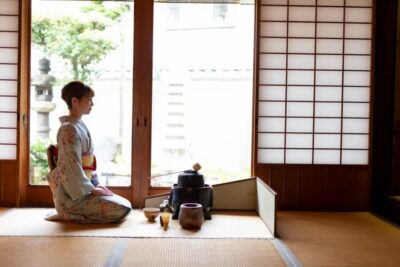
Browse the lists this tour appears in