
Reviewed · TEA CEREMONY EXPERIENCES
Kimono Tea Ceremony at Kyoto Maikoya, NISHIKI
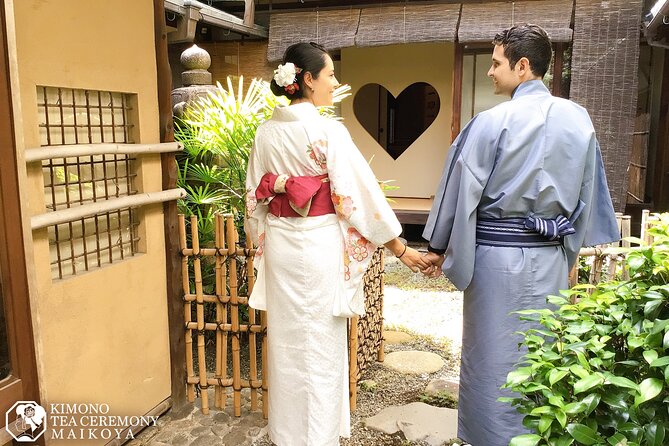
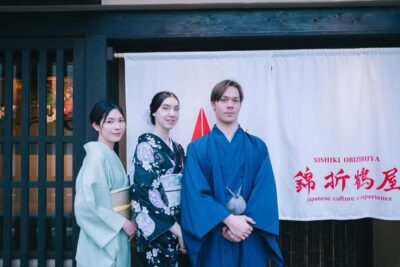
Put on a kimono, then make matcha. Kyoto Maikoya’s Nishiki tea ceremony joins two memorable parts of Japanese culture in one tidy 90-minute experience. I like the hands-on tea making, since you do more than watch a host perform, and I like the kimono dressing and simple hairstyling, which make the ceremony feel special and give you excellent photo opportunities. The main consideration is group size: although the booking information lists a maximum of two people per reservation, the ceremony itself may include several other participants.
You make your own way to the central Nishiki location, choose a kimono, sit on tatami flooring, learn the meaning behind the ritual, and finish with matcha and wagashi sweets. The price is $65.66 per person, which is fair if you want both dressing and ceremony in one booking, but less compelling if you only want a quiet, highly formal tea service.
In This Review
- Key points at a glance
- Why this Kyoto experience works so well
- Choosing a kimono and getting ready
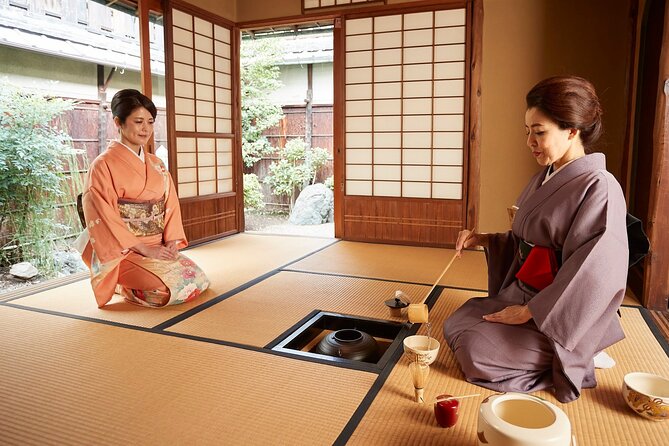
- Sitting on tatami for the tea ceremony
- Making matcha instead of only watching
- The Nishiki location and timing
- Is $65.66 a fair price?
- Who will enjoy this most?
- Useful tips before you go
- Should you book the Maikoya Nishiki ceremony?
- FAQ
- How long does the Kimono Tea Ceremony at Kyoto Maikoya last?
- What is included in the price?
- Do I need to arrange transportation?
- Can children attend the ceremony?
- Is the ceremony private?
- What happens if the experience is canceled because of bad weather?
Key points at a glance
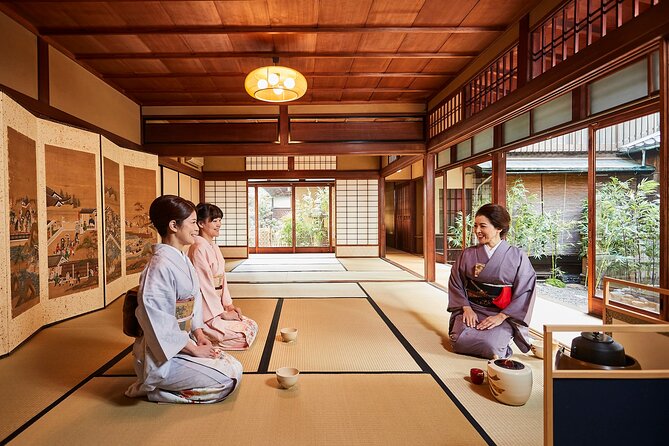
- Kimono and hairstyling come first: Staff help you dress properly, add simple hair ornaments, and provide a small purse for valuables.
- You make your own matcha: The tea master explains the utensils and guides you through mixing the tea yourself.
- The ceremony is educational: Expect background on tea customs, Kyoto, and the meaning behind the movements.
- Morning and afternoon times are available: That makes it easy to fit around Nishiki Market and central Kyoto sightseeing.
- The setting is traditional: Tatami floors, Japanese-style seating, tea utensils, sweets, and kimono create a strong sense of place.
- Plan for a shared experience: Sessions may include around 8 to 12 people, even though the reservation limit is two people per booking.
Why this Kyoto experience works so well
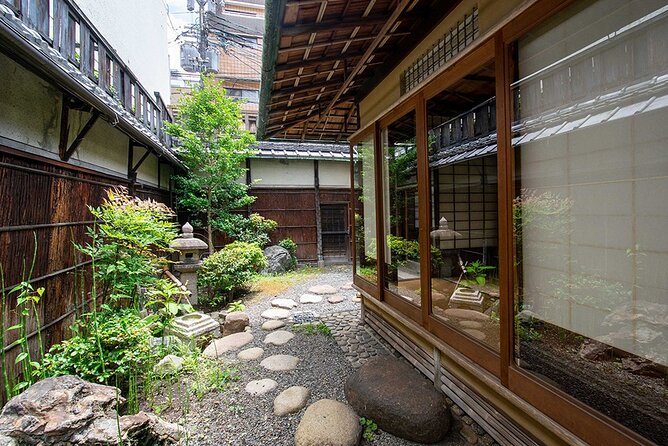
I like this activity because it avoids the usual problem of splitting a cultural experience into separate bookings. You do not need to find a kimono rental shop, get dressed elsewhere, and then hurry to a tea house. At Maikoya, the clothing, hair, tea, sweets, utensils, and explanation are handled in one place.
That convenience matters in Kyoto. A short visit can become a string of train rides, reservations, and small navigational puzzles. Here, you simply reach Kimono Tea Ceremony MAIKOYA Nishiki at 329 Ebiyacho, on Gokomachi-dori, south of Sanjo. After check-in, the experience follows a clear path from dressing room to tea room.
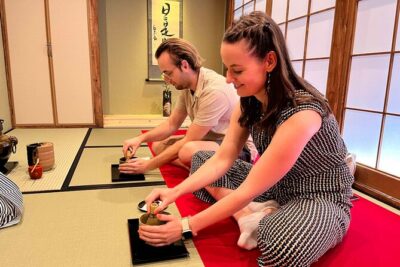
The ceremony also has a good balance of watching and doing. You see the host prepare tea in the traditional way, but you also learn how to use the whisk and make your own matcha. That small act helps the ritual make sense. Instead of looking at unfamiliar movements and wondering what they mean, you receive an explanation and then try the process yourself.
The activity is listed at 96 percent recommended, with a 4.8 rating from 911 ratings. That fits the strongest pattern in the feedback: people especially praise the kind staff, clear explanations, beautiful kimonos, and the chance to take photographs before and around the ceremony.
More Kimono Experiences in Kyoto
- Kyoto: Kimono Rental with Hairstyling and Accessories
★ 4.8 · 653 reviews - Kyoto: Kimono Tea Ceremony at Orizuruya Gion
★ 4.9 · 618 reviews - KYOTO Tea Ceremony with kimono near by Imamiya Jinjya Shrine
★ 5.0 · 343 reviews
Choosing a kimono and getting ready
The first major part is selecting a kimono from the available collection. Staff help you choose and then dress you correctly. This is not simply putting on a loose robe and tying a belt. Proper kimono dressing involves arranging several layers and securing everything so the outfit looks neat while you sit on the floor.
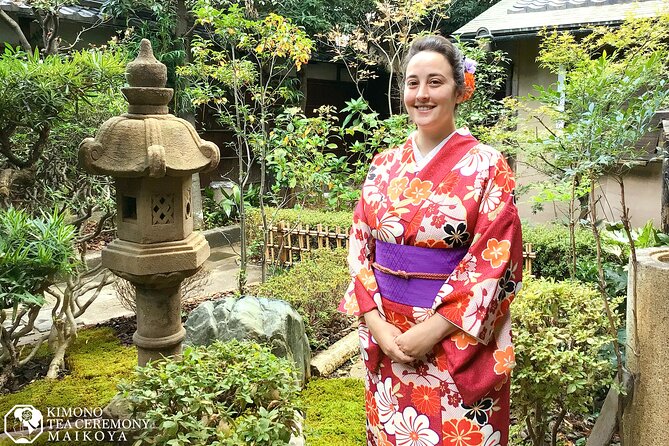
For women, simple hairstyling is included. Staff pin up the hair and may add flowers or other decorative accessories to match the kimono. The finished look is one of the experience’s biggest pleasures, especially if you have never worn traditional Japanese clothing before.
You also receive a small purse for valuables, a useful touch since a formal kimono does not give you ordinary pockets. Keep your belongings light, and you will be more comfortable while sitting and moving around.
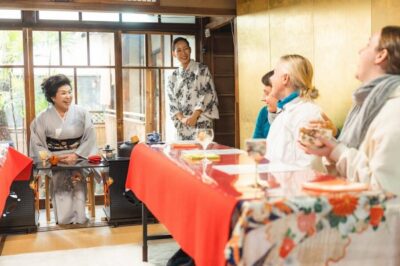
Allow yourself to enjoy this part rather than treating it as a delay before the tea. Several participants describe the dressing process as one of the most enjoyable sections. The staff are praised for being helpful and friendly, and the care taken with accessories adds to the feeling that you are being prepared for a real occasion.
Photography is clearly part of the fun. You should be ready to take pictures once you are dressed, and staff may help with photos. One version of the experience includes time in a garden for pictures, although the exact amount of garden time can vary. Since the activity depends on good weather, outdoor photography may be affected by rain.
A practical note: kimono are attractive but not designed for speed. You will move more slowly and sit differently than you would in ordinary clothes. Wear something comfortable underneath, and avoid planning a rushed activity immediately afterward.
Sitting on tatami for the tea ceremony
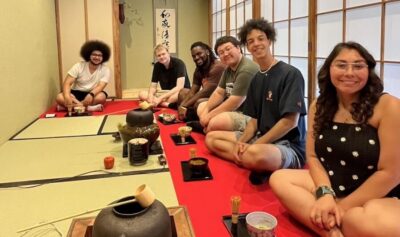
Once everyone is ready, you move to the tea room and sit Japanese-style on tatami flooring. The room is decorated in a traditional manner, which gives the ceremony a more convincing sense of place than a simple demonstration in a modern studio.
The host introduces the tea ceremony’s customs, origins, and significance. You learn about the utensils, the order of the movements, and the care given to each step. The teaching is aimed at first-time participants, so you do not need prior knowledge of Japanese tea culture.
The tone can vary slightly by host. Some sessions feel calm and meditative, while others include humor and a more lively explanation. One highly praised host, Sono, is described as especially clear and entertaining. Another session included a short meditation, giving the event a quiet spiritual touch without turning it into a formal religious practice.
I think this educational part is essential. Without it, the ceremony might look like a sequence of slow gestures. With the explanation, you begin to understand why the host handles the bowl and utensils with such care, and why the ritual values attention, respect, and calm.
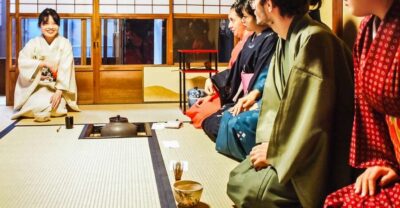
The experience is conducted in a shared setting. The booking information says you can reserve a maximum of two people through the booking channel, but that does not mean the entire ceremony is private. Sessions have included about 8 to 12 participants, and the activity may bring together people from several countries.
That group setting has both benefits and drawbacks. A mixed group can make the experience feel welcoming and shared, and there is a pleasant sense of people from different places taking part in the same peaceful ritual. On the other hand, a larger group means less individual attention and fewer chances to ask long questions. If you want a private tea ceremony with only your own party, this is not the right format.
Making matcha instead of only watching
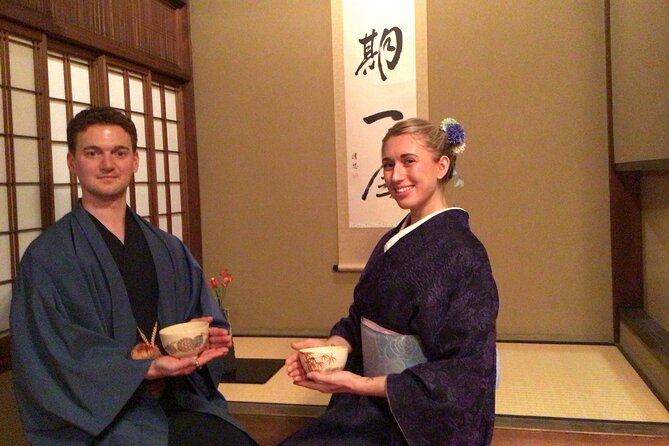
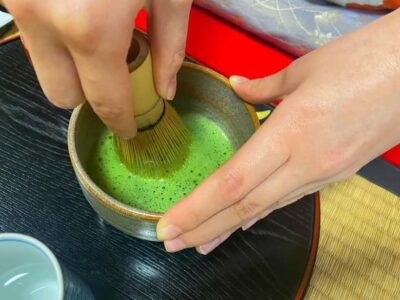
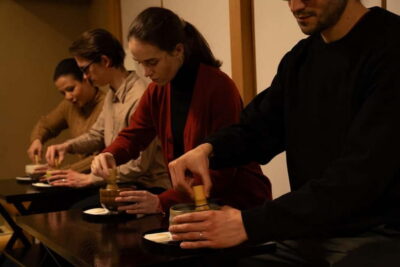
The most interactive moment comes when you prepare your own matcha. The host introduces the utensils and shows you how to combine the tea powder and hot water. You then follow the steps yourself under guidance.
Matcha has a strong, grassy taste that may surprise you if you usually drink sweetened tea. The Japanese sweets served with it provide a gentle contrast. These wagashi are small, so do not expect a full snack or meal, but they are an important part of the tea service and help balance the flavor of the matcha.
I appreciate that the tea is described as high-quality matcha rather than a generic green tea drink. The focus is on the preparation and the ceremony, not just handing you a cup. You leave with a clearer idea of how matcha is made and why the tea ceremony is about more than drinking tea.
The host also explains the customs as you go, so the process remains easy to follow. You are not expected to remember every rule or copy every movement perfectly. The point is to take part respectfully and understand the basic rhythm.
This makes the experience suitable for first-time visitors, including families with older children. One 10-year-old attended with a parent and took part in the history lesson and tea preparation. Children under seven cannot enter the venue, and a reservation cannot be made if someone under seven is in your party.
More Tea Ceremonies in Kyoto
- Kyoto: Tea Ceremony in a Traditional Tea House in Kiyomizu
★ 4.9 · 3,519 reviews - Kyoto: Tea Ceremony Ju-An at Jotokuji Temple
★ 4.9 · 3,207 reviews - Kyoto: 45-Minute Tea Ceremony Lesson Experience
★ 4.3 · 2,378 reviews - Kyoto: Table-Style Tea Ceremony at a Kyo-Machiya
★ 4.9 · 1,211 reviews
The Nishiki location and timing
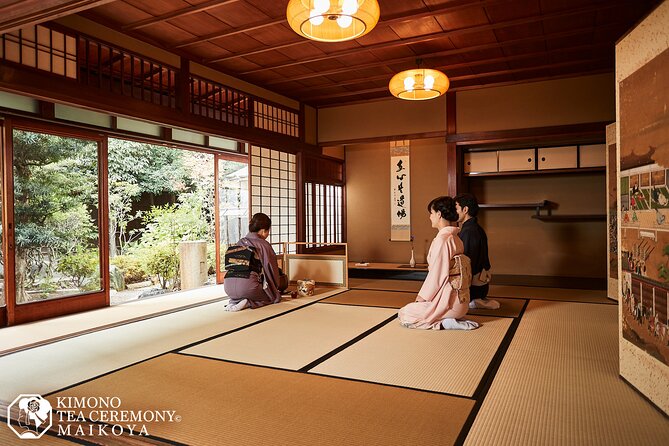
The meeting point is in central Kyoto at 329 Ebiyacho, Gokomachi-dori, Sanjo sagaru. It is near public transportation, but hotel pickup and drop-off are not included. You need to make your own way there and return from the same meeting point when the activity ends.
The central location makes this easy to pair with other Kyoto plans. A morning appointment can lead into lunch and sightseeing around Nishiki Market or central Kyoto. An afternoon appointment can work after a temple visit or a morning walk through the city.
You should allow extra time to find the address. Kyoto streets can be confusing, and arriving late could cut into the dressing or tea portion. Check the location carefully before leaving your hotel, especially if you are relying on a navigation app.
Morning and afternoon start times are available. Choose based on your day rather than assuming one period is better. The ceremony itself lasts about 90 minutes, but dressing, hairstyling, photos, and the transition into the tea room fill the experience. Do not schedule a train departure or timed attraction immediately afterward.
The activity requires good weather. If poor weather causes cancellation, you are offered another date or a full refund. You can also cancel for a full refund if you do so at least 24 hours before the start time. Changes or cancellations made within 24 hours are not accepted for a refund.
Is $65.66 a fair price?
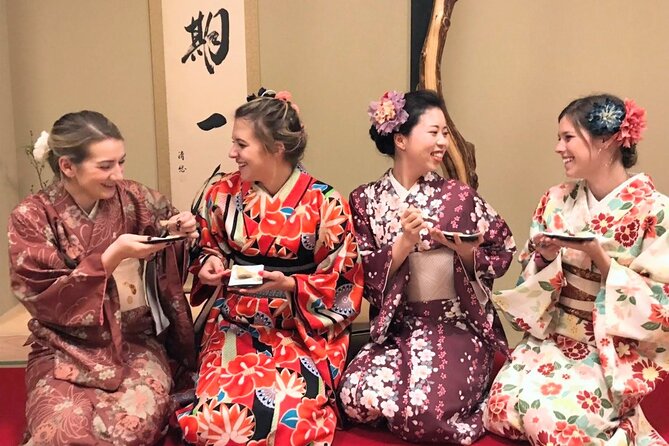
At $65.66 per person, this is not the cheapest way to drink matcha in Kyoto. You can find tea in many places for far less. The value here comes from combining several services that would otherwise require separate arrangements.
Your price covers the kimono costume, simple hairstyling, green tea, utensils, snacks, and instruction. You are paying for the preparation as much as the beverage. Staff spend time dressing you, arranging your hair, explaining the ritual, and guiding you through the tea making.
For a first visit to Kyoto, I think the price is reasonable if you want photographs and a clear introduction to the ceremony. It is especially useful if you have limited time and want one organized cultural activity rather than a more formal tea school lesson.
The value is weaker if your main goal is silence, privacy, or a long tea service. This is a packaged cultural activity with a dressing element and a shared group format. It aims to make the tradition accessible, not to recreate an austere tea ceremony for a tiny private audience.
I would also factor in the convenience of the location. Since the appointment takes place in central Kyoto and lasts about 90 minutes, you can build it into a day without losing half a day to transportation. That helps the price make more sense.
Who will enjoy this most?
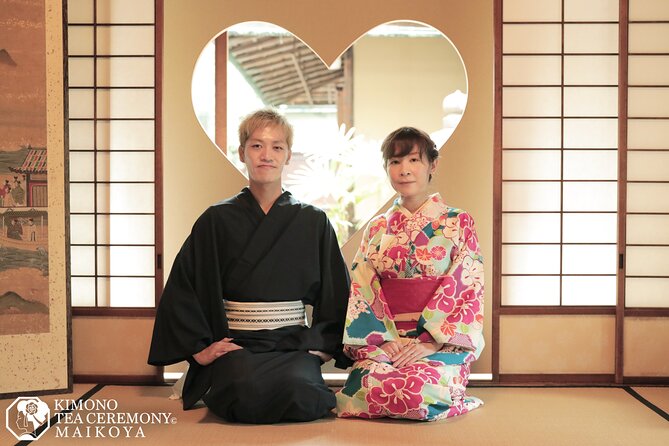
I would recommend this for a first-time visitor who wants a friendly introduction to Japanese customs. You get enough explanation to understand the ceremony, but you do not need to study tea culture before arriving.
It also suits couples, friends, parents with children aged seven and older, and solo participants who enjoy meeting people from different countries. The kimono and photo element make it appealing if you want a visual memory of Kyoto, not just a lesson.
The activity may not suit you if you dislike sitting on the floor, wearing fitted traditional clothing, or taking part in a shared group. It is also not ideal if you want a private appointment or a full meal. The sweets are small, and the tea is the focus.
People who have already attended a tea ceremony can still enjoy it, especially if they want the kimono experience or a different explanation of the ritual. One repeat participant found the second visit special because the host offered new information. Still, first-time participants will gain the most from the basic instruction.
Useful tips before you go
- Arrive with enough time to locate the Nishiki meeting point. Transportation and hotel transfers are not included.
- Keep valuables light. A small purse is provided, but kimono are not designed for carrying much.
- Plan to take photographs. The dressing, hair ornaments, kimono, and traditional rooms are central parts of the experience.
- Wear comfortable clothing underneath the kimono.
- Expect tatami flooring and Japanese-style sitting.
- Do not book this if someone in your party is under seven.
- If you want a smaller ceremony, ask about the expected group size before booking. The reservation limit of two does not guarantee a private session.
- Leave room in your schedule after the ceremony. Dressing and photos make the full visit feel less rushed when you are not racing to the next stop.
Should you book the Maikoya Nishiki ceremony?
I would book it if you want a well-organized first taste of Kyoto culture, especially one that combines clothing, photographs, history, matcha, and sweets. The strongest part is the way the staff guide you through every stage. You do not need to know how to wear a kimono or prepare tea before arriving.
The main tradeoff is intimacy. This is not necessarily a private ceremony, and the group may be larger than the booking limit suggests. If that is acceptable, $65.66 buys a memorable 90-minute activity in a convenient part of Kyoto.
For families with children under seven, very private occasions, or visitors seeking a strictly formal tea-school experience, I would choose something else. For most first-time visitors who want to dress up and take part rather than simply watch, Maikoya Nishiki is a strong choice.
FAQ
How long does the Kimono Tea Ceremony at Kyoto Maikoya last?
The experience lasts approximately 1 hour and 30 minutes.
What is included in the price?
The price includes a kimono costume, simple hairstyling, green tea, tea utensils, and snacks, including wagashi sweets.
Do I need to arrange transportation?
Yes. Transportation and hotel pickup and drop-off are not included. You make your own way to the Nishiki meeting point, and the activity ends there.
Can children attend the ceremony?
Children under seven cannot enter the tea ceremony venue. If your party includes a child under seven, you cannot make a reservation for this experience.
Is the ceremony private?
No private ceremony is guaranteed. You can reserve a maximum of two people through the stated booking channel, but the session may include additional participants. Some sessions have included around 8 to 12 people.
What happens if the experience is canceled because of bad weather?
If poor weather causes the activity to be canceled, you are offered a different date or a full refund. You can also receive a full refund when canceling at least 24 hours before the start time.
Just added around Kyoto
- Kyoto: Private Customizable Day Trip by Car★ 5.0 · 38 reviews
- Kyoto: Gion Night Walking Tour with Geisha Insight★ 5.0 · 39 reviews
- Kyoto: Full Day Bike Tour★ 4.9 · 39 reviews
- Private Japanese Calligraphy in Kyoto – Learn Shodō with a Master★ 5.0 · 39 reviews
- Experience a tea ceremony in an authentic tearoom, in Kyoto!★ 4.5 · 41 reviews
- Kyoto: Gion Evening Walk with Hidden Gems, Geisha & Sake★ 5.0 · 41 reviews
- Kyoto Private Photo Shoot & Tour by SnapKyoto★ 5.0 · 41 reviews
- The Way of Tea: Kyoto Crafts, Hidden Temples & Wabi-Sabi Walk★ 5.0 · 41 reviews
Tea Ceremony Experiences, compared.
Tea Ceremony in a Traditional Tea House in Kiyomizu
Read our review →
Browse the lists this tour appears in