Reviewed · TEA CEREMONY EXPERIENCES
KYOTO Tea Ceremony with kimono near by Imamiya Jinjya Shrine
Tea turns into a Kyoto memory. This 90-minute experience combines an authentic kimono fitting with a traditional Japanese tea ceremony near Daitoku-ji and Imamiya Jinjya Shrine. I like the care given to dressing and hair styling, and I like that you do more than watch: you learn to prepare your own tea. The main consideration is timing, since the kimono dressing and photographs are part of the program and the room can feel busy when everyone arrives together.
I also appreciate the small group size, capped at 12 people, and the presence of a tea master with 30 years of study. The price, $99.49 per person, is fair if you want clothing, hair, instruction, sweets, tea, and photographs in one package, but it may feel high if you only want a short cup of matcha.
In This Review
- Key details at a glance
- Why this Kyoto tea ceremony feels more complete
- Choosing a kimono and getting ready
- Watching a tea master perform the ceremony
- Preparing your own bowl of tea
- What the location adds to your day
- Is $99.49 a fair price?
- The parts most worth your time
- Drawbacks to consider before booking
- Who will enjoy this most?
- Should you book this Kyoto experience?
- FAQ
- How long does the Kyoto kimono tea ceremony last?
- Where does the experience begin and end?
- Is kimono rental included?
- Is hair styling included?
- Can men take part in the kimono experience?
- Do I make tea during the experience?
- Is transportation included?
- How many people can join the activity?
- What is the cancellation policy?
Key details at a glance
- Three generations of tea-room tradition: The ceremony takes place in a tea room used by the same family for three generations.
- Kimono and hair are included: You choose from a Nishijin kimono collection, receive help dressing, and have your hair set before the ceremony.
- You do not only watch: After the tea master demonstrates the ritual, you prepare tea yourself.
- Small-group setting: The experience accepts no more than 12 people, allowing room for questions and personal help.
- Near important tea-culture sites: The meeting point is in Kyoto’s Kita Ward, close to Daitoku-ji and in the wider area of Imamiya Jinjya Shrine.
- Plan around the cancellation rule: You receive a full refund when canceling at least 24 hours ahead, but late cancellations are not refunded.
Why this Kyoto tea ceremony feels more complete
Many tea ceremonies give you a seat, a bowl of matcha, and a brief explanation. This one adds the clothing ritual first, which changes how the whole experience feels.
You begin by selecting a kimono from a collection connected with Nishijin, Kyoto’s famous textile district. The supplied information does not promise a particular fabric, color, or style, so you should treat the choice as a personal selection rather than a museum display. You pick the color and pattern you prefer, then staff help you put it on.
That process is not a quick costume change. A kimono involves several layers and careful tying. A few people have found the dressing to be a multi-person job, and that is useful context: allow time and patience. The staff are accustomed to preparing people efficiently, but they are also handling multiple layers, accessories, and hair arrangements.
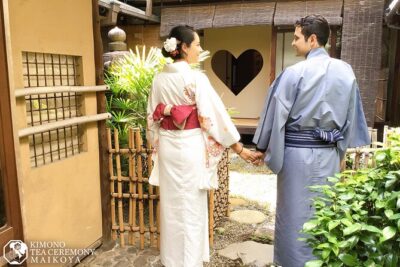
For women, hair styling is included. The experience also accommodates men wearing kimono. This makes the program a good choice for couples, families, and mixed-age groups, rather than an activity designed only for women seeking photos.
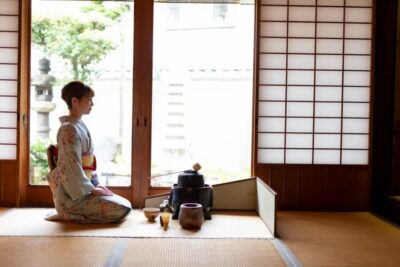
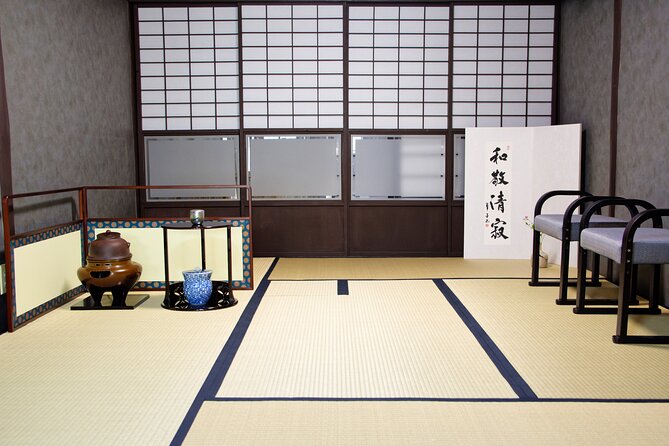
The setting adds weight. The tea room has been used for three generations, and the tea master has studied the ceremony for 30 years. You are still taking part in a visitor activity, but the demonstration is presented as a formal cultural practice rather than a quick photo prop.
More Kimono Experiences in Kyoto
- Kimono Tea Ceremony at Kyoto Maikoya, NISHIKI
★ 5.0 · 911 reviews - Kyoto: Kimono Rental with Hairstyling and Accessories
★ 4.8 · 653 reviews - Kyoto: Kimono Tea Ceremony at Orizuruya Gion
★ 4.9 · 618 reviews
Choosing a kimono and getting ready
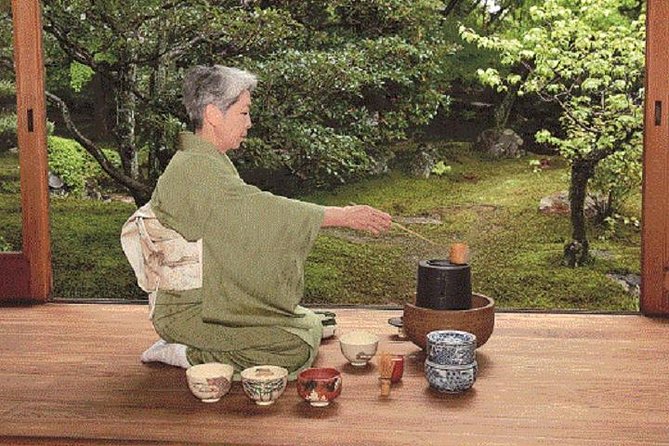
The first portion takes place at the meeting point, Tea Ceremony Caren, at 74-4 Murasakino Daitokujicho in Kyoto’s Kita Ward. The location is near public transportation, but private transportation is not included, so you must make your own way there.
Arrive a little early if you can. The staff can work quickly, but arriving close to the start time may mean several people are being dressed at once. Getting there early gives you a calmer look at the kimono choices and helps avoid a rushed start.
When selecting your kimono, it helps to have a general color in mind. The collection offers many colors and patterns, and the choice is part of the fun. At the same time, too many options can slow you down. Decide whether you prefer a bold pattern, a softer color, or something that will photograph well against the room.
Once dressed, you have a simple photo session. Staff help with poses and take photographs, rather than leaving you to ask another member of your group to handle everything. That is especially helpful for solo participants and families who want everyone included.
Do not expect a long professional portrait shoot. The program is only about an hour and a half, and the photographs serve as a pleasant part of the preparation. Think of them as useful memories of the kimono fitting, not a separate studio appointment.
Watching a tea master perform the ceremony
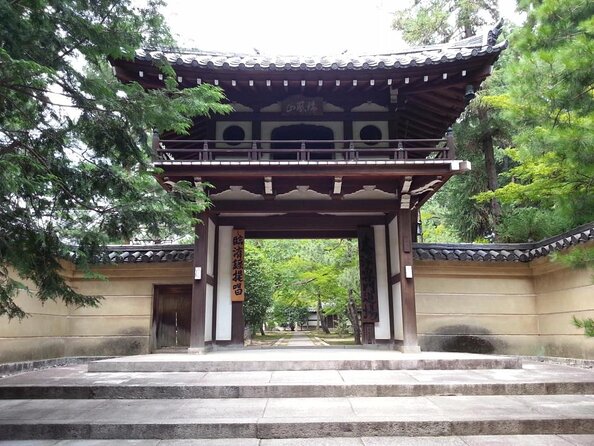
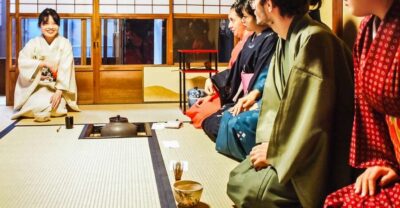
After the preparation, you go upstairs to the tea-room area for the ceremony. The tea master demonstrates the traditional steps while an interpreter or guide explains what is happening.
The ceremony is deliberate. Movements are controlled, and the order matters. You learn how the tea is prepared, how it is presented, and how guests should behave while receiving it. The explanation also covers the background of tea ceremony practice and the meaning behind some kimono patterns.
The pace may feel slow if you are expecting a tasting session. That is part of the point. Japanese tea ceremony is built around attention, courtesy, and the quiet exchange between host and guest. You are not there to sample several teas or rush through a list of activities.
Seasonal sweets are served with the tea. Their role is not simply dessert. They balance the bitterness of matcha and form part of the traditional sequence. You receive a cup of tea and instruction on Japanese manners, including how to take part respectfully.
The ceremony is conducted in Japanese with interpretation available. One guide named in the supplied feedback is Akira, who helped explain the ceremony, shared extra information about the history of the tea fan, and assisted with photographs and poses. Staff names and language support can vary by session, so do not assume a particular guide will lead your date, but the experience is designed to provide explanation rather than leave you guessing.
Preparing your own bowl of tea
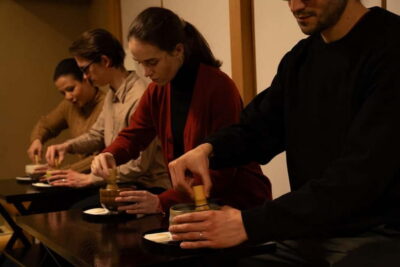
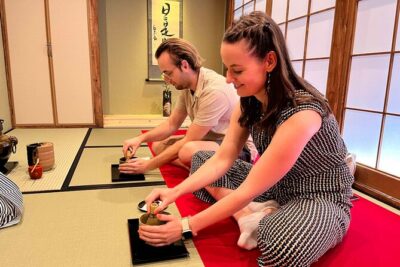
The most useful feature is the chance to make tea yourself. After watching the tea master, you take a turn preparing a cup for another person in the group.
This gives you a better feel for the ritual than simply observing it. You handle the tools, follow the sequence, and see how difficult it is to reproduce the tea master’s smooth movements. Nobody expects a first attempt to be perfect. The activity is structured as instruction, not a test.
For families, this hands-on part may be the difference between a pleasant demonstration and a memorable cultural lesson. Teenagers who might not sit through a purely formal ceremony can take an active role. Solo participants are included too, and the staff arrange the experience so you can participate rather than watch other people make the tea.
The program describes the tea as Japanese tea and includes coffee and/or tea. The details point to matcha served with seasonal sweets, but the exact tea selection is not presented as a full tasting menu. If you are seeking a specialist lesson on grades of matcha, farming regions, or whisking techniques, this is probably not that kind of class.
Instead, you get a clear introduction to the ceremony’s purpose and etiquette, followed by a practical attempt. That is a sensible format for a first encounter.
More Tea Ceremonies in Kyoto
- Kyoto: Tea Ceremony in a Traditional Tea House in Kiyomizu
★ 4.9 · 3,519 reviews - Kyoto: Tea Ceremony Ju-An at Jotokuji Temple
★ 4.9 · 3,207 reviews - Kyoto: 45-Minute Tea Ceremony Lesson Experience
★ 4.3 · 2,378 reviews - Kyoto: Table-Style Tea Ceremony at a Kyo-Machiya
★ 4.9 · 1,211 reviews
What the location adds to your day
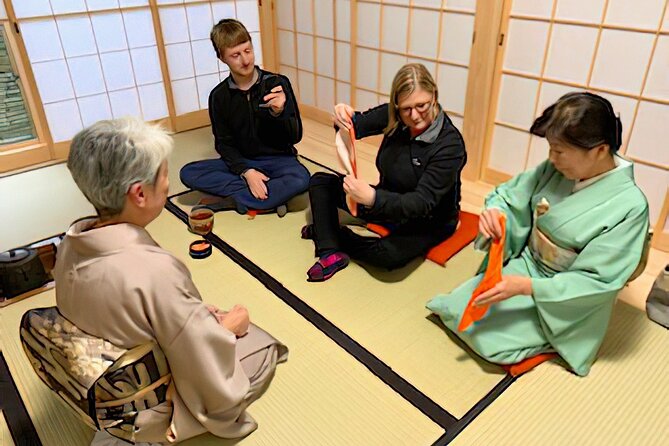
The meeting point is in Murasakino, in northern Kyoto, near Daitoku-ji Temple. This part of the city is tied closely to Zen temples and tea culture, giving the experience a more fitting setting than a generic downtown event space.
The information also connects the activity with Imamiya Jinjya Shrine. Some sessions include a walk toward a nearby temple for the ceremony, but the stated meeting and ending point is Tea Ceremony Caren, so you should not plan on a separate shrine tour or temple admission being included.
That distinction matters when planning your day. You can pair this activity with sightseeing in northern Kyoto, but build your schedule around the 90-minute program and your own transport time. The ceremony ends back at the meeting point, which makes it easy to continue exploring the area afterward.
The old tea room may not suit someone looking for polished modern interiors. Its age is part of the character, but comfort and presentation are likely to feel traditional rather than luxurious. The staff make an effort to keep the experience comfortable, yet you should come for the ritual and instruction, not hotel-style surroundings.
Is $99.49 a fair price?
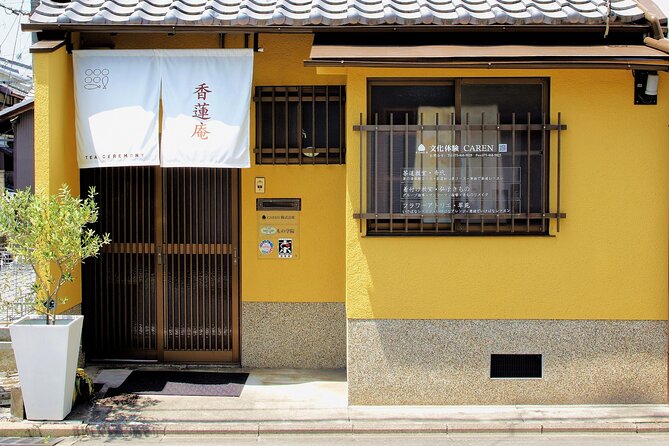
At $99.49 per person, the cost is not low for a 90-minute activity. The value depends on what you would otherwise book separately.
Your fee covers:
- Kimono use
- Help putting on the kimono
- Hair setting
- A simple photo session
- A tea master’s demonstration
- Commentary on tea ceremony history and etiquette
- Seasonal sweets and tea
- A chance to prepare your own tea
- A professional instructor
A kimono rental and hair appointment alone can take time and cost a substantial amount in Kyoto. Add a guided ceremony, interpretation, photographs, and hands-on practice, and the combined price becomes easier to justify.
I would call it good value for a first visit to Kyoto, especially if you want one neatly arranged cultural activity without organizing clothing rental and a tea lesson yourself. It is less compelling for someone who already owns kimono, has attended tea ceremony before, or wants a long, advanced study of the tea arts.
The group limit of 12 also helps. This is not a private ceremony, but it is small enough for questions and individual turns. A larger group would make the dressing, photographs, and tea preparation feel less personal.
The parts most worth your time
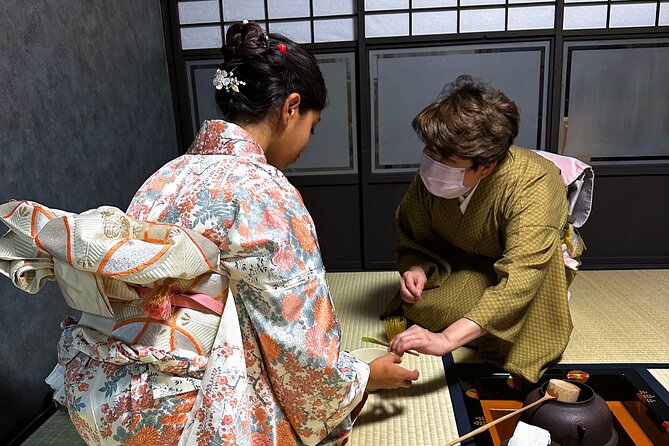
The dressing is more meaningful than it may first appear. You see how much work goes into arranging traditional clothing, and that can give you new respect for the dress before the tea begins.
The tea master’s demonstration is the heart of the program. Thirty years of study does not make the activity a formal apprenticeship, but it does give the ceremony a serious foundation. You are shown the correct movements and the reason behind the manners.
The photo session is practical rather than excessive. Staff help create keepsakes while you are already dressed, so you do not need to arrange a second photography stop.
The strongest moment for many people is making the tea. It turns the experience from a performance into participation. You may produce an imperfect bowl, but you will understand the care involved far better than if you simply sipped a prepared cup.
Drawbacks to consider before booking
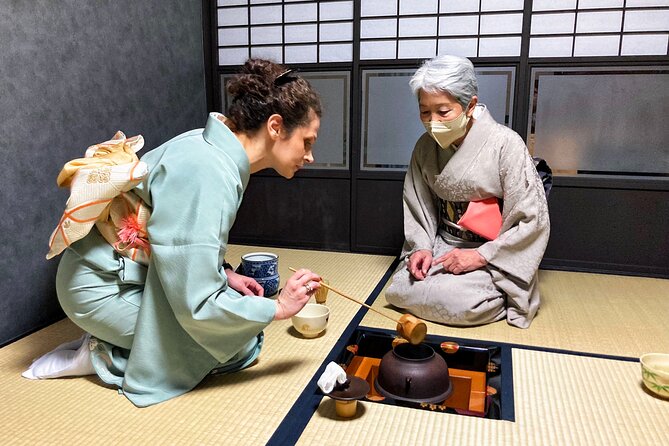
The 90-minute duration includes dressing, hair, photographs, explanations, the demonstration, and your own tea preparation. That means no single section can be extremely long. If you want a quiet, extended tea ceremony with long periods of meditation, this may feel compact.
The arrival period can also be hectic when several people show up together. Early arrival is the simplest fix.
The experience is near public transportation, but there is no private vehicle service. Check your route to Murasakino before leaving, especially if you are coming from central Kyoto or fitting this between temple visits.
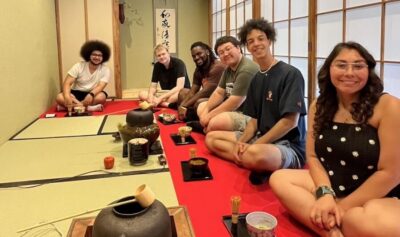
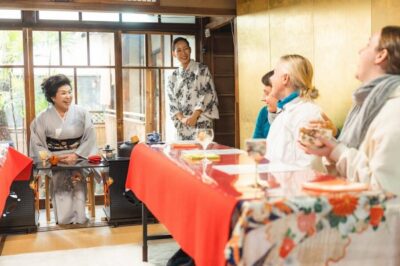
The program has a maximum of 12 people, but it is not advertised as a private booking. You may share the room with other people from around the world. For many visitors, that adds a friendly social element, but anyone seeking complete privacy should keep the group format in mind.
Finally, the cancellation policy is firm. Cancel 24 hours or more before the start time for a full refund. Changes or cancellations inside that window are not refunded. The activity can also be canceled if the minimum number is not reached or if weather prevents the experience from going ahead. In those cases, you are offered another date or experience, or a full refund.
Who will enjoy this most?
I would choose this for first-time Kyoto visitors who want a simple entry into tea ceremony without needing prior knowledge. The guide explains the manners and background, so you do not need to study the ritual before arriving.
It suits families particularly well. Adults can appreciate the clothing and cultural context, while younger people have the chance to prepare tea and take photographs. The activity also works for couples and solo participants. A solo visitor is not left out of the practical portion.
It is a good fit if you value photographs, traditional clothing, and cultural explanation in equal measure. It is not the best pick if your main goal is a long tasting, a private ceremony, or a specialist course in tea preparation.
Wear clothes that allow staff to dress you easily, although no specific clothing requirement is provided. Also remember that a kimono is fitted and layered. You will want to move at a comfortable pace and avoid packing another tightly scheduled activity immediately afterward.
Should you book this Kyoto experience?
I would book it if you want a well-organized introduction to two Kyoto traditions at once: kimono and tea ceremony. The combination feels more complete than a quick rental photo stop, and the chance to prepare tea gives you something real to do.
The strongest reasons to choose it are the three-generation tea room, the experienced tea master, the hair and kimono preparation, and the small-group limit. The strongest reasons to skip it are the fixed cancellation rule, the possibility of a busy dressing period, and the short duration for the price.
For a first tea ceremony in Kyoto, $99.49 is reasonable when you count everything included. Arrive early, keep your schedule flexible, and choose the kimono color you like without overthinking it. The ceremony works best when you slow down and let the staff guide you.
FAQ
How long does the Kyoto kimono tea ceremony last?
The experience lasts approximately 1 hour and 30 minutes.
Where does the experience begin and end?
It begins at Tea Ceremony Caren, 74-4 Murasakino Daitokujicho, Kita Ward, Kyoto, 603-8231, Japan. It ends back at the same meeting point.
Is kimono rental included?
Yes. You choose a kimono from the collection and receive assistance putting it on.
Is hair styling included?
Yes. The program includes help setting your hair before you put on the kimono.
Can men take part in the kimono experience?
Yes. The activity is available to men and women, and the supplied information specifically describes both men and women wearing kimono.
Do I make tea during the experience?
Yes. The tea master first demonstrates the ceremony, then you have an opportunity to prepare your own tea.
Is transportation included?
No. Private transportation is not included. The meeting point is near public transportation.
How many people can join the activity?
The maximum group size is 12 people.
What is the cancellation policy?
You can cancel at least 24 hours before the local start time for a full refund. Cancellations or changes made less than 24 hours before the start time are not refunded. If the activity is canceled because of weather or because the minimum number of participants is not reached, you are offered another date or experience, or a full refund.
More Temple & Shrine Tours in Kyoto
- Kyoto: Fushimi Inari, Kinkakuji, Bamboo Grove 1 Day Bus Tour
★ 4.8 · 4,316 reviews - Fushimi Inari Hidden Hiking Tour (Private Option Available)
★ 5.0 · 1,750 reviews - Osaka/Kyoto:Kinkakuji,Arashiyama,FushimiInariShrine,NaraPark
★ 4.1 · 1,596 reviews - Kyoto/Osaka: Nara, Fushimi Inari Taisha, Arashiyama Bus Tour
★ 4.7 · 1,275 reviews
Just added around Kyoto
- Kyoto: Gion Night Walking Tour with Geisha Insight★ 5.0 · 39 reviews
- Kyoto: Private Customizable Day Trip by Car★ 5.0 · 38 reviews
- Kyoto: Full Day Bike Tour★ 4.9 · 39 reviews
- Private Japanese Calligraphy in Kyoto – Learn Shodō with a Master★ 5.0 · 39 reviews
- Experience a tea ceremony in an authentic tearoom, in Kyoto!★ 4.5 · 41 reviews
- Kyoto: Gion Evening Walk with Hidden Gems, Geisha & Sake★ 5.0 · 41 reviews
- Kyoto Private Photo Shoot & Tour by SnapKyoto★ 5.0 · 41 reviews
- The Way of Tea: Kyoto Crafts, Hidden Temples & Wabi-Sabi Walk★ 5.0 · 41 reviews
Tea Ceremony Experiences, compared.
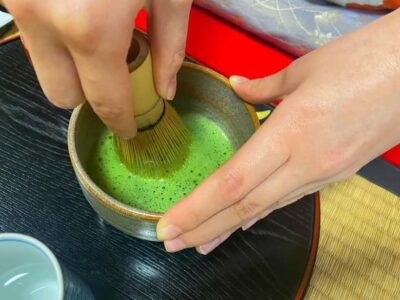
Tea Ceremony in a Traditional Tea House in Kiyomizu
Read our review →