
Reviewed · TEA CEREMONY EXPERIENCES
Kanazawa: Kenrokuen Tea Ceremony Experience
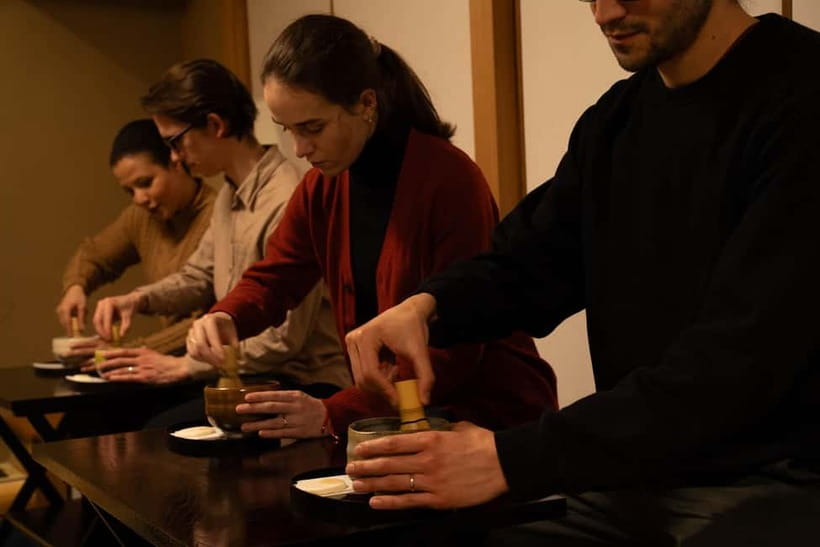
Tea becomes theater, then a hands-on lesson. This one-hour tea ceremony offers a clear look at Japanese tea culture inside Kenrokuen, with a master preparing matcha and an English-speaking guide explaining each movement. I especially like the peaceful formal tea room and the chance to make your own tea. The main drawback is practical: you must pay the 320-yen Kenrokuen entrance fee separately, and the garden itself cannot be seen from the tea room.
The experience is short enough to fit neatly into a Kanazawa sightseeing day, yet it does not feel like a rushed photo stop. You taste wagashi sweets from traditional confectioners, learn why the ceremony is performed in a particular way, and get patient help as you try it yourself. Since the activity takes place alongside other groups, children under eight are not accepted, and quiet behavior is expected.
In This Review
- Key points at a glance
- Entering Kenrokuen and finding Kenrokutei
- The historical setting behind the tea
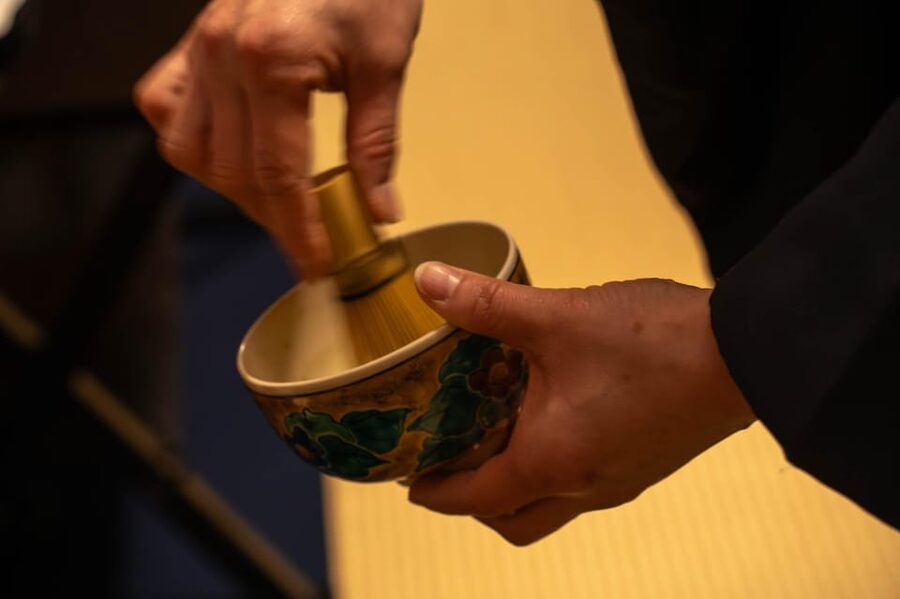
- Watching the master prepare matcha
- Wagashi first, matcha second
- Making your own matcha
- What the one-hour format delivers
- Sitting, timing, and group etiquette
- The best way to plan your garden visit
- Who will enjoy this tea ceremony most
- Should you book the Kenrokuen tea ceremony?
- FAQ
- How long does the Kanazawa Kenrokuen tea ceremony last?
- How much does the tea ceremony cost?
- Is the Kenrokuen entrance fee included?
- Where is the meeting point?
- Is the garden visible from the tea room?
- Is the experience offered in English?
- Can I take photographs?
- Can I sit on a chair instead of the floor?
- What is the minimum age?
Key points at a glance
- Historic meeting place: Begin at Kenrokutei, a building where the Maeda lords entertained important visitors.
- A real ceremony demonstration: Watch a tea master prepare matcha before trying the process yourself.
- Wagashi with a purpose: Taste traditional sweets from respected Japanese confectioners before drinking the tea.
- English explanations: Guides explain etiquette, gestures, history, and the meaning behind the ritual.
- Kenrokuen access required: The 320-yen garden entry fee is separate, but it also lets you explore one of Japan’s celebrated gardens.
- Floor seating with an option: You normally sit on mats, but you can request a chair if kneeling is difficult.
Entering Kenrokuen and finding Kenrokutei
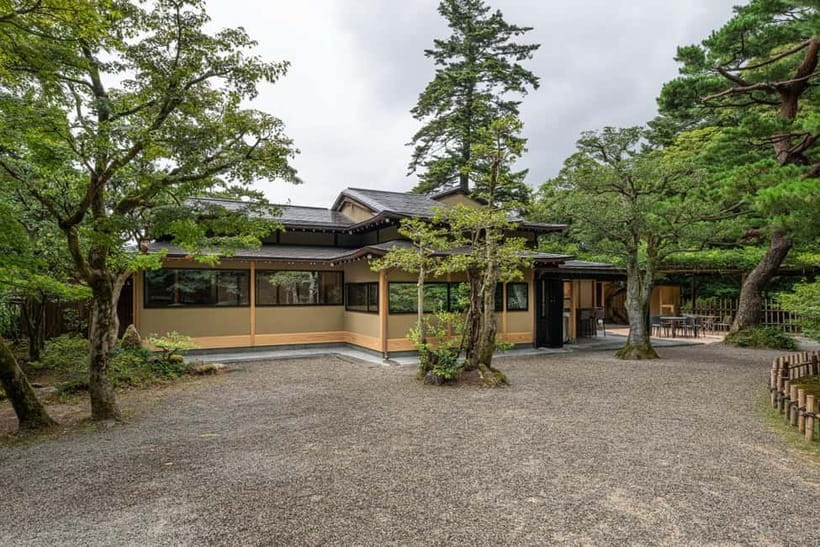
This experience begins inside Kenrokuen Garden, one of Kanazawa’s main sights. Your meeting point is in front of the fountain near Kenrokutei, the historic tea house where the Maeda lords once received important visitors.
You need to enter the garden before reaching the tea room. The admission fee is 320 yen and is not part of the tea ceremony price. That extra charge is small, but it matters when you are comparing the total cost of the activity.
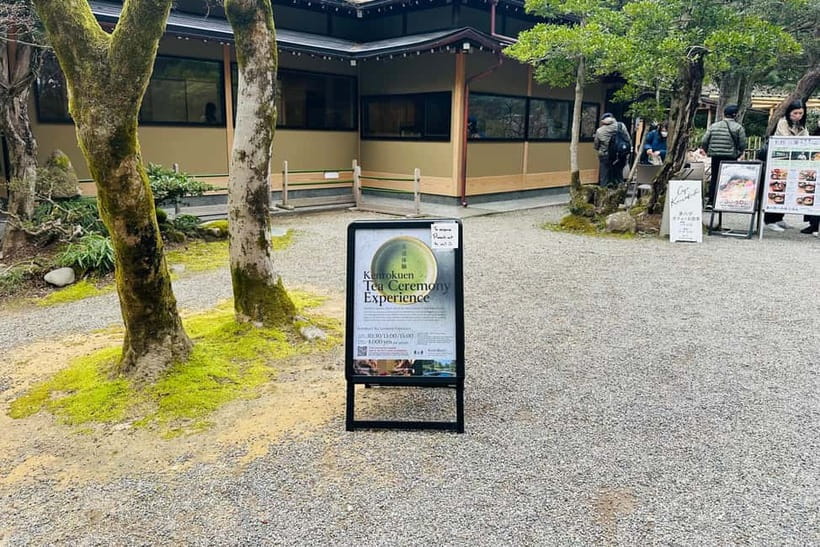
Give yourself time to find the correct entrance and walk to the fountain. The meeting instructions point you toward the fountain inside the garden, and a signboard at Kenrokutei provides more information. One useful improvement would be clearer wording that directs you specifically inside the tea room once you arrive. Do not simply wait outside the garden or assume the experience takes place beside the fountain.
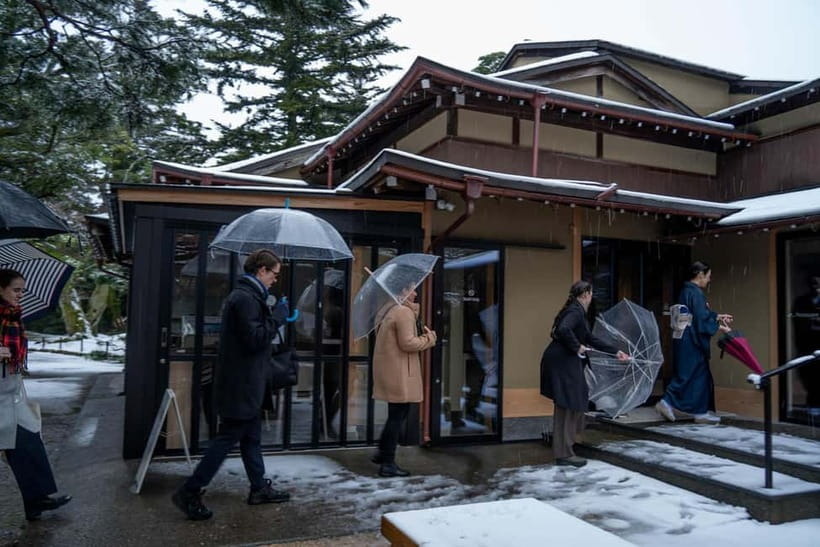
The garden visit adds real value. You can explore Kenrokuen before or after the ceremony, and your admission allows you to treat the tea experience as part of a larger garden visit rather than as an isolated one-hour appointment. The garden is especially appealing in changing weather. One participant attended during snowfall and found the warm welcome inside particularly memorable.
There is one important expectation to set early: you cannot see the garden from the tea room. The ceremony is held in a formal enclosed room, away from outside views. That separation is intentional and helps keep your attention on the ceremony, but it means you should enjoy the garden separately.
More tea ceremonies:
- Kyoto: Tea Ceremony in a Traditional Tea House in Kiyomizu
★ 4.9 · 3,519 reviews - Kyoto: Tea Ceremony Ju-An at Jotokuji Temple
★ 4.9 · 3,207 reviews - Kyoto: 45-Minute Tea Ceremony Lesson Experience
★ 4.3 · 2,378 reviews
The historical setting behind the tea
Kenrokutei gives the activity more context than a generic matcha demonstration in a modern shop. The building is linked to the Maeda lords, who ruled the Kaga domain and used the site to entertain high-ranking visitors.
Your guide begins with an explanation of the way of tea and its place in Japanese culture. The introduction covers the background of the ceremony before the formal preparation begins. This helps you see the ritual as more than a method for making powdered green tea.
The explanations focus on the reasons behind the movements. You learn how to behave in the tea room, when to watch, and how to take part without worrying about making a social mistake. That is important for first-time participants. Japanese tea etiquette can seem exacting when you encounter it without guidance, but the instruction here is designed to make the ceremony approachable.
The English-speaking guides are a major strength. Océane received particular praise for explaining the steps clearly and answering questions at the right moments. Nana was also singled out for bringing warmth and feeling to the preparation. Guide names and staffing can change, but the experience is built around having an English instructor explain the ceremony as it unfolds.
Watching the master prepare matcha
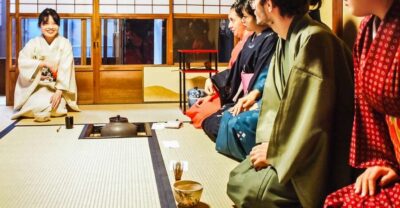
The central portion begins with a tea master carrying out the ceremony. You watch the careful preparation, the handling of the utensils, and the controlled sequence of gestures.
The pace is calm. This is not a stage show with rapid commentary or a long lecture. The guide explains the meaning of what you are seeing, then gives you space to notice the precision of the movements. That balance helps you understand why the ceremony can feel meditative.
You will also learn how to act in the room. Instructions cover basic conduct and the respectful way to receive the tea and sweets. You are not expected to arrive with prior knowledge, and the guides encourage questions.
The atmosphere is quiet, though it may not be perfectly silent. The tea room is used by other groups at the same time, and one participant reported hearing noise from a nearby room. The hosts apologized and even offered a small gift, but the point is worth noting: this is a shared tourist experience, not a private ceremony in total silence.
That distinction does not make the activity inauthentic. It simply tells you what kind of experience you are booking. The ceremony is a shortened, visitor-friendly introduction rather than the full traditional event, which can last several hours. For most sightseeing schedules, the one-hour format is a sensible tradeoff.
Wagashi first, matcha second
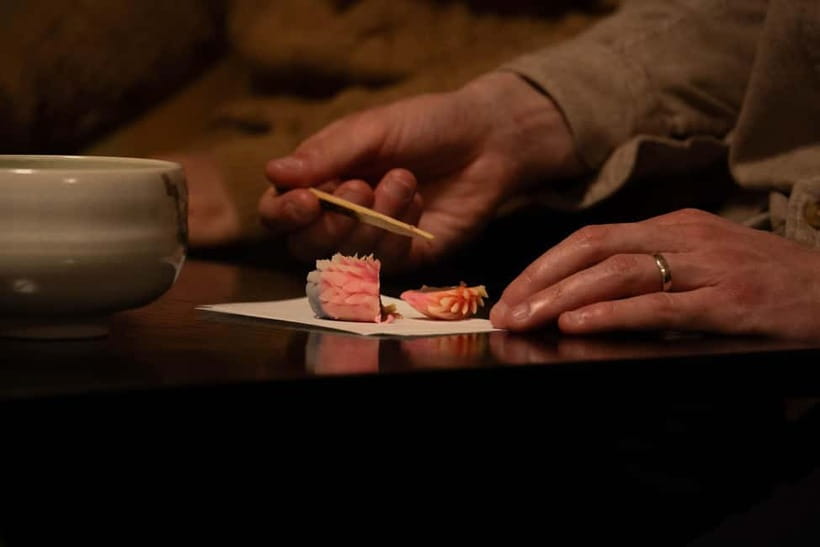
Traditional wagashi sweets are served as part of the ceremony. These are made by established confectioners, and they provide more than a small dessert.
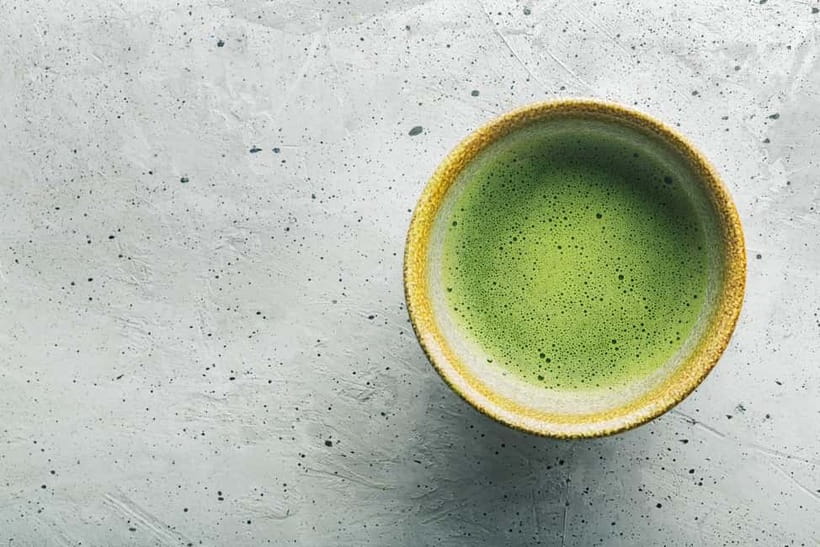
The sweetness prepares your palate for matcha, which has a naturally grassy and slightly bitter character. Eating the wagashi first makes the tea easier to appreciate, especially if this is your first time drinking matcha. Some participants also enjoyed the sweets enough to regard them as one of the culinary highlights.
The sweets are part of the cultural lesson. Japanese confectionery often reflects the season and the care given to presentation, though the specific varieties served can change. You do not need to be a tea enthusiast to enjoy this portion. It is a simple way to connect the ceremony to everyday Japanese food traditions.
The activity includes tea and sweets, and photographs are allowed. Ask before taking pictures during a particularly formal moment, and keep your camera use quiet so it does not interrupt the room. A photograph afterward can preserve the memory, but the ceremony is best appreciated with your attention off the screen.
A few more Kanazawa experiences worth weighing up
- World Heritage Shirakawa-go and Experience Tours from Kanazawa
★ 5.0 · 4,049 reviews - Kanazawa Half Day Tour (Private Guide)
★ 5.0 · 361 reviews - Kanazawa Full Day Tour (Private Guide)
★ 5.0 · 323 reviews - 1 Day Private Charter Tour to Shirakawa-go & Takayama
★ 4.5 · 253 reviews
Making your own matcha
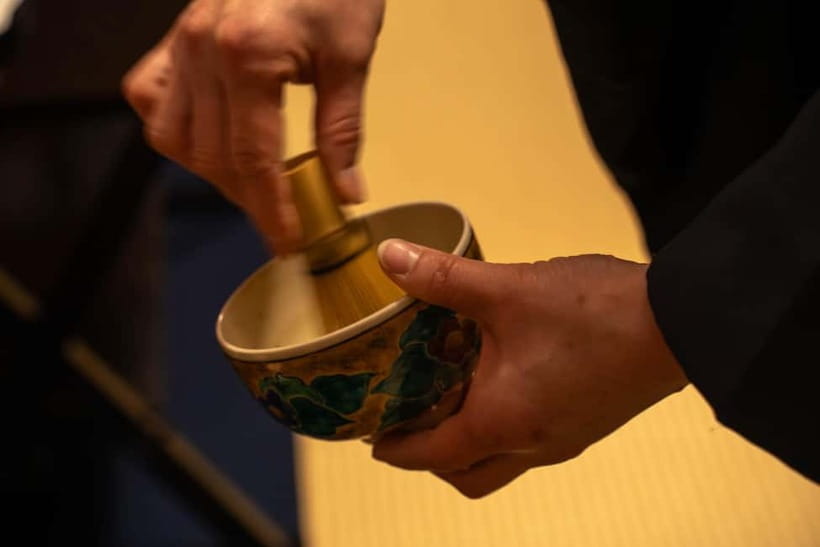
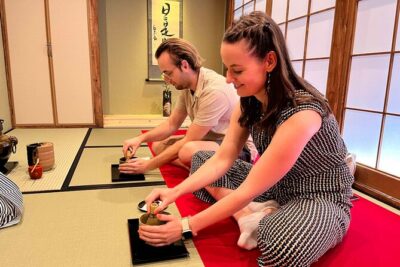
After watching the master, you get to try the process yourself. The guide shows you how to prepare the tea and helps you through the motions.
This is where the experience becomes more than observation. Whisking matcha looks easy until you try to produce the right texture and consistency. Several participants enjoyed discovering that the task was harder than it appeared, while still finding it fun and manageable with assistance.
You also learn how to enjoy the finished tea in the proper manner. The point is not to test your technique or produce a perfect bowl on your first attempt. It is to understand the attention, rhythm, and care involved in preparing matcha.
I like this hands-on section because it gives you a practical memory to take home. Afterward, you may feel more confident making matcha yourself, and you will have a better sense of why the tea ceremony values deliberate movement.
The guides are patient with beginners. They explain the procedure before, during, and after the demonstration, and they make room for questions. If you want a quiet cultural activity that still gives you something to do, this is a good balance.
What the one-hour format delivers
At $35 per person, the cost is reasonable for a guided cultural experience in a major Japanese garden, especially because the price includes the ceremony, sweets, and a photograph. The separate 320-yen garden admission raises your actual outlay slightly, but it also gives you access to Kenrokuen for a wider visit.
The value comes from the instruction rather than the amount of tea. You are paying for access to a formal room, a demonstration by a master, English interpretation, cultural context, sweets, and a guided attempt at making matcha.
A full tea ceremony would require much more time and concentration. This shorter version gives you the main elements without taking half a day. If your Kanazawa schedule includes Kenrokuen already, the activity fits particularly well. You can walk through the garden, attend the ceremony, then continue sightseeing.
The one-hour length also makes this suitable for people who are curious but unsure about committing to a more formal or lengthy ceremony. You get a meaningful introduction without needing to memorize etiquette in advance.
Sitting, timing, and group etiquette
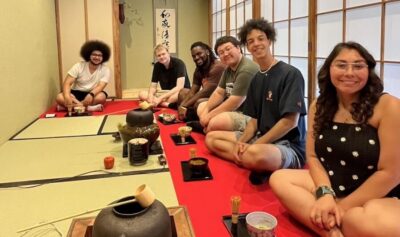
The ceremony is normally conducted on mats, so expect floor seating. If you have difficulty kneeling or sitting on the floor, request a chair. It is best to do this when booking or before the ceremony begins.
Punctuality matters. Arriving more than ten minutes after the scheduled start can lead to cancellation of the reservation, with no useful way to join quietly once the ceremony is underway. Plan extra time for the garden entrance, the walk to Kenrokutei, and finding the fountain.
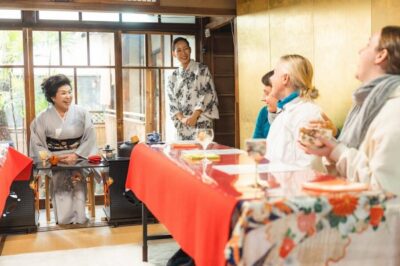
The activity is conducted in English and takes place with other groups. Participants are expected to help maintain a peaceful room, so it is not designed for noisy young children. The supplied information gives two age references, with participation listed as seven and older in one place and children under eight excluded elsewhere. To avoid a problem, treat the practical minimum as age eight.
If you need translation into a language other than English, arrange a private reservation by contacting the provider. Standard sessions are intended to work in English, and extra translation during a shared ceremony could disturb the other people in the room.
The best way to plan your garden visit
You have two sensible options. Visit Kenrokuen first, then arrive at Kenrokutei with the garden fresh in your mind. Or attend the ceremony early and explore the garden afterward, when you can take your time without watching the clock.
I prefer allowing enough time for the garden before the ceremony. Kenrokuen is the reason you must pay admission, and rushing through it would weaken the value of the outing. The tea room does not provide garden views, so do not count on admiring the scenery during the ceremony itself.
Check the starting time when you book and build in a cushion. The exact meeting location is easy to misunderstand because the instructions refer to the fountain, while the actual activity takes place at Kenrokutei. Look for the tea ceremony signboard and confirm you are at the correct shop.
The experience works in any season, and the garden setting changes its mood. Warm weather offers an easy garden walk, while cold or snowy days make the quiet indoor ceremony feel especially welcome. The tea room provides the calm center of the visit, not a scenic overlook.
Who will enjoy this tea ceremony most
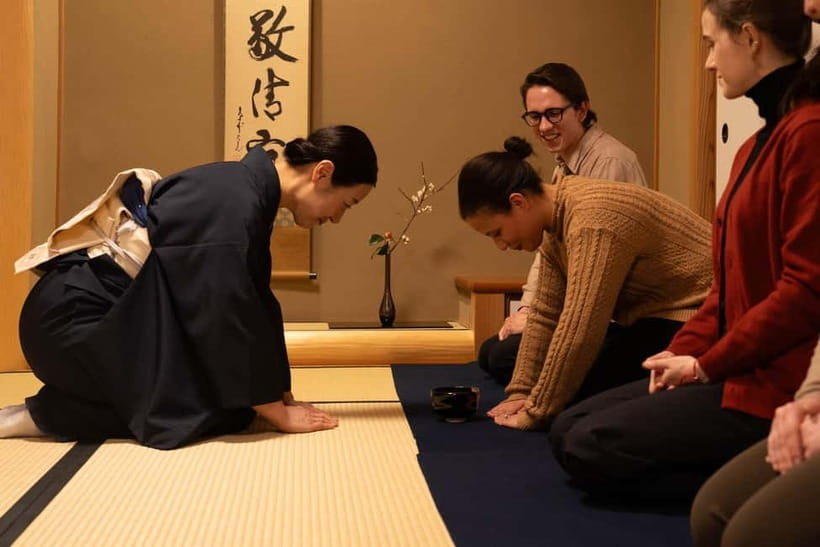
I would recommend it to first-time visitors who want a cultural activity with clear English guidance. You do not need to know anything about matcha, Japanese etiquette, or the tea ceremony before arriving.
It also suits you if you prefer a small, focused activity over a long tour. The hour is enough to watch, learn, taste, and participate without crowding out Kanazawa’s other sights.
Food lovers will appreciate the wagashi, while anyone interested in mindfulness or ritual will enjoy the careful pace. The experience is also a good choice for couples, solo visitors, and families with older children who can remain quiet in a formal room.
You may want to skip it if your main goal is an open-air garden view during the activity. You should also choose another plan if floor seating is uncomfortable and you do not arrange a chair in advance. Finally, serious tea students may find the shortened tourist format too basic, though it offers a useful introduction.
Should you book the Kenrokuen tea ceremony?
Book it if you want to understand matcha through watching and doing, rather than simply ordering a bowl at a café. The English explanations, traditional sweets, historic setting, and chance to prepare your own tea make the $35 price fair, especially when combined with a full visit to Kenrokuen.
Keep your expectations realistic. This is a one-hour introduction held alongside other groups, not a private multi-hour ceremony. You will not have garden views from the tea room, and the separate garden entry fee is required.
For most people visiting Kanazawa, I think it earns a place in the day. Arrive early, explore Kenrokuen, find Kenrokutei carefully, and let the ceremony slow you down for an hour. That combination gives you both the famous garden and a thoughtful look at one of Japan’s most recognizable traditions.
FAQ
How long does the Kanazawa Kenrokuen tea ceremony last?
The experience lasts one hour.
How much does the tea ceremony cost?
The listed price is $35 per person. Kenrokuen Garden admission costs an additional 320 yen.
Is the Kenrokuen entrance fee included?
No. You must pay the 320-yen entrance fee separately to enter the garden and reach Kenrokutei.
Where is the meeting point?
Meet in front of the fountain inside Kenrokuen Garden, near Kenrokutei. Check the tea ceremony signboard for more information when you arrive.
Is the garden visible from the tea room?
No. The tea room is enclosed and does not overlook the garden. Plan to explore Kenrokuen before or after the ceremony.
Is the experience offered in English?
Yes. The instructor and explanations are provided in English.
Can I take photographs?
Yes. Photography is allowed so you can keep a memory of the experience.
Can I sit on a chair instead of the floor?
Yes. You can request a chair if sitting or kneeling on the floor is difficult.
What is the minimum age?
The information gives conflicting minimum ages, listing participation from age seven while also stating that children under eight are not suitable. To avoid confusion, book for children aged eight or older.
Just added around Kanazawa
- Kanazawa private half day/Photoshoot by professional photographer★ 5.0 · 38 reviews
- Kanazawa: City Highlights & Hidden Gems Private Walking Tour★ 4.8 · 42 reviews
- Photoshoot session by professional photographer in Kanazawa★ 5.0 · 42 reviews
- Kanazawa Half Day E-bike Tour★ 5.0 · 42 reviews
- Kanazawa Private Tour: Highlights of an Old Samurai Town★ 5.0 · 46 reviews
- [Day trip bus tour from Kanazawa Station] Weekend only! World Heritage Shirakawago Day Bus Tour★ 5.0 · 46 reviews
- Kanazawa Gourmet Experience Omicho Market Tour★ 5.0 · 50 reviews
- Private Tour of Shirakawago and Gokayama from Kanazawa★ 5.0 · 50 reviews
Tea Ceremony Experiences, compared.
Tea Ceremony in a Traditional Tea House in Kiyomizu
Read our review →
Browse the lists this tour appears in