
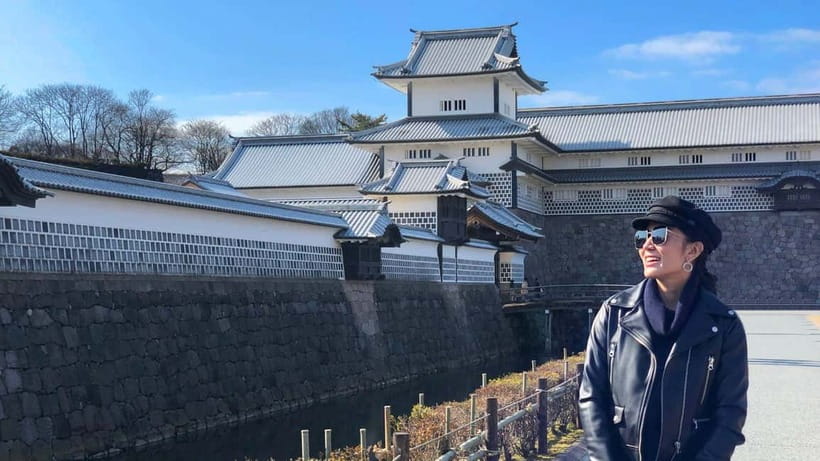
Reviewed · CITY TOURS
Kanazawa: City Highlights & Hidden Gems Private Walking Tour
Kanazawa rewards the curious walker. This private tour gives you a route shaped around your interests, not a fixed march from one sight to the next. I like the chance to combine major sights such as Kenrokuen and the Nagamachi Samurai District with quieter alleys, shrines, studios, and cafes that are easy to miss alone. The guides also add real value through local stories, practical tips, and help speaking with shop owners.
I especially like the flexible two to eight hour length. A short visit can cover key districts, while a longer outing leaves room for craft culture, Omicho Market, and unhurried conversation. The main consideration is simple: this is primarily a walking tour, and public transport or taxis cost extra. If you have mobility concerns, discuss the route carefully before booking.
In This Review
- Key points at a glance
- Why a private walk works well in Kanazawa
- Starting at Kanazawa Station and setting the plan
- Nagamachi Samurai District and the quieter side of history
- Kenrokuen, Japan’s garden classic
- Gold leaf and Kanazawa’s working craft culture
- Higashi Chaya District after the crowds thin
- Omicho Market, local food, and useful finishing points
- What the guides add to the walk
- Is $64 per person good value?
- Walking demands, timing, and what to bring
- Who should book this Kanazawa walking tour?
- FAQ
- How long does the Kanazawa private walking tour last?
- Where does the tour start?
- Is transportation included?
- Are attraction tickets and food included?
- Which languages are available?
- Can I cancel the tour?
Key points at a glance
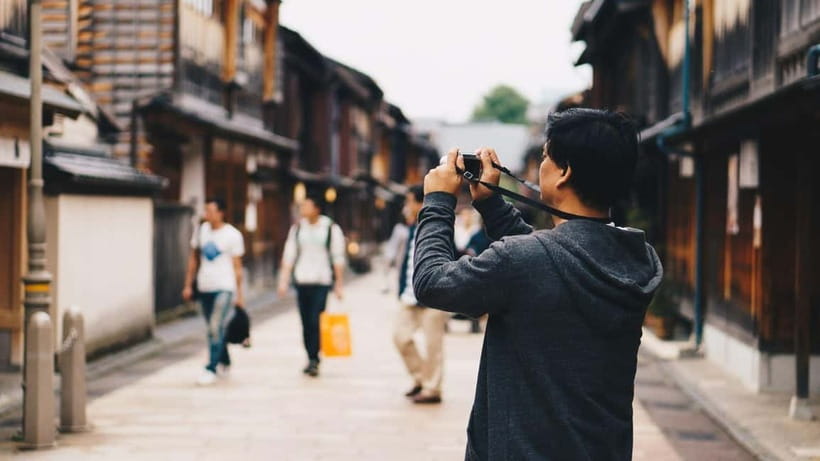
- Your route is built after booking: A questionnaire helps match your interests, pace, and must-see places with a local host.
- Kanazawa’s main sights fit naturally together: Kenrokuen, Nagamachi, Higashi Chaya, the castle area, and Omicho Market can be combined according to your time.
- Local craft is part of the experience: Gold leaf workshops and artisan studios offer a look at work Kanazawa is known for.
- Private guiding keeps the pace human: You can stop for questions, change direction, skip a sight, or linger when something catches your eye.
- The guides earn strong praise for flexibility: Akari, Saki, Megumi, Mouri, and others are described as warm, helpful, and willing to adjust the day.
- The price is reasonable for a private introduction: At $64 per person, the value improves for couples or small groups who want personal attention.
Why a private walk works well in Kanazawa

Kanazawa is compact enough to explore on foot, yet its sights are spread across several distinct districts. That makes a local guide useful on a first visit. You can spend the morning among gardens and samurai lanes, then cross town to old teahouse streets and craft shops without wasting time guessing which road to take.
The private format matters more than the label suggests. You are not simply following a guide through a standard circuit. After you complete the questionnaire, your host contacts you to shape the route around your interests. You might ask for Japanese history, local food, traditional crafts, quiet places, or a mix of all four.
That flexibility is particularly helpful if you have only an evening in Kanazawa. One solo visitor had a short window before leaving the city and ended up taking a longer city walk with Mouri. The outing extended beyond the planned time because the conversation and stops were going so well. That kind of easy adjustment is hard to get on a large group tour.
You can also ask to skip the famous sights. One guest specifically wanted less familiar places and found the experience useful for seeing corners that would have been easy to pass alone. That is a strong reason to book this rather than simply joining a standard highlights tour.
More hidden gem tours:
- Kanazawa Private Tour with a Local – Highlights & Hidden Gems
★ 5.0 · 116 reviews - Kyoto Geisha Walking Tour: Gion District & Hidden Gems
★ 4.7 · 3,273 reviews - Private Kyoto Tour with a Local, Highlights & Hidden Gems, Personalised
★ 5.0 · 1,543 reviews
Starting at Kanazawa Station and setting the plan
The usual central meeting point is the Kanazawa Station Information Center at 1-1-1 Kinoshinbomachi. Hotel pickup can also be arranged from a centrally located Kanazawa hotel, which is handy if you are carrying luggage or want to begin without first finding the station.
The opening conversation is important. Tell your host how much walking you enjoy, which places you have already seen, and what you care about most. If you are visiting Kenrokuen independently, for example, you could use the tour for Nagamachi, Higashi Chaya, and craft studios instead.
A two-hour booking calls for discipline. You can still see a surprising amount, but you should choose one clear theme or a small group of nearby sights. A four-hour tour gives you more breathing room for several districts. The full eight hours is better suited to a broad first look at Kanazawa, especially if you want history, gardens, food, and crafts in one day.
Your host may use local buses or taxis between areas. Those fares are not included, so ask about the likely transfers when the route is arranged. The tour itself is not a private vehicle excursion.
Nagamachi Samurai District and the quieter side of history
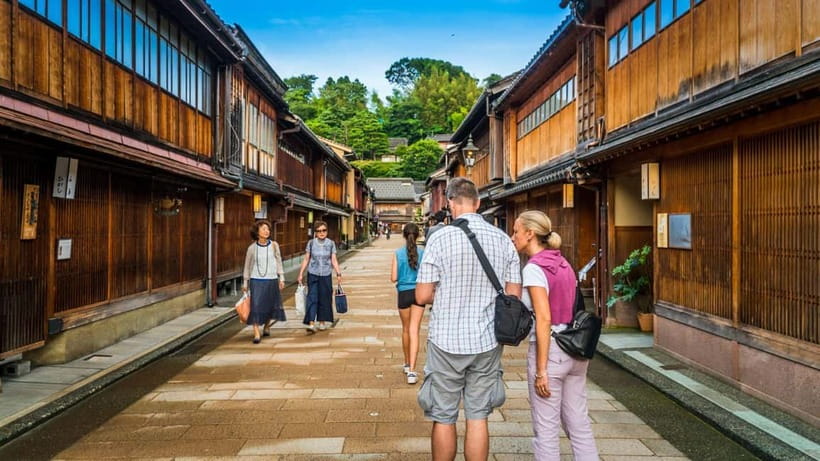
Nagamachi is one of the most atmospheric parts of the walk. Its preserved streets and former samurai residences provide a sense of how the city was organized in the feudal period. The appeal is not only one grand building. It is the combination of narrow lanes, traditional walls, old homes, and the stories that make the area readable.
A guide can explain what you are looking at instead of leaving you to admire the scenery without context. The strongest praise for this tour centers on that running commentary. Guides such as Megumi and Akari have been singled out for explaining Kanazawa’s past and culture in a clear, approachable way.
You may visit a samurai house, depending on the route and your interests. Keep in mind that attraction tickets are not included, so admission costs can be added if you choose to enter paid sites. You can also ask your host to focus on the district’s streets and exterior details if you prefer a shorter or less expensive stop.
I would place Nagamachi near the top of the list for a first visit. It gives you a strong sense of place without requiring a long formal lecture. The only catch is that the experience depends on walking slowly enough to notice the details, so it is less suitable for anyone who needs a route with minimal walking.
Kenrokuen, Japan’s garden classic
Kenrokuen is one of Japan’s Three Great Gardens, and it provides a welcome change of pace after the city streets. Expect carefully arranged views, water, trees, bridges, and open areas where your host can explain how the garden is experienced rather than simply point out its most photographed spots.
The garden is especially useful as part of a balanced itinerary. Kanazawa has plenty of old streets and cultural sites, but Kenrokuen gives you space and quiet. A guide can also adjust the amount of time spent there. Some people want a slow garden visit; others would rather see only the main paths and use the saved time for markets or workshops.
One couple praised Criselda for combining the castle area, Kenrokuen, and the samurai district in a satisfying outing. That pairing shows how the garden can work within a wider history-focused route.
The practical issue is time. Kenrokuen can absorb an entire visit if you enjoy gardens, but a two-hour tour cannot give every area equal attention. Tell your host if it is a must-see. If you have already been there, the personalized format lets you move on to another district.
More walking tours:
- Kanazawa: Private Walking Tour with a Local
★ 4.8 · 141 reviews - Kanazawa Private/Group Walking Tour: Local & Major Highlight
★ 4.8 · 113 reviews - True Kanazawa: Private Walking tour with a Local guide
★ 5.0 · 66 reviews - Tokyo Tsukiji Fish Market Food and Culture Walking Tour
★ 5.0 · 3,184 reviews
Gold leaf and Kanazawa’s working craft culture
Kanazawa is closely associated with gold leaf, and the tour can include artisan studios and gold leaf craft workshops. This is one of the most useful choices for anyone who wants more than old buildings and scenic streets.
The value here is seeing a living tradition in a working setting. You can learn how local craft shapes daily life, shops, souvenirs, and the city’s identity. The experience may also suit you if you prefer hands-on or visual activities to formal museum visits, though any workshop fees or purchases are not included in the tour price.
Your host can point you toward places that match your interests, then help explain what you are seeing. One guest especially appreciated having a guide communicate with shop owners. That small service can make a big difference when you want to ask questions, compare pieces, or understand what makes an item local.
Craft stops are also easy to combine with other parts of the city. You might spend part of a longer route in Nagamachi, visit a studio, then continue toward Higashi Chaya. On a short tour, choose craft culture as the main theme rather than trying to squeeze in every major district.
Higashi Chaya District after the crowds thin
Higashi Chaya is known for its preserved teahouse streets and traditional facades. It is one of the places most likely to appear on a first-time Kanazawa route, but the guide can help you look beyond the main street.
The reward is atmosphere. Quiet side lanes, small shops, teahouses, and nearby shrines create a slower feel than a simple photo stop. Your host may also help you identify cafes or artisan shops that fit your interests. The goal is not to race through the district, but to understand why these streets still feel distinct.
One guest on the two-hour option managed to see Higashi Chaya, a samurai house, and finish at Omicho Market because the guide adjusted the route well. That is a useful example of what a short tour can accomplish when you give your host a clear priority list.
The limitation is that the district can become a checklist if you are trying to cover too much. If you love architecture and old neighborhoods, give it time. If your main interest is food or crafts, use Higashi Chaya as one part of a route rather than the entire focus.
Omicho Market, local food, and useful finishing points
Omicho Market is a natural stop for anyone interested in food. The market’s stalls give you a chance to see local ingredients and ask for help choosing what to try. Food and drinks are not included, so plan to pay directly for anything you eat.
A guide is useful here because you can ask what is worth sampling, how to order, and which stalls fit your preferences. You should also say if you have dietary restrictions or a strong interest in seafood, sweets, produce, or everyday food culture. The tour description does not promise specific tastings, so treat the market as a guided introduction rather than a food tour with included samples.
Omicho can also be a practical ending point. One guest on the short route was dropped there after seeing the teahouse district and a samurai house. That arrangement lets you continue eating or shopping after the guided portion ends, instead of retracing your steps to the station.
If you are short on time, finishing at Omicho Market makes sense. You can have lunch or browse on your own. If you need to return to your hotel or catch a train, confirm the end point with your host before setting off.
What the guides add to the walk

The best part of this experience is the human connection. Several guides receive praise for being friendly, calm, flexible, and easy to talk with. Akari is repeatedly credited with adapting routes to exact requests and walking at a comfortable pace. Saki is praised for taking her time and matching the group’s tempo. Megumi is described as warm and helpful, while Mouri is remembered for his enthusiasm and personal feel.
That does not mean every guide will have the same personality. You are matched with a host based on the questionnaire, and the exact person is not guaranteed. Still, the format gives you a useful chance to explain what you want before the day begins.
I would use the direct communication well. Ask for a guide who can spend more time on history if that matters to you. Tell the host if you want shop recommendations, local cafes, photo stops, or quiet streets. The more specific you are, the more useful the customized route should be.
The guides also help with small moments that do not appear on a map. They can explain a shrine, point out a shop, translate a question, or suggest what to do after the tour. Those details are often worth more than another rushed landmark.
Is $64 per person good value?
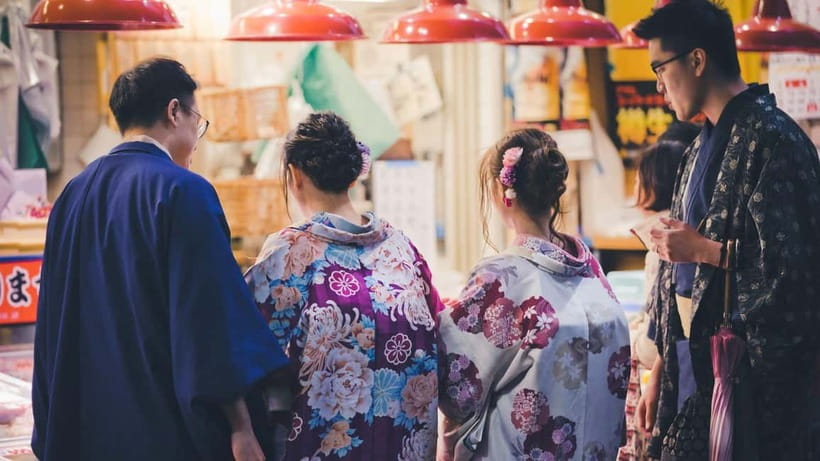
At $64 per person, this is a fair price for a private experience, especially for two or more people who want personal attention. You are paying for planning, a local host, route flexibility, and the ability to ask questions throughout the walk. The value is strongest if you use the guide to avoid wasted time and shape the day around specific interests.
It is less attractive if you only want a quick list of sights or plan to visit the same places alone with a guidebook. Attraction tickets, food, drinks, and transport are extra, so your total spending will be higher than the advertised price.
The flexible duration helps. A two-hour booking can function as a city orientation, while four to eight hours can become a proper introduction to several districts. For a first day in Kanazawa, I think the four-hour option offers a sensible balance between cost, coverage, and tired feet.
Walking demands, timing, and what to bring
Wear comfortable shoes. You will be outdoors and on foot for much of the experience, and the route may include several districts. A hat, sunscreen, water, and a camera are sensible additions, particularly for a longer outing.
The activity is listed as wheelchair accessible, but it is also marked as unsuitable for people with mobility impairments. That mixed guidance deserves attention. Contact the host before booking and ask for a route that matches your needs, including the amount of walking, possible transfers, and access at any paid attractions.
English and Japanese guiding are available. Smoking is not allowed during the experience. Start times are flexible, but you need to check availability for the date and duration you want.
Free cancellation is available up to 24 hours before the experience for a full refund, and you can reserve now and pay later. Those policies are useful if your Japan schedule is still shifting.
Who should book this Kanazawa walking tour?
I would recommend it most strongly to first-time visitors who want a clear introduction without being pushed through a rigid schedule. It is also a good fit for couples, families with older children, solo visitors, and repeat visitors who want quieter places instead of the standard route.
Food lovers can ask for Omicho Market. History fans can build a day around Nagamachi, the castle area, and Kenrokuen. Craft-minded visitors can give gold leaf and artisan studios more time. If you have only an evening, a two-hour route can still provide useful orientation and local recommendations.
I would hesitate if you dislike walking, want a vehicle-based tour, or need all entrance fees and transport included. I would also avoid expecting a fully planned sightseeing package without providing your own preferences. This experience works best when you take part in shaping it.
FAQ
How long does the Kanazawa private walking tour last?
You can choose a duration from two to eight hours, depending on availability. A shorter tour suits a focused route, while a longer booking allows more districts, stops, and conversation.
Where does the tour start?
Your host can arrange pickup from any centrally located Kanazawa hotel. Alternatively, you can meet at the Kanazawa Station Information Center, located at 1-1-1 Kinoshinbomachi, Kanazawa, Ishikawa 920-0858.
Is transportation included?
No. This is mainly a walking experience. Public transport or local taxis may be used between sites, but those costs are additional and can be discussed with your host.
Are attraction tickets and food included?
No. Food, drinks, and entrance tickets are not included in the price. You pay separately for any meals, refreshments, admissions, workshops, or purchases.
Which languages are available?
The tour is available with a live guide in English or Japanese.
Can I cancel the tour?
Yes. You can cancel up to 24 hours in advance for a full refund. You can also reserve now and pay later.
Just added around Kanazawa
- Kanazawa private half day/Photoshoot by professional photographer★ 5.0 · 38 reviews
- Photoshoot session by professional photographer in Kanazawa★ 5.0 · 42 reviews
- Kanazawa Half Day E-bike Tour★ 5.0 · 42 reviews
- Kanazawa Private Tour: Highlights of an Old Samurai Town★ 5.0 · 46 reviews
- [Day trip bus tour from Kanazawa Station] Weekend only! World Heritage Shirakawago Day Bus Tour★ 5.0 · 46 reviews
- Kanazawa Gourmet Experience Omicho Market Tour★ 5.0 · 50 reviews
- Private Tour of Shirakawago and Gokayama from Kanazawa★ 5.0 · 50 reviews
- Shirakawago & Kanazawa from Kanazawa★ 5.0 · 51 reviews
City Tours, compared.

Private City Highlights Tour with Local Guide
Read our review →
Asakusa, Skytree & Akhihabara Go-Kart City Experience
Read our review →
Hiroshima City 4hr Private Walking Tour with Licensed Guide
Read our review →


Private Haneda Airport (HND) to Central Tokyo City Transfer
Read our review →
3-hour Guided E-Bike Tour of the City’s Hidden Gems
Read our review →
Browse the lists this tour appears in