
Reviewed · CYCLING TOURS
Tokyo: 3-Hour Bike or E-Bike City Highlights Tour
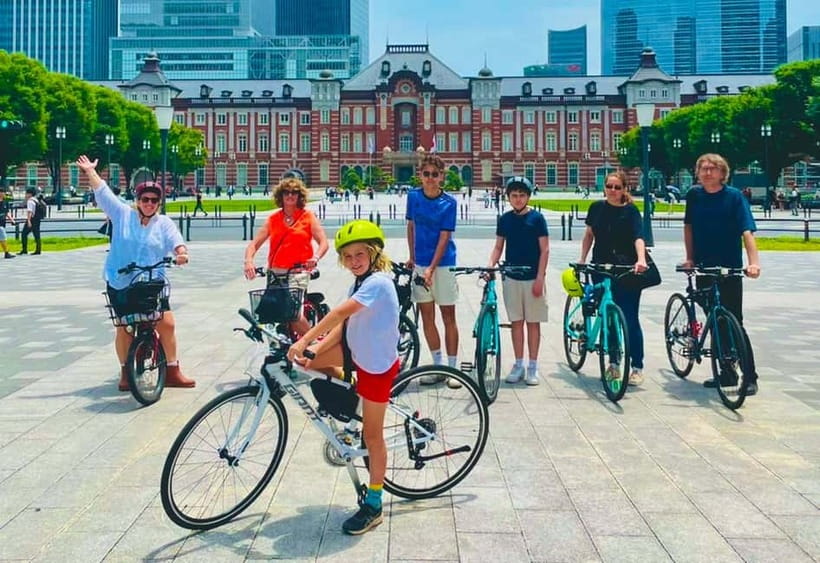
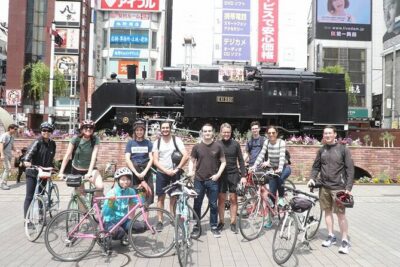
Tokyo looks huge from the train window. Two wheels shrink it quickly, taking you from Shiba Park temples to Shibuya neon in three hours. I like the mix of famous sights and quieter streets, and I like that guides such as Naoki, KJ, Atsu, and Kosei add local stories rather than simply pointing at buildings. The main catch is that you must be comfortable riding beside traffic, and helmets cost an extra ¥1,000 in cash.
This is a strong first-day activity because it gives you a fast sense of how Tokyo’s districts fit together. The e-bike option is a smart choice if you do not cycle often or have limited stamina, though the route can cover roughly 15 to 20 kilometers, depending on the day. Expect sightseeing first, with short explanations at stops, not a nonstop history lecture.
In This Review
- Tokyo by bike: key points at a glance
- Starting at Commodore Perry’s statue
- Shiba Park and Zojo-ji Temple
- Hibiya Park and the Imperial Palace
- Tokyo Station, Ote-mon Gate, and Chidorigafuchi
- Akasaka Palace and the National Stadium
- A local stop away from the main sights
- Aoyama, Cat Street, and Shibuya
- What riding in Tokyo feels like
- Choosing between a cross bike and an e-bike
- Guides, group size, and the personal touch
- Is $45 a good value?
- Who should book this ride?
- FAQ
- How long is the Tokyo bike tour?
- Where does the tour meet?
- What kind of bikes are available?
- Are helmets included?
- Can children join the tour?
- What is included in the price?
- Should you book it?
Tokyo by bike: key points at a glance
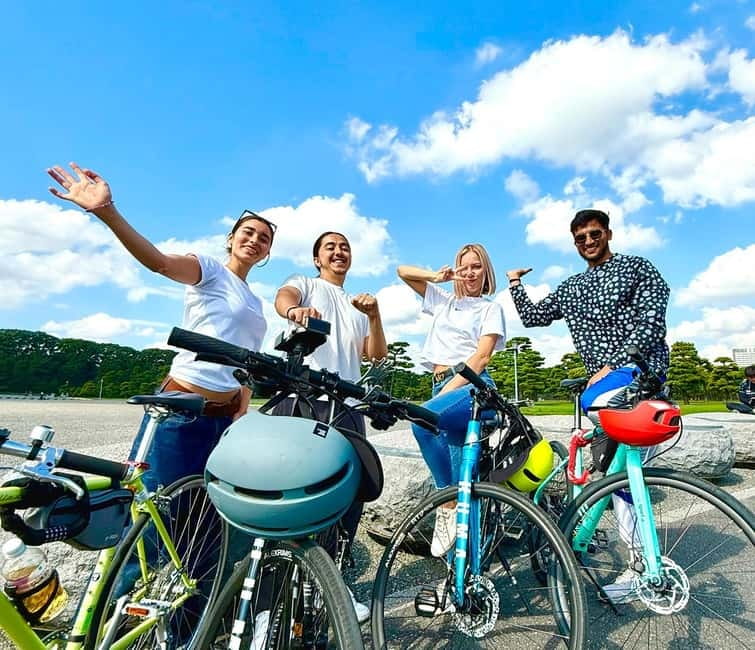
- A broad three-hour route: Ride from Commodore Perry’s statue through Shiba, Marunouchi, Akasaka, Aoyama, and Shibuya.
- A useful bike choice: Pick a Bianchi or Fuji cross bike, or an e-bike if hills, heat, or distance concern you.
- A strong first-day orientation: You can see temples, palace grounds, major parks, modern architecture, and Shibuya in one outing.
- Guides make the difference: English-speaking guides including Naoki, KJ, Atsu, Tyler, and Rikuu are praised for safety, stories, and friendly conversation.
- Traffic is part of the deal: You may move between sidewalks and roads, so this is not the right trip for a nervous or inexperienced cyclist.
- Good value at $45: Bike, guide, insurance, and a small handlebar pouch are included, while helmets and child seats cost extra.
Starting at Commodore Perry’s statue
The meeting point is near the statue of Commodore Perry, about a three-minute walk from Daimon Station’s A6 exit. This is a practical place to begin because the ride quickly reaches some of central Tokyo’s major sights instead of spending much of the three hours getting out of town.
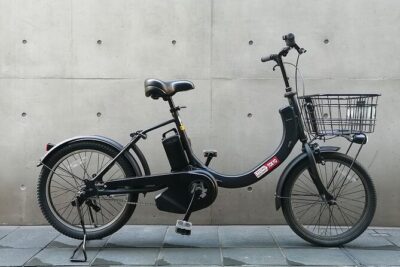
You will meet an English- or Japanese-speaking guide and receive a cross bike or e-bike, depending on your booking. The supplied bikes are Bianchi and Fuji models, described as high-quality road-style bicycles. A small pouch attached to the bike holds items such as your phone, wallet, and keys, which saves you from stuffing everything into a pocket.
The operator provides bike insurance. Helmets are available on site for ¥1,000 each, paid in cash, but they are not included in the $45 price. I would budget for one. A child seat costs ¥3,000, although children under 12 cannot join the tour, so this option appears aimed at younger children who are not eligible for the ride itself.
More Bike Tours in Tokyo
- Tokyo Guided Small-Group Biking Tour
★ 5.0 · 1,250 reviews - Tokyo Great Cycling Tour
★ 5.0 · 811 reviews - Tokyo Top Highlights 3h Guided E-bike Tour
★ 5.0 · 714 reviews
Shiba Park and Zojo-ji Temple
The first major stop is Zojo-ji Temple, reached through the grounds of Shiba Park. You get about 15 minutes here for a guided visit and photographs, enough time to take in the temple setting and hear about its place in Tokyo’s story.
This is an effective opening stop. Zojo-ji offers a traditional counterpoint to the office towers and traffic around it, and the nearby Tokyo Tower area gives the ride an immediate sense of old and new Tokyo sharing the same block. The short visit means you should not expect a detailed temple tour. You are getting orientation, context, and time for photographs before moving on.
The route is designed to keep you moving. If you want long visits inside every temple, garden, or palace building, a bicycle tour cannot provide that. If you want to see where these places sit in relation to one another, the format works well.
Hibiya Park and the Imperial Palace
Hibiya Park receives only a brief three-minute visit. That sounds short, and it is, but the park provides a change of pace after the temple. You may pause, look around, and continue toward the Imperial Palace area without spending a large portion of the tour on one garden.
At the Imperial Palace, the planned stop lasts around 15 minutes and includes a guided explanation and photo time. The palace grounds are among Tokyo’s key landmarks, yet the public experience is mainly about broad spaces, stone walls, gates, and the setting rather than entering the private residence. Your guide helps explain what you are seeing and where the palace fits into modern Japan.
This stop is especially useful early in your Tokyo stay. You can return later for a longer walk around the East Gardens or nearby Marunouchi streets, now with a better sense of direction. The bike gives you that first overview without asking you to cross the city by train.
Tokyo Station, Ote-mon Gate, and Chidorigafuchi
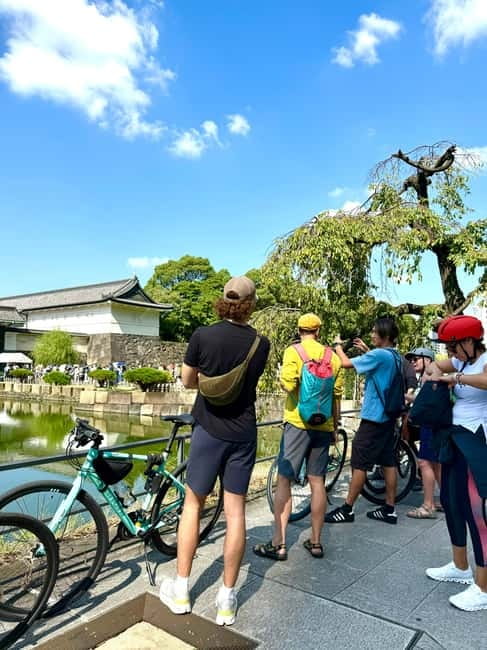
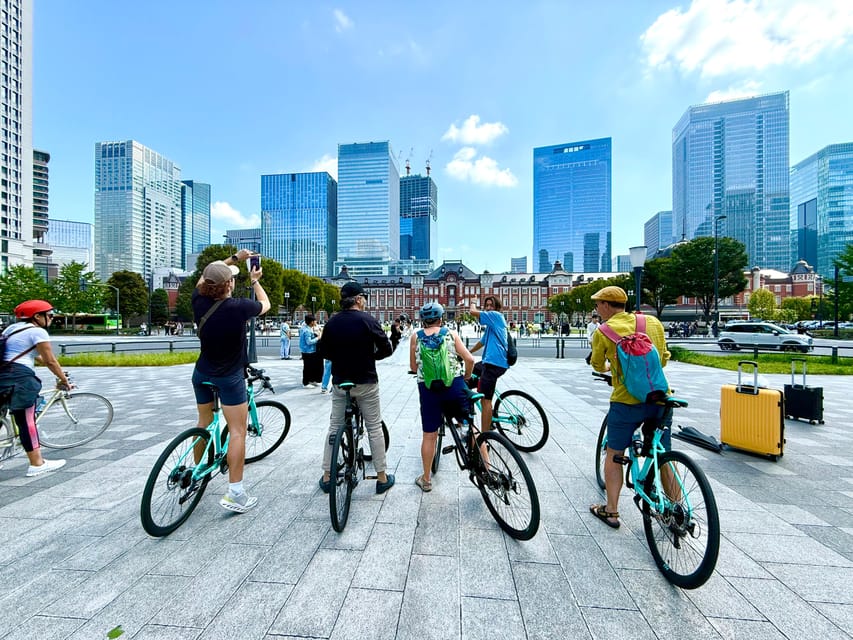
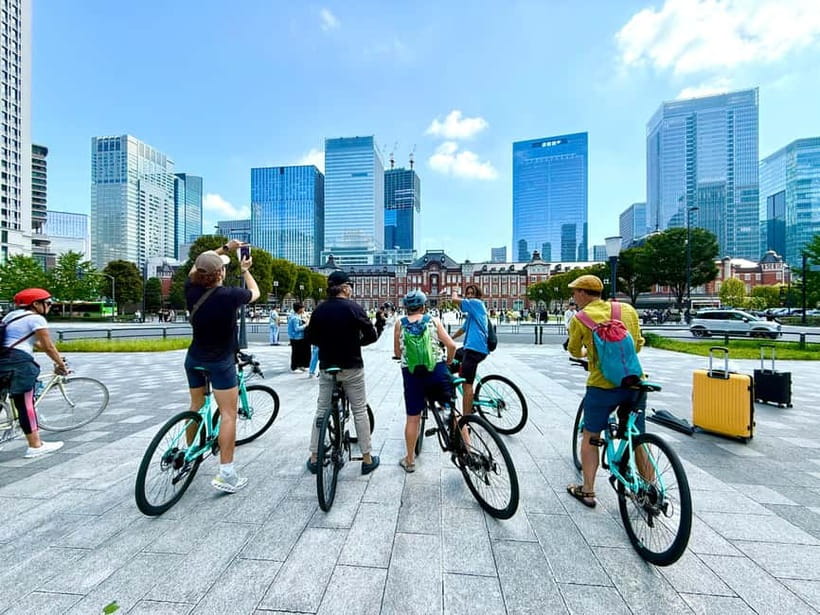
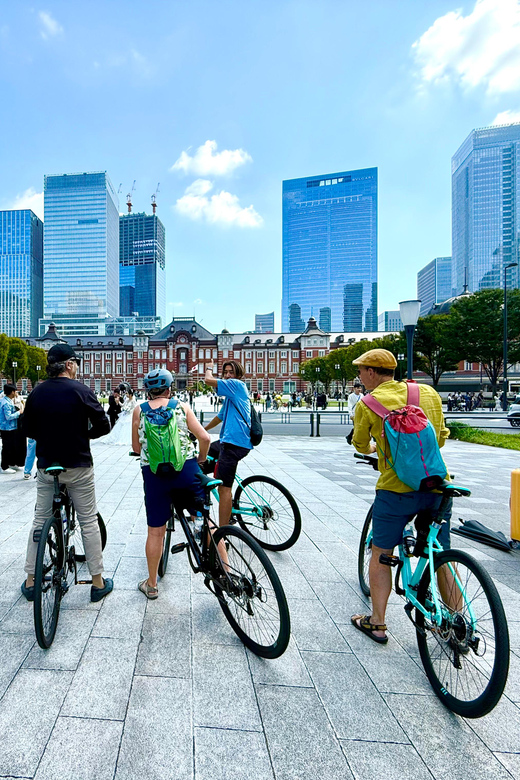
Tokyo Station follows with about 10 minutes for photographs and a short visit. Its grand facade is one of the city’s most recognizable pieces of architecture, and the surrounding Marunouchi district shows Tokyo at its polished business-center best.
The group then passes Ote-mon Gate, with about five minutes to stop and take pictures. The gate links the palace area with the wider network of moats, walls, and entrances around the Imperial Palace. You will not have time to study every detail, but the sequence helps you see the palace as a working part of the city rather than an isolated monument.
Chidorigafuchi is another short break and photo stop. The area is known for its moat and greenery, making it a calmer section of the route. Five minutes is enough for a breath and a few pictures, though it may feel rushed if you are hoping for a long stroll. Bring water, especially in warm months. One August rider found the heat noticeable, while an autumn ride was described as comfortable and sunny.
More E-Bike Tours in Tokyo
- 3h Tokyo E-Bike Tour: Hidden Gems, and Local Life with guide
★ 5.0 · 670 reviews - Tokyo: 3-hour Guided E-Bike Tour of the City’s Hidden Gems
★ 4.8 · 251 reviews - Tokyo: 3-Hour Bike/E-Bike Tour of the City’s Highlights
★ 5.0 · 209 reviews - 3-Hour Tokyo Private E-Bike Tour Starting from Your Hotel
★ 5.0 · 117 reviews
Akasaka Palace and the National Stadium
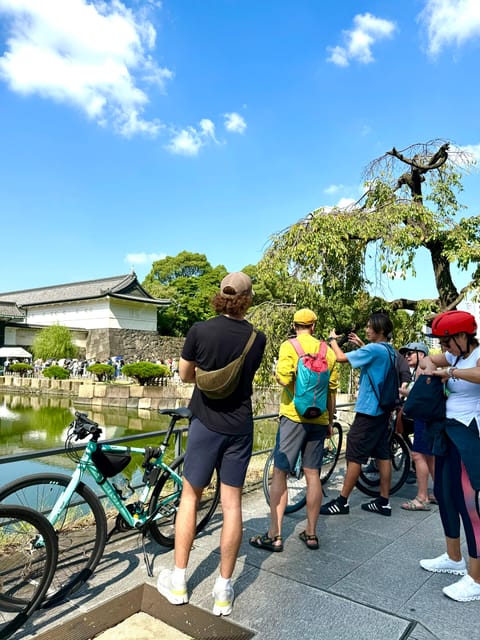
The State Guest House Akasaka Palace is a 10-minute photo stop. Its formal architecture gives you another side of Tokyo, one very different from the compact streets and commercial signs found elsewhere on the route.
Next comes the New National Stadium, with about 10 minutes for a visit and photographs. The stadium adds a modern sports and design focus to the day. Together, Akasaka Palace and the stadium show how the route keeps shifting between formal state buildings, public parks, and contemporary Tokyo.
The value here is the range. You are not spending three hours looking at one type of attraction. You get temples, gardens, palace walls, government buildings, sports architecture, and shopping districts. The tradeoff is that each place receives only a small slice of time.
A local stop away from the main sights
The itinerary includes an unspecified local stop described as a lesser-known place, with about 15 minutes for a guided visit. Since the exact location can vary, you should treat this as a flexible part of the ride rather than a guaranteed named attraction.
That uncertainty is not necessarily a weakness. The best city rides often need room to adjust for traffic, weather, or the group’s pace. This stop gives the guide a chance to show you something that is not simply on every Tokyo postcard. Guides have also offered local suggestions for later meals and visits, which can make the advice useful beyond the three-hour ride.
A quick convenience-store stop may also occur during the tour. One group appreciated a brief 7-Eleven break and recommendations for Japanese snacks. Do not count on this as a formal food tasting, but it can be a handy pause if you need water or a small bite.
Aoyama, Cat Street, and Shibuya
Aoyama St. Grace Cathedral is a very short three-minute sightseeing and photo stop. It is more of a passing point than a full visit, but it adds architectural variety before the route heads toward the youthful districts of Aoyama and Harajuku.
Cat Street receives about five minutes. This area is a useful bridge between quieter side streets and the commercial energy associated with Harajuku and Shibuya. The short stop lets you see the character of the area without turning the tour into a shopping excursion.
The payoff comes at Shibuya Crossing, where you get roughly 10 minutes for photographs and a guided explanation. Seeing the crossing after cycling through several central districts gives it more context. You have already experienced Tokyo’s palace district and back streets, so Shibuya feels like one part of a very large city, not the whole city.
Tower Records Shibuya is another quick three-minute photo and sightseeing stop. It is a small but fitting finish for a route that ends in one of Tokyo’s major music and youth-culture districts. The tour concludes at the Bell of Peace.
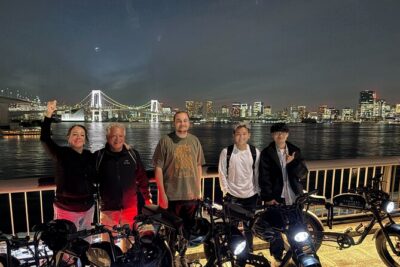
Some departures may reach Shibuya in the evening, when the signs and crossing take on a different look. One rider particularly enjoyed the neon-lit finish. Check the available start time if that atmosphere matters to you, since the tour lasts three hours and the exact light conditions will depend on the season.
What riding in Tokyo feels like
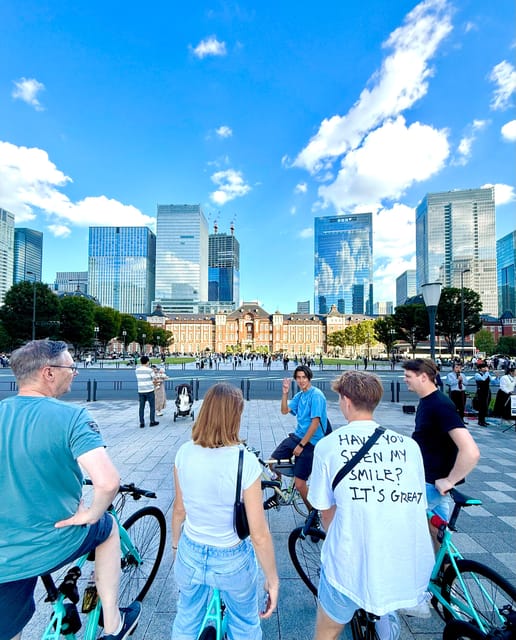
Tokyo is often easier to cycle through than first-time visitors expect, but this is still a city ride. You may move from sidewalks to roads and ride near traffic. Several participants felt safe with their guides, and the route is arranged in smaller groups when needed, which helps with maneuverability.
That does not make the ride suitable for everyone. One parent enjoyed the experience with a 14-year-old but found road riding more stressful than expected. Another rider specifically advised against booking if you are not comfortable cycling in traffic. Take that advice seriously.
You should be able to control a bike, start and stop confidently, and handle a ride that may reach 15 to 20 kilometers. The tour is not intended for people who cannot ride, pregnant women, people with back problems, or children under 12.
The pace is generally described as relaxed and attentive. Guides check that people are keeping up, adjust when possible, and help with photographs. Rain does not automatically ruin the outing, but you need suitable clothing. A poncho from a FamilyMart or another convenience store is a practical backup if the forecast looks wet.
Choosing between a cross bike and an e-bike
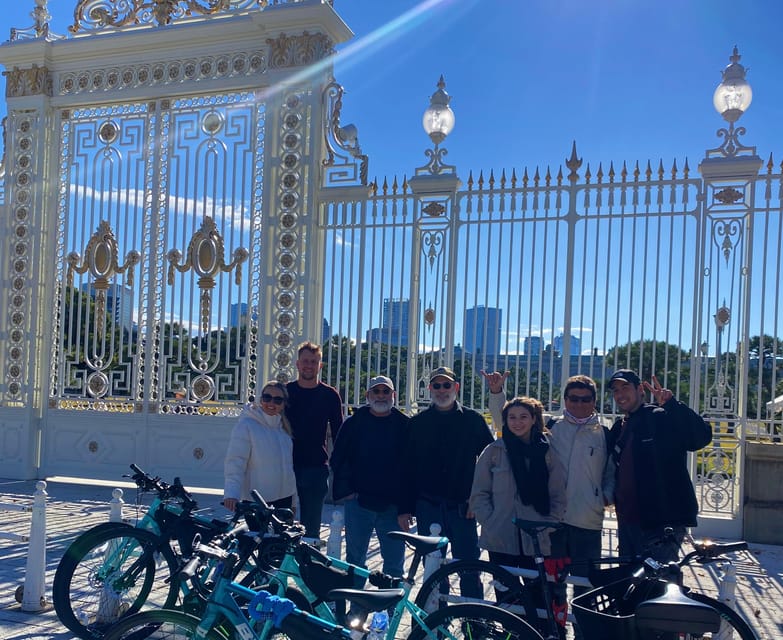
The standard bicycles are a good fit if you cycle regularly and want more exercise. The route covers a lot of ground, so you get a physical sense of Tokyo rather than simply being carried from stop to stop.
Choose the e-bike if you rarely ride, feel unsure about the distance, or want to save energy for the rest of your day. Riders found the electric assistance useful on hills and after a late night, and it can make the tour more pleasant in warm weather. You still need to ride safely and pay attention, however. An e-bike does not remove the need for balance, braking, or road awareness.
Wear comfortable clothes and shoes. Bring water. There is no need to dress for a formal temple visit, since the itinerary is primarily an outdoor sightseeing ride.
Guides, group size, and the personal touch
The guides are one of the tour’s strongest features. Naoki is repeatedly praised for being friendly, funny, attentive, and able to explain customs and history. KJ, Atsu, Kosei, Rikuu, Tyler, Kai, Keiji, and Rinto are also singled out for safety, clear English, good pacing, and easy conversation.
That range of names suggests a larger guiding team rather than one fixed personality. Your experience will depend partly on who leads your departure, but the consistent pattern is encouraging: guides answer questions, take photographs, check on the group, and share recommendations for the rest of your stay.
Private and small-group options are available. A group of five was described as comfortable, and a group of six enjoyed the relaxed pace. Larger family groups may be split into smaller riding units, which is better for crossing streets and keeping everyone together.
The style is more sightseeing ride than classroom lecture. You will receive explanations at key stops, but most of the time is spent pedaling, looking, and moving between districts. I see that as a strength if you want a lively introduction. If you want extensive academic detail at every monument, book a walking or specialist history tour instead.
Is $45 a good value?
At $45 per person, the tour offers a solid amount for three hours. You receive a bike or e-bike, an English-speaking guide, local commentary, a small bike pouch, and insurance. You also cover a large part of central Tokyo that would take more planning and several train rides to connect on your own.
The value is greatest at the start of your visit. You can mark places for later, learn the broad shape of the city, and collect suggestions from your guide. It is also useful if you have only a short time in Tokyo and want a wide sample of neighborhoods.
Remember the extras. A helmet costs ¥1,000 in cash, and a child seat costs ¥3,000. The tour also does not include food or drinks, although a short convenience-store stop may be possible. For a three-hour route covering many major sights, the base price remains reasonable, especially if you choose an e-bike and would otherwise spend money on several separate transport trips.
Who should book this ride?
I would recommend it to confident casual cyclists, active couples, families with teenagers who already ride well, and solo visitors who want company and a quick city introduction. It suits people who prefer seeing a lot from the outside rather than entering each attraction.
Book early in your stay if you can. The ride helps you understand Tokyo’s scale and gives you useful ideas for later days. Small groups are preferable if you want more chances to ask questions and an easier time staying together.
I would skip it if you dislike road cycling, have back problems, cannot ride comfortably for several hours, or want long, unhurried visits inside temples and gardens. In that case, use Tokyo’s excellent train system and choose walking tours in individual districts.
FAQ
How long is the Tokyo bike tour?
The tour lasts three hours. Starting times vary, so you should check availability when booking.
Where does the tour meet?
Meet your guide near the Statue of Commodore Perry. It is about a three-minute walk from Daimon Station’s A6 exit.
What kind of bikes are available?
You can select a high-quality Bianchi or Fuji cross bike, or choose an e-bike if you are not comfortable riding long distances or do not cycle often.
Are helmets included?
No. Helmets are available on site for ¥1,000 per unit, paid in cash.
Can children join the tour?
Children under 12 are not permitted. A child seat is available for ¥3,000 per unit, subject to the tour’s age restrictions.
What is included in the price?
The $45 price includes an English-speaking guide, a Bianchi or Fuji cross bike or e-bike according to your selection, local stories and advice, a small bike pouch, and bike insurance.
Should you book it?
Book this tour if you want to get your bearings fast and feel Tokyo’s size from street level. The route packs an impressive range into three hours, and the guides add the warmth and practical advice that turn a simple bike rental into a useful introduction.
Choose the e-bike if your stamina is uncertain, bring cash for a helmet, and be honest about your comfort around traffic. With those points understood, this is a lively, well-priced way to connect Shiba’s temple grounds, the Imperial Palace area, Aoyama, and Shibuya in one memorable ride.
More 3-Hour Experiences
- 3-Hour Tokyo Pub Crawl Nightlife Welcome Guided Tour in Shibuya
★ 5.0 · 209 reviews - 3-Hour Small-Group Sushi Making Class in Tokyo
★ 5.0 · 166 reviews - Tokyo Like a Local: Private & Personalised Experience (2-3 hours)
★ 4.5 · 81 reviews - Tokyo: 3-Hour Bike or E-Bike Tour of City’s Hidden Gems
★ 4.7 · 81 reviews
Just added around Tokyo
- Tokyo 6hr Instagram Highlights Private Tour with Licensed Guide★ 5.0 · 38 reviews
- Tokyo Small Group Tour with Guide★ 4.5 · 38 reviews
- Tokyo Sumo Experience with Live Show & Audience Challenge★ 5.0 · 38 reviews
- Japanese Food Cooking Class in Asakusa, Tokyo★ 5.0 · 39 reviews
- Very popular in Harajuku♡Animal petting zoo★ 4.6 · 39 reviews
- Ramen Making from Scratch with Tokyo Mom(Vegan Option Available)★ 5.0 · 39 reviews
- Tokyo JDM Night: 600hp C63s AMG Edition 1 (Private)★ 4.9 · 39 reviews
- Tokyo: Kimono Rental inside Shinjuku Gyoen National Garden★ 4.9 · 39 reviews
Cycling Tours, compared.
3h Tokyo E-Bike Tour: Hidden Gems, and Local Life with guide
Read our review →
Arashiyama Bamboo Forest & Hidden Gems Bike Tour (Early Bird)
Read our review →
Hiroshima in a Nutshell: Morning Bike Adventure
Read our review →Browse the lists this tour appears in