
Reviewed · SUSHI-MAKING CLASSES
3-Hour Small-Group Sushi Making Class in Tokyo
Sushi is better when you make it yourself. This three-hour Cooking Sun class in Tokyo turns a famous Japanese dish into a practical, hands-on lesson, with English-speaking instructors, ingredients supplied, and a meal at the end. I especially like the small class size, capped at nine people, and the chance to make several styles of sushi rather than only one simple roll. The quiet residential setting in Shinjuku also gives the afternoon a calmer feel than a crowded restaurant.
The class is friendly to beginners, children from age six, solo visitors, and families. I also like that you learn tamagoyaki, sushi rice, dashi, and miso soup along with the sushi itself. The main limitation is important: the fish is pre-sliced, so this is a shaping and preparation class, not a lesson in cutting whole fish or working as a sushi chef.
In This Review
- Key points at a glance
- Why this Tokyo sushi class is worth three hours
- Finding Cooking Sun Tokyo in Shinanomachi
- The opening lesson: dashi, miso, and Japanese seasonings
- Making tamagoyaki before the sushi assembly
- Preparing rice, shrimp, and the other fillings
- Four sushi styles, four different techniques
- Nigiri
- Inari
- Hosomaki
- California roll
- Sitting down to eat what you made
- The instructors make the difference
- Families, vegetarians, and dietary needs
- Timing, price, and cancellation advice
- Who should book this sushi class?
- Should you book Cooking Sun Tokyo?
- FAQ
- Where does the sushi-making class start?
- What time does the class begin?
- How long does the experience last?
- What types of sushi will I learn to make?
- Is the class suitable for complete beginners?
- Is raw fish cutting included?
- Can children join the class?
- Is a vegetarian option available?
Key points at a glance
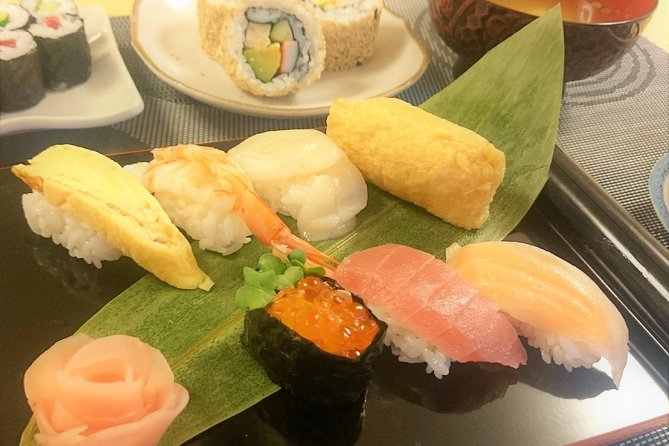
- Make four sushi styles: Prepare nigiri, inari, hosomaki, and California rolls with step-by-step help.
- Learn more than rolling: The lesson includes sushi rice, tamagoyaki, dashi, miso soup, and Japanese seasonings.
- Small class, better access: With a maximum of nine people, instructors can watch your technique and help when a roll goes crooked.
- English-friendly instruction: Cooking Sun instructors explain the food, methods, and some cultural background in clear English.
- A full meal is included: Sit down with your finished sushi, miso soup, wasabi, and pickled ginger.
- Good family activity: The minimum age is six, and the instructors are used to helping children and complete beginners.
Why this Tokyo sushi class is worth three hours
Tokyo offers no shortage of sushi counters, conveyor-belt restaurants, and market stalls. Those are excellent places to eat, but they do not show you why sushi rice behaves differently from ordinary rice or how a simple omelet becomes a useful filling.
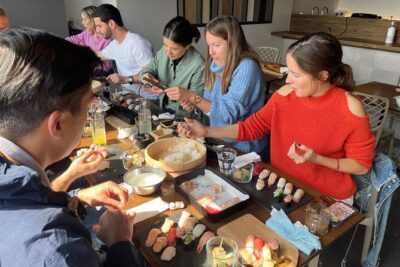
This class gives you that missing piece. You do not only watch an instructor prepare food. You mix, shape, roll, and assemble the dishes yourself, then eat what you have made. That makes the experience useful beyond the afternoon. You can take the recipes home and try a sushi night in your own kitchen.
At $72.67 per person, the price is fair for a three-hour cooking lesson that includes an English-speaking instructor, ingredients, an apron and towel rental, and a substantial meal. You are paying for instruction as well as food. If your only aim is to eat the finest sushi in Tokyo, this is not the best use of your money. If you want a memory, new kitchen skills, and enough food to count as a meal, the value is much stronger.
The class is booked an average of 53 days ahead, so I would not leave it until the final days of your trip. The 1:30 pm start also works well as an afternoon plan, especially if you want a break from sightseeing.
More Sushi-Making Classes in Tokyo
- Sushi Making Tokyo Roll and Authentic Japanese Sushi Class
★ 5.0 · 3,971 reviews - Tokyo: Roll and Authentic Sushi Making Class in Asakusa
★ 4.9 · 1,957 reviews - Make Sushi and Create Unforgettable Memories in Tokyo
★ 5.0 · 1,413 reviews
Finding Cooking Sun Tokyo in Shinanomachi
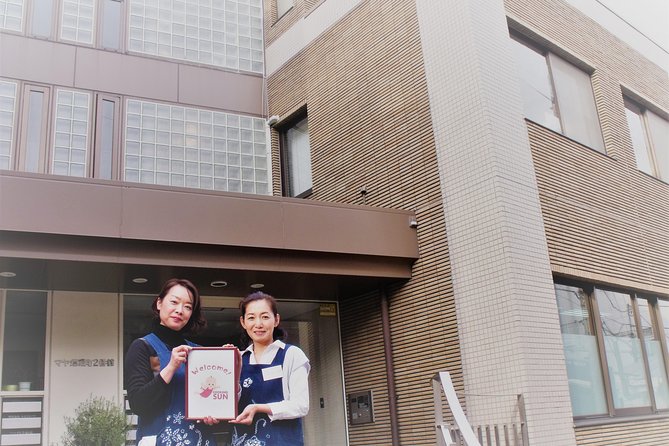
The class begins at Cooking Sun Tokyo, at 18-39 Shinanomachi in Shinjuku City. The studio is near public transportation, but hotel pickup and drop-off are not included, so you need to make your own way there.
The location has a useful character. It is set back from the main roads in a quiet residential area, giving the class a local neighborhood feel rather than a polished tourist venue in a busy commercial district. You should allow enough time to find the address and arrive ready for the 1:30 pm start.
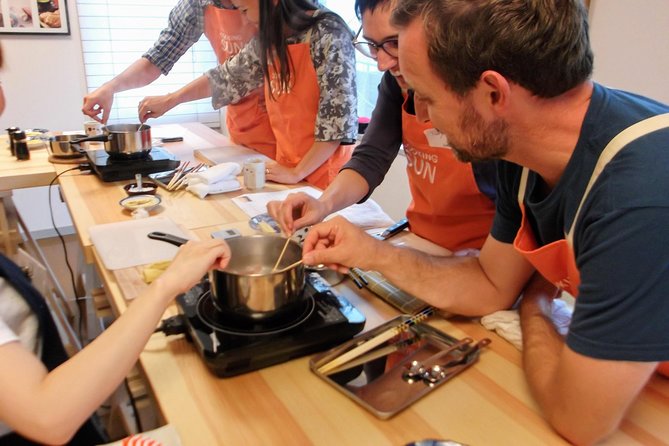
Once inside, you can expect a compact cooking space suited to a small group. The class size matters here. A sushi lesson can become frustrating when an instructor demonstrates once and then disappears into a crowd. With no more than nine people, you have a better chance to receive help with rice portions, rolling pressure, and the shape of your nigiri.
The setting is also practical for families. One family described the room as comfortably cooled during a hot August day, a small detail that can make a long cooking session much more pleasant.
The opening lesson: dashi, miso, and Japanese seasonings
The class begins with an introduction to essential Japanese ingredients. You learn about dashi, miso, and traditional seasonings before moving into the main preparation.
This part is easy to overlook, but it gives the food context. Dashi is a foundation for Japanese cooking, and miso soup is more than a side dish placed beside your sushi. Understanding these ingredients helps you recognize the balance of savory, sweet, salty, and lightly acidic flavors used throughout the meal.
The instructors also share information about Japanese cooking and the background of sushi. This makes the class more than a craft session. You begin to understand how the separate pieces fit together and why the food is prepared in particular ways.
Cooking Sun’s instructors are English-speaking and have been praised for clear explanations and a warm manner. Names noted by participants include Miki, Yuki, Yuko, Aya, Yuca, and Yummy Yuma. Instructor assignments may vary, but the teaching style is described as patient, organized, and encouraging.
Making tamagoyaki before the sushi assembly
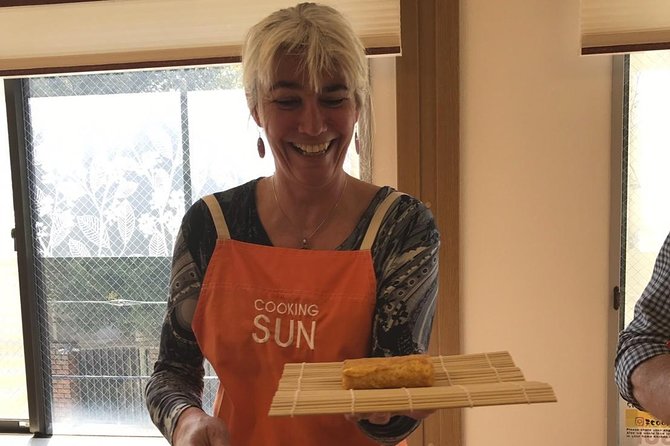
One of the most useful parts of the class is preparing tamagoyaki, the Japanese rolled omelet. It can look simple, but getting the layers to cook and fold neatly takes some coordination.
Here you get to practice a technique that has value beyond sushi. The omelet is used as a filling, so it becomes part of the final meal rather than a side exercise. If your first attempt is not perfectly rectangular, that is part of the fun. The instructors guide you through the process, and the finished omelet still tastes good even when it looks homemade.
Several people found this step more challenging than expected, but also rewarding. I would pay attention to the instructor’s hand movements and not worry about producing a restaurant-perfect result. The class is designed for people who may never have cooked sushi before.
A completely different kind of day out in Tokyo:
- Mt Fuji and Hakone 1-Day Bus Tour Return by Bullet Train
★ 5.0 · 26,383 reviews - 1-Day Tokyo Bus Tour
★ 5.0 · 14,250 reviews - Tokyo: TOKYO SKYTREE® Admission ticket
★ 4.5 · 11,192 reviews - Tokyo: teamLab Planets TOKYO Digital Art Museum Entry Ticket
★ 4.6 · 9,779 reviews
Preparing rice, shrimp, and the other fillings
Next comes the basic material that makes or breaks sushi: the rice. You learn how to prepare sushi rice and combine it with the toppings and fillings supplied for the class.
Shrimp is included among the ingredients, and the menu also uses tamagoyaki, tofu pouches, and other fillings for the different sushi forms. The ingredients are provided, which keeps the class hassle-free and means you do not need to shop for unfamiliar items before arriving.
This is also where the difference between a lesson and a demonstration becomes clear. You handle the ingredients yourself, with the instructors correcting small mistakes as you work. You might use too much rice at first or press a roll too loosely. That is exactly the sort of thing that is hard to learn from a recipe alone.
The class does not include raw fish cutting instruction. The fish used is pre-sliced. That keeps the lesson manageable in three hours and makes it suitable for beginners, but anyone hoping to learn professional fish preparation should choose a different course.
Four sushi styles, four different techniques
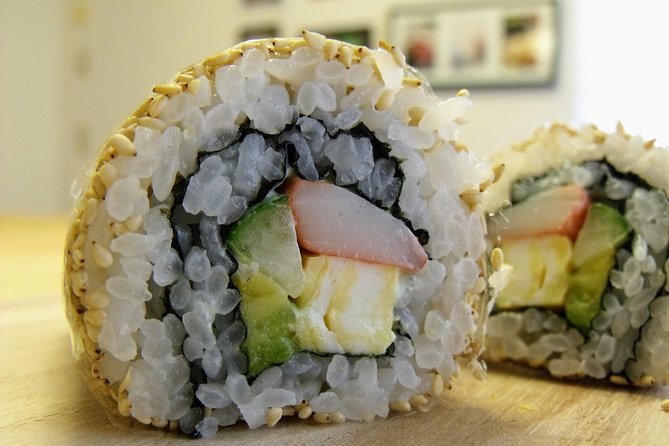
The class covers four main types of sushi, each requiring a different approach.
Nigiri
Nigiri is hand-pressed sushi, with rice shaped into a small mound and topped with an ingredient. You learn how much rice to use, how to form it without crushing the grains, and how to place the topping neatly.
This is one of the best reasons to take the class. Nigiri looks minimal, but the shape and texture matter. Making it yourself helps you appreciate why a skilled sushi chef can make a small piece feel so precise.
Inari
Inari uses a sweet tofu pouch filled with sushi rice. It is less intimidating than rolled sushi because the pouch does much of the shaping work, and it gives you a taste of a style that many first-time sushi makers may not prepare at home.
The sweet tofu contrasts nicely with the savory elements of the meal. It is also a practical option for children and anyone who finds rolling difficult at first.
Hosomaki
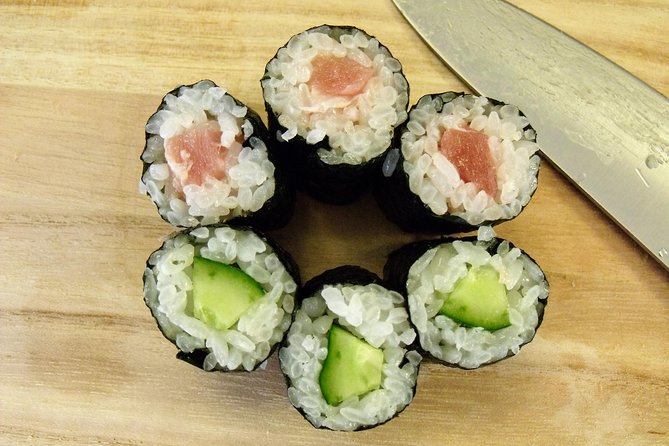
Hosomaki is a thin roll. You learn to distribute the rice and filling across the seaweed, then roll it firmly enough to hold together without squeezing everything out.
This is the basic rolling skill that most people want from a sushi class. The instructor’s guidance matters because the amount of rice and the position of the filling affect the final shape. Your first roll may be uneven, but the process becomes easier once you understand the pressure needed.
California roll
The California roll adds another style to the lesson and gives you a chance to work with a broader combination of ingredients. It also helps show how sushi can change across countries while still using Japanese methods such as seasoned rice and rolling.
The point is not to compare it with a restaurant version. The useful lesson is learning how to assemble a larger roll and keep it together when you cut it.
Some participants have produced as many as seven different items during the meal, including miso soup, tamagoyaki, inari, hosomaki, California roll, ebi nigiri, tamago sushi, and four pieces of nigiri. The exact amount may depend on the class, but you should arrive hungry. The food is described as plentiful.
Sitting down to eat what you made
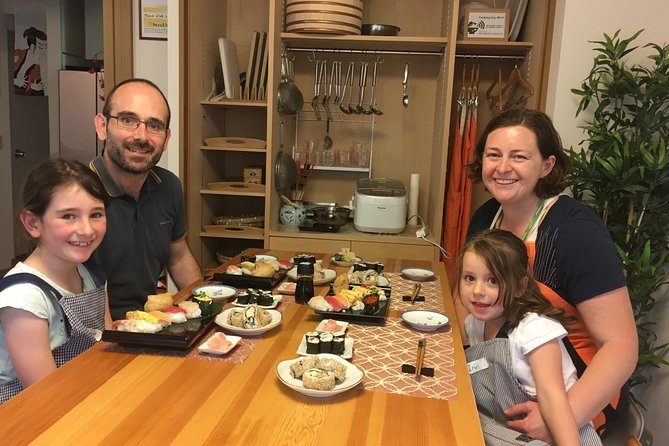
After the preparation, you sit down and eat the finished sushi with miso soup, fresh wasabi, and pickled ginger. This shared meal is the payoff, but it is also a useful final lesson.
You can see which rolls held together, which pieces used too much rice, and how the flavors work together. The food may not match the quality of an elite Tokyo sushi restaurant, and one honest assessment points out that the fish is not the main attraction. Still, the meal is reported to be delicious, filling, and satisfying because you made it yourself.
I like this format better than a class that sends you home with a few small samples. Here, you get enough food to serve as lunch or dinner, and the meal gives the three hours a clear finish.
Fresh wasabi and pickled ginger are included at the table. These details help you understand how sushi is traditionally eaten, rather than treating the rolls as finger food without context.
The instructors make the difference
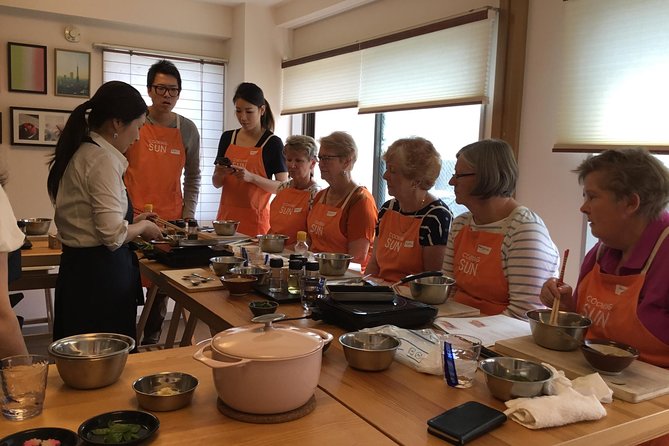
The strongest part of this experience is the teaching. The instructors are repeatedly described as friendly, patient, and attentive, with excellent English. They explain the steps, offer help when needed, and keep the mood light when someone’s sushi does not look quite like the demonstration model.
That matters for beginners. You do not need previous cooking experience, and the class is structured so that even people who rarely cook can follow along. Families with children have found the instructors patient and supportive, while solo visitors and couples fit naturally into the small group.
The class can also work well for people who want to learn but feel nervous about making mistakes. Sushi has a reputation for precision, yet the tone here appears relaxed. You are expected to learn by doing, not to arrive with professional knife skills.
Families, vegetarians, and dietary needs
The minimum age is six, making this a reasonable family activity for children who can follow kitchen instructions. The instructors have experience giving children attention, and the compact group size helps prevent younger participants from getting lost in the crowd.
Vegetarian preparation is available, but you need to request it when booking. You should also provide any other dietary requirements at that time. The available information does not promise every type of allergy accommodation, so be specific rather than hoping the kitchen can adjust at the last moment.
The class is suitable for solo visitors, couples, and families. It is less suited to anyone seeking a formal chef-training session or raw fish butchery. It is also not the place to compare premium fish quality across Tokyo’s top sushi counters.
Timing, price, and cancellation advice
The experience lasts about three hours and begins at 1:30 pm. It ends back at the meeting point, with no hotel transportation included.
At $72.67, I see this as a mid-priced food experience rather than a cheap meal. The cost includes the lesson, ingredients, instructor, apron and towel rental, and the sushi meal. You also receive recipes you can use at home, which adds lasting value.
Booking ahead is wise because the activity is often reserved 53 days in advance. Free cancellation is available if you cancel at least 24 hours before the local start time. Changes or cancellations inside that window are not refunded. The experience also requires good weather, and if poor weather causes cancellation, you are offered another date or a full refund.
Who should book this sushi class?
I would choose this class if you want a social afternoon with real participation rather than a passive food tasting. It is especially good for:
- First-time sushi makers
- Families with children age six and older
- Solo visitors who want an easy group activity
- Sushi fans who want recipes to recreate at home
- People interested in Japanese cooking beyond restaurant meals
- Anyone who appreciates clear English instruction
I would look elsewhere if your main goal is learning to slice raw fish, buying top-grade seafood, or studying advanced sushi-chef technique. The pre-sliced fish is a firm limit, not a minor detail.
Should you book Cooking Sun Tokyo?
Yes, if you want a friendly, useful, and filling introduction to sushi making in Japan. The small group, English-speaking instruction, wide range of sushi styles, and patient teaching give it strong value at $72.67.
Book it early, request vegetarian or other dietary needs in advance, and arrive hungry. You will leave with a better understanding of sushi rice, tamagoyaki, dashi, and rolling technique, plus the confidence to try a sushi night at home. Just keep your expectations clear: this is a hands-on home-cooking lesson, not professional fish-cutting training or a premium sushi dinner.
FAQ
Where does the sushi-making class start?
The class starts at Cooking Sun Tokyo, located at 18-39 Shinanomachi, Shinjuku City, Tokyo 160-0016, Japan.
What time does the class begin?
The class begins at 1:30 pm.
How long does the experience last?
The sushi-making experience lasts approximately three hours.
What types of sushi will I learn to make?
You will learn to make nigiri, inari, hosomaki, and California rolls. The class also includes tamagoyaki and sushi rice preparation.
Is the class suitable for complete beginners?
Yes. No previous experience is necessary, and the English-speaking instructors guide you through each stage.
Is raw fish cutting included?
No. The fish used in the class is pre-sliced, so raw fish cutting instruction is not included.
Can children join the class?
Yes. The minimum age is six, and the class has a maximum of nine participants.
Is a vegetarian option available?
Yes. A vegetarian option is available, but you must request it when booking. You should also provide any other dietary requirements at that time.
More 3-Hour Experiences
- Tokyo Top Highlights 3h Guided E-bike Tour
★ 5.0 · 714 reviews - 3h Tokyo E-Bike Tour: Hidden Gems, and Local Life with guide
★ 5.0 · 670 reviews - Tokyo: 3-Hour Bike or E-Bike City Highlights Tour
★ 4.8 · 435 reviews - Tokyo: 3-hour Guided E-Bike Tour of the City’s Hidden Gems
★ 4.8 · 251 reviews
Just added around Tokyo
- Tokyo 6hr Instagram Highlights Private Tour with Licensed Guide★ 5.0 · 38 reviews
- Tokyo Small Group Tour with Guide★ 4.5 · 38 reviews
- Tokyo Sumo Experience with Live Show & Audience Challenge★ 5.0 · 38 reviews
- Japanese Food Cooking Class in Asakusa, Tokyo★ 5.0 · 39 reviews
- Very popular in Harajuku♡Animal petting zoo★ 4.6 · 39 reviews
- Ramen Making from Scratch with Tokyo Mom(Vegan Option Available)★ 5.0 · 39 reviews
- Tokyo JDM Night: 600hp C63s AMG Edition 1 (Private)★ 4.9 · 39 reviews
- Tokyo: Kimono Rental inside Shinjuku Gyoen National Garden★ 4.9 · 39 reviews
Sushi-Making Classes, compared.
Sushi Making Tokyo Roll and Authentic Japanese Sushi Class
Read our review →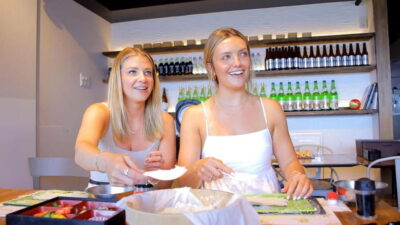
Roll and Authentic Sushi Making Class in Asakusa
Read our review →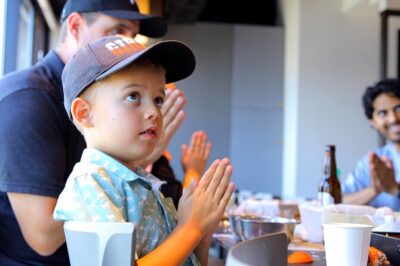
Make Sushi and Create Unforgettable Memories in Tokyo
Read our review →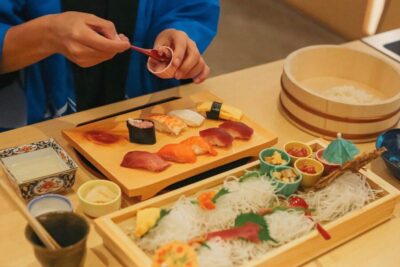
Sushi Making Class in a Happi Coat near a Famous Spot
Read our review →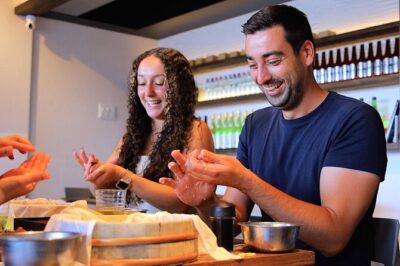
Sushi Making Osaka Roll and Authentic Japanese Sushi Class
Read our review →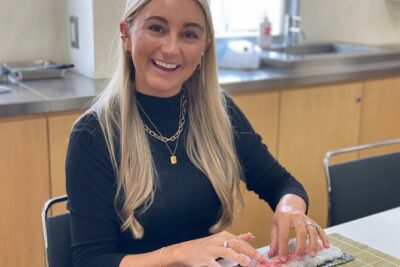
Tokyo Sushi Making Class in Tsukiji with Professional Chef
Read our review →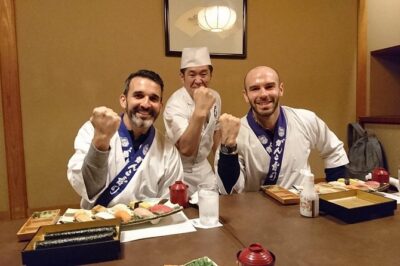
Tsukiji Fish Market Guided Tour and Sushi Making with Pro Chef
Read our review →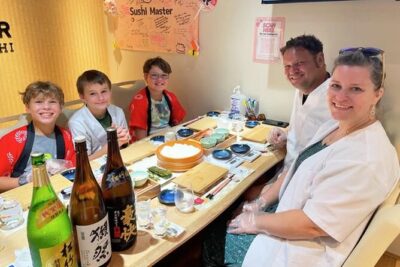
Sushi Making in Kyoto! Same-day bookings welcome!
Read our review →Browse the lists this tour appears in