
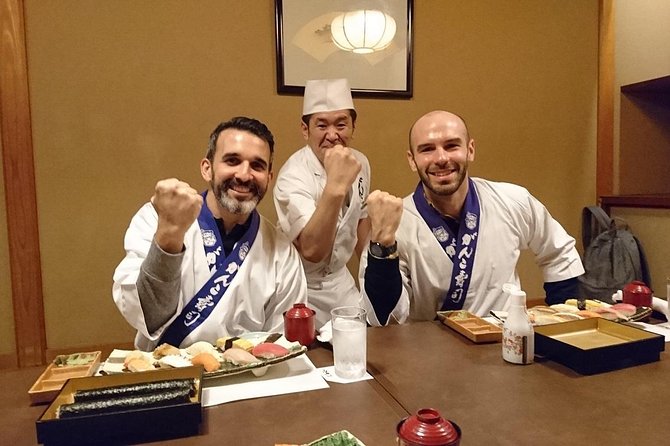
Reviewed · SUSHI-MAKING CLASSES
Tsukiji Fish Market Guided Tour and Sushi Making with Pro Chef
Fresh fish tells a story. This four-hour experience links Tokyo’s seafood trade to the food on your plate, beginning at Tsukiji Honganji Temple and continuing through the outer Tsukiji market before a hands-on sushi lesson. I like the way the market walk gives you useful food tips, and I like that you eat the sushi you make, along with a chef-prepared piece, dashi soup, wasabi, and green tea. The main caution is value: at $104.13, you should expect a cultural walking tour and a basic introductory class, not a private chef’s course or a tasting tour.
The best guides, including Monami, Sachi-san, Ko, Mari-san, Yuki, and Tad, have made this experience warm and easy to follow. I also like its family appeal: children and teenagers can take part in the sushi lesson. Still, the market portion includes no food tastings, and the class may be held in a small upstairs room, so this is not the right pick if you want a long restaurant-style meal or a polished culinary school.
In This Review
- The five things to know before you book
- Starting at Tsukiji Honganji Temple
- Reading Tsukiji’s outer market
- The Jogai Market and Nippon Fish Port Market
- Moving upstairs for the sushi lesson
- Eating what you made
- What the $104.13 price really buys
- Who will enjoy this Tsukiji experience
- Small details that can make the day better
- Should you book it?
- FAQ
- Where does the tour begin?
- How long does the experience last?
- Does the tour visit the old inner Tsukiji market?
- What will I make in the sushi class?
- Is food included during the market walk?
- Can I request vegetarian, halal, gluten-free, or kosher food?
- Where does the sushi class take place?
- What should I wear?
The five things to know before you book
- Tsukiji means the outer market today: The former inner wholesale market moved to Toyosu in 2018, so this tour focuses on the public shopping streets and a small wholesale area.
- The sushi class teaches six forms: You make five types of nigiri and one rolled sushi, with step-by-step help from a professional chef.
- The tour begins at a temple: Expect Buddhist customs, local history, and food culture before the market walk gets underway.
- Food tastings are not included: You can buy snacks and seafood from vendors, but bring extra cash if you want to sample along the way.
- The venue can change: The class may take place in Tsukiji, Asakusa, or Yotsuya, depending on availability, and the final stop changes with it.
- The group can reach 22 people: That keeps the price lower, but it may make browsing stalls and asking personal questions less flexible.
Starting at Tsukiji Honganji Temple
Meet at the main gate of Tsukiji Honganji Temple, not the rear side. This detail matters because map apps can send you around the back. Look for the guide holding a Japan Wonder Travel sign, and arrive early. The group leaves at the scheduled time and cannot wait for late arrivals.
The temple gives the morning a useful cultural opening. Your guide may explain how to approach and pray at a Buddhist temple, along with the history of the area. Sachi-san has been praised for showing visitors the proper prayer customs, while Ko has helped explain the difference between Japanese temples and shrines during the walk.
I like beginning here because it gives you a little context before the food displays take over. Tsukiji is not just a row of seafood counters. It is also part of a neighborhood shaped by religion, commerce, and Japan’s close connection to the sea.
That said, anyone booking this mainly for fish should know that the first part includes temple and shrine discussion. One customer found the opening portion more focused on spiritual culture than on the market itself. That is a benefit if you want a broader introduction to Tokyo, but a drawback if you want four straight hours of seafood.
More Market Tours in Tokyo
- Tokyo Tsukiji Fish Market Food and Culture Walking Tour
★ 5.0 · 3,184 reviews - Tokyo: Tsukiji Fish Market Food and Walking tour
★ 5.0 · 1,724 reviews - Tokyo: Tsukiji Fish Market Guided Walking Tour
★ 4.9 · 1,397 reviews
Reading Tsukiji’s outer market
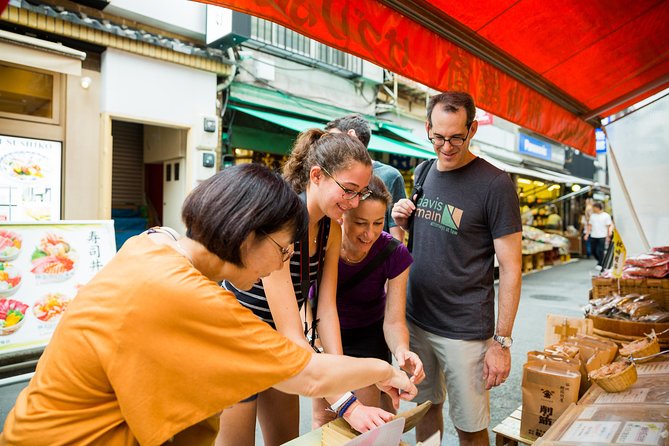
From the temple, you walk into the outer Tsukiji market. This is the public-facing area, packed with shops selling seafood, Japanese ingredients, prepared foods, kitchen tools, and other cooking supplies. The old inner market, where wholesale business took place, moved to Toyosu on October 6, 2018. This tour does not take you into that relocated business area.
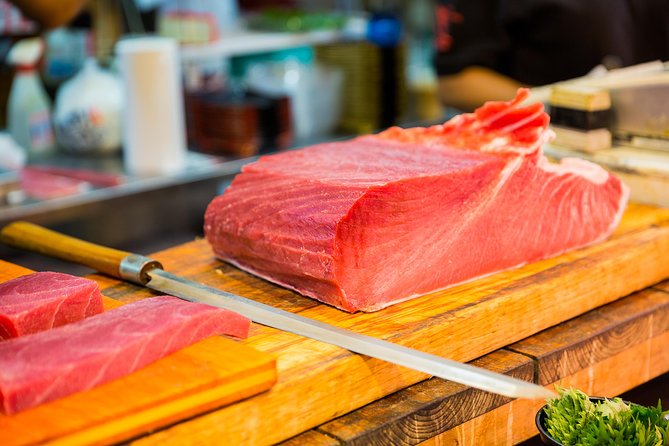
Your guide leads you to notable sections and explains how fish moves from the ocean through distribution and sales. That supply chain lesson is one of the stronger reasons to book a guided walk. On your own, you can see piles of seafood and rows of food stalls, but you may not understand what you are looking at or how the market fits into Japanese cooking.
Monami has been especially praised for pointing out good food spots while helping visitors weigh quality against price. Other guides, including Yuki and Tad, have been described as patient and clear, with enough time to look around rather than rushing from one stop to another. That personal guidance can help you avoid spending blindly at the first appealing counter.
The walk also introduces foods and utensils that may be unfamiliar. You might see ingredients used in dashi, different seafood varieties, Japanese knives, and tools connected with sushi preparation. The tour is less about checking off famous stalls and more about learning what the market sells and why those goods matter.
There is an important limit: the tour price does not include tastings. You can purchase food from the stalls, but those purchases are your responsibility. Bring cash if you want to try snacks or seafood during the walk. One practical criticism of the experience is that a group can make spontaneous sampling harder, since you need to stay with the guide and the rest of the party.
The Jogai Market and Nippon Fish Port Market
The itinerary includes Tsukiji Jogai Market and Tsukiji Nippon Fish Port Market. These areas let you see the market as a working shopping district rather than as a single attraction with one entrance and one exit.
Jogai Market is the part most suited to browsing. You can expect a mix of seafood stores, food counters, Japanese pantry items, and cooking equipment. The guide helps sort the useful from the merely eye-catching, which is valuable in a place where unfamiliar products can make every shelf look important.
The Nippon Fish Port section adds context about seafood distribution and wholesale activity. The exact route can depend on the day and market conditions, so treat the walk as an introduction rather than a full behind-the-scenes tour. The fish market is closed on Wednesdays, Sundays, and other market closure days, so check the available date before making plans around it.
I would allow room in your schedule after the tour. The activity lasts about four hours, but the end can be delayed. The provider also says the final stop may be Tsukiji, Asakusa, or Yotsuya, depending on where the sushi class is held. You will return to the meeting point only when the advertised arrangement allows it, so do not schedule an important appointment immediately afterward.
Moving upstairs for the sushi lesson
The sushi class takes place in a Japanese-style classroom in a traditional building. The room is on the third floor, and there are stairs only. Comfortable walking shoes are a must for the market, and they are even more useful once you add the stairs and several hours on your feet.
The venue may be in Tsukiji, but it can also be in Asakusa or Yotsuya if the usual space is unavailable. You are not told the location until the day of the experience. This lack of certainty is a logistical weakness, especially if you are planning other sightseeing around the class.
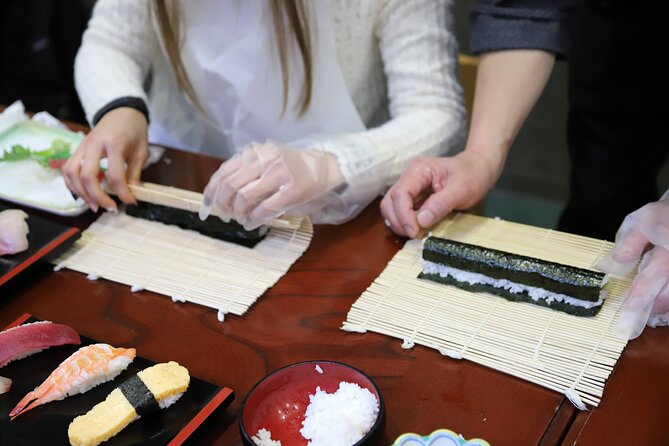
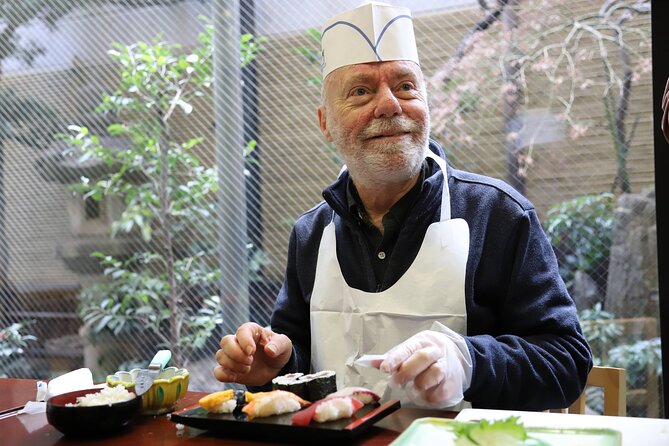
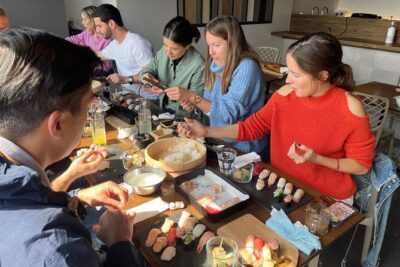
Once seated, the mood becomes calmer and more hands-on. A professional sushi chef demonstrates the basic methods and guides you through each stage. The lesson covers five types of nigiri sushi and one rolled sushi. It is intended as an introduction, so you do not need advanced kitchen skills.
Several details add value. The chef prepares wasabi, demonstrates fish preparation, and serves traditional dashi soup and green tea with the meal. One especially useful demonstration involved deboning fish. A fair suggestion for improving the lesson would be to show more clearly how to slice fish for sushi, since cutting is a major part of sushi technique.
The teaching is supported by explanations and, in some sessions, a PowerPoint presentation. The class is delivered in Japanese and English, with staff helping participants follow the steps. You make the sushi yourself rather than simply watching a chef work, which makes the experience more memorable and gives you skills you can try at home.
More Sushi-Making Classes in Tokyo
- Sushi Making Tokyo Roll and Authentic Japanese Sushi Class
★ 5.0 · 3,971 reviews - Tokyo: Roll and Authentic Sushi Making Class in Asakusa
★ 4.9 · 1,957 reviews - Make Sushi and Create Unforgettable Memories in Tokyo
★ 5.0 · 1,413 reviews - Tokyo: Sushi Making Class in a Happi Coat near a Famous Spot
★ 4.9 · 1,377 reviews
Eating what you made
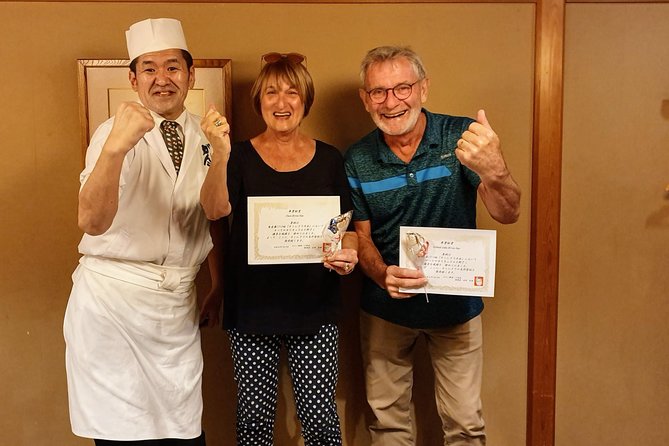
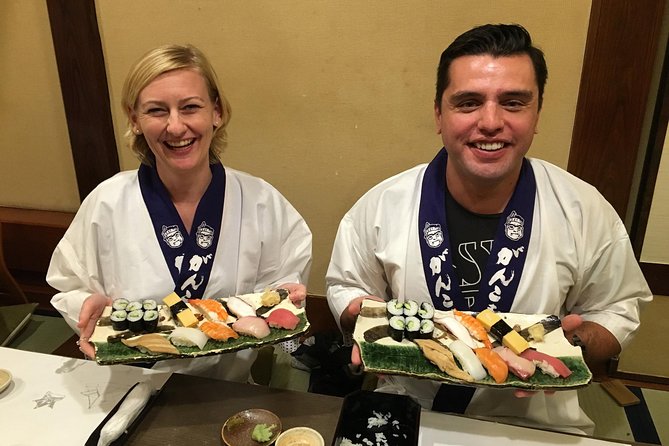
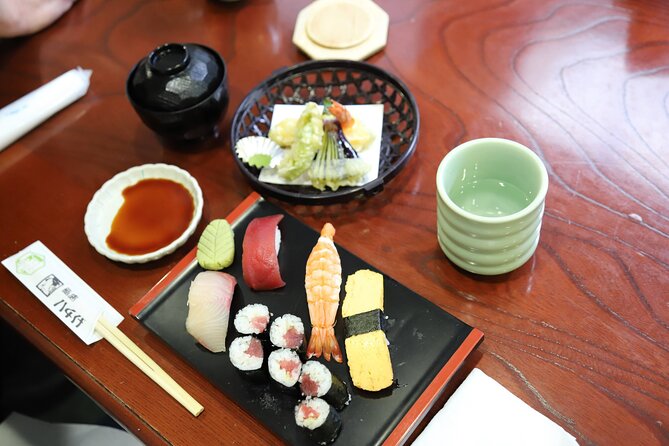
At the end, you eat your own sushi for lunch. You also receive sushi prepared by the master, which gives you a useful comparison between an introductory effort and a professional result. Dashi soup, fresh wasabi, and green tea complete the meal.
This is where the market visit pays off. After seeing seafood counters and learning how ingredients are sold, you handle some of those ingredients yourself. The connection between market and meal becomes clear, even if you are only making simple nigiri and one roll.
The meal is not a wide tasting menu. You should not expect a large selection of restaurant dishes or unlimited market samples. The value comes from participation, instruction, and the cultural explanation around the food. If you want to taste many different vendors, plan to buy extra food before or after the class.
Cleanliness and freshness matter during a raw-fish lesson. One participant specifically appreciated the clean setting and fresh seafood, while another found the room basic and small. Both points can be true. This is a practical teaching space, not a luxury dining room.
What the $104.13 price really buys
At $104.13 per person, the price is reasonable for a combined guided walk and food activity if you want both in one morning or afternoon. You are paying for a guide who can explain the market, a professional chef, ingredients, the sushi you prepare, a chef-made serving, soup, wasabi, and tea.
The value is strongest for first-time visitors who would otherwise wander through Tsukiji without knowing what they are seeing. It is also strong for families and couples who want an activity rather than another restaurant meal. Children and teenagers have enjoyed the class, and an 18-year-old participant was able to take part comfortably.
The price feels less attractive if you mainly want market tastings. Those are extra, and a self-guided walk costs nothing beyond what you eat. It may also feel high if you have already taken sushi classes or want detailed instruction in fish slicing, rice seasoning, knife work, and advanced presentation.
A group of up to 22 people keeps the experience social and accessible, but it limits one-on-one attention. The best value comes when your guide gives you time to ask questions and when you make good use of the chef’s demonstrations.
Who will enjoy this Tsukiji experience
I would recommend this tour to first-time visitors who want a clear introduction to Tsukiji without having to research every market section. It suits families, older children, and teens who can manage stairs and several hours of walking.
It also works well for people who like food with context. You learn about temple customs, Japanese ingredients, seafood distribution, market etiquette, and sushi preparation in one outing. The guides have been praised for friendly English, patience, and local explanations, which can make the experience easier for visitors who do not speak Japanese.
You should think twice if you need a fully customized food program. The provider says vegetarian, halal, gluten-free, kosher, and allergy-related requests may not be accommodated. The booking information asks you to state restrictions, but you should not assume a safe substitute will be available. Contact the provider before booking if food safety is a concern.
The experience is also a poor fit if you dislike stairs, want hotel pickup, or need a guaranteed end point. Transportation to and from attractions, hotel transfers, extra food, and personal purchases are not included.
Small details that can make the day better
Wear comfortable shoes and bring water. Green tea is provided, but one participant wished plain water were also available.
Arrive at the front gate of Tsukiji Honganji Temple early, since late arrivals cannot be added to the end of the tour. The tour cannot be extended for people who arrive late, and same-day late arrival or cancellation brings no refund.
If you plan to eat at market stalls, carry spending money and leave time for it. The group format means you may not be able to stop at every counter, so ask your guide for priorities early.
Finally, keep your schedule loose after the class. The venue may shift to Asakusa or Yotsuya, and the end point depends on the date and venue.
Should you book it?
Book this experience if you want a friendly introduction to Tsukiji followed by an easy, hands-on sushi class. The strongest parts are the guides, the connection between market ingredients and the finished meal, and the chance to eat what you prepare.
Skip it if your goal is the former inner wholesale market, a serious chef-training course, or a food tour with tastings included. At $104.13, the experience offers good value when you want culture, market orientation, and lunch in one package. It offers weaker value if you only want seafood sampling or advanced sushi technique.
FAQ
Where does the tour begin?
It begins at the main gate of Tsukiji Honganji Temple, at 3-chōme-15-1 Tsukiji, Chuo City, Tokyo. Do not go to the back side of the temple, since map apps may direct you there.
How long does the experience last?
The experience lasts approximately four hours. The end may be delayed, so avoid arranging an important appointment immediately afterward.
Does the tour visit the old inner Tsukiji market?
No. The inner wholesale market moved to Toyosu in 2018. This experience visits the outer Tsukiji market and a small wholesale area connected with Japanese food and culture.
What will I make in the sushi class?
You will learn to make five types of nigiri sushi and one rolled type. A professional sushi chef provides demonstrations and step-by-step help.
Is food included during the market walk?
Market tastings are not included. You may buy food from vendors, but those purchases cost extra. The sushi you make, a sushi serving from the chef, dashi soup, wasabi, and green tea are included in the class experience.
Can I request vegetarian, halal, gluten-free, or kosher food?
The provider says these requests are unfortunately not accommodated. You can enter dietary information during booking, but allergy and food restriction requests may not be possible to fulfill.
Where does the sushi class take place?
The class may be held in Tsukiji, Asakusa, or Yotsuya, depending on venue availability. The exact location cannot be announced until the day of the experience.
What should I wear?
Wear comfortable walking shoes. The tour involves substantial walking, and the classroom is on the third floor of a traditional building with stairs only.
More Shopping Tours in Tokyo
- Tokyo: Tsukiji Fish Market Sushi Making Class with Pro Chef
★ 4.9 · 506 reviews - Tokyo Food Tour Taste Fresh Delights at Tsukiji Market
★ 5.0 · 429 reviews - Tokyo Tsukiji Fish Market Tour and Sushi Making Lesson
★ 5.0 · 390 reviews - Tsukiji Fish Market: Street Food & Culture Walking Tour
★ 4.8 · 259 reviews
More Fish Market Tours in Tokyo
- Tokyo Sushi Making Class in Tsukiji with Professional Chef
★ 5.0 · 1,177 reviews - Tokyo: Tsukiji Fish Market Food and Culture Walking Tour
★ 4.7 · 757 reviews - Tsukiji Fish Market: Street Food & Culture Walking Tour
★ 5.0 · 669 reviews - Tsukiji Fish Market Small-Group Food Walking Tour
★ 5.0 · 621 reviews
Just added around Tokyo
- Tokyo Small Group Tour with Guide★ 4.5 · 38 reviews
- Tokyo 6hr Instagram Highlights Private Tour with Licensed Guide★ 5.0 · 38 reviews
- Tokyo Sumo Experience with Live Show & Audience Challenge★ 5.0 · 38 reviews
- Very popular in Harajuku♡Animal petting zoo★ 4.6 · 39 reviews
- Japanese Food Cooking Class in Asakusa, Tokyo★ 5.0 · 39 reviews
- Ramen Making from Scratch with Tokyo Mom(Vegan Option Available)★ 5.0 · 39 reviews
- Tokyo: Kimono Rental inside Shinjuku Gyoen National Garden★ 4.9 · 39 reviews
- Tokyo JDM Night: 600hp C63s AMG Edition 1 (Private)★ 4.9 · 39 reviews
Sushi-Making Classes, compared.
Sushi Making Tokyo Roll and Authentic Japanese Sushi Class
Read our review →
Roll and Authentic Sushi Making Class in Asakusa
Read our review →
Make Sushi and Create Unforgettable Memories in Tokyo
Read our review →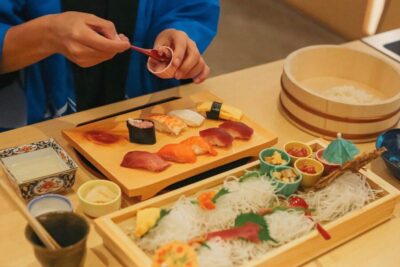
Sushi Making Class in a Happi Coat near a Famous Spot
Read our review →
Sushi Making Osaka Roll and Authentic Japanese Sushi Class
Read our review →
Tokyo Sushi Making Class in Tsukiji with Professional Chef
Read our review →
Sushi Making in Kyoto! Same-day bookings welcome!
Read our review →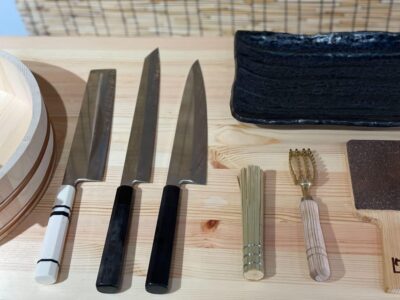
Tsukiji Fish Market Sushi Making Class with Pro Chef
Read our review →Browse the lists this tour appears in