
Reviewed · SUSHI-MAKING CLASSES
Sushi Making Osaka Roll and Authentic Japanese Sushi Class
Sushi tastes better when you make it. This friendly Osaka cooking class puts you near Dotonbori and Shinsaibashi, then gives you a practical introduction to maki rolls and nigiri sushi with English-speaking instructors. I like the ready-to-use ingredients, which keep the class focused on technique rather than chopping and food prep. I also like that you eat what you make, turning a short lesson into lunch, dinner, or a substantial snack.
The instructors receive especially strong praise for being patient, funny, and encouraging. Reika, Fuko, Fujiko, Aina, Arisa, Matty, Yui, and Ina are among the teachers singled out for warm instruction in individual sessions. The main consideration is timing: the advertised class lasts about 1 hour 40 minutes, but some people found the eating, photo-taking, and cleanup period a little tight.
In This Review
- Key points to know before booking
- Why this Osaka class earns such high marks
- Finding the room near Dotonbori
- The opening lesson: sushi, culture, and preparation
- Making maki rolls without the chef’s shortcut
- Shaping nigiri, the trickier skill
- Eating your work and making room for photos
- What the price delivers at $31.01
- Group size, language, and atmosphere
- Small concerns worth considering
- Who should book this sushi class?
- Should you book the Osaka sushi class?
- FAQ
- Where does the sushi-making class meet?
- Where does the class end?
- How long does the experience last?
- Is the class taught in English?
- What types of sushi will I make?
- Are ingredients included?
- Is hotel pickup included?
- How many people can join the class?
- Can I cancel for a full refund?
Key points to know before booking
- You make both maki and nigiri: The class covers rolled sushi and hand-formed sushi, not just one simple recipe.
- Everything is prepped: Ingredients are ready when you arrive, so beginners can concentrate on shaping, filling, and presentation.
- The location is central: The meeting point at 1-chōme-16-20 Higashishinsaibashi is close to Dotonbori and Shinsaibashi.
- It works well for families: Children and teens can take part, and the instructors are praised for patience with younger cooks.
- Your finished sushi becomes the meal: You are not simply watching a demonstration, you eat the maki and nigiri you prepare.
- Allow extra arrival time: The room can be tricky to find, and the class has a maximum of 20 participants.
Why this Osaka class earns such high marks
Osaka is a fine place to study sushi. The city takes food seriously, but you do not need a chef’s background or a Japanese vocabulary to join this lesson. The class is designed for first-timers, with a friendly pace and English instruction throughout.
The strongest part is the hands-on format. You learn by doing, correcting a loose roll or an overfilled piece as you go. That is more useful than watching a perfect chef work quickly behind a counter. Sushi looks simple when an expert makes it. Once the rice, filling, seaweed, and fish are in front of you, the small details become clear.
The class also adds cultural context. You learn some of the history of sushi along with the practical steps. One person felt the balance leaned slightly too far toward explanation and wanted more time for making and eating, but most of the feedback praises the mix of information, practice, and tasting.
At a top rating of 5 from 1,224 reviews and a 100 percent recommendation figure, this is not a risky choice for a short Osaka activity. Still, the praise is most useful when you know what it refers to: friendly staff, clear demonstrations, plenty of food, and an easy setting for people who have never made sushi.
More Sushi-Making Classes in Osaka
- Osaka Sushi Making Experience
★ 5.0 · 400 reviews - Osaka Sushi Making Class – Hands-On Nigiri & Rolls (Same-Day OK)
★ 5.0 · 352 reviews - Osaka: Roll and Authentic Sushi Making Class in Dotonbori
★ 4.9 · 239 reviews
Finding the room near Dotonbori
The meeting point is Sushi Making Osaka, at 1-chōme-16-20 Higashishinsaibashi, Chuo Ward, Osaka, 542-0083. It is close to the Dotonbori shopping street and Shinsaibashi, two of the easiest areas to combine with a food-focused day in central Osaka.
The location is convenient once you are there, but do not cut your arrival too close. A family specifically found the place tricky to locate, and another person described it as a small room on the third floor. I would allow extra time to identify the building and reach the classroom.
That advice matters more in Osaka than it might at home. The streets around Dotonbori can be crowded, signs may be hard to read, and a central address does not always mean an obvious entrance. Use the mobile ticket and meeting-point details before leaving your hotel, and arrive early enough to avoid beginning the class flustered.
There is no hotel pickup or drop-off. You make your own way to the classroom, then return to the same meeting point when the activity ends. The venue is near public transportation, making it easy to pair with sightseeing in Namba, Dotonbori, or Shinsaibashi.
The opening lesson: sushi, culture, and preparation
At the start, the instructor introduces the sushi you will make and explains the basic method. The lesson includes cultural information and some history of sushi in Japan, giving you a little context before you handle the ingredients.
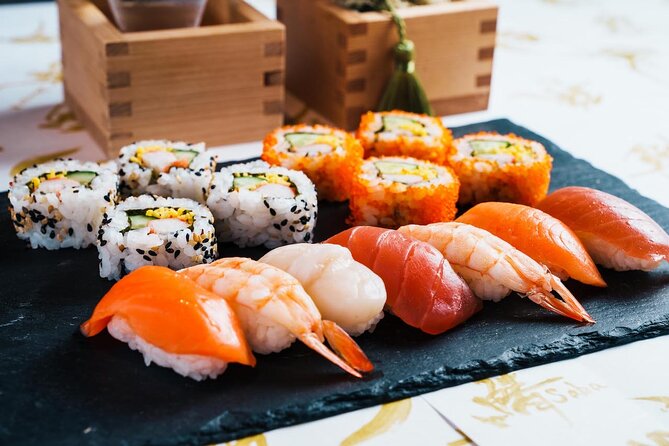
That opening is useful because sushi is not simply raw fish placed on rice. The class helps explain the difference between maki, the rolled form wrapped in seaweed, and nigiri, the hand-shaped rice topped with fish or another ingredient. Once you understand the two styles, the practical instructions make more sense.
All cooking-class ingredients are prepared in advance. This is a major convenience for a 1 hour 40 minute session. You are not spending half the class washing rice, slicing vegetables, or waiting for ingredients to be portioned. Instead, you can get straight to the parts that are difficult for a beginner: using the right amount of rice, placing fillings evenly, rolling firmly, and shaping nigiri without crushing it.
The instructors are also the reason the class feels approachable. Several sessions were led by teachers described as energetic, humorous, and patient. Fuko was praised for combining a clear introduction with humor, while Aina, Reika, Fujiko, Matty, Yui, Arisa, and Ina were each associated with friendly, encouraging instruction in different classes. The instructor for your session will vary, but the teaching style appears to be a consistent strength.
Making maki rolls without the chef’s shortcut
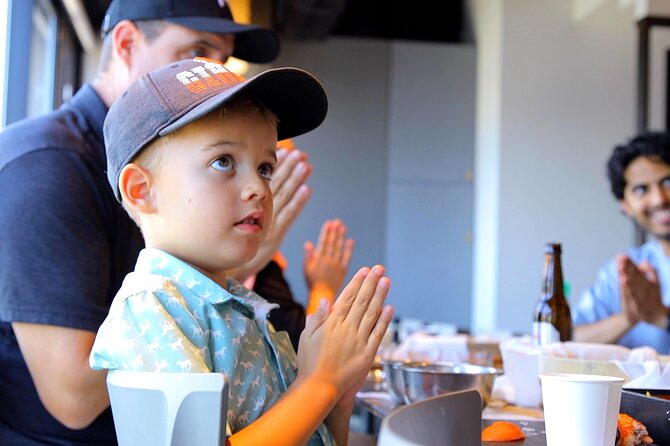
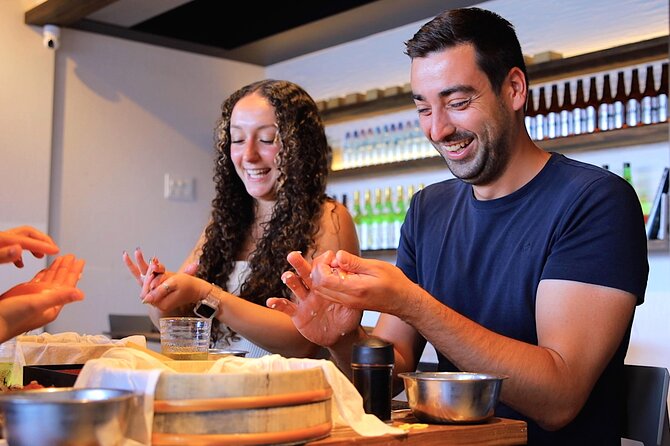
The maki portion gives you a satisfying first win. You arrange the ingredients, follow the instructor’s demonstration, and roll the sushi yourself. The process is simple enough to follow, but not so easy that it feels like a children’s craft project.
This is where the prepped ingredients help. You can focus on balance and technique. Too much filling makes the roll difficult to close. Too much rice can overwhelm the other flavors. A careful demonstration lets you see how the instructor handles the seaweed and bamboo rolling mat, then you copy the movement at your own station.
The result may not look as neat as a professional sushi chef’s first try. That is part of the fun. One useful lesson from the class is that polished sushi requires more control than it appears to from across a restaurant counter.
You can expect to make one maki roll, according to one detailed description of the portion. The roll is then cut into pieces so you can admire your work and eat it. The finished sushi is not merely a sample. Several people describe making enough food for a proper meal.
A completely different kind of day out in Osaka:
- Osaka Go Karting Tour with Funny Costume
★ 5.0 · 2,658 reviews - Osaka Castle: Museum and Tower Entry Ticket
★ 4.5 · 2,380 reviews - Osaka: Shinsekai Food Tour with 13-15 Dishes at 5 Eateries
★ 4.8 · 2,204 reviews - Osaka Food Tour: 13 Dishes at 5 Local Eateries
★ 5.0 · 2,149 reviews
Shaping nigiri, the trickier skill

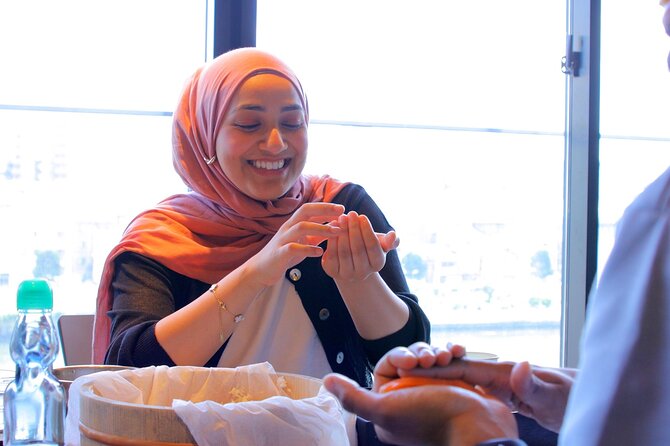
Nigiri is the more revealing part of the lesson. You form the rice by hand, then place the topping on it with the correct pressure and shape. The basic motion is easy to describe, but getting a compact piece that still feels light takes practice.
The class gives you several chances to try. One detailed account describes making about four to eight nigiri, depending on how quickly you work. That range makes sense for a group class: some people move carefully, while experienced cooks finish more quickly and have time for extra pieces.
You may work with fish and other ingredients, and vegetarian options are available. One session included both fish and vegetarian choices that were described as tasty. If you have a dietary preference or cannot eat a particular ingredient, record it when you book. A participant who did not eat shrimp found that a last-minute replacement was not available, so do not assume substitutions can be arranged at the table.
The hands-on format is especially good for families. Children can see an immediate result, and parents do not need to worry about a complicated recipe. One family found the instructors patient with kids, while another said teens stayed engaged. The activity gives younger cooks a clear task without requiring them to sit quietly through a long lecture.
Eating your work and making room for photos
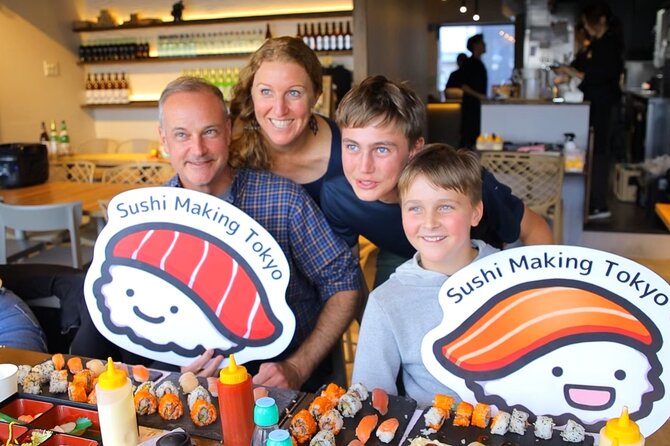
The reward comes quickly: you sit down and eat the sushi you have made. For many people, that is the key value of the class. You learn a skill, enjoy a meal, and leave with a clearer idea of how sushi is assembled.
The portions appear generous for the price. Reports describe one maki roll and several nigiri, with enough food to serve as lunch or dinner for some people. You should not expect a full restaurant tasting menu, but you are unlikely to leave hungry if you eat the class meal.
The schedule is the one area where I would manage expectations. The session lasts approximately 1 hour 40 minutes, yet the process includes an introduction, demonstrations, hands-on work, eating, photos, and cleanup. One person felt rushed while still eating as the staff prepared for the next group. Another found the class length just right.
My practical advice is to treat this as a structured class rather than a leisurely meal. Take a few photos as you go, but do not assume you will have a long period afterward for group pictures or lingering over drinks. Beer and sake are not listed as included, so you should not book this expecting a food-and-drink social evening.
One person also wished the classroom lighting were brighter for photographs. If you care about polished food pictures, take them during the process when the instructors pause, rather than waiting until the end.
What the price delivers at $31.01
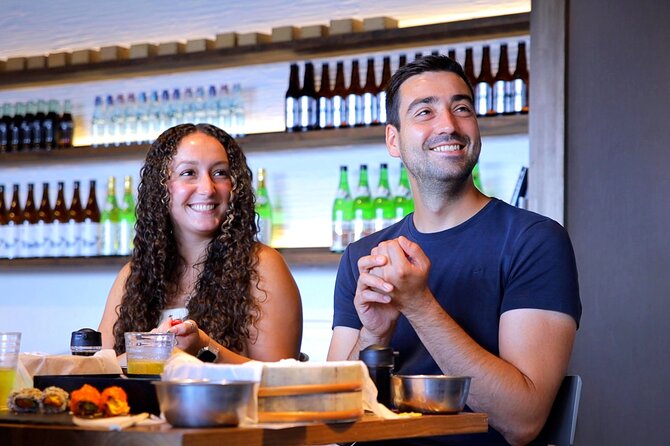
At $31.01 per person, this class offers solid value if you want an activity as well as a meal. You receive an English-speaking instructor, prepared ingredients, the cooking lesson, and the sushi you make. The central Osaka location adds value because you can fit the class into a day around Dotonbori and Shinsaibashi without arranging a separate excursion.
The price is less compelling if you only want to eat excellent sushi. Osaka has plenty of restaurants, and a cooking class will never match the speed or precision of ordering from a specialist. You are paying for instruction, participation, and the memory of making the food yourself.
The value also depends on your expectations. If you want to learn a technique you can repeat at home, the class delivers useful basics. If you mainly want a relaxed celebration with drinks, long conversation, and generous time for photos, the fixed schedule may feel less satisfying.
For families, the price can make sense because everyone has an active role. A regular meal ends when the plates are cleared. Here, the preparation becomes the entertainment, and the food is part of the activity.
Group size, language, and atmosphere
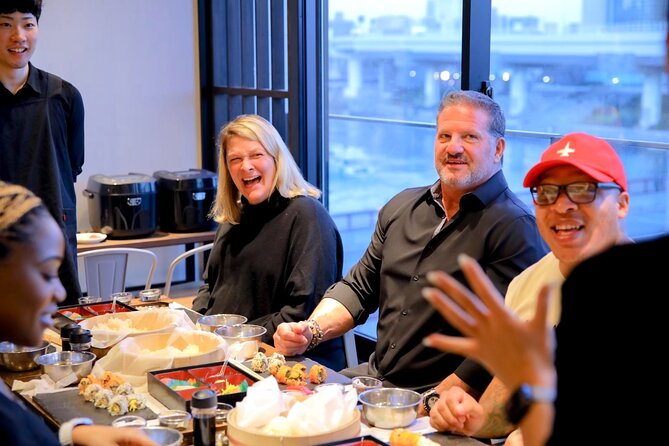
The class accepts up to 20 people. That is large enough for a lively room but small enough for instructors to circulate and offer help. The quality of the session depends partly on how actively the teacher moves around the table, and the strongest feedback praises instructors who stop to correct technique and answer questions.
English-speaking staff make the class easy for international visitors. You can ask about sushi ingredients, preparation, and cultural customs without needing specialist language skills. Accents may vary by instructor, so listen closely during the first demonstration and ask for a repeat if you miss a step.
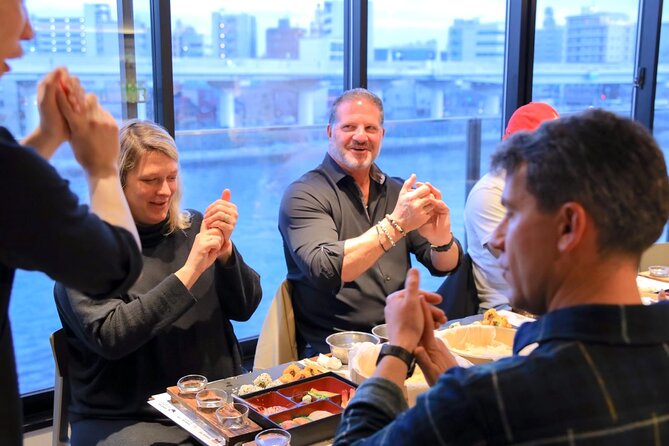
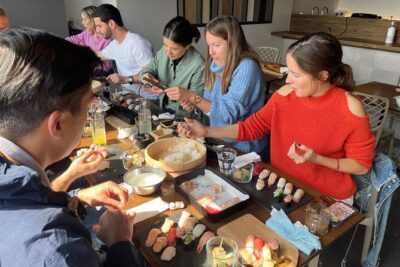
The mood is social rather than formal. You share a table, compare rolls, laugh at imperfect shapes, and eat together. That makes it a good choice for couples, families, solo visitors who want an easy group activity, and friends looking for something beyond another meal.
The classroom itself has been described as clean and modern. The lighting may not be ideal for photographs, but the setting is intended for practical instruction, not fine dining. Wear something comfortable and come ready to use your hands.
Small concerns worth considering
The main concern is the compressed schedule. Most people find the class fun and well paced, but a few wanted more time for eating and photos. If you are someone who likes to linger, plan your next activity with a little breathing room.
Food handling is another point to keep in mind. One person was concerned that fish remained at room temperature during the session and would have preferred it over ice. The provided information does not state the class’s detailed food-safety procedure, so if this worries you, ask the instructor when you arrive.
Dietary requests should be made in advance. Vegetarian options are available, but a same-day shrimp substitution was not possible in one case. Do not rely on being able to change ingredients after the class begins.
Finally, the experience is not private. With up to 20 participants, you may share the room with families, couples, and other groups. That is part of the cheerful atmosphere, but it also means the instructor’s attention is shared.
Who should book this sushi class?
I would recommend it to first-time sushi makers, families with children or teens, couples wanting an interactive date activity, and anyone who has already eaten plenty of sushi in Osaka and wants to understand how it is made.
It is especially useful early in your stay. After learning the difference between maki and nigiri and practicing the basic methods, you may notice more detail during later sushi meals. You will also have a simple recipe framework to try at home, even if your first homemade roll looks more generous than elegant.
I would be more cautious if you dislike group activities, need a fully relaxed meal, or have strict dietary requirements that were not confirmed in advance. You should also avoid booking it immediately before an important reservation, since finding the room and completing the class may take more of your schedule than the headline duration suggests.
Should you book the Osaka sushi class?
For $31.01, this is a well-priced, central, beginner-friendly way to turn a meal into an activity. The strongest reasons to book are the patient English-speaking teachers, the chance to make both maki and nigiri, the generous finished portions, and the easy location near Osaka’s main food and shopping districts.
Book it if you want to do something with your hands and share a lighthearted memory with your family or companions. Skip it if you only want the finest sushi served by a professional or if you need a slow, drink-filled evening.
Choose a morning, afternoon, or evening time that leaves room around the class. Arrive early, list dietary needs during booking, and save your photo-taking for short pauses rather than the final minutes. With those expectations set, this is an appealing Osaka add-on that gives you a meal, a lesson, and a story to take home.
FAQ
Where does the sushi-making class meet?
The class meets at Sushi Making Osaka, 1-chōme-16-20 Higashishinsaibashi, Chuo Ward, Osaka, 542-0083, Japan.
Where does the class end?
The activity ends back at the meeting point.
How long does the experience last?
The class lasts approximately 1 hour 40 minutes.
Is the class taught in English?
Yes. An English-speaking instructor is included.
What types of sushi will I make?
You will learn to make sushi rolls, including maki, and authentic nigiri sushi.
Are ingredients included?
Yes. The ingredients used in the cooking class and the meal are included, and they are prepared before the class begins.
Is hotel pickup included?
No. Hotel pickup and drop-off are not included. You must make your own way to the meeting point.
How many people can join the class?
The activity has a maximum group size of 20 participants.
Can I cancel for a full refund?
Yes, if you cancel at least 24 hours before the experience start time. Cancellations made less than 24 hours in advance are not refunded, and changes made within that period are not accepted.
Just added around Osaka
- Osaka Food Tour with 10 Classic Japanese Tastings & Drinks★ 5.0 · 38 reviews
- Osaka: Highlights & Hidden Gems Private Walking Tour★ 4.7 · 38 reviews
- Kyoto private tour (Shore excursion available from Osaka or Kobe port)★ 5.0 · 39 reviews
- Osaka Private Day Trip – Enjoy Your First-Time Visit to Osaka!★ 5.0 · 39 reviews
- Kyoto & Nara & Uji: Full Day Sightseeing Tour from Osaka or Kyoto★ 4.5 · 39 reviews
- Authentic SUSHI Course Cooking Class★ 5.0 · 39 reviews
- Osaka: Mind & Spirit Balance Temple Reiki Healing★ 5.0 · 41 reviews
- Osaka Afternoon Walking Tour with Osaka River Cruise★ 3.5 · 42 reviews
Sushi-Making Classes, compared.
Sushi Making Tokyo Roll and Authentic Japanese Sushi Class
Read our review →
Roll and Authentic Sushi Making Class in Asakusa
Read our review →
Make Sushi and Create Unforgettable Memories in Tokyo
Read our review →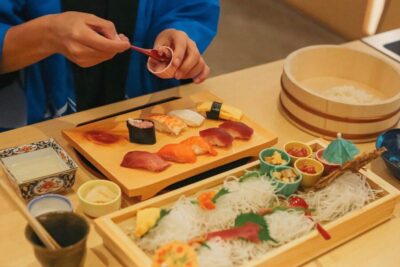
Sushi Making Class in a Happi Coat near a Famous Spot
Read our review →
Tokyo Sushi Making Class in Tsukiji with Professional Chef
Read our review →
Tsukiji Fish Market Guided Tour and Sushi Making with Pro Chef
Read our review →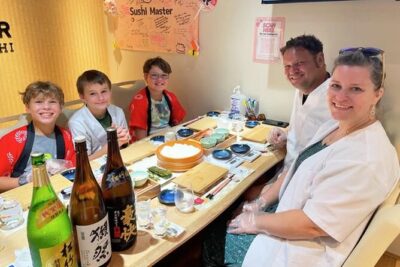
Sushi Making in Kyoto! Same-day bookings welcome!
Read our review →
Tsukiji Fish Market Sushi Making Class with Pro Chef
Read our review →Browse the lists this tour appears in