
Reviewed · 1-DAY TOURS
Osaka Private Day Trip – Enjoy Your First-Time Visit to Osaka!
Osaka rewards a well-planned first day. This seven-hour private tour links the city’s best-known sights by train and subway, giving you a useful first look at old Osaka, modern Osaka, and its famously lively food districts. I like the efficient route and the chance to ask a guide questions as you go. I also like that guides such as Ma-chan, Josh, and Lily have adjusted the pace or added meaningful stops for their groups.
The main catch is cost. At $138.05 per person, you still pay separately for trains, admission fees, lunch, and personal expenses. The tour can be excellent when your guide adds context and keeps the day moving, but one poor experience reported a guide who mainly led the way from stop to stop. Your value depends heavily on the individual guide.
In This Review
- Five things to know before you book
- Starting among the crowds at Umeda Station
- Looking across Osaka from the Umeda Sky Building
- Meeting Osaka’s powerful past at Osaka Castle
- Finding Osaka’s loudest signs in Dotonbori
- Entering 1,400 years of Buddhist tradition at Shitennoji
- Finishing in the old entertainment district of Shinsekai
- How the seven-hour schedule really works
- What the price includes, and what it does not
- Standard route or customizable day?
- The guide makes or breaks the experience
- Who should book this Osaka day trip?
- Final decision: book it for orientation, not a slow day
- FAQ
- How long does the Osaka private day trip last?
- Where does the tour begin?
- Where does the tour finish?
- Can the ending point be changed?
- Is transportation included in the price?
- Are admission tickets included?
- Is lunch included?
- Is the tour private?
- Can I customize the route?
- Should I bring cash?
Five things to know before you book
- Six major Osaka sights in seven hours: You visit Umeda, Osaka Castle, Dotonbori, Shitennoji, and Shinsekai, with time built in for the Umeda Sky Building.
- Public transportation is part of the experience: Train and subway travel keeps the route practical, but fares are not included and busy stations can be tiring.
- The tour ends in a different district: You begin at Osaka Station and finish at Shin-Imamiya Station, which is useful if you plan to continue around Shinsekai.
- Private means personal attention: Only your group participates, so you can ask questions, request a slower pace, or discuss a special stop with your guide.
- Bring cash and comfortable shoes: Some places do not accept credit cards, and the day includes plenty of walking.
- The customizable option needs advance planning: Contact the guide two weeks ahead if you want to shape the route around your interests.
Starting among the crowds at Umeda Station
The meeting point is Osaka Station, at 3-chōme-1-1 Umeda in Kita Ward. The tour description identifies nearby Umeda Station as a major Osaka Metro terminal, and that matters because this is not a quiet introduction to the city. Weekday morning and evening crowds can be intense, with lines forming on especially busy days.
Your guide meets you here and helps begin the day using Osaka’s public transport system. That arrangement is practical for a first visit because you do not have to work out every transfer alone. You still need to pay your own fares, and you should expect station walking, stairs, crowds, and time spent getting on and off trains.
I would arrive ready to move. Wear shoes you can walk in for several hours, keep your phone charged, and carry some Japanese yen. The meeting point is near public transportation, and most people can take part, but the pace will feel demanding if you need frequent rests.
A few more Osaka experiences worth weighing up
- From Kyoto/Osaka: Kyoto Top Highlights 1-Day Guided Bus Tour
★ 4.5 · 714 reviews - Kyoto and Nara Day Trip from Osaka
★ 4.0 · 175 reviews - From Osaka or Kyoto: Kyoto and Nara 1-Day Bus Tour
★ 3.5 · 141 reviews
Looking across Osaka from the Umeda Sky Building
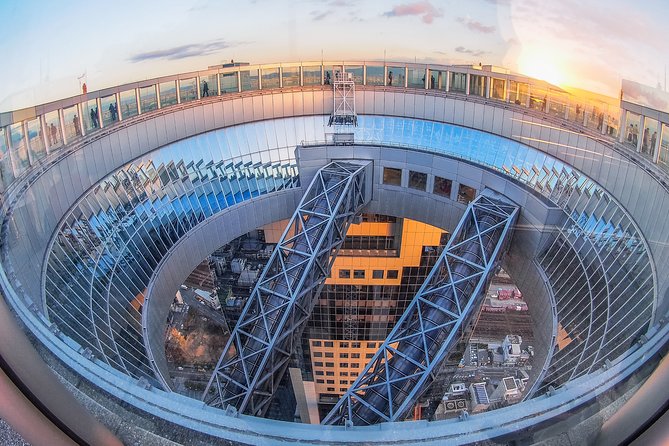
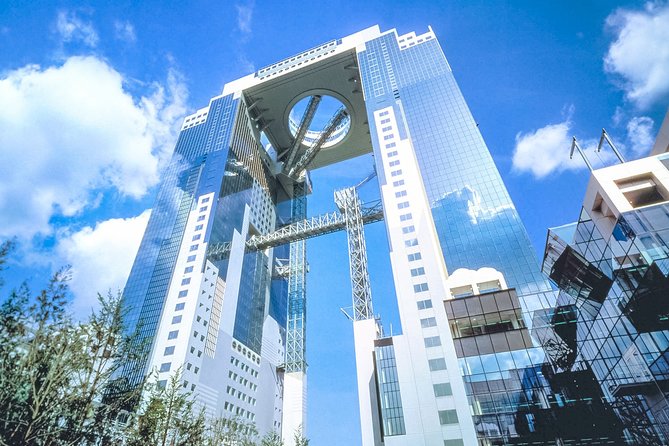
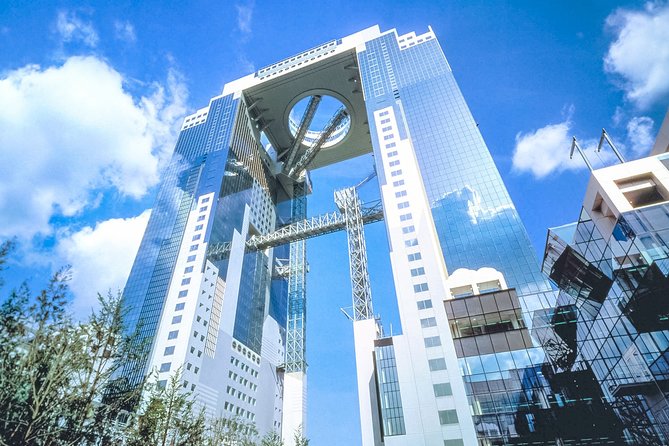
The Umeda Sky Building is one of Osaka’s most recognizable pieces of modern architecture. Its unusual form leads up to the Kuchu Teien Observatory, where you can look over the city from a height of 173 meters.
The stop lasts about 40 minutes. Admission is not included, so add that cost before deciding how much value you place on the stop. The visit is short enough to fit into a busy day, but it does not leave much room for a slow architectural visit or a long pause at the top.
I like this early stop because it gives you a visual sense of Osaka before the day turns toward castles, temples, and old downtown neighborhoods. You see the city from above, then spend the rest of the tour moving through its different districts at street level.
The drawback is simple: if clouds or poor weather limit the view, the admission charge may feel less worthwhile. The tour does not state that the observatory ticket is included, so ask about the current price if your budget is tight.
Meeting Osaka’s powerful past at Osaka Castle
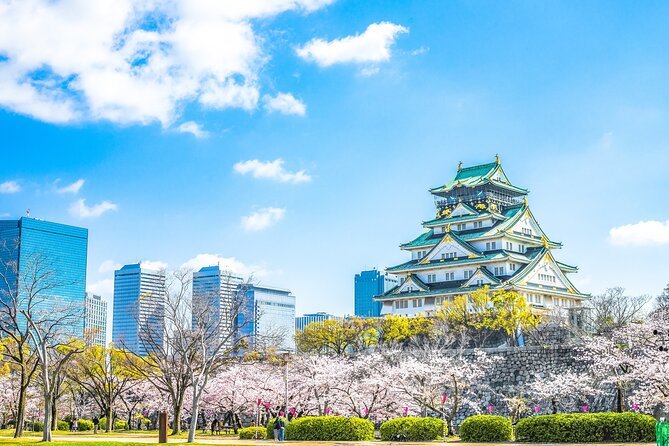
Osaka Castle receives the longest scheduled stop, about one hour and ten minutes. It is one of Japan’s three famous castles and now houses a museum with displays connected to armor, kimono, and the era in which the castle played a major role.
The castle is visually impressive, but the museum is the real reason to allow time here. A guide can help connect what you see inside to Osaka’s political and military past. One person who booked the tour described Osaka Castle as a long-held must-see, drawn by both its beauty and its importance to the city.
Admission is extra. You should also remember that the castle complex itself can require a fair amount of walking before and after the museum visit. The schedule allows more time here than at Dotonbori or Shinsekai, which tells you how central the stop is to the day.
I would use this time for questions. Ask your guide to explain the castle’s role, the museum displays, or how the present building relates to the original structure. The private format works best at a place like this, where a few clear explanations can make the visit more meaningful than simply taking photos outside.
Finding Osaka’s loudest signs in Dotonbori
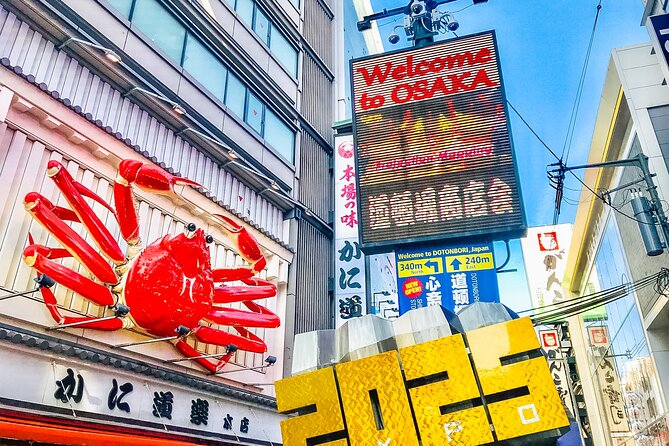
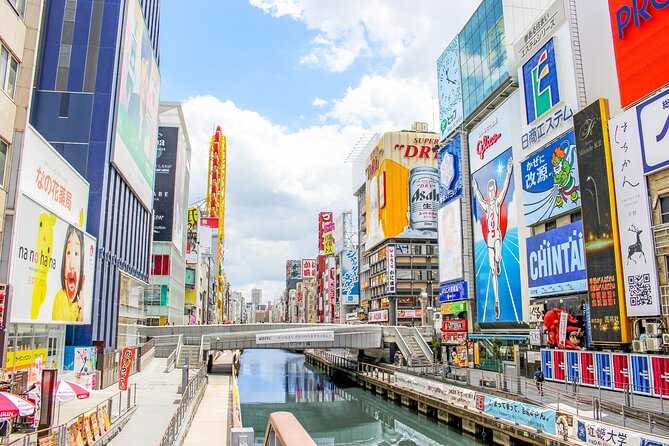
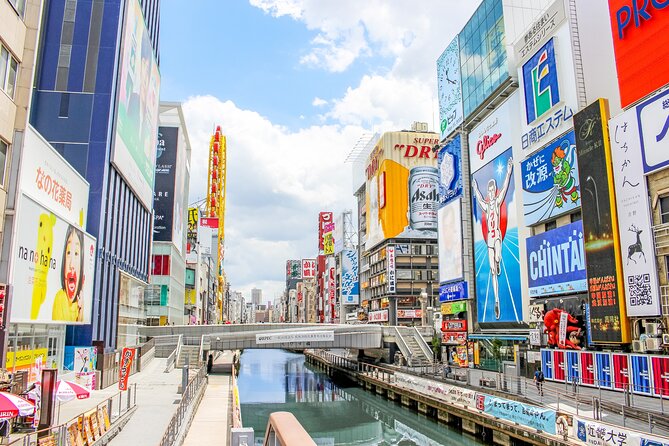
Dotonbori is Osaka’s most famous downtown entertainment area, and the stop lasts about 20 minutes. The essential photo is in front of the Glico running man sign, one of the district’s best-known symbols.
This is a quick orientation stop, not a full food tour or shopping session. Dotonbori is lined with unusual signs and advertisements, so even a short walk gives you a taste of Osaka’s playful visual style.
Twenty minutes is enough for the signature photo and a glance around, but not enough to explore the district properly. Lunch is not included, and the tour schedule does not promise time for a meal here. If eating Osaka specialties is a priority, ask your guide how lunch fits into the seven-hour day before you start.
I like Dotonbori as a contrast to Osaka Castle. The castle gives you formal monuments and museum displays. Dotonbori gives you bright signs, crowds, restaurants, and the city’s more humorous side. Just do not expect a leisurely evening in the neighborhood during this brief stop.
A completely different kind of day out in Osaka:
- Osaka Go Karting Tour with Funny Costume
★ 5.0 · 2,658 reviews - Osaka Castle: Museum and Tower Entry Ticket
★ 4.5 · 2,380 reviews - Osaka: Shinsekai Food Tour with 13-15 Dishes at 5 Eateries
★ 4.8 · 2,204 reviews - Osaka Food Tour: 13 Dishes at 5 Local Eateries
★ 5.0 · 2,149 reviews
Entering 1,400 years of Buddhist tradition at Shitennoji
Shitennoji Temple brings the oldest part of the tour into view. It has a 1,400-year history and was built after Buddhism arrived in Japan. The site is associated with one of Japan’s oldest architectural styles.
The scheduled visit lasts about 40 minutes, and admission is not included. The tour information also notes that you can climb the five-story pagoda, described as a rare opportunity. If that option is open during your visit, it gives the stop an added physical and visual element, though you should ask your guide about current access.
Shitennoji is valuable because it offers a calmer, more traditional setting after the energy of Dotonbori. I would listen closely here, since the temple’s age and architectural style are difficult to understand from photographs alone.
The short stop means you may not see every part of the grounds. Temporary closures can also lead to a substitute location. That is worth remembering if Shitennoji is the main reason you are booking the tour.
Finishing in the old entertainment district of Shinsekai
The final stop is Shinsekai, a downtown area filled with restaurants and theaters. Tsutenkaku Tower is its central symbol, surrounded by distinctive buildings and signs that make the area especially good for photographs.
You have about 20 minutes here, and there is no admission fee listed for the stop itself. The tour ends at Shin-Imamiya Station in Naniwa Ward, not back at Osaka Station. That finish makes sense geographically, since Shinsekai is nearby, but it may be inconvenient if your hotel or evening plans are back in Umeda.
Tell your guide if you want to finish somewhere else. The tour information says the ending point can be changed when requested. Still, raise the issue before the day gets underway, rather than waiting until the final stop.
Shinsekai makes a fitting ending because it shows yet another side of Osaka. You finish among older entertainment streets and eye-catching architecture rather than at a major museum or shopping center. If you want to continue exploring, Shin-Imamiya Station provides a useful onward point, but transportation after the tour remains your responsibility.
How the seven-hour schedule really works
The listed stops total about three hours and 15 minutes. The rest of the seven-hour period goes toward trains, subway transfers, walking between stations and sights, waiting, and possibly a short meal break.
That sounds reasonable for a city tour, but it will not feel relaxed. You cover six locations across several districts, and each stop has a purpose. The price of that efficiency is limited time at each place, especially Dotonbori and Shinsekai.
I would book this as a first-day survey rather than a slow cultural tour. You get enough of each district to decide where you want to return later. If you already know Osaka well, the standard route may feel repetitive unless you choose the customizable option.
The private format helps with pacing. Lily, for example, adjusted the schedule for special needs and added two stops that mattered to her group. Another guide, Ma-chan, was praised for checking that the group was enjoying the day and helping them return to their train station. These details show what the format can do when the guide takes an active role.
What the price includes, and what it does not
The listed price is $138.05 per person. It includes the guide and the private tour, but not transportation, entrance fees, lunch, drinks, or other personal expenses.
For the standard route, estimated tour-related extra costs are listed as 4,110 Japanese yen per person. Treat that figure as a planning guide rather than your complete spending limit, since food and some admissions remain separate.
The price is easier to justify for a small group that values help with transport and personal attention. A private guide can save you the effort of organizing six stops and can explain why each place matters. The value drops if you mainly need directions, since you could visit the same districts independently for less.
Group discounts are available, although the supplied information does not state the discount amount. Compare the total for your group before booking. The more people sharing the private guide arrangement, the more reasonable the per-person cost may become.
Standard route or customizable day?
The standard plan is best if you want the major Osaka sights without spending time planning a route. It gives you a clear mix of high-rise views, castle history, temple architecture, downtown signs, and old entertainment streets.
The customizable option is better if you have a strong interest in one part of Osaka or need a different pace. You must contact the guide two weeks in advance, and the hotels that can serve as meeting points must be within Osaka city. If you do not respond after choosing the customizable option, the standard route will be used.
That last point is important. Do not assume selecting customizable automatically creates a personal plan. Send your requests early and confirm the meeting and ending points.
The guide makes or breaks the experience
The strongest praise centers on guides who do more than lead the route. Ma-chan was described as caring, efficient, and good at explaining the history of each location. Josh was praised for offering useful insights and asking what the group specifically wanted to see. Lily received credit for changing the schedule and pace to meet special needs.
Another group found Michael and his associate patient and helpful, including assistance with buying JR train tickets at Tokyo Central Station. That comment refers to a different city experience, so I would not use it as evidence about the Osaka route itself. It does reinforce the benefit of a guide who helps with practical transport questions.
There is also a clear warning. One dissatisfied customer felt the guide added little beyond escorting the group from one stop to the next. That is a serious concern at this price. At the start, tell your guide what you want: historical detail, food suggestions, photography, transport help, or a slower pace. Clear expectations give the private format a better chance to work.
Who should book this Osaka day trip?
I would recommend it to a first-time Osaka visitor with only one full day, especially someone who feels uneasy navigating Japanese train and subway stations. Families and small groups may also like the private setup, since the day can be adjusted more easily than a fixed group excursion.
It suits people who want a broad introduction rather than hours at one attraction. You see the city’s major symbols quickly, then can return to your favorite area later.
I would hesitate if you are highly budget-conscious, already comfortable with public transportation, or want long meals and unhurried sightseeing. You pay extra for convenience and a guide, while still covering your own fares, admissions, and food.
Free cancellation is available up to 24 hours before the start time. Changes or cancellations made later are not accepted for a refund, so check your plans before the cutoff.
Final decision: book it for orientation, not a slow day
I would book this tour if I were visiting Osaka for the first time and wanted help fitting the city’s main sights into one day. The route is smart, the private format can be genuinely useful, and the mix of Osaka Castle, Shitennoji, Dotonbori, and Shinsekai gives you more than a series of similar photo stops.
I would book the customizable option only if I were willing to contact the guide two weeks ahead and explain exactly what I wanted. Otherwise, choose the standard route and accept that the day will be active and fairly quick.
The deciding question is simple: do you want a guide who adds meaning and keeps transport manageable? If yes, this can be a strong first look at Osaka. If you only need a route between famous places, save the money and explore independently.
FAQ
How long does the Osaka private day trip last?
The tour lasts approximately seven hours.
Where does the tour begin?
It begins at Osaka Station, at 3-chōme-1-1 Umeda, Kita Ward, Osaka, 530-0001, Japan.
Where does the tour finish?
The standard finishing point is Shin-Imamiya Station in Naniwa Ward, Osaka.
Can the ending point be changed?
Yes. You should tell the guide if you want to change the finishing point.
Is transportation included in the price?
No. You must pay your own train and subway fares. Transportation costs are not included.
Are admission tickets included?
No. Entrance fees for places such as the Umeda Sky Building, Osaka Castle, and Shitennoji are paid separately.
Is lunch included?
No. Lunch, drinks, and other personal expenses are not included.
Is the tour private?
Yes. Only your group participates in the activity.
Can I customize the route?
Yes. Choose the customizable option and contact the guide two weeks before the tour to plan your itinerary. If you do not respond, the standard route will be used.
Should I bring cash?
Yes. Some places visited during the day do not accept credit cards, so bring cash for admissions and personal spending.
Just added around Osaka
- Osaka Food Tour with 10 Classic Japanese Tastings & Drinks★ 5.0 · 38 reviews
- Osaka: Highlights & Hidden Gems Private Walking Tour★ 4.7 · 38 reviews
- Kyoto private tour (Shore excursion available from Osaka or Kobe port)★ 5.0 · 39 reviews
- Kyoto & Nara & Uji: Full Day Sightseeing Tour from Osaka or Kyoto★ 4.5 · 39 reviews
- Authentic SUSHI Course Cooking Class★ 5.0 · 39 reviews
- Osaka: Mind & Spirit Balance Temple Reiki Healing★ 5.0 · 41 reviews
- Osaka: Gluten-Free Ramen and Gyoza Cooking Class★ 5.0 · 42 reviews
- Osaka Afternoon Walking Tour with Osaka River Cruise★ 3.5 · 42 reviews
1-Day Tours, compared.
Mt Fuji and Hakone 1-Day Bus Tour Return by Bullet Train
Read our review →
Mt Fuji & Hakone Cruise, Drum Show Bullet Train 1 Day from Tokyo
Read our review →
Peaceful Hiroshima & Miyajima UNESCO 1 Day Bus Tour
Read our review →
Fushimi Inari, Kinkakuji, Bamboo Grove 1 Day Bus Tour
Read our review →

Browse the lists this tour appears in