
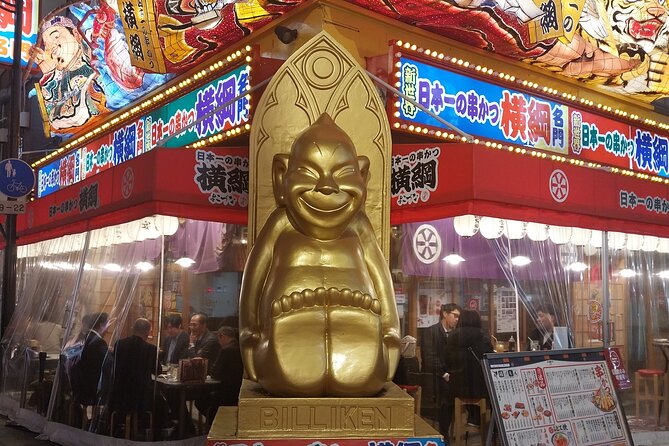
Reviewed · FOOD & DRINK
Osaka Food Tour with 10 Classic Japanese Tastings & Drinks
Osaka eats early and often. This three-hour walk through Tenjinbashi gives you a tasty shortcut to local favorites, from okonomiyaki and kushi-katsu to udon, mackerel sashimi, taiyaki, and mochi skewers. I like the small maximum of 10 people and the fact that your guide handles ordering and translation. You can focus on eating instead of decoding menus or fumbling with payment at every stop.
I also like the mix of savory dishes, sweets, and drinks. Guides such as Terumi, Marcelo, and Akane have added useful neighborhood context, with some walks including an unexpected shrine visit. The main consideration is timing: the tour starts at 10:45 am, so it is more of a late breakfast and lunch than an evening food crawl, and three hours of tasting can leave you very full.
In This Review
- Key points to know before booking
- Why Tenjinbashi-Suji makes a good food-tour setting
- The opening tastings: a quick start to Osaka’s food culture
- Mackerel sashimi and the tour’s more unusual flavors
- Kushi-katsu, okonomiyaki, and the Osaka classics
- Udon and takoyaki add familiar Osaka comfort
- Taiyaki, mochi, and the sweeter finish
- The secret dish and the advantage of a guide
- What $86.50 gets you
- Timing, meeting point, and the walk home
- Who should book this Osaka food walk
- Should you book it?
- FAQ
- How long does the Osaka food tour last?
- What time does the tour start?
- Where does the tour meet?
- Where does the tour end?
- How many people can join the tour?
- What food is included?
- Are drinks included?
- Is hotel pickup included?
- Can I cancel for a full refund?
- What happens if the tour is canceled?
Key points to know before booking
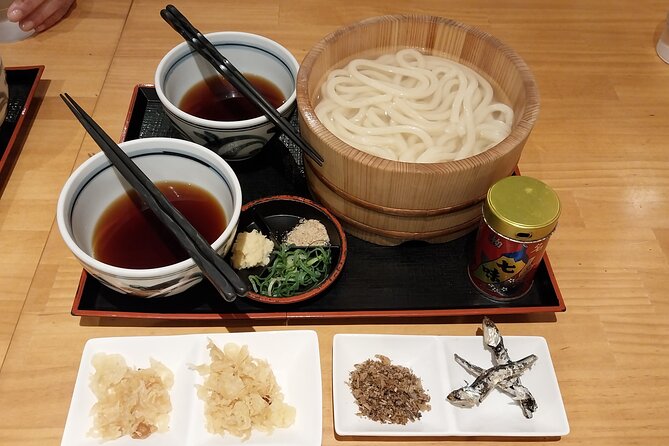
- Tenjinbashi-Suji is the main stage: You walk through much of Japan’s longest covered shopping arcade, nearly three miles in total.
- Ten different tastings keep the meal varied: Expect Osaka classics, noodles, fish, rice snacks, sweets, and drinks rather than one large restaurant meal.
- A guide removes the language hassle: Your guide orders, translates, and explains what you are eating.
- The group is capped at 10 people: That makes it easier to ask questions and stay connected during the walk.
- The start and finish are different: Meet at Minami-Morimachi Station and finish near the Osaka Museum of Housing and Living.
- The $86.50 price buys convenience as well as food: It makes the most sense if you value local guidance, translation, and a planned tasting route.
Why Tenjinbashi-Suji makes a good food-tour setting
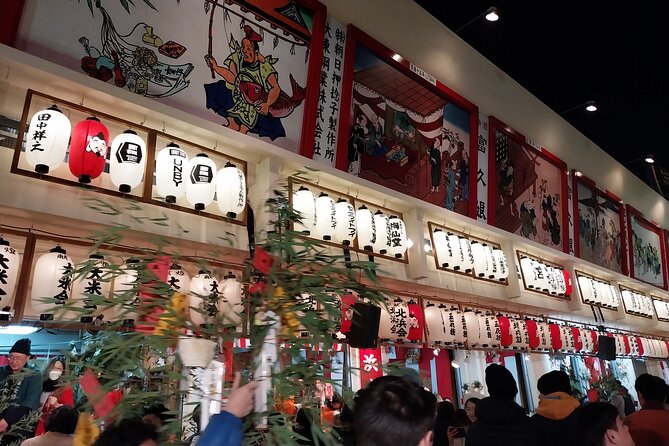
The walk begins near Minami-Morimachi Station, at the Resona Bank Minamimorimachi Branch, and moves through the Tenjibashi-Suji shopping arcade. The arcade stretches for nearly three miles, making it one of Osaka’s most useful places to see everyday shopping and eating in one long covered passage.
That setting matters. You are not simply being taken from one famous restaurant to another. You are walking through a working neighborhood where food shops, small eateries, and ordinary local businesses share the same roof. The covered arcade also keeps much of the route practical in uncertain weather, although the experience itself requires good weather and can be canceled if conditions are poor.
I like food tours that use a neighborhood as their classroom. Here, the guide can point out how Osaka’s eating culture fits into daily life, not just explain a list of dishes. The route gives you a feel for the city between bites, which is a better introduction than sitting in one restaurant for three hours.
You should still expect a walking tour, not a formal restaurant progression. The exact order of stops can vary, and the supplied information does not name every venue. That is part of the appeal, but it also means you should not book this expecting a fixed restaurant menu or a private dining room.
More Food Tours in Osaka
- Osaka: Shinsekai Food Tour with 13-15 Dishes at 5 Eateries
★ 4.8 · 2,204 reviews - Osaka Food Tour: 13 Dishes at 5 Local Eateries
★ 5.0 · 2,149 reviews - Hungry Osaka Street Food Tour:15 Tastings & 3 Drinks with a Local
★ 5.0 · 1,727 reviews
The opening tastings: a quick start to Osaka’s food culture
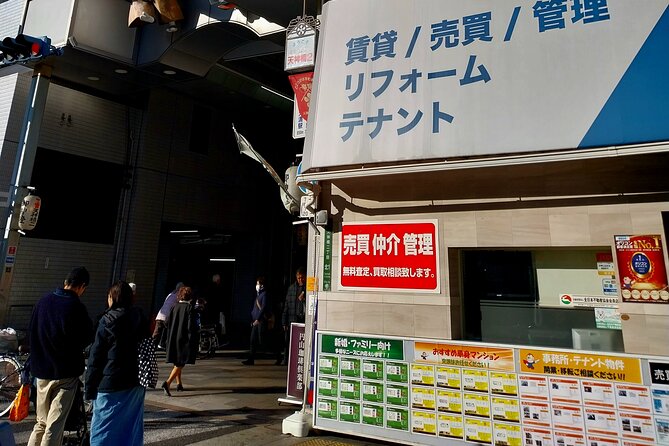
The tour starts at 10:45 am, and the first bite may arrive quickly. One account describes beginning with a snack before moving on to a Shinto shrine, which was an unexpected bonus rather than a promised main stop. That is a useful detail: the guide may add cultural touches when the route allows, but you should treat the listed food tastings as the core of the experience.
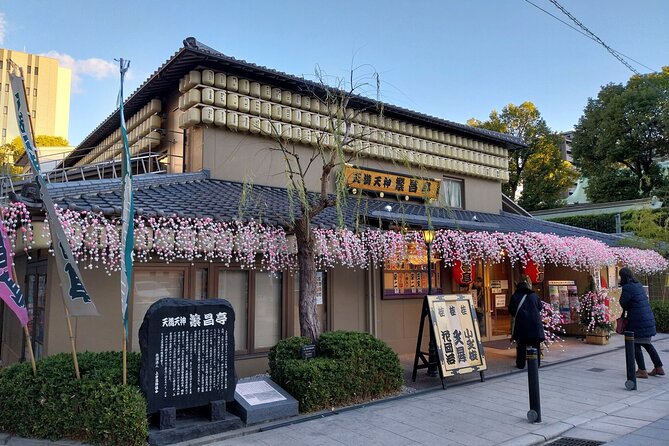
A shrine visit can give the morning a welcome pause. After tasting food, you get a chance to look around, ask questions, and connect what you are seeing with Japanese customs. Marcelo and Terumi were both praised for adding cultural information, while Akane was appreciated for explaining the neighborhood as well as the dishes.
The value of this first part is not the size of the snack. It is the way a guide gets you comfortable with the pace of the tour. You may be shown how the group will order, share, and move between stops. Since the guide takes care of ordering and translation, you do not need to know the names of every dish in advance.
Mackerel sashimi and the tour’s more unusual flavors
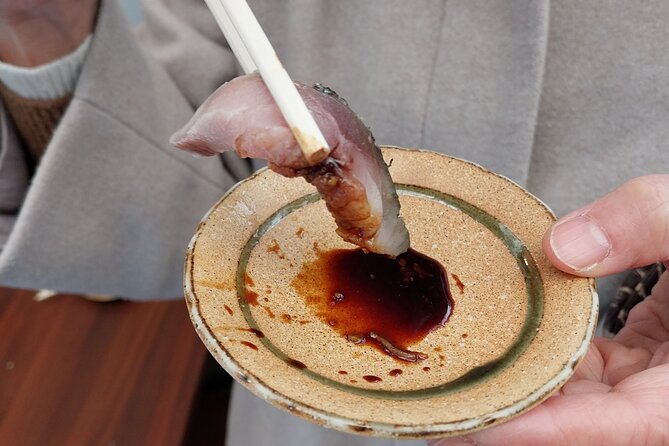
Mackerel sashimi is one of the more distinctive inclusions. Fresh fish can be a useful test of how you feel about Japanese food beyond the familiar dishes. It adds a clean, savory contrast to fried foods, noodles, and sweets.
One account also mentions straw-smoked fish, which may be connected to the tour’s fish tasting or a guide-selected special. The published food list specifically names mackerel sashimi, so that is the item you should count on. The straw-smoked preparation is best viewed as a possible variation, not a guarantee.
This is where having a guide helps. You can ask how the fish is prepared, what makes it different from cooked fish, and how to eat it. A small group is useful for this kind of explanation because the guide has more time to respond than on a large coach-style outing.
If raw fish is not for you, the tour may require some flexibility. The food list includes many cooked and sweet items, but the experience is designed around trying a range of Osaka foods. I would not choose it if you want a carefully controlled menu with no fish.
Kushi-katsu, okonomiyaki, and the Osaka classics
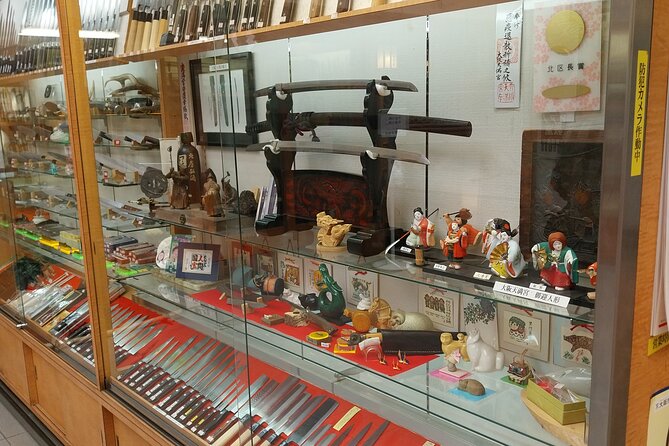
Kushi-katsu is one of Osaka’s best-known comfort foods: ingredients are placed on skewers, coated, and deep-fried. It brings crunch and salt to the tasting lineup. Because it is served as a tasting rather than your only meal, you can enjoy the style without committing to a full plate of fried food.
Okonomiyaki follows the same Osaka spirit in a different form. This savory pancake is often associated with casual dining, shared tables, and a filling combination of batter and toppings. The tour pairs it with beer, a combination that makes sense if you want to understand why this dish has such broad appeal.
The key benefit here is comparison. You are not eating one famous item in isolation. You move from fish to fried skewers to a hot savory pancake, so the differences in texture and flavor become clearer. The guide can also explain the dishes as they arrive, rather than leaving you to guess what is on the plate.
Do not expect full-size servings of every item. Ten tastings plus drinks in three hours would be a lot even for a serious eater. The portions are intended to build a varied meal, and you should arrive hungry but not starved.
A completely different kind of day out in Osaka:
- Osaka Go Karting Tour with Funny Costume
★ 5.0 · 2,658 reviews - Osaka Castle: Museum and Tower Entry Ticket
★ 4.5 · 2,380 reviews - Osaka: teamLab Botanical Garden Entry Ticket
★ 4.5 · 1,710 reviews - Osaka: Tea Ceremony Experience
★ 4.9 · 1,426 reviews
Udon and takoyaki add familiar Osaka comfort
Udon gives the tour a softer, warmer course. These thick noodles are easy to recognize but still worth trying in Japan, where the broth and toppings may differ from what you have eaten elsewhere. The published inclusions specifically list udon, while one account also enjoyed takoyaki, Osaka’s famous octopus-filled snack.
Takoyaki is not listed among the guaranteed inclusions, so you should not treat it as certain for every departure. Still, its appearance in the food experience fits the Osaka theme and shows how the route may include a guide’s chosen stop or a substitute dish.
The combination of udon and takoyaki, if both appear, gives you two kinds of comfort food: a bowl of noodles and a small, hot street-style snack. It also helps you see that Osaka food is not limited to okonomiyaki and fried skewers.
A practical point: three hours of eating can pass quickly, but the food itself may slow you down. This is not an exercise-focused walk. Wear comfortable shoes, leave room in your schedule, and avoid planning a large meal immediately afterward.
Taiyaki, mochi, and the sweeter finish
The sweet courses help keep the tasting list from feeling heavy. Taiyaki is a freshly baked fish-shaped cake, often filled with custard or red bean paste. One account specifically mentions custard-filled waffles, which may be a local variation or a guide-selected sweet at one of the stops. The guaranteed description names freshly baked taiyaki, so that is the safer expectation.
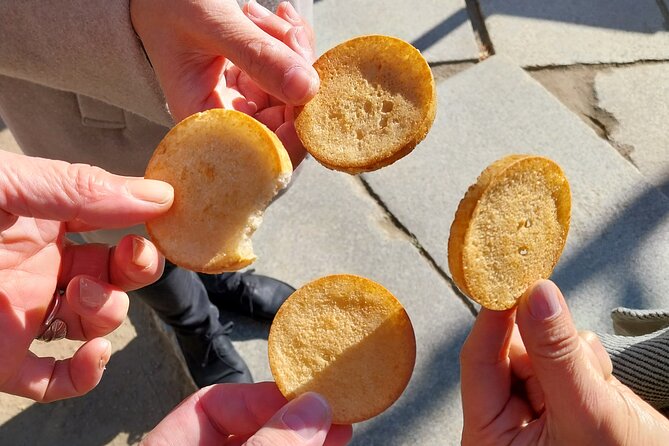
Dango mochi sweet skewers are also included and are made on the day. Their chewy texture makes them quite different from the crisp rice crackers included elsewhere. These are small details, but they are exactly what makes a food walk more useful than a checklist of famous dishes.
Matcha tea appeared in one account as well. Drinks are part of the tour, although the supplied information does not specify every drink or promise matcha at each departure. Beer is described as a match for okonomiyaki, so you should expect drink pairings rather than a separate beverage tasting program.
Rice crackers round out the sweet and snack side of the route. They are common across Japan, but trying them in the middle of a local food walk gives you another everyday reference point. The lineup is broad enough to suit someone who wants to taste rather than sit through a single long meal.
The secret dish and the advantage of a guide
The tour includes an item described only as a secret dish. That is a small but effective way to keep some surprise in the route. Since the dish is not named, you should not build your expectations around a specific food, but you can count on at least one element that is not fully spelled out ahead of time.
The guide’s role is the real thread holding the experience together. Terumi was praised for her English, local expertise, and ability to explain foods such as udon, matcha tea, okonomiyaki, smoked fish, and takoyaki. Marcelo was appreciated for his cultural explanations, and Akane was praised for the food selection and neighborhood information.
That repeated strength matters more than any one dish. You can find okonomiyaki and kushi-katsu on your own, but it takes time to choose places, understand menus, order the right amount, and pay at each stop. A guide reduces that work and helps you avoid spending the first day of your Osaka visit learning by trial and error.
The translation service is especially useful if you have food questions. You can ask what you are eating and how it is prepared without relying on gestures or a translation app. The small group also gives you better access to the guide, although the maximum of 10 does not mean the tour will always have 10 people.
What $86.50 gets you
At $86.50 per person, this is not the cheapest way to snack in Osaka. You could buy individual dishes for less if you already know where to go and feel comfortable ordering in Japanese.
The price becomes easier to justify when you count what is bundled together: about three hours of guided walking, 10 food tastings, drinks, translation, ordering help, and a planned route through Tenjinbashi-Suji. You are paying for food, but also for time saved and mistakes avoided.
I see the strongest value for a first visit to Osaka. If you have only a short stay, the tour gives you a fast introduction to several local foods and a neighborhood you might otherwise miss. It can also help you decide which dishes you want to seek out again later.
The value is weaker for an experienced Osaka eater who already knows Tenjinbashi-Suji and can order comfortably. In that case, you may prefer to spend the same money on a longer meal or several independent stops. Group discounts may improve the cost for people booking together, but the specific discount is not given.
The experience is often booked about 63 days ahead, so popular dates may fill early. Confirmation is sent within 48 hours, subject to availability. The tour accepts a mobile ticket, which keeps the meeting process simple.
Timing, meeting point, and the walk home
Meet at Minami-Morimachi Station at 10:45 am, near 2 Chome-1 Minamimorimachi, Kita Ward. The tour does not provide hotel pickup or drop-off, so you need to reach the station on your own.
The tour ends at the open space of the Osaka Museum of Housing and Living. This is useful because you finish in the Tenjinbashi area rather than returning to the starting station. You can continue exploring nearby, visit the museum if it suits your plans, or use public transportation from the area.
The separate start and finish points also mean you should not leave a bag, shopping, or anything important at the starting point. Plan your afternoon around the museum area, not around returning to Minami-Morimachi.
Most people can participate, and the route is near public transportation. Still, you should be comfortable walking for roughly three hours with food stops. The published information does not give a detailed accessibility description, so contact the provider before booking if you need specific assistance.
Free cancellation is available when you cancel at least 24 hours before the local start time. Late cancellations and late changes are not accepted for a refund. If poor weather or an insufficient minimum number of people cancels the tour, you can choose another date or experience, or receive a full refund.
Who should book this Osaka food walk
I would recommend this tour to first-time visitors who want a guided start to Osaka food. It suits you especially well if menus feel intimidating, you want to try several dishes in one morning, or you prefer learning a neighborhood through food rather than visiting a single restaurant.
It is also a good match for couples, families, and small groups who want an easy shared activity. The group discount may help when several people book together, and the food variety means you do not have to choose one cuisine or one style of restaurant.
You may want to skip it if you dislike fish, strongly prefer evening food tours, or want complete control over every dish. The route includes a broad range of foods, but the point is to sample what the guide selects.
The 4.9 rating from 38 reviews and 100 percent recommendation signal a very strong level of satisfaction, with guide quality receiving repeated praise. I would put the greatest weight on that consistency: Terumi, Marcelo, and Akane are each credited with explaining food and culture clearly, not simply leading people from stop to stop.
Should you book it?
Book this Osaka food walk if you want a guided introduction to local eating with little ordering stress. The Tenjinbashi-Suji setting, 10 tastings, drinks, and small group give you a lot to work with in three hours, and the guide can turn unfamiliar dishes into understandable choices.
At $86.50, it is best viewed as a time-saving food lesson with a meal built in. If you arrive hungry, enjoy variety, and can make the 10:45 am start, it is a practical way to get your Osaka bearings and leave with a list of foods worth trying again.
FAQ
How long does the Osaka food tour last?
The tour lasts approximately three hours.
What time does the tour start?
The tour starts at 10:45 am.
Where does the tour meet?
The meeting point is Minami-Morimachi Station, at 2 Chome-1 Minamimorimachi, Kita Ward, Osaka.
Where does the tour end?
The tour ends at the open space of the Osaka Museum of Housing and Living.
How many people can join the tour?
The tour has a maximum of 10 participants.
What food is included?
The listed tastings include mackerel sashimi, kushi-katsu, Osaka-style okonomiyaki, udon, freshly baked taiyaki, a secret dish, dango mochi skewers, and rice crackers.
Are drinks included?
Yes. Drinks are included as part of the tastings. Beer is described as a pairing with okonomiyaki.
Is hotel pickup included?
No. Hotel pickup and drop-off are not included.
Can I cancel for a full refund?
Yes, if you cancel at least 24 hours before the experience start time. Late cancellations and changes are not accepted for a refund.
What happens if the tour is canceled?
If poor weather or an insufficient minimum number of participants causes cancellation, you can receive a full refund or choose another date or experience.
Just added around Osaka
- Osaka: Highlights & Hidden Gems Private Walking Tour★ 4.7 · 38 reviews
- Kyoto private tour (Shore excursion available from Osaka or Kobe port)★ 5.0 · 39 reviews
- Osaka Private Day Trip – Enjoy Your First-Time Visit to Osaka!★ 5.0 · 39 reviews
- Kyoto & Nara & Uji: Full Day Sightseeing Tour from Osaka or Kyoto★ 4.5 · 39 reviews
- Authentic SUSHI Course Cooking Class★ 5.0 · 39 reviews
- Osaka: Mind & Spirit Balance Temple Reiki Healing★ 5.0 · 41 reviews
- Osaka Afternoon Walking Tour with Osaka River Cruise★ 3.5 · 42 reviews
- Osaka: Gluten-Free Ramen and Gyoza Cooking Class★ 5.0 · 42 reviews
Food & Drink, compared.
Shinjuku Food Tour (13 Dishes at 4 Local Eateries)
Read our review →
Tokyo Tsukiji Fish Market Food and Culture Walking Tour
Read our review →
Shinsekai Food Tour with 13-15 Dishes at 5 Eateries
Read our review →
Osaka Food Tour: 13 Dishes at 5 Local Eateries
Read our review →
Shinjuku Food Tour (15 Dishes and 4 Eateries)
Read our review →
Best of Shinjuku: Izakaya Food Tour (4 Stops, 14+ Tastings)
Read our review →
Kyoto Night Foodie Tour in Gion (9+ dishes + 6 Sake tastings)
Read our review →
Hungry Osaka Street Food Tour:15 Tastings & 3 Drinks with a Local
Read our review →Browse the lists this tour appears in