
Reviewed · FOOD & DRINK
Tokyo: Shinjuku Food Tour (13 Dishes at 4 Local Eateries)
Shinjuku rewards curious eaters. This three-hour walking tour gives you a useful shortcut through the district, pairing 13 Japanese dishes with stops at a food stall, izakaya, traditional eatery, and gastrobar. I like the generous variety, and I like that food and two drinks are included, so you are not stopping to sort out small payments all evening. The main drawback is that the quality of the guiding can vary, and some people felt they needed more explanation about the dishes and neighborhood.
The route covers Omoide Yokocho, Kabukicho, and Shinjuku Golden Gai, three areas with very different personalities. You get a small group of no more than 12 people, though that can still feel crowded in tiny restaurants. At $86.22 per person, the tour is best value for first-time visitors who want a broad introduction, not for confident eaters who already know Shinjuku’s food scene.
In This Review
- Key points to know before booking
- Why this is a smart first evening in Shinjuku
- Meeting at the west side of Shinjuku Station
- Omoide Yokocho: a compact start among tiny eateries
- Kabukicho: food beside Tokyo nightlife
- Shinjuku Golden Gai: narrow lanes and postwar Tokyo
- What the 13 dishes really mean
- Guide quality can make or break the evening
- Walking, timing, and group size
- Is $86.22 good value?
- Who should book this Shinjuku food walk?
- Should you book it?
- FAQ
- How long does the Shinjuku food tour last?
- How many dishes are included?
- Are drinks included?
- What types of places does the tour visit?
- Which Shinjuku areas are included?
- Where does the tour begin?
- Where does the tour finish?
- Can I return to the starting point?
- How large is the group?
- What happens if I cancel?
Key points to know before booking
- Thirteen tastings are included: You sample food at four different types of Japanese venue rather than eating one large meal in one restaurant.
- The route covers old and modern Shinjuku: Omoide Yokocho, Kabukicho, and Golden Gai each offer a different look at the district.
- Two drinks are part of the price: Alcoholic and non-alcoholic choices are included.
- The group is capped at 12: That is smaller than a large coach group, but narrow alleys and tiny dining rooms can still make the outing feel busy.
- Guide quality matters: Guides such as May, Hoshi, Igor, Elena, Kei, and Lloyd received especially warm praise for their food knowledge, local tips, and friendly manner.
- Allow time for walking: The tour moves between several stops and ends near the Southeast Exit of Shinjuku Station.
Why this is a smart first evening in Shinjuku
Shinjuku can be hard to read at first. The station is enormous, the streets change character quickly, and many of the best-looking eateries have tiny entrances or menus that offer little help in English. A guide removes much of that guesswork.
I like the way this outing mixes food with place. You are not simply being taken from restaurant to restaurant. The route passes through narrow postwar lanes, Tokyo’s famous entertainment district, and an area filled with tiny bars. That gives the meal a sense of location, which is exactly what a good food walk should do.
The experience also works well for solo visitors. Shared tables and a small group create an easy setting for conversation. One solo participant ended up exchanging contact details with fellow diners and meeting them again during the trip. That is not guaranteed, of course, but the format makes it easier to meet people than a solitary restaurant meal.
The tour has a 4.9 rating from 6,603 ratings, with 99 percent recommending it. Those numbers suggest a consistently popular outing, but they should not make you ignore the weaker points. A few people wanted more cultural explanation, and one person felt the food did not justify the price. Your guide will have a real effect on how much you learn.
More Food Tours in Tokyo
- Tokyo Tsukiji Fish Market Food and Culture Walking Tour
★ 5.0 · 3,184 reviews - Tokyo: Shinjuku Food Tour (15 Dishes and 4 Eateries)
★ 4.9 · 2,033 reviews - Best of Shinjuku: Izakaya Food Tour (4 Stops, 14+ Tastings)
★ 5.0 · 1,863 reviews
Meeting at the west side of Shinjuku Station
The meeting point is outside AOKI Shinjukunishiguchi Honten at 1-chōme-8-5 Nishishinjuku. This is on the west side of the station, while the tour finishes near the Southeast Exit of JR Shinjuku Station.
That change of location matters. Shinjuku Station is famously large, so give yourself time to find the correct exit and building. The activity is near public transportation, but arriving early is still wise, especially if this is your first visit to the area.
The tour uses a mobile ticket, and booking confirmation is provided at the time of booking. The maximum group size is 12. That keeps the group manageable on foot, although a dozen people can still be a lot inside a very small izakaya or bar-lined alley.
The tour ends near the Southeast Exit. If you prefer to return to the starting point, you can ask the guide to escort you back to the Starbucks meeting area. That is useful if your hotel or onward train is on the west side.
Omoide Yokocho: a compact start among tiny eateries
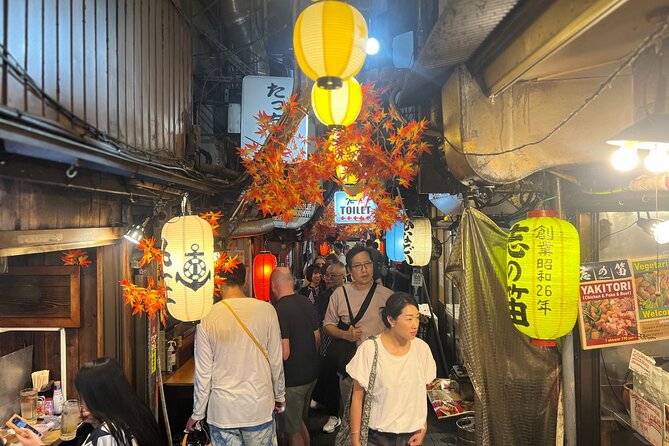
The first hour takes place around Omoide Yokocho, a tight collection of narrow lanes filled with small izakayas and food stalls. The setting is a strong introduction to Shinjuku because the dining rooms are close together, intimate, and built around quick meals and conversation.
This is the kind of place that can feel intimidating when you are alone. Entrances are small, seating is limited, and it may not be obvious where to stand or how to order. With a guide, you can focus on tasting instead of trying to work out the rules.
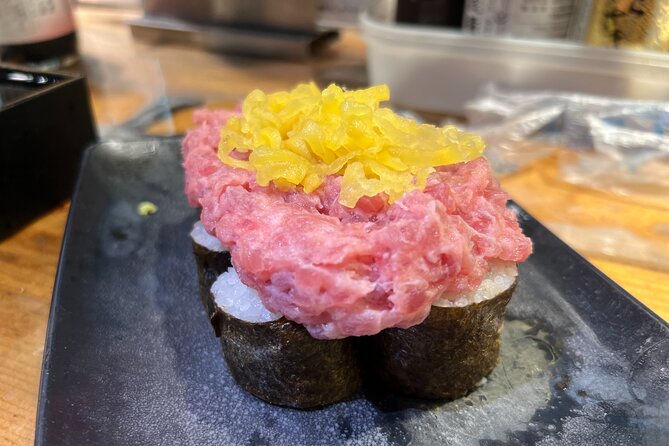
Expect the first food stop to set the tone for the evening. Food is served as part of the package, and the emphasis is on sampling several items rather than choosing one dish from a menu. Some diners praised the variety, while one person felt raw food arrived without enough instruction. If you are unfamiliar with Japanese dishes, ask your guide to identify each item and explain how to eat it.
This is also where the food can feel most dependent on personal taste. Several people described the meals as delicious and difficult to find alone. Another person found the izakaya dishes disappointing compared with food discovered independently. I would treat the stop as a chance to try something new, not as a guarantee that every dish will become a favorite.
Kabukicho: food beside Tokyo nightlife
The second hour focuses on Kabukicho, Tokyo’s best-known entertainment district. The guide explains the area’s different establishments and takes the group to a traditional Japanese restaurant.
Kabukicho is useful context for the meal. It is not simply a restaurant neighborhood, and understanding its nightlife helps you read the streets as you walk. The guide may also point out nearby sights along the way. Some guides have added stops such as the giant 3-D cat and the Godzilla figure on a rooftop, though these extras are not listed as guaranteed parts of the tour.
The restaurant stop provides a change from the tiny lanes of Omoide Yokocho. The supplied details describe one of the venues as a traditional eatery, and the food selection is intended to show a different side of Japanese dining. One particularly praised dish was pork katsu, described as coming from an old and famous restaurant.
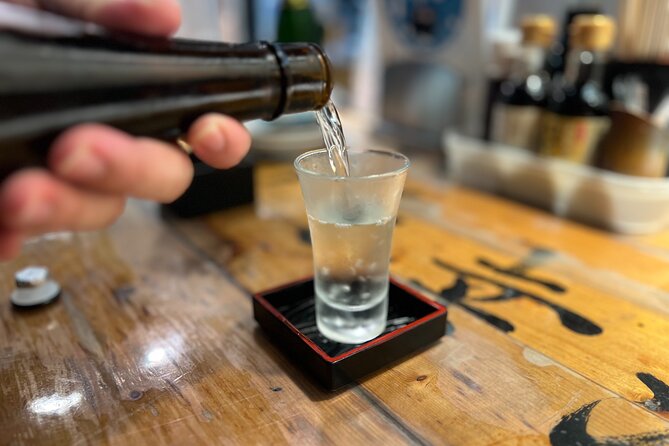
This is often the point where you may appreciate having a guide order for the table. You can sample food without committing to a full serving, and you can ask about ingredients or customs. The tour also includes alcoholic and non-alcoholic drinks, with two complimentary drinks in total. If you do not drink alcohol, you can choose non-alcoholic options.
A completely different kind of day out in Tokyo:
- Mt Fuji and Hakone 1-Day Bus Tour Return by Bullet Train
★ 5.0 · 26,383 reviews - 1-Day Tokyo Bus Tour
★ 5.0 · 14,250 reviews - Tokyo: TOKYO SKYTREE® Admission ticket
★ 4.5 · 11,192 reviews - Tokyo: teamLab Planets TOKYO Digital Art Museum Entry Ticket
★ 4.6 · 9,779 reviews
Shinjuku Golden Gai: narrow lanes and postwar Tokyo
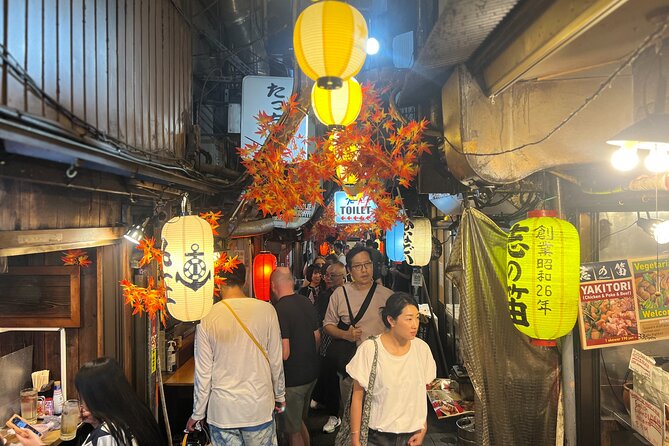
The final hour is set around Shinjuku Golden Gai, an area known for narrow alleys and more than 200 tiny bars. Its compact buildings preserve a slice of postwar Tokyo, and the contrast with the large station and bright commercial streets is striking.
Golden Gai is mainly a place to look, walk, and understand. Many bars are extremely small and may have specific entry customs, so a guided visit helps you avoid wandering into the wrong kind of venue. The food component here is paired with the area’s atmosphere rather than treated as a formal restaurant dinner.
One important caution is that the precise route may not always include every named area. A person booked partly for Golden Gai and was disappointed when the group did not go there. If seeing this neighborhood is essential to your plans, confirm the route with the guide at the start and ask what is scheduled that evening.
The fourth food venue is described as a gastrobar, and the final tasting can include taiyaki, a Japanese fish-shaped cake filled with sweet filling. One account described stopping for taiyaki as dessert after several savory dishes. Another person mentioned tasting snails. These examples show the range possible, but individual dishes may differ by guide, venue, or day.
What the 13 dishes really mean
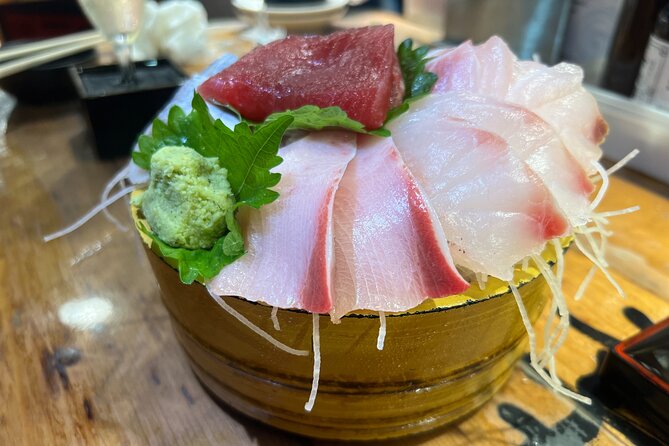
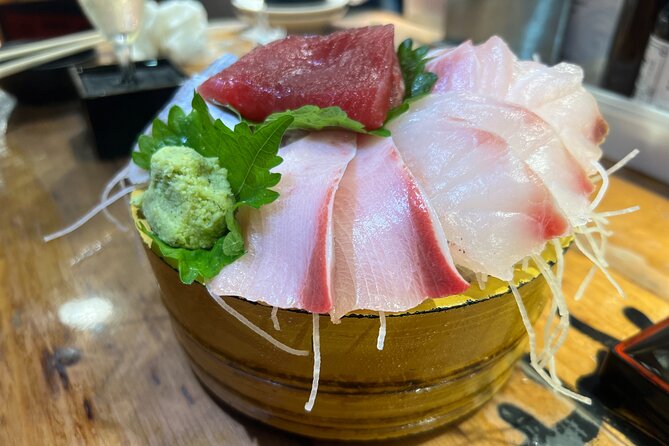
Thirteen dishes sounds like a great deal of food, and it is. The tour is designed as a progressive tasting rather than a snack followed by a normal dinner. Come hungry, but do not expect to receive 13 full restaurant portions.
The range is the biggest advantage. You may move from food served at a stall to izakaya dishes, then to a traditional restaurant and a gastrobar. That gives you more useful knowledge than a single bowl of ramen because you can compare settings, flavors, and dining styles.
The food can include dishes such as tonkotsu and taiyaki, based on descriptions of particular outings. Katsu pork has also been singled out as a memorable stop, and one person tried snails for the first time. These details make the tour a good fit if you want a gentle push toward unfamiliar foods.
The weak point is explanation. One person reported that food was placed on the table without enough information about what it was or what to do with it. That would be frustrating if your main goal is food education. Ask direct questions throughout the evening, especially if the guide is moving quickly.
Dietary requirements and preferences should be raised before or at the start of the tour. A guide named Kei was praised for making sure everyone had food suited to their restrictions and preferences, but the provided information does not promise that every dietary need can be met. Do not assume that a particular menu will be available.
Guide quality can make or break the evening
The strongest praise is aimed at the guides. May was described as friendly, helpful, and good at adding local suggestions. Hoshi received praise for excellent English and clear explanations of Japanese food and culture. Igor was appreciated for explaining the dishes, neighborhoods, and background of the places along the route.
Other guides received similar comments. Elena was praised for her energy and easy-to-follow cultural explanations. Paula brought humor to her stories, while Nathan offered practical ideas for the rest of a Tokyo visit. Lloyd helped a mother coordinate taxis because of her mobility issues.
That last example is useful, but it should not be read as a promise of a fully accessible tour. Most people can participate, yet this is a walking experience through narrow streets and compact venues. If you have a mobility concern, tell the provider in advance and speak with the guide at the meeting point.
Guide quality is not perfectly uniform. A few people found the narration too light and wanted more detail about the food and restaurants. I would book this for a friendly introduction and social evening, rather than expecting a formal lecture on Japanese cuisine.
Walking, timing, and group size
The advertised duration is about three hours, with roughly one hour connected to each main neighborhood. That is enough time to sample a lot without taking an entire day from your Tokyo plans.
The walking pace has generally been described as manageable. One person with a leg injury said the route was paced well, while another reminded future diners to be ready to walk enough to work off the food. The route is not presented as a strenuous hike, but comfortable shoes are sensible.
A group of up to 12 gives you a better chance to hear the guide than a large bus tour. It also makes table arrangements easier than a group of 30. Still, the restaurants and alleys themselves are small. If you strongly dislike close seating or group dining, this format may not suit you.
The end point near the Southeast Exit is convenient for continuing into Shinjuku, returning to a hotel, or catching a train. Remember that the starting and finishing sides of the station differ.
Is $86.22 good value?
At $86.22, the price is not cheap for three hours, but it includes 13 dishes, two drinks, a guide, and entry to four food venues. If you ordered comparable tastings independently, you would also spend time researching restaurants, finding entrances, ordering, and handling payments.
The value is strongest for first-time visitors. You are paying for access, organization, interpretation, and confidence. The guide can take you into places you might pass by, explain what to order, and give you ideas for later meals.
The value is weaker if you already know Shinjuku well or prefer to choose every dish yourself. One unhappy diner felt independent izakaya meals were better. That is a fair criticism, because a guided tasting cannot guarantee that every selected dish will match your personal taste.
Free cancellation is available if you cancel at least 24 hours before the local start time. Cancellations inside that window are not refunded, and changes are not accepted within 24 hours.
Who should book this Shinjuku food walk?
I would choose this tour if you are visiting Tokyo for the first time, feel unsure about Japanese menus, or want to meet other people over a shared meal. It is also a good first or second evening activity because the guide can suggest places and foods for the rest of your stay.
Food-focused couples and small groups should enjoy the range. Solo visitors can benefit from the social setup. You will also get more from the outing if you are willing to try unfamiliar dishes and ask questions.
I would hesitate if you need a highly detailed food lecture, want a guaranteed visit to every named neighborhood, or have strong control over the menu. In those cases, confirm the route and dietary arrangements before paying.
Should you book it?
Book this tour if you want a lively, organized introduction to Shinjuku’s food streets and prefer tasting many small portions to sitting down for one meal. The combination of four eateries, 13 dishes, two drinks, and three distinct neighborhoods offers real value for a first visit.
Go in with flexible expectations. The best guides, including May, Hoshi, Igor, Elena, Kei, and Lloyd, can turn the evening into a warm cultural introduction. A less informative guide may leave you wishing the dishes had been explained better. Ask questions, arrive early at the west-side meeting point, and confirm that Golden Gai is on the evening’s route if it matters to you.
FAQ
How long does the Shinjuku food tour last?
The experience lasts approximately three hours.
How many dishes are included?
The tour includes 13 Japanese dishes served across four eateries.
Are drinks included?
Yes. Two complimentary drinks are included, with alcoholic and non-alcoholic options.
What types of places does the tour visit?
The food stops include one stall, one izakaya, one traditional Japanese eatery, and one gastrobar.
Which Shinjuku areas are included?
The planned areas are Omoide Yokocho, Kabukicho, and Shinjuku Golden Gai.
Where does the tour begin?
It begins at AOKI Shinjukunishiguchi Honten, 1-chōme-8-5 Nishishinjuku, Shinjuku City, Tokyo 160-0023.
Where does the tour finish?
The tour ends near the Southeast Exit of JR Shinjuku Station.
Can I return to the starting point?
Yes. You can ask the guide to escort you back to the Starbucks meeting area near the starting point.
How large is the group?
The maximum group size is 12 people.
What happens if I cancel?
You receive a full refund if you cancel at least 24 hours before the local start time. Cancellations or changes made within 24 hours are not accepted, and the payment is not refunded.
Just added around Tokyo
- Tokyo 6hr Instagram Highlights Private Tour with Licensed Guide★ 5.0 · 38 reviews
- Tokyo Small Group Tour with Guide★ 4.5 · 38 reviews
- Tokyo Sumo Experience with Live Show & Audience Challenge★ 5.0 · 38 reviews
- Japanese Food Cooking Class in Asakusa, Tokyo★ 5.0 · 39 reviews
- Very popular in Harajuku♡Animal petting zoo★ 4.6 · 39 reviews
- Ramen Making from Scratch with Tokyo Mom(Vegan Option Available)★ 5.0 · 39 reviews
- Tokyo JDM Night: 600hp C63s AMG Edition 1 (Private)★ 4.9 · 39 reviews
- Tokyo: Kimono Rental inside Shinjuku Gyoen National Garden★ 4.9 · 39 reviews
Food & Drink, compared.
Tokyo Tsukiji Fish Market Food and Culture Walking Tour
Read our review →
Shinsekai Food Tour with 13-15 Dishes at 5 Eateries
Read our review →
Osaka Food Tour: 13 Dishes at 5 Local Eateries
Read our review →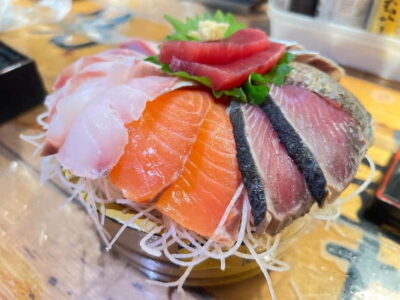
Shinjuku Food Tour (15 Dishes and 4 Eateries)
Read our review →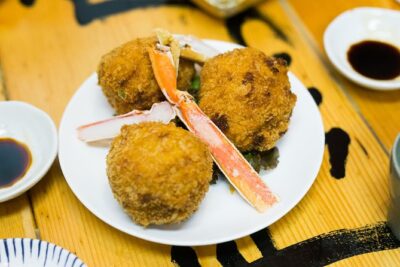
Best of Shinjuku: Izakaya Food Tour (4 Stops, 14+ Tastings)
Read our review →
Kyoto Night Foodie Tour in Gion (9+ dishes + 6 Sake tastings)
Read our review →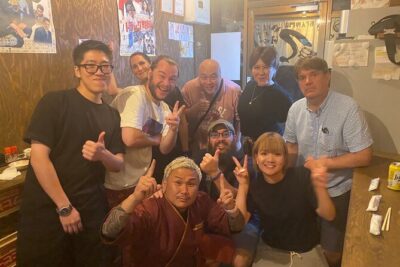
Hungry Osaka Street Food Tour:15 Tastings & 3 Drinks with a Local
Read our review →
Browse the lists this tour appears in