
Reviewed · FOOD & DRINK
Osaka: Shinsekai Food Tour with 13-15 Dishes at 5 Eateries
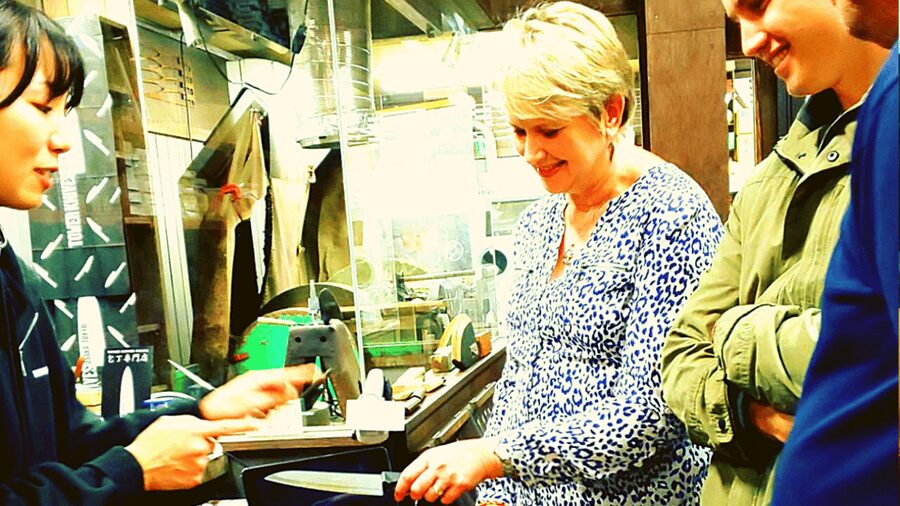
Come hungry, leave happily stuffed. This three-hour Osaka food tour takes you through Shinsekai’s arcades and side streets, stopping at five small local eateries for 13 to 15 Japanese dishes. I like the small group limit of nine, which makes ordering and conversation easier, and I like the mix of familiar Osaka favorites with foods you might not spot on your own, including oden, nikudoufu, gyoza, and tonpeiyaki.
The guides add real value, too. Taka, who grew up in Osaka, has shared local customs and after-tour suggestions, while guides such as Kevin, Tommy, Mio, Paul, and Mario have been praised for explaining both the food and the district. The main consideration is dietary choice: this tour is not suitable for vegans or people with gluten intolerance, and even pescatarians may find that a couple of dishes do not work for them.
In This Review
- Key points at a glance
- Meeting Osaka at Dobutsuen-mae Station
- Stop one: takoyaki, oden, and Osaka’s snack culture
- Stop two: an izakaya full of classic Osaka flavors
- Kushikatsu: Osaka’s fried skewers
- Stop three: a traditional restaurant for nikudoufu and homestyle plates
- Stop four: a specialty gyoza restaurant
- The final stop: tonpeiyaki, karaage, and one last drink
- What the walking adds to the meal
- The guides shape the evening
- Is $53 good value?
- Who should book this Shinsekai food tour?
- Booking and practical details
- Should you book it?
- FAQ
- How long does the Osaka Shinsekai food tour last?
- How many dishes are included?
- How many eateries do you visit?
- What foods might be served?
- Are drinks included?
- Is the tour suitable for vegans or people with gluten intolerance?
- Where does the tour meet?
- How large is the group?
Key points at a glance
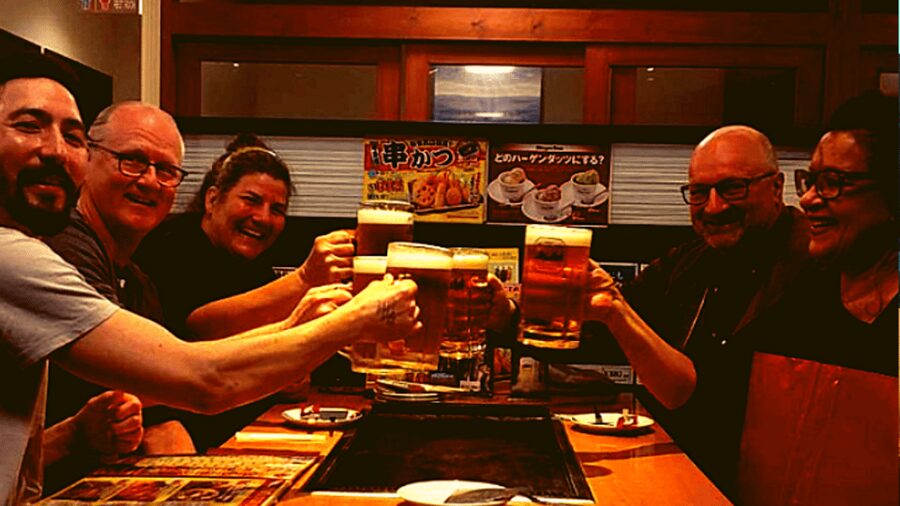
- Five different food settings: You eat at a stall, gastrobar, classic eatery, izakaya, and specialty restaurant.
- A full Osaka menu: Expect takoyaki, kushikatsu, kitsune udon, yakitori, gyoza, karaage, tonpeiyaki, and more.
- Two drinks included: You can choose alcoholic or non-alcoholic drinks during the stops.
- Shinsekai beyond the main signs: The route uses arcades and side alleys where menus are often only in Japanese.
- A small English-speaking group: The tour is limited to nine people and lasts about three hours.
- Good timing for first-time visitors: The food and local orientation make this a useful early Osaka activity.
Meeting Osaka at Dobutsuen-mae Station
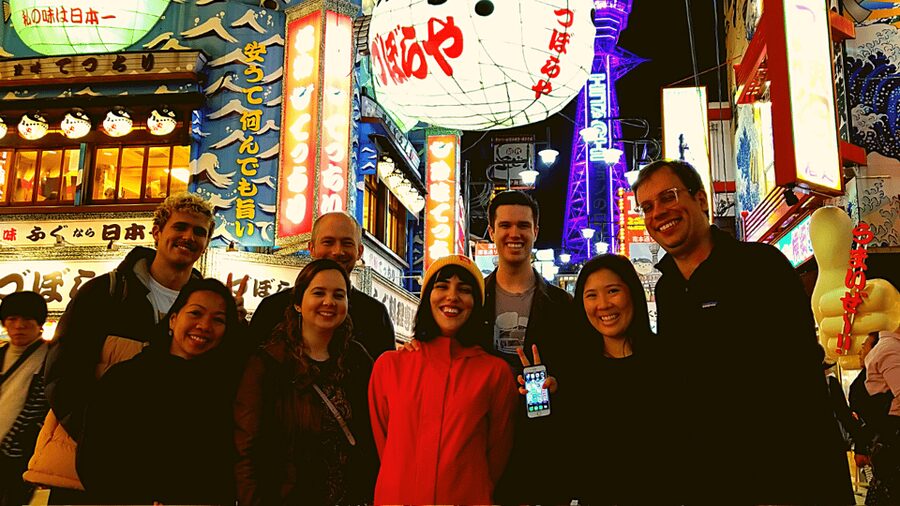
The tour begins at Dobutsuen-mae Station on the Midosuji Line. You meet at exit 1, in front of the 15 wall lanterns of Daiichi Building.
That precise landmark matters. Shinsekai has plenty of signs, lights, streets, and station exits competing for your attention, so you will want to arrive with enough time to find the lanterns without rushing. Hotel pickup and drop-off are not included, so you make your own way to the station and leave from the final restaurant on your own.
From the start, the setting is part of the meal. Shinsekai is known for its old-school entertainment streets, food shops, arcades, and local restaurants. The tour does not simply place you at one large dining table. It moves you through the neighborhood, letting you see how Osaka eats in small establishments that can be hard to approach when you cannot read the menu.
I especially like this format for a first evening in Osaka. You get food, a basic sense of direction, and suggestions from a guide who can answer the practical questions that often come up later in your trip.
More Food Tours in Osaka
- Osaka Food Tour: 13 Dishes at 5 Local Eateries
★ 5.0 · 2,149 reviews - Hungry Osaka Street Food Tour:15 Tastings & 3 Drinks with a Local
★ 5.0 · 1,727 reviews - Hungry Osaka Street Food Tour: 15 Dishes & 3 Drinks
★ 4.9 · 694 reviews
Stop one: takoyaki, oden, and Osaka’s snack culture
The first stop is a takoyaki and oden stall. Takoyaki are battered octopus balls cooked in a special molded pan, then served hot with sauces and toppings. They are one of Osaka’s best-known foods, but a guided tasting helps you understand the texture and preparation instead of treating them as just another snack.
Oden offers a different experience. These simmered ingredients are served from a warm broth, making this a particularly welcome stop on a cold evening. The exact selection can change, but the tour description includes oden among the opening dishes.
Starting with a stall is a smart choice. It eases you into the rhythm of Japanese casual dining before the group moves into sit-down restaurants. It also gives you an early taste of the tour’s central idea: small portions and shared plates can add up quickly.
Do not fill up here. The meal is only beginning, and later stops bring noodles, skewers, dumplings, fried chicken, and several substantial plates.
Stop two: an izakaya full of classic Osaka flavors

The next visit is an izakaya, the Japanese style of casual pub where food is as important as the drinks. Here you may sample kitsune udon, yakitori, chicken wings, and nagaimo.
Kitsune udon pairs udon noodles with a sweet piece of fried tofu. It is a comforting dish, and the soft tofu gives it a flavor quite different from the grilled and fried items around it. Yakitori brings skewered chicken, while chicken wings add a crisp, savory bite. Nagaimo, a mountain yam, can have a slippery texture that may be new to you.
This is one of the useful parts of having a guide. You are not left to guess what a Japanese menu item means or how it fits into the local food culture. The guides explain what is in front of you, answer questions, and keep the meal moving without making it feel like a race.
The food comes in a broad range of styles. That variety is more valuable than ordering one famous dish at a busy restaurant because you can compare textures and cooking methods in one evening.
Kushikatsu: Osaka’s fried skewers
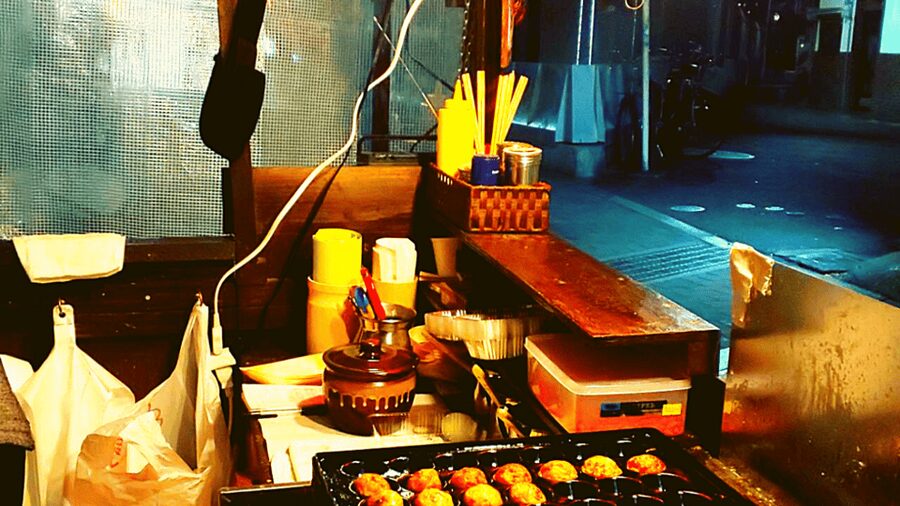
Kushikatsu is one of the signature foods associated with Osaka. It consists of meat and vegetables on skewers, coated and lightly deep-fried.
The simple description does not quite prepare you for the fun of eating it. Kushikatsu is casual, quick, and easy to share. It also shows Osaka’s fondness for food that is direct and satisfying rather than fussy.
The tour includes kushikatsu as part of the izakaya portion or nearby food sequence, though the exact order can change. You may find vegetables alongside meat, which helps break up the richer fried dishes.
If you are watching your appetite, pace yourself here. Fried food can feel light when it arrives one skewer at a time, but by the end of the evening you will have eaten far more than you expected.
A completely different kind of day out in Osaka:
- Osaka Go Karting Tour with Funny Costume
★ 5.0 · 2,658 reviews - Osaka Castle: Museum and Tower Entry Ticket
★ 4.5 · 2,380 reviews - Osaka: teamLab Botanical Garden Entry Ticket
★ 4.5 · 1,710 reviews - Osaka: Tea Ceremony Experience
★ 4.9 · 1,426 reviews
Stop three: a traditional restaurant for nikudoufu and homestyle plates
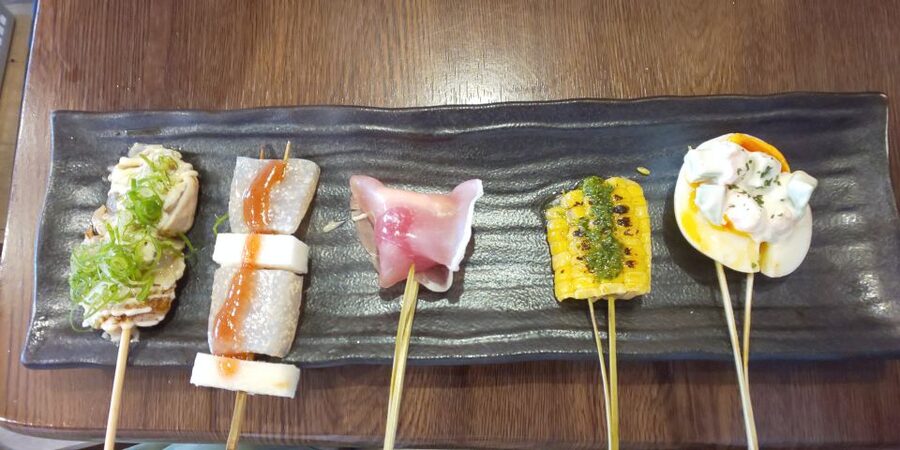
The third stop takes you to a cozy, traditional Japanese restaurant. The menu includes nikudoufu, a beef and tofu stew, original yakitori or skewered beef assortments, mochi, and one alcoholic or non-alcoholic drink.
This is likely to feel different from the snack stalls and izakaya. Nikudoufu is a homestyle dish, with beef and tofu cooked together in a savory sauce. It gives the tour a slower, more familiar sense of Japanese cooking. It is not just about famous street food. You also get a taste of the kind of warm, simple plate that helps explain why local restaurants matter.
The mochi adds a soft, chewy finish to the course. If you have never had it before, listen closely to the guide’s explanation and take your time with the texture.
The included drink is a useful touch. You can choose alcohol or a non-alcoholic option, so you do not have to drink to take part. Since the tour includes two drinks overall, this is one place to use that allowance if the setting appeals to you.
Stop four: a specialty gyoza restaurant
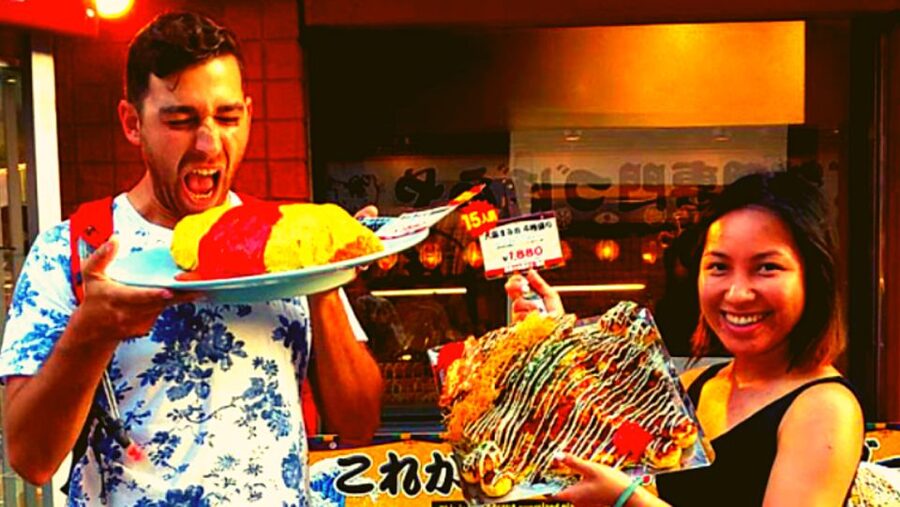
Next comes a restaurant devoted to gyoza. These Japanese dumplings are usually filled with meat and vegetables, then cooked to give them a browned base and tender top.
The gyoza stop gives the meal another change of pace. You move from skewers and stews to small dumplings that are easy to share. One recent tour description specifically praised crispy Osaka-style gyoza, so you may find a version with a particularly crisp underside.
This is also a good example of why the five-stop plan works. You are not depending on a single restaurant to deliver every famous Osaka food. Each place has its own focus, and the guide handles the route and ordering.
Restaurant availability can affect the schedule. The listed establishments may occasionally be full or closed, in which case the group goes to alternatives. That is a practical point, not a flaw unique to this tour. Small local businesses do not always operate on a fixed sightseeing timetable, and the replacement may still offer a good local meal.
The final stop: tonpeiyaki, karaage, and one last drink
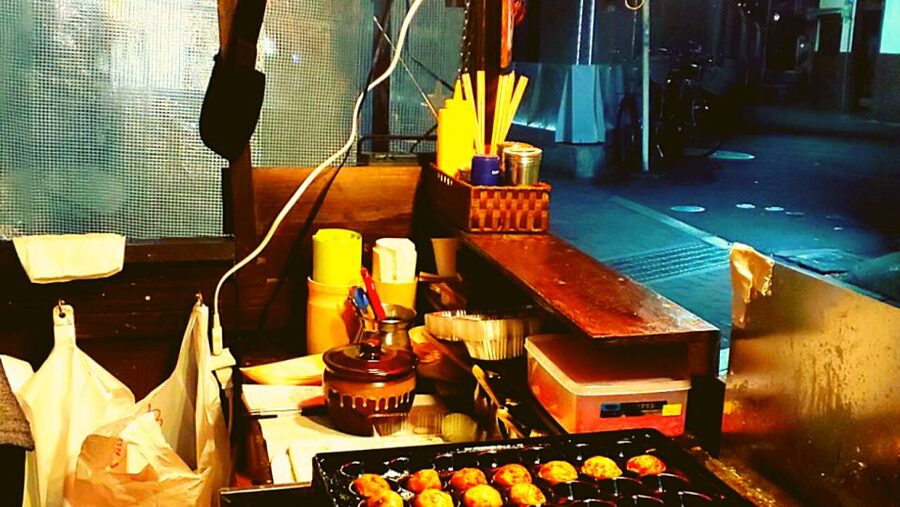
The final eatery brings another generous spread. The sample menu includes tonpeiyaki, a pork omelette, edamame, karaage, Japanese fried chicken with spices, and a Japanese pancake or fruit dish. You also receive your second drink here.
Tonpeiyaki is a good Osaka-style finish: egg, pork, and sauce in a filling dish that feels more like comfort food than a small snack. Karaage adds crisp, seasoned fried chicken, while edamame gives you something lighter to nibble between richer bites.
The description says an abundance of edamame and karaage, and that wording matches the practical warning you need: you will probably be full before the final plate arrives. Several guides have been praised for keeping the evening moving at a casual pace, but this is still a substantial amount of food in three hours.
The final stop may also include a Japanese pancake or fruit dish, depending on availability. The menu is not fixed, and dishes can change with the season and the restaurants’ stock. Think of the advertised menu as a strong guide to the style of the meal, not a guaranteed checklist.
What the walking adds to the meal
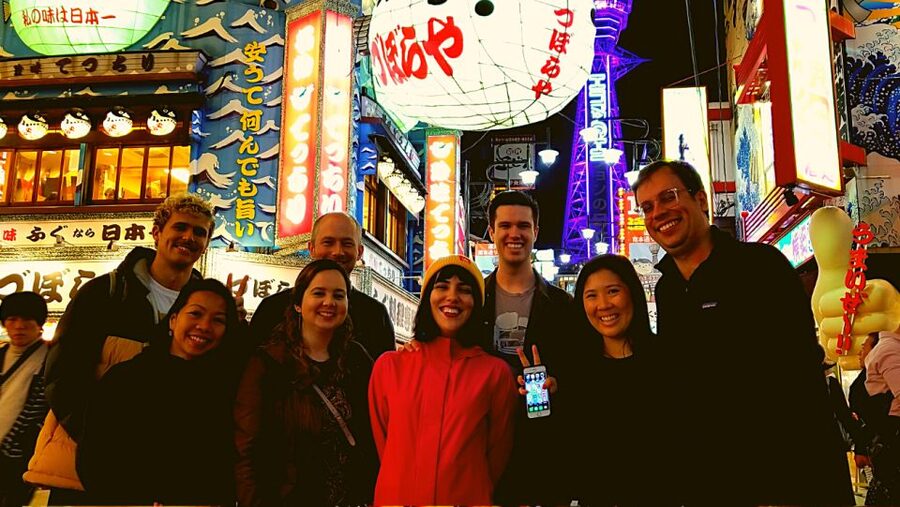
You spend the evening walking between eateries through arcades and side alleys. The route is not presented as a major sightseeing walk, but the movement gives you a useful look at Shinsekai between plates.
One person described the tour as involving plenty of steps, which is worth taking seriously. The walking helps break up the eating, but you should wear comfortable shoes and expect to be on your feet. On a cold evening, the constant movement can also help you stay warm.
The streets and eateries use Japanese menus, and that is part of the appeal. You are seeing places chosen for their local character rather than dining only at restaurants designed for international visitors. At the same time, the English-speaking guide keeps the experience workable for you.
Guides have also added history, Osaka trivia, food origins, and local recommendations along the way. Brian used trivia questions to keep the group involved, while Tommy has been praised for giving extra context about Shinsekai after the meal. That guide-to-neighborhood connection is one of the tour’s strongest features.
The guides shape the evening
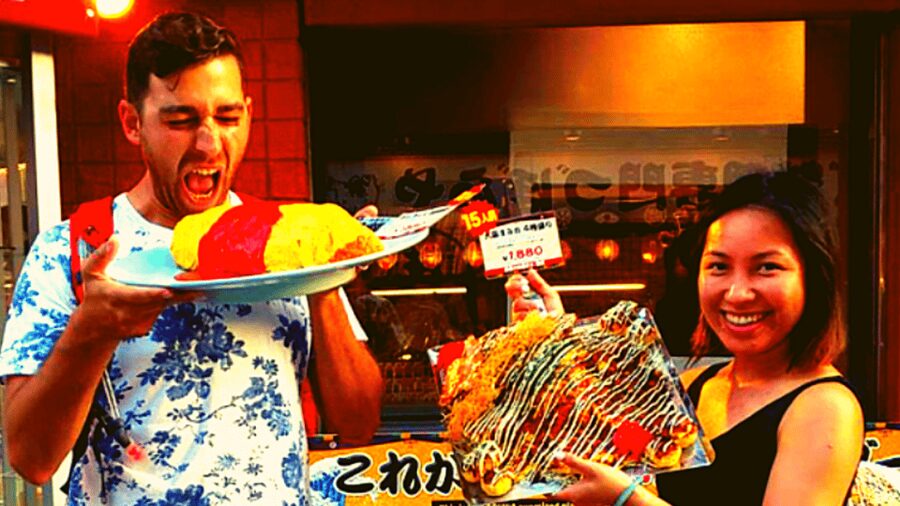
The company uses several guides, so your exact personality match will depend on the departure. Names praised for warmth, humor, and clear explanations include Kevin, Tommy, Mio, Paul, Taka, Mario, Kiko, Suga, Yuki, and others.
The consistent strength is not a single scripted performance. It is the way the guides help a group of strangers eat together. Kevin has been described as keeping things on schedule without making the evening feel hurried. Dominic helped one group connect so well that they went for karaoke afterward. Mario even ordered fries for children in one family group.
Taka is Osaka-born and raised, which adds a particularly local perspective. Tommy has offered restaurant suggestions after the tour and answered questions later in the trip. These details matter because a good food tour should give you more than a full stomach. It should help you feel less lost at your next Japanese menu.
With a maximum of nine people, you have a better chance to ask questions and speak with the guide. The small group also makes it easier to enter tiny establishments without the unwieldy feel of a large bus tour.
Is $53 good value?
At $53 per person, the price is reasonable for the amount included. You receive food at five separate establishments, 13 dishes in total as the stated minimum, and two drinks. The tour lasts three hours and includes an English-speaking guide who handles the route and helps explain what you are eating.
The real value is access. You might save money by ordering individual dishes on your own, but you would need to find five suitable places, understand the menus, manage ordering, and fit everything into one evening. The tour removes those hurdles and takes you to small local businesses that may not be obvious from a standard Osaka food guide.
It is not the cheapest way to eat dinner. You are paying for guidance, variety, coordination, and local context as well as the food. For someone who already knows Shinsekai and speaks Japanese, the price may feel less compelling. For a first visit, the broad menu and easy access make it a fair deal.
The two included drinks help. You can choose alcoholic or non-alcoholic beverages, so the value does not depend on drinking beer or sake.
Who should book this Shinsekai food tour?
I would choose this experience if you want to sample many Osaka dishes without committing to full portions at several restaurants. It suits curious eaters who enjoy small local places, walking, group conversation, and learning the background of dishes.
It also works well early in your Osaka stay. You get ideas for other places to eat, learn how several dishes taste, and become more comfortable with the city’s casual dining culture.
Families may enjoy it, but the food is built for adults and adventurous eaters. One family received fries for children, but that should not be treated as a standard part of the menu. If your children eat a narrow range of foods, ask before booking.
This is not the right choice for vegans or people with gluten intolerance. The tour specifically excludes both groups because there are too few suitable dishes. Pescatarians should also check in advance, since some included plates may contain meat and two dishes were not suitable for one pescatarian group.
Booking and practical details
The tour lasts three hours, with starting times varying by availability. It is conducted in English and limited to nine participants.
You can cancel up to 24 hours in advance for a full refund, and the reserve-now, pay-later option keeps your plans flexible. Those terms are useful if your Osaka schedule is still shifting, but the more important planning point is to arrive at the correct meeting place: exit 1 of Dobutsuen-mae Station, in front of the 15 wall lanterns of Daiichi Building.
Come with an empty stomach. The food is plentiful, and the evening includes several fried and filling dishes. Wear comfortable shoes, bring room for a drink or two, and do not plan a large dinner afterward.
Should you book it?
Yes, if you want a friendly introduction to Shinsekai and a wide sampling of Osaka food in one evening. The strongest reasons are the small group, the five different eateries, the generous portions, and guides who add local stories instead of simply pointing at plates.
Skip it if you need vegan, gluten-free, or highly controlled dietary options. You may also prefer independent dining if you dislike fixed routes or shared group meals.
For most omnivorous visitors, especially on a first Osaka visit, the $53 cost buys a useful mix of food, neighborhood access, and practical guidance. Book it near the beginning of your stay, arrive hungry, and treat the menu as a flavorful tour through Osaka rather than a fixed promise of every listed dish.
FAQ
How long does the Osaka Shinsekai food tour last?
The tour lasts three hours.
How many dishes are included?
The experience includes 13 dishes as the stated total, with the advertised range listed as 13 to 15 dishes. The exact food can change with availability, season, and restaurant operations.
How many eateries do you visit?
You visit five food stops: one stall, one gastrobar, one classic eatery, one izakaya, and one specialized restaurant.
What foods might be served?
The sample menu includes takoyaki, oden, kitsune udon, yakitori, chicken wings, nagaimo, kushikatsu, nikudoufu, beef skewers, mochi, gyoza, tonpeiyaki, edamame, karaage, and a Japanese pancake or fruit dish.
Are drinks included?
Yes. Two drinks are included, and you can choose alcoholic or non-alcoholic options.
Is the tour suitable for vegans or people with gluten intolerance?
No. The tour is not suitable for vegans or people with gluten intolerance because there are too few appropriate dishes.
Where does the tour meet?
You meet at Dobutsuen-mae Station on the Midosuji Line, exit 1, in front of the 15 wall lanterns of Daiichi Building.
How large is the group?
The tour is conducted in English and limited to nine participants.
Just added around Osaka
- Osaka Food Tour with 10 Classic Japanese Tastings & Drinks★ 5.0 · 38 reviews
- Osaka: Highlights & Hidden Gems Private Walking Tour★ 4.7 · 38 reviews
- Kyoto private tour (Shore excursion available from Osaka or Kobe port)★ 5.0 · 39 reviews
- Osaka Private Day Trip – Enjoy Your First-Time Visit to Osaka!★ 5.0 · 39 reviews
- Kyoto & Nara & Uji: Full Day Sightseeing Tour from Osaka or Kyoto★ 4.5 · 39 reviews
- Authentic SUSHI Course Cooking Class★ 5.0 · 39 reviews
- Osaka: Mind & Spirit Balance Temple Reiki Healing★ 5.0 · 41 reviews
- Osaka: Gluten-Free Ramen and Gyoza Cooking Class★ 5.0 · 42 reviews
Food & Drink, compared.
Shinjuku Food Tour (13 Dishes at 4 Local Eateries)
Read our review →
Tokyo Tsukiji Fish Market Food and Culture Walking Tour
Read our review →
Osaka Food Tour: 13 Dishes at 5 Local Eateries
Read our review →
Shinjuku Food Tour (15 Dishes and 4 Eateries)
Read our review →
Best of Shinjuku: Izakaya Food Tour (4 Stops, 14+ Tastings)
Read our review →
Kyoto Night Foodie Tour in Gion (9+ dishes + 6 Sake tastings)
Read our review →
Hungry Osaka Street Food Tour:15 Tastings & 3 Drinks with a Local
Read our review →
Browse the lists this tour appears in