
Reviewed · FULL-DAY
Kyoto & Nara & Uji: Full Day Sightseeing Tour from Osaka or Kyoto
Three famous stops, one very full day. This tour links Nara Park’s bowing deer, Uji’s matcha shops, and Kyoto’s Fushimi Inari gates without asking you to work out several train routes. I like the variety and the useful choice of departing from Osaka or Kyoto. The tradeoff is clear: with nine hours and several stops, some visits feel hurried.
I also like that the day includes both major sights and smaller pleasures, from Todai-ji Temple and Byodo-in to a stroll beside the Uji River. Guides such as Amy, Amanda, Eve, and John have earned especially warm praise for clear instructions and friendly help. Still, the experience can change sharply with the guide assigned. Some guests had excellent English explanations, while others found the commentary too limited or hard to follow.
At $67 per person, the air-conditioned transport and route planning make good sense if you want a broad first look at the region. Add ¥1,500 for the two temple admissions, plus lunch and your own snacks. This is best for someone who values seeing a lot in one day more than lingering at every shrine, shop, and temple.
In This Review
- Key points before you book
- What this Osaka or Kyoto day trip is really designed to do
- Nara Park and the deer: a lively first stop
- Todai-ji Temple and the ¥800 admission
- Uji Park and the river: a calmer middle act
- Byodo-in and the Phoenix Hall on the ¥10 coin
- Byodoin Omotesando: Uji’s matcha heart
- Fushimi Inari’s Senbon Torii gates
- Pace, transport, and the guide question
- Is $67 a fair price?
- Who should book this full-day route?
- Should you book it?
- FAQ
- How long does the tour last?
- Can I depart from Osaka or Kyoto?
- Are temple admission fees included?
- Is lunch included?
- How large can the tour group be?
- Does the bus have a bathroom?
Key points before you book
- Nara begins with free-roaming deer: You get time in Nara Park, with the option to see the famous deer before visiting Todai-ji.
- Two paid temples cost extra: Todai-ji is ¥800 and Byodo-in is ¥700 per person.
- Uji is the matcha stop: Byodoin Omotesando offers tea, sweets, and tea products in a pleasant shopping street.
- Fushimi Inari gets the longest visit: The Senbon Torii section receives about 1 hour and 20 minutes.
- This is a large-group day: The vehicle can carry up to 45 people, so meeting times and clear directions matter.
- The bus has no bathroom: Plan restroom breaks around the stops, and do not wait until the next temple.
What this Osaka or Kyoto day trip is really designed to do
This is a sightseeing sampler, not a slow cultural walk. In about nine hours, you move through three destinations in two prefectures, with transport between them and a guide managing the schedule.
I see the main value in the route itself. Nara, Uji, and Fushimi Inari are all reachable by public transport, but fitting them together in one day takes planning. The tour removes much of that work. You board an air-conditioned vehicle, receive directions for each stop, and return to the vehicle at set times.
The guide may offer context during the drive and explain the plan at each destination, but much of the actual sightseeing is self-guided. You should not expect a private guide walking beside you through every temple hall or shrine path. Several strong experiences came from guides who gave clear instructions, answered questions, and helped people regroup. Other experiences suffered when English explanations were brief or difficult to understand.
The group limit of 45 is important. That is a sizeable party for narrow shrine paths and busy temple grounds. You may spend part of the day following a flag, meeting point, or guide message rather than enjoying a quiet, flexible outing. If you are comfortable with that structure, the large group keeps the price low. If you want personal attention, look for a smaller tour.
A few more Osaka experiences worth weighing up
- Osaka: Minoh, Katsuoji Temple, & Minoh Falls Full-day Tour
★ 4.9 · 172 reviews - Osaka’s Best and Brightest: Private Full-Day Tour by Vehicle
★ 5.0 · 147 reviews - Full Day Tour of Kyoto with Private Transportation
★ 5.0 · 130 reviews
Nara Park and the deer: a lively first stop
Nara Park covers about 660 hectares, so even a short visit gives you a sense of its scale. The park is known for its free-roaming deer, old temples, and broad paths. The planned visit lasts about 50 minutes, which is enough to see deer, take photographs, and walk toward the temple area, but not enough for a leisurely exploration of the entire park.
The deer are the instant attraction. Some bow when they expect food, and they can be wonderfully charming. They are also still animals, not tame props. One guide, Brian, received specific praise for explaining how to stay safe around them, a useful reminder for families and anyone carrying food.
Use your time sensibly. Get your bearings first, keep treats under control, and follow local instructions around the animals. If you want a long walk through Nara Park, quiet temple corners, or several museums, this schedule will not provide it.
The park stop is free, but it is mainly an introduction to Nara. The tour then moves to Todai-ji, the city’s major temple visit.
Todai-ji Temple and the ¥800 admission
Todai-ji is one of Japan’s most important temples and part of the UNESCO-listed Historic Monuments of Ancient Nara. Its Great Buddha Hall is the reason many people come, and the scale of the temple gives this short stop real weight.
The planned time is about 30 minutes, with the ¥800 admission paid separately. That half-hour is enough for a direct visit if you follow the guide’s instructions and head straight to the main attraction. It is not enough for a relaxed look at every feature, long photographs, or an unhurried circuit of the grounds.
This is one place where meeting-point directions matter. A poor explanation can leave you at the main entrance while the group moves toward the temple, costing you the very sight you paid to visit. Stay close during the transition from the park and confirm exactly where and when to meet the group.
Families may find Todai-ji especially memorable because the building and Buddha are easy to appreciate without a long lecture. History fans may want to return independently for more time. The tour gives you the essential stop, not the full Nara experience.
Uji Park and the river: a calmer middle act
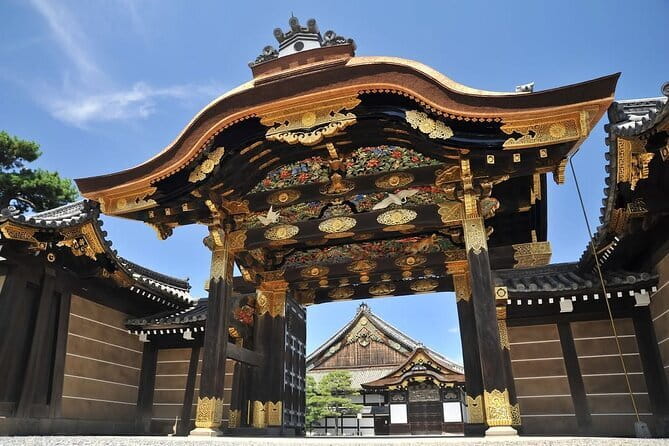
After Nara, the tour turns to Uji, a city closely associated with Japanese green tea. Uji Park occupies islands in the Uji River and connects to the riverbanks by three bridges. The planned park visit lasts about 30 minutes, followed by about 20 minutes beside the river.
This part of the day provides a welcome change from deer crowds and major temple grounds. You get open views, bridges, water, and a chance to slow your pace for a few minutes. The Uji River has long served as a route linking the area around Lake Biwa with Osaka, adding useful geographic context to what might otherwise seem like a simple riverside walk.
Do not expect a long nature outing. The park and river times are short, and the group must keep moving. Think of these stops as a scenic introduction to Uji, not a full day in the city.
I like the balance here. The tour is not only a sequence of famous buildings. You also get time to notice the setting that gives Uji its character.
A completely different kind of day out in Osaka:
- Osaka Go Karting Tour with Funny Costume
★ 5.0 · 2,658 reviews - Osaka Castle: Museum and Tower Entry Ticket
★ 4.5 · 2,380 reviews - Osaka: Shinsekai Food Tour with 13-15 Dishes at 5 Eateries
★ 4.8 · 2,204 reviews - Osaka Food Tour: 13 Dishes at 5 Local Eateries
★ 5.0 · 2,149 reviews
Byodo-in and the Phoenix Hall on the ¥10 coin
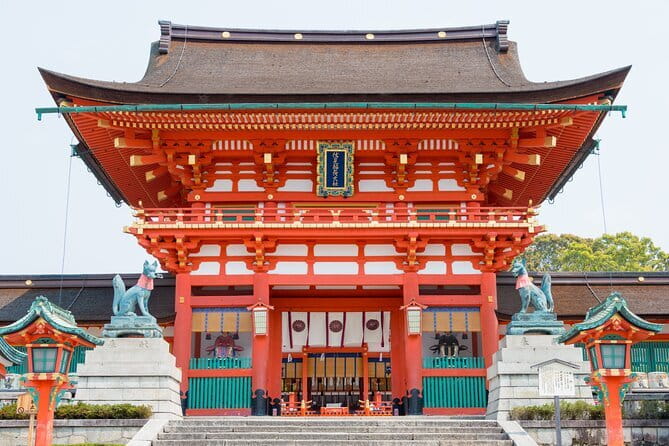
Byodo-in Temple is Uji’s main cultural prize. Its Phoenix Hall was built in 1053 and is pictured on the obverse side of Japan’s ¥10 coin. Seeing the hall reflected across its pond gives the temple a special visual appeal, even during a short visit.
Admission is ¥700 per person and is not included in the tour price. The scheduled temple visit lasts about 30 minutes. That is enough to enter, see the central view, and take photographs, but you may have little time for a slow inspection of the grounds or additional areas.
The temple is a strong reason to accept the tour’s fast pace. It offers something distinct from Todai-ji and Fushimi Inari: a refined temple setting tied directly to Japanese art, religion, and everyday currency. If you enjoy architecture, bring a little attention to the Phoenix Hall’s wing-like corridors rather than treating it as just another photo stop.
The short visit is also the main limitation. One guest felt that more temple time would have been better than spending as long in the matcha area. That is a fair point, especially if temples are your priority.
Byodoin Omotesando: Uji’s matcha heart
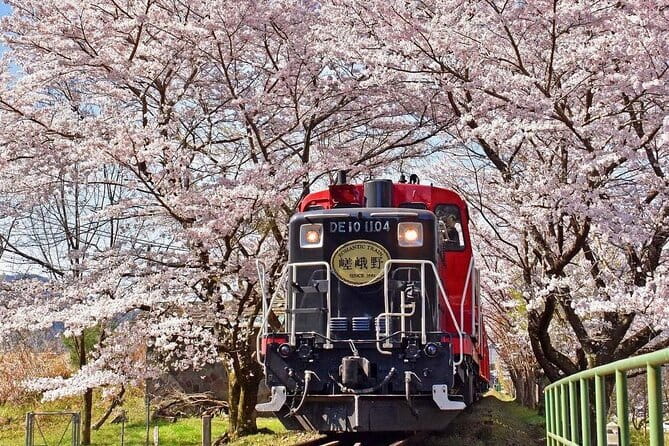
Byodoin Omotesando is a cobbled street lined with shops selling tea, sweets, and tea-related products. The tour allows about 40 minutes here, making it one of the better places to browse at your own pace.
This is where the experience becomes more local and sensory. You can look at different grades and forms of green tea, sample matcha-flavored items if available, and choose gifts without needing to search for the shopping area yourself. If you already love matcha, this may be your favorite part of Uji.
The street is also the stop most likely to feel too long if you care more about monuments than food. The time is not a formal tea ceremony, and the tour does not promise one. It is a shopping and walking interval in a tea-focused part of town.
Keep an eye on the clock. A tempting shop can make 40 minutes disappear, and the bus will not wait for a final purchase. If you are buying tea, pack it carefully in your day bag and keep your receipt.
Fushimi Inari’s Senbon Torii gates
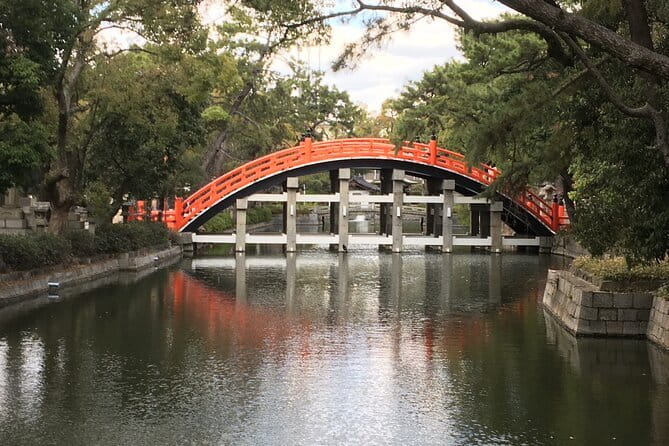
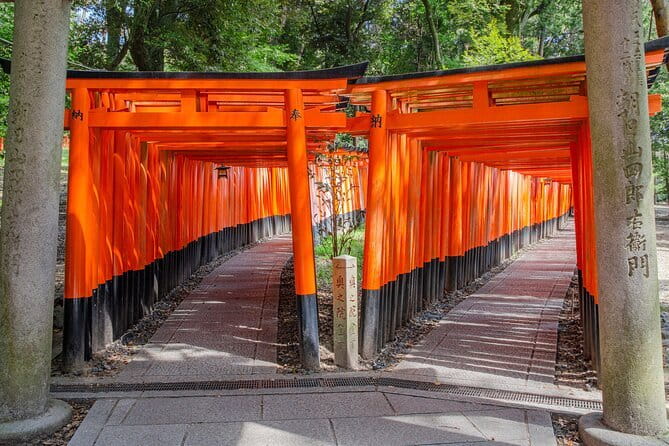
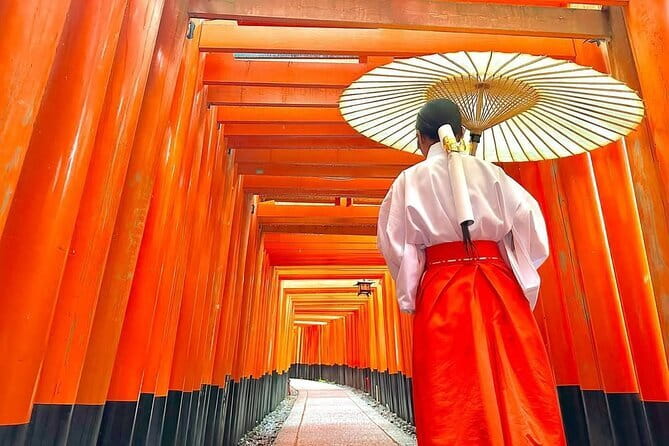
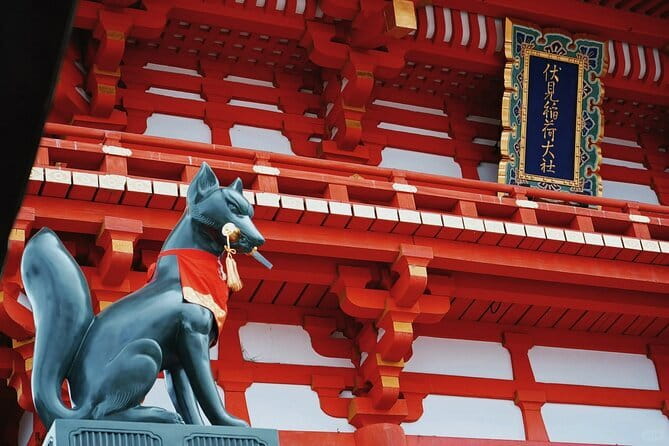
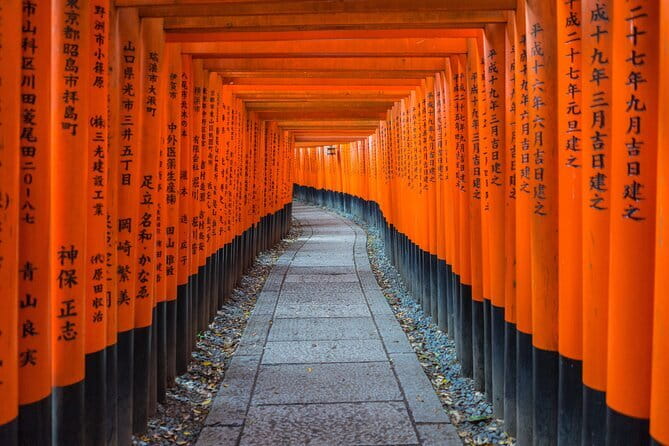
The final major stop is Fushimi Inari Taisha, head shrine of the roughly 30,000 Inari shrines in Japan. Inari is associated with rice, and the shrine is famous for its thousands of vermilion torii gates, known as Senbon Torii.
The planned visit is about 1 hour and 20 minutes, the longest single stop. That sounds generous, but the shrine complex extends up Mount Inari. You will need to choose your goal. You can focus on the lower shrine and the first tunnel of gates, or walk farther uphill and turn back before the meeting time.
This is a place where comfortable shoes matter. The path rises, crowds can slow you down, and stopping for photographs adds time. Do not assume you can reach the summit and return within the allotted visit. The practical approach is to set a turnaround time and leave a margin for finding the group.
Fushimi Inari is free to enter, which helps keep the total cost reasonable. It is also the most visually dramatic stop, but it can be crowded. The tour gives you access at a useful time of day within a larger route, not a private or quiet shrine visit.
Pace, transport, and the guide question
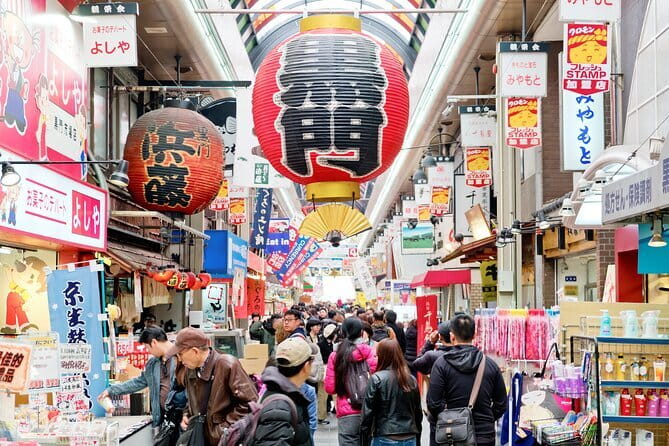
The air-conditioned vehicle is the backbone of this experience. It links places that would otherwise require several train and bus connections, and it gives you a place to sit between walks. For a day that covers Osaka or Kyoto, Nara, Uji, and Fushimi Inari, that convenience has real value.
The vehicle may carry up to 45 people. Large groups can slow boarding, crossings, head counts, and departures. Arrive early at the stated meeting point, and keep the guide’s contact instructions handy. Some guides use WhatsApp to send directions or help people regroup.
Guide quality appears to be the biggest variable. Amy was praised for excellent English, clear cultural explanations, snacks, photographs, and careful attention to the group. Amanda earned similar praise for sending instructions ahead of time and making meeting points easy to follow. Eve, Candy, John, Laura, Brian, and Cicy were also singled out for helpful or friendly service.
There were also complaints about late starts, limited English, rapid explanations, and information repeated in both English and Mandarin. That means you should treat the tour as partly escorted transport and partly independent sightseeing. The guide’s job is to get you to the right places and keep the day moving, but the depth of commentary may depend on the person leading your vehicle.
One practical point deserves emphasis: the bus does not have a bathroom. Use facilities when you have the chance at the park or temples. Lunch is also independent, with time provided rather than a meal included, so carry a little water and plan to eat efficiently.
Is $67 a fair price?
The base price is $67 per person. Add ¥800 for Todai-ji and ¥700 for Byodo-in, bringing the required admissions to ¥1,500 per person. Lunch is extra.
For that total, I think the tour offers fair value if you are staying in Osaka or Kyoto for a short time and want a broad introduction. You are paying for transport, route planning, and access to three well-known areas in one day. The ability to begin from either Osaka or Kyoto also helps fit the outing into different hotel plans.
The value drops if you already understand Japan’s rail system and want long visits at each site. Public transport may give you more control over how long you stay, where you eat, and how far you walk. The tour’s advantage is not maximum time. It is reduced planning.
Who should book this full-day route?
I would recommend it to first-time visitors, families, and anyone with only one open day for Kyoto-area sights. It works well if you want deer, a major temple, matcha shopping, a riverside walk, and torii gates without changing trains several times.
It suits people who can walk at a moderate pace and return on time. Strollers or large luggage should be declared when booking, and the operator asks you to give advance notice if you booked separately from relatives or friends who need to be in the same vehicle.
I would be cautious if you want detailed historical interpretation, a quiet shrine visit, or long shopping breaks. The schedule is ambitious, and the group size can make the day feel managed rather than personal.
Should you book it?
Book this tour if your priority is seeing the highlights efficiently. Nara’s deer, Todai-ji, Uji’s tea street and Byodo-in, and Fushimi Inari make a memorable combination, and the price is reasonable once you understand what is included.
Skip it if you would rather spend a full morning at one temple or explore Uji slowly. Also think twice if you need a bathroom on the bus or dislike large groups.
My best advice is simple: wear good shoes, budget for ¥1,500 in admissions, eat on the provided lunch break, and confirm the meeting point at every stop. With that mindset, this is a useful first taste of three very different Japanese destinations.
FAQ
How long does the tour last?
The tour lasts approximately nine hours.
Can I depart from Osaka or Kyoto?
Yes. The experience offers departure options from Osaka or Kyoto.
Are temple admission fees included?
No. Todai-ji costs ¥800 per person, and Byodo-in costs ¥700 per person. These fees are paid separately.
Is lunch included?
No. Lunch is not included, but time is provided for independent dining.
How large can the tour group be?
The tour can have a maximum of 45 participants.
Does the bus have a bathroom?
No. The bus does not have a bathroom, so use facilities during the scheduled stops.
Just added around Osaka
- Osaka Food Tour with 10 Classic Japanese Tastings & Drinks★ 5.0 · 38 reviews
- Osaka: Highlights & Hidden Gems Private Walking Tour★ 4.7 · 38 reviews
- Kyoto private tour (Shore excursion available from Osaka or Kobe port)★ 5.0 · 39 reviews
- Osaka Private Day Trip – Enjoy Your First-Time Visit to Osaka!★ 5.0 · 39 reviews
- Authentic SUSHI Course Cooking Class★ 5.0 · 39 reviews
- Osaka: Mind & Spirit Balance Temple Reiki Healing★ 5.0 · 41 reviews
- Osaka: Gluten-Free Ramen and Gyoza Cooking Class★ 5.0 · 42 reviews
- Osaka Afternoon Walking Tour with Osaka River Cruise★ 3.5 · 42 reviews
Full-Day, compared.
Mount Fuji Full-Day Private Tour from Tokyo (Customizable)
Read our review →
Hiroshima / Miyajima Full-day Private Tour with Government Licensed Guide
Read our review →

5 Top Highlights of Kyoto Full Day Bike Tour (E-bike option)
Read our review →
Full Day Biking Tour Exploring the Best of Kyoto
Read our review →
Mt. Fuji, Hakone Full-Day Private Tour with English Driver Guide
Read our review →Browse the lists this tour appears in