
Reviewed · RAMEN & NOODLE TOURS
Osaka: Gluten-Free Ramen and Gyoza Cooking Class
Rice flour changes the ramen game. This three-hour Osaka class lets you make gluten-free noodles and gyoza wrappers from scratch, then sit down to eat what you cooked. I like the rare chance to prepare two kinds of ramen, soy sauce and tomato, in one session. I also like the very small group, limited to four people, which gives chef Yuki room to explain each step and help with tricky dough and dumpling folds.
The main consideration is the setting. You are cooking in a residential-style Japanese home near Nukata Station, not a large professional school. That makes the class personal and relaxed, but it also means the experience depends on enjoying close quarters and a home-based format. At $103 per person, it is a serious price for a meal, but a fairer value if you want practical recipes, one-on-one help, and a food experience built around gluten-free cooking.
In This Review
- Key points at a glance
- Why this Osaka cooking class is unusual
- Arriving at the home near Nukata Station
- Starting with gluten-free ramen noodles
- Building soy sauce ramen from the broth up
- Trying tomato ramen, a modern Japanese variation
- Making rice-flour gyoza wrappers
- Folding and pan-frying the gyoza
- Sitting down to eat what you made
- Adding the optional sake pairing
- The teaching style and group atmosphere
- Who should book this experience
- Is $103 a fair price in Osaka?
- Should you book Yuki’s ramen and gyoza class?
- FAQ
- Where is the cooking class held?
- How long does the experience last?
- How much does the class cost?
- How many people can join?
- Is the class taught in English?
- Do I need cooking experience?
- What dishes will I make?
- Is the meal included?
- Is sake included?
- What should I wear?
- Can I cancel for a refund?
Key points at a glance
- Two ramen styles in one class: Make handmade rice-flour noodles for savory soy sauce ramen and less-common tomato ramen.
- Gluten-free from the beginning: Prepare both the ramen noodles and gyoza wrappers without wheat.
- A tiny class size: With no more than four participants, Yuki can give detailed help rather than simply demonstrate.
- Held in a Japanese home: The residential setting gives the class a friendly, local feel instead of a polished cooking-school atmosphere.
- A meal you actually prepare: You do not just watch a chef cook. You make the noodles, wrappers, filling, broth, and dumplings, then eat the results.
- Optional sake tasting: Three 45 ml servings are available, including chilled Junmai, chilled Junmai Ginjo, and warm Junmai.
Why this Osaka cooking class is unusual
Gluten-free visitors often have a hard time with Japanese food. Ramen noodles, gyoza wrappers, soy sauce, and shared cooking surfaces can all require careful attention. This class takes a different route: you begin with gluten-free ingredients and learn how the dishes are built.
That is useful even if you are not gluten-free. Rice flour behaves differently from wheat flour, and the class shows you how to work with that difference instead of treating it as a simple substitute. You leave with techniques that may help you recreate Japanese dishes at home, not just a pleasant memory and a full stomach.
The class is taught by Yuki, a professional chef with more than 10 years of culinary experience. She has also taught international participants for over a year, and the class is conducted in English. Her teaching style is patient and clear, which matters when you are handling unfamiliar dough or trying to fold your first gyoza.
The tone is friendly rather than formal. You can ask questions, hear stories about Japanese cooking, and work at a pace suited to your group. That personal attention is one of the strongest reasons to choose this class over a larger demonstration.
More Cooking Classes in Osaka
- Osaka: Ramen and Gyoza Cooking Class in Dotonbori
★ 5.0 · 378 reviews - Osaka Cooking Class: Okonomiyaki &Japanese cuisines experience
★ 5.0 · 261 reviews - Ramen and Gyoza Cooking Class in Osaka
★ 5.0 · 202 reviews
Arriving at the home near Nukata Station
The address is 4-19 Nukata-cho, Osaka, about a five-minute walk from Nukata Station. The venue is in a quiet neighborhood and has a welcoming sign at the entrance. Detailed directions are sent after booking, which should make the final walk easier.
You should allow a little mental space for the change in setting. This is not a restaurant with a broad sign and a busy front counter. It is a charming residential-style building with a clean, inviting feel. That is part of the appeal, since you are entering a more personal side of Osaka, but it may feel less straightforward than meeting at a major station or hotel.
Wear comfortable clothes suitable for cooking. You do not need previous cooking experience, and the class is designed for beginners as well as more confident home cooks. Still, come ready to work with your hands. This is not a sit-back tasting session.
The small group limit of four is especially helpful here. A cramped class can make dough work frustrating, but a small group gives you a better chance to see Yuki’s hand movements and ask for help when something goes wrong.
Starting with gluten-free ramen noodles
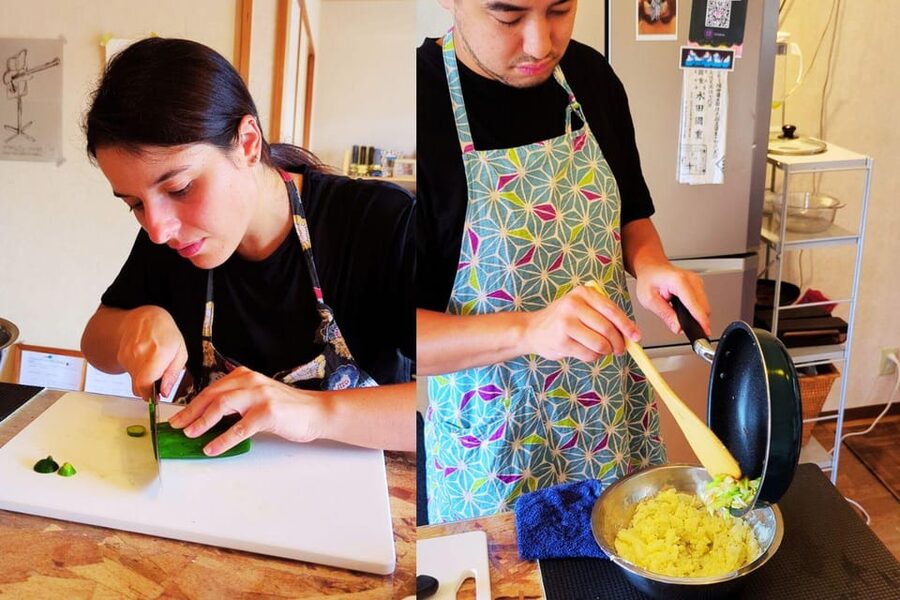
The class begins with an introduction to the ingredients, tools, and Japanese cooking methods you will use. Yuki also explains how she developed recipes for dishes that are normally made with wheat.
You then make the ramen noodles from rice flour. The goal is a chewy texture, which is one of the harder parts of making gluten-free noodles. Wheat gluten naturally gives noodles stretch and resilience, so learning how to create a satisfying bite with rice flour is more than a basic ingredient swap.
This is likely to be the most useful part of the class for anyone hoping to cook at home. You see the process step by step and receive recipes and tips afterward. The instructions are meant to be practical, not simply a chef’s performance that is hard to repeat in your own kitchen.
Do not expect instant perfection. Handmade noodles can take attention, and the texture is important. The advantage of the four-person format is that Yuki can correct your technique as you go. That patient guidance appears repeatedly in the strongest feedback about the class.
Building soy sauce ramen from the broth up
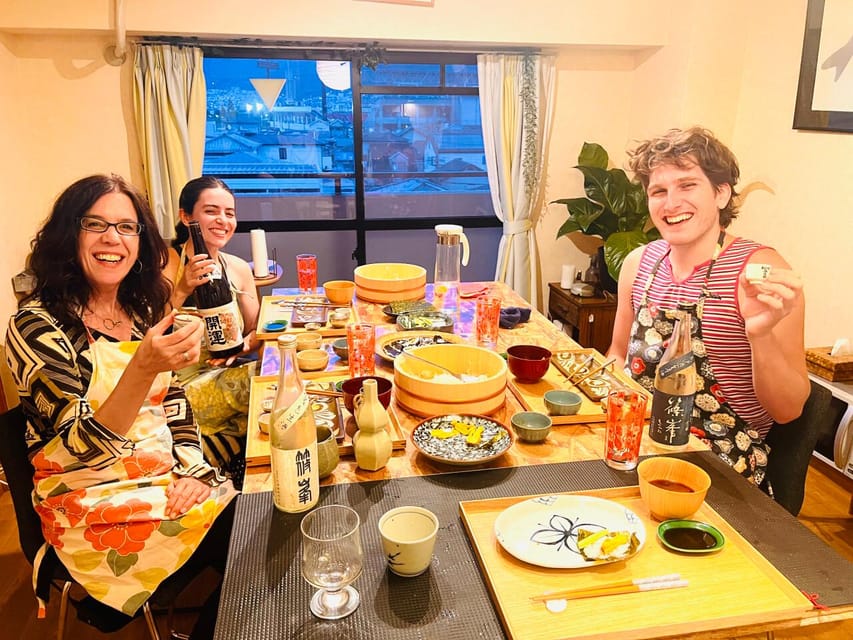
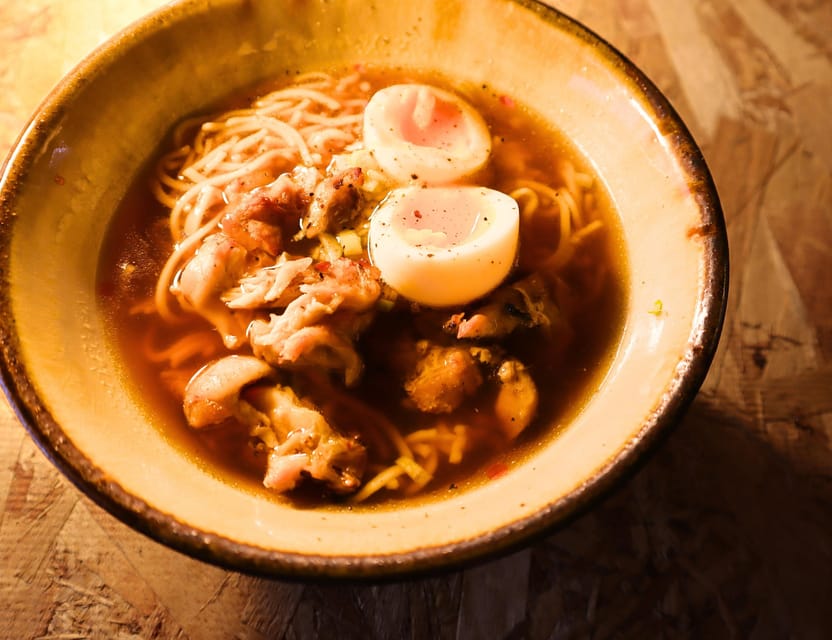
Once the noodles are under control, the class turns to soy sauce ramen. You prepare a savory soy-based broth and pair it with the noodles you made.
This part connects the handmade component with a familiar Japanese flavor profile. Soy sauce ramen is classic, satisfying, and easy to understand as a first bowl. The broth gives you a clear lesson in balance: seasoning should support the noodles rather than bury them.
The value here is not just the final bowl. Yuki explains traditional Japanese flavoring and the small choices that affect the finished dish. If you already cook at home, you may appreciate this more than a simple recipe sheet, since timing and proportion often matter as much as the ingredient list.
For anyone with celiac disease or a serious allergy, you should still discuss your needs before booking. The class is presented as gluten-free, but the supplied information does not spell out separate facilities, cross-contact procedures, or ingredient brands. Those details are worth confirming directly if even trace exposure is a concern.
More Ramen Tours in Osaka
- Osaka: Five Must-See Highlights Walking Tour & Ramen Lunch
★ 4.7 · 411 reviews - Walking Tour of Osaka’s 5 Must-See Sights, with Ramen for Lunch
★ 5.0 · 158 reviews - Cooking Ramen&Gyoza/KatsuCurry/Bento/Okonomiyaki+Store Tour@Osaka
★ 5.0 · 138 reviews - Three Types of Ramen Cooking Class in Osaka
★ 5.0 · 119 reviews
Trying tomato ramen, a modern Japanese variation
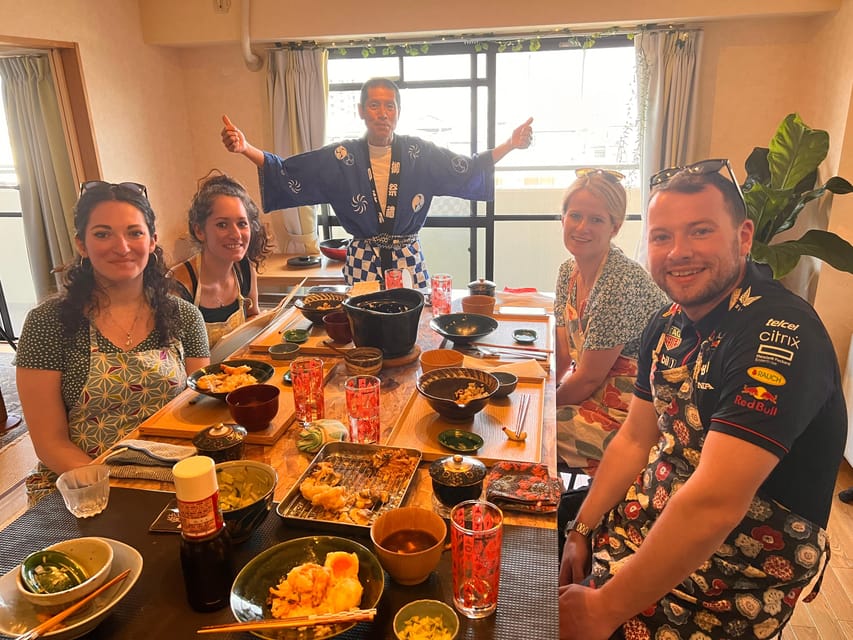
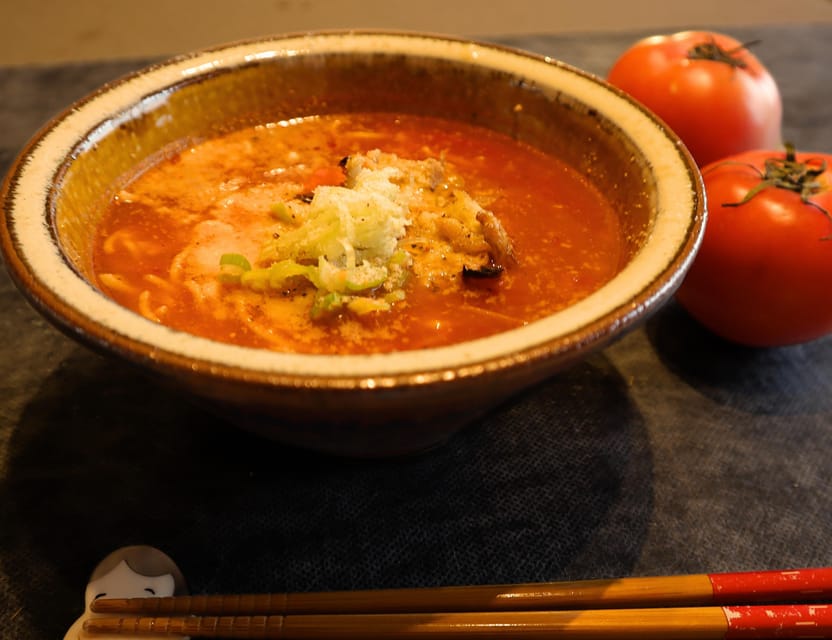
The second ramen is tomato ramen, a tangy and more modern variation. It is described as less common in Japan, which gives the class a welcome twist instead of repeating the same flavor twice.
Tomato ramen also helps show how Japanese cooking can adapt. You begin with a familiar ramen structure, then move toward a fresher, sharper flavor. Having two bowls in one class lets you compare how the same handmade noodles work with different broths.
This is a good choice for curious eaters who want more than a standard Japanese cooking lesson. You are not simply learning one famous dish. You are seeing how a traditional format can be changed without losing its identity.
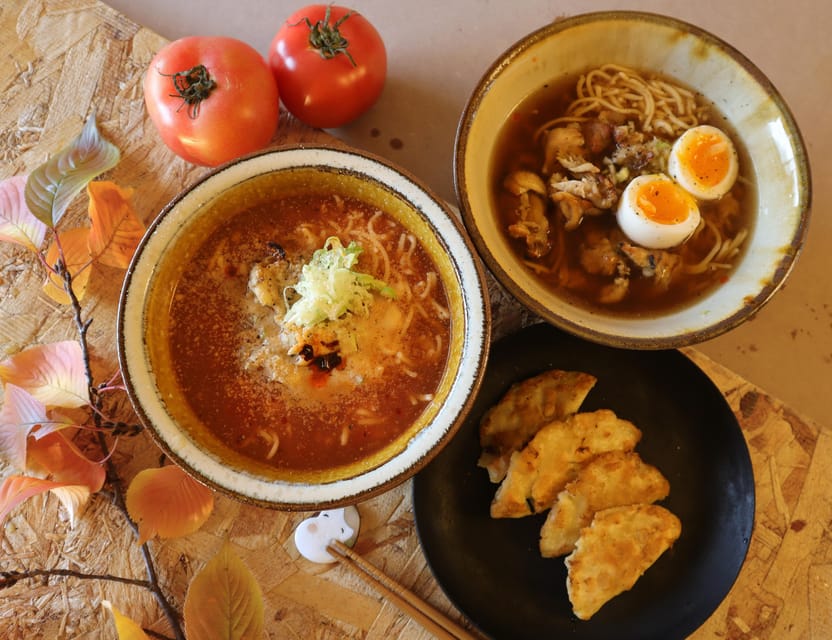
There is one practical issue: two types of ramen plus gyoza make for a substantial amount of food. Come hungry, as requested, but pace yourself. The class runs for three hours, so the meal comes after a fair amount of preparation rather than all at once.
Making rice-flour gyoza wrappers
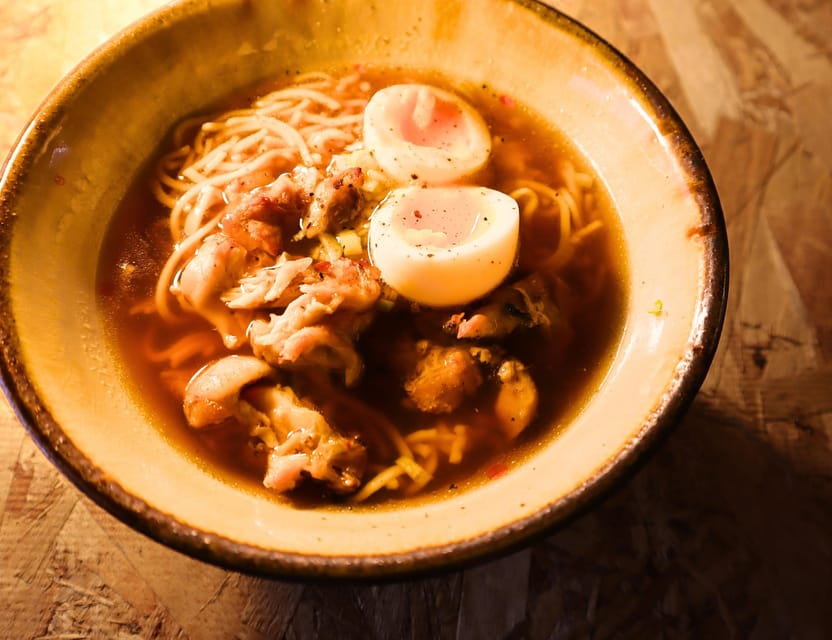
The gyoza section begins with wrappers made from rice flour. This is another strong feature for gluten-free cooks, since dumpling wrappers are usually wheat-based and difficult to replace with a store-bought option.
Working with wrapper dough can be fiddly. You need enough structure to hold the filling, but the wrapper must remain flexible enough to fold. In a larger class, this could become a rushed demonstration. Here, Yuki’s direct instruction should make the process more manageable.
You then prepare a savory filling and portion it into the wrappers. The class gives you the full process, from dough to finished dumpling, instead of treating the wrappers as a minor detail.
That makes the lesson useful beyond Osaka. If you can source rice flour at home, the recipes and tips may help you repeat the dish. You will also understand why the homemade version may need a little practice before it looks like a restaurant dumpling.
Folding and pan-frying the gyoza
Folding gyoza is one of the most enjoyable hands-on tasks in the class, but it can also be the part where beginners feel clumsy. Yuki teaches you how to shape the dumplings and create the folds. The aim is a crisp outside with a tender interior.
The final cooking method is pan-frying. You learn how to achieve the golden base that gives gyoza its appeal. The contrast between the crunchy underside and soft filling is the payoff for all that wrapper work.
I like that this section has a clear, visible result. Even if your folds are not identical, you can see how the cooking technique affects the dumplings. The class is not asking you to produce perfect restaurant pieces. It is teaching you a repeatable method and giving you a chance to enjoy the process.
The gyoza also adds variety to the meal. After working through noodles and broth, folding dumplings changes the pace and keeps the three hours active.
Sitting down to eat what you made
After the cooking is finished, you gather in a cozy dining area and eat your ramen and gyoza. This is more satisfying than being served a prepared meal because you understand the work behind each bowl and dumpling.
The meal is included in the price, along with the instructor, hands-on cooking, recipes, and tips. You should not think of the $103 as a cheap lunch. You are paying for three hours of instruction, ingredients, a small group, a full meal, and access to a chef in her home.
For a pair or a small group who values food instruction, that can be good value. It is especially worthwhile if gluten-free Japanese cooking is difficult to find elsewhere. If you only want to eat ramen and gyoza, a restaurant will cost less and take less time.
The dining portion also gives Yuki a chance to explain the flavors and discuss how sake pairs with the dishes. It turns the meal into part of the lesson rather than a rushed finish.
Adding the optional sake pairing
The optional sake pairing includes three 45 ml servings: chilled Junmai, chilled Junmai Ginjo, and warm Junmai. The selection gives you three different ways to consider sake with the food.
The chilled servings offer a crisp comparison, while the warm Junmai provides a different style alongside the savory ramen and gyoza. Yuki guides you through how the sake works with the dishes, adding a small cultural lesson to the meal.
This option is best for adults who already enjoy sake or want a structured introduction. It is not necessary to enjoy the class, and the food preparation remains the main event. Since the supplied details do not state the extra cost, confirm the price when booking.
The teaching style and group atmosphere
The most praised part of this class is Yuki herself. Her patience, kindness, clear explanations, and ability to work with different skill levels come through again and again. That matters more here than fancy equipment or a grand kitchen.
Yuki is the sole instructor, so the atmosphere stays personal. She can answer questions, explain a technique again, and keep the cooking moving. Several participants specifically valued the mix of social conversation and useful instruction.
The English-language teaching is another practical advantage. You can follow the recipes and ask about Japanese ingredients without relying on translation. The class also offers a chance to hear about Japanese cooking from someone who works with it professionally.
The setting will suit you if you enjoy meeting people in a relaxed environment. It may not suit you if you prefer a highly polished school with multiple stations, formal demonstrations, or a large menu of options. The charm is in the home setting and the direct contact with Yuki.
Who should book this experience
I would put this class near the top of the list for:
- People who need or prefer gluten-free Japanese food
- Beginners who want close instruction
- Couples and small groups seeking a social food activity
- Home cooks who want recipes they can repeat
- Visitors who enjoy local settings more than large commercial venues
- Adults interested in adding sake to a Japanese meal
It is also suitable for experienced cooks, though you should not expect advanced culinary training. The focus is on clear methods, traditional flavoring, and making dishes successfully in a friendly setting.
The activity is not suitable for people over 95, according to the stated restrictions. No other prior cooking requirement is listed. Comfortable clothing is the only specific item you need to bring.
Free cancellation is available up to 24 hours before the start time for a full refund, and you can reserve while paying later. Starting times depend on availability, so check the schedule before building the class into a tightly timed day.
Is $103 a fair price in Osaka?
The price makes sense only if you value the instruction as much as the meal. You are getting three hours, a group capped at four, a professional chef, several dishes made from scratch, recipes, and the food you prepare.
The gluten-free focus adds real value. Japanese cuisine can be difficult to navigate when you must avoid wheat, and this class gives you more than reassurance at a restaurant. It teaches you how to make noodles and wrappers yourself.
Still, the price is not a bargain in the usual food-tour sense. If your main goal is a low-cost meal, choose a restaurant. If your goal is a practical skill, a personal connection, and a meal that you helped create, the cost is easier to justify.
Should you book Yuki’s ramen and gyoza class?
Book it if you want a hands-on Osaka food experience with a strong gluten-free focus. The combination of two ramen styles, handmade wrappers, pan-fried gyoza, and a small home setting gives the three hours plenty of substance.
I would be especially keen to book if I had celiac concerns, enjoyed cooking, or wanted recipes to use after Japan. Just confirm cross-contact procedures and ingredient details before paying if your dietary needs are strict.
Skip it if you want a quick tasting, a large professional kitchen, or the cheapest possible ramen meal. For everyone else, the small class size and Yuki’s patient teaching make this a thoughtful use of an Osaka afternoon.
FAQ
Where is the cooking class held?
The class is held at 4-19 Nukata-cho, Osaka, about a five-minute walk from Nukata Station.
How long does the experience last?
The cooking class lasts three hours.
How much does the class cost?
The listed price is $103 per person.
How many people can join?
The group is limited to four participants.
Is the class taught in English?
Yes. English is the listed teaching language.
Do I need cooking experience?
No. Prior cooking experience is not required.
What dishes will I make?
You will make gluten-free ramen noodles, soy sauce ramen, tomato ramen, gyoza wrappers, gyoza filling, and pan-fried gyoza.
Is the meal included?
Yes. You eat a full meal made from your cooking, and recipes and tips are included.
Is sake included?
An optional pairing is available with three 45 ml servings: chilled Junmai, chilled Junmai Ginjo, and warm Junmai. The supplied details do not state its price.
What should I wear?
Wear comfortable clothes suitable for cooking.
Can I cancel for a refund?
You can cancel up to 24 hours in advance for a full refund. Reserve now and pay later is also available.
Just added around Osaka
- Osaka Food Tour with 10 Classic Japanese Tastings & Drinks★ 5.0 · 38 reviews
- Osaka: Highlights & Hidden Gems Private Walking Tour★ 4.7 · 38 reviews
- Kyoto private tour (Shore excursion available from Osaka or Kobe port)★ 5.0 · 39 reviews
- Osaka Private Day Trip – Enjoy Your First-Time Visit to Osaka!★ 5.0 · 39 reviews
- Kyoto & Nara & Uji: Full Day Sightseeing Tour from Osaka or Kyoto★ 4.5 · 39 reviews
- Authentic SUSHI Course Cooking Class★ 5.0 · 39 reviews
- Osaka: Mind & Spirit Balance Temple Reiki Healing★ 5.0 · 41 reviews
- Osaka Afternoon Walking Tour with Osaka River Cruise★ 3.5 · 42 reviews
Ramen & Noodle Tours, compared.
Ramen Cooking Class at Ramen Factory in Kyoto
Read our review →
Eat and Drink Like a Local: Tokyo Ueno Food Tour-Taverns&Ramen
Read our review →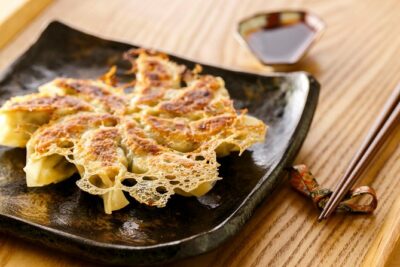
Ramen & Gyoza Cooking Class in Tokyo with Local Supermarket Visit
Read our review →
Ramen Cooking Class at a Ramen Factory with Souvenir
Read our review →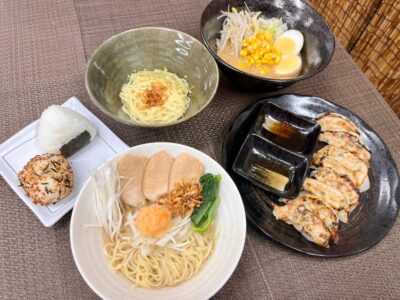
Five Must-See Highlights Walking Tour & Ramen Lunch
Read our review →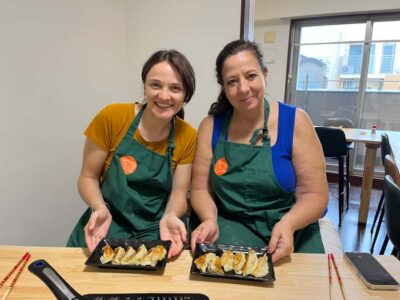
Browse the lists this tour appears in