
Reviewed · COOKING CLASSES
Osaka Cooking Class: Okonomiyaki &Japanese cuisines experience
Osaka puts dinner in your hands. This friendly cooking class takes you from Noda Station to Yayo’s home kitchen, where you learn to make beloved Japanese dishes and eat the results. I like the small maximum of eight people, and I like the personal teaching style, with Yayo explaining not only what to do, but why each ingredient matters. The main drawback is the compact home setting, which may feel close if you prefer a polished cooking school.
The 2.5-hour class costs $104.13 per person, including ingredients, utensils, and the meal you prepare. You can add sake and beer tasting, and vegetarian or pescatarian arrangements are available if requested when booking. Arrive early: more than 10 minutes late can mean missing the class with no refund.
In This Review
- Key points at a glance
- Starting outside Noda Station
- Miso soup starts with small details
- Turning batter into takoyaki
- Okonomiyaki, Osaka’s filling centerpiece
- Omelet, taiyaki, and matcha add variety
- Yayo’s teaching style is part of the meal
- Optional sake and beer tasting
- Is $104.13 a fair price?
- Who will enjoy this Osaka cooking class?
- Practical details before you book
- Should you book Cooking Class YAYO?
- FAQ
- Where does the cooking class meet?
- How long does the class last?
- What dishes will I cook?
- Is the class taught in English?
- Are vegetarian and pescatarian options available?
- Is sake included?
- What happens if I arrive late?
Key points at a glance
- Cook Osaka classics at home: Prepare okonomiyaki, takoyaki, miso soup, and other Japanese favorites with hands-on help.
- Meet Yayo in her own kitchen: The home setting gives the class a warm, personal feel rather than a formal school atmosphere.
- Expect plenty of food: The meal can include miso soup, Japanese omelet, savory pancakes, octopus balls, taiyaki, and matcha.
- Keep the group small: With no more than eight people, you get a better chance to handle ingredients and ask questions.
- Add a local drink pairing: Sake and beer tasting is available as an optional extra.
- Plan around the meeting point: You meet outside Noda Station and return there after the class.
Starting outside Noda Station
The class begins outside Noda Station in Osaka’s Fukushima Ward, at 1 Chome-1 Ohiraki. You meet your English-speaking instructor there and continue to the cooking studio, which is Yayo’s home.
That meeting point matters. You do not need to arrange a hotel transfer, and the location is near public transportation. Still, Osaka has several stations with similar names, so check the exact station and address before setting out. The instructions ask you to arrive on time, and this is not a casual drop-in activity. If you arrive more than 10 minutes late, participation cannot be guaranteed and a refund is not provided.
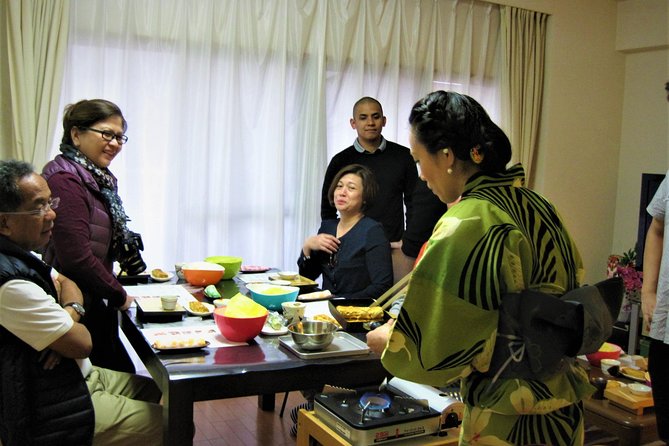
The home setting is central to the character of the class. You are not simply standing behind a demonstration counter while an instructor does the work. You enter a local residence, cook in a small space, and share the meal with the other people booked that day. That can feel more genuine and relaxed, though it also means you should not expect a large commercial kitchen or much spare room.
The group limit is eight. Some sessions may be smaller, and couples or solo participants can find themselves with especially close instruction. A solo booking has even resulted in what felt like a private lesson, while other classes have brought together couples and families from different countries. The exact group size depends on the date you choose.
More Cooking Classes in Osaka
- Osaka: Ramen and Gyoza Cooking Class in Dotonbori
★ 5.0 · 378 reviews - Ramen and Gyoza Cooking Class in Osaka
★ 5.0 · 202 reviews - Osaka Sake Tasting with Takoyaki Cooking
★ 5.0 · 156 reviews
Miso soup starts with small details
The cooking begins with miso soup, a useful choice because it shows how Japanese food often depends on quiet, careful steps. The soup may look simple, but the strength of the stock, the timing of the miso, and the balance of the ingredients all shape the final bowl.
Yayo explains the method as you work, rather than leaving you to copy a recipe without context. One especially useful lesson is the preparation of dashi, the savory stock used in many Japanese dishes. Several class participants have found that the process is easier than expected, which is good news if you want to repeat these recipes at home.
This part of the class suits cooks at almost any level. You do not need advanced skills, and the instructor guides you through the process. At the same time, you get practical information that goes beyond simply mixing ingredients. Yayo also explains the cultural background of the dishes and how ingredients can vary in different parts of Japan.
For me, that context gives the soup more value than a basic recipe card. You begin to see how everyday Japanese cooking uses stock, fermented miso, eggs, cabbage, seafood, and small garnishes to create meals with plenty of flavor without complicated equipment.
Turning batter into takoyaki
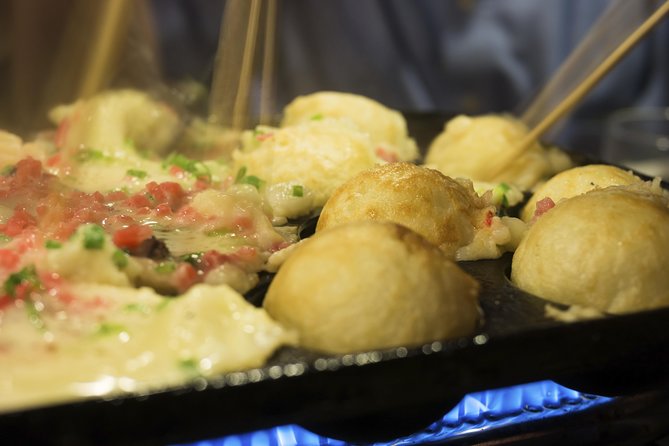
Next comes takoyaki, Osaka’s famous round snack made from wheat-flour batter and traditionally filled with octopus. The challenge is shaping the soft mixture into neat balls as it cooks, so this is one of the most hands-on sections of the lesson.
You learn how the batter is handled and how the filled pieces are cooked into their familiar shape. Takoyaki looks easy when an experienced cook turns it, but first attempts can be messy. That is part of the fun, and Yayo’s guidance helps keep the process manageable.
The class is designed so you participate without feeling that every mistake will ruin lunch. Preparation is organized in advance, but you still get to make the dishes yourself. That balance is important. You spend enough time cooking to understand the technique, while the meal remains enjoyable rather than becoming a stressful kitchen test.
Takoyaki also gives you a direct connection to Osaka’s food identity. It is casual, filling, and closely linked with the city’s everyday eating culture. Making it in a local home helps you experience the dish as more than a snack picked up from a street stall.
Okonomiyaki, Osaka’s filling centerpiece
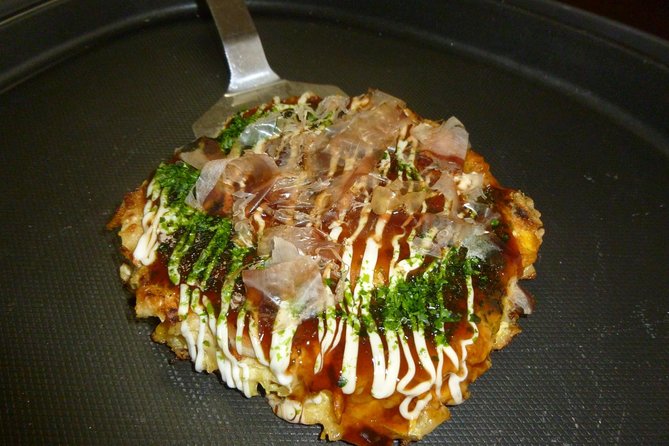
The main event for many people is okonomiyaki, a savory pancake built around cabbage, egg, flour, pork, and dried bonito flakes. The name is often explained as meaning something like cooked as you like it, and the dish has plenty of room for variations.
Here, you learn the basic structure and cooking method, along with tips that make it possible to repeat the dish at home. The cabbage gives the pancake bulk, while the egg and flour hold everything together. Pork and bonito flakes add savory depth, and the finished result makes a substantial meal.
This is where the class earns its price for anyone who wants more than a one-time food tasting. You leave with a clearer sense of how to make a recognizable Japanese dish using ingredients and equipment that may be available outside Japan. The instruction also helps remove some of the mystery around Japanese cooking. You do not need to be a professional cook, and the class is arranged so that success is quite likely.
The amount of food deserves attention. You prepare several dishes rather than one small sample, and the meal can be so generous that you may have leftovers. Arrive hungry. A light breakfast or lunch before the class is sensible, particularly if you also choose the drink pairing.
A completely different kind of day out in Osaka:
- Osaka Go Karting Tour with Funny Costume
★ 5.0 · 2,658 reviews - Osaka Castle: Museum and Tower Entry Ticket
★ 4.5 · 2,380 reviews - Osaka: Shinsekai Food Tour with 13-15 Dishes at 5 Eateries
★ 4.8 · 2,204 reviews - Osaka Food Tour: 13 Dishes at 5 Local Eateries
★ 5.0 · 2,149 reviews
Omelet, taiyaki, and matcha add variety
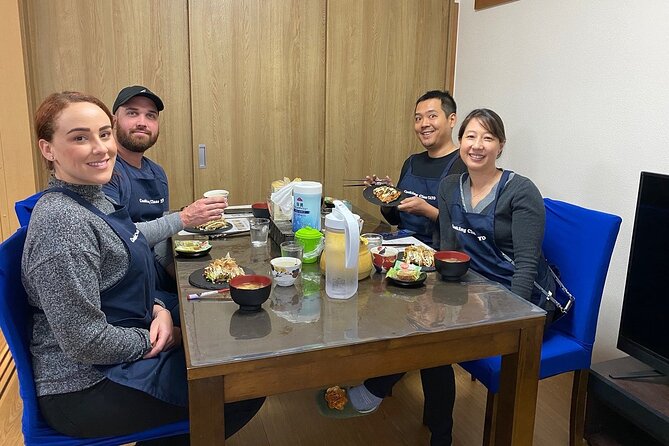
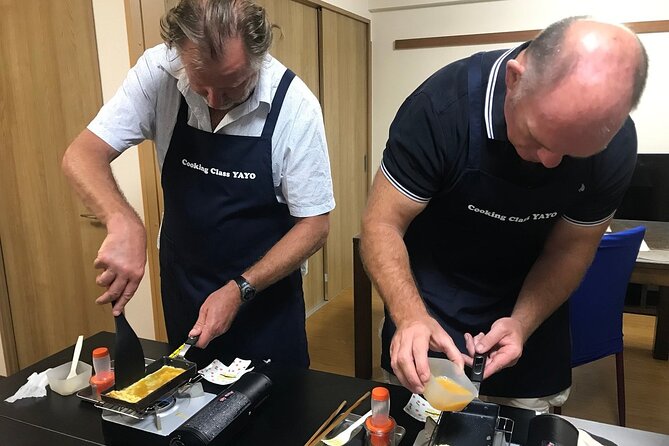
The central class description highlights miso soup, takoyaki, and okonomiyaki, but the full food experience can include additional Japanese staples. Past sessions have included dashimaki tamago, a rolled Japanese omelet, along with taiyaki and matcha tea at the end.
Dashimaki tamago adds a different cooking lesson from the pancakes and takoyaki. Instead of working with a large mixture, you practice building a soft, layered omelet. It is a useful contrast and shows how Japanese meals can include delicate egg dishes alongside stronger savory foods.
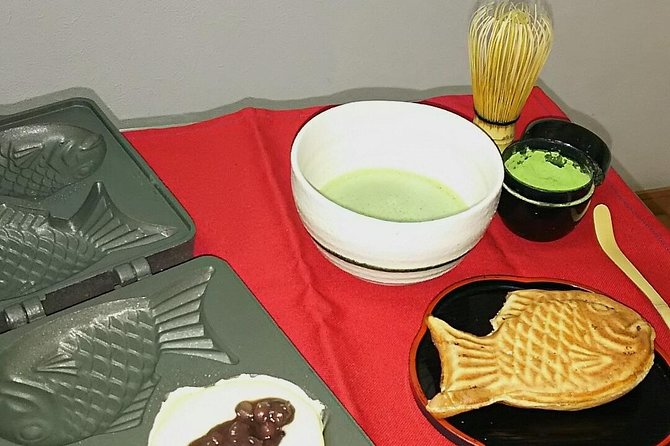
Taiyaki closes the meal on a sweet note. This fish-shaped cake is a familiar Japanese treat, and trying it after the savory dishes gives the class a pleasant finish. Matcha tea follows, creating a simple pause before you leave.
Because the available information describes the menu in slightly different ways, you should treat the extra dishes as part of the possible class format rather than a guaranteed list for every date. The core focus is Japanese cooking, with okonomiyaki, takoyaki, and miso soup specifically identified. The class may also offer the omelet, taiyaki, matcha, snacks, or other thoughtful additions.
Yayo’s teaching style is part of the meal
The strongest reason to choose this class is Yayo herself. She teaches in clear English, answers questions, and creates an atmosphere where you can relax around other people. Her style is described as patient, funny, warm, and attentive, with plenty of room for conversation while the food cooks.
That personal approach makes a difference in a small home kitchen. You can ask why a technique works, how a dish changes between regions, or how to make it again after returning home. Yayo also shares stories about Japanese daily life and her mother’s ingredients, adding a family connection to the food.
Small touches help make the class memorable. Some participants have received printed instructions in their own language, homemade treats, chopsticks, paper cranes made with flags from their home countries, or other small gifts. These extras are not the main reason to book, and they may vary, but they show the care Yayo puts into the welcome.
The home setting also encourages a more social evening. You might cook with a couple, a family, or people visiting from another country. If you prefer a quiet private lesson, a small booking could suit you, but there is no promise that every session will be private.
Optional sake and beer tasting
After the cooking, you sit down to eat what you made. The class includes lunch or dinner, depending on the scheduled session, and the food is the heart of the activity.
You can add a sake and beer pairing for an additional local drink component. This is a good choice if you want to learn how Japanese drinks fit with the meal, but it is not required. The standard class already includes the cooking and the food, while extra drinks and food are not included unless selected.
If you choose the pairing, pace yourself. The class includes several substantial dishes, and the food itself can be more filling than expected. Anyone who does not drink can simply enjoy the meal, tea, and conversation.
Gratuities are optional. Hotel pickup and drop-off are not included, so you handle your own transport to and from Noda Station.
Is $104.13 a fair price?
At $104.13 per person, this is not the cheapest way to eat okonomiyaki in Osaka. A restaurant meal or market snack will cost much less. The comparison is not quite fair, though, because this price includes a 2.5-hour lesson, an English-speaking instructor, ingredients, utensils, and a full meal.
You are paying for participation and access to a local home, not just the food. If you want to learn dashi, make takoyaki without fear, understand the structure of okonomiyaki, and take home methods you can use again, the price is reasonable. The optional drink pairing gives you another way to tailor the cost.
The value is best for people who enjoy cooking, food culture, and conversation. It is less compelling for someone who wants a quick Osaka meal or a formal culinary qualification. The class is about practical home cooking and hospitality, not restaurant-level training.
The high satisfaction rate and 5 out of 5 rating across 261 reviews point to a consistently well-received experience, but I would still keep expectations sensible. The studio is small, the class is held in a residence, and the exact menu or added gifts may vary. Those are not flaws for most people, but they are useful facts when deciding what sort of activity you want.
Who will enjoy this Osaka cooking class?
I would recommend it most strongly to:
- Solo visitors who want a social activity with personal instruction
- Couples seeking a relaxed food experience
- Families with older children who enjoy hands-on tasks
- First-time visitors who want an introduction to Osaka food
- Home cooks who want repeatable Japanese recipes
- People who enjoy meeting local hosts rather than attending a large group tour
It is also a smart choice early in a Japan trip. Learning about dashi, miso, cabbage, bonito flakes, and Japanese omelet techniques can make later restaurant meals easier to understand. You may also return home with the confidence to try okonomiyaki or miso soup in your own kitchen.
You should think twice if you need a large, modern cooking studio, a guaranteed private booking, or a fixed menu with no variation. People with strict dietary needs should ask about arrangements before booking. Vegetarian and pescatarian options are available upon request at the time of booking, but you should not wait until the class begins to raise the issue.
Practical details before you book
The class lasts about two hours and 30 minutes. It begins and ends at the meeting point outside Noda Station, and no hotel transfer is provided.
Mobile tickets are available, and confirmation is provided when you book. Adult pricing applies to everyone except children age two and under. Since the cooking studio is small, only people with confirmed bookings can join.
Free cancellation is available up to 24 hours before the local start time. Cancelling or changing the booking less than 24 hours ahead does not qualify for a refund, so double-check your Osaka schedule before committing.
Bring an appetite and allow time to find the meeting point. The most useful preparation is simple: arrive early, tell the provider about vegetarian or pescatarian needs when booking, and decide in advance if the sake and beer pairing interests you.
Should you book Cooking Class YAYO?
Yes, if you want a warm, personal introduction to Osaka food and like the idea of making a full meal rather than watching a demonstration. The combination of okonomiyaki, takoyaki, miso soup, possible omelet and taiyaki, and Yayo’s patient instruction gives you plenty to do in a short afternoon or evening.
I would not book it for a sleek culinary-school setting or a guaranteed private tour. Book it for the home atmosphere, the generous portions, the practical recipes, and the chance to sit down with food you helped prepare. If that sounds like your kind of Osaka memory, this class is worth making room for.
FAQ
Where does the cooking class meet?
The class meets outside Noda Station in Osaka’s Fukushima Ward, at 1 Chome-1 Ohiraki, Fukushima Ward, Osaka, 553-0007, Japan.
How long does the class last?
The cooking class lasts approximately two hours and 30 minutes.
What dishes will I cook?
The class focuses on okonomiyaki, takoyaki, and miso soup. Depending on the session, the food experience may also include dashimaki tamago, taiyaki, matcha tea, snacks, or other Japanese dishes.
Is the class taught in English?
Yes. An English-speaking instructor leads the class.
Are vegetarian and pescatarian options available?
Yes. Vegetarian and pescatarian options are available if you request them when booking.
Is sake included?
Local sake tasting is optional and must be selected as an add-on. Extra food and drinks are not included in the standard price.
What happens if I arrive late?
You should arrive on time. If you arrive more than 10 minutes late, participation cannot be guaranteed, and you will not receive a refund.
Just added around Osaka
- Osaka Food Tour with 10 Classic Japanese Tastings & Drinks★ 5.0 · 38 reviews
- Osaka: Highlights & Hidden Gems Private Walking Tour★ 4.7 · 38 reviews
- Kyoto private tour (Shore excursion available from Osaka or Kobe port)★ 5.0 · 39 reviews
- Osaka Private Day Trip – Enjoy Your First-Time Visit to Osaka!★ 5.0 · 39 reviews
- Kyoto & Nara & Uji: Full Day Sightseeing Tour from Osaka or Kyoto★ 4.5 · 39 reviews
- Authentic SUSHI Course Cooking Class★ 5.0 · 39 reviews
- Osaka: Mind & Spirit Balance Temple Reiki Healing★ 5.0 · 41 reviews
- Osaka: Gluten-Free Ramen and Gyoza Cooking Class★ 5.0 · 42 reviews
Cooking Classes, compared.
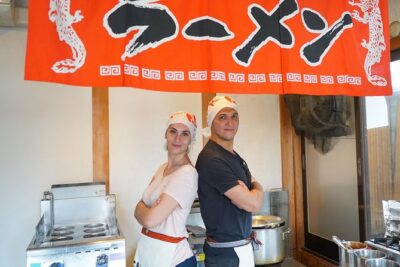
Ramen Cooking Class at Ramen Factory in Kyoto
Read our review →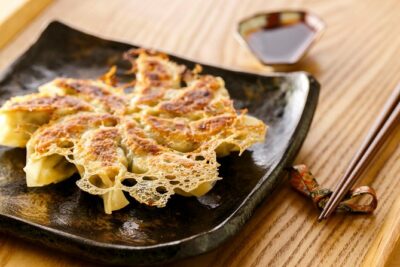
Ramen & Gyoza Cooking Class in Tokyo with Local Supermarket Visit
Read our review →
Ramen Cooking Class at a Ramen Factory with Souvenir
Read our review →
Japanese Washoku Bento Small Group Cooking Class
Read our review →

Easy Ramen Cooking Experience in Kabukicho, Shinjuku
Read our review →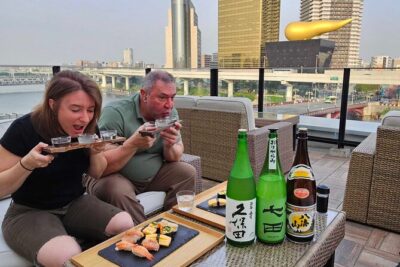
Ramen and Sushi Cooking Class with Sake Pairing Set in Tokyo
Read our review →Browse the lists this tour appears in