
Reviewed · RAMEN & NOODLE TOURS
Ramen & Gyoza Cooking Class in Tokyo with Local Supermarket Visit
Tokyo tastes better when you make lunch yourself. This 2.5-hour class brings you into YUCa’s home kitchen in the Nishiogu area, where you learn to prepare ramen and gyoza with a friendly local teacher. I like the warm, personal setting and the chance to see a quieter side of Tokyo away from the main tourist districts. I also like that the recipes are approachable enough to recreate at home. The main thing to watch is the level of hands-on cooking: with one kitchen and up to seven people, parts of the class are demonstration-style rather than fully individual.
YUCa is the host and teacher, and her welcoming personality is a big part of the experience. I also appreciate the optional supermarket visit, which can help you understand Japanese ingredients in their everyday setting. Since the market visit is optional and has not always taken place, you should confirm that it will be available if it is a major reason for booking.
In This Review
- Key points at a glance
- Reaching YUCa’s Nishiogu kitchen
- 10:00 to 10:30, a short lesson on home cooking
- 10:30 to 12:30, making ramen and gyoza
- Eating what you prepared
- 12:30 to 13:00, the optional supermarket visit
- How hands-on is the class?
- YUCa’s teaching style and the home setting
- Is $122.70 a fair price?
- Who should book this Tokyo cooking class?
- Booking and cancellation details
- FAQ
- Where does the ramen and gyoza class take place?
- What time does the experience begin?
- How long does the class last?
- What dishes do you make?
- Do you eat the food you prepare?
- Is the supermarket visit included?
- Is there a vegetarian option?
- How many people can join the class?
- Can you cancel for a full refund?
- Should you book it?
Key points at a glance
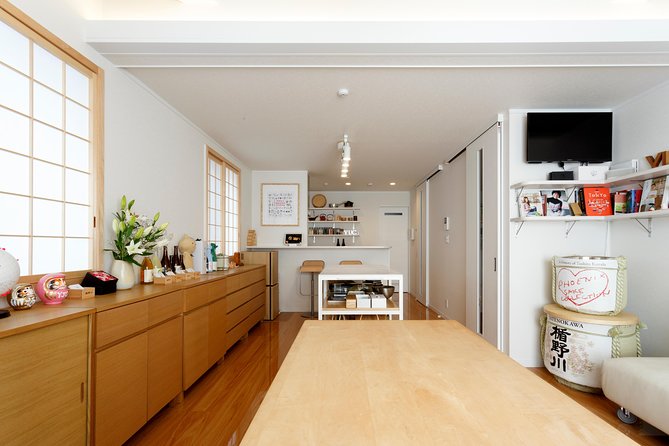
- Cook in a real Tokyo home kitchen: The class takes place at YUCa’s Japanese Cooking in Nishiogu, giving you a look at an ordinary residential part of Tokyo.
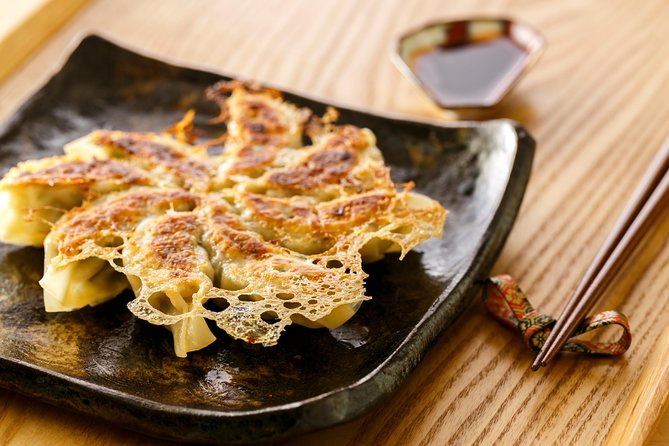
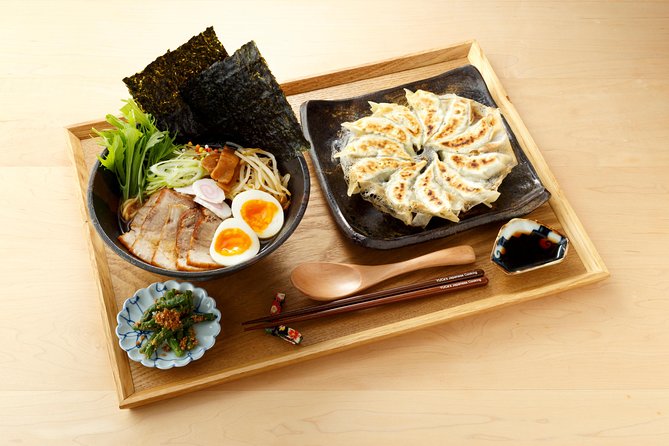
- Make two Japanese staples: You prepare ramen and minced pork gyoza, then sit down to eat what you made.
- A small class of up to seven: The limited group size keeps the setting personal, though not every task can be done individually.
- Useful for beginners and families: The recipes are described as easy to follow, and children, teenagers, parents, and grandparents have all taken part.
- Optional supermarket visit: After cooking, you may tour a local supermarket from 12:30 to 1 p.m. and ask about unfamiliar ingredients.
- Good value for food-focused visitors: At $122.70 per person, you are paying for instruction, a meal, cultural context, and a personal host rather than just lunch.
Reaching YUCa’s Nishiogu kitchen
The class begins at 10 a.m. at YUCa’s Japanese Cooking, 2-chōme-34-8 Nishiogu, Arakawa City, Tokyo 116-0011. The activity ends at the same address, which makes the morning easy to plan around.
Nishiogu is outside the central sightseeing core. That is part of the appeal. You will not be cooking in a slick restaurant aimed at passing tourists. Instead, you get a glimpse of a residential Tokyo neighborhood and a home kitchen arranged for teaching.
The location is near public transportation, but the supplied information does not give a specific station or walking time. I would allow extra time for finding the address, especially if you are navigating Tokyo by train for the first time. One person chose an Uber and found that simple, but public transport is also listed as an option.
This is not the kind of activity you should squeeze between two tightly timed attractions. Arrive ready for a three-hour morning, including the optional supermarket stop. The class starts promptly at 10 a.m., and the cooking itself begins after a short introduction.
More Cooking Classes in Tokyo
- Tokyo: Easy Ramen Cooking Experience in Kabukicho, Shinjuku
★ 4.6 · 321 reviews - Ramen and Sushi Cooking Class with Sake Pairing Set in Tokyo
★ 5.0 · 291 reviews - Tokyo: Wagyu and 7 Japanese Dishes Cooking Class
★ 4.9 · 273 reviews
10:00 to 10:30, a short lesson on home cooking
The morning opens with a lecture on Japanese home cooking and lifestyle, scheduled from 10:15 to 10:30 after the initial meeting time. This helps place the dishes in a wider setting.
Ramen is often treated by visitors as a quick restaurant meal, but the class presents it as something you can understand and assemble at home. Gyoza also becomes less mysterious when you see how the filling, wrappers, and cooking steps fit together.
YUCa’s teaching style receives especially strong praise. She is described as patient, energetic, warm, and easy to understand in English. She also adds small cultural touches, such as writing participants’ names in Japanese characters based on their pronunciation.
That personal welcome matters. You are not simply following a printed recipe. You can ask why certain ingredients are used, how Japanese home cooking differs from restaurant food, and what to look for when shopping. The class also gives people from different countries a natural way to talk while working around the kitchen.
10:30 to 12:30, making ramen and gyoza
The main cooking session lasts two hours. You work on ramen and gyoza, using vegetables and meat to prepare the dishes before sitting down to eat.
The process is organized around the timing of the food. While the ramen ingredients cook, you make the gyoza by hand. That arrangement keeps the class moving and gives you a second task instead of standing around waiting.
The gyoza portion is likely to be the most tactile part of the class. Shaping dumplings by hand is accessible even if you have little cooking experience, and it works well for families. Children aged 9, 13, and 14 have enjoyed taking part, and teenagers have also found the class entertaining.
The ramen preparation is more about understanding the components and putting the bowl together. You learn how the soup, noodles, toppings, and other ingredients come together. One important point is that not every step involves lengthy chopping or complicated cooking. Some participants have found parts of the process fairly light, with small amounts of prepared ingredients, powder, or liquid added to a bowl.
That is the class’s main limitation for serious home cooks. If you want a technical workshop focused on knife skills, broth-making from scratch, or long cooking processes, this may feel modest. If you want an easy introduction to two popular Japanese dishes, the format makes more sense.
I like this balance for most visitors. You get enough activity to feel involved, but you do not spend the entire morning struggling with difficult techniques in an unfamiliar kitchen. YUCa explains the steps clearly, and the recipes are presented as practical dishes you can attempt again at home.
Eating what you prepared
After the cooking, you assemble the ramen bowls and eat the gyoza. This is more than a final reward. It lets you see how your preparation affected the finished dish.
The food is consistently praised for its taste, and several people have said the meal compared favorably with restaurant food. Portions may feel small to some people, so do not arrive expecting a giant bowl of ramen followed by a full restaurant-style lunch. The aim is a cooking lesson with a satisfying tasting meal.
I like the shared-table element. You eat alongside the other participants, compare your dumpling shapes, and talk about the cooking process. The maximum group size is seven, so the atmosphere should feel social without becoming a large tour group.
This is also a useful choice if your party includes people with different levels of cooking interest. Beginners can follow the instructions, experienced cooks can ask questions, and children can focus on hands-on tasks such as shaping gyoza.
More Ramen Tours in Tokyo
- Eat and Drink Like a Local: Tokyo Ueno Food Tour-Taverns&Ramen
★ 5.0 · 957 reviews - Tokyo: Ramen Tasting Tour with 6 Mini Bowls of Ramen
★ 4.9 · 432 reviews - Professional Ramen & Gyoza with Ramen Chef in a restaurant!
★ 5.0 · 223 reviews - Shibuya: Ramen Dojo Tokyo | Make All 3 (Tonkotsu/Shoyu/Miso)
★ 5.0 · 214 reviews
12:30 to 13:00, the optional supermarket visit
The final half-hour is an optional tour of a local supermarket. This is one of the most interesting parts for anyone who wants to continue Japanese cooking after returning home.
A supermarket can tell you more about daily life than a formal sightseeing stop. You may get help identifying ingredients, understanding labels, and spotting the products used in Japanese kitchens. The visit also gives you a look at a neighborhood outside the usual Tokyo sightseeing routes.
The supermarket tour is not guaranteed in the same way as the cooking session. It is marked optional, and some participants have left without visiting the store. In one case, the host understood that a participant needed to return to a hotel because a family member was ill. Other people have also described the class without a supermarket stop.
So, I would treat the market visit as a useful extra, not the central promise of the experience. If it matters to you, mention it when booking and confirm the plan with YUCa on the morning of the class. The cooking class itself remains the main activity.
How hands-on is the class?
This is worth explaining clearly. The experience is hands-on, but it is not a private cooking lesson where every person has a separate stove and preparation station.
There is one kitchen, and the class can include up to seven participants. YUCa demonstrates some steps, then assigns roles and brings people into the process. You may prepare ingredients, shape gyoza, add components, assemble bowls, and taste the results, but some parts will be watched rather than performed by everyone.
For many people, that is the right level. You can enjoy the social side and still learn the basic method without worrying about doing every technical step yourself. The setup also lets YUCa keep an eye on the cooking and explain what is happening.
For a more advanced cook, the class may feel less demanding than expected. I would book it for cultural context, an easy meal, and a friendly kitchen experience rather than for professional-level training.
YUCa’s teaching style and the home setting
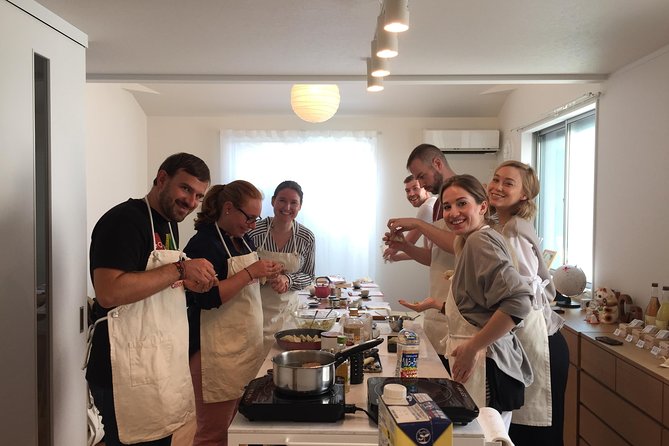
The host is the strongest part of the experience. YUCa’s approach is friendly and lively, with clear explanations and plenty of encouragement. She makes an effort to include everyone, which matters when a group contains both confident cooks and people who rarely cook.
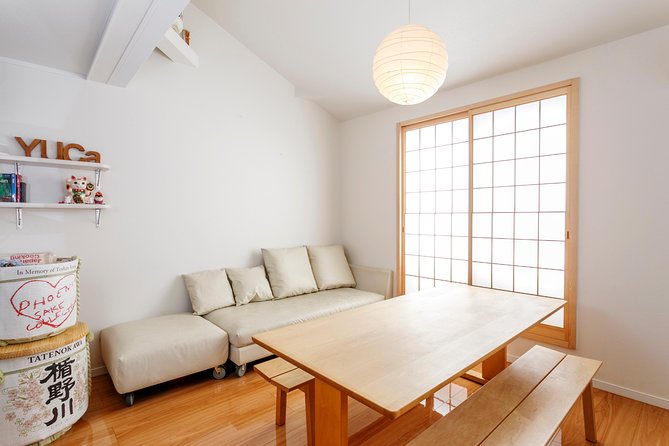
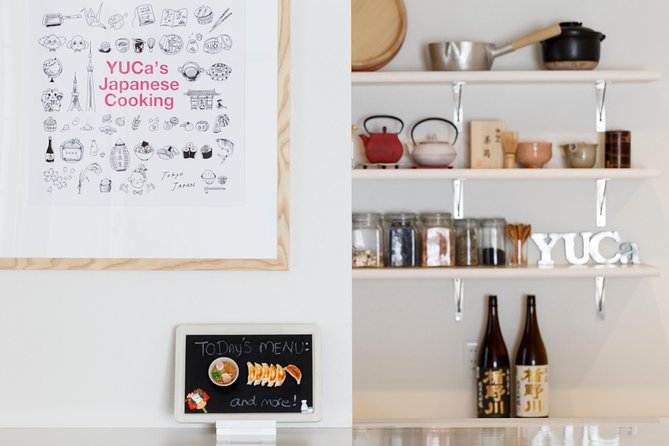
The home setting adds something you cannot get from a standard restaurant class. You see a real Japanese kitchen and learn in a space connected to the teacher’s daily life. Participants have described the studio as cute and well equipped, while also noting that it is a home rather than a large cooking school.
English-speaking visitors should find the instructions easy to follow. Dietary needs should be provided when booking. A vegetarian option is available, but you need to request it ahead of time.
The class also works well as a family activity. The gyoza-making gives younger participants a clear job, while the cultural explanations give adults more to think about. Couples, solo participants, siblings, and multigenerational families can all fit the format, provided there are at least two people in the booking.
Is $122.70 a fair price?
At $122.70 per person, this is not a cheap lunch. But the comparison should not be with a bowl of ramen at a station restaurant.
The price includes about two hours of cooking instruction, a meal of ramen and gyoza, access to a small home-based class, and cultural discussion with a local host. You also get recipes and techniques you can use later, which gives the experience value beyond the food eaten that morning.
The optional supermarket visit adds value if it takes place. It can help you shop with more confidence and understand Japanese ingredients in a practical way. Still, I would not pay this price solely for the market portion, since that stop is optional.
I consider the price fair for visitors who care about food and personal contact. It is less compelling if you only want a quick meal, or if you expect a highly technical cooking course with extensive individual preparation.
The experience has a five-out-of-five rating from 823 reviews and is recommended by 100 percent of respondents in the supplied information. That strong response fits the repeated praise for YUCa’s warmth, the tasty food, and the welcoming group atmosphere. The lower ratings focus mainly on the missing supermarket tour or the limited amount of individual cooking, not on poor hospitality or bad food.
Who should book this Tokyo cooking class?
You should consider this class if you want to:
- Learn two recognizable Japanese dishes in one morning
- Meet a local host in a home kitchen
- Cook with children, teenagers, parents, or grandparents
- Pick up recipes that seem realistic to recreate at home
- See a residential area outside central Tokyo
- Enjoy a social activity with a small group
- Get guidance in English
It is especially good for people who want a break from temples, shopping streets, and crowded observation decks. The class gives you something to do with your hands and a meal at the end.
You may want another type of class if you are seeking advanced ramen broth, elaborate knife work, or a fully individual workstation. You should also think twice if the supermarket tour is your main reason for booking. It is optional and has not always been included in the morning.
The class requires a minimum booking of two people, and the maximum is seven. That makes it a practical choice for couples and small families, but not for someone hoping to join entirely alone under a single-person reservation.
Booking and cancellation details
Confirmation is provided when you book, and the experience offers a mobile ticket. Give YUCa any dietary requirements at booking, including a vegetarian request.
You can cancel for a full refund up to 24 hours before the 10 a.m. start time. Cancellations or changes made less than 24 hours ahead are not accepted for a refund. The provider also requires a minimum number of participants, so if the class is canceled for that reason, you will be offered another date or experience, or receive a full refund.
FAQ
Where does the ramen and gyoza class take place?
It takes place at YUCa’s Japanese Cooking, 2-chōme-34-8 Nishiogu, Arakawa City, Tokyo 116-0011, Japan.
What time does the experience begin?
The meeting time is 10 a.m.
How long does the class last?
The full schedule runs for about three hours, from 10 a.m. to 1 p.m., including the optional supermarket visit. The stated experience duration is approximately 2.5 hours.
What dishes do you make?
You make ramen and minced pork gyoza, using different vegetables and meat during the preparation.
Do you eat the food you prepare?
Yes. After cooking, you taste and eat the ramen and gyoza you made.
Is the supermarket visit included?
The supermarket tour is optional and is scheduled from 12:30 to 1 p.m. Since it has not always taken place, confirm its availability if it is important to you.
Is there a vegetarian option?
Yes. A vegetarian option is available, but you must advise the provider when booking.
How many people can join the class?
The experience has a maximum of seven participants. A minimum of two people per booking is required.
Can you cancel for a full refund?
Yes. You must cancel at least 24 hours before the local start time for a full refund. Cancellations or changes made later are not refunded or accepted.
Should you book it?
I would book this class if you want a friendly, personal morning centered on Japanese food rather than a formal culinary course. YUCa’s warmth, the home setting, the tasty meal, and the chance to make gyoza by hand give the experience its appeal.
Go in expecting guided participation, not two hours of nonstop individual cooking. Confirm the optional supermarket stop if you want it, provide dietary needs early, and allow extra time to reach Nishiogu. For families, first-time cooks, and food-focused visitors, this is a strong way to see another side of Tokyo and leave with recipes you can try at home.
Just added around Tokyo
- Tokyo 6hr Instagram Highlights Private Tour with Licensed Guide★ 5.0 · 38 reviews
- Tokyo Small Group Tour with Guide★ 4.5 · 38 reviews
- Tokyo Sumo Experience with Live Show & Audience Challenge★ 5.0 · 38 reviews
- Japanese Food Cooking Class in Asakusa, Tokyo★ 5.0 · 39 reviews
- Very popular in Harajuku♡Animal petting zoo★ 4.6 · 39 reviews
- Ramen Making from Scratch with Tokyo Mom(Vegan Option Available)★ 5.0 · 39 reviews
- Tokyo: Kimono Rental inside Shinjuku Gyoen National Garden★ 4.9 · 39 reviews
- Tokyo JDM Night: 600hp C63s AMG Edition 1 (Private)★ 4.9 · 39 reviews
Ramen & Noodle Tours, compared.
Ramen Cooking Class at Ramen Factory in Kyoto
Read our review →
Eat and Drink Like a Local: Tokyo Ueno Food Tour-Taverns&Ramen
Read our review →
Ramen Cooking Class at a Ramen Factory with Souvenir
Read our review →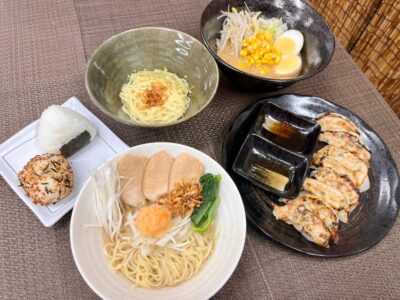
Five Must-See Highlights Walking Tour & Ramen Lunch
Read our review →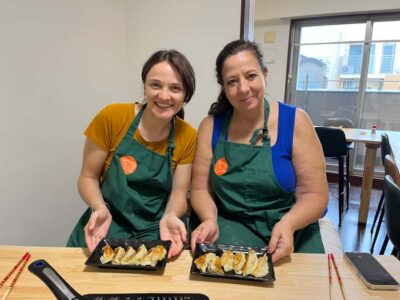
Easy Ramen Cooking Experience in Kabukicho, Shinjuku
Read our review →Browse the lists this tour appears in