
Reviewed · RAMEN & NOODLE TOURS
Professional Ramen & Gyoza with Ramen Chef in a restaurant!
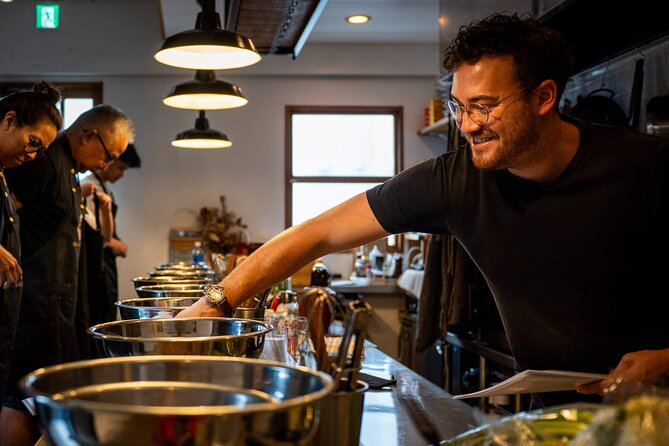
Ramen is harder than it looks. This four-hour class in Meguro puts you to work making noodles from scratch, gyoza, and a restaurant-quality bowl under the guidance of bilingual chefs. I like the small maximum of six people, which gives you more time at the workbench, and I like that you cook in a real restaurant kitchen rather than a private home. The main caution is the price: at $159.18 per person, this is a serious food experience, not a cheap lunch with a recipe card.
You meet at 9:00 a.m. at Baba Ramen Cooking Meguro, at 3-chōme-7-32 Shimomeguro. I also appreciate the class’s practical focus. You handle much of the process yourself, learn why each layer matters, and receive an e-book so the lesson does not end when you leave. Be ready for hot pans, oils, physical work, and a full meal at the end.
In This Review
- Key points at a glance
- What makes the Meguro setting useful
- Arriving at 9:00 a.m. in Meguro
- Learning the five parts of a proper ramen bowl
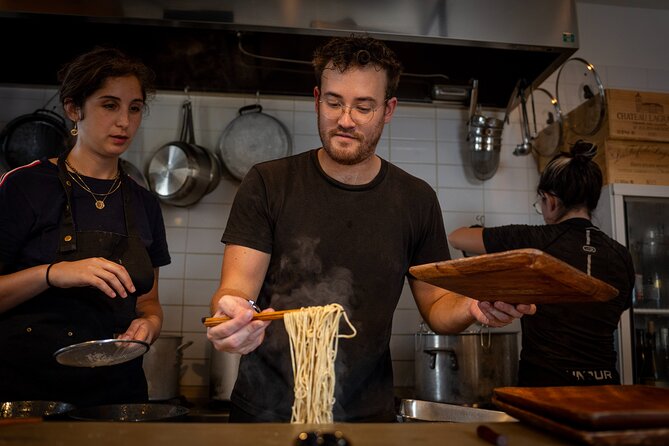
- Rolling noodles from scratch
- Folding gyoza alongside the ramen
- Working with Andrew and the bilingual chef team
- How much value you get for $159.18
- Dietary needs and special requests
- Who should book this cooking class
- Booking and cancellation details
- Should you book Baba Ramen?
- FAQ
- Where does the ramen cooking class meet?
- What time does the class start?
- How long does the experience last?
- Where does the class finish?
- How many people can join the class?
- Are vegetarian or vegan options available?
- Can the class accommodate gluten-free or pork-free diets?
- What happens if I need to cancel?
Key points at a glance
- Make the noodles yourself: Roll and prepare fresh ramen noodles instead of simply assembling a prepared bowl.
- Cook in a working restaurant: The class uses kitchen-grade equipment and a professional restaurant setting.
- Prepare ramen and gyoza: You make both dishes, then eat the results during the same session.
- Small group, more guidance: The class has a maximum of six people, allowing close instruction and feedback.
- Choose from two broth options: You can select the broth that best fits your taste.
- Plan dietary requests ahead: Vegetarian, vegan, gluten-free, and pork-free options may be available if requested in advance.
What makes the Meguro setting useful
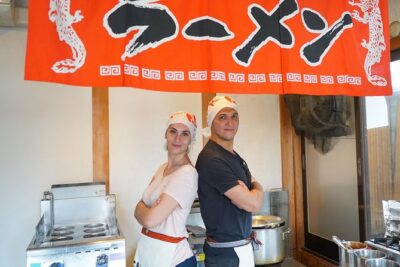
Many cooking classes are held in a home or a demonstration kitchen. Baba Ramen takes place in a restaurant, which changes the feel of the morning. You work with commercial equipment and see how a professional kitchen handles timing, heat, preparation, and assembly.
That matters most with ramen. A bowl may look simple, but it brings together several parts that must be ready at the right time. The class covers the noodles, broth, seasoning, toppings, and other components that make up the finished dish. One particularly useful lesson is that fresh ingredients and time do much of the work. There are also shortcuts that reduce preparation time without giving up too much flavor.
The restaurant itself is small and practical. It is used as an Italian restaurant at night, so this is not a staged cultural set built only for visitors. You get a working food space, not a polished showroom. That can mean less room to spread out, but it also supports the class’s hands-on style.
More Ramen Tours in Tokyo
- Eat and Drink Like a Local: Tokyo Ueno Food Tour-Taverns&Ramen
★ 5.0 · 957 reviews - Ramen & Gyoza Cooking Class in Tokyo with Local Supermarket Visit
★ 5.0 · 823 reviews - Tokyo: Ramen Tasting Tour with 6 Mini Bowls of Ramen
★ 4.9 · 432 reviews
Arriving at 9:00 a.m. in Meguro
The class starts at Baba Ramen Cooking Meguro in Shimomeguro, Meguro City. The meeting point is also the end point, so you return to the same restaurant after lunch. The experience is near public transportation, though the supplied details do not specify the nearest station or walking time. Check the exact route before leaving your hotel, especially for a 9:00 a.m. start.
A morning start works well for a cooking class. You have several hours for preparation, instruction, and eating, then the rest of the day remains free for Meguro or another part of Tokyo. Still, do not schedule a rushed activity immediately afterward. The class is listed at about four hours, and the hands-on format means you should allow some flexibility.
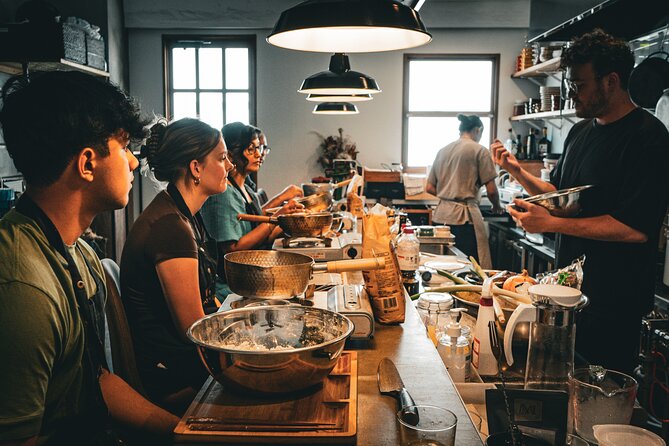
The maximum group size is six. That is one of the strongest practical features here. Ramen involves several active steps, and a large group can turn cooking into watching. With six or fewer people, you have a better chance of receiving direct corrections while rolling noodles, folding gyoza, handling ingredients, or working around hot equipment.
Learning the five parts of a proper ramen bowl
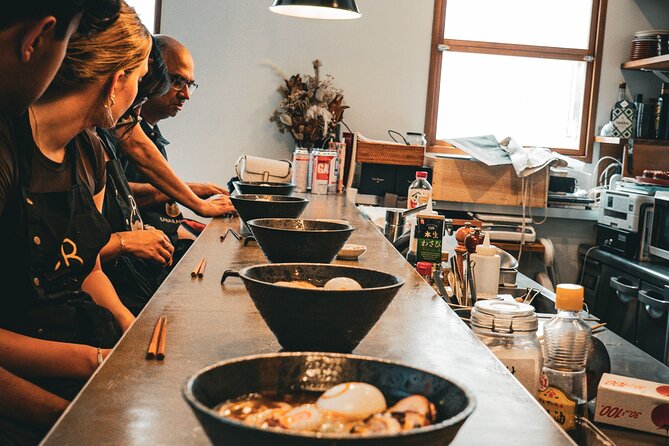
The class does not treat ramen as instant noodles with toppings. You learn the separate parts of the dish and how they work together. The instruction includes the noodles, broth, seasoning, toppings, and other elements that create the final bowl.
The first surprise for many people is the amount of work behind a good bowl. Participants are kept busy, and the class can include tasks such as preparing ingredients, working with chicken bones, rolling noodles, and handling hot pans and oil. This is not a show where the chef does all the difficult work while you take photos.
The chefs explain the process while you work. They also cover ramen’s background, different ramen styles, cooking techniques, and basic etiquette. That cultural context is useful because it explains why the dish is assembled and eaten in particular ways, rather than giving you a set of disconnected kitchen instructions.
You also get a choice of two broth options. The available details do not identify the exact broths, so check when booking if your choice matters for allergies, religious restrictions, or personal taste. The option is still valuable because broth is the heart of the bowl, and not every diner wants the same flavor profile.
Rolling noodles from scratch
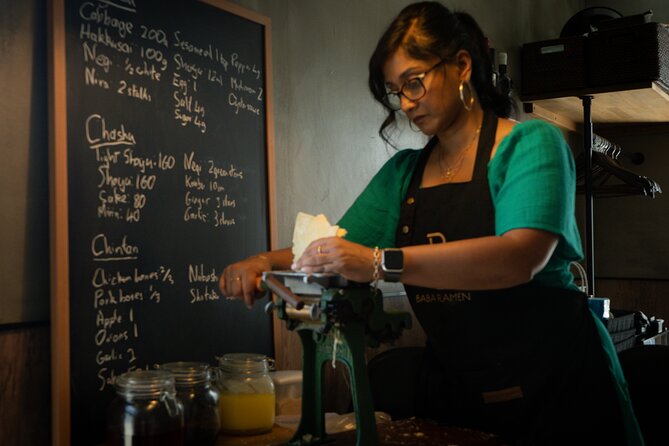
Fresh noodles are the part that gives this class its strongest sense of achievement. You do not simply add a packet to broth. You work through the process of making the noodles and learn how the texture affects the finished ramen.
The class uses professional equipment, which gives you a better idea of the pressure, timing, and technique involved in a restaurant. You may need to concentrate and follow instructions closely. That is part of the appeal, but it also explains why the experience takes four hours.
I would not book this class if you want a quiet demonstration. You should expect to participate throughout the morning. The physical work is manageable for most people who can safely cook in a commercial kitchen, but the combination of hot pans, oil, ingredients, and repeated preparation makes sensible footwear and attention important.
The payoff is a bowl that feels like your own work. The finished meal is not just something placed in front of you. You have seen how the noodles were made and how the other components came together. That connection is one reason the class can leave you with more respect for the time and labor behind ramen.
A completely different kind of day out in Tokyo:
- Mt Fuji and Hakone 1-Day Bus Tour Return by Bullet Train
★ 5.0 · 26,383 reviews - 1-Day Tokyo Bus Tour
★ 5.0 · 14,250 reviews - Tokyo: TOKYO SKYTREE® Admission ticket
★ 4.5 · 11,192 reviews - Tokyo: teamLab Planets TOKYO Digital Art Museum Entry Ticket
★ 4.6 · 9,779 reviews
Folding gyoza alongside the ramen
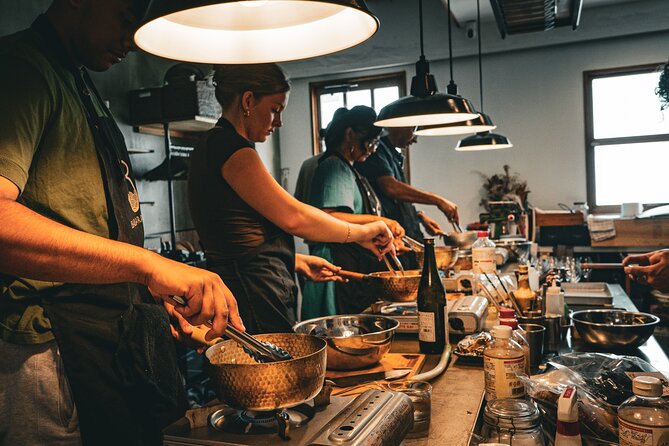
Gyoza adds a second skill and keeps the class from becoming a single-dish lesson. You learn to prepare and shape the dumplings, then cook them as part of the meal.
This is a good addition for groups with mixed interests. One person may be fascinated by noodle texture, while another prefers the hands-on rhythm of filling and folding dumplings. The gyoza also gives you another recipe to practice at home, rather than sending you back with only one complicated ramen project.
The cooking is active from start to finish. The chefs guide you through the process, and you take part in the different stages rather than watching from the side. The result is a generous meal of ramen and gyoza, with several people describing the portions as plentiful.
Because the class involves several dishes and techniques, it suits families and small groups particularly well. It also works for solo participants who enjoy meeting other people around food. The group dynamic can never be guaranteed, but the small size gives you a better chance of talking with everyone and getting individual help.
Working with Andrew and the bilingual chef team
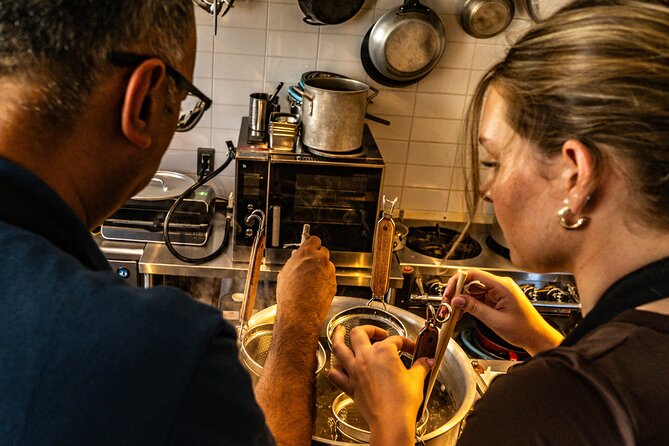
The instructors are local, bilingual chefs who teach in English and Japanese. Their role is more than translating a recipe. They explain technique, answer questions, keep the kitchen moving, and add the cultural details that make the food easier to understand.
Andrew is named as part of the team, and other instructors mentioned include Eric, Jae, and Leo. The teaching style is described as friendly, patient, organized, and good-humored. That combination matters in a practical class because the pace can be quick and the kitchen can feel busy once everyone is cooking.
The best part of the instruction is the balance between explanation and action. You learn why a step matters, then carry it out yourself. The chefs are there to correct technique and keep things safe, but they do not remove all the work from your hands.
This is also a useful choice for English-speaking visitors who want more than a recipe translated into English. The class includes ramen etiquette, background, and the range of styles you can make. You leave with a clearer sense of what you are doing, not simply a list of ingredients.
How much value you get for $159.18
At $159.18 per person, this class costs more than a bowl of ramen, a plate of gyoza, and a casual food tour. The value depends on what you want from the morning.
If your goal is the least expensive way to eat ramen in Tokyo, this is not the right choice. You can find excellent bowls for far less. The price makes more sense if you value instruction, restaurant access, a full meal, direct help, and recipes you can use later.
The class lasts about four hours and includes two substantial dishes. You also use professional equipment and take part in a wide range of preparation tasks. A small group of no more than six adds real value because you are not paying for a place in a large audience.
The e-book is another practical benefit. Making restaurant-quality ramen at home is not a quick weeknight task, but the written recipes give you a starting point. One participant had already begun making shoyu tare at home after the class, which shows how the lesson can lead to continued practice.
I would see the price as fair for a serious cooking experience, particularly if you regularly book food classes while traveling. For a family of five, the total cost becomes substantial, so decide if everyone wants to participate rather than simply eat. Children can be accommodated, and the teaching team has been described as welcoming toward a very young child, but the hot kitchen means close adult attention is still important.
Dietary needs and special requests
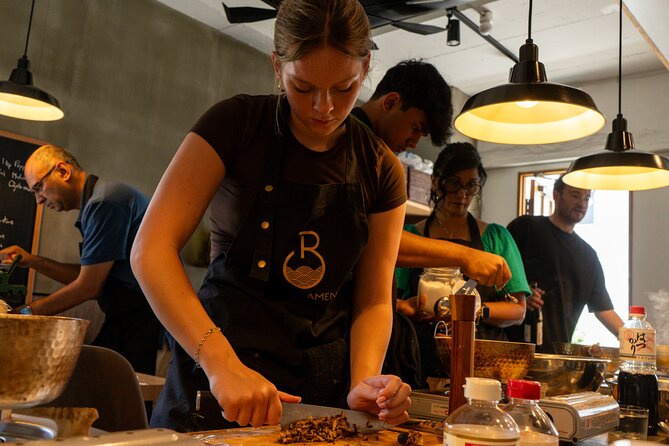
Vegetarian and vegan versions may be available. Gluten-free and pork-free options may also be possible. You must mention these needs in your request ahead of time, and all alternatives are subject to availability.
Do not wait until you arrive. Ramen broth, seasoning, noodles, dumpling wrappers, and fillings can involve ingredients that are not obvious. Advance notice gives the team a chance to confirm what can be changed.
The class can also work well for solo diners with food allergies, provided those needs are communicated clearly. The available information does not promise that every allergy can be handled, so ask before booking if your restriction is severe or medically significant.
Service animals are allowed. The activity is near public transportation, and confirmation is provided at booking. A mobile ticket is available, which makes it easier to keep the reservation on your phone.
Who should book this cooking class
I would recommend Baba Ramen to you if you want an activity with real participation. It suits people who enjoy learning by doing, food-focused visitors, families with older children, and anyone who wants to take a piece of Japan home in the form of a usable recipe.
It is also a strong pick for a repeat visitor to Tokyo. You do not need another sightseeing stop if you want a different kind of morning. The class gives you cultural context, practical technique, and a meal in one appointment.
You should think twice if you want a short, relaxed tasting. Four hours is a long time for a cooking lesson, and the class expects effort. You may be chopping, rolling, handling hot cookware, and moving through several stages before you sit down to eat.
The class is rated 4.9 from 223 ratings, with 96 percent recommending it. That high level of satisfaction fits the experience’s strongest points: organized instruction, friendly chefs, an unusually hands-on format, and food that people consistently describe as delicious. The one recurring reservation is the cost, and that is a fair concern.
Booking and cancellation details
You receive confirmation at the time of booking. The experience offers free cancellation if you cancel at least 24 hours before the local start time. Cancellations or changes made less than 24 hours before the start are not accepted for a refund.
The class requires good weather and a minimum number of participants. If poor weather or low participation causes cancellation, you are offered another date or experience, or a full refund. Keep that in mind when planning a tightly packed Tokyo itinerary.
Should you book Baba Ramen?
Book it if you want to understand ramen by making it, not just eating it. The small group, restaurant kitchen, bilingual teaching, handmade noodles, gyoza, and take-home recipes give this class more substance than a quick food activity.
I would especially choose it for a food-loving family, a couple seeking a practical Tokyo experience, or a solo visitor who enjoys meeting people through cooking. I would skip it only if the $159.18 price feels too high or if you would rather spend the morning sampling several inexpensive ramen shops.
For the right person, this is a satisfying use of four hours. You work hard, eat a lot, and leave with a better understanding of why a good bowl takes time.
FAQ
Where does the ramen cooking class meet?
It meets at Baba Ramen Cooking Meguro, 3-chōme-7-32 Shimomeguro, Meguro City, Tokyo 153-0064, Japan.
What time does the class start?
The stated start time is 9:00 a.m.
How long does the experience last?
The class lasts approximately four hours.
Where does the class finish?
It ends back at the meeting point in Meguro.
How many people can join the class?
The activity has a maximum of six participants.
Are vegetarian or vegan options available?
Vegetarian and vegan options may be available if you mention the request in advance. Availability is subject to confirmation.
Can the class accommodate gluten-free or pork-free diets?
Gluten-free and pork-free options may be available with advance notice, subject to availability.
What happens if I need to cancel?
You can receive a full refund if you cancel at least 24 hours before the local start time. Cancellations made later are not refunded.
More Dining Experiences
- Tokyo Bar Hopping Tour in Shinjuku (All-You-Can-Drink + Dinner)
★ 5.0 · 3,587 reviews - Tokyo: Sumo Show and Dining Experience
★ 4.8 · 2,742 reviews - Tokyo: Samurai Restaurant Show Ticket with 2 Drinks
★ 4.5 · 1,307 reviews - Sumida River: Japanese Traditional Yakatabune Dinner Cruise
★ 4.6 · 779 reviews
Just added around Tokyo
- Tokyo Small Group Tour with Guide★ 4.5 · 38 reviews
- Tokyo 6hr Instagram Highlights Private Tour with Licensed Guide★ 5.0 · 38 reviews
- Tokyo Sumo Experience with Live Show & Audience Challenge★ 5.0 · 38 reviews
- Very popular in Harajuku♡Animal petting zoo★ 4.6 · 39 reviews
- Japanese Food Cooking Class in Asakusa, Tokyo★ 5.0 · 39 reviews
- Ramen Making from Scratch with Tokyo Mom(Vegan Option Available)★ 5.0 · 39 reviews
- Tokyo: Kimono Rental inside Shinjuku Gyoen National Garden★ 4.9 · 39 reviews
- Tokyo JDM Night: 600hp C63s AMG Edition 1 (Private)★ 4.9 · 39 reviews
Ramen & Noodle Tours, compared.
Ramen Cooking Class at Ramen Factory in Kyoto
Read our review →
Eat and Drink Like a Local: Tokyo Ueno Food Tour-Taverns&Ramen
Read our review →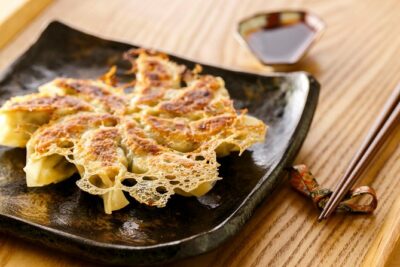
Ramen & Gyoza Cooking Class in Tokyo with Local Supermarket Visit
Read our review →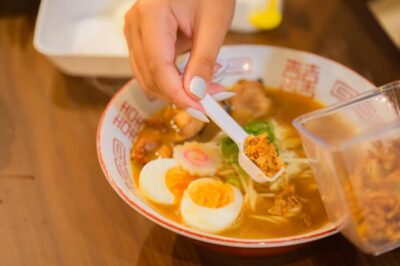
Ramen Cooking Class at a Ramen Factory with Souvenir
Read our review →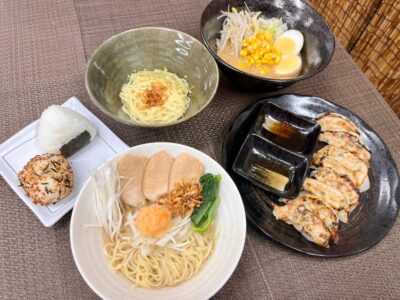
Five Must-See Highlights Walking Tour & Ramen Lunch
Read our review →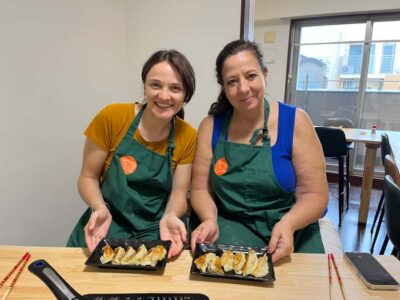
Browse the lists this tour appears in