
Reviewed · SUMO EXPERIENCES
Tokyo: Sumo Show and Dining Experience
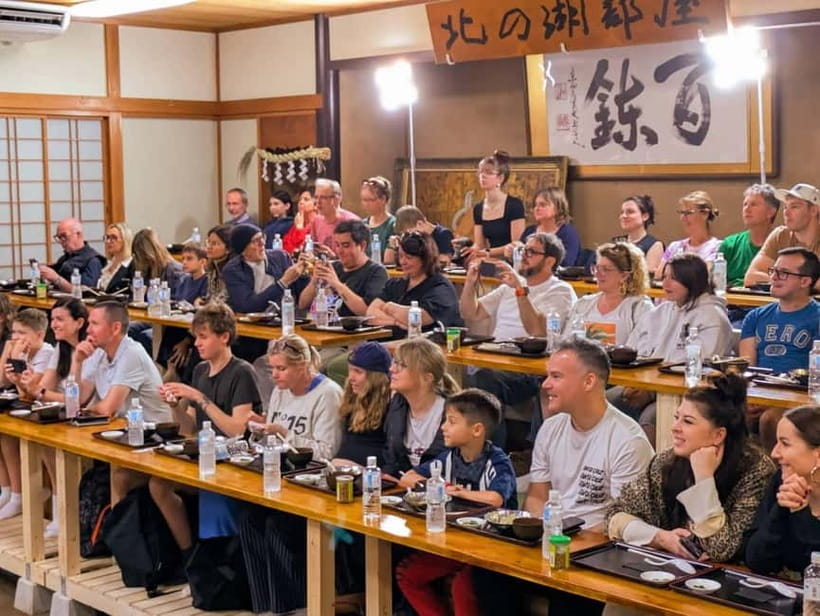
Sumo gets very real, very quickly. At Tokyo Sumo Room in Kiyosumi-Shirakawa, you sit close to former professional wrestlers, learn how this ancient sport works, watch demonstrations, and may even step into the ring yourself. I like the friendly, funny presentation and the chance to see sumo outside a large tournament hall. I also like the meal option, especially the hearty chanko-nabe associated with sumo wrestlers.
The main thing to watch is the booking choice. The 11:00 AM and 7:00 PM shows can include Japanese cuisine, but the 3:00 PM show has no meal plan. Even the show with dinner may require you to select the correct option, so check the details before paying. At about $79 per person, this is good value if you want food, instruction, wrestling, and audience participation in one compact outing.
In This Review
- Key points at a glance
- Why Kiyosumi-Shirakawa is a good setting
- A short lesson before the wrestling begins
- Watching former wrestlers show their skill
- The part most people remember: entering the ring
- What you eat with the show
- How long the program feels
- Hospitality and the small-room atmosphere
- Who will enjoy this most
- Practical planning for your visit
- Is the $79 price fair?
- Should you book Tokyo Sumo Room?
- FAQ
- Where is Tokyo Sumo Room located?
- How long does the sumo and dining experience last?
- Is Japanese food included?
- Can I participate in sumo activities?
- Is the experience offered in English?
- Is Tokyo Sumo Room wheelchair accessible?
Key points at a glance
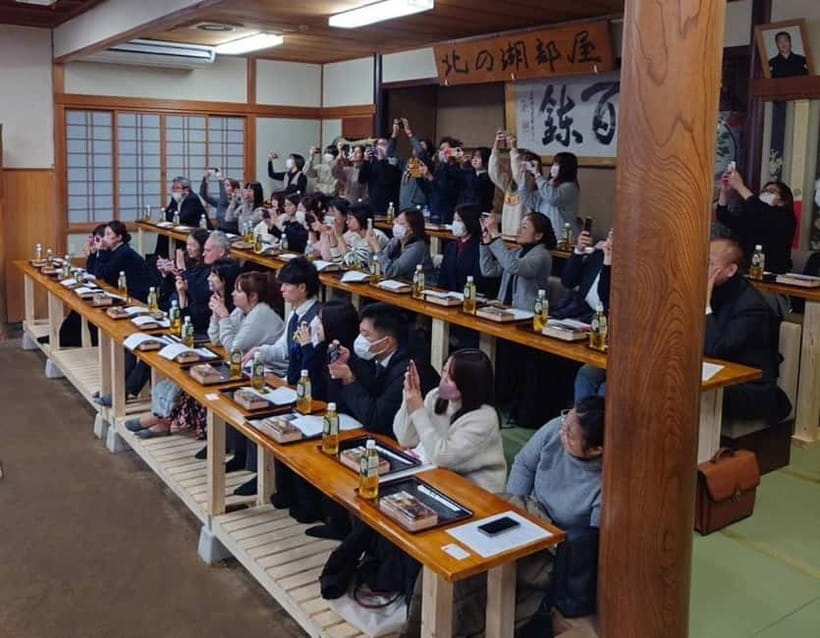
- Former Makuuchi wrestler Tokitsumi runs the venue: The setting has a direct link to professional sumo rather than being only a themed restaurant.
- You may wrestle a real former rikishi: Audience participation is a major part of the fun, though you can also simply watch.
- The English presentation is clear and playful: The host explains rules, training, and customs without making the subject feel heavy.
- Chanko-nabe adds real flavor: The meal option draws on the hot pot traditionally eaten by sumo wrestlers.
- Kiyosumi-Shirakawa is easy to reach by public transport: You can fit this into a Tokyo day without arranging a private transfer.
- The show lasts 90 minutes to two hours: It works well as a focused afternoon activity or an evening meal with entertainment.
Why Kiyosumi-Shirakawa is a good setting
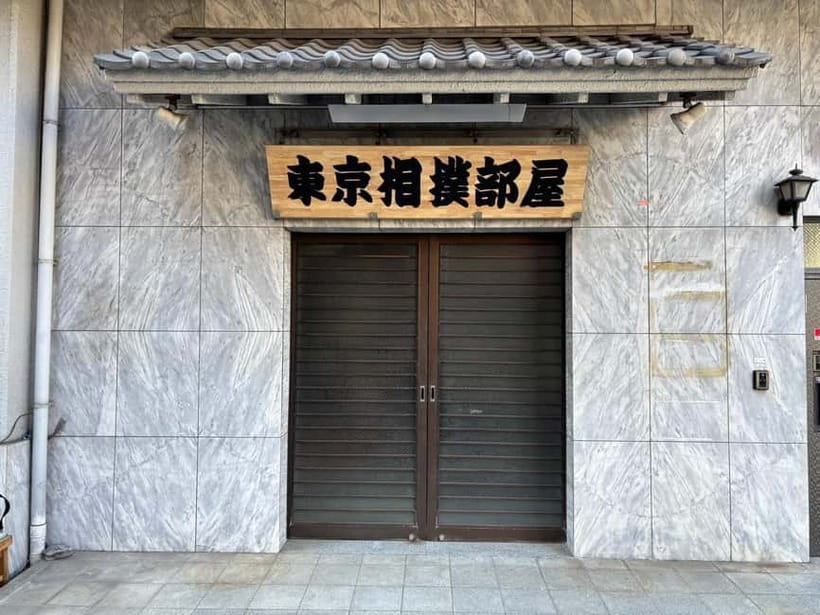
Tokyo Sumo Room is in Kiyosumi-Shirakawa, a district in eastern Tokyo that is easy to reach by public transport. The area is a useful change of pace from the giant crossings, department stores, and packed sightseeing zones farther west.
You are not attending a major tournament here. That distinction matters. Official tournaments have strict schedules, formal rituals, and tickets that can be difficult to secure. Tokyo Sumo Room offers a smaller cultural show where the focus is on explaining the sport and bringing you close to the action.
The venue is described as a sumo stable, and that gives the setting a more personal feel than a polished stage production. The room can accommodate more than 20 people, though one recent evening had only eight. A smaller group means more room for questions and a better chance of taking part.
I would allow extra time to find the building and arrive without rushing. Transportation is not included, and the activity is easiest if you use Tokyo’s rail network and follow your map carefully. Comfortable shoes are recommended, particularly if you plan to join the activities.
More Sumo Experiences in Tokyo
- Tokyo: Sumo Show Experience with Chicken Hot Pot and a Photo
★ 4.8 · 6,678 reviews - the SUMO show
★ 5.0 · 1,960 reviews - Tokyo Shinjuku Sumo Show & Experience with Photo
★ 5.0 · 1,750 reviews
A short lesson before the wrestling begins
The show starts with an English introduction to sumo. The host covers the sport’s history, rules, customs, and basic movements, giving you enough information to understand what follows.
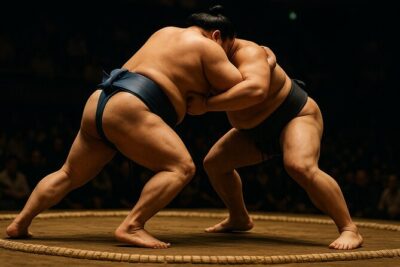
That introduction is more important than it may sound. Sumo can look simple at first: two large athletes face each other, push, and try to force the other outside the ring. In practice, the sport depends on balance, timing, footwork, grip, and explosive strength.
The explanations also help you notice the ritual side of sumo. The sport is tied to old Japanese traditions, and the presentation gives those traditions context instead of treating the wrestlers as comic figures. The tone is light, but the athletes’ work is treated with respect.
The host’s English is a strong part of the experience. You can ask questions, follow the demonstrations, and understand the jokes without needing prior sumo knowledge. Families and first-time visitors should find the format easy to follow.
This is not a long academic lecture. The information is concise and built around the action. If you already follow professional sumo closely, you may know some of the basics, but you will still get the benefit of seeing the techniques demonstrated at close range.
Watching former wrestlers show their skill
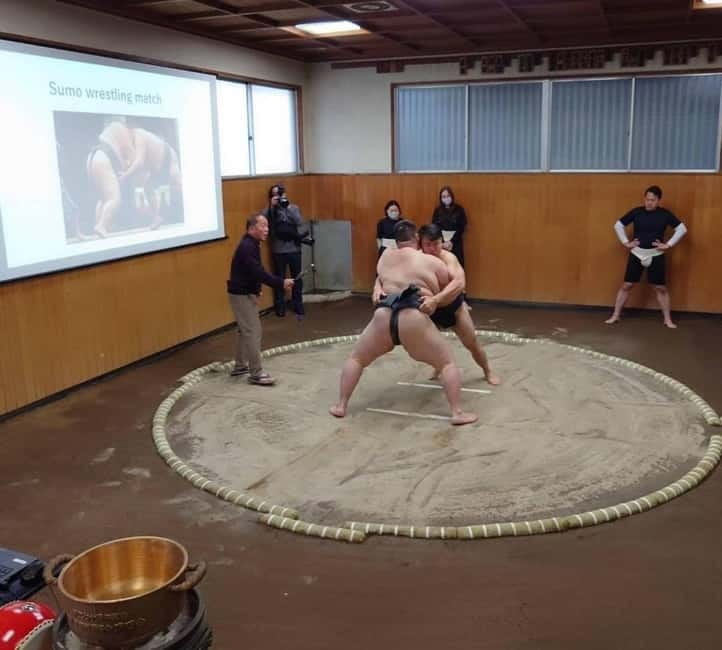
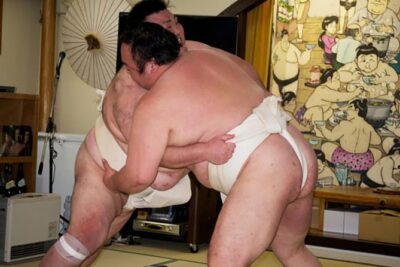
The central performance features former sumo wrestlers, known as rikishi, demonstrating the strength and technique required in the sport. The wrestlers show training movements and engage in several contests, with reports of three competitions during one evening program.
The close distance changes the effect. On television, sumo can seem slow until the collision begins. From a nearby seat, you can better appreciate how much force is involved and how quickly a match can turn.
The demonstrations are not presented as a formal tournament. They are designed to teach and entertain, with the host explaining what you are seeing. The wrestlers also joke with each other and the audience, which keeps the atmosphere relaxed.
That humor is one reason this works well for families. Children can watch powerful athletes, learn a few rules, and then see the sport become playful. Adults get the cultural background, while children get a show with movement and laughter.
The balance is generally well judged. The comedy makes sumo approachable, but the performance still gives you a sense of the discipline behind it. You see athletes who have trained seriously, not actors pretending to be wrestlers.
The number of wrestlers may vary. The experience information refers to professional sumo performances and optional training, while individual sessions have featured two or three former wrestlers. I would treat the exact lineup as flexible rather than expecting a fixed cast.
The part most people remember: entering the ring
Audience participation is the standout feature. If you want to take part, you may receive a short lesson and then challenge one of the wrestlers in a simulated match.
This is not an even contest, and that is the joke. Several participants describe discovering that the wrestlers were far stronger than expected. You can push with everything you have and still find yourself going nowhere, which makes for a memorable few seconds.
You do not have to participate. Watching other people make the attempt can be just as entertaining, especially when the host and wrestlers play along. That makes the event suitable for mixed groups, including people who would rather keep their feet outside the ring.
If you do want to participate, wear comfortable shoes and be ready for a physical activity. The experience information recommends comfortable footwear, and the activities may involve pushing, movement, and getting down close to the ring. You should follow the staff’s instructions and choose your level of involvement sensibly.
Some participants have been allowed to wear a mawashi for the activity. One person noted that it was less uncomfortable than expected. Still, this is not something to assume will happen for everyone, so think of it as a possible part of the fun rather than a guaranteed feature.
For families, participation can turn a good cultural activity into the story everyone tells later. Children may not remember every rule, but they are likely to remember seeing a family member try to move a sumo wrestler.
A completely different kind of day out in Tokyo:
- Mt Fuji and Hakone 1-Day Bus Tour Return by Bullet Train
★ 5.0 · 26,383 reviews - 1-Day Tokyo Bus Tour
★ 5.0 · 14,250 reviews - Tokyo: TOKYO SKYTREE® Admission ticket
★ 4.5 · 11,192 reviews - Tokyo: teamLab Planets TOKYO Digital Art Museum Entry Ticket
★ 4.6 · 9,779 reviews
What you eat with the show
The meal option is built around Japanese cuisine, including dishes inspired by chanko-nabe. This is the filling hot pot traditionally associated with sumo wrestlers, and it suits the setting better than a generic restaurant meal would.
Chanko-nabe is practical food. It is hearty, warm, and designed to satisfy. The meal is not just decoration for the show. It helps explain how food fits into the daily life and training culture of sumo.
The menu may include seasonal Japanese items along with the hot pot. Specific dishes can vary, so you should not book expecting one exact menu unless it is shown at the time of reservation. Portions have been generous enough for some diners to request seconds, and sake has been available as a personal purchase.
Vegetarian options are available if requested. They can also be modified on the day, but I would still mention dietary needs in advance. That gives the kitchen a better chance to prepare something suitable without slowing down your meal.
Here is the important booking detail:
- The 11:00 AM and 7:00 PM shows offer meal options.
- The 3:00 PM show has no meal plan.
- Choose the meal option carefully, because a show title or description may not automatically mean dinner is included.
- Personal expenses, including extra drinks, are separate.
At $79, the price makes more sense when the meal is included. You are paying for a small-group cultural presentation, live performances, instruction, interaction with former wrestlers, and Japanese food. For the 3:00 PM show without food, you should decide how much you value the wrestling lesson and audience participation alone.
How long the program feels
The stated duration is 90 minutes to two hours. That is long enough to provide substance without taking over your day.
A typical flow includes the welcome and explanation, a look at sumo customs and training, several wrestling demonstrations, audience interaction, and food during the meal sessions. The exact order may vary, particularly because dining and performance happen in the same room.
The compact schedule makes this easy to add to a Tokyo itinerary. You could visit Kiyosumi-Shirakawa earlier in the day, attend the afternoon show, and continue elsewhere. The evening session works well for families who want one planned dinner activity rather than another restaurant meal.
The show is also a good choice near the start of a Japan trip. It gives you basic sumo vocabulary and context before you encounter the sport elsewhere. It can also be a lively final-night activity because the format is social and does not require a full day of walking.
Do not expect the length or structure of a professional tournament. You will not spend hours watching one bout after another. This is a guided cultural performance, and its value comes from the access, explanations, and participation.
Hospitality and the small-room atmosphere
The staff’s warmth is a repeated strength. The host is personable and energetic, and the wrestlers are presented as approachable people as well as skilled athletes.
That matters in a small venue. In a large attraction, you may feel like one face in a crowd. Here, the staff can respond to individual groups, celebrate birthdays, answer questions, and help record participation. One family even had their phones charged and their wrestling attempts filmed by the owners.
The atmosphere suits celebrations. Birthday greetings, family participation, and group laughter fit naturally into the program. It also works for solo visitors. A person who attended alone after a companion cancelled still received a welcoming reception and a full experience.
English is the stated language of instruction. That makes the program practical for international visitors, especially when the rules and audience activities are central to the fun.
The presentation is informal, but the organization seems to be a strength. The host keeps the event moving, explains what is happening, and allows time for interaction. That prevents the meal from becoming a long wait between demonstrations.
Who will enjoy this most
I would recommend Tokyo Sumo Room to several kinds of visitors:
- Families with children: The mix of food, stories, physical demonstrations, and participation keeps different ages interested.
- First-time sumo viewers: You do not need to understand the sport before arriving.
- Visitors who want a personal cultural activity: The smaller setting offers more contact than a large stadium.
- Groups celebrating a birthday or special occasion: The staff can make the event feel personal.
- Solo visitors: The welcoming format does not depend on arriving with a large group.
- Food-focused visitors: The meal option adds chanko-nabe and Japanese dishes to the program.
I would be less enthusiastic if your main goal is to watch an official tournament. This is not a substitute for a Grand Sumo Tournament day at Ryogoku Kokugikan. It is better understood as an introduction, demonstration, and meal with a playful audience element.
You should also consider your comfort with physical participation. The show remains worthwhile if you only watch, but the experience becomes more distinctive if you are willing to try the ring.
Practical planning for your visit
Book ahead, especially if you want the evening meal session or are visiting with a family group. The advertised rating is 4.8 from 2,742 reviews, and strong demand can make same-day planning less reliable.
Check the start time and meal inclusion before confirming. The available sessions include 11:00 AM, 3:00 PM, and 7:00 PM options, but availability can change. The meal is included only with the relevant meal selection, and no meal plan is available for the 3:00 PM show.
Transportation to and from the venue is not included. Plan to use public transport to Kiyosumi-Shirakawa and leave enough time for the final walk. Bring a camera, since the close-up demonstrations and ring activities are especially worth recording.
The venue is wheelchair accessible. Smoking is not allowed, including indoors. Vegetarian food can be arranged, and you should request changes before the event when possible.
Free cancellation is available up to 24 hours before the activity for a full refund. A reserve-now, pay-later option may also help if your Tokyo schedule is still shifting.
Is the $79 price fair?
For the meal-inclusive sessions, I think the price is fair. You get more than a restaurant performance: there is a presentation on sumo, live demonstrations, interaction with former wrestlers, and a substantial Japanese meal.
The strongest value comes from the personal access. A tournament ticket gives you authentic competition, but it does not necessarily give you an English explanation or the chance to ask questions and try a sumo movement yourself.
The 3:00 PM option requires a closer look. Since it has no meal plan, you are mainly paying for the show, instruction, and interaction. That can still be worthwhile, particularly if you want the wrestling experience and already have lunch or dinner planned elsewhere.
For a family, the cost can add up quickly. Still, the program combines several activities that would otherwise require separate planning: a cultural lesson, live entertainment, a meal, and a hands-on activity. That makes it easier to justify than a short photo stop or a basic themed dinner.
Should you book Tokyo Sumo Room?
Book it if you want a friendly, accessible introduction to sumo with real former wrestlers, clear English instruction, and a chance to participate. I especially recommend the 11:00 AM or 7:00 PM meal sessions if chanko-nabe and Japanese food are part of your plan.
Choose the 3:00 PM show only after confirming that the lack of food suits you. And if you dislike audience participation, do not worry: watching the wrestlers and learning the rules still gives you a solid experience.
For most first-time visitors, this is one of the easier ways to understand why sumo is more than two athletes pushing in a ring. You get the ritual, the strength, the jokes, the food, and a memorable lesson in humility when a former wrestler barely moves.
FAQ
Where is Tokyo Sumo Room located?
Tokyo Sumo Room is located in Kiyosumi-Shirakawa in Tokyo, on Honshu. The venue is accessible by public transport.
How long does the sumo and dining experience last?
The activity lasts between 90 minutes and two hours, depending on the session and program.
Is Japanese food included?
Japanese cuisine is included when you select the meal option for the 11:00 AM or 7:00 PM show. The 3:00 PM show has no meal plan available.
Can I participate in sumo activities?
Authentic sumo training experiences and audience participation are available as optional parts of the activity. You may have the chance to practice with or challenge a former sumo wrestler.
Is the experience offered in English?
Yes. English instruction is provided, including explanations of sumo’s history, rules, and traditions.
Is Tokyo Sumo Room wheelchair accessible?
Yes, the venue is wheelchair accessible. Smoking is not allowed, including indoors.
More Dining Experiences
- Tokyo: Samurai Restaurant Show Ticket with 2 Drinks
★ 4.5 · 1,307 reviews - Tokyo Dinner Cruise & Tradition Show & Drinks & Tokyo Tower
★ 4.7 · 315 reviews - Tokyo Bay: Traditional Japanese Yakatabune Dinner Cruise
★ 4.7 · 243 reviews - Professional Ramen & Gyoza with Ramen Chef in a restaurant!
★ 5.0 · 223 reviews
More Dinner Experiences
- Tokyo Bar Hopping Tour in Shinjuku (All-You-Can-Drink + Dinner)
★ 5.0 · 3,587 reviews - Sumida River: Japanese Traditional Yakatabune Dinner Cruise
★ 4.6 · 779 reviews - Tokyo Bay Yakatabune Dinner/Day Cruise with Japan Show and Drinks
★ 4.5 · 473 reviews - Tokyo: Shinjuku Bar Hopping with All-You-Can-Drink & Dinner
★ 4.9 · 440 reviews
Just added around Tokyo
- Tokyo 6hr Instagram Highlights Private Tour with Licensed Guide★ 5.0 · 38 reviews
- Tokyo Small Group Tour with Guide★ 4.5 · 38 reviews
- Tokyo Sumo Experience with Live Show & Audience Challenge★ 5.0 · 38 reviews
- Very popular in Harajuku♡Animal petting zoo★ 4.6 · 39 reviews
- Japanese Food Cooking Class in Asakusa, Tokyo★ 5.0 · 39 reviews
- Ramen Making from Scratch with Tokyo Mom(Vegan Option Available)★ 5.0 · 39 reviews
- Tokyo: Kimono Rental inside Shinjuku Gyoen National Garden★ 4.9 · 39 reviews
- Tokyo JDM Night: 600hp C63s AMG Edition 1 (Private)★ 4.9 · 39 reviews
Sumo Experiences, compared.
Tokyo Shinjuku Sumo Show & Experience with Photo
Read our review →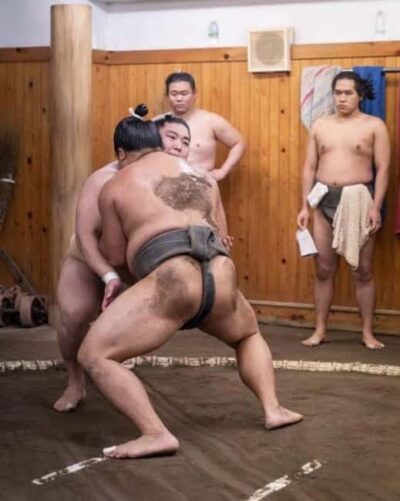
Sumo Show & Experience w/ Optional Kimono & Hot Pot
Read our review →
Authentic Sumo Experience in Tokyo: Enter the Sanctuary
Read our review →
Luxury Sumo Show Experience & Japanese cuisine & Drink
Read our review →
Browse the lists this tour appears in