
Reviewed · SUMO EXPERIENCES
the SUMO show
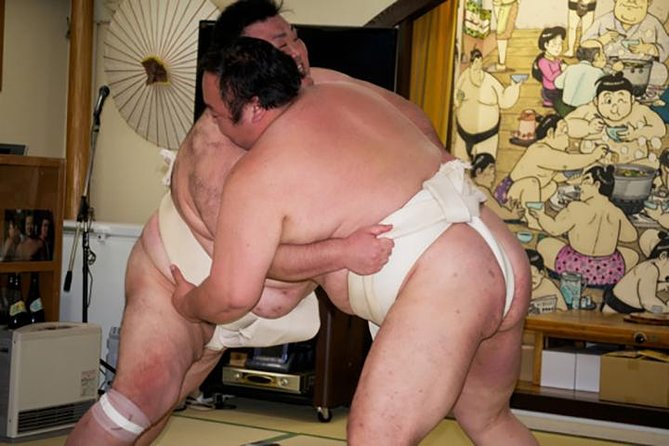
Sumo is more than a wrestling match. This lively 90-minute experience lets you meet retired wrestlers, learn the sport’s rules and training rituals, watch close-up demonstrations, and even challenge a wrestler yourself. I especially like the friendly crowd participation and the chance to share a meal prepared in the sumo tradition.
The tonkatsu and chanko soup add real value to the $89.54 price, and the small-audience setup can make the show feel personal. My main caution is seating: some tables may be farther from the dohyo, and you may share a table with another group. The food portions also may not satisfy very large appetites.
In This Review
- Key points to know before booking
- Meeting retired wrestlers in Sumida
- A useful introduction to sumo rules and rituals
- Watching the sparring demonstration up close
- The optional bout with a real sumo wrestler
- Tonkatsu and chanko soup at the sumo table
- Photos, costumes, and time with the performers
- What the $89.54 price really covers
- Timing, seating, and cancellation details
- Who will enjoy the SUMO show most
- Should you book the SUMO show?
- FAQ
- Where does the SUMO show take place?
- What time does the experience start?
- How long does the SUMO show last?
- What food is included?
- Are drinks included?
- Can I wrestle a retired sumo wrestler?
- Are dietary accommodations available?
- Will I have my own table?
- What is the cancellation policy?
Key points to know before booking
- You can step into the ring: Participation is optional, but you may put on a sumo costume and face a retired wrestler in a playful bout.
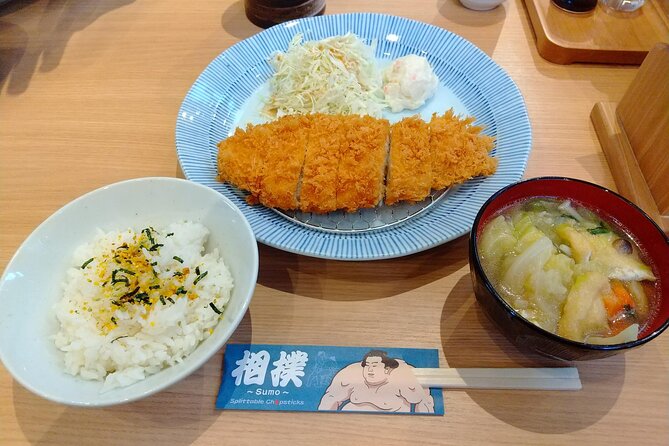
- The meal is part of the experience: Your package includes tonkatsu and chanko soup, but drinks cost extra.
- It is educational without feeling like a lecture: The host explains sumo history, techniques, training, and rules through demonstrations and humor.
- The show lasts about 90 minutes: It begins at 1:00 pm and ends back at the same location, making it easy to pair with other Tokyo plans.
- Seats are assigned in reservation order: Arriving early does not guarantee a better seat, and larger groups may not sit together.
- Dietary requests need advance notice: Vegetarian and other dietary accommodations can be requested, ideally at least five days before the event.
Meeting retired wrestlers in Sumida
The experience begins at Yokozuna Tonkatsu, at 3-chōme-1-11 Tatekawa in Sumida City. You make your own way there, meet the host and other participants, then settle in for the show and meal.
This part of Tokyo is away from the busiest sightseeing zones, but the venue is near public transportation. That matters because you do not need to build an elaborate transfer plan around it. Allow enough time to reach Sumida without rushing, especially if this is your first visit to the area.
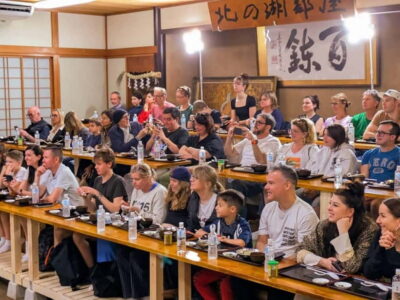
The setting is designed for a communal event rather than a formal theater performance. Depending on the size of the group, you may share a table with another party. Groups with many members may not all sit together, so keep that in mind if you are arranging a family outing or traveling with friends.
The maximum group size is 60 people. That is not tiny, but the layout can still feel fairly intimate when compared with a major stadium event. Several participants particularly liked having a clear view and being able to interact with the wrestlers instead of simply watching from a distance.
More Sumo Experiences in Tokyo
- Tokyo: Sumo Show Experience with Chicken Hot Pot and a Photo
★ 4.8 · 6,678 reviews - Tokyo: Sumo Show and Dining Experience
★ 4.8 · 2,742 reviews - Tokyo Shinjuku Sumo Show & Experience with Photo
★ 5.0 · 1,750 reviews
A useful introduction to sumo rules and rituals
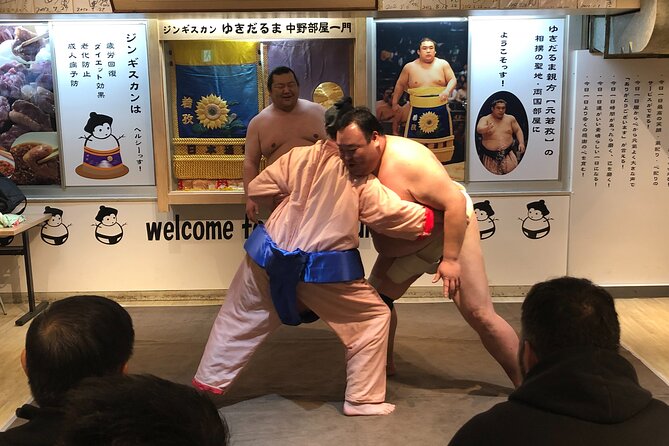
The first part of the program explains the foundations of sumo. You learn about the sport’s history, rules, techniques, exercises, and training rituals before the action begins.
I like this approach because sumo can look mysterious if you have never watched it closely. The gestures, movements, costumes, and formal routines have meaning, but a first-time viewer may not know what to look for. This introduction gives you enough background to understand the demonstrations that follow.
The presentation is aimed at a broad audience. It is not presented as an academic study of sumo, and it should not be your only lesson if you want an expert-level account of the sport. Instead, you get a clear and entertaining overview that works well for families, first-time visitors, and anyone who wants cultural context without sitting through a long lecture.
The host keeps the tone light. Humor helps the rules stick, and the performers explain techniques in a way that makes sense even if you know nothing about sumo. One practical note: if video or background sound is being used during the explanation, it may be harder to hear every word. Sitting where you can see the speaker clearly, and asking questions when invited, will help.
Watching the sparring demonstration up close
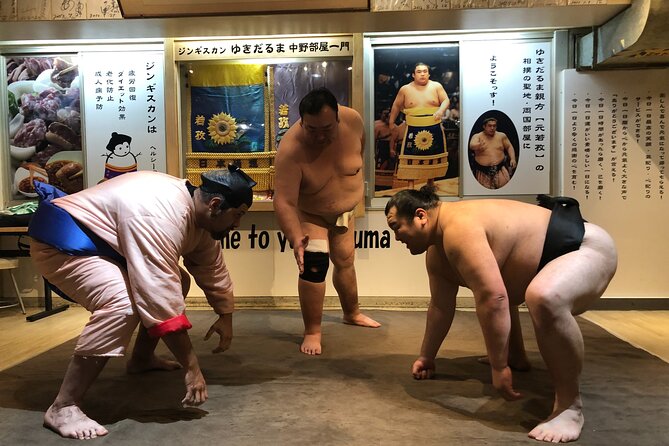
After the introduction, retired sumo wrestlers demonstrate moves and techniques. This is the point when the sport becomes easier to appreciate. Sumo may appear to be a quick collision, but the demonstrations show that positioning, balance, timing, and technique matter.
The performers also show exercises and sparring, giving you a better sense of the physical demands behind the sport. You are not simply watching a staged cultural display with no explanation. The wrestlers connect what they do in the ring with the training and discipline required to compete.
The tone is playful, but the demonstrations still provide a genuine look at the sport. The retired wrestlers are there to entertain, yet their experience gives the show credibility. They can explain techniques from personal experience and respond to questions in a more direct way than a guide who has only studied sumo.
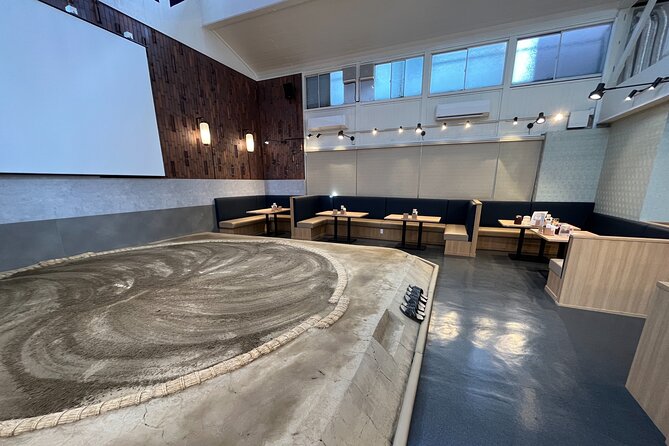
Your view will depend on your seat. Some tables are close to the dohyo, while others may be farther away. One useful expectation to set is that you might need to stand briefly to see a particular demonstration if your table is not near the ring. That is a seating issue, not a flaw in the performances, but it can affect how much you enjoy the visual side of the program.
The optional bout with a real sumo wrestler
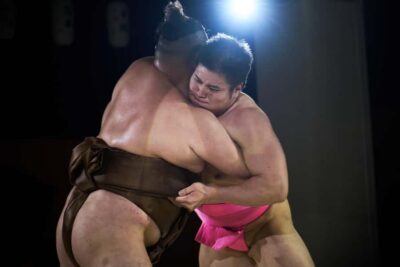
The most memorable part for many participants is the chance to enter the ring. You can put on a traditional sumo costume and challenge a retired wrestler in a friendly bout.
Participation is optional. You can watch others, take photographs, and enjoy the show without wrestling. That flexibility makes the activity work for mixed groups, since one person can be eager to compete while another prefers to stay seated.
If you do participate, keep your expectations sensible. The point is not to defeat a professional-sized athlete through strength alone. The wrestlers use the moment to demonstrate technique and create a funny, good-natured contest. One helpful attitude is to play along and enjoy the spectacle rather than treating it as a serious athletic test.
The activity can be especially entertaining for children and teenagers, though adults are encouraged to join as well. Families with children around nine and eleven have found the format engaging, and one family described it as one of the best parts of a Tokyo visit. The performers take time with different tables and make room for photographs, which helps the experience feel more personal.
You should follow staff instructions and use good judgment. The venue can ask anyone who causes trouble to leave without a refund. That rule is standard for an interactive event, but it is worth knowing before you arrive.
A completely different kind of day out in Tokyo:
- Mt Fuji and Hakone 1-Day Bus Tour Return by Bullet Train
★ 5.0 · 26,383 reviews - 1-Day Tokyo Bus Tour
★ 5.0 · 14,250 reviews - Tokyo: TOKYO SKYTREE® Admission ticket
★ 4.5 · 11,192 reviews - Tokyo: teamLab Planets TOKYO Digital Art Museum Entry Ticket
★ 4.6 · 9,779 reviews
Tonkatsu and chanko soup at the sumo table
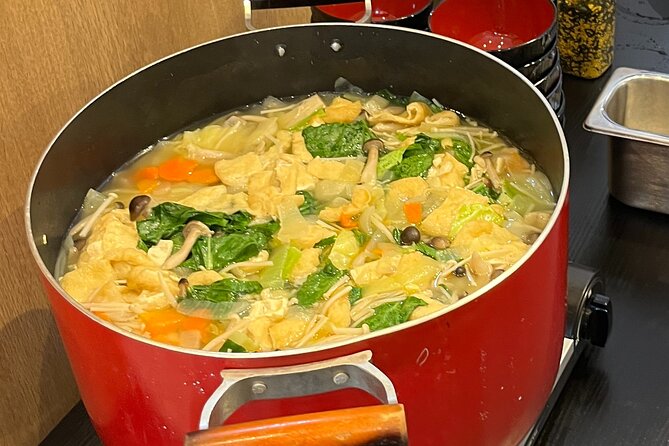
The meal includes tonkatsu and chanko soup. Tonkatsu is breaded, fried meat, while chanko is the hearty soup commonly associated with sumo wrestlers’ meals. Here, the food is prepared by the wrestlers, making lunch part of the cultural experience rather than a separate restaurant stop.
The food receives some of the strongest praise. Several people found the tonkatsu surprisingly good, and the chanko soup has earned particular affection. If you enjoy Japanese comfort food, this is a welcome addition to the ticket price.
Portions are the one area where expectations vary. Some people found the meal satisfying, while another left hungry and wished for a larger serving of chanko. If you have a large appetite, consider having a snack before or after the show. You will not be able to order drinks as part of the package, since beverages are not included.
Dietary needs can be accommodated if you request them in the special notes when booking. Vegetarian options are available on request, but the operator may not be able to respond to requests made fewer than five days before the event. Do not leave this until the last minute.
An occasional extra, such as ice cream, has been mentioned, but it is not part of the listed inclusions. I would treat that as a pleasant possibility, not something to count on.
Photos, costumes, and time with the performers
There is time for photographs with the wrestlers before the experience ends. The traditional costume makes the pictures more memorable than a standard group photo, especially if you take part in the bout.
The photo opportunity also helps round out the program. You get a chance to speak with the wrestlers, thank them, and capture a record of the afternoon instead of leaving immediately after the final demonstration. The performers are described as friendly, funny, and willing to spend time with each table.
This interaction is a major reason I would choose this experience over a purely passive show. You are not only watching a performance. You are meeting people who spent part of their lives inside the sport and seeing how easily they connect with an international audience.
At the same time, the event is built for a crowd. If you want a long private conversation with a wrestler or a detailed personal account of life in a stable, this is probably not the right format. You receive an accessible introduction and short interactions, not an extended interview.
What the $89.54 price really covers
At $89.54 per person, this is not a budget lunch. You are paying for several elements at once: a 90-minute hosted program, retired sumo wrestlers, demonstrations, audience participation, photographs, and a Japanese meal.
The price makes the most sense if you plan to take part. A person who only watches the show and eats lunch may find the cost high, especially if food portions feel modest. Someone who joins the ring, asks questions, takes photos, and treats the meal as part of a cultural activity is likely to get better value.
The included meal is important. Without lunch, the ticket would feel more expensive for a short performance. With tonkatsu and chanko soup included, the event becomes a compact cultural outing that combines entertainment, food, and instruction.
Group discounts are available, which can help families or larger parties. A mobile ticket also makes the booking process convenient, though you still need to wait for confirmation, which is sent within 48 hours and remains subject to availability.
The experience has a 4.9 rating from 1,960 reviews, with 98 percent recommending it. Those figures suggest a strong track record, but they do not remove the practical drawbacks. Seating, food quantity, and the premium price will matter more to some people than to others.
Timing, seating, and cancellation details
The program starts at 1:00 pm and lasts about one and a half hours. It ends at the same meeting point, so you can plan a later activity without arranging a separate return transfer.
Seating is assigned according to when reservations are received. Arriving early will not guarantee a better seat. If a close view matters to you, book earlier rather than assuming you can improve your position by showing up ahead of time.
For a full refund, cancel at least 24 hours before the local start time. Cancellations or changes made less than 24 hours before the event are not accepted for a refund. Date changes are also not allowed within three days of the experience, and flight delays or illness during that period are treated as cancellations.
Most people can participate, and the venue is near public transportation. Since the event includes an optional wrestling activity, you can choose your own level of involvement. The operator asks everyone to follow staff directions and act considerately.
Who will enjoy the SUMO show most
I would recommend this for families, first-time visitors to Japan, and anyone who wants a light cultural activity with plenty of laughs. Children can watch the demonstrations, learn the basic rules, and decide if they want to challenge a wrestler.
It also suits adults who want more than a photo in front of a sumo statue but do not have time to attend a full tournament. You get a short explanation of the sport, live demonstrations, and a chance to interact with retired wrestlers in one sitting.
The event is a good choice for a mixed group because participation is flexible. You can wrestle, watch, eat, take photographs, or simply enjoy the atmosphere. The friendly format has also worked well for a participant with special needs, according to one family.
I would think twice if you dislike audience participation, shared tables, or set menus. The show encourages interaction, and the seating arrangement is not fully under your control. If you want a serious, technical study of sumo or a formal tournament atmosphere, this experience will feel too light.
Should you book the SUMO show?
Yes, if you want an entertaining introduction to sumo and are happy to join in. The retired wrestlers, comic demonstrations, optional bout, and meal make this a memorable way to encounter a major part of Japanese culture without committing to a full day at a tournament.
Book it with three points in mind: the price is for an experience, not just lunch; seating may be shared or distant from the ring; and food portions may be light for a large appetite. Request vegetarian or allergy accommodations at least five days ahead.
For most families and first-time visitors, I think the mix of learning, laughter, photographs, and personal interaction earns the cost. If you are willing to step into the ring, the value gets even better.
FAQ
Where does the SUMO show take place?
It begins at Yokozuna Tonkatsu, located at 3-chōme-1-11 Tatekawa, Sumida City, Tokyo 130-0023, Japan.
What time does the experience start?
The scheduled start time is 1:00 pm.
How long does the SUMO show last?
The sumo demonstration and meal last approximately 1 hour and 30 minutes.
What food is included?
The package includes tonkatsu and chanko soup for lunch.
Are drinks included?
No. Drinks are not included in the price.
Can I wrestle a retired sumo wrestler?
Yes. You may challenge a retired wrestler in a friendly bout, but participation is optional.
Are dietary accommodations available?
Vegetarian and other dietary accommodations may be available if requested during booking. Requests should be made at least five days before the event date.
Will I have my own table?
Not necessarily. You may be asked to share a table with another group, and larger parties may not all sit together.
What is the cancellation policy?
You can receive a full refund if you cancel at least 24 hours before the experience start time. Cancellations or changes made less than 24 hours before the start are not accepted for a refund.
Just added around Tokyo
- Tokyo 6hr Instagram Highlights Private Tour with Licensed Guide★ 5.0 · 38 reviews
- Tokyo Small Group Tour with Guide★ 4.5 · 38 reviews
- Tokyo Sumo Experience with Live Show & Audience Challenge★ 5.0 · 38 reviews
- Japanese Food Cooking Class in Asakusa, Tokyo★ 5.0 · 39 reviews
- Very popular in Harajuku♡Animal petting zoo★ 4.6 · 39 reviews
- Ramen Making from Scratch with Tokyo Mom(Vegan Option Available)★ 5.0 · 39 reviews
- Tokyo JDM Night: 600hp C63s AMG Edition 1 (Private)★ 4.9 · 39 reviews
- Tokyo: Kimono Rental inside Shinjuku Gyoen National Garden★ 4.9 · 39 reviews
Sumo Experiences, compared.
Tokyo Shinjuku Sumo Show & Experience with Photo
Read our review →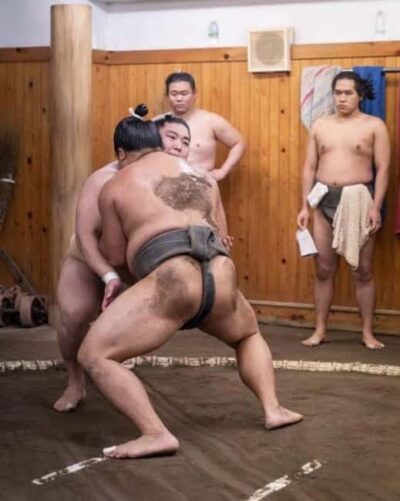
Sumo Show & Experience w/ Optional Kimono & Hot Pot
Read our review →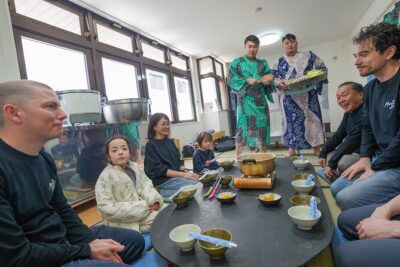
Authentic Sumo Experience in Tokyo: Enter the Sanctuary
Read our review →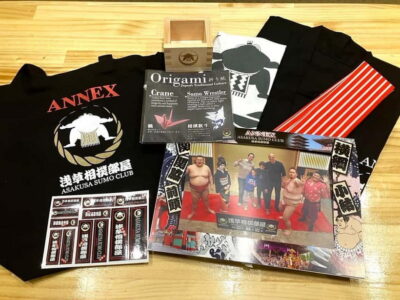
Luxury Sumo Show Experience & Japanese cuisine & Drink
Read our review →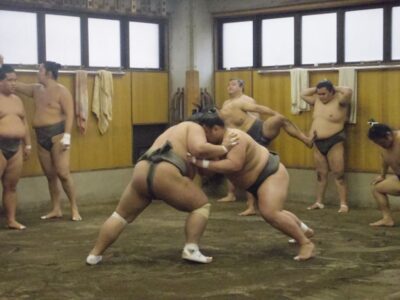
Browse the lists this tour appears in