
Reviewed · SUMO EXPERIENCES
Tokyo: Sumo Morning Practice Viewing Tour
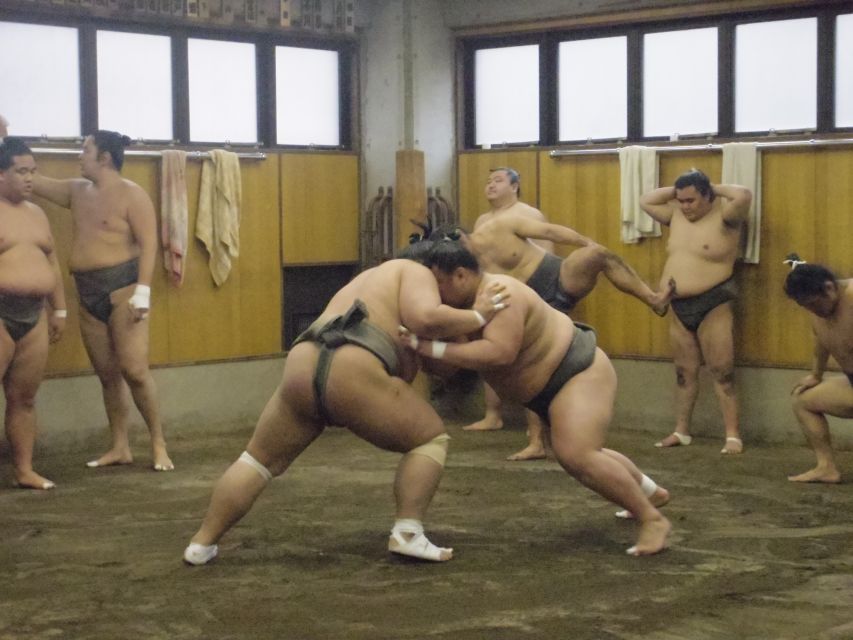
Sumo is far more than a tournament spectacle. This morning visit takes you inside a working sumo stable, where wrestlers live, train, eat, and chase the highest ranks in Japan’s national sport. You sit just a few feet from the action and watch the hard, repetitive work behind those brief bouts in the ring.
I like the genuine setting and the close view of training. I also like the way guides such as Yuko, Noriko, Oku San, Mako, and Kaz explain the rules and customs without drowning out the practice. The main consideration is simple: you must sit quietly and stay until the session ends, usually between 9:00 and 10:00 in the morning.
This is not a staged dinner show or a quick photo stop. It is a place of work, and the experience depends on your respect for that. At $81 per person, the price is high for a morning activity, but the access is rare, the setting is authentic, and the lessons can make a later tournament much easier to understand.
In This Review
- Key points before you book
- Why a sumo stable is worth your morning
- Meeting in Ryogoku, Tokyo’s sumo neighborhood
- The 15-minute introduction to sumo
- Entering the stable and taking your seat
- Watching 60 to 90 minutes of hard training
- Learning without breaking the silence
- Famous wrestlers and stable differences
- Photos after practice, if the day allows
- Is $81 a fair price?
- Who will enjoy this most?
- Practical advice for a smooth morning
- Should you book the Tokyo sumo stable visit?
- FAQ
- How long does the sumo morning practice tour last?
- What time does the practice finish?
- Where does the tour meet?
- Is the stable located in Ryogoku?
- Can I take photos inside the stable?
- Can I record video during practice?
- Can I leave the stable during practice?
- Is the tour suitable for children?
- Is the tour suitable for people with mobility impairments?
- What language is the tour conducted in?
- Are food and drinks allowed inside?
Key points before you book
- You watch a real training session: Expect roughly 60 to 90 minutes of practice, not a short demonstration arranged for tourists.
- The view is unusually close: Seating is inside the stable, often only a few feet from the wrestlers.
- Ryogoku is the right neighborhood: The stable is in Tokyo’s sumo district, close to the National Sumo Arena and other stables.
- Silence is part of the experience: Phones must be silent, and you cannot stand, wander, eat, drink, or record video during practice.
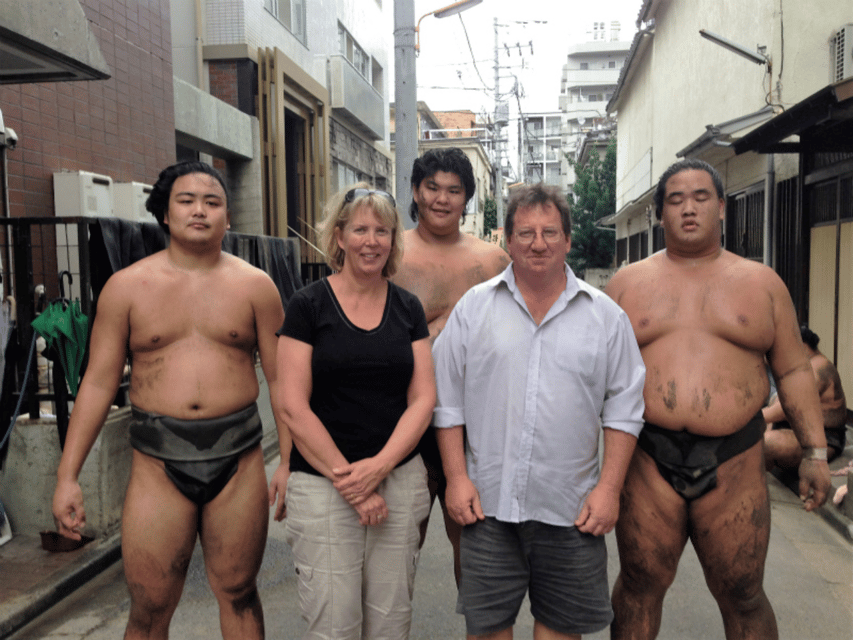
- Photos with wrestlers may be possible: This depends on the stable and the day, so treat it as a bonus rather than a promise.
- The best seats go early: Groups are seated according to arrival, and an early arrival can mean a front-row view.
Why a sumo stable is worth your morning
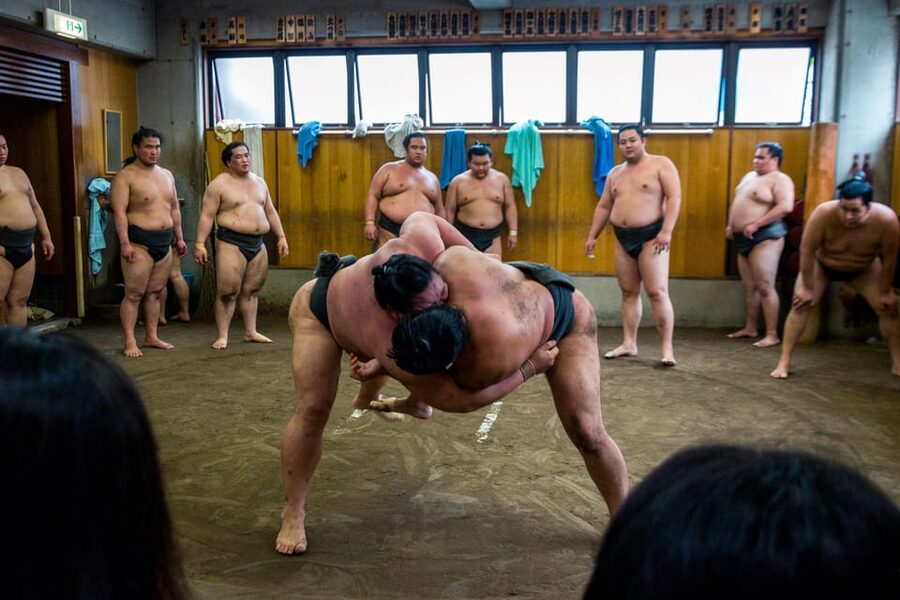
A tournament shows you the finished product. A stable shows you the work behind it.
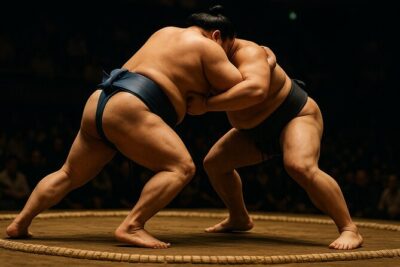
Sumo wrestlers train from early morning, often almost every day. Their practice includes drills, technique work, repeated clashes, and bouts watched closely by the stable master and coaches. You see how much effort goes into a sport where an actual match may last only seconds.
That contrast is what makes the visit valuable. On television, sumo can look slow until the wrestlers collide. From a few feet away, the force is harder to miss. One person described the sound and power of the practice as enough to make you shudder at first. That is a useful warning: this is physical training, not a gentle cultural demonstration.
The sport also has strong ties to Shinto beliefs. The rituals, manners, ring customs, and strict structure are not decorations added for an audience. They are part of sumo’s identity. A good English-speaking guide helps you understand what you are seeing, especially if you know little about the sport.
I especially value the quiet format. During the practice, the guide may pass written notes or explanation cards rather than speaking loudly. That lets you follow the action while respecting the wrestlers. It also means you should not expect a running commentary every second.
More Sumo Experiences in Tokyo
- Tokyo: Sumo Show Experience with Chicken Hot Pot and a Photo
★ 4.8 · 6,678 reviews - Tokyo: Sumo Show and Dining Experience
★ 4.8 · 2,742 reviews - the SUMO show
★ 5.0 · 1,960 reviews
Meeting in Ryogoku, Tokyo’s sumo neighborhood
The exact meeting point depends on the option you book, so read your confirmation carefully. Some groups meet and then take a train to the stable. From there, the walk may be around 15 minutes, and guides help keep the group together.
Ryogoku gives the morning a useful sense of place. This is Tokyo’s sumo district, home to the National Sumo Arena and several stables. One visitor noticed two other stables while walking through the area, and the stable used for the visit was less than a 10-minute walk from the arena in that case.
I recommend arriving early. The meeting point can be a little hard to identify, and one person wished for a clearer picture of the exact location. Extra time solves both problems. It also improves your chance of sitting near the front once the group reaches the stable.
The walk is not just dead time. Depending on the guide, you may hear about Ryogoku, sumo customs, the local area, and the tournaments for which the wrestlers are preparing. Guides such as Noriko and Yuko have been praised for explaining the surroundings as well as the sport.
The 15-minute introduction to sumo
Before reaching the stable, your guide explains the basic idea of sumo. The goal is to force an opponent out of the ring or make any part of the opponent’s body, apart from the soles of the feet, touch the ground.
You also get an introduction to ranks, training, tournaments, and the daily life of wrestlers. The exact amount of detail depends on the guide and the group, but the best explanations cover both the technical side and the cultural rules.
This briefing matters because the training can look repetitive at first. Once you know what to watch for, the movements become more interesting. You begin to notice balance, foot placement, timing, grip, and the way a wrestler reacts after a clash.
The guides tend to receive the strongest praise for this part of the experience. Yuko has been described as warm, organized, and clear. Oku San brought humor as well as practical instructions. Taku, Mako, Kaz, Miwako, Tad, and Noriko have also been singled out for making the sport easier to understand.
Do not expect a lecture on every detail before entering. The stable is still a working place, and the guide’s first duty is to explain how you should behave once practice begins.
Entering the stable and taking your seat
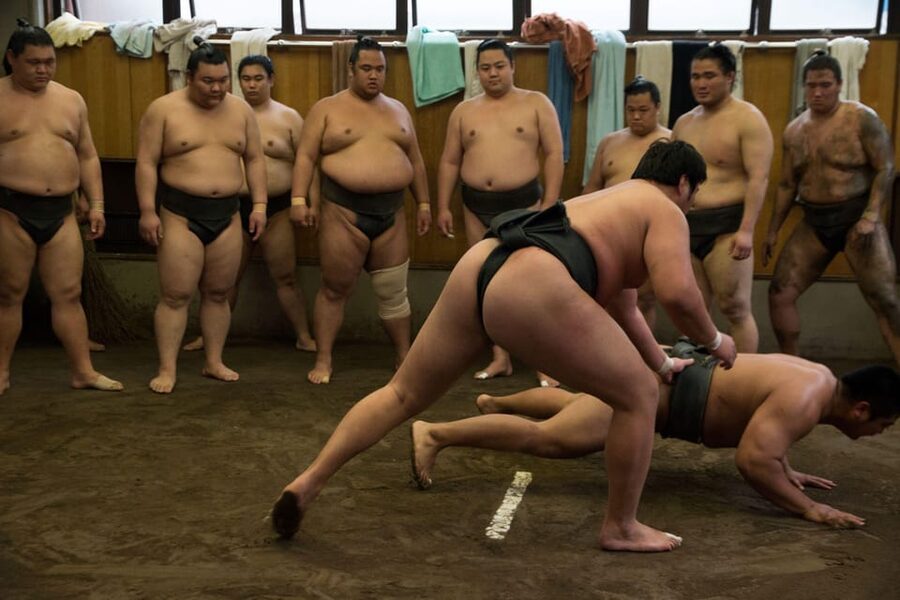
The stable is not normally open to the general public. Access has traditionally been associated with sponsors and people connected to the sport, so entering one as a visitor is unusual even for many Japanese residents.
That rarity explains much of the price. You are not simply buying a talk about sumo. You are being brought into a private training setting where the wrestlers live and work.
Inside, you sit on the floor and remain in place. Modest clothing is required. Hats and sunglasses are not allowed, and you cannot bring food or drinks into the stable. Your phone must be silent, and flash photography is prohibited.
The rules may sound strict, but they protect the practice. The wrestlers are preparing for serious competition, and the stable is not a theater with a show schedule designed around audience comfort. You need to treat the room as a quiet observation area.
Seating is generally arranged by arrival. This can make a real difference. Front-row seats offer the clearest view and better photo chances, while sitting at the side or farther back can make pictures more difficult. One group arrived before another tour and still found the front row taken, so early arrival helps, but it cannot guarantee the best position.
A completely different kind of day out in Tokyo:
- Mt Fuji and Hakone 1-Day Bus Tour Return by Bullet Train
★ 5.0 · 26,383 reviews - 1-Day Tokyo Bus Tour
★ 5.0 · 14,250 reviews - Tokyo: TOKYO SKYTREE® Admission ticket
★ 4.5 · 11,192 reviews - Tokyo: teamLab Planets TOKYO Digital Art Museum Entry Ticket
★ 4.6 · 9,779 reviews
Watching 60 to 90 minutes of hard training
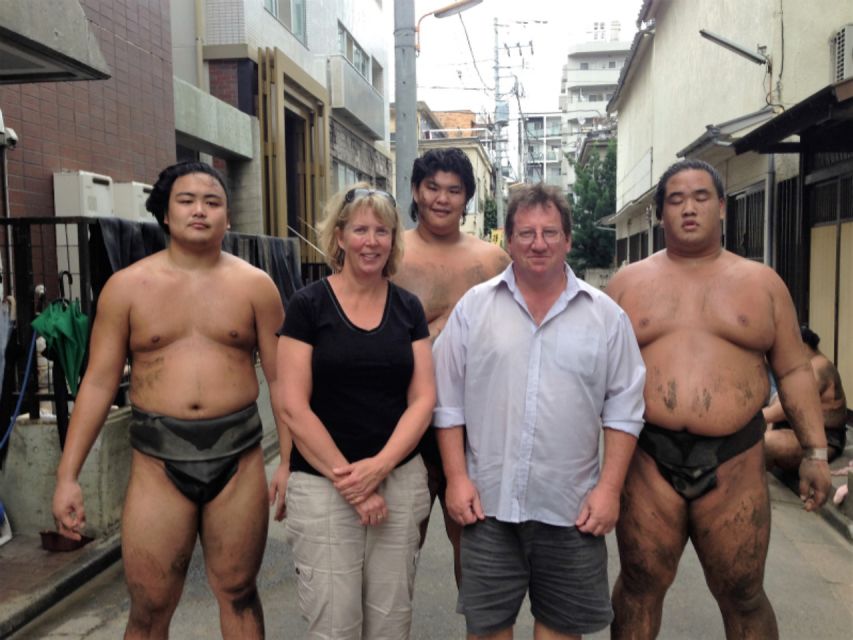
The central part of the visit lasts about an hour to an hour and a half. You stay until the practice ends, and the overall experience lasts about 90 minutes to two hours.
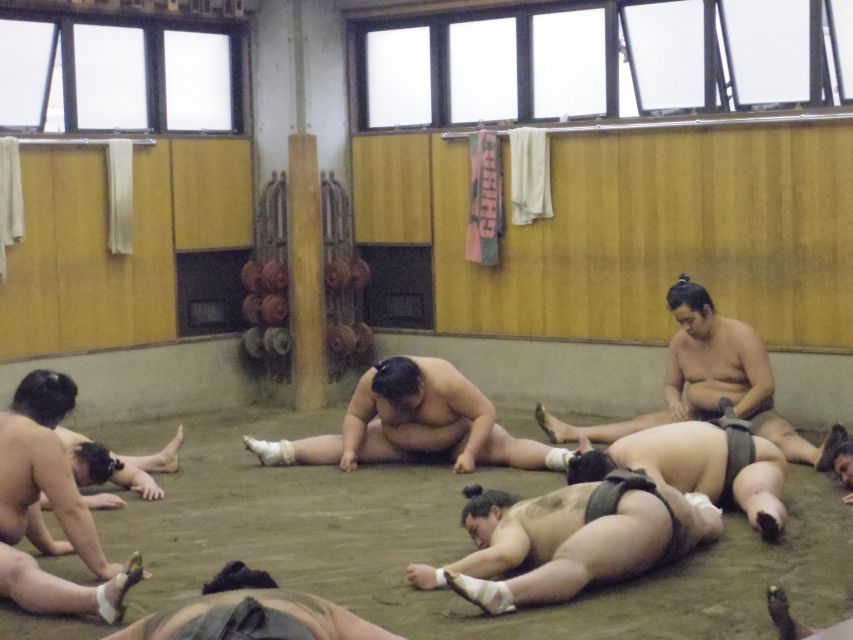
You may see wrestlers work through drills and technique practice before facing one another in bouts. The training can be repetitive, but that repetition is the point. Sumo strength is built through thousands of careful movements, not a single dramatic match.
The close distance changes how you read the sport. You can see the wrestlers prepare, collide, reset, and listen to instructions from the stable master or coach. You also notice that sumo is not only about size. Balance, timing, leverage, footwork, and split-second decisions matter.
A visitor with a martial arts background found the tactics and training drills especially rewarding. You do not need that background to enjoy the session, though. The physical commitment is easy to understand, even when the Japanese terms are new.
The practice may become quiet and repetitive for some people. You cannot stand to stretch, move around, or leave for a break. One honest assessment described the experience as less suitable for anyone who cannot remain still and quiet for a long period.
That is the key test. If you want constant action, this may feel slow. If you can watch details and appreciate disciplined practice, the hour can pass quickly.
Learning without breaking the silence
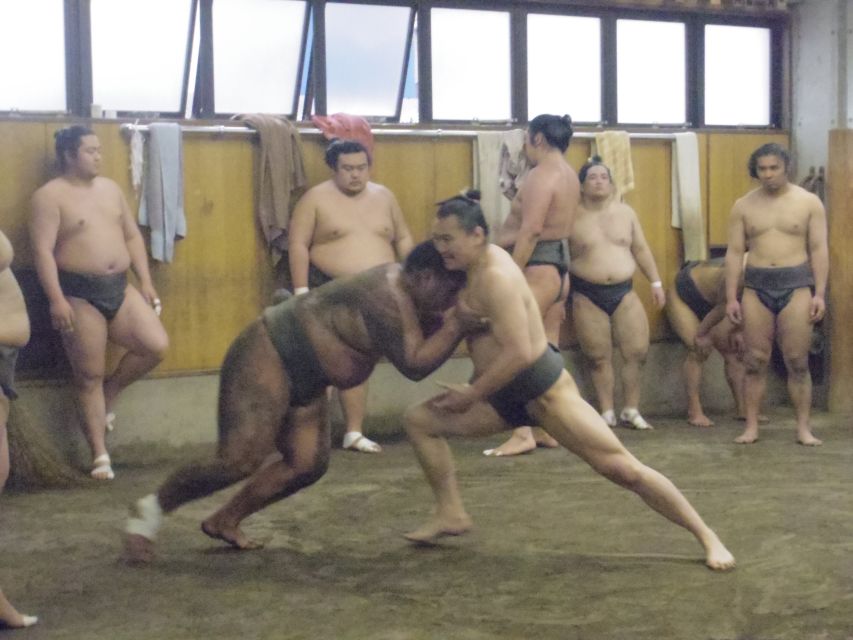
Because the group must remain quiet, the guide may use written cards, notes, or a printed help sheet. These can explain the names of wrestlers, describe a drill, or point out an important moment.
This system works well when the group is close to the action but cannot talk. It also avoids the common problem of a guide speaking over the sport. Still, sound can be difficult during a clash. One person found it hard to hear the guide’s quiet explanations at certain moments, so you should expect a few details to be missed.
That is not really a flaw in the tour. It is the cost of watching a real practice respectfully. The experience asks you to accept less conversation in exchange for better access to the training.
The guide also answers questions before or after practice. In some cases, the stable master has answered questions directly. One stable master was described as a former wrestler with a great deal of practical experience, while another visit included a useful question-and-answer session afterward.
The quality of the guide matters here. You are not only watching large athletes push one another around. You are learning how an old Japanese sport works and why the training is structured as it is.
Famous wrestlers and stable differences
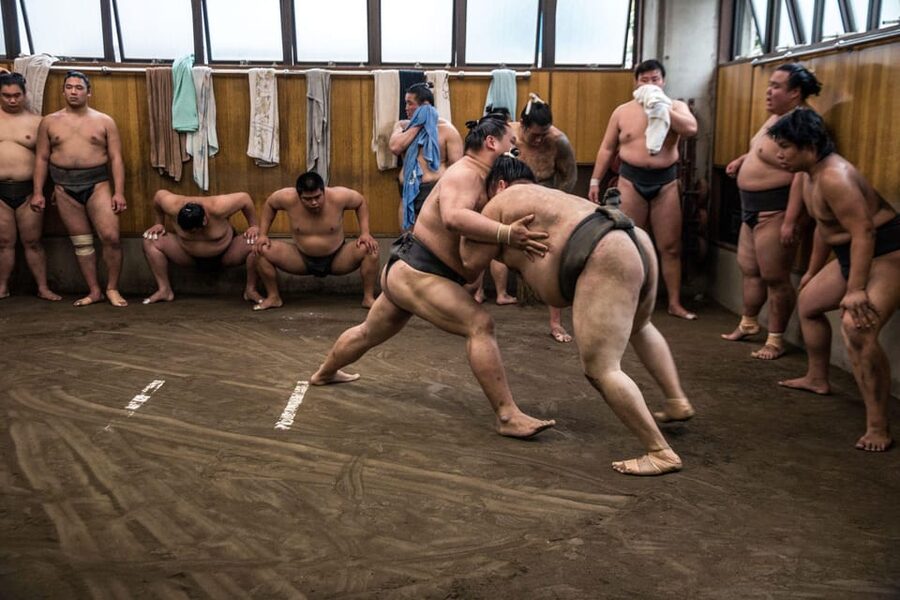
The stable you visit depends on the day and the training schedule. You should not book this expecting to see a particular wrestler or stable.
That said, the chance encounters can be remarkable. One visitor saw Terunofuji overseeing around 20 wrestlers at Isegahama Stable, along with well-known competitors such as Enho and Takerufuji. Another group watched wrestlers at Arashio Stable.
Those names are not guaranteed, but they show the kind of access that can occur. The stable master and coaches may be present, and the session can include wrestlers at different stages of their careers. You are watching a working group, not a cast selected for a performance.
Training schedules also affect what you see. A group may need to leave just as the top-ranked wrestlers begin their practice. That can be frustrating if you hoped to see every major figure in the stable, but it is another reason to view the tour as a window into daily life rather than a guaranteed celebrity sighting.
Photos after practice, if the day allows
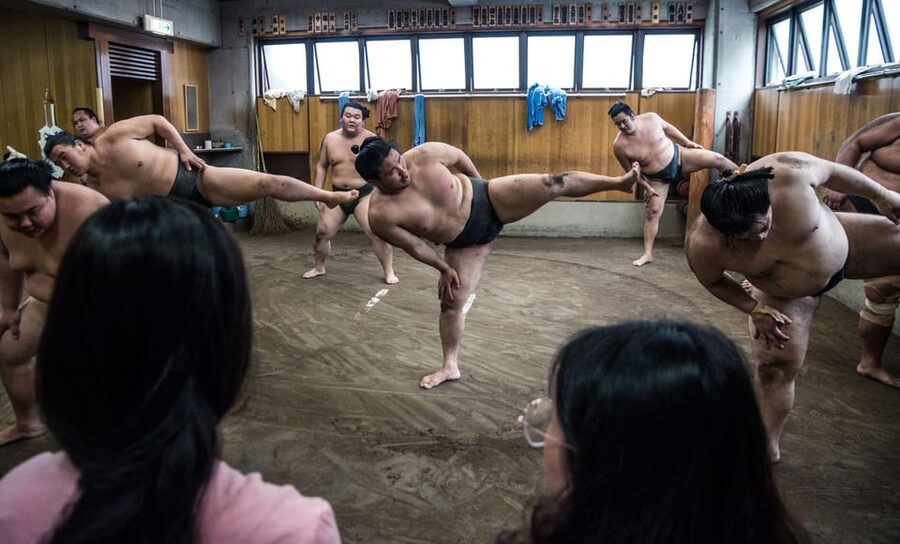
Photos with wrestlers may be available after the training. When it happens, it is a memorable end to the visit, and several people were pleased to take pictures with one or more wrestlers.
Do not count on it. The information clearly says photos depend on the day, and the stable’s schedule comes first. The wrestlers may need to continue their routine, or the conditions may not allow a photo session.
The no-video rule is firm. You cannot record the practice, and flash photography is not allowed. This may disappoint you if you want footage for social media, but it encourages you to watch the session instead of holding a phone between yourself and the action.
If you get a photo, follow the guide’s instructions and keep the moment brief and respectful. The photo is an extra, not the main reason to book.
Is $81 a fair price?
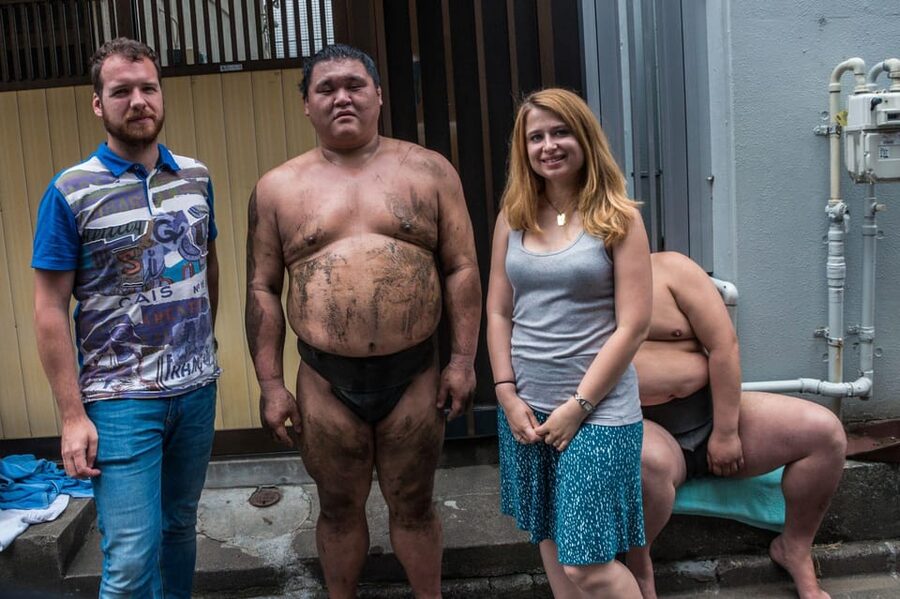
At $81, this is not a cheap way to fill an hour in Tokyo. You could visit the Ryogoku area for much less, and a tournament ticket offers a different kind of sumo experience.
The value comes from access. A tournament places you in an arena with a large crowd and a formal schedule. This tour takes you into a real stable, gives you a close view of daily practice, and provides an English explanation of customs and technique.
I think the price is fair if sumo is a priority or if you cannot attend a tournament. It also makes sense if you want a cultural experience that is not a staged show. The price may feel high if you are only mildly curious, especially because the session can be quiet, repetitive, and strict.
Think of it as an introduction to the sport and a behind-the-scenes visit, not a replacement for tournament day. If you can attend both, the stable visit may help you understand what happens in the arena. One person visited a tournament later the same day and found the improved understanding made the competition more enjoyable.
Free cancellation up to 24 hours before the activity and reserve-now, pay-later booking make the commitment easier, but the practical issue is your morning schedule. Do not plan a tight appointment immediately afterward because the practice can end earlier or later than expected.
Who will enjoy this most?
I would recommend this to adults and older children with a real interest in Japanese culture, traditional sports, martial arts, or the daily discipline of elite athletes. The minimum age is 11, and that rule makes sense.
You need to sit on the floor, remain quiet, and stay until the end. People who enjoy observing small details will get more from the visit than people looking for constant interaction.
It is also a good choice for anyone unable to secure a tournament ticket. You receive a serious look at the sport without needing to understand every rule first.
I would be cautious about booking it for a family with restless children. The restrictions are not flexible, and leaving the stable means you cannot re-enter. The experience is also not suitable for people with mobility impairments.
Practical advice for a smooth morning
- Arrive early, both to find the meeting point and to improve your seating position.
- Wear modest clothes suitable for sitting on the floor.
- Leave hats, sunglasses, food, and drinks behind.
- Put your phone on silent before entering.
- Do not expect to stand, move around, or take a break during practice.
- Bring patience. The session may be shorter or longer than expected.
- Keep your morning open until the practice is finished.
- Treat photos with wrestlers as a possible extra, not a guaranteed part of the visit.
- Follow the guide’s instructions about trains, walking, seating, and stable etiquette.
The ending location may differ from the starting point, so do not assume you will finish exactly where you met. Ryogoku’s sumo attractions and meal restaurants make it easy to continue exploring the area afterward.
Should you book the Tokyo sumo stable visit?
I would book it if you want to see sumo as a lived tradition rather than a packaged performance. The close seating, real training, local explanations, and chance to meet wrestlers create a rare morning in Tokyo.
I would skip it if you dislike floor seating, silence, fixed rules, or repetitive athletic practice. For everyone else, especially people who cannot attend a tournament, $81 buys meaningful access to a part of Japan that most visitors only see from the grandstand.
FAQ
How long does the sumo morning practice tour last?
The experience lasts about 90 minutes to two hours. The training itself usually lasts around 60 to 90 minutes, depending on the day.
What time does the practice finish?
You must stay until the practice ends, usually around 9:00 to 10:00 AM. The exact ending time can vary.
Where does the tour meet?
The meeting point can vary depending on the option booked. After meeting, the group may take a train to the sumo stable.
Is the stable located in Ryogoku?
Yes. The stable is in Ryogoku, Tokyo’s well-known sumo district, near the National Sumo Arena and other sumo-related sights.
Can I take photos inside the stable?
Photos may be allowed, and photos with wrestlers are available when conditions permit. Flash photography is not allowed.
Can I record video during practice?
No. Video recording is not allowed during the visit.
Can I leave the stable during practice?
You must stay until the end of the practice. Once you leave the stable, you cannot re-enter.
Is the tour suitable for children?
The tour is not suitable for children under 11 years old. Everyone must remain quiet, still, and respectful during the training.
Is the tour suitable for people with mobility impairments?
No. The experience is listed as unsuitable for people with mobility impairments, and seating takes place on the floor.
What language is the tour conducted in?
The tour includes a live English-speaking guide.
Are food and drinks allowed inside?
No. Food and drinks are not allowed in the stable. Hats and sunglasses are also prohibited.
Just added around Tokyo
- Tokyo 6hr Instagram Highlights Private Tour with Licensed Guide★ 5.0 · 38 reviews
- Tokyo Small Group Tour with Guide★ 4.5 · 38 reviews
- Tokyo Sumo Experience with Live Show & Audience Challenge★ 5.0 · 38 reviews
- Very popular in Harajuku♡Animal petting zoo★ 4.6 · 39 reviews
- Japanese Food Cooking Class in Asakusa, Tokyo★ 5.0 · 39 reviews
- Ramen Making from Scratch with Tokyo Mom(Vegan Option Available)★ 5.0 · 39 reviews
- Tokyo: Kimono Rental inside Shinjuku Gyoen National Garden★ 4.9 · 39 reviews
- Tokyo JDM Night: 600hp C63s AMG Edition 1 (Private)★ 4.9 · 39 reviews
Sumo Experiences, compared.
Tokyo Shinjuku Sumo Show & Experience with Photo
Read our review →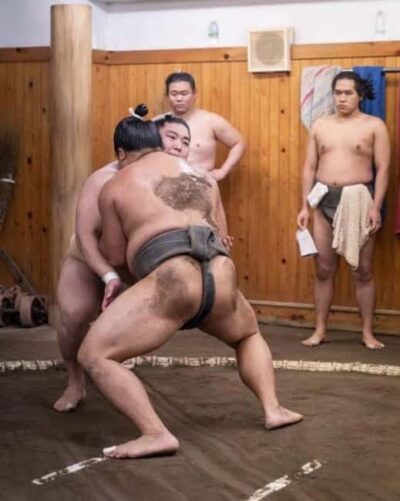

Sumo Show & Experience w/ Optional Kimono & Hot Pot
Read our review →
Authentic Sumo Experience in Tokyo: Enter the Sanctuary
Read our review →
Luxury Sumo Show Experience & Japanese cuisine & Drink
Read our review →Browse the lists this tour appears in