
Reviewed · SUMO EXPERIENCES
Tokyo: Sumo Show Experience with Chicken Hot Pot and a Photo
Sumo gets wonderfully close here. At the Asakusa Sumo Club, you sit around a real dohyo, learn the basics from a bilingual presenter, watch retired professional wrestlers perform, and eat chicken hot pot as the action unfolds. It is less a serious sporting event than a polished cultural dinner show, which is exactly why it works so well for families and first-time sumo fans.
I like the way the show makes an unfamiliar sport easy to follow, with clear explanations of rituals, rules, and wrestling techniques. I also like the generous package: all-you-can-eat chanko-nabe, Japanese side dishes, one drink, a printed photo, and a souvenir set are included. The main consideration is that the matches are entertainment, not an official tournament or morning stable practice, and the food selection may feel limited if you expect a large restaurant buffet.
In This Review
- Key points to know before booking
- Entering a real dohyo in Asakusa
- The opening: geisha dance and a sense of ceremony
- Learning sumo without needing prior knowledge
- The best-of-three match is entertainment first
- The sumo challenge: your chance to enter the ring
- Chicken hot pot and the all-you-can-eat meal
- What the $103 price really includes
- The closing photo and souvenir gift bag
- Who will enjoy this most
- Practical advice for choosing your seat and meal
- Should you book the Asakusa Sumo Club show?
- FAQ
- How long does the Tokyo sumo show last?
- How much does the experience cost?
- Is the commentary available in English?
- Is this an official sumo tournament?
- Can I challenge a sumo wrestler?
- What food is included?
- Are drinks included?
- Are vegetarian or vegan meals available?
- Is the experience wheelchair accessible?
Key points to know before booking
- A real sumo ring sits at the center of the room, so every seat has a direct view of the demonstrations and matches.
- The show is performed by retired professional sumo wrestlers, with a playful style suited to adults and children.
- English and Japanese commentary explains sumo customs, techniques, rules, and rituals as the program unfolds.
- A geisha dance opens the entertainment, adding a traditional Japanese performance before the wrestling begins.
- Audience members can challenge a wrestler, although places are limited and may be assigned by lottery.
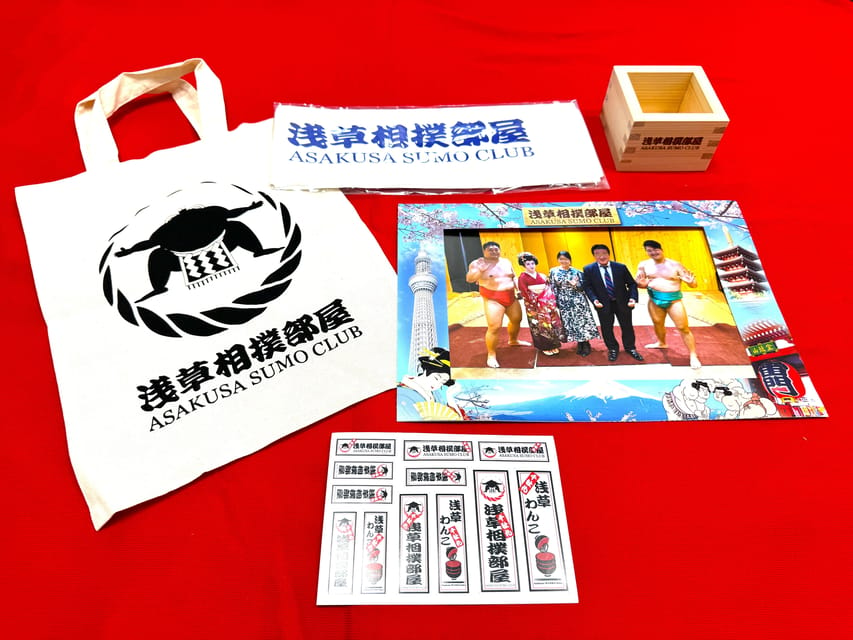
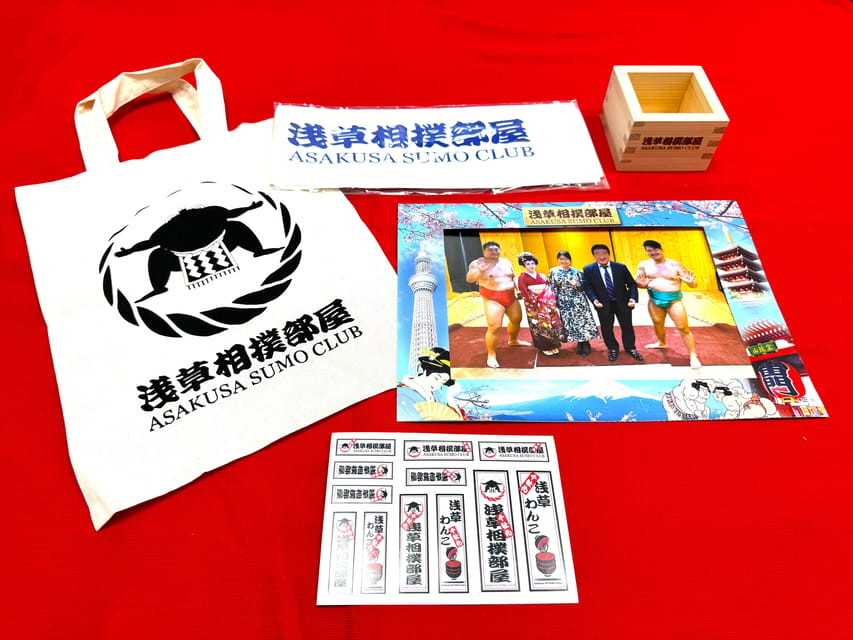
- The $103 price includes more than the show, including food, one drink, a framed or printed photo, and a souvenir gift set.
Entering a real dohyo in Asakusa
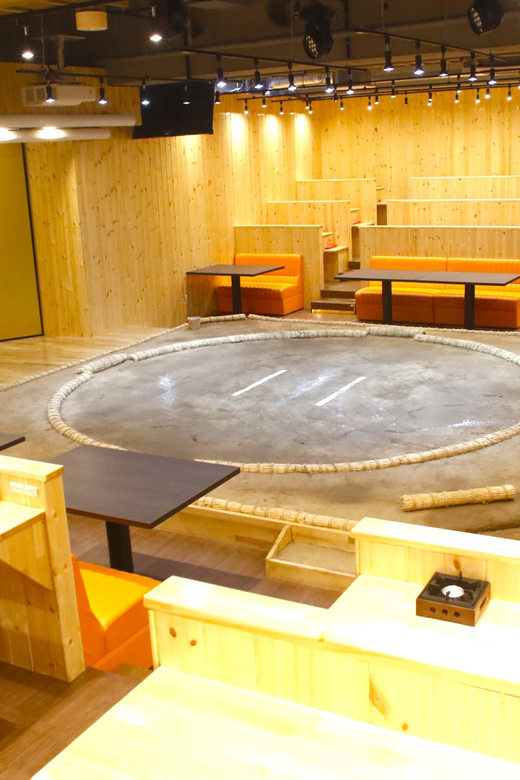
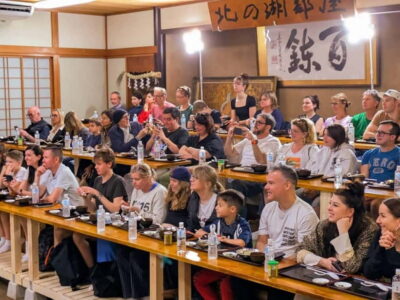
The strongest feature of this experience is the setting. A genuine sumo ring occupies the middle of the restaurant, with tables arranged around it. You are not watching a distant stage from the back of a theater. You are close enough to follow the wrestlers’ footwork, expressions, and comic reactions.
That layout also makes the two-hour program feel social. The wrestlers can play to different sections of the room, and the presenter keeps the audience involved instead of leaving you to work out what is happening. Standard seats provide a clear view, while VIP seating places you in the front row. VVIP seating offers the most central and unobstructed position.
The upgrade matters most if you care about photographs or want to see the physical details of each movement. Standard seating should be adequate for families and most first-time visitors, since all seats are arranged around the ring. If you are celebrating a special occasion or want the closest possible view, VIP is the more sensible splurge. VVIP is for people who want the best central position and do not mind paying more for it.
You may be seated with other people. That is worth knowing if you are booking as a couple or a small family and expect a private table. In practice, the shared layout fits the friendly, interactive nature of the show.
More Sumo Experiences in Tokyo
- Tokyo: Sumo Show and Dining Experience
★ 4.8 · 2,742 reviews - the SUMO show
★ 5.0 · 1,960 reviews - Tokyo Shinjuku Sumo Show & Experience with Photo
★ 5.0 · 1,750 reviews
The opening: geisha dance and a sense of ceremony
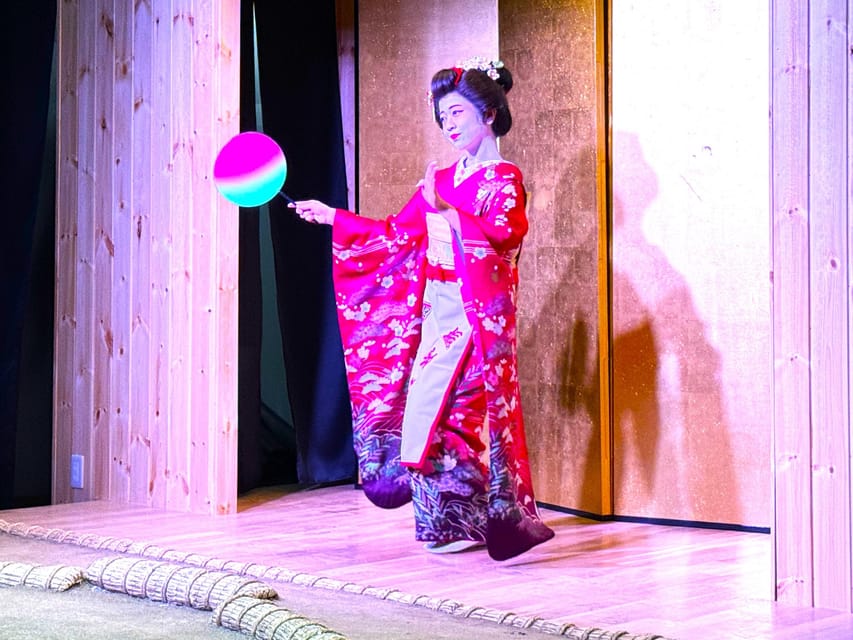
Before the sumo begins, a geisha performs a traditional Japanese dance in an elegant kimono. This gives the evening a calmer opening and introduces a different side of Japanese performance culture before the noisy, physical comedy of the wrestling starts.
The dance is not a long lecture or museum display. It is a live performance, and its value comes from the contrast. Sumo can look rough and loud, while the geisha dance is controlled and graceful. The pairing makes the program feel broader than a wrestling demonstration alone.
If you have never seen a geisha perform, this may be one of the most memorable parts of the evening. It also gives children a quick change of pace before the sumo action begins. The final souvenir photo can include the wrestlers and geisha, giving you a keepsake that reflects both parts of the program.
Learning sumo without needing prior knowledge
The bilingual moderator explains the sport in English and Japanese. You will hear about sumo’s long connection with Japanese culture, the rituals around entering the ring, basic rules, and the techniques used to move an opponent.
That explanation is important because sumo can seem simple at first glance. Two large wrestlers push, pull, and try to force each other out of the ring. The presentation helps you notice the details: stance, balance, timing, hand placement, and the ways a smaller or quicker wrestler can use technique rather than brute force.
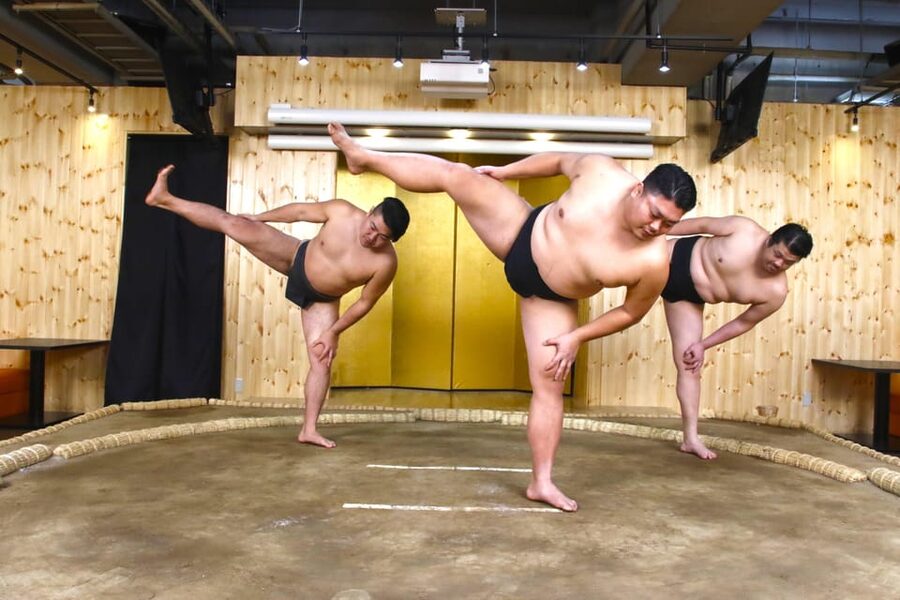
The program also includes demonstrations of morning exercises and classic sumo moves. This is a useful distinction from simply watching two people wrestle. You see some of the discipline behind the sport, then understand how those movements appear in a match.
The tone stays light. The presenter uses humor and audience interaction, and the wrestlers play along. Names such as Asanokuma and Asanohide have been singled out by people who enjoyed the performers’ comic timing, but the exact cast can vary. The host is a major part of the evening, too. Lala and Benjamin have both been praised for keeping the explanations lively, though one person found the host’s style less appealing than the rest of the program.
The best-of-three match is entertainment first
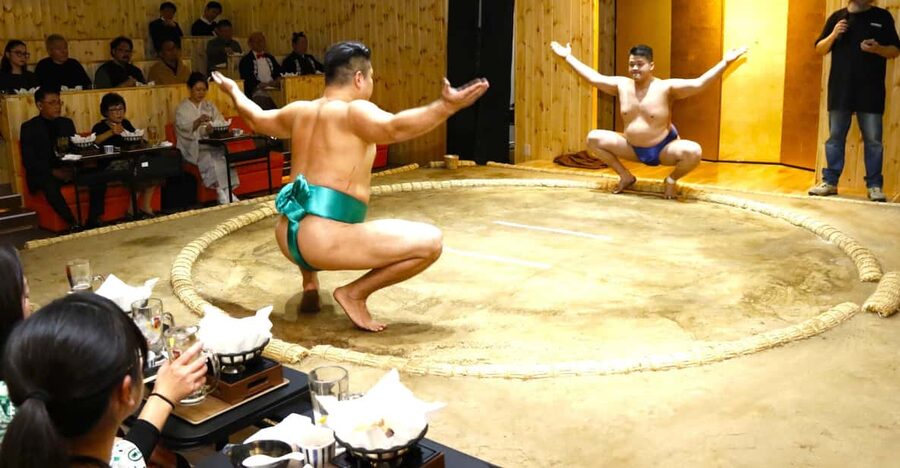
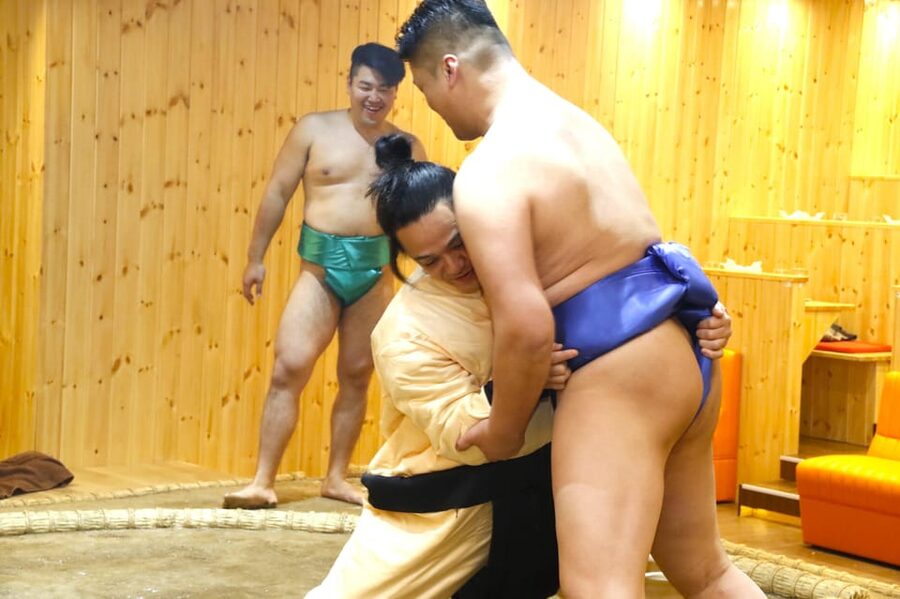
The main event is a best-of-three match between retired professional sumo wrestlers. These men know the sport, and their size and technique make the demonstrations impressive. At the same time, the mood is playful rather than fierce.
You should arrive expecting a staged entertainment show, not the tension of a professional tournament. The wrestlers exaggerate reactions, interact with the room, and make the action accessible to people who have never watched sumo. That approach is especially effective with children, who may not have the patience for a formal sporting event.
The show’s humor does not remove all educational value. You still see traditional moves and learn how a match is decided. The balance is its appeal: enough real technique to teach you something, enough comedy to keep the room involved.
If you are a serious sumo follower hoping to observe athletes preparing for an official bout, choose a morning practice or stable visit instead. This experience is designed for a fun evening out. The description is clear about that, and the distinction should prevent disappointment.
A completely different kind of day out in Tokyo:
- Mt Fuji and Hakone 1-Day Bus Tour Return by Bullet Train
★ 5.0 · 26,383 reviews - 1-Day Tokyo Bus Tour
★ 5.0 · 14,250 reviews - Tokyo: TOKYO SKYTREE® Admission ticket
★ 4.5 · 11,192 reviews - Tokyo: teamLab Planets TOKYO Digital Art Museum Entry Ticket
★ 4.6 · 9,779 reviews
The sumo challenge: your chance to enter the ring
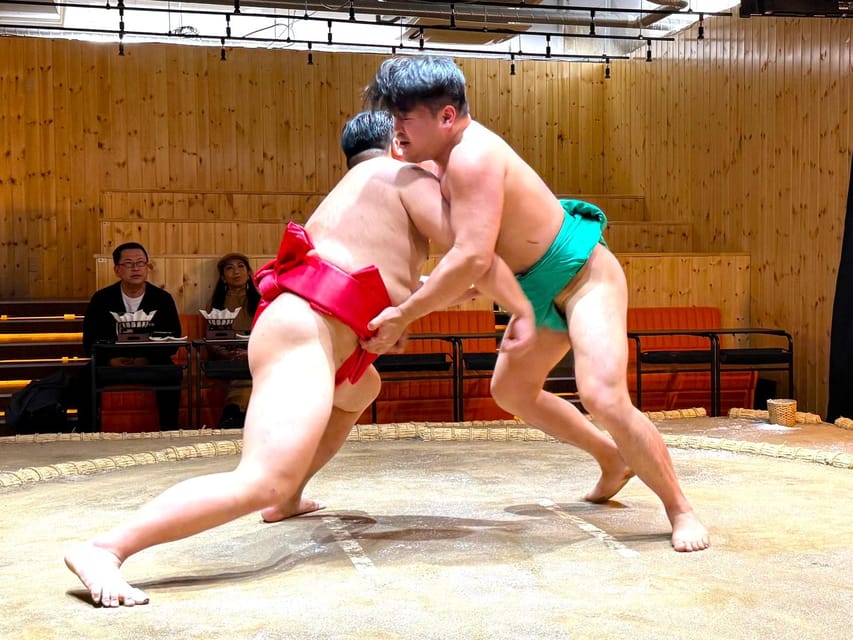
The audience challenge is one of the most popular parts of the program. A few people are invited to step into the dohyo and face a sumo wrestler. It is a memorable way to understand the sport’s physicality, even if you are quickly reminded that size, balance, and experience matter.
Challenge positions are limited. If many people volunteer, participants are selected by lottery, so you should not book this experience assuming you will wrestle. Children can enjoy watching the challenge even when they are not selected, and several families have found that the opportunity adds a strong finish to the show.
The interaction is handled as entertainment, not as a dangerous contest. Still, you should follow the staff’s instructions and consider your own comfort before volunteering. The attraction is the shared laugh and the chance to stand in a real sumo ring, not proving that you can defeat a retired professional.
For many people, this is the moment that turns a good dinner show into a story they will still be telling after returning home. It also gives children a clear highlight to anticipate during the earlier explanations.
Chicken hot pot and the all-you-can-eat meal
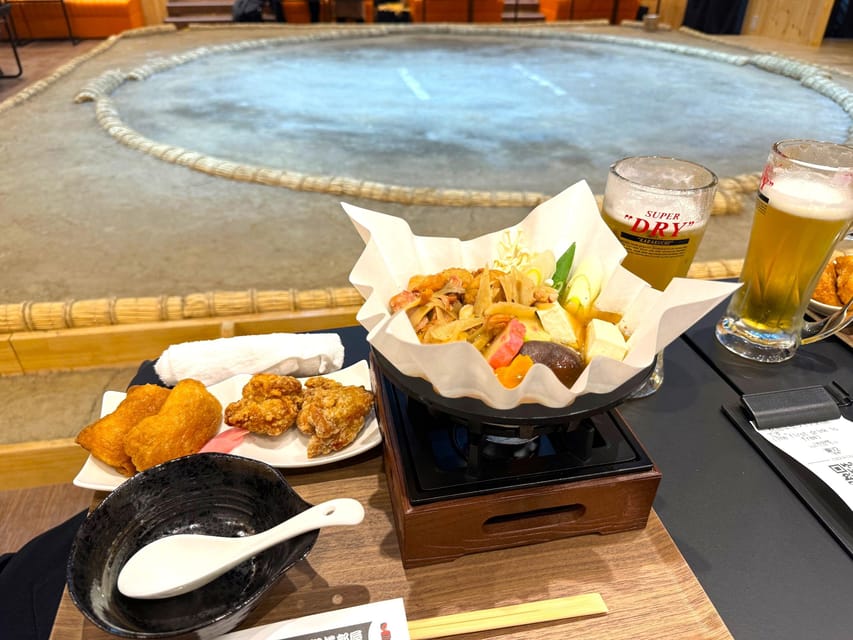
Food is served during the show, with chicken chanko-nabe as the main dish. Chanko-nabe is closely associated with sumo wrestlers, traditionally providing a hearty communal meal. Here, the hot pot helps connect the dinner to the theme rather than feeling like an unrelated restaurant course.
The meal also includes Japanese dishes such as edamame, inari sushi, and sweet rolls. Exact side dishes can vary, but the overall offering is more than just soup and chicken. You receive one complimentary drink, and additional drinks can be purchased.
The all-you-can-eat format is a strong part of the value. You can order more using a QR code, and some food or drinks can be ordered in whole portions or smaller parts. That flexibility is useful if one person wants another serving while someone else has had enough.
Food quality has generally been praised, especially the chicken and broth. One person felt that the food selection was limited, so I would not choose this experience solely for culinary variety. Think of the meal as a generous, filling accompaniment to the show rather than a fine-dining event.
There is also a practical point about the hot pot setup. Some tables use paper bowls over an open flame, which can make cautious diners nervous. Staff guidance matters here, particularly if you are dining with children. The setup is part of the shared hot pot experience, but it may feel less familiar than a standard restaurant meal.
Vegetarian and vegan meals are available if requested at least two days ahead. Gluten-free and halal meals are not provided, though you may bring your own food for dietary reasons. Infants do not receive meals, seating, or souvenirs as part of the package.
What the $103 price really includes
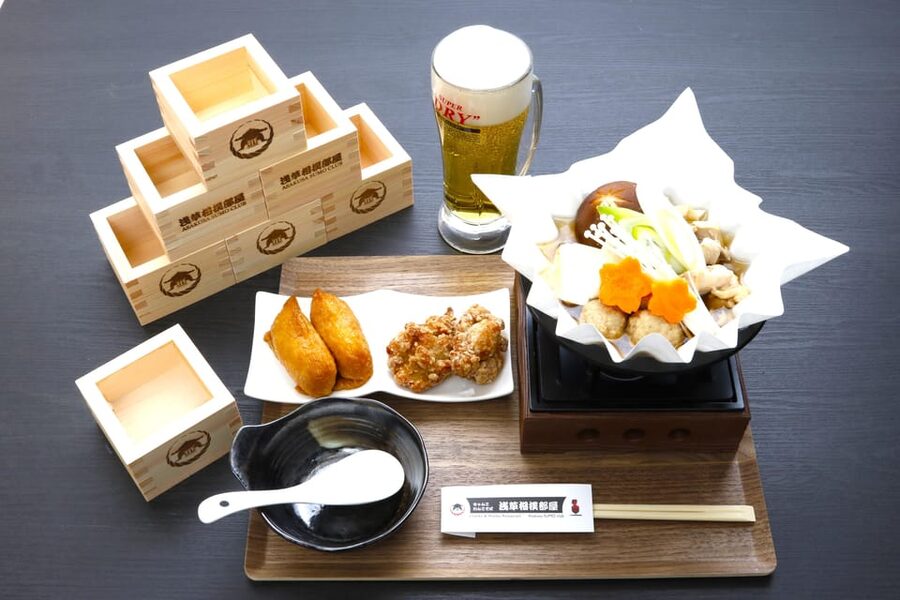
At $103 per person, this is not a budget meal. The value depends on how you compare it. You are paying for a two-hour cultural performance, live bilingual hosting, a traditional dance, food, one drink, audience participation, and two take-home mementos.
A separate meal and a ticketed cultural performance in Tokyo could quickly approach the same total, especially if you add drinks and photographs. Here, the evening is organized around one clear theme, and the food continues while you watch the program. That saves you from arranging separate activities and makes the price easier to justify.
The strongest value comes if you want a family-friendly introduction to sumo. Adults can learn about the sport, children have interactive moments, and everyone receives a photo and souvenir set at the end. The package also avoids the uncertainty of attending a major tournament, where tickets can be difficult to obtain and the action may not be easy for beginners to understand.
The value is weaker for three types of people. First, serious sumo fans may want active wrestlers and a more authentic training setting. Second, diners seeking a broad or refined Japanese meal may find the food too limited. Third, anyone who dislikes staged audience participation may prefer a quieter cultural activity.
The closing photo and souvenir gift bag
After the show, you receive a printed photo with the sumo wrestlers, and the farewell gift bag includes a souvenir set. The contents can change with the season, so do not book expecting one particular item.
This is a small but worthwhile touch. The photo gives you a physical record of the experience, and it can include the geisha performer as well as the wrestlers. For families, it turns the evening into a shared keepsake rather than just another digital image buried in a phone.
The farewell also gives the program a tidy ending. After two hours of food, commentary, demonstrations, and cheering, you leave with something in hand. That helps the package feel complete.
Who will enjoy this most
I would recommend the show most strongly to families, first-time sumo watchers, and anyone looking for an easy cultural activity in Asakusa. It works particularly well for mixed-age groups because the presentation explains the basics without treating adults or children as an afterthought.
It also suits people who prefer an organized evening. You do not need to understand Japanese, since the moderator speaks in English and Japanese. You can eat, watch, and participate in one venue instead of piecing together several activities.
Older adults can enjoy it too. The program is seated, wheelchair-accessible, and designed around a close view of the ring. Wheelchair-accessible places are limited, so you should request one at booking. A small-group format is available, though seating may still be shared with other people.
I would be more cautious if your main goal is to observe serious sumo training. This is an entertainment show by retired wrestlers. It offers context and real techniques, but it does not provide a behind-the-scenes look at an active sumo stable.
Practical advice for choosing your seat and meal
Book VIP if close photographs and a front-row view matter to you. Standard seating still offers a clear view, while VVIP is best for a central, unobstructed perspective.
Request vegetarian or vegan food at least two days ahead. Bring your own food if you need gluten-free or halal options, since those meals cannot be provided. If you need wheelchair seating, say so when booking because availability is limited.
Keep your expectations focused on fun, not competition. Raise your hand for the sumo challenge if you want to participate, but remember that selection is not guaranteed. Even without entering the ring, you will see other audience members take on the wrestlers.
The meeting point can vary by the seating or ticket option you choose, so check your confirmation carefully. If the main show is fully booked, the nearby sister venue offers a more luxurious sumo show with deluxe Japanese cuisine, though it is a different experience.
Should you book the Asakusa Sumo Club show?
Book it if you want an entertaining, well-organized introduction to sumo with food included. The combination of bilingual explanations, retired wrestlers, geisha dance, audience challenges, and a souvenir photo gives you plenty for the $103 price.
Skip it if you want an official tournament atmosphere, active-stable access, or a sophisticated multi-course meal. For almost everyone else, especially families and first-time visitors to Tokyo, this is a lively way to spend two hours in Asakusa without needing any prior knowledge of sumo.
FAQ
How long does the Tokyo sumo show last?
The experience lasts two hours.
How much does the experience cost?
The listed price is $103 per person.
Is the commentary available in English?
Yes. A moderator provides live commentary in English and Japanese.
Is this an official sumo tournament?
No. The performance is an entertainment show featuring retired professional sumo wrestlers.
Can I challenge a sumo wrestler?
You can apply to enter the ring and challenge a wrestler. The number of challengers is limited, and participants may be selected by lottery if there are too many applicants.
What food is included?
The package includes all-you-can-eat chicken chanko-nabe and Japanese dishes. Examples include edamame, inari sushi, and sweet rolls, though the exact dishes may vary.
Are drinks included?
One complimentary drink is included. Additional drinks are available for purchase.
Are vegetarian or vegan meals available?
Yes, but you must request them at least two days in advance.
Is the experience wheelchair accessible?
Yes, but wheelchair-accessible seating is limited. You should state your seating requirement when booking.
Just added around Tokyo
- Tokyo 6hr Instagram Highlights Private Tour with Licensed Guide★ 5.0 · 38 reviews
- Tokyo Small Group Tour with Guide★ 4.5 · 38 reviews
- Tokyo Sumo Experience with Live Show & Audience Challenge★ 5.0 · 38 reviews
- Japanese Food Cooking Class in Asakusa, Tokyo★ 5.0 · 39 reviews
- Very popular in Harajuku♡Animal petting zoo★ 4.6 · 39 reviews
- Ramen Making from Scratch with Tokyo Mom(Vegan Option Available)★ 5.0 · 39 reviews
- Tokyo JDM Night: 600hp C63s AMG Edition 1 (Private)★ 4.9 · 39 reviews
- Tokyo: Kimono Rental inside Shinjuku Gyoen National Garden★ 4.9 · 39 reviews
Sumo Experiences, compared.
Tokyo Shinjuku Sumo Show & Experience with Photo
Read our review →
Sumo Show & Experience w/ Optional Kimono & Hot Pot
Read our review →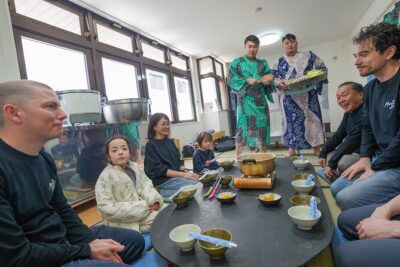
Authentic Sumo Experience in Tokyo: Enter the Sanctuary
Read our review →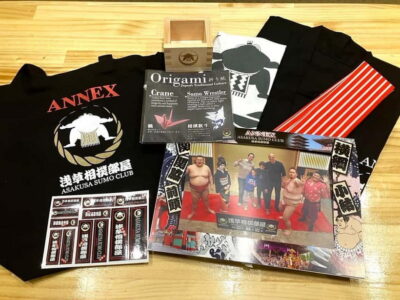
Luxury Sumo Show Experience & Japanese cuisine & Drink
Read our review →Browse the lists this tour appears in