
Reviewed · SUMO EXPERIENCES
Tokyo: Sumo Show and Experience in Shinjuku
Ancient sport, modern fun. This 90-minute Shinjuku show gives you a clear introduction to sumo rituals and technique, then lets you see the power up close. I like the friendly English presentation, especially when hosts such as Paula, Dai, Ari, and Ali turn rules and Japanese phrases into something easy to follow. I also like the audience participation, including the chance to wear a traditional sumo outfit and enter the ring.
The main thing to understand is that this is not a tournament. You see demonstrations, sparring, and an exhibition match rather than official competition. For $69, I think it offers solid value if you want culture and entertainment in one compact event, but serious sumo fans looking for the tension of a grand tournament should set their expectations accordingly.
In This Review
- Key points at a glance
- What happens during the 90-minute Shinjuku show
- Shiko, salt, and the discipline behind each bout
- Live sparring and the exhibition match
- Step into the dohyo for the most memorable moment
- Why the English explanations are worth paying for
- Is $69 good value in Tokyo?
- Who will enjoy this experience most?
- Practical advice before you go
- Should you book the Shinjuku sumo show?
- FAQ
- Where does the sumo show meet?
- How long does the experience last?
- Is this an official sumo tournament?
- Is the show conducted in English?
- Can I wrestle a sumo wrestler?
- Is food included?
Key points at a glance
- The show explains sumo before asking you to watch it: History, rules, rituals, training, techniques, and fouls help first-time viewers follow the action.
- The wrestlers are part of the entertainment: The rikishi demonstrate moves, spar with each other, answer questions, and interact warmly with the audience.
- Audience members can enter the ring: You may put on a traditional sumo outfit and challenge a wrestler in a playful match.
- English hosts make a difference: Paula, Dai, Ari, Ali, and other hosts have been praised for humor, clear explanations, and crowd interaction.
- The location is central but the entrance matters: Meet on the second floor of Sekisaku Building in Shinjuku, entering from the front door beside Daiso.
- The format suits families and first-timers: It is lively enough for children, but gives adults useful cultural context too.
What happens during the 90-minute Shinjuku show
You meet on the second floor of Sekisaku Building in Shinjuku. The entrance is not simply any door into the building. You must use the front entrance facing the main door next to Daiso, so take a moment to match the building and storefront before heading upstairs.
Arrive early. The event follows a set timetable, and late entry may not be accepted at the front desk. That rule matters more here than it might at a casual bar or theater. The show moves through several planned sections, and allowing people to wander in late would interrupt the demonstrations and audience activities.
The setting begins in a welcoming way. A bottled water welcome drink is included, and some sessions have offered other drinks such as lemon sours. The stated inclusion is bottled water, so treat any additional drink as a possible extra rather than something guaranteed. Music, friendly staff, and informal conversation help take the edge off if you know little about sumo.
The first part gives you the background needed for the rest of the event. You learn about sumo’s history, customs, rules, and the professional discipline of the wrestlers. The hosts also introduce useful Japanese phrases and explain why the sport involves far more than two large men pushing each other.
That introduction is one of the strongest reasons to book this show. If you attend a professional bout without any context, the rituals can seem slow and the rules can be hard to spot. Here, the explanations give meaning to the foot stomping, salt throwing, wrestler entrances, and moments of stillness before a bout.
Hosts have different personalities, but the common thread is strong audience contact. Paula has been praised for her humor and energy, while Dai is especially good at answering questions and explaining details. Ari and Ali have also been singled out for keeping the mood warm and lively. The exact host can vary, but an English-speaking MC is part of the experience.
More Sumo Experiences in Tokyo
- Tokyo: Sumo Show Experience with Chicken Hot Pot and a Photo
★ 4.8 · 6,678 reviews - Tokyo: Sumo Show and Dining Experience
★ 4.8 · 2,742 reviews - the SUMO show
★ 5.0 · 1,960 reviews
Shiko, salt, and the discipline behind each bout
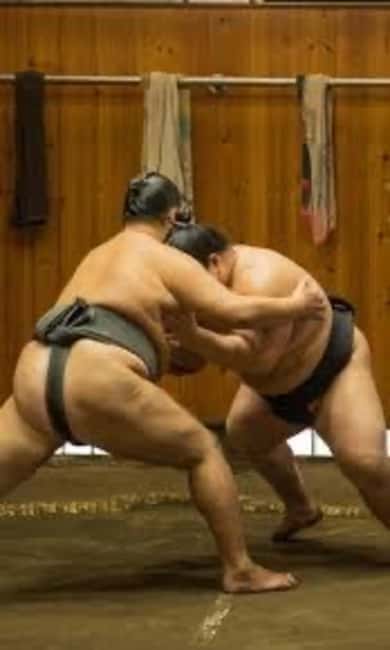
Sumo has a visual language, and the show takes time to explain it. The forceful shiko, or foot stomping, is easy to dismiss as theater until you learn how it relates to balance, strength, and preparation. Salt throwing adds drama, but it also reflects the ritual character of the sport.
The format helps you notice details that might pass by during a televised match. You see how the wrestlers prepare, how they position themselves, and how much mental control is needed before physical contact begins. The demonstrations also cover techniques and fouls, giving you a better sense of what is legal and what can end a bout.
One useful lesson is that size alone does not explain success. The explanations focus on skill, strategy, discipline, and mental strength. That can change the way you watch sumo later, especially if you see a professional competition in Tokyo.
The training demonstrations are another good part of the program. Rather than presenting the wrestlers only as performers, the show gives you a glimpse of the work behind the sport. You begin to understand why their movements can look simple but require control and practice.
The tone stays light. Humor is used often, and that works well for people who are new to sumo. The event does not ask you to sit through a lecture before the fun begins. It shifts between information, demonstrations, jokes, and action.
Live sparring and the exhibition match
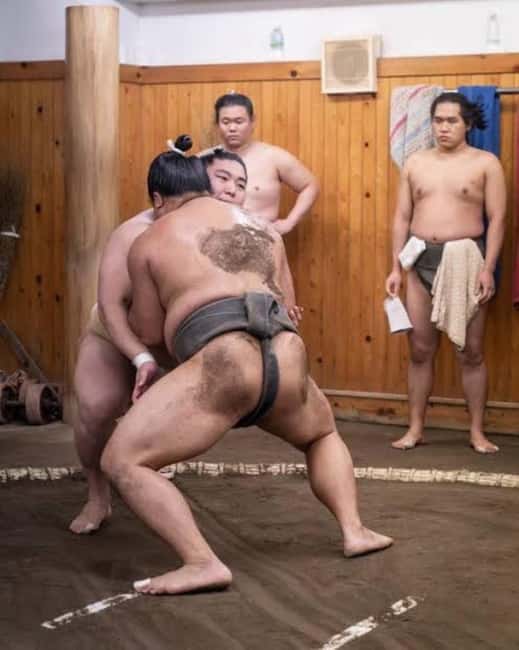
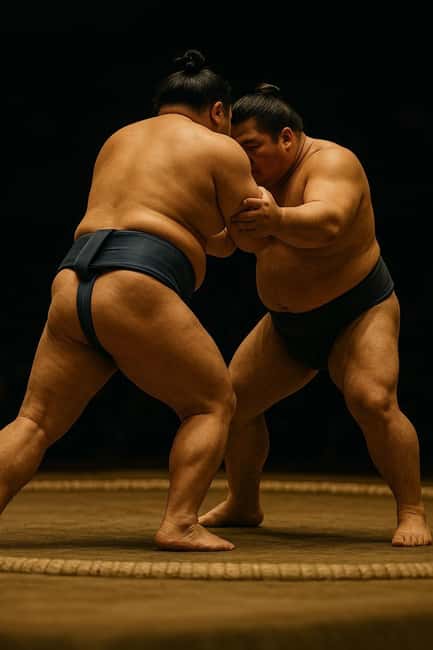
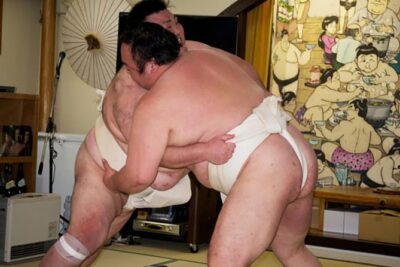
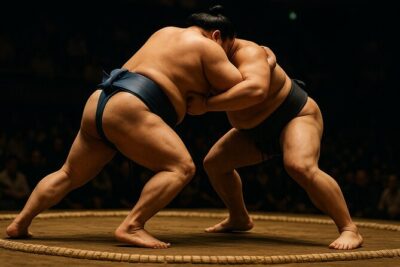
Once the basic ideas are clear, the rikishi show you the sport in motion. You watch professional sumo wrestlers perform techniques and take part in live sparring. The physical impact is the point: even a short exchange can sound and feel powerful in a way that a video screen cannot match.
The event also includes an exhibition match. This is the part many people expect when they hear sumo show, but it is important to call it what it is. The match is presented for demonstration and entertainment, not as an official tournament bout with championship consequences.
That does not make it dull. The wrestlers are skilled performers, and the show uses the match to display timing, strength, balance, and movement. The audience gets a better view of the action than it would in a large arena, and the English commentary helps you understand what is happening.
The match also benefits from the structure of the earlier presentation. You have already learned about the rituals and techniques, so you can recognize them instead of simply watching bodies collide. The result is a more useful introduction than an unexplained performance.
The limits are clear, though. If you already follow professional sumo closely, you may find the 90 minutes familiar rather than revelatory. One attendee described the event as worth doing once, but not necessarily repeating. I agree that its greatest value is as an introduction or cultural activity, not as a substitute for attending a major competition.
Step into the dohyo for the most memorable moment
The audience participation is the show’s best surprise. Volunteers are invited to put on a traditional sumo outfit and step into the ring, or dohyo, to face one of the wrestlers.
You should not expect a fair contest. The whole point is the comic mismatch between a visitor and a trained rikishi. The wrestlers play along, and they are described as friendly, good sports who know how to make the challenge fun without making it uncomfortable.
Some participants have been tossed over the ropes or allowed a playful victory. That does not mean you can defeat a professional sumo wrestler. It means the wrestler controls the encounter and gives you a safe, funny story to take home.
This segment works especially well for families. Children can watch an adult volunteer make an attempt, and adults often enjoy seeing confident participants discover that size and enthusiasm are not enough. If you prefer to observe, you can enjoy the spectacle without stepping into the ring yourself.
The opportunity to wear the outfit adds to the memory. It turns the event from a standard stage performance into a personal encounter with the sport. The information provided does not promise that every person can participate, so the number of volunteers and the exact selection process may vary.
Photos with the wrestlers have also been part of some visits, but photography is not listed as a formal inclusion. Consider it a possible bonus, not a guaranteed feature. Ask the staff on arrival if a photo opportunity matters to you.
A completely different kind of day out in Tokyo:
- Mt Fuji and Hakone 1-Day Bus Tour Return by Bullet Train
★ 5.0 · 26,383 reviews - 1-Day Tokyo Bus Tour
★ 5.0 · 14,250 reviews - Tokyo: TOKYO SKYTREE® Admission ticket
★ 4.5 · 11,192 reviews - Tokyo: teamLab Planets TOKYO Digital Art Museum Entry Ticket
★ 4.6 · 9,779 reviews
Why the English explanations are worth paying for
Sumo is easy to watch and surprisingly hard to understand at first. The rituals can look repetitive, and a quick bout may end before you know which move decided it. A good MC closes that gap.
The presenters explain the sport in plain English and keep the crowd involved. They cover history, rules, phrases, techniques, and the wrestlers’ professional routine without burying you in specialist terms. That balance has earned particular praise from families and first-time visitors.
I especially like the way the show links ritual to action. You are not just told that sumo has formal customs. You see the foot stomps, salt, entrance, preparation, and bout, then learn why each part matters.
The question-and-answer element helps too. Some sessions give you a chance to ask the wrestlers questions. That personal contact makes the event feel less like a distant cultural display and more like a friendly introduction.
The best hosts add plenty of humor. Paula’s lively delivery, Dai’s ability to handle questions, and the warm style associated with Ari and Ali all help keep the show moving. Host quality can shape the experience, but the format gives the presenter plenty to work with.
Is $69 good value in Tokyo?
At $69 per person, this is not a budget attraction, but it is fairly priced for a 90-minute event with professional wrestlers, an English-speaking host, demonstrations, live sparring, and audience participation. Bottled water is included, while food is not.
The value depends on what you want. If you want a short, central activity that combines a cultural lesson with live entertainment, the price is reasonable. You are paying for access to the wrestlers, the guided explanations, and the chance to take part, not just for a seat in a room.
I would be less enthusiastic about the price if you are seeking an official sporting event. This is a show, not a tournament, and the match is arranged for the audience. The $69 makes more sense when you see it as an interactive cultural performance.
It can also be a smart choice after a long day in Tokyo. One attendee appreciated being able to sit and enjoy the presentation after hours of walking. The compact length keeps it from taking over your evening, while Shinjuku gives you plenty to do before or after the event.
Food is not included, so plan around that. You can eat before or after in Shinjuku, but do not arrive expecting a dinner show. The welcome drink is a small convenience, not a meal.
Who will enjoy this experience most?
This is a strong fit for first-time sumo viewers. The explanations give you enough background to appreciate the action, and the live demonstrations make the sport easier to understand than a textbook or television broadcast.
Families are well served. Children get physical comedy and audience participation, while adults receive useful context about Japanese culture and professional discipline. The playful wrestling challenge can become the highlight of a family trip.
It also suits adults who want something different from temples, shopping, and observation decks. The event gives you a close look at a national sport without requiring a full day at a tournament.
Japanese residents and people already familiar with sumo can enjoy the demonstrations and the chance to ask questions, but repeat value may be lower. If you already attend professional competitions or follow the sport closely, the educational material may cover ground you know.
I would be cautious about booking if your only goal is to see high-stakes sumo. The absence of tournament pressure is a real difference. There are no official rankings, championship implications, or full-day tournament atmosphere here.
Practical advice before you go
Use the correct building entrance. The meeting point is on the second floor of Sekisaku Building in Shinjuku, and entry is through the front of the building facing the main door next to Daiso.
Allow extra time to find it. Since late entry may not be accepted, arriving at the last minute creates an avoidable risk. The show follows a schedule, so punctuality protects your entire booking.
Wear something that lets you sit comfortably and move if you volunteer. You may be invited to put on a traditional sumo outfit and enter the dohyo, though participation is not guaranteed for every attendee.
Do not build your plans around food being served. Food is excluded, and the listed welcome drink is bottled water. If you want a larger meal, arrange it separately before or after the show.
The activity is conducted in English. That makes it especially useful if you want to understand the customs rather than simply watch the movements. The humor and crowd interaction are also part of the appeal, so expect an active presentation rather than a quiet demonstration.
Cancellation is flexible: you can cancel up to 24 hours before the activity for a full refund. A reserve-now, pay-later option is also available, which helps if your Tokyo schedule is still changing.
Should you book the Shinjuku sumo show?
Book it if you want an entertaining first lesson in sumo, a chance to see rikishi up close, and the possibility of entering the dohyo yourself. The strongest parts are the clear English hosting, the mix of history and action, and the wrestlers’ friendly crowd work.
Do not book it expecting an official tournament. You will get demonstrations, sparring, and an exhibition match, with plenty of humor and audience involvement.
For families, first-time visitors, and anyone curious about Japanese culture, I think the $69 price is justified. For devoted sumo followers, it is probably best as a one-time introduction before attending a professional competition. Arrive early, use the correct entrance, and let the wrestlers show you why this sport is about much more than brute force.
FAQ
Where does the sumo show meet?
The meeting point is on the second floor of Sekisaku Building in Shinjuku. Enter through the front of the building facing the main door next to Daiso.
How long does the experience last?
The show lasts 90 minutes. Starting times vary, so check availability when booking.
Is this an official sumo tournament?
No. The activity is a show with demonstrations, live sparring, and an exhibition match. It is not a tournament.
Is the show conducted in English?
Yes. An English-speaking MC and live English guide explain the history, rules, rituals, and techniques.
Can I wrestle a sumo wrestler?
You have the opportunity to wear a traditional sumo outfit and challenge a wrestler in the dohyo. Audience participation can vary, so it is an opportunity rather than a guarantee for every person.
Is food included?
No. Food is not included. A bottled water welcome drink is included, and other drinks may be available during some sessions.
Just added around Tokyo
- Tokyo 6hr Instagram Highlights Private Tour with Licensed Guide★ 5.0 · 38 reviews
- Tokyo Small Group Tour with Guide★ 4.5 · 38 reviews
- Tokyo Sumo Experience with Live Show & Audience Challenge★ 5.0 · 38 reviews
- Very popular in Harajuku♡Animal petting zoo★ 4.6 · 39 reviews
- Japanese Food Cooking Class in Asakusa, Tokyo★ 5.0 · 39 reviews
- Ramen Making from Scratch with Tokyo Mom(Vegan Option Available)★ 5.0 · 39 reviews
- Tokyo: Kimono Rental inside Shinjuku Gyoen National Garden★ 4.9 · 39 reviews
- Tokyo JDM Night: 600hp C63s AMG Edition 1 (Private)★ 4.9 · 39 reviews
Sumo Experiences, compared.
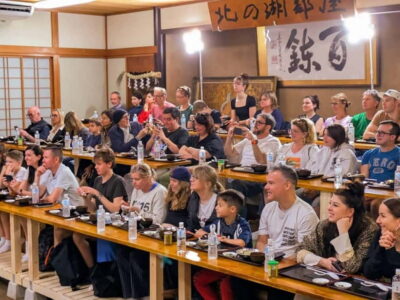
Tokyo Shinjuku Sumo Show & Experience with Photo
Read our review →
Sumo Show & Experience w/ Optional Kimono & Hot Pot
Read our review →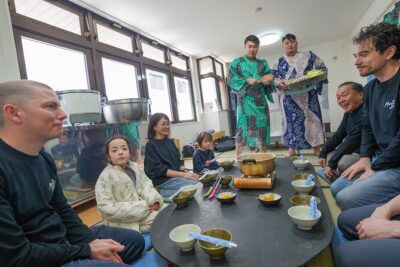
Authentic Sumo Experience in Tokyo: Enter the Sanctuary
Read our review →
Luxury Sumo Show Experience & Japanese cuisine & Drink
Read our review →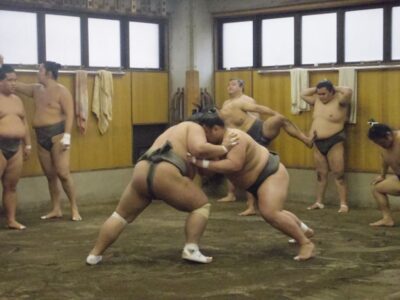
Browse the lists this tour appears in