
Reviewed · SUMO EXPERIENCES
Tokyo Shinjuku Sumo Show & Experience with Photo
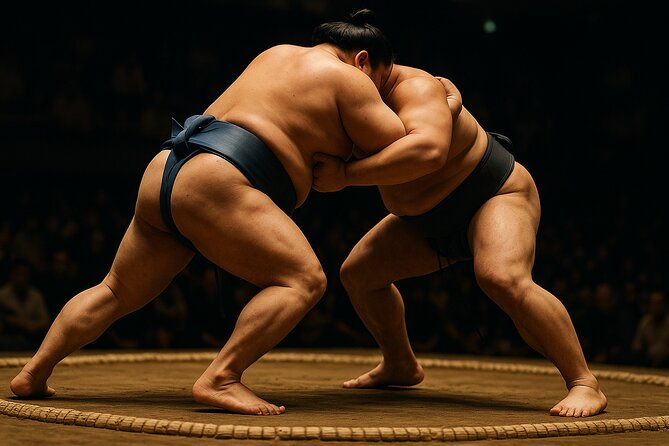
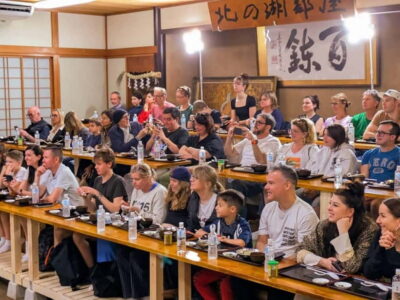
Sumo is more than a wrestling match. At Tokyo’s Shinjuku Sumo Club, you get a lively 90-minute introduction to Japan’s national sport, with two professional wrestlers, a bilingual MC, ritual demonstrations, audience participation, and a photo session. I like the clear explanations of salt throwing, ring stomping, rules, tactics, and sumo customs. I also like how easily the show brings children and first-time visitors into the action.
The main consideration is expectation. This is an entertaining cultural show, not a formal tournament match. Some wrestlers may be retired, and the mood is light and playful. If you want serious competition between active grand champions, this is not the right ticket. If you want to understand sumo without spending hours figuring out a tournament, the format works very well.
In This Review
- Key Points Before You Book
- What Happens Inside the Shinjuku Sumo Club
- The Rituals Make the Wrestling Easier to Understand
- Two Wrestlers Bring the Sport to Life
- Your Turn on the Dohyō
- A Photo Opportunity With the Wrestlers
- How Much Is the $79.59 Price Worth?
- Who Will Enjoy This Most?
- The Practical Details That Matter
- What Could Disappoint You?
- Should You Book the Shinjuku Sumo Show?
- FAQ
- Where does the sumo experience take place?
- How long does the experience last?
- How much does the experience cost?
- Is the ticket mobile?
- Are the wrestlers real sumo athletes?
- Is the show explained in English?
- Can I try sumo wrestling?
- Can children participate?
- Can I take photos with the wrestlers?
- Can I cancel for a refund?
Key Points Before You Book
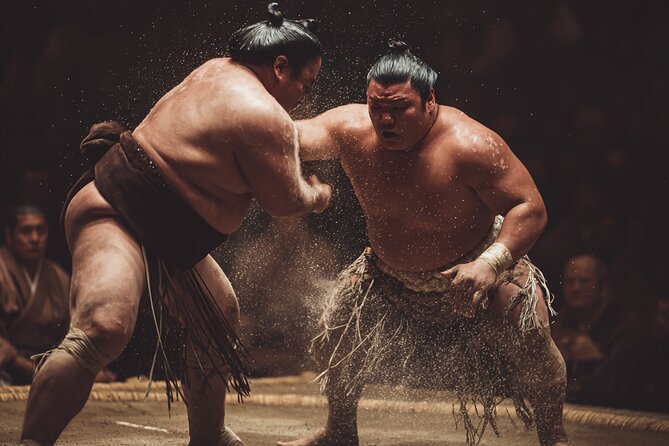
- Two real sumo wrestlers perform live: You see their size, speed, strength, rituals, and wrestling techniques at close range.
- A bilingual MC explains the sport: The host covers origins, rules, movements, tactics, customs, and daily practices in an easy-to-follow way.
- Audience participation is central: You may step onto the dohyō for a friendly challenge, ask questions, or watch children wrestle in inflatable sumo suits.
- The show lasts about 90 minutes: It fits neatly into a Tokyo sightseeing day or evening in Shinjuku.
- The tone is family-friendly: Humor, demonstrations, and simple explanations make this a strong choice for children and first-time sumo viewers.
- The price is $79.59 per person: That is reasonable for a guided cultural performance with personal interaction, though less appealing if you only want a short photo opportunity.
What Happens Inside the Shinjuku Sumo Club
The experience takes place at the Shinjuku Sumo Club, a traditional-style venue in the Shinjuku area. The location is near public transportation, and the train approach is reported to be easy to manage. I would still leave at least 30 minutes of extra time, especially if you are coming through Tokyo traffic or navigating Shinjuku Station.
The show lasts approximately 1 hour and 30 minutes. That is long enough to explain the sport properly, but short enough for families and busy sightseers. You are not committing an entire afternoon to a subject you may know little about.
The bilingual MC guides the whole event. This matters because sumo can look simple at first glance: two large athletes push, shove, and try to force one another out of the ring. The explanations show you what to watch for. You learn why a wrestler stomps, what the salt means, how a match is won, and how movements fit within the sport’s rules and customs.
The tone is deliberately welcoming. Hosts such as Manny, Shane, Mr. So, and others have been praised for their humor and smooth explanations during different sessions. The exact host may vary, but the format is designed to keep the information moving without turning the event into a lecture.
More Sumo Experiences in Tokyo
- Tokyo: Sumo Show Experience with Chicken Hot Pot and a Photo
★ 4.8 · 6,678 reviews - Tokyo: Sumo Show and Dining Experience
★ 4.8 · 2,742 reviews - the SUMO show
★ 5.0 · 1,960 reviews
The Rituals Make the Wrestling Easier to Understand
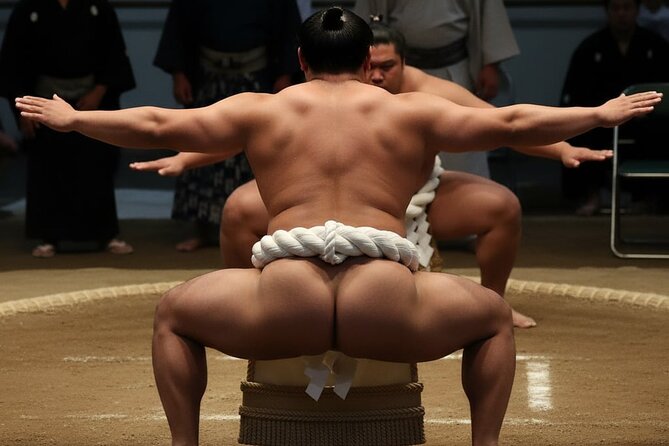
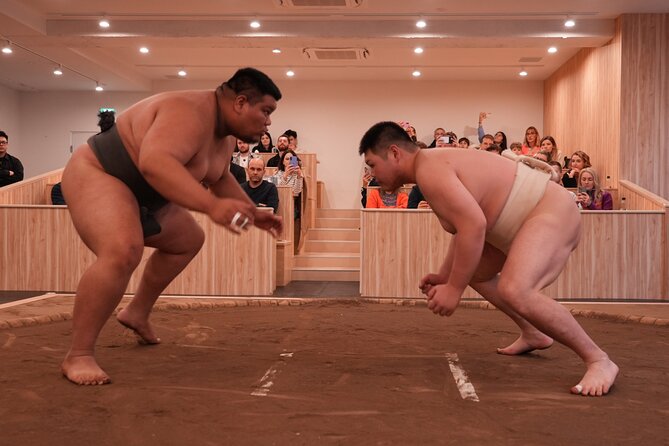
Before the action begins, the show explains several recognizable sumo rituals. Wrestlers throw salt into the ring, stomp their feet, and perform pre-match movements. These actions are not random warm-ups. They connect the bout to the religious and ceremonial side of sumo.
I find this part especially useful for anyone who has seen sumo on television but never understood the slow preparation before a match. The stomping, gestures, and pauses can seem theatrical until you know what they represent. The MC gives you the cultural context, then the demonstrations let you see it at close range.
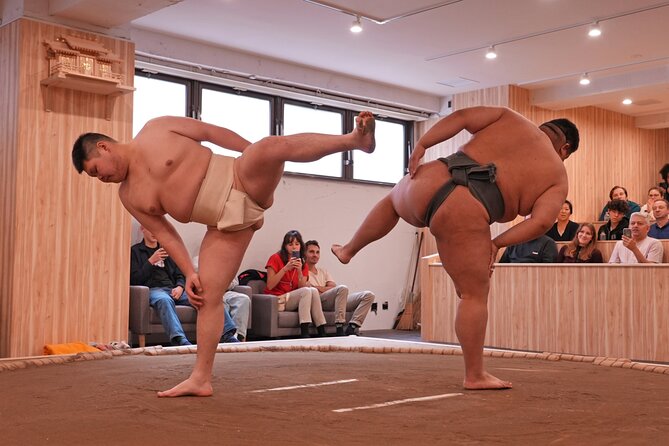
The explanations also cover the basic rules and tactics. You learn that sumo is not simply about being the heaviest person in the ring. Balance, timing, footwork, leverage, and quick movement matter. The wrestlers demonstrate how different approaches work, which helps you appreciate the speed of athletes who may look slow while standing still.
That contrast is one of the show’s best teaching tools. The wrestlers are large, but they can move quickly. A demonstration makes this far more memorable than a paragraph in a guidebook.
Two Wrestlers Bring the Sport to Life
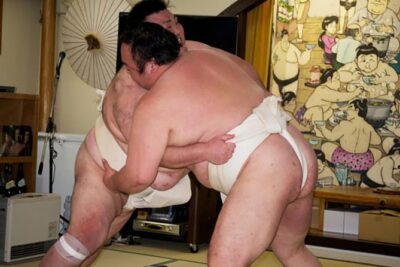
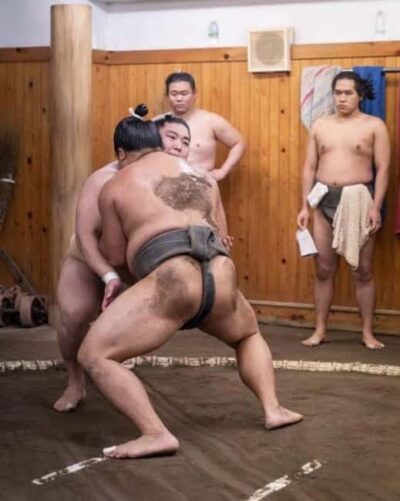
The central performance features two sumo wrestlers showing their strength and skill through live matches and demonstrations. Names can vary by session, with athletes such as Ogawa, Tani, Gucci, and George appearing in different accounts. The important point is that you are watching real wrestlers rather than actors pretending to perform a sumo routine.
Some sessions feature retired wrestlers. That is worth understanding before you buy. Their role here is to explain, demonstrate, entertain, and connect with the audience. The event is built around access and good humor, not the intensity or uncertainty of an official tournament.
The wrestlers also answer questions and interact directly with the audience. This human side adds value. You are not just watching two athletes from a distance. You get a sense of their personalities, hear explanations about their sport, and see how they handle the playful challenges.
The show keeps a respectful attitude toward sumo while allowing room for laughs. That balance is important. The sport has serious traditions, but the event does not expect you to arrive as an expert or behave like you are attending a formal tournament.
Your Turn on the Dohyō
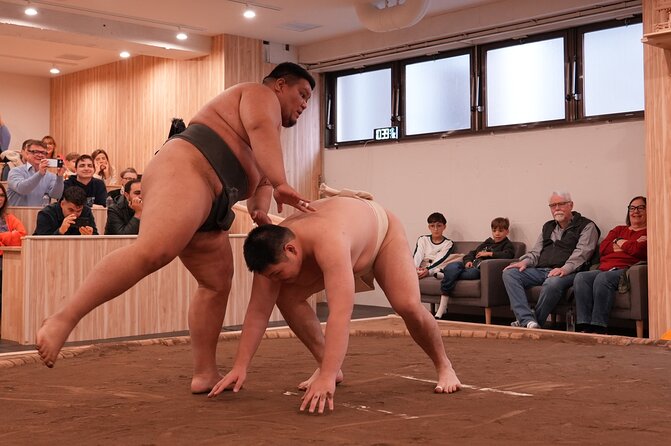
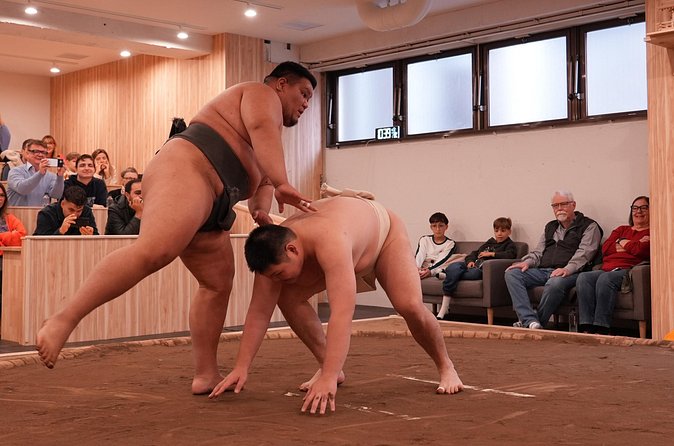
Audience participation is the part many people remember most. Selected members of the audience can step onto the dohyō and attempt a friendly sumo challenge against one of the wrestlers.
You should not expect a fair contest. The point is not to defeat a professional athlete. It is to feel the scale and power of the wrestler, learn a little about stance and movement, and give the audience something funny to cheer for.
Children may be invited to participate in inflatable sumo costumes. This turns the show into a big family laugh, especially when a small child faces a much larger wrestler. The costumes make the activity less intimidating and give younger children a way to join in without needing any knowledge of the sport.
Adults can also take part, depending on the session and audience selection. If you prefer to watch, you can still enjoy the action from your seat. Audience participation adds energy, but you do not need to volunteer to get value from the experience.
The question-and-answer period is another useful feature. It gives you a chance to ask about the wrestlers, their training, sumo customs, and the sport itself. This personal contact helps explain why the show feels more like a cultural introduction than a standard stage performance.
A completely different kind of day out in Tokyo:
- Mt Fuji and Hakone 1-Day Bus Tour Return by Bullet Train
★ 5.0 · 26,383 reviews - 1-Day Tokyo Bus Tour
★ 5.0 · 14,250 reviews - Tokyo: TOKYO SKYTREE® Admission ticket
★ 4.5 · 11,192 reviews - Tokyo: teamLab Planets TOKYO Digital Art Museum Entry Ticket
★ 4.6 · 9,779 reviews
A Photo Opportunity With the Wrestlers
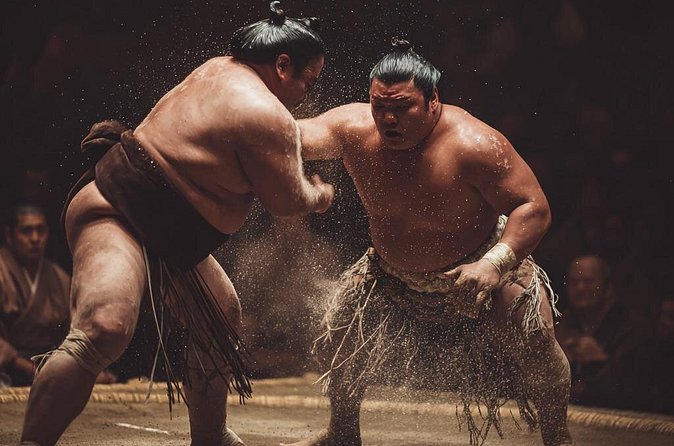
The experience includes a photo session with the wrestlers. This gives you a lasting souvenir and lets you see their size up close without the rush of a quick passing photograph.
For many people, the photograph is more than a keepsake. It captures the unusual nature of the experience: you are standing beside athletes whose physical presence is difficult to understand until you are next to them. Families and couples will likely value this part, especially after watching the demonstrations and joining the applause.
The photo session also gives you a final chance to interact with the wrestlers. The overall format makes the athletes approachable, while still treating their profession and traditions with respect.
How Much Is the $79.59 Price Worth?
At $79.59 per person, this is not a cheap drop-in activity. The value depends on what you want from your Tokyo evening.
You are paying for about 90 minutes of live performance, bilingual explanation, cultural background, audience interaction, and photographs with the wrestlers. I consider that a fair price for a visitor who wants a structured introduction to sumo and does not have the time or confidence to attend a formal tournament.
The price looks stronger for families. A child may not sit through a long historical talk, but the demonstrations, humor, costumes, and wrestling challenge give the subject immediate appeal. The show also works for adults who want an easy cultural activity without needing prior knowledge of Japanese.
The value is less convincing if your main goal is serious sport. This is not a substitute for watching a tournament at Ryōgoku Kokugikan. It does not offer the atmosphere, ranking drama, or competitive stakes of an official event. You are buying access, explanation, and entertainment.
Food and drink can be purchased during the show, according to the experience details. One point to keep in mind is that a bottled water may be provided rather than a broad drink selection. If refreshments matter to you, check the current arrangements before booking.
Who Will Enjoy This Most?
I would recommend this experience to first-time visitors who want a clear introduction to sumo. You do not need to know the rankings, memorize Japanese terms, or understand every ritual before you arrive.
It is also a strong choice for families. The show gives children several ways to stay involved: watching the athletes, seeing the costumes, listening to the MC, and possibly joining the challenge. The humor keeps the subject approachable without reducing it to a simple comedy act.
Couples and solo visitors can enjoy it too. The venue offers something different from the usual Tokyo choices of observation decks, shopping streets, and food tours. It also works well when you want an evening activity in central Tokyo that does not require a full night out.
I would be more cautious about recommending it to dedicated sumo fans who want top-level competition. You may already know the rules and rituals, and the performance may feel too introductory. For that audience, a formal tournament or training-related experience could be a better match, though those options are not part of this booking.
The Practical Details That Matter
You receive confirmation at the time of booking, and the ticket is mobile, so you do not need to arrange a paper voucher. The venue is near public transportation, and the train route is considered straightforward.
Shinjuku Station can be confusing, so allow time to find the correct exit and walk to the club. I would not plan to arrive at the last minute. One audience member reached the venue just in time because of traffic, and the practical lesson is simple: give yourself a buffer.
Most people can participate. The show is not described as requiring a special level of fitness, though stepping into a wrestling challenge is optional. If you have mobility concerns, it is sensible to ask the provider about the current setup before booking, since the experience includes a traditional-style ring and optional audience activity.
Free cancellation is available when you cancel at least 24 hours before the start time. Changes or cancellations made inside that window are not accepted for a refund, and cut-off times follow local Tokyo time.
What Could Disappoint You?
The biggest risk is arriving with the wrong picture in your head. If you imagine a full professional tournament, you may find the performance too staged or too light. One useful way to think about it is as a sumo theater and cultural lesson, supported by real athletes.
The quality of the MC also shapes the evening. The format depends on clear bilingual explanations and good audience management. Past sessions have included hosts praised for humor, pacing, and detail, but the specific person may change.
The event may also feel less exciting if you have limited interest in Japanese culture or already know a great deal about sumo. A short 90-minute show cannot provide every detail about the sport’s institutions, rankings, training life, or modern debates.
For most first-time visitors, those limits are reasonable. The show gives you enough context to watch sumo with new eyes, then sends you back into Tokyo with a memorable photograph and a better sense of why the sport matters.
Should You Book the Shinjuku Sumo Show?
I would book this if you want a fun, family-friendly introduction to sumo with real wrestlers and plenty of explanation. The bilingual MC, demonstrations, questions, photos, and optional wrestling challenge make it easy to enjoy even if you begin as a complete beginner.
At $79.59, the experience earns its price through personal interaction rather than competitive sport. Book it for culture, humor, and access. Skip it only if your priority is a serious tournament match or a more advanced look at professional sumo.
For a first visit to Tokyo, this is a sensible choice when you want something memorable, easy to follow, and different from the city’s usual sightseeing stops.
FAQ
Where does the sumo experience take place?
It takes place at the Shinjuku Sumo Club in Shinjuku, Tokyo.
How long does the experience last?
The experience lasts approximately 1 hour and 30 minutes.
How much does the experience cost?
The listed price is $79.59 per person.
Is the ticket mobile?
Yes. The experience includes a mobile ticket.
Are the wrestlers real sumo athletes?
Yes. Two real sumo wrestlers perform demonstrations and matches during the experience.
Is the show explained in English?
A bilingual MC explains the rituals, history, rules, movements, and tactics during the show.
Can I try sumo wrestling?
Audience members may have the chance to step onto the dohyō and take part in a friendly sumo challenge.
Can children participate?
The experience is family-friendly, and children may be invited to wrestle in inflatable sumo costumes.
Can I take photos with the wrestlers?
Yes. The experience includes a photo opportunity with the wrestlers.
Can I cancel for a refund?
You can cancel for a full refund if you cancel at least 24 hours before the experience start time. Cancellations or changes made less than 24 hours in advance are not accepted for a refund.
Just added around Tokyo
- Tokyo Small Group Tour with Guide★ 4.5 · 38 reviews
- Tokyo 6hr Instagram Highlights Private Tour with Licensed Guide★ 5.0 · 38 reviews
- Tokyo Sumo Experience with Live Show & Audience Challenge★ 5.0 · 38 reviews
- Very popular in Harajuku♡Animal petting zoo★ 4.6 · 39 reviews
- Japanese Food Cooking Class in Asakusa, Tokyo★ 5.0 · 39 reviews
- Ramen Making from Scratch with Tokyo Mom(Vegan Option Available)★ 5.0 · 39 reviews
- Tokyo: Kimono Rental inside Shinjuku Gyoen National Garden★ 4.9 · 39 reviews
- Tokyo JDM Night: 600hp C63s AMG Edition 1 (Private)★ 4.9 · 39 reviews
Sumo Experiences, compared.
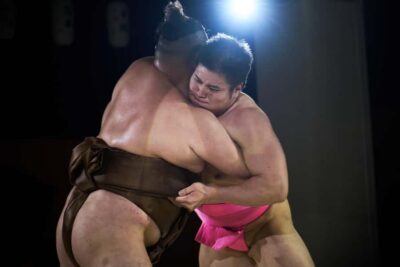
Sumo Show & Experience w/ Optional Kimono & Hot Pot
Read our review →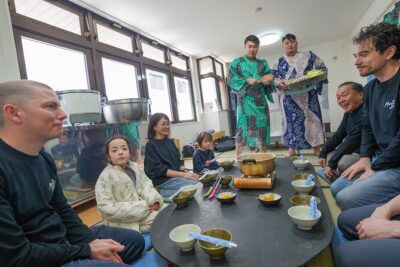
Authentic Sumo Experience in Tokyo: Enter the Sanctuary
Read our review →
Luxury Sumo Show Experience & Japanese cuisine & Drink
Read our review →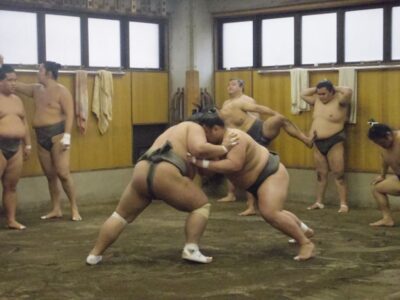
Browse the lists this tour appears in