
Reviewed · SUMO EXPERIENCES
Tokyo: Sumo Tournament Tour with Chair Seat Tickets
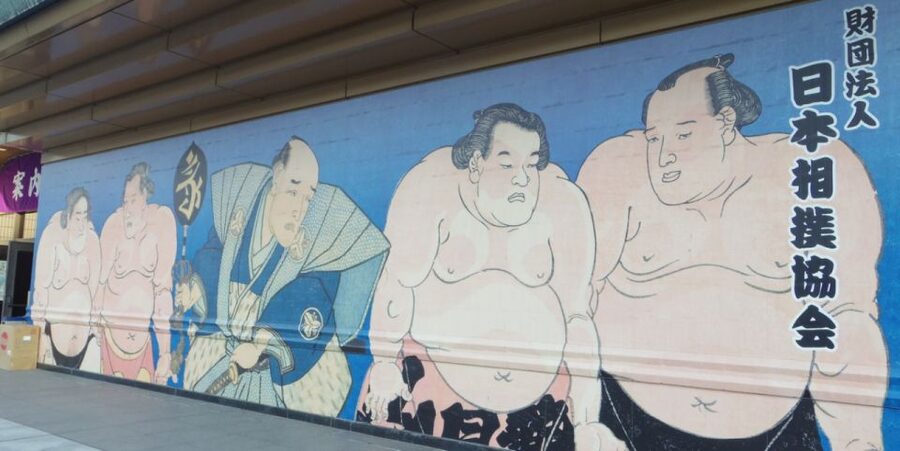
Sumo is far more than two wrestlers colliding. This Tokyo tour gives you a seat inside Ryogoku Kokugikan, a traditional arena, during one of the city’s limited annual tournaments. I especially like the local crowd energy and the English-speaking guide who explains the rituals, rankings, sponsors, and wrestlers as the action unfolds. The main drawback is that 2F chair seats can be high and small, so you may pay extra for convenience rather than a close-up view.
I also like that this is a real tournament, not a staged dinner show. Guides such as Taka, Mieko, Mia, Sho, and Hiro have been praised for making the sport understandable and fun, often encouraging the group to cheer for a favorite wrestler. At $141 per person, it is not cheap, but it can be good value when official tickets sell out quickly and you want help finding your way around the arena.
In This Review
- Key points at a glance
- Why Tokyo sumo tournaments are hard to catch
- Meeting at Ryogoku Station at 2:15 PM
- What happens inside Ryogoku Kokugikan
- Why the guide matters for first-time spectators
- Choosing between 2F chairs and 1F box seats
- Lunch, snacks, and the sumo fan kit
- How authentic is the experience?
- Is $141 a fair price?
- Who should book this sumo experience?
- Practical tips for a better afternoon
- FAQ
- Where does the sumo tournament tour meet?
- How long does the experience last?
- What sumo divisions can I watch?
- Are the seats on the first or second floor?
- Does the ticket include food?
- Is an English-speaking guide included?
- Can young children attend?
- Is the experience suitable for wheelchair users?
- Should you book it?
Key points at a glance
- See the top divisions at the right time: The Makuuchi ring-entering ceremony is at 3:40 PM, the Yokozuna ceremony at 3:55 PM, and top-division bouts begin at 4:10 PM.
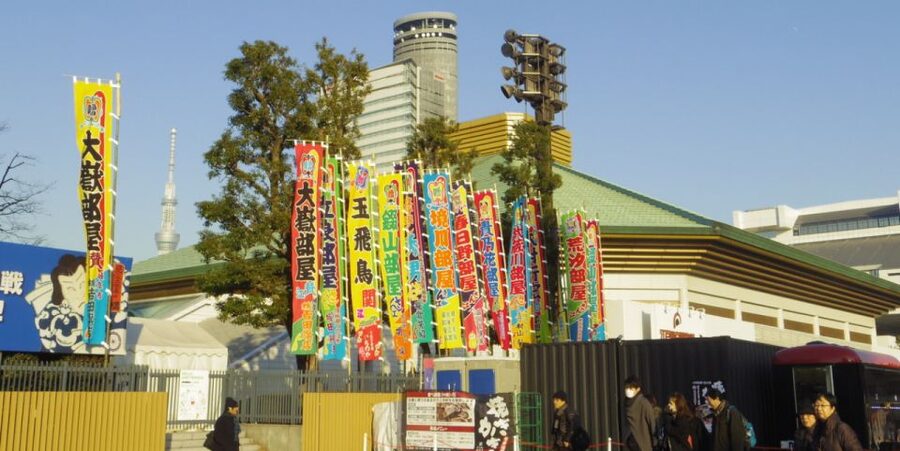
- Watch real sumo in its home setting: The tournament takes place at Ryogoku Kokugikan, Tokyo’s main sumo arena.
- Get useful explanations during the bouts: A good guide can explain ranking, rituals, tactics, sponsorship banners, and why the audience reacts as it does.
- Choose your seat carefully: The standard option uses 2F chair seats, while the 1F option provides a private box space shared only by your own party.
- Expect a ticket service with guidance: Some versions include a full guide, while the Entrance Assistant option only takes you to the stadium entrance.
- Plan for a six-hour afternoon: The meeting time is around 2:15 PM, and the tournament finishes at about 6:00 PM.
Why Tokyo sumo tournaments are hard to catch
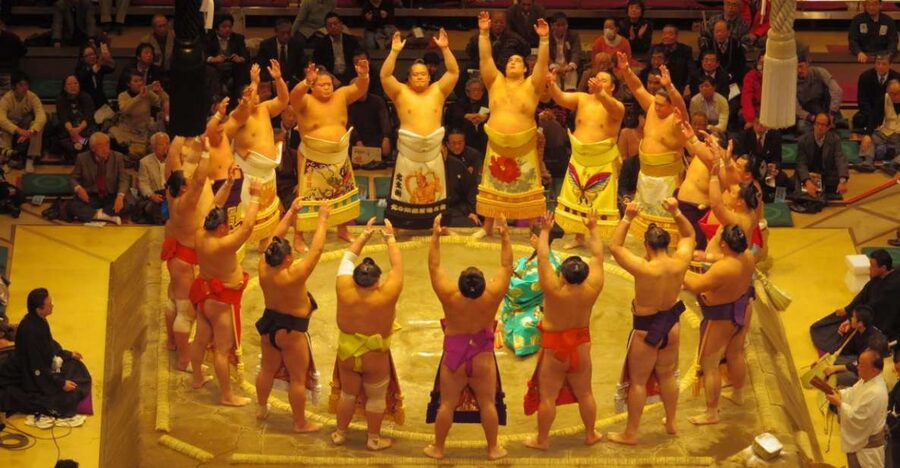
Tokyo hosts only three of the six major sumo tournaments held each year, and each Tokyo tournament runs for 15 days. That makes the timing important. If your visit falls outside one of these tournament periods, this particular experience will not fit your schedule.
Even when the dates work, getting a ticket can be difficult. The official sales websites can sell out fast, especially for popular days near the final. Several people who tried to buy directly found this tour a practical alternative. You pay a premium, but you gain a reserved ticket and a smoother route into the arena.
The date matters, too. A mid-tournament day has plenty of action, while the final day carries extra tension because the championship is decided. One person attended the day before the final and found the atmosphere especially exciting. If your schedule allows a choice, late tournament days are likely to feel more important, though they may also be harder to book.
More Sumo Experiences in Tokyo
- Tokyo: Sumo Show Experience with Chicken Hot Pot and a Photo
★ 4.8 · 6,678 reviews - Tokyo: Sumo Show and Dining Experience
★ 4.8 · 2,742 reviews - the SUMO show
★ 5.0 · 1,960 reviews
Meeting at Ryogoku Station at 2:15 PM
The standard meeting point is the West Gate of JR Ryogoku Station at 2:15 PM, although the exact point can vary by booking option. Ryogoku is the right place for a sumo outing, with the stadium close to the station and the surrounding district closely tied to the sport.
Allow time to find your group. Several groups may gather in the same area, and the check-in process can feel confusing if you have not read the booking instructions carefully. Group colors and numbers may be used to separate parties, so keep the confirmation details available on your phone.
This is one part of the day where being early helps. A person who arrived without an internet connection found the color-coding stressful. I would arrive 10 to 15 minutes early, check the meeting instructions before leaving your hotel, and avoid carrying a large suitcase.
Depending on your selected package, the guide may hand you the ticket and walk with you to the stadium. The Entrance Assistant option is more limited: staff take you to Ryogoku Kokugikan but do not go inside. If you want explanations during the tournament, choose the full guide option.
What happens inside Ryogoku Kokugikan
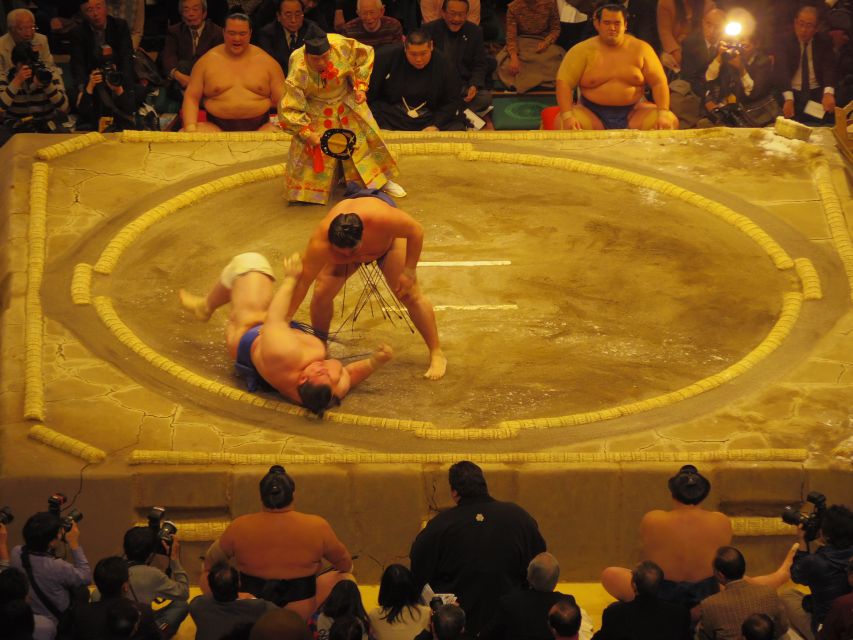
The arena becomes more interesting as the afternoon progresses. Lower-ranked bouts take place earlier, while the strongest wrestlers appear later. Your schedule centers on the top part of the day, so you are not simply entering for one short match.
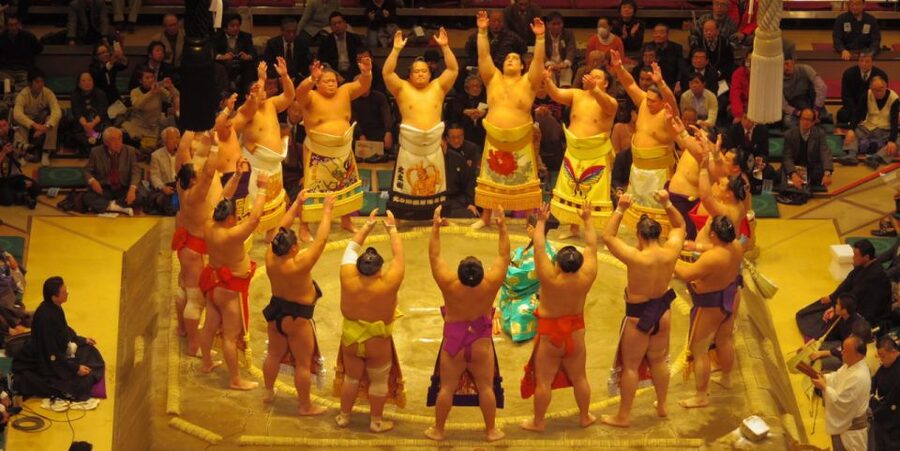
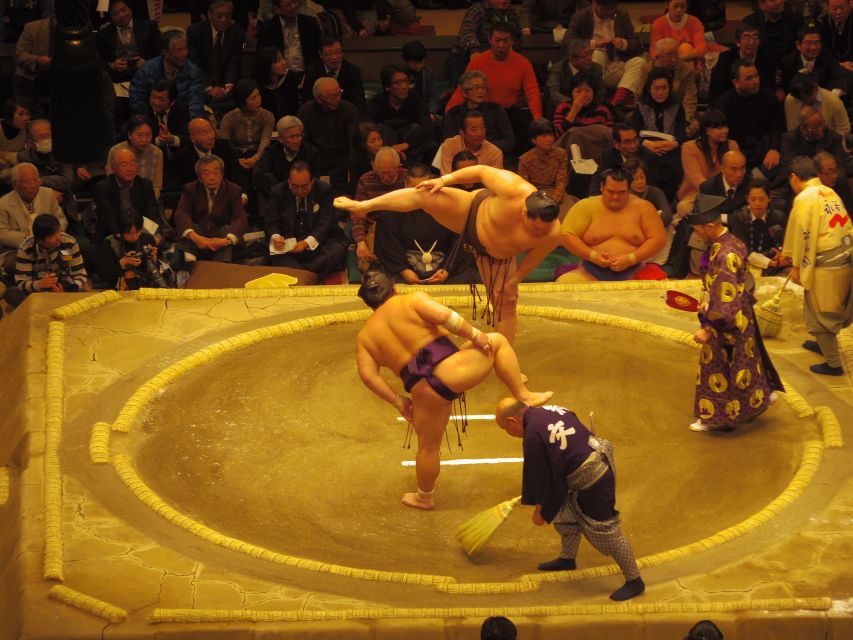
The Makuuchi Division ring-entering ceremony takes place at 3:40 PM. These wrestlers are the top division competitors, and the ceremony gives you a first look at the athletes before the main bouts begin.
At 3:55 PM comes the Yokozuna ring-entering ceremony. Yokozuna are the highest-ranked wrestlers in sumo, and their ceremony has a special weight. The gestures, clothing, and formal movements can seem mysterious at first. This is where an English-speaking guide adds real value.
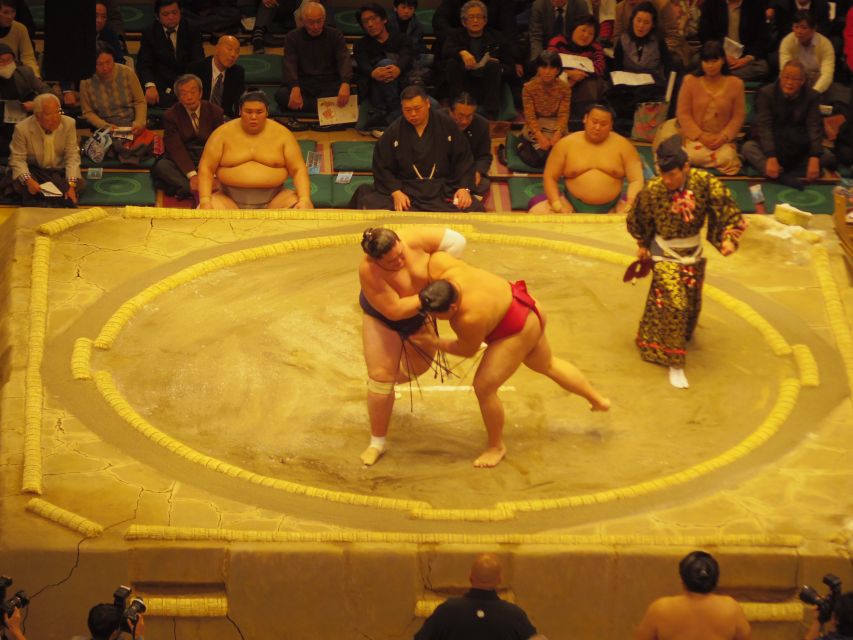
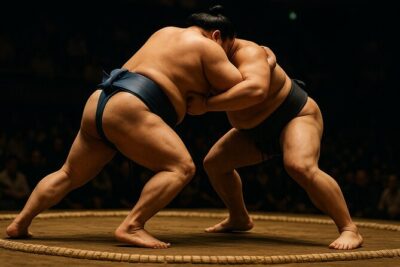
The Makuuchi bouts begin at 4:10 PM and continue until the tournament finishes around 6:00 PM. A bout can be over very quickly. The basic aim is simple: force the opponent out of the ring or make any part of his body other than the soles of his feet touch the ground. The preparation, stare-down, charge, and sudden finish give the sport its particular rhythm.
A guide can help you notice what happens between the collisions. You may learn why a wrestler receives more sponsor banners, how the ranking system affects a match, or why the audience is cheering for one competitor. Guides Taka, Mieko, Mia, Sho, Hiro, and Michiko have all been singled out for clear explanations and real enthusiasm for sumo.
Why the guide matters for first-time spectators
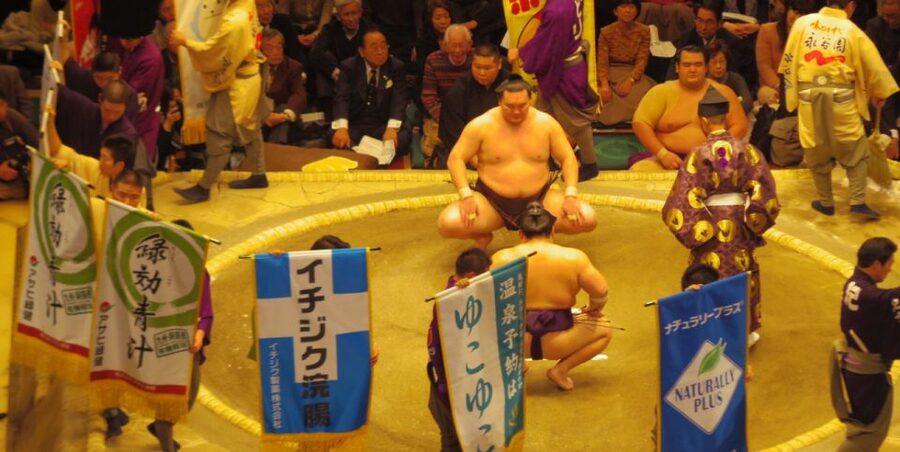
You can watch sumo without a guide, but the first few bouts may be hard to read. The wrestlers look similar from a distance, the rules are not complex but have several customs around them, and the importance of a match depends partly on each wrestler’s ranking and tournament record.
The better guides do not talk constantly. They explain the key ritual, point out an important matchup, and let you enjoy the action. Mieko has prepared a sheet showing the day’s bouts, wrestler names, and current positions. That kind of simple reference can save you from trying to identify competitors on your own.
Some guides also help the group choose someone to support. Sho reportedly joined in the cheering for a favorite wrestler, while Take encouraged the group to get behind his choice. This gives the afternoon a playful side. You are not just watching silently from a seat. You begin to understand the crowd’s loyalties.
The guide also helps with the arena itself. Being shown to your seat by someone who speaks English and knows the building removes much of the uncertainty. That is especially useful if you are trying to arrive in time for a ceremony or carrying children who need to settle quickly.
A completely different kind of day out in Tokyo:
- Mt Fuji and Hakone 1-Day Bus Tour Return by Bullet Train
★ 5.0 · 26,383 reviews - 1-Day Tokyo Bus Tour
★ 5.0 · 14,250 reviews - Tokyo: TOKYO SKYTREE® Admission ticket
★ 4.5 · 11,192 reviews - Tokyo: teamLab Planets TOKYO Digital Art Museum Entry Ticket
★ 4.6 · 9,779 reviews
Choosing between 2F chairs and 1F box seats
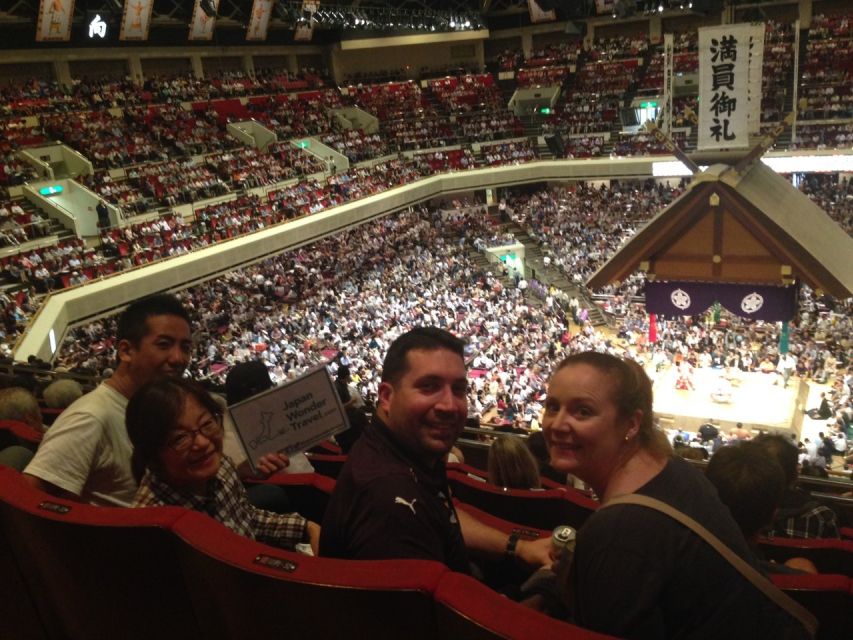
The standard ticket is generally a 2F chair seat, with no option to select a specific seat. Your guide hands over the ticket on the day. The arena is relatively compact, so even higher seats can provide a solid view of the ring. One person initially worried that a B section looked far away on the seating map, but found the view more than adequate.
Still, do not expect ringside intimacy. A few people found the seats small or wished they were closer. If seeing facial expressions and details of the wrestlers matters most to you, consider the 1F box-seat option.
On the first floor, seating is in box spaces rather than individual chairs. The booking information says that your party can enjoy its own seating area without sharing it with other groups. This gives you more room and a closer position, though the cost depends on the option selected.
The seating choice changes the character of the day. A 2F chair is the sensible pick for most first-time visitors who want a good overall view. A 1F box is better for a special occasion, a family group, or anyone who values space and proximity enough to pay more.
Large luggage cannot go into the seating area. Bring only what you can keep neatly with you. Baby strollers are not allowed, and the activity is not suitable for wheelchair users.
Lunch, snacks, and the sumo fan kit
Food is not included in the basic package. The arena has food and drinks available, and one person found the prices reasonable. That makes it easy to turn the afternoon into a full outing without arranging a separate restaurant meal.
Some booking options include lunch, but check the exact description before paying. A few people expected a hot-pot meal that did not appear to be included in their package. Others specifically enjoyed a packed lunch or chanko nabe, the hearty hot pot associated with sumo wrestlers.
If you choose a lunch option, list allergies and dietary restrictions when booking. Do not assume every food package is the same. The lunch add-on can be a pleasant part of the experience, but it should be treated as an option, not a standard feature.
The Sumo Fan Cheer Kit is also available with selected options. This can make the event more engaging, especially for children or anyone who wants to cheer in a more organized way. It is not the reason to book the tour, but it adds a bit of theater to the seats.
How authentic is the experience?
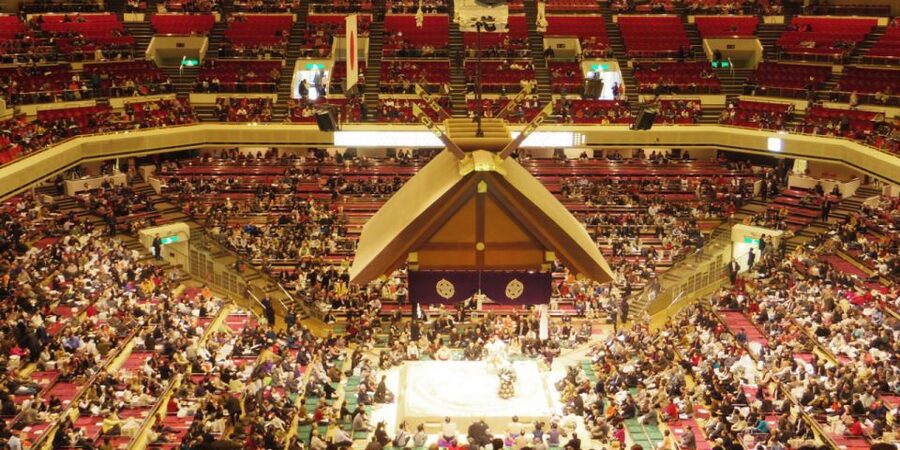
This is a genuine tournament, with professional wrestlers competing under the formal rules of sumo. That matters. You are watching the sport in a working arena, alongside a Japanese audience, rather than attending a performance arranged only for international visitors.
The atmosphere is one of the strongest reasons to go. The audience responds to the bouts, the ceremonies bring a formal pause before the action, and the large wrestlers reveal just how quick the sport can be. One person compared the matches favorably with American wrestling because the sumo bouts are often much faster than expected.
Do not judge the experience only by the length of each contest. A bout may last seconds, but the buildup includes ritual movements, preparation, ranking, and crowd response. Once your guide explains these pieces, the short matches feel more meaningful.
The event also gives you a look at the discipline behind the spectacle. These wrestlers train for years to reach the upper divisions. Seeing the Makuuchi and Yokozuna wrestlers in competition helps you understand why rank, record, and ceremony matter so much.
Is $141 a fair price?
At $141 per person, this is a premium afternoon. The ticket itself is only one part of the cost. You are also paying for access when official tickets may be unavailable, an English-speaking guide, help at the arena, and sometimes a cheer kit or lunch depending on the package.
Value depends on how much assistance you need. If you are comfortable navigating Japanese ticket sites, identifying seats, and learning the rules in advance, buying directly may cost less. But official tickets can sell out quickly, and obtaining them is not always straightforward.
One person estimated the extra cost over face value at roughly 3,500 yen and considered it reasonable. That is a useful way to view the price: not as a cheap ticket, but as a convenience fee for a rare event.
The guide is the biggest variable. A weak guide would leave you with admission and little else. The strongest guides, including Mieko, Taka, Mia, and Sho, turn an unfamiliar sport into something you can follow. The repeated praise for their enthusiasm and explanations suggests that the guided option is worth more than simply being escorted to the door.
Who should book this sumo experience?
I would recommend it to a first-time sumo spectator, especially if your Japan itinerary happens to match a tournament. You do not need prior knowledge of the sport, and the guide can explain enough to make the bouts easy to follow.
It also suits families with older children. The matches are short, the wrestlers are impressive, and the cheer kit can help younger spectators take part. Children aged three and under enter free but do not receive their own seat, so they must sit on an adult’s lap. Children aged four and older need their own tickets.
This is less suitable if you need wheelchair access, want to bring a stroller, or dislike fixed seating. The 2F chairs can feel cramped, and the tour does not include hotel pickup or drop-off.
It is also not ideal for anyone expecting a full guided sightseeing day. The core activity is the tournament, with the guide explaining the sport and helping you reach your seats. Some packages may include lunch or extra assistance, but check what you selected.
Practical tips for a better afternoon
- Arrive early at the station meeting point and keep your group color and number ready.
- Read the meeting instructions before leaving your hotel, especially if you may be offline.
- Check if your package includes lunch, a cheer kit, 1F box seats, or only 2F chairs.
- Bring a small bag rather than large luggage.
- Choose a later tournament day if you want a stronger championship atmosphere and your schedule allows it.
- Ask your guide about wrestler rankings, sponsor banners, and the rituals. Those details make the bouts easier to understand.
- If you want extra space or a closer position, pay attention to the 1F box-seat option rather than assuming all tickets are the same.
- Keep the afternoon open from 2:15 PM until roughly 6:00 PM.
FAQ
Where does the sumo tournament tour meet?
The usual meeting point is the West Gate of JR Ryogoku Station at 2:15 PM. The exact location may vary according to the option you book.
How long does the experience last?
The meeting begins around 2:15 PM, the top-division ceremonies take place at 3:40 PM and 3:55 PM, and the tournament ends at about 6:00 PM.
What sumo divisions can I watch?
The schedule includes the Makuuchi Division ring-entering ceremony, the Yokozuna ring-entering ceremony, and Makuuchi Division bouts beginning at 4:10 PM.
Are the seats on the first or second floor?
The standard option provides 2F chair seats. Some options provide 1F box seats instead. Specific seats cannot be selected for the 2F chair option.
Does the ticket include food?
Food and drinks are not included in the standard activity. Some selected options include lunch, so check the package details carefully. Dietary restrictions should be provided when booking a lunch option.
Is an English-speaking guide included?
A professional English-speaking guide is included with the guided tour option. The Entrance Assistant option only takes you to the stadium and does not include staff inside the venue.
Can young children attend?
Children aged three and under can enter free, but they do not have their own seat and must sit on an adult’s lap. Children aged four and older need their own tickets.
Is the experience suitable for wheelchair users?
No. The activity is listed as unsuitable for wheelchair users. Baby strollers are also not allowed, and large luggage cannot be taken into the seating area.
Should you book it?
Book this tour if your Tokyo dates match a tournament and you want a real sumo event without wrestling with sold-out ticket systems. The local atmosphere, formal ceremonies, and strong guides make it much more than a seat inside an arena.
Choose 2F chairs for the best balance of cost and view. Pay more for 1F box seats if space and closeness matter. I would also choose the full guided option over a basic entrance escort, since the explanations about rankings, rituals, and wrestlers are what make the sport click. For a rare and distinctly Japanese afternoon, $141 can be a fair price, especially when direct tickets are already gone.
Just added around Tokyo
- Tokyo 6hr Instagram Highlights Private Tour with Licensed Guide★ 5.0 · 38 reviews
- Tokyo Small Group Tour with Guide★ 4.5 · 38 reviews
- Tokyo Sumo Experience with Live Show & Audience Challenge★ 5.0 · 38 reviews
- Japanese Food Cooking Class in Asakusa, Tokyo★ 5.0 · 39 reviews
- Very popular in Harajuku♡Animal petting zoo★ 4.6 · 39 reviews
- Ramen Making from Scratch with Tokyo Mom(Vegan Option Available)★ 5.0 · 39 reviews
- Tokyo JDM Night: 600hp C63s AMG Edition 1 (Private)★ 4.9 · 39 reviews
- Tokyo: Kimono Rental inside Shinjuku Gyoen National Garden★ 4.9 · 39 reviews
Sumo Experiences, compared.
Tokyo Shinjuku Sumo Show & Experience with Photo
Read our review →
Sumo Show & Experience w/ Optional Kimono & Hot Pot
Read our review →
Authentic Sumo Experience in Tokyo: Enter the Sanctuary
Read our review →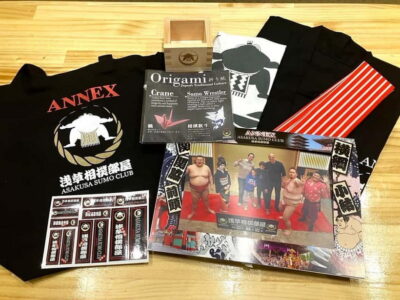
Luxury Sumo Show Experience & Japanese cuisine & Drink
Read our review →
Browse the lists this tour appears in