
Reviewed · RAMEN & NOODLE TOURS
Shibuya: Ramen Dojo Tokyo | Make All 3 (Tonkotsu/Shoyu/Miso)
Ramen gets better when you make it yourself. This 90-minute class near Shibuya Station gives you hands-on practice with fresh noodles, chicken chashu, and three soup styles: tonkotsu, shoyu, and miso. You finish by eating three small bowls side by side, which makes the lesson both practical and delicious.
I like the chance to compare three classic ramen flavors in one sitting, and I like that the class uses a professional noodle machine rather than reducing the activity to a simple cooking demonstration. The small group, capped at eight people, should also give you useful access to the English-speaking instructor. The main consideration is that you prepare the noodles and toppings, but you do not make the broths entirely from scratch, so this may feel less satisfying if broth-making is your main goal.
In This Review
- Six useful things to know before booking
- Why making three small bowls works so well
- Finding the studio from Shibuya Station
- The first 10 minutes: check-in and a short briefing
- Chicken chashu: a quick topping lesson
- The 20-minute noodle-making session
- Soup preparation and what you actually make
- Plating three mini bowls in five minutes
- Thirty minutes to taste, compare, and take photos
- What the $86.22 price includes
- Who will enjoy this class most
- Timing, cancellation, and practical planning
- Should you book Ramen Dojo Tokyo?
- FAQ
- Where does the ramen class take place?
- How far is the studio from Shibuya Station?
- How long does the activity last?
- Which ramen styles will I make and taste?
- Is the class taught in English?
- What is included in the price?
- Is the class suitable for people with food allergies?
- What is the cancellation policy?
Six useful things to know before booking
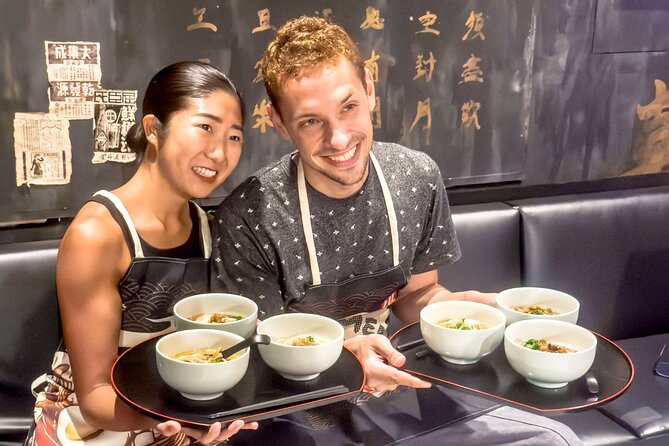
- Three ramen styles in one class: You taste tonkotsu, shoyu, and miso in mini bowls rather than committing to one full serving.
- Fresh noodles are the main hands-on task: You knead dough and cut it with a professional noodle cutter.
- The class is near Shibuya Station: Allow about 10 minutes to walk to the Umekita Building.
- The group is small: A maximum of eight people means beginners can receive personal help.
- You get a digital recipe afterward: The class is designed to help you repeat parts of the process at home.
- Dietary limits matter: The activity is not suitable for severe wheat, egg, or soy allergies, celiac disease, severe airborne flour sensitivity, or strict vegan and religious diets.
Why making three small bowls works so well
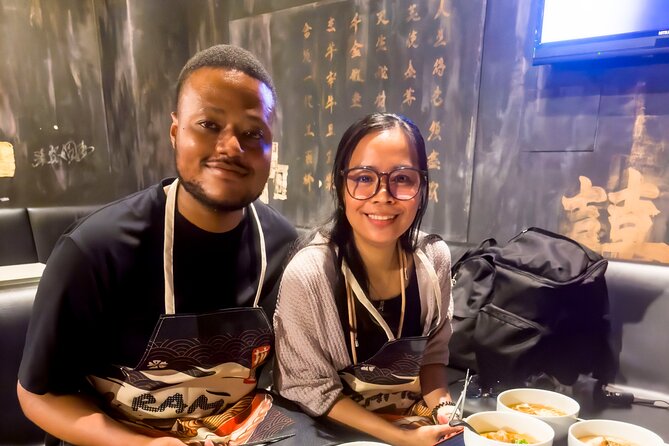
A normal ramen meal gives you one flavor. This class gives you three, and that comparison is the heart of the experience.
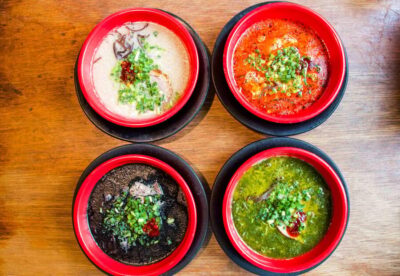
Tonkotsu is the creamy, pork-style ramen associated with a full-bodied broth. Shoyu brings a soy-sauce-based flavor, while miso gives you a deeper, more savory taste. The portions are mini bowls, so you can sample all three without turning the class into an uncomfortable food marathon.
I like this format for first-time ramen cooks. You can notice how the same basic noodle-making process changes when paired with different soups and toppings. You also get a better sense of what you prefer before trying to recreate ramen in your own kitchen.
The three-bowl finish has a practical benefit, too. It gives you a clear tasting session after the work is done. You adjust flavors, add toppings, take photos, and then sit down to eat what you made.
More Ramen Tours in Tokyo
- Eat and Drink Like a Local: Tokyo Ueno Food Tour-Taverns&Ramen
★ 5.0 · 957 reviews - Ramen & Gyoza Cooking Class in Tokyo with Local Supermarket Visit
★ 5.0 · 823 reviews - Tokyo: Ramen Tasting Tour with 6 Mini Bowls of Ramen
★ 4.9 · 432 reviews
Finding the studio from Shibuya Station
The meeting point is the Umekita Building at 7-11 Maruyamachō, Shibuya, Tokyo 150-0044. It is about a 10-minute walk from Shibuya Station and close to public transportation.
That short walk is worth building into your schedule. Shibuya is easy to reach, but the area can be confusing when you are trying to match a station exit with a smaller street address. I would arrive early enough to find the building without rushing, especially if you have children or are carrying shopping bags.
The class starts and ends at the same place. That makes it simple to continue exploring Shibuya afterward. You might plan the ramen class before shopping, a café stop, or an evening visit to another part of Tokyo.
There is no hotel pickup or drop-off. Transportation to and from the studio is your responsibility, and the price does not include personal expenses, drinks, or gratuities.
The first 10 minutes: check-in and a short briefing
The class begins with check-in and an introduction to the process. This is when you can get settled, put on the provided apron, and learn what will happen during the 90 minutes.
The briefing matters because the class moves through several stages in a short time. You will handle dough, a noodle cutter, chicken chashu, soup, toppings, and boiling water. A clear explanation at the beginning helps you understand which jobs need care and which parts are done with guidance from the instructor.
The English-speaking format is useful for anyone who wants more than a visual demonstration. The instructors are described as patient and supportive, which should help if you have little cooking experience. One eight-year-old was accommodated successfully, so families with children may find the class approachable, though young children will still need adult supervision around hot equipment and kitchen tools.
Chicken chashu: a quick topping lesson
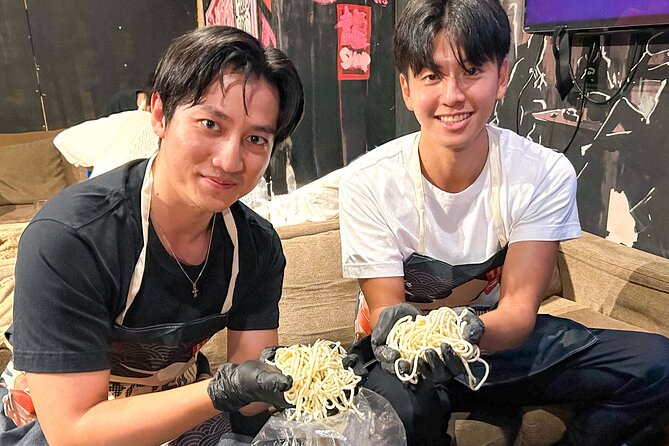
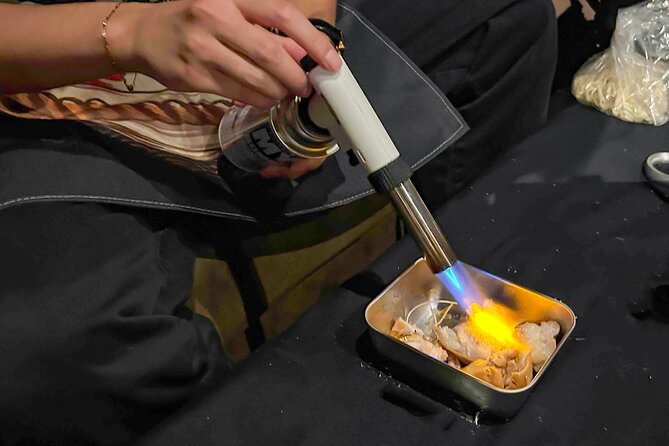
After the opening, you spend about five minutes preparing the chicken chashu, followed by another 10 minutes later in the class to finish it.
Chicken chashu gives the meal a topping with texture and flavor, and it makes the finished bowls feel like more than plain noodles in soup. Because the preparation is split into two parts, you get a quick introduction first, then return to the ingredient as the ramen comes together.
This section is brief, so you should not expect a full culinary lesson on every detail of chashu preparation. Its role is to help you create a complete bowl within the time limit. The class focuses on the whole ramen-making process, not on mastering one topping in isolation.
A completely different kind of day out in Tokyo:
- Mt Fuji and Hakone 1-Day Bus Tour Return by Bullet Train
★ 5.0 · 26,383 reviews - 1-Day Tokyo Bus Tour
★ 5.0 · 14,250 reviews - Tokyo: TOKYO SKYTREE® Admission ticket
★ 4.5 · 11,192 reviews - Tokyo: teamLab Planets TOKYO Digital Art Museum Entry Ticket
★ 4.6 · 9,779 reviews
The 20-minute noodle-making session

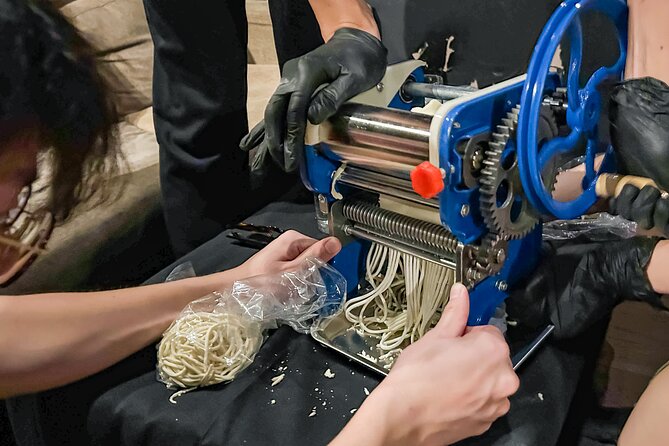
The noodle work is the most active part of the class. You knead the dough, then push it through a professional cutting machine to create fresh noodles.
This is where the experience earns its place over simply visiting a ramen shop. You see and feel the dough change as you work it, then watch it become noodles. The machine also gives you a bit of kitchen drama without requiring advanced knife skills.
You do not need to arrive as a cook. Beginners are welcome, and the instructor provides guidance during the process. If the dough feels difficult at first, take your time and follow the directions closely. The small group size should make it easier to ask for help instead of trying to copy someone across a crowded room.
One important point is that the pasta ingredients are prepared in advance. You take part in kneading and cutting, but you are not starting with every ingredient from the very first step. That keeps the class within 90 minutes, though a serious home cook may want more detail about flour ratios and dough development.
Soup preparation and what you actually make
The schedule allows about 10 minutes for boiling noodles and preparing the soups. You will see three broths, then adjust the soup to your preferred taste before assembling the bowls.
This is also the area where you should set realistic expectations. The class teaches you how to work with the three soup styles, but you do not prepare every broth entirely from raw ingredients. One participant particularly wanted more broth instruction and felt the class placed greater emphasis on noodles.
I see that as a fair limitation for a short workshop. Making three full broths from scratch would require much more time, equipment, and advance preparation. The current format lets you compare the flavors while still giving you meaningful work with the noodles, chashu, seasoning, and toppings.
If broth technique is the reason you want to book, ask yourself how much detail you need. If your goal is to understand the basic balance of tonkotsu, shoyu, and miso, the class should meet that need. If you want to simmer a broth from bones or build a stock over many hours, this is not that type of lesson.
The dietary note is important here. The class is not suitable for severe wheat, egg, or soy allergies, celiac disease, or strict dietary requirements. A vegetarian broth is not listed as part of the standard offering, and substitutions beyond the stated inclusions are not promised.
Plating three mini bowls in five minutes
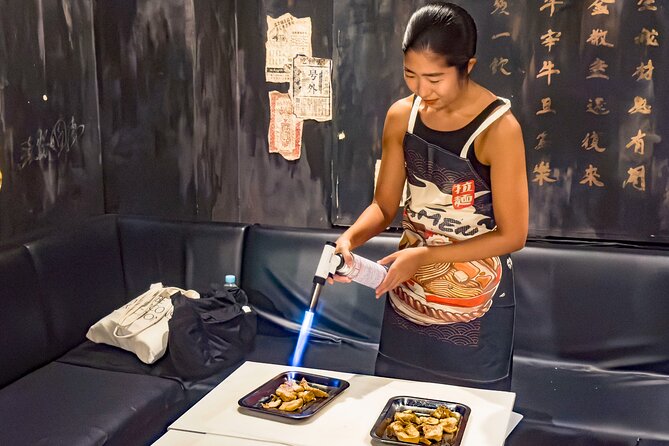
You get about five minutes to plate the ramen. That may sound rushed, but the ingredients and process have already been organized to keep the class moving.
The plating stage is where the separate tasks become a finished meal. You place the noodles in the bowls, add the soup, finish the chicken chashu, and choose the toppings. The result is designed to look good in photographs, so you can leave with a record of the three-style tasting.
Because the bowls are small, presentation is part of the fun rather than a race to produce a huge meal. You can see the differences between the soups at a glance. It also gives you a useful model for serving several flavors at home if you want to host a ramen tasting.
Thirty minutes to taste, compare, and take photos
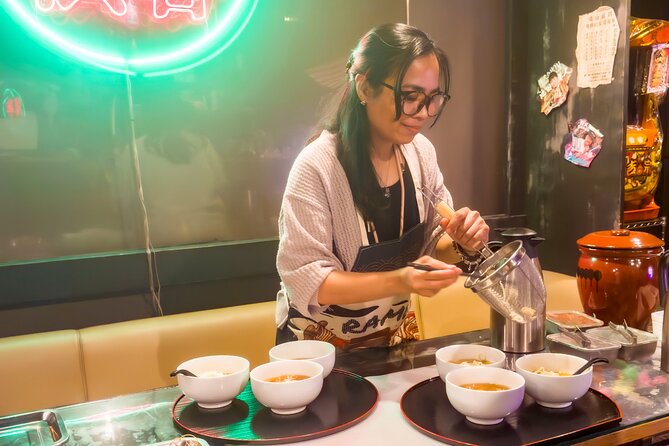
The final 30 minutes are set aside for eating and photos. This is a generous part of the schedule, and it keeps the class from feeling like a nonstop kitchen assignment.
You can taste the tonkotsu, shoyu, and miso bowls side by side. Try them in any order, then compare the seasoning, texture, and overall weight of each soup. The class is not only about producing food. It is also about learning what makes one ramen style different from another.
The three mini bowls are included in the price, so you are not paying for a lesson and then needing to find lunch immediately afterward. The portions are tasting portions rather than full restaurant meals, but they should take the edge off and give you a satisfying finish.
The final tasting also helps beginners see that a bowl does not have to be perfect to be enjoyable. You made the noodles, adjusted the flavor, and assembled the toppings. That personal connection is a large part of the appeal.
What the $86.22 price includes
At $86.22 per person, this is not a cheap meal. You can find ramen in Tokyo for far less than the cost of the class, and you should not book this experience simply as a way to get lunch.
The value comes from the instruction and equipment. Your fee covers the English-speaking instructor, ingredients, kitchen equipment, apron use, three mini bowls, and a digital recipe after the class. You also get access to a professional noodle machine, which is not something most visitors can easily use during a regular Tokyo meal.
I think the price makes more sense if you enjoy cooking, want a structured activity near Shibuya, or plan to repeat the recipe at home. It is also useful for families and small groups who want an indoor activity that includes food but does not require a full restaurant meal.
The value is weaker if you mainly want a large serving of ramen or a detailed broth course. In that case, a ramen restaurant plus a separate cooking lesson focused on soup may suit you better.
Who will enjoy this class most
I would recommend Ramen Dojo Tokyo to:
- First-time ramen makers who want clear guidance
- Families with older children who can take part in kitchen tasks
- Couples and friends looking for a short food activity near Shibuya
- Visitors who want to taste several ramen styles in one session
- Home cooks who would use a digital recipe afterward
- Anyone who enjoys taking food photos and trying hands-on cultural activities
I would be more cautious about booking it for someone with severe food allergies, celiac disease, strict vegan requirements, or a strong sensitivity to airborne flour. The class also requires stair use, so it is not suitable for people unable to use stairs.
The activity has a maximum of eight participants. That is a useful limit for a practical class, since you are not merely watching an instructor from the back of a large room. Personal guidance is especially helpful when kneading dough and using the noodle cutter.
Timing, cancellation, and practical planning
The full activity lasts about 90 minutes. That makes it easy to fit into a Shibuya day, but I would avoid scheduling another fixed activity immediately afterward. The class has several steps, and you will want time to walk back to the station and get your bearings.
The experience begins and ends at the Umekita Building. Mobile tickets are accepted, and confirmation is provided when you book.
Free cancellation is available until 24 hours before the start time for a full refund. Cancellations or changes made within 24 hours are not refunded or accepted, based on local Tokyo time.
Should you book Ramen Dojo Tokyo?
Book this class if you want to make fresh noodles, taste three ramen styles, and learn enough to try the process at home. The small group, patient instruction, included tasting bowls, and digital recipe give the experience useful substance beyond a quick photo opportunity.
Think twice if your main interest is making broth from scratch. The soups are prepared for the lesson, and the most detailed hands-on work centers on the noodles, chashu, seasoning, and assembly.
For a first ramen workshop near Shibuya, I find the format appealing and well balanced. You get a real cooking task, a clear tasting comparison, and a manageable 90-minute schedule. At $86.22, it is best treated as a food experience rather than a budget meal, but for the right visitor, it offers a tasty way to understand Tokyo’s favorite comfort food.
FAQ
Where does the ramen class take place?
The class takes place at the Umekita Building, 7-11 Maruyamachō, Shibuya, Tokyo 150-0044, Japan.
How far is the studio from Shibuya Station?
The studio is about a 10-minute walk from Shibuya Station and is near public transportation.
How long does the activity last?
The experience lasts approximately 90 minutes.
Which ramen styles will I make and taste?
You will make and taste mini bowls of tonkotsu, shoyu, and miso ramen.
Is the class taught in English?
Yes. An English-speaking instructor leads the class.
What is included in the price?
The price includes three mini ramen bowls, all ingredients, use of kitchen equipment, an apron loan, an English-speaking instructor, and a digital recipe provided after the class.
Is the class suitable for people with food allergies?
It is not suitable for severe wheat, egg, or soy allergies, celiac disease, severe airborne flour sensitivity, or strict dietary requirements such as fully strict vegan or religious diets.
What is the cancellation policy?
You can cancel at least 24 hours before the start time for a full refund. Cancellations or changes made less than 24 hours before the start time are not accepted or refunded.
Just added around Tokyo
- Tokyo 6hr Instagram Highlights Private Tour with Licensed Guide★ 5.0 · 38 reviews
- Tokyo Small Group Tour with Guide★ 4.5 · 38 reviews
- Tokyo Sumo Experience with Live Show & Audience Challenge★ 5.0 · 38 reviews
- Japanese Food Cooking Class in Asakusa, Tokyo★ 5.0 · 39 reviews
- Very popular in Harajuku♡Animal petting zoo★ 4.6 · 39 reviews
- Ramen Making from Scratch with Tokyo Mom(Vegan Option Available)★ 5.0 · 39 reviews
- Tokyo JDM Night: 600hp C63s AMG Edition 1 (Private)★ 4.9 · 39 reviews
- Tokyo: Kimono Rental inside Shinjuku Gyoen National Garden★ 4.9 · 39 reviews
Ramen & Noodle Tours, compared.
Ramen Cooking Class at Ramen Factory in Kyoto
Read our review →
Eat and Drink Like a Local: Tokyo Ueno Food Tour-Taverns&Ramen
Read our review →
Ramen & Gyoza Cooking Class in Tokyo with Local Supermarket Visit
Read our review →
Ramen Cooking Class at a Ramen Factory with Souvenir
Read our review →
Five Must-See Highlights Walking Tour & Ramen Lunch
Read our review →
Browse the lists this tour appears in