
Reviewed · CYCLING TOURS
Full Day Biking Tour Exploring the Best of Kyoto
Kyoto is easier on two wheels. This full-day ride links major sights with quiet streets, traditional neighborhoods, and local places that are easy to miss from a bus. I especially like the small group of up to eight people, which allows the guide to keep the pace friendly and answer questions. I also like that lunch, water, a Cannondale bicycle, and a helmet are included.
The catch is simple: this is a serious day out, not a gentle spin around one park. You may cover roughly 18 to 20 miles, walk thousands of steps at the temple stops, and feel tired by the end. The route is generally flat, but summer heat, saddle comfort, and carrying a small backpack can make a difference.
In This Review
- Key things to know before you book
- Starting near Kyoto Station with the right bike
- Nishi Honganji and the scale of Kyoto’s Buddhism
- Kitano Tenmangu, a shrine with a local rhythm
- Kinkaku-ji and the Golden Pavilion crowds
- The Imperial Palace grounds and Kyoto’s royal past
- Gion, geisha culture, and respectful sightseeing
- A Japanese lunch that breaks up the long ride
- Tofuku-ji and a quieter temple pause
- Fushimi Inari and the torii gate route
- What the cycling itself feels like
- The guide can make or break the day
- Who should book this Kyoto bike tour?
- My booking advice
- FAQ
- Where does the Kyoto biking tour start?
- Where does the tour finish?
- How long does the tour last?
- How far do you cycle?
- What is included in the price?
- How many people can join the tour?
- What age must riders be?
- Is the tour physically demanding?
- Are dietary requirements accommodated?
- Can I cancel for a refund?
Key things to know before you book
- You cover Kyoto’s big sights in one day: The route includes Kinkaku-ji, Fushimi Inari, Gion, the Imperial Palace grounds, Nishi Honganji, Kitano Tenmangu, and Tofuku-ji.
- The route uses quieter streets: Guides take small roads and back lanes where possible, making the ride feel calmer than Kyoto’s main traffic corridors.
- Lunch is part of the value: A hearty Japanese meal and bottled water are included, with the meal often taken at a traditional local restaurant.
- This is active sightseeing: Expect a full day of cycling plus walking at temples and shrines. A moderate fitness level and confidence on a bicycle are required.
- The guides shape the experience: Names praised in the tour’s feedback include Karl, Carl, Indra, Jay, Juan, Paul, Jamie, Jaimie, and Quinn. Most comments highlight their humor, organization, and command of Japanese culture and history.
- The tour returns to its starting point: You meet at Cycle Kyoto near Kyoto Station and finish there, a useful arrangement if you have luggage or evening plans nearby.
Starting near Kyoto Station with the right bike
The day begins at Cycle Kyoto, at 7 Higashikujō Nishisannōchō in Minami Ward. The shop is about one block south of Kyoto Station, making the meeting point fairly easy to reach by train or local transport.
You meet the guide and the rest of the group, then get fitted for a high-quality Cannondale bicycle and helmet. That short setup matters. A bike that fits properly is far more important than having fancy equipment when you will spend most of the day in the saddle.
The group is limited to a maximum of eight people, although the tour description also refers to a maximum of nine. Either way, this is a small-group outing rather than a large parade of cyclists. You can hear the guide at each stop, ask questions, and keep the group together more easily.
The supplied bicycles include a small front pouch for a phone or wallet. You should not count on generous storage. If you bring a backpack, you will carry it for the entire ride, so pack lightly.
An electric bicycle upgrade may be available, according to one detailed account, but it is not listed as a standard inclusion. Ask about it before booking if you are concerned about the distance. One practical warning: even with an electric bike, the seat may become uncomfortable after several hours.
More Bike Tours in Kyoto
- Hidden Kyoto E-Biking tour
★ 5.0 · 1,843 reviews - Bike Tour Exploring North Kyoto plus Lunch
★ 5.0 · 1,087 reviews - Arashiyama Bamboo Forest & Hidden Gems Bike Tour (Early Bird)
★ 5.0 · 613 reviews
Nishi Honganji and the scale of Kyoto’s Buddhism
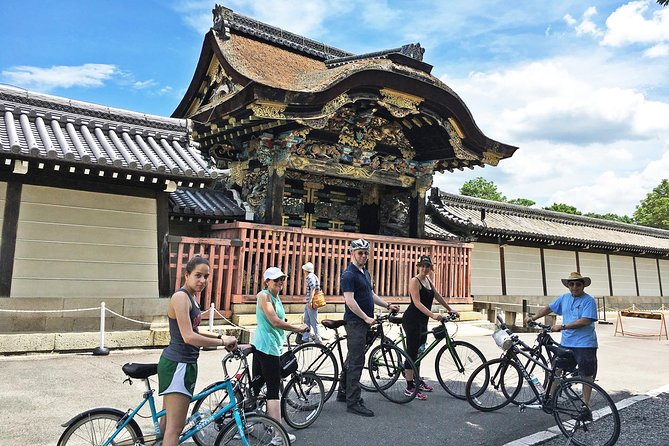
Your first sightseeing stop is Nishi Honganji, one of Kyoto’s major Buddhist temples and one of the city’s least visited large religious sites. The wooden buildings are vast, giving you a quick lesson in the scale and craftsmanship of Japanese temple architecture.
The short stop lasts about 15 minutes. That is enough for an introduction and a look around, but not enough for a slow, detailed visit. Its value comes from the guide’s explanation and from seeing a quieter religious site before the day reaches Kyoto’s most famous attractions.
This is also where the bike tour begins to show its strength. You are not simply being taken from one famous entrance to another. You are moving through the city and getting a feel for how Kyoto’s major temples fit into ordinary neighborhoods.
Kitano Tenmangu, a shrine with a local rhythm
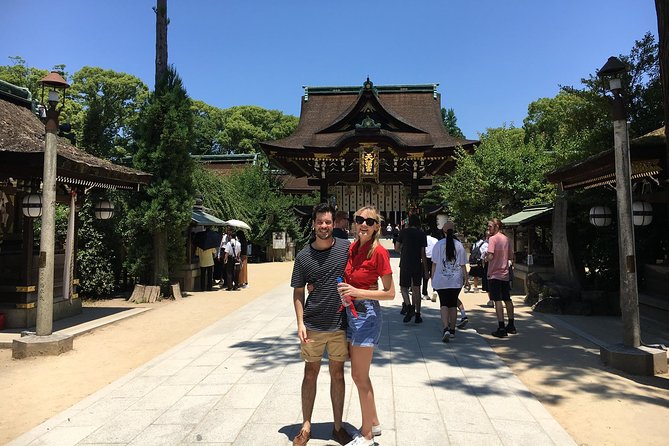
Kitano Tenmangu offers a different mood. It is a Shinto shrine with an active local role, and the tour gives you about 20 minutes to look around and watch shrine activity.
The stop is brief, so you will not have time to inspect every corner. Still, the contrast with Nishi Honganji is useful. Kyoto’s religious sites are not all alike, and a good guide can explain the difference between Buddhist temples and Shinto shrines without turning the day into a lecture.
The most praised guides add small cultural details at stops like this. Jamie, Jaimie, and others have been singled out for teaching basic Japanese phrases, counting, and the names of the months. Those touches make the information easier to remember and give you something practical to use during the rest of your Japan trip.
Kinkaku-ji and the Golden Pavilion crowds
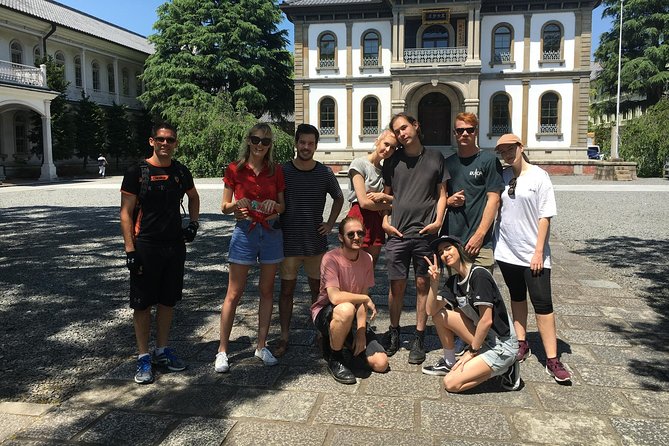
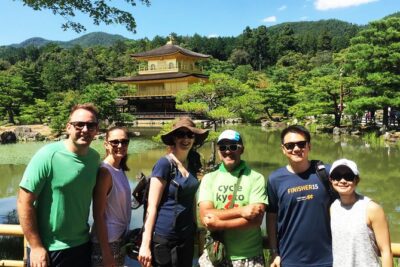
Kinkaku-ji, or the Golden Pavilion, is the visual star of the first half of the day. Its gold-covered exterior reflects across the pond, and the setting is instantly recognizable for good reason.
You spend about 30 minutes here, including time for the guide’s commentary and a chance to pause for an ice cream. The pavilion is one of Japan’s most visited sights, so expect a busy setting rather than a quiet temple visit.
The bicycle helps you arrive without dealing with the full hassle of a group bus. It does not remove the crowds once you enter the grounds, but it makes the larger route far more efficient. You see Kinkaku-ji without giving up half a day to transportation.
Keep your expectations sensible. This is a photo and orientation stop, not an extended temple study. If you want to explore the grounds at length, you may prefer returning on your own another day.
A completely different kind of day out in Kyoto:
- PERFECT KYOTO 1-Day Bus Tour
★ 5.0 · 13,518 reviews - Kyoto: Fushimi Inari, Kinkakuji, Bamboo Grove 1 Day Bus Tour
★ 4.8 · 4,316 reviews - Kyoto: Tea Ceremony in a Traditional Tea House in Kiyomizu
★ 4.9 · 3,519 reviews - Kyoto Geisha Walking Tour: Gion District & Hidden Gems
★ 4.7 · 3,273 reviews
The Imperial Palace grounds and Kyoto’s royal past
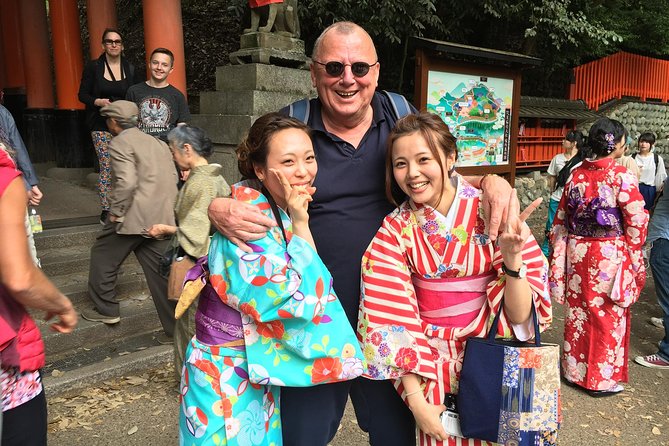
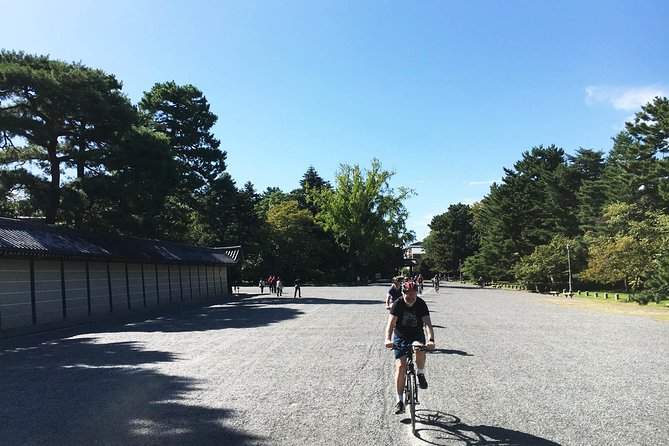
The route also passes through the grounds of the former seat of Japan’s imperial family. The provided schedule does not give this stop a separate number or exact duration, but it is part of the ride between the main attractions.
The palace grounds give you a change of pace. After the polished spectacle of Kinkaku-ji, you get open space and a chance to hear how Kyoto functioned as Japan’s imperial capital. The setting also provides a welcome break from temple entrances and crowded lanes.
This is one of the places where cycling adds real value. You cross a broad historic area under your own power, rather than seeing it through a vehicle window. The guide can connect the physical setting with Kyoto’s political past while you take a short breather.
Gion, geisha culture, and respectful sightseeing
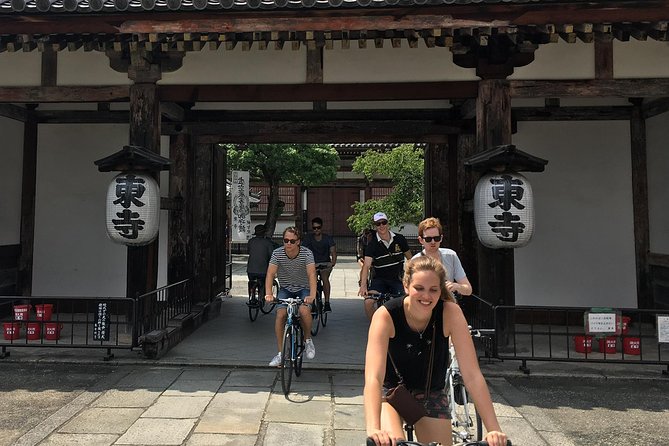
Gion is Kyoto’s best-known geisha district, with traditional streets, wooden buildings, and a culture that visitors often misunderstand. The tour spends about 15 minutes here, enough for an introduction and a quick look at the area.
You may catch a glimpse of a geisha or maiko, but no sighting is guaranteed. The better reason to visit is to learn how the district works and how to behave respectfully. Do not block narrow lanes, chase performers, or treat people as scenery. A thoughtful guide can explain the difference between public appearances and private work.
Jay is praised for making this part of the day fun while also explaining geishas and Japanese culture. Another account highlights a very good lunch in Gion, giving the stop more substance than a quick photo opportunity.
Gion can feel crowded, particularly at popular times. The tour’s short visit is useful for getting oriented, but you may want to return later if you hope to walk the district slowly.
A Japanese lunch that breaks up the long ride
Lunch is included, and that is important on a seven to eight-hour cycling day. A detailed account describes a traditional noodle house with mostly local patrons, while another praises a family restaurant in Gion. The exact restaurant may vary, but the meal is intended to be a proper Japanese lunch rather than a quick snack.
This is one of the strongest value points. At $119.38 per person, you are paying for a full day of guiding, bicycle use, a helmet, water, and lunch. Food alone does not make the tour a bargain, but it reduces the extra cost and planning that come with an active day.
Dietary requirements must be provided ahead of time. Do not wait until the morning of the tour. You should also bring a little spending money if you want an ice cream or other personal purchases at stops.
Tofuku-ji and a quieter temple pause
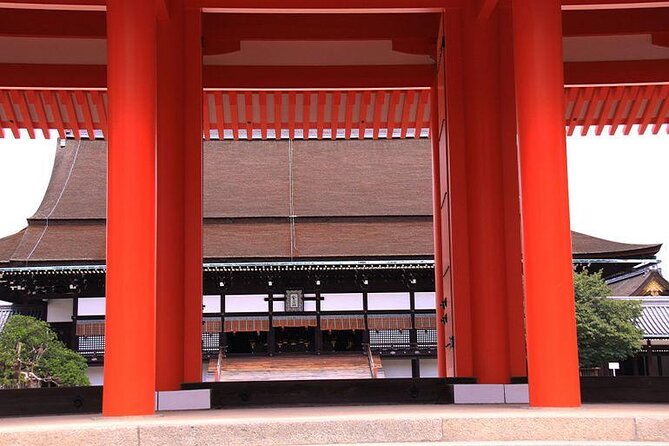
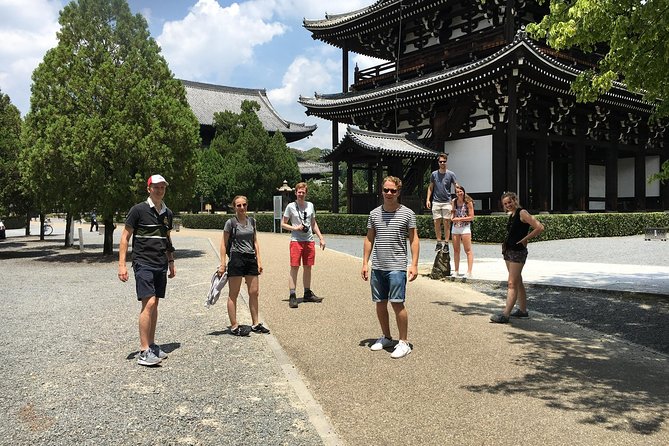
Tofuku-ji receives only about five minutes in the schedule, so think of it as a scenic stop rather than a full temple visit. The bridge offers attractive views, and the spacious grounds show why this is one of Kyoto’s important Zen temples.
The short timing may disappoint you if Tofuku-ji is high on your personal list. On the other hand, the stop helps prevent the day from becoming a series of long indoor visits. You get a quick look, hear the key story, and continue toward Fushimi Inari.
This is a recurring trade-off on the tour. You see a remarkable number of places, but most stops are introductions. The tour works best if you want a broad view of Kyoto and plan to return to one or two favorites for a slower visit.
Fushimi Inari and the torii gate route
Fushimi Inari-taisha is the final major stop and one of Kyoto’s most famous sights. Its long rows of orange torii gates climb the wooded slopes behind the shrine, creating a route that can be confusing and crowded.
You spend around 20 minutes here. The guide helps choose a practical path through the crowds, which is especially useful when the lower shrine area is packed. You will not walk the full mountain route in that time, but you can see the key approach and understand why the shrine is so important.
Indra has been praised for explaining the story and economics behind the thousands of torii gates. That context adds much more than a standard photo stop. You learn why businesses and individuals donate gates, rather than simply seeing an orange tunnel and moving on.
Fushimi Inari comes late in the day, when your legs may be tired. The advantage is that you have already seen much of Kyoto before arriving. The drawback is that you may wish for more time here, especially if you want to climb beyond the lower gates.
What the cycling itself feels like
The route is generally flat and has been described as safe and easy to follow, with guides using smaller roads and back streets when possible. You still ride on city streets, so you need to be comfortable cycling around traffic, intersections, pedestrians, and occasional changes in pace.
The total distance is substantial. Reports range from about 18 miles to 20 miles, with one outing running from roughly 9 a.m. to 6 p.m. because the group wanted to continue seeing more. The official duration is about seven to eight hours, so allow a full day.
You may also walk around 14,000 steps at the stops. That is why the tour can feel more demanding than the distance alone suggests. Wear supportive shoes, use sunscreen, and bring clothing that handles sweat. Summer weather can make the ride much harder.
The ride is not described as technically difficult. It is the length that matters. If you regularly cycle and can comfortably spend a day outdoors, the pace should be manageable. If you rarely ride a bike, dislike hills or heat, or want a relaxed sightseeing day, choose a walking or vehicle-based tour instead.
The guide can make or break the day
The strongest part of this experience is the guiding. Karl and Carl are praised for deep knowledge, humor, organization, and skill with families. Indra receives high marks for explaining Kyoto’s history, culture, temples, and the meaning behind Fushimi Inari. Juan is praised for an engaging style and a good lunch choice. Paul is noted for keeping a mixed international group safe, entertained, and together.
Jay is especially praised for taking photos of the group and keeping the day light. Quinn has more than 20 years of experience living in Japan and is valued for practical recommendations. Jamie and Jaimie add language lessons and cultural details to the ride.
There is one important caution. One less positive account found the cycling excellent but the explanations unclear and the overall value weaker than similar bike tours. That suggests the individual guide matters greatly. Most feedback is highly favorable, with a 4.9 rating and 99 percent recommendation rate, but no guided tour is identical from one day to the next.
Who should book this Kyoto bike tour?
I would choose this experience if you have limited time in Kyoto and want a strong first look at the city. It is also a good fit for active families with teenagers aged 13 or older, couples who prefer movement to buses, and anyone who wants both major landmarks and quieter streets.
The minimum age is 13, and every rider must be comfortable on a bicycle. The small group suits people who enjoy asking questions and hearing stories rather than simply following a flag through a crowd.
I would hesitate if your main goal is long, quiet visits inside temples. The schedule is packed, and the stops at Tofuku-ji, Gion, and Fushimi Inari are short. I would also think twice if you have knee, back, or balance problems, since the tour requires many hours of riding and walking.
At $119.38, the price is fair for a full day that includes the bicycle, helmet, lunch, water, and a guide. You are paying for access to a carefully arranged route and for the time saved by moving efficiently between distant sights. It is less compelling if you would rather spend several hours at just one or two temples.
My booking advice
Book this tour if you want to see a wide slice of Kyoto in one active day, especially during a short stay. The route is broad, the transport is practical, and lunch and equipment remove several small travel hassles.
Before booking, make sure you can handle roughly 18 to 20 miles of mostly easy riding plus substantial walking. Check dietary needs in advance, pack light, and ask about an electric bicycle if you are unsure about the distance.
The experience can be canceled for poor weather or if the minimum number is not reached. You can cancel for a full refund up to 24 hours before the start time, but late cancellations and changes are not refunded. If the conditions are right and you want Kyoto with more movement and personality than a bus tour, this is a strong choice.
FAQ
Where does the Kyoto biking tour start?
The tour starts at Cycle Kyoto, 7 Higashikujō Nishisannōchō, Minami Ward, Kyoto, 601-8003, Japan.
Where does the tour finish?
The activity ends back at the Cycle Kyoto meeting point.
How long does the tour last?
The tour lasts approximately seven to eight hours.
How far do you cycle?
The distance is not formally specified, but accounts of the route describe roughly 18 to 20 miles of cycling.
What is included in the price?
The price includes use of a Cannondale bicycle, a helmet, bottled water, and lunch.
How many people can join the tour?
The tour has a maximum of eight travelers according to the additional information. The overview describes a small group with a maximum of nine.
What age must riders be?
Riders must be at least 13 years old and comfortable riding a bicycle.
Is the tour physically demanding?
Yes. You need a moderate fitness level. The day includes many hours of cycling and walking at temples, shrines, and other sights.
Are dietary requirements accommodated?
Dietary requirements can be accommodated if you provide the information ahead of time.
Can I cancel for a refund?
You can cancel at least 24 hours before the start time for a full refund. Cancellations or changes made less than 24 hours before the start time are not refunded.
Just added around Kyoto
- Kyoto: Gion Night Walking Tour with Geisha Insight★ 5.0 · 39 reviews
- Kyoto: Private Customizable Day Trip by Car★ 5.0 · 38 reviews
- Kyoto: Full Day Bike Tour★ 4.9 · 39 reviews
- Private Japanese Calligraphy in Kyoto – Learn Shodō with a Master★ 5.0 · 39 reviews
- Experience a tea ceremony in an authentic tearoom, in Kyoto!★ 4.5 · 41 reviews
- Kyoto: Gion Evening Walk with Hidden Gems, Geisha & Sake★ 5.0 · 41 reviews
- Kyoto Private Photo Shoot & Tour by SnapKyoto★ 5.0 · 41 reviews
- The Way of Tea: Kyoto Crafts, Hidden Temples & Wabi-Sabi Walk★ 5.0 · 41 reviews
Cycling Tours, compared.
3h Tokyo E-Bike Tour: Hidden Gems, and Local Life with guide
Read our review →
Arashiyama Bamboo Forest & Hidden Gems Bike Tour (Early Bird)
Read our review →
Hiroshima in a Nutshell: Morning Bike Adventure
Read our review →Browse the lists this tour appears in