
Reviewed · CYCLING TOURS
Hidden Kyoto E-Biking tour
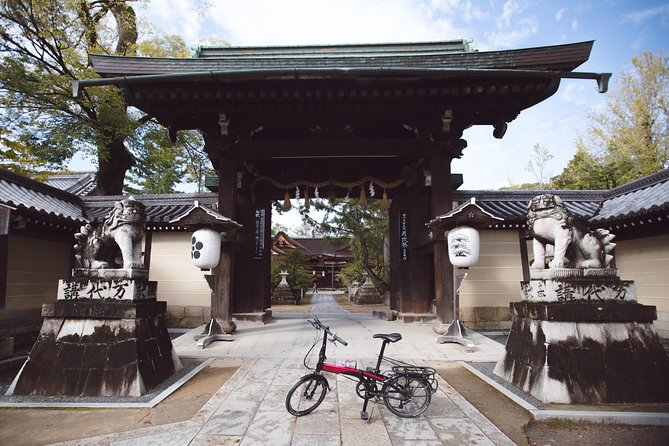
Kyoto reveals itself between the famous temples. This 3-hour-45-minute e-bike ride links Kinkakuji and Kitano Tenmangu with quiet lanes, Zen gardens, and small religious sites that are easy to miss by bus. I especially like the gentle pace and the chance to see Kyoto beyond its headline attractions, plus the included bike, helmet, and water. The main consideration is that the guide’s cultural talks can run long, and a few hills and descents still require comfort on a bicycle.
With a maximum of eight people, the ride feels personal rather than mass-produced. Guides such as Yuta, Michael, Sean, Henry, and Shizuka have earned praise for clear storytelling about Zen Buddhism, Shinto, geisha culture, samurai history, and temple etiquette. If you want a calm, active morning with plenty of context, this is one of Kyoto’s more useful half-day outings.
In This Review
- Key points to know before you pedal
- Why an e-bike is a smart way to see northern Kyoto
- Starting at NORU and settling into the route
- Kinkakuji, Kyoto’s bright introduction
- Daitokuji and the art of quieter temple time
- Kitano Tenmangu and Kyoto’s living traditions
- Koto-in and the beauty of a small garden
- Zuihoin and the final Zen note
- The guides make or break the experience
- Price, timing, and what your $116 buys
- Who should book this Kyoto bike tour?
- Should you book Hidden Kyoto E-Biking?
- FAQ
- Where does the Hidden Kyoto E-Biking tour begin?
- Where does the tour end?
- How long is the tour?
- How far do you cycle?
- What is included in the price?
- What is the minimum age?
- What happens if bad weather cancels the tour?
Key points to know before you pedal
- A compact Kyoto route: Cover roughly 4.3 to 4.9 miles, or about 7 to 8 kilometers, in a relaxed loop from the NORU bicycle shop.
- Famous sights with quieter stops: Visit Kinkakuji, Daitokuji, Kitano Tenmangu, Koto-in, and Zuihoin, while also riding through local backstreets.
- Electric assistance matters: The bikes make hills and warm weather far easier, especially around northern Kyoto.
- Small groups help: The tour caps participation at eight people, leaving room for questions and individual attention.
- A guide-led cultural lesson: Expect more than directions. The best guides explain Zen, Shinto, Buddhist customs, geisha traditions, and local etiquette.
- Plan around the weather: The tour requires good weather, and you must arrive 15 minutes early for an on-time departure.
Why an e-bike is a smart way to see northern Kyoto
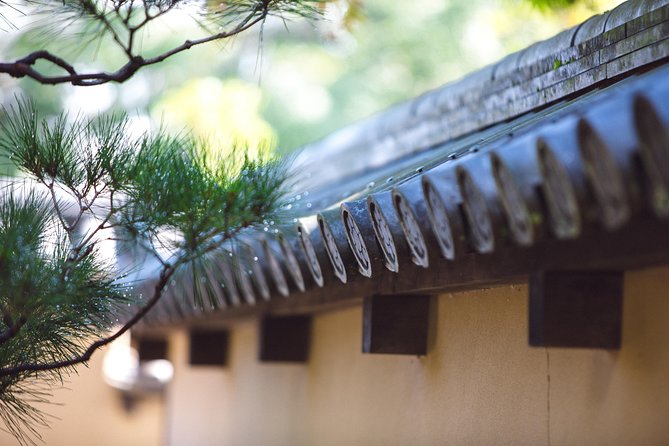
Kyoto’s major temples are spread across a wide area. Walking between them takes time, while buses can be slow and crowded. This ride gives you a middle path: you cover more ground than on foot, but you still move slowly enough to notice tiled roofs, narrow lanes, gardens, and ordinary neighborhood life.
The route is described as easy and safe, with electric assistance doing much of the work. That matters because northern Kyoto includes hills, and several riders have specifically appreciated the help on steep sections. You still need basic bicycle confidence, since the ride includes descents and city streets, but you do not need to be a strong cyclist.
The bikes are foldable rental models, with helmets supplied. Past riders have found them simple to use after a short introduction. If you have not ridden for years, tell the guide at the start. Yuta and other guides have been praised for patience and for staying close to anyone who feels uncertain.
The ride covers around 7 to 8 kilometers, depending on how the route is described, but the distance is only part of the story. Stops, explanations, temple visits, and time in the gardens make the outing last nearly four hours. This is sightseeing by bicycle, not a timed athletic ride.
More Bike Tours in Kyoto
- Bike Tour Exploring North Kyoto plus Lunch
★ 5.0 · 1,087 reviews - Arashiyama Bamboo Forest & Hidden Gems Bike Tour (Early Bird)
★ 5.0 · 613 reviews - 5 Top Highlights of Kyoto Full Day Bike Tour (E-bike option)
★ 5.0 · 511 reviews
Starting at NORU and settling into the route
You meet at NORU Kyoto Bike Tours, at 429-22 Takigahanacho in Kamigyo Ward. Departure times are offered at 8:30, 9:00, 12:30, and 1:00, so you can choose a morning or afternoon outing.
Arrive at least 15 minutes early. This is not a tour where arriving a few minutes late is harmless. The group leaves on schedule, and missing the departure means no refund.
The opening orientation covers the rental bike and helmet. Use this time to ask about the electric assistance, braking, and gears. The tour is aimed at people aged 13 and older, and the operator says most participants can take part, but anyone who cannot ride a bicycle should not book it.
The small group size is a real advantage. Eight is the maximum, and a smaller group can pause without causing a long delay. It also makes it easier to hear the guide beside a temple gate or ask about a custom that has just been explained.
Kinkakuji, Kyoto’s bright introduction
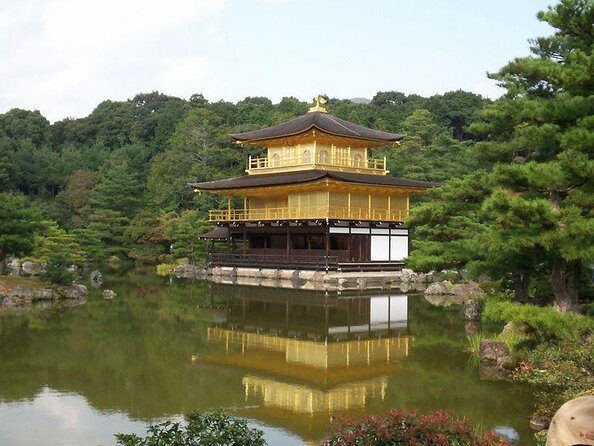
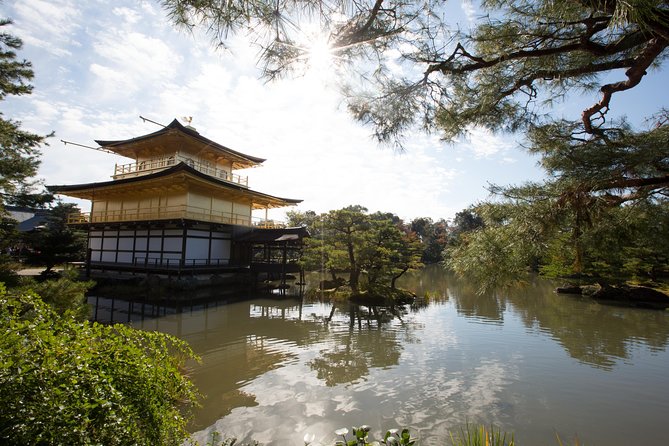
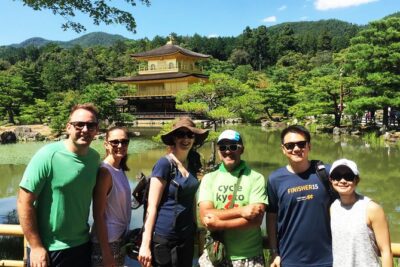
Kinkakuji, the Golden Pavilion, is the route’s most famous sight. Its gold-covered upper levels reflected in the pond make it one of Kyoto’s instantly recognizable views. The stop gives you the grand, polished face of Kyoto before the ride turns toward quieter corners.
Expect this to be the busiest part of the route. Kinkakuji is not a secret, and the tour cannot remove the crowds that gather around a major UNESCO-listed site. The advantage is timing and context: you see it as part of a larger northern Kyoto route rather than spending your entire day moving from one major attraction to another.
Your guide can add useful background about Buddhist traditions, temple customs, and how to behave at sacred places. That context makes the visit more meaningful, especially if this is your first morning in Kyoto.
Keep your expectations practical. The tour includes a stop at Kinkakuji, but the provided details do not say that an admission ticket is included. Food and drinks are also not included, aside from the supplied water, so budget separately for any entrance charges or refreshments.
Daitokuji and the art of quieter temple time
Daitokuji is a large temple complex with a different mood from Kinkakuji. Instead of one famous building dominating the visit, the complex offers a series of temple spaces and gardens connected by peaceful lanes.
This is where the tour’s title begins to make sense. You are still seeing an important Kyoto religious site, but the atmosphere is more measured. The guide can explain how Zen practice shapes temple gardens and architecture, helping you notice details that might otherwise look like simple gravel, stone, or carefully placed plants.
The experience may suit you especially well if you enjoy places that reward quiet attention. It is less about collecting photographs and more about understanding how a temple complex functions as a place of practice, art, and ceremony.
The tradeoff is the amount of time spent listening. One participant felt the guide talked too long for a short tour and would have preferred more time to explore. That is a fair warning. The strongest guides, including Yuta, Michael, Sean, and Henry, receive praise for lively and useful explanations, but the pace can depend on the guide and the interests of your group.
More E-Bike Tours in Kyoto
- E-Bike Tours of the highlights of Kyoto!!!
★ 5.0 · 291 reviews - Kyoto: City Secrets eBike Tour
★ 4.9 · 196 reviews - Pedal Adventure Kyoto’s iconic landmarks on an e-bike tour
★ 5.0 · 189 reviews - Kyoto: Hidden Gems E-Bike Tour with Local Japanese Guide
★ 4.9 · 189 reviews
Kitano Tenmangu and Kyoto’s living traditions
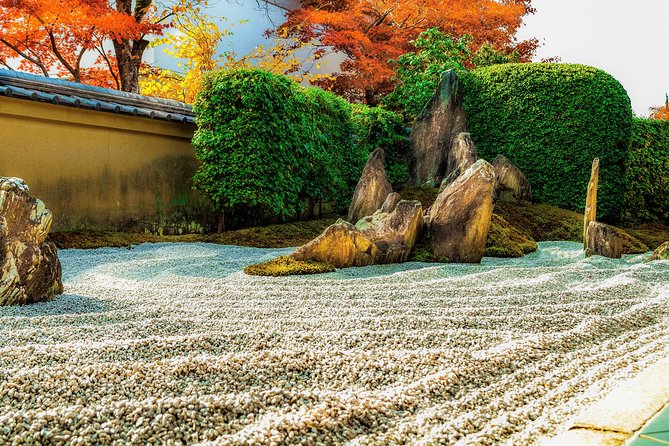
Kitano Tenmangu is a major Shinto shrine and one of the route’s key religious stops. Here, the guide can help you distinguish Shinto customs from Buddhist traditions, a subject that many first-time visitors find confusing.
You may learn how to approach a shrine, what respectful behavior looks like, and why certain objects and gestures matter. Several guides have also explained geisha and maiko traditions, along with customs connected to Japanese festivals and daily life.
This stop adds variety to the route. Kinkakuji and Daitokuji give you Buddhist settings, while Kitano Tenmangu provides a Shinto counterpart. Seeing both in one ride makes Kyoto’s religious culture easier to understand than visiting unrelated sites with no explanation.
The surrounding streets also help break up the formal temple visits. You ride through areas that feel more residential, with fewer large tour groups and a slower rhythm. Keep an eye on the road rather than treating every lane as a photo stop. The point is to pass through these neighborhoods respectfully, not turn them into a moving stage set.
Koto-in and the beauty of a small garden
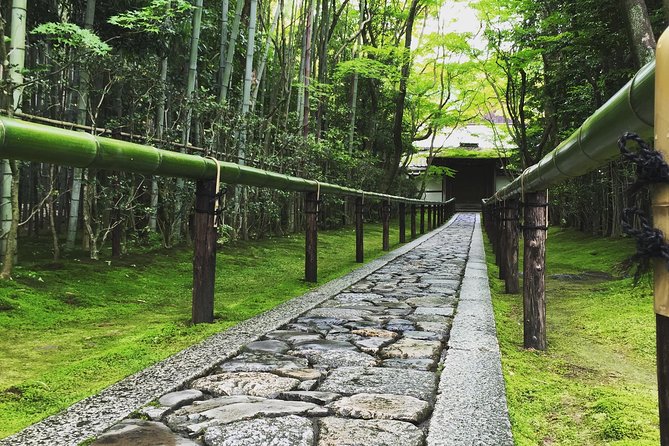
Koto-in is one of the more intimate stops. Its appeal comes from restraint: a quieter temple setting, garden views, and a sense of space after the larger sights.
This is the kind of place that can be hard to appreciate without a guide. Kyoto’s Zen gardens are not simply decorative courtyards. Their shapes, empty spaces, and framed views invite a slower way of looking. A good explanation can give you a starting point, then let you notice the details for yourself.
The route’s emphasis on lesser-known sites is valuable here. You are not just racing between the temples that appear on every postcard. You are given time to see why smaller places matter, even when they lack a single famous structure.
The exact amount of time at each stop can vary. If your group has many questions, a temple explanation may take longer. If you prefer more independent wandering, say so politely. The guide is there to shape the experience, but a short tour must balance conversation with time on site.
Zuihoin and the final Zen note
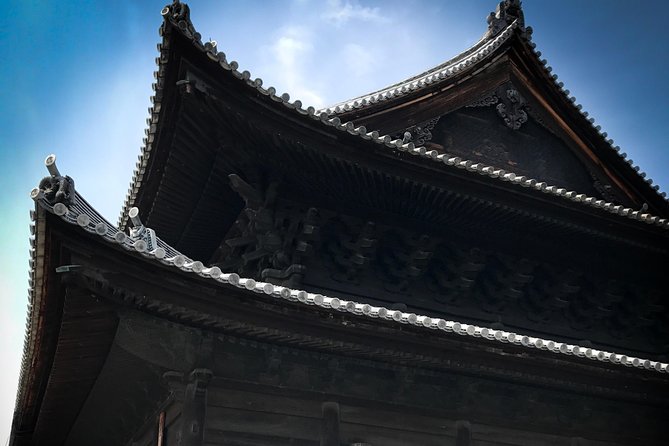
Zuihoin is another stop connected with Zen gardens and quiet reflection. It fits the route’s final movement away from headline sights and toward places that ask for a little more attention.
Several guides have included a brief Zen-focused element near the end. This can be a lovely finish after cycling through temples and backstreets, particularly if you enjoy cultural interpretation rather than simple sightseeing.
Do not expect a full meditation course or a long formal ceremony. The supplied details describe Zen elements and garden visits, not a guaranteed extended practice session. Think of it as a thoughtful closing note that may give you a new way to look at the gardens you see later in your Kyoto visit.
A charming tea stop has also been part of some outings. The story attached to the place, said to stretch across more than a thousand years and 28 generations, adds a memorable human detail. Since it is not listed among the formal inclusions, treat it as a possible feature rather than something guaranteed on every departure.
The guides make or break the experience
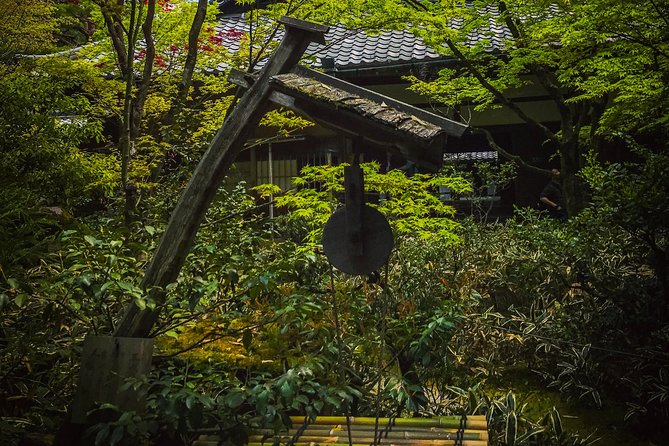
The strongest part of this tour is the guide. The bikes get you from place to place, but the explanations turn a pleasant ride into a useful introduction to Kyoto.
Yuta receives especially warm praise for his English, patience, and ability to connect Zen Buddhism, Shinto, temple etiquette, geisha culture, and feudal Japan. Michael is praised for his storytelling and for his background as a Japanese history teacher. Sean is described as clear, kind, funny, and well prepared for rainy or cool conditions.
Henry has also been praised for his long experience living in Japan and his respect for Japanese culture. Shizuka led a small group through temples, backstreets, and hilly sections, with participants noting the quality of the bikes and the balance between riding and explanation.
The guide names are useful when selecting a departure, but assignments can change. Do not book solely for one person unless the operator confirms that guide in advance. What you can reasonably expect is an English-speaking route coordinator who gives historical and cultural background while managing the group on the road.
If you prefer a fast ride with only brief facts, this may feel talk-heavy. If you like stories and want to understand what you are seeing, the pace will likely feel just right.
Price, timing, and what your $116 buys
At $116 per person, this is not the cheapest way to see Kyoto. You can visit many temples independently for less, especially if you are comfortable navigating public transportation and renting a bicycle on your own.
The value comes from combining several services in one compact outing. You receive an e-bike, helmet, water, route planning, a small group, and an English-speaking guide. You also avoid spending time working out how to connect northern Kyoto’s temples yourself.
For a first visit, the route can help you get your bearings early in your stay. You finish back at the original meeting point, which makes it easier to continue with lunch or another planned activity nearby. Returning visitors may value it even more, since the ride focuses on places beyond the standard Kyoto checklist.
The schedule deserves attention. With departures from early morning through early afternoon, you can fit the ride around other plans. The full outing lasts about 3 hours and 45 minutes, so do not place a major timed reservation immediately afterward.
Food is not included. Bring or buy what you need before or after the ride, and remember that the supplied water is the only included refreshment clearly stated.
Who should book this Kyoto bike tour?
I would recommend it to active adults, families with children aged 13 or older, and anyone who wants a more personal introduction to Kyoto. It is also a strong choice if you have already seen the major central sights and want smaller temples, gardens, and residential streets.
You do not need to be a serious cyclist. The electric assistance reduces effort, and the ride is described as easy, but you should be comfortable steering, braking, and handling a few hills and descents. If you have not been on a bicycle in many years, the guide can help, though no bicycle tour can remove every road-related concern.
This is less suitable if you dislike group commentary, want complete freedom at each temple, or have difficulty riding for several hours. It may also disappoint if you expect every moment to be hidden from the public. Kinkakuji and Kitano Tenmangu are well-known sites, while the quieter atmosphere comes mainly from the connecting streets and smaller stops.
Rain can be manageable, and some guides have provided rain gear, but you should still bring a raincoat or poncho and weatherproof gloves if wet conditions are expected. The operator may cancel for poor weather and offer another date or a full refund.
Cancellation is free up to 24 hours before the start time. Changes or cancellations inside that window are not accepted, and no-shows are nonrefundable. The tour also requires a minimum number of participants, so a cancellation by the operator can result in another date, another experience, or a full refund.
Should you book Hidden Kyoto E-Biking?
Book it if you want Kyoto’s famous temples paired with quieter streets and a guide who can explain what you are seeing. The electric bikes make a hilly route practical, and the small group keeps the outing friendly and manageable.
I would choose a morning departure near the beginning of a Kyoto stay. You can learn basic temple etiquette, get a feel for the city’s northern side, and collect food and sightseeing suggestions from the guide for later.
Skip it if you cannot ride a bicycle, want a completely self-guided visit, or prefer short explanations and long unstructured stops. For everyone else, the $116 price is reasonable for the equipment, planning, and cultural guidance, especially when the goal is to see more than Kyoto’s most photographed places.
FAQ
Where does the Hidden Kyoto E-Biking tour begin?
It begins at NORU Kyoto Bike Tours, located at 429-22 Takigahanacho, Kamigyo Ward, Kyoto, 602-8336, Japan.
Where does the tour end?
The ride finishes back at the original meeting point.
How long is the tour?
The experience lasts approximately 3 hours and 45 minutes.
How far do you cycle?
The route is described as approximately 7 to 8 kilometers, or about 4.3 to 4.9 miles.
What is included in the price?
The price includes an English-speaking route coordinator, rental bike, rental helmet, and water.
What is the minimum age?
The minimum age is 13.
What happens if bad weather cancels the tour?
If the operator cancels because of poor weather, you can choose another date or receive a full refund.
Just added around Kyoto
- Kyoto: Private Customizable Day Trip by Car★ 5.0 · 38 reviews
- Kyoto: Gion Night Walking Tour with Geisha Insight★ 5.0 · 39 reviews
- Kyoto: Full Day Bike Tour★ 4.9 · 39 reviews
- Private Japanese Calligraphy in Kyoto – Learn Shodō with a Master★ 5.0 · 39 reviews
- Experience a tea ceremony in an authentic tearoom, in Kyoto!★ 4.5 · 41 reviews
- Kyoto: Gion Evening Walk with Hidden Gems, Geisha & Sake★ 5.0 · 41 reviews
- Kyoto Private Photo Shoot & Tour by SnapKyoto★ 5.0 · 41 reviews
- The Way of Tea: Kyoto Crafts, Hidden Temples & Wabi-Sabi Walk★ 5.0 · 41 reviews
Cycling Tours, compared.

3h Tokyo E-Bike Tour: Hidden Gems, and Local Life with guide
Read our review →
Arashiyama Bamboo Forest & Hidden Gems Bike Tour (Early Bird)
Read our review →
Hiroshima in a Nutshell: Morning Bike Adventure
Read our review →
5 Top Highlights of Kyoto Full Day Bike Tour (E-bike option)
Read our review →Browse the lists this tour appears in