
Reviewed · CYCLING TOURS
Bike Tour Exploring North Kyoto plus Lunch
Kyoto rewards anyone willing to slow down. This six-hour ride links famous temples with quiet lanes, local shrines, and corners you could easily miss from a bus. I like the small group of up to eight and the way the route mixes major sights with everyday Kyoto. The included lunch and temple admission also make the $106.12 price easier to justify.
The main consideration is physical: you may cover about 13 miles, or roughly 24 kilometers, over the day. The pace is generally easy to moderate, and the route has frequent stops, but summer heat, steady riding, and a short incline near Kinkakuji can still make this more tiring than a standard walking tour. Guides such as Mayko, Julian, Indra, Karl, Quinn, and Jay have earned especially strong praise for their warmth, safety awareness, and ability to explain Japanese religion and history in plain terms.
In This Review
- Key reasons to consider this Kyoto bike tour
- Why seeing Kyoto by bicycle works so well
- Starting at Cycle Kyoto at 10 a.m.
- Nishi Honganji: a quiet start with serious scale
- Kitano Tenmangu and the everyday side of Kyoto
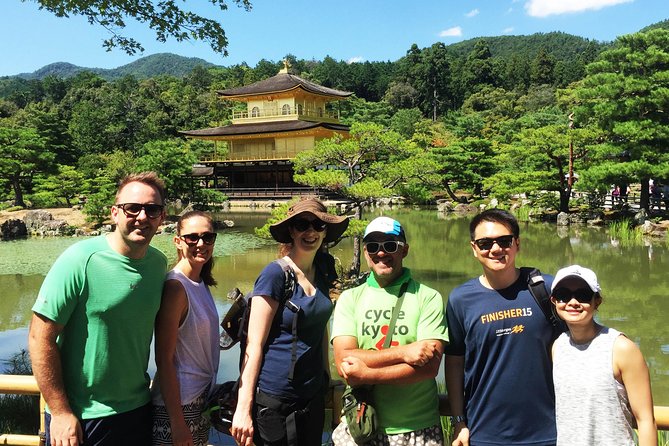
- Kinkakuji: Kyoto’s famous Golden Pavilion
- The former imperial grounds and the ride between sights
- Lunch: a welcome break, with some flexibility
- Gion: a brief look at Kyoto’s geisha district
- The guides are a major part of the value
- How difficult is the riding?
- Is $106.12 a fair price?
- Practical details before you book
- Who should book this ride?
- FAQ
- How long does the Kyoto bike tour last?
- Where does the tour start and finish?
- What is included in the price?
- Is lunch included?
- How far do you ride?
- Who can join the tour?
- What happens if the weather is bad?
Key reasons to consider this Kyoto bike tour
- A useful first-day introduction: The route covers Nishi Honganji, Kitano Tenmangu, Kinkakuji, the former imperial grounds, and Gion in one outing.
- A small group capped at eight: Your guide can adjust speed, answer questions, and make the day feel personal rather than mass-produced.
- Comfortable Cannondale bicycles: Bikes are fitted by height, and riders have reported padded seats and optional helmets.
- A genuine mix of Kyoto: You get famous sights, back streets, quiet lanes, religious sites, and the geisha district.
- Lunch is built into the day: The meal may be noodles, sushi, or another local option, and dietary needs should be shared ahead of time.
- Strong value for active sightseers: Equipment, guidance, bottled water, lunch, and Kinkakuji admission are included for $106.12.
Why seeing Kyoto by bicycle works so well
Kyoto is spread across a broad basin, and its most interesting places do not sit neatly beside one train station. A bus can move you between sights, but it also leaves you waiting in traffic and looking at the city through glass. A bicycle gives you a better sense of how the temples, homes, shops, shrines, and narrow lanes fit together.
This is not a race. The cycling portion takes about two and a half hours, with the rest of the five to six-hour outing used for sightseeing, explanations, food, and short breaks. That balance matters. You get enough movement to cover ground, but you are not pedaling past every attraction just to reach the finish.
The route is often described as easy to moderate. Riders who had not been on a bicycle for years found the pace manageable, and guides adjusted the speed to suit the group. Still, you should be comfortable riding a bike in a city and have a moderate level of fitness. A hot day can change the calculation quickly, so use the supplied bottled water and bring a practical attitude about heat.
The bikes are high-quality Cannondale models. Staff fit them according to your height, and padded seats have helped make the long ride more comfortable. Helmets are available, which is a welcome option for anyone who prefers extra protection.
More Bike Tours in Kyoto
- Hidden Kyoto E-Biking tour
★ 5.0 · 1,843 reviews - Arashiyama Bamboo Forest & Hidden Gems Bike Tour (Early Bird)
★ 5.0 · 613 reviews - 5 Top Highlights of Kyoto Full Day Bike Tour (E-bike option)
★ 5.0 · 511 reviews
Starting at Cycle Kyoto at 10 a.m.
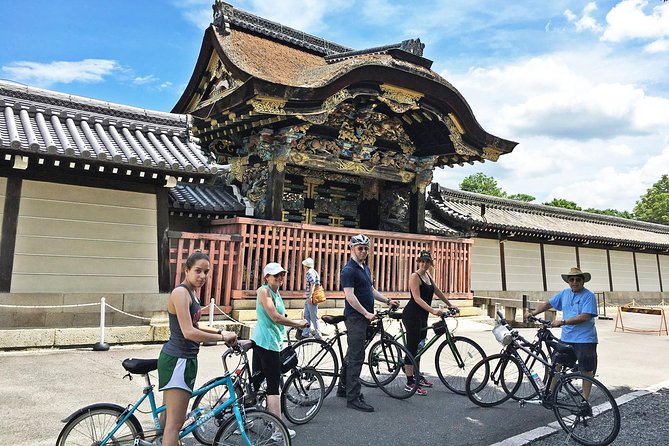
The day begins at Cycle Kyoto, at 7 Higashikujō Nishisannōchō in Kyoto’s Minami Ward. The shop is near public transportation, and this is where you meet the guide and the rest of the group, receive your bicycle, and get ready for the route.
Allow time to arrive without rushing. A proper bike fit is worth a few minutes, especially if you are not used to riding for several hours. You receive the bike, guidance, and bottled water as part of the outing.
The group limit of eight is one of the tour’s best features. A small party is easier to keep together on city streets, and it gives the guide room to learn names, respond to questions, and alter the pace. Jay, Quinn, and other guides have been praised for making solo riders and families feel included, while guides including Indra and Karl are noted for lively explanations that turn stops into conversations rather than lectures.
The tour returns to this same meeting point. That makes the start and finish simple, though you should remember that the day is not a one-way transfer to your next Kyoto sight.
Nishi Honganji: a quiet start with serious scale
The first temple stop is Nishi Honganji, one of Kyoto’s less visited major religious sites. Its huge wooden buildings give you an immediate sense of scale, yet the site usually feels calmer than Kyoto’s headline attractions.
You have about 15 minutes here. That is enough for an introduction, a look at the architecture, and a chance to take in the atmosphere, but not enough for a long, unhurried exploration of every building. The short visit works well near the beginning of the day because it gets you into Kyoto’s religious world before the route reaches the more crowded sights.
One appealing detail is the visible repair work on the historic buildings. Rather than pretending old structures remain untouched, the repairs show how Kyoto preserves them for the future. Your guide can help you notice details that might otherwise disappear into the large wooden spaces.
Kitano Tenmangu and the everyday side of Kyoto
Next comes Kitano Tenmangu Shrine, with about 20 minutes to look around. This is a chance to see a major shrine while also sharing space with local worshippers.
The stop has a different feel from Nishi Honganji. You move from a large Buddhist temple complex to a Shinto shrine, and guides such as Indra and Quinn have been particularly praised for explaining the differences between Buddhism and Shinto in a clear, approachable way. That context adds real value because Kyoto’s religious sites can look similar at first glance if you do not know what to watch for.
Kitano Tenmangu also gives you a calmer pause before the day’s most famous attraction. You can enjoy the quiet mood, learn about the shrine’s past, and observe how the site functions for people who are there for more than sightseeing.
A completely different kind of day out in Kyoto:
- PERFECT KYOTO 1-Day Bus Tour
★ 5.0 · 13,518 reviews - Kyoto: Fushimi Inari, Kinkakuji, Bamboo Grove 1 Day Bus Tour
★ 4.8 · 4,316 reviews - Kyoto: Tea Ceremony in a Traditional Tea House in Kiyomizu
★ 4.9 · 3,519 reviews - Kyoto Geisha Walking Tour: Gion District & Hidden Gems
★ 4.7 · 3,273 reviews
Kinkakuji: Kyoto’s famous Golden Pavilion
Kinkakuji is the tour’s biggest name. The Golden Pavilion is one of Japan’s most recognized sights, and the included entrance fee saves you one extra expense and one small decision during the day.
You spend about 30 minutes at the temple. The visit includes commentary, time for photographs, and the possibility of stopping for ice cream. That last detail is practical rather than ornamental: a cold treat can be welcome after riding, particularly in Kyoto’s hot months.
Kinkakuji can be crowded, and no guided visit can remove that reality. The pavilion is also an iconic image, so expectations are high. The advantage here is having a guide explain what you are seeing and direct your attention beyond the obvious gold structure.
There is a slight incline on the way to Kinkakuji. It is not described as a major climb, and riders report that most of the route is gentle, but this is the point where you may notice the effort. Afterward, much of the ride feels easier, with the route continuing through northern Kyoto and back toward the city.
The former imperial grounds and the ride between sights
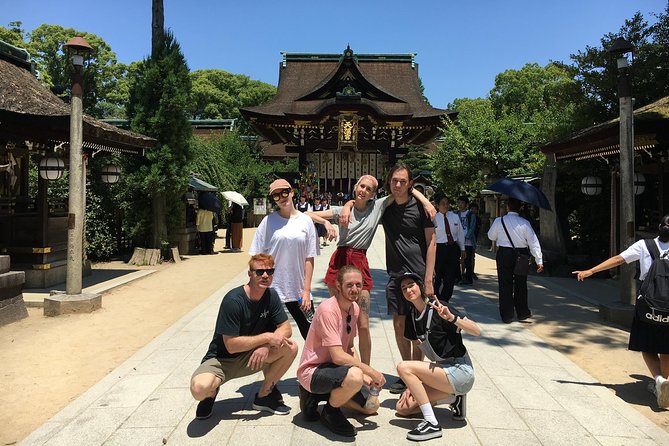
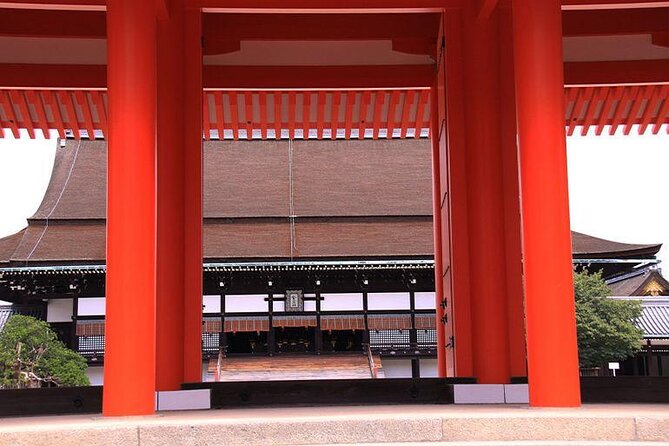
The route also passes through the grounds of the former seat of Japan’s imperial family. The supplied schedule gives this stop no formal number and no exact duration, but it is part of the northern Kyoto section.
This is where the bicycle format earns its keep. Instead of treating each temple as a separate appointment, you travel through the city’s spaces in between. You see Kyoto not only as a collection of postcard stops, but as streets and districts joined by ordinary movement.
Your guide leads you through back alleys and less obvious corners, helping you avoid getting lost. You should not expect every turn to be a secret attraction. The value is in seeing how the city changes from one historic site to the next, with commentary that connects architecture, religion, and daily life.
Lunch: a welcome break, with some flexibility
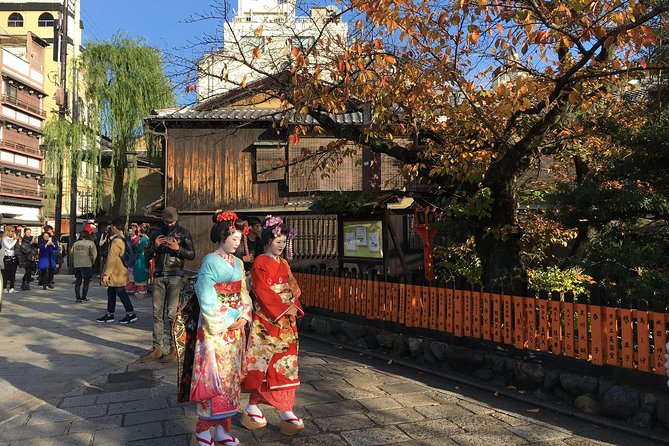
Lunch is included, and it is an important part of the experience rather than an afterthought. Several outings have featured a traditional noodle restaurant, including one described as about 400 years old. Another group ate at a sushi bar or sushi train after the planned noodle house was closed.
That flexibility is useful. It means the exact restaurant can change, so you should not book this expecting one fixed menu or one guaranteed dining room. You can expect a Japanese meal selected as part of the day, with the guide helping the group settle in.
Dietary requirements must be provided in advance. Vegetarian options have been arranged for some groups, but the safest approach is to state your needs when booking, not when you sit down hungry.
The lunch break also gives your legs a rest. After several hours of riding and sightseeing, a seated meal helps the day feel balanced. Extra drinks are not included, so budget a little more if you want something beyond the supplied water.
Gion: a brief look at Kyoto’s geisha district
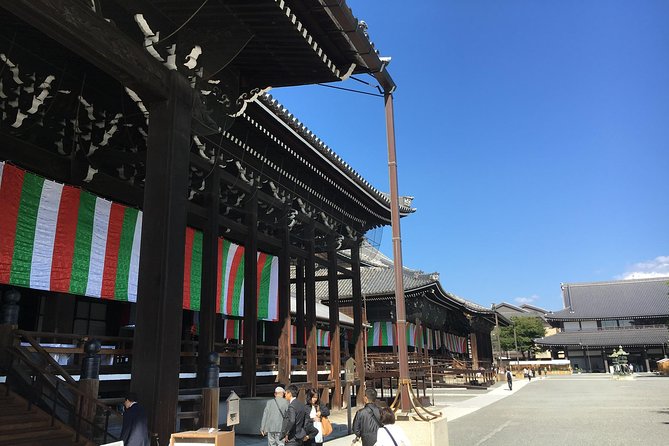
The final named sightseeing stop is Gion, Kyoto’s famous geisha district. The scheduled visit is about 10 minutes, so think of it as an orientation and a short look, not a full walking tour of the neighborhood.
Your guide explains the hidden world of geisha and may point out where you could possibly glimpse one. Keep your expectations sensible and your manners respectful. A chance sighting is never guaranteed, and the purpose of the stop is to understand the district, not to treat people who work there as photo subjects.
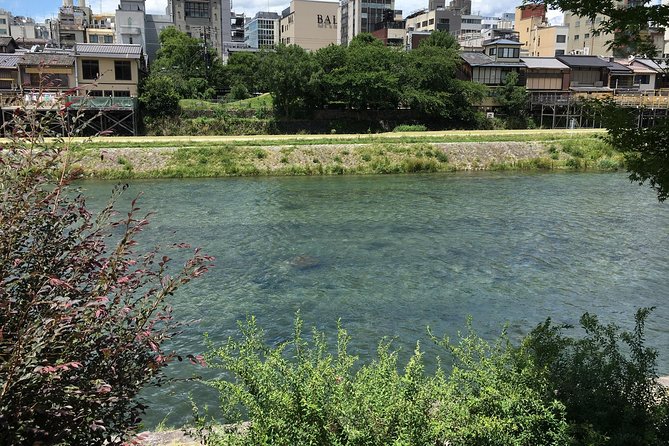
Gion provides a fitting contrast to the temples and shrines. You see a historic entertainment quarter within the modern city, then return by bicycle to the starting point. It is a short stop, but useful if you want a first introduction before exploring Gion more carefully on your own.
The guides are a major part of the value
The route is good, but the guide can determine whether the day feels merely efficient or genuinely memorable. This tour has received especially strong praise for its guides.
Mayko is described as engaged and thoughtful, with a talent for connecting old traditions to present-day Japanese culture. Julian is praised for an easygoing manner, strong local knowledge, and enthusiasm for Kyoto. Indra brings wide knowledge of Japanese history, religion, geisha culture, and the difference between Buddhist and Shinto traditions.
Karl is known for detailed answers and a lively personality. Quinn has been singled out for learning everyone’s name, adapting the pace, keeping riders hydrated in hot weather, and sometimes adding extra time or stops. Jay has been warmly praised by families and solo riders for making the day feel friendly while keeping an eye on safety.
Guide assignments can change, so you cannot request a particular person based on these examples. You can reasonably expect the experience to depend heavily on who leads your group, as it does with any small-group tour.
How difficult is the riding?
The tour is suitable for riders aged 13 and older who are comfortable on a bicycle. You do not need to be a serious cyclist, but you should be ready to ride for several hours and cover roughly 13 miles.
The pace is not meant to be athletic. There are frequent sightseeing stops and photo breaks, and guides have adjusted the route for the group’s ability. Several riders found the route safe and manageable, even with limited recent cycling experience.
Still, do not confuse manageable with effortless. You ride through a city, spend time on the saddle, and face at least one slight incline. Hot weather can make the same distance feel much harder. Comfortable clothing, sun protection, and a willingness to drink water will improve your day.
Families with older children have enjoyed the outing, including a family with children aged 12 to 17, though the stated minimum age is 13. If someone in your party is younger than 13, confirm eligibility before booking.
Is $106.12 a fair price?
At $106.12 per person, this is not the cheapest way to see Kyoto. It is also more than a basic bicycle rental because the cost includes a Cannondale bike, guidance, bottled water, lunch, and admission to Kinkakuji.
The value comes from combining transport, sightseeing, interpretation, and food in one half-day experience. You cover a wide section of the city without planning connections between temples, and you avoid spending time figuring out the safest route. For a first full day in Kyoto, that orientation can save effort later because you learn where you may want to return.
The price makes less sense if you prefer a slow visit at each temple, dislike group schedules, or already know Kyoto well. You will have set stop lengths, including only about 10 minutes in Gion and 30 minutes at Kinkakuji. This is a broad introduction, not an intensive study of one neighborhood.
The rating is 4.9 from 1,087 reviews, with 99 percent recommending it. Those figures suggest unusually consistent satisfaction, especially with the guides, lunch, route, and sense of safety. They do not erase the physical demands or guarantee a particular meal, but they support the idea that the tour delivers what it promises.
Practical details before you book
The tour runs about five to six hours and starts at 10 a.m. It ends back at the Cycle Kyoto meeting point. Confirmation is provided at booking, and the activity requires good weather.
Free cancellation is available until 24 hours before the start time for a full refund. Changes or cancellations inside that window are not accepted for a refund. If bad weather cancels the tour, you are offered another date or a full refund. The same choice applies if the minimum number of riders is not reached.
Because rain can affect a bike tour, booking near the start of your Kyoto stay is a smart tactic. One party had to move its outing because of rain and found rescheduling straightforward. Placing it early gives you more room to shift the day if the forecast turns poor.
Who should book this ride?
I would choose this tour if you want a broad first look at Kyoto, like active sightseeing, and value a guide who can explain what you are seeing. It suits couples, families with teenagers, solo riders, and anyone who would rather pedal past traffic than spend the day boarding buses.
It is also a good pick if Japanese religious traditions seem confusing to you. The explanations at Nishi Honganji and Kitano Tenmangu, along with the stops at Kinkakuji and Gion, give you a useful framework for the rest of your Japan trip.
I would hesitate if you want complete independence, have trouble riding for several hours, or need long uninterrupted time at each attraction. The route covers a lot, but the tradeoff is shorter visits and a fixed group pace.
For most active visitors, I think the combination of small-group attention, strong guides, lunch, and a varied route makes this one of Kyoto’s better introductions. Book it early in your stay, check the weather, share dietary needs in advance, and arrive ready to ride rather than simply be driven around.
FAQ
How long does the Kyoto bike tour last?
The experience lasts approximately five to six hours, beginning at 10 a.m. and ending back at the Cycle Kyoto meeting point.
Where does the tour start and finish?
It starts and finishes at Cycle Kyoto, 7 Higashikujō Nishisannōchō, Minami Ward, Kyoto, 601-8003, Japan.
What is included in the price?
The price includes a high-quality Cannondale bicycle, guidance, bottled water, lunch, and temple entrance fees. Admission to Kinkakuji is specifically included.
Is lunch included?
Yes. Lunch is included, though the restaurant and meal can vary. Past meals have included noodles and sushi. Dietary requirements must be provided ahead of time.
How far do you ride?
The cycling portion takes about two and a half hours. The total distance is approximately 13 miles, or 24 kilometers, spread across the day with sightseeing stops and breaks.
Who can join the tour?
Riders must be at least 13 years old, comfortable riding a bicycle, and have a moderate level of physical fitness. The group can include a maximum of eight people.
What happens if the weather is bad?
The tour requires good weather. If it is canceled because of poor weather, you will be offered a different date or a full refund.
More Lunch Experiences
- Osaka/Kyoto: Arashiyama, Nara & Fushimi Inari Shrine w/Lunch
★ 4.4 · 754 reviews - Kyoto Zen Meditation & Garden Tour at a Zen Temple with Lunch
★ 5.0 · 441 reviews - 4.5-Hour Kyoto Bike Tour with Lunch and UNESCO Zen Temples
★ 5.0 · 122 reviews - From Kyoto: Nara History Guided Half Day Bus Tour with Lunch
★ 4.8 · 114 reviews
Just added around Kyoto
- Kyoto: Private Customizable Day Trip by Car★ 5.0 · 38 reviews
- Kyoto: Gion Night Walking Tour with Geisha Insight★ 5.0 · 39 reviews
- Kyoto: Full Day Bike Tour★ 4.9 · 39 reviews
- Private Japanese Calligraphy in Kyoto – Learn Shodō with a Master★ 5.0 · 39 reviews
- Experience a tea ceremony in an authentic tearoom, in Kyoto!★ 4.5 · 41 reviews
- Kyoto: Gion Evening Walk with Hidden Gems, Geisha & Sake★ 5.0 · 41 reviews
- Kyoto Private Photo Shoot & Tour by SnapKyoto★ 5.0 · 41 reviews
- The Way of Tea: Kyoto Crafts, Hidden Temples & Wabi-Sabi Walk★ 5.0 · 41 reviews
Cycling Tours, compared.
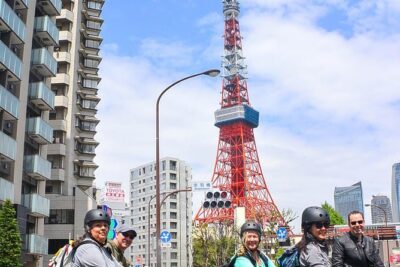
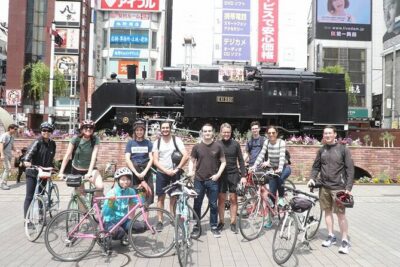
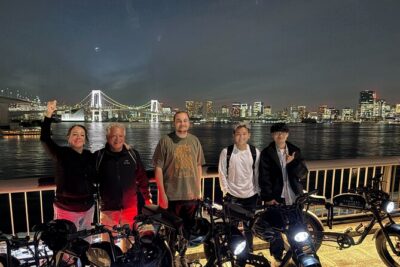
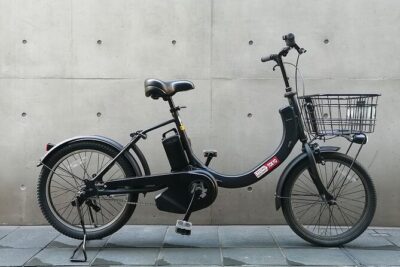
3h Tokyo E-Bike Tour: Hidden Gems, and Local Life with guide
Read our review →
Arashiyama Bamboo Forest & Hidden Gems Bike Tour (Early Bird)
Read our review →
Hiroshima in a Nutshell: Morning Bike Adventure
Read our review →
5 Top Highlights of Kyoto Full Day Bike Tour (E-bike option)
Read our review →Browse the lists this tour appears in