
Reviewed · TEMPLE & SHRINE TOURS
Kyoto Zen Meditation & Garden Tour at a Zen Temple with Lunch
Stillness is hard to find in Kyoto. This four-and-a-half-hour experience makes space for it, combining Zen meditation with a monk and guided walks through Tofukuji’s temple grounds. I like the small maximum of seven people, and I like that temple admission and a traditional Buddhist lunch are included. The main drawback is the strict schedule: arrive late and you may miss the group without a refund.
I also like the cultural balance. You are not simply led from one photo stop to another. A local guide explains Zen, Buddhism, and Shinto traditions, then prepares you for a quiet meditation session where private conversation is not allowed. The 10:45 departure has lunch at about 2:15, so you will want a good breakfast or early brunch.
In This Review
- Key Details at a Glance
- What Makes This Kyoto Experience Different
- Walking Through Tofukuji and Its Zen Setting
- Reading a Dry Garden Instead of Just Photographing It
- The Monk-Led Zazen Session
- A Buddhist Lunch After the Quiet Hour
- Guides Who Add More Than Directions
- Is $110.10 a Fair Price?
- Timing, Clothing, and Other Practical Matters
- Who Will Enjoy This Most?
- Should You Book the Kyoto Zen Meditation Tour?
- FAQ
- How long does the Kyoto Zen Meditation and Garden Tour last?
- Where does the tour begin?
- Where does the activity end?
- Is temple admission included?
- Is lunch included?
- What happens during the meditation session?
- Can dietary requests be arranged?
- What is the cancellation policy?
Key Details at a Glance
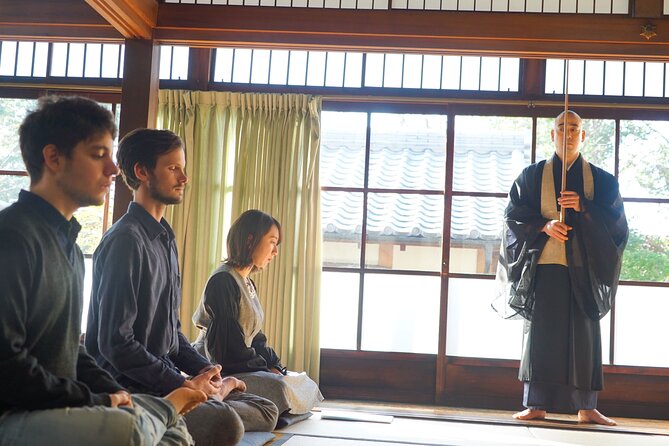
- Meditation with a resident monk: Learn the basics of zazen and sit in a real temple setting, with the guide helping translate and explain.
- Tofukuji and Zen gardens: Walk through one of Kyoto’s major Zen temple areas and study the dry garden with commentary rather than rushing past it.
- Traditional Buddhist lunch: A meat-free meal inspired by food historically served by Zen monks is part of the price.
- Small group of seven: The group size gives you a better chance to ask questions and receive help during the cultural explanations.
- Four and a half hours: The pace allows time for walking, temple visits, meditation, and lunch, but it is not a quick sightseeing stop.
- Ends near Chishaku-in Temple: The practical end point can differ from the simple meeting-point description, so listen for the guide’s final instructions.
What Makes This Kyoto Experience Different
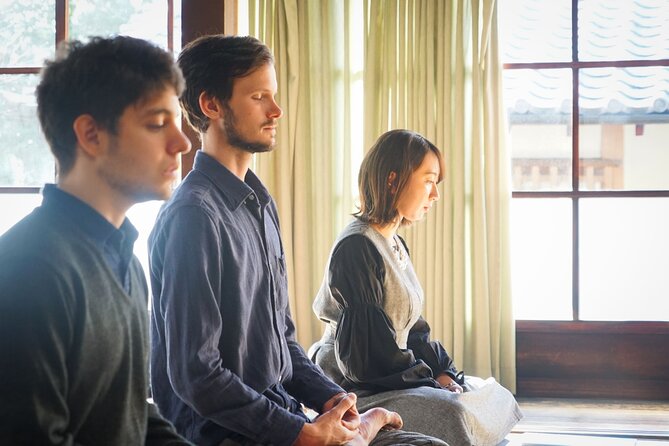
Kyoto has no shortage of temples, gardens, and guided walks. What makes this outing different is the shift from looking at Zen to trying one of its practices.
You begin around Tofukuji, one of the five major Zen temples in Kyoto. The guide helps place the buildings, gardens, and customs in context. That matters because a Zen temple can otherwise become a parade of gates, roofs, incense, and photographs. Here, you get an explanation of why quiet, order, and careful attention matter in the setting.
The central experience is zazen, or seated Zen meditation. A monk introduces the practice and guides the group through the basics. Some guides, including Yutaka and Hikari, have helped English-speaking participants understand what to expect before the session begins. When the monk speaks only Japanese, the guide can explain the instructions and translate questions afterward.
This is not a promise of instant enlightenment, and you do not need prior meditation experience. It is a structured introduction in a working religious setting. That makes it more meaningful than a generic wellness class, but it also means you need to respect the temple’s rules.
More Temple & Shrine Tours in Kyoto
- Kyoto: Fushimi Inari, Kinkakuji, Bamboo Grove 1 Day Bus Tour
★ 4.8 · 4,316 reviews - Kyoto: Tea Ceremony in a Traditional Tea House in Kiyomizu
★ 4.9 · 3,519 reviews - Kyoto: Tea Ceremony Ju-An at Jotokuji Temple
★ 4.9 · 3,207 reviews
Walking Through Tofukuji and Its Zen Setting
The tour begins at the FamilyMart near Tofukuji, at 12-chome-232 Honmachi in Kyoto’s Higashiyama Ward. The starting point is near public transportation, which makes it practical to reach from other parts of Kyoto.
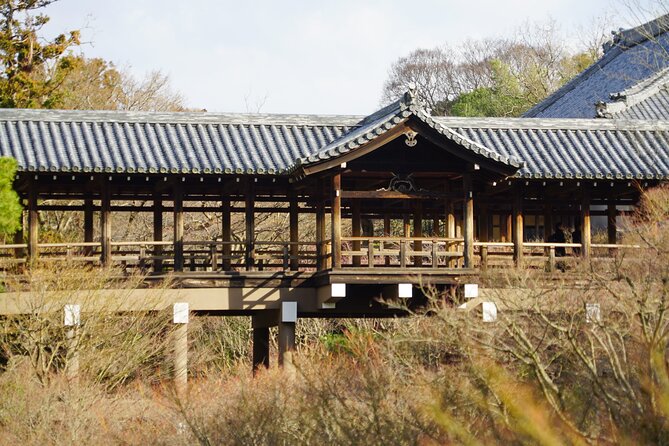
From there, you walk through the Tofukuji area with your guide. The route includes temple buildings and a famous shrine area, along with details about Buddhist and Shinto customs. The exact order can vary, but the purpose is consistent: help you understand the religious setting before you sit down to meditate.
I like this gradual approach. You first see how Zen appears in architecture, gardens, and daily temple life. Then you try a small part of the discipline yourself. It gives the meditation more meaning, since you already have some idea of the tradition behind it.
The walking is also a chance to ask questions. Yutaka is often praised for his warmth and for explaining small details without turning the tour into a lecture. Hikari has been especially helpful in preparing people for the monk-led session. The best guides here do more than recite dates. They connect the places you see with ideas about Buddhism, Zen practice, and Kyoto culture.
Keep your expectations measured. This is not a full tour of every corner of Tofukuji, and the experience is built around meditation rather than an exhaustive temple survey. If you want a long architectural tour with extensive time for photography, this may feel focused. If you want a calmer visit with cultural context, the focus works well.
Reading a Dry Garden Instead of Just Photographing It
A dry landscape garden, often called a karesansui garden, uses stones, gravel, and carefully placed forms instead of ponds and large plant displays. Its simplicity can look almost stark at first. With guidance, you get more from the arrangement than a quick photograph.
The garden visit is deliberately quiet. Your guide explains the visual elements and gives you time to take in the space. I like that combination of commentary and pause. Too much talking would defeat the purpose, but no explanation would leave many visitors guessing at the garden’s ideas.
The gardens are also an excellent bridge to meditation. You begin by slowing down your gaze, noticing space and form, and allowing the setting to be quiet. Later, the meditation asks you to apply that same attention inward.
Photography is possible during the walking portions, and the temple grounds provide plenty of careful details to notice. Still, this is not a photo-focused outing. During zazen, private conversation is generally prohibited, and you receive reading materials for silent use. Put your phone away and treat the silence as part of the activity, not as dead time.
The Monk-Led Zazen Session
The meditation session is the heart of the experience. You learn how to sit, how to approach the practice, and what to expect from a formal temple session. The monk provides the instruction, while your guide helps bridge any language gap.
One particularly useful detail is the translation support. In some sessions, the monk speaks Japanese only. The guide prepares you in advance, translates additional explanations, and helps with questions at the end. That means you are not left trying to guess what happened.
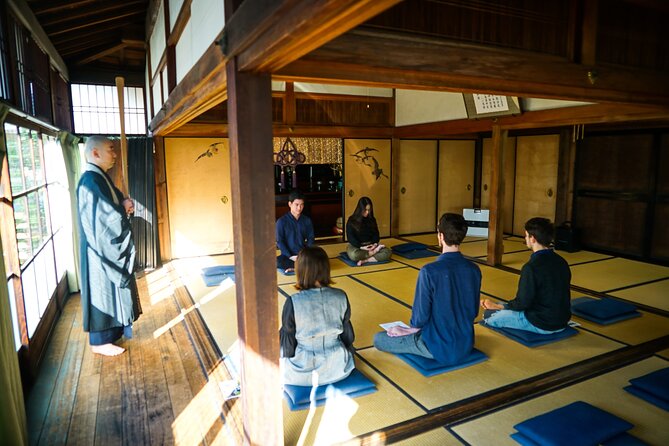
The session can last about an hour, including a short break. That is long enough to feel like a real practice rather than a ceremonial minute of silence. It may also feel demanding if you have never sat still for that long. You do not need to arrive as an experienced meditator, but you should arrive ready to follow instructions and remain quiet.
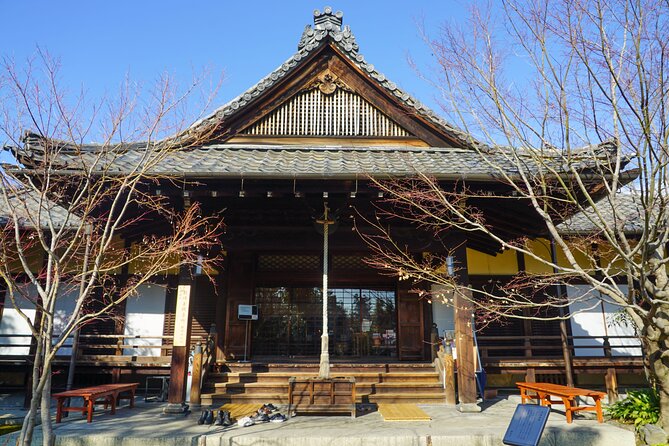
The setting adds weight to the experience. You are not meditating in a hotel room or a modern studio. You are sitting in a temple connected to Zen practice, under the guidance of a resident monk. Several people have described this as the most memorable part of their time in Kyoto, especially those looking for a reflective pause from a busy city or a demanding daily routine.
There is also a useful human element after the formal session. The monk may speak with the group and answer questions through the guide. That gives you a chance to clarify posture, breathing, or the ideas introduced during the session.
The limitation is clear: this is a group activity. You cannot chat privately during meditation, and the session will not be tailored to your personal spiritual background. Think of it as a respectful introduction, not private instruction.
A completely different kind of day out in Kyoto:
- PERFECT KYOTO 1-Day Bus Tour
★ 5.0 · 13,518 reviews - Kyoto Geisha Walking Tour: Gion District & Hidden Gems
★ 4.7 · 3,273 reviews - Kyoto: Gion Magical Night Walking Tour with Geisha Trivia
★ 4.9 · 2,393 reviews - Kyoto: 45-Minute Tea Ceremony Lesson Experience
★ 4.3 · 2,378 reviews
A Buddhist Lunch After the Quiet Hour
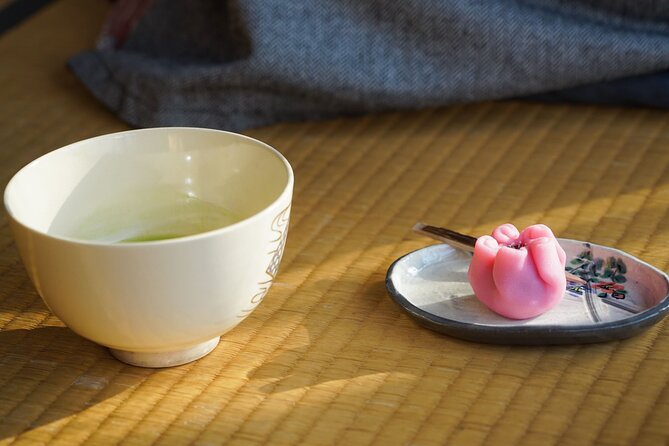
Lunch is included, which improves the value of the tour and helps make the half-day feel complete. The meal is a traditional Buddhist-style lunch, historically associated with food served by Zen monks. It is vegetarian in character, and one person described the Kyoto-style meal as both generous and delicious.
The timing deserves attention. For a 10:45 start, lunch is scheduled around 2:15, after meditation. That is late for many people, so eat enough before meeting the group. You may find the later meal satisfying after several hours of walking and quiet concentration, but do not rely on a quick snack during the tour.
Food restrictions need careful planning. The operator cannot guarantee an allergy-free meal because the food is prepared in kitchens that it does not control. Substitutions may not always be possible at individual stops, though the guide will try to make up for missed items elsewhere.
If you have a dietary request, send it by the day before. Requests made on the day cannot be accepted. This is especially important for serious allergies or strict dietary needs. The meal is a pleasant cultural part of the tour, but it should not be treated as a fully customizable restaurant experience.
Guides Who Add More Than Directions
The guide can make or break a culture-focused tour, and this experience receives especially strong praise for its guiding. Yutaka is often described as warm, passionate, and well informed about Kyoto and Zen Buddhism. He has a calm manner that suits the subject, and he takes time to explain details at the temples.
Hikari has also been praised for her preparation and translation during the meditation session. Other guide names appearing in the feedback include Yukata and Yuka, so the assigned guide may vary. I would not book expecting one specific person unless the reservation confirms it.
What you can reasonably expect is help with cultural interpretation, questions, and the monk’s instructions. A good guide also makes the group feel comfortable, which matters when you are about to sit quietly with strangers in a religious setting.
The maximum group size is seven. That is small enough for personal questions and easier communication than a large bus tour. It also means the group’s punctuality matters more. One late arrival can disrupt the meditation schedule, so the start time is enforced strictly.
Is $110.10 a Fair Price?
At $110.10 per person, this is not the cheapest way to see a Kyoto temple. The price makes more sense when you count what is bundled together: a guide for roughly four and a half hours, temple admission, several temple-area visits, dry garden commentary, a monk-led meditation session, translation help, and lunch.
You are paying for access and structure, not simply transportation. The monk-led zazen session is the part that gives the tour its strongest value. It would be difficult to arrange the same introduction on your own, especially if you do not speak Japanese or know which temple offers this kind of instruction.
The small group adds value too. With no more than seven people, the guide can answer questions and prepare everyone for the session. If you only want to wander around Tofukuji and take pictures, you can spend less by visiting independently. If you want context, a formal practice, and a meal in one block of time, the price is easier to justify.
I would book this for the experience rather than for the number of sights. It is not designed to check off every major Kyoto landmark. Its value lies in giving you a slower, more focused way to understand one part of the city.
Timing, Clothing, and Other Practical Matters
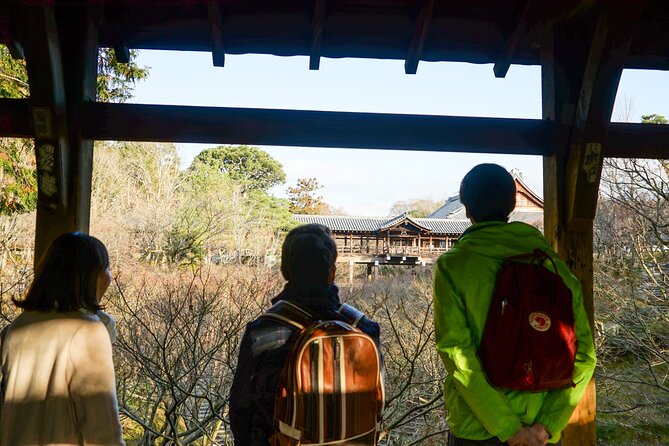
Arrive early. The tour will not wait for late arrivals, and missing the group means no participation, refund, or rescheduling. The meeting point is the FamilyMart near Tofukuji, so allow time to locate the store and get oriented.
Wear comfortable shoes for the walking portions. In summer, Kyoto can be extremely hot and humid, so bring water and a hat. In winter, temple floors can feel cold, and thick socks are recommended.
The age minimum is 12. The tour is near public transportation, but the supplied details do not promise a fully step-free route, so ask the operator directly if mobility access is important to you.
There is a small point of confusion about the ending. The written details say the activity ends near Chishaku-in Temple, while another note says the itinerary may return toward the meeting point and that the group plans to disband at the last shop. Treat the final stop as the practical end of the tour and confirm your onward route with the guide.
Free cancellation is available up to 24 hours before the local start time. Changes or cancellations inside that window are not accepted for a refund.
Who Will Enjoy This Most?
I would recommend this tour to you if you want more than temple sightseeing. It suits first-time meditators, solo visitors seeking quiet, and anyone curious about Zen, Buddhism, or Japanese religious life.
It also works well for repeat visitors. One participant who had been to Kyoto many times still found the meditation and explanations offered a different view of the city. The tour gives familiar temple areas a new purpose.
Couples and small groups should enjoy the easy scale, provided everyone is comfortable with silence and a set schedule. The experience is also a good fit for people who appreciate a guide’s cultural explanations more than a long list of photo stops.
I would hesitate to recommend it if you need a guaranteed allergy-safe meal, dislike sitting quietly for an extended period, or want complete freedom to linger at each temple. It is also a poor match for anyone likely to arrive late or for visitors with only a narrow gap between other bookings.
Should You Book the Kyoto Zen Meditation Tour?
Book it if the idea of sitting with a Zen monk, learning how zazen works, and sharing a Buddhist meal appeals to you. The strongest parts are the quiet temple setting, the careful preparation by guides such as Yutaka and Hikari, and the small group of seven or fewer.
Skip it if your main goal is rapid sightseeing, flexible meal timing, or a fully customizable menu. For the right audience, $110.10 buys a thoughtful cultural experience rather than just another temple walk. Give yourself the full four and a half hours, arrive early, eat breakfast, and let the silence do some of the work.
FAQ
How long does the Kyoto Zen Meditation and Garden Tour last?
The experience lasts approximately four hours and 30 minutes.
Where does the tour begin?
It begins at FamilyMart Nakai Tofukuji, at 12-chome-232 Honmachi, Higashiyama Ward, Kyoto, 605-0981, Japan.
Where does the activity end?
The activity ends near Chishaku-in Temple. The group may disband at the last shop, despite information saying it returns toward the meeting point, so confirm the final stop with your guide.
Is temple admission included?
Yes. You do not need to pay separate admission for the temples included in the experience.
Is lunch included?
Yes. A traditional Buddhist meal associated with food served by Zen monks is included.
What happens during the meditation session?
You learn the basics of zazen, or Zen meditation, and practice under the guidance of a resident monk. Private conversation is generally not allowed during the session, and reading materials may be provided for silent use.
Can dietary requests be arranged?
You must submit any dietary request by the day before the tour. Allergy-free meals and all dietary substitutions cannot be guaranteed because the food is prepared in kitchens outside the operator’s control.
What is the cancellation policy?
You can cancel up to 24 hours before the experience begins for a full refund. Cancellations or changes made less than 24 hours before the start time are not accepted for a refund.
More Lunch Experiences
- Bike Tour Exploring North Kyoto plus Lunch
★ 5.0 · 1,087 reviews - Osaka/Kyoto: Arashiyama, Nara & Fushimi Inari Shrine w/Lunch
★ 4.4 · 754 reviews - 4.5-Hour Kyoto Bike Tour with Lunch and UNESCO Zen Temples
★ 5.0 · 122 reviews - From Kyoto: Nara History Guided Half Day Bus Tour with Lunch
★ 4.8 · 114 reviews
Just added around Kyoto
- Kyoto: Gion Night Walking Tour with Geisha Insight★ 5.0 · 39 reviews
- Kyoto: Private Customizable Day Trip by Car★ 5.0 · 38 reviews
- Kyoto: Full Day Bike Tour★ 4.9 · 39 reviews
- Private Japanese Calligraphy in Kyoto – Learn Shodō with a Master★ 5.0 · 39 reviews
- Kyoto: Gion Evening Walk with Hidden Gems, Geisha & Sake★ 5.0 · 41 reviews
- Experience a tea ceremony in an authentic tearoom, in Kyoto!★ 4.5 · 41 reviews
- Kyoto Private Photo Shoot & Tour by SnapKyoto★ 5.0 · 41 reviews
- The Way of Tea: Kyoto Crafts, Hidden Temples & Wabi-Sabi Walk★ 5.0 · 41 reviews
Temple & Shrine Tours, compared.
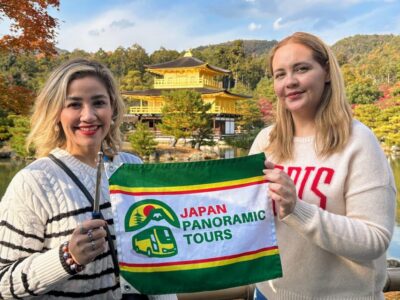
Fushimi Inari, Kinkakuji, Bamboo Grove 1 Day Bus Tour
Read our review →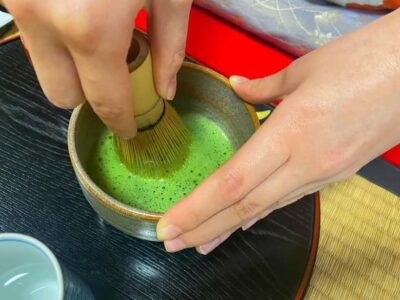
Tea Ceremony in a Traditional Tea House in Kiyomizu
Read our review →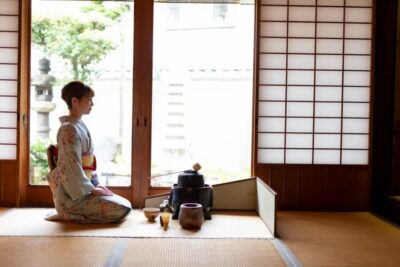

Meiji Shrine, Asakusa, Skytree Bus Tour and Cruise
Read our review →
Fushimi Inari Hidden Hiking Tour (Private Option Available)
Read our review →
Osaka/Kyoto:Kinkakuji,Arashiyama,FushimiInariShrine,NaraPark
Read our review →
Asakusa Walking Tour with Sensoji Temple Visit
Read our review →
Nikko: Kegon Falls, Lake Chuzenji & Toshogu Temple
Read our review →Browse the lists this tour appears in