
Reviewed · TEA CEREMONY EXPERIENCES
Osaka: Tea Ceremony Experience
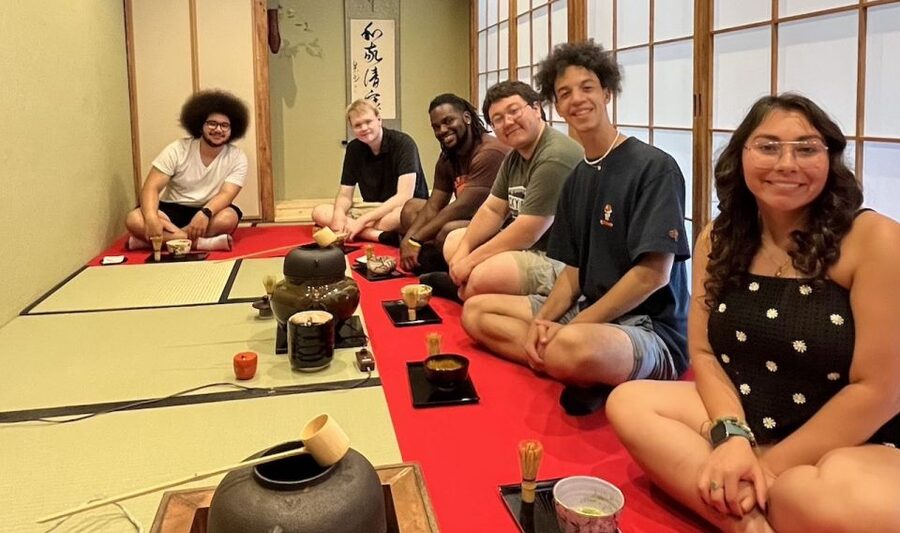
Slow down in the middle of Osaka. This 45-minute tea ceremony offers a quiet break from the lively streets around Dotonbori, with Japanese instructors in kimono explaining the meaning, manners, and movements of the ritual in clear English. You watch a demonstration, then prepare your own bowl of matcha with traditional tools.
I especially like the hands-on matcha making, since you do more than sit and watch. The seasonal Japanese sweet is another small but important touch, balancing matcha’s bitter edge. The main thing to consider is the floor seating in the tatami room. If sitting on the floor is uncomfortable, 45 minutes can feel longer.
The setting is traditional without being intimidating. Instructors such as Yuki, Akiko, Kazu, Mayumi, and Kana have been praised for their patience, warm manner, and clear explanations. At $25 per person, I see this as one of Osaka’s better-value cultural activities, especially if you want context rather than a quick photo opportunity.
In This Review
- Key Details Before You Book
- Why This Osaka Tea Ceremony Works for First-Time Visitors
- Entering the Tatami Room in Dotonbori
- Welcome, History, and Basic Manners
- Watching the Demonstration in Kimono
- Making Matcha Yourself With Traditional Tools
- Seasonal Sweets and the Taste of the Ceremony
- How Much Time and Value You Get for $25
- Who Should Book This Experience
- Practical Tips for a Smoother Visit
- Should You Book the Osaka Tea Ceremony?
- FAQ
- How long does the Osaka tea ceremony last?
- How much does the tea ceremony cost?
- What is included in the price?
- Is the experience conducted in English?
- Do I get to make matcha myself?
- Where is the meeting point?
- Are children allowed to participate?
- Can I cancel my reservation?
Key Details Before You Book
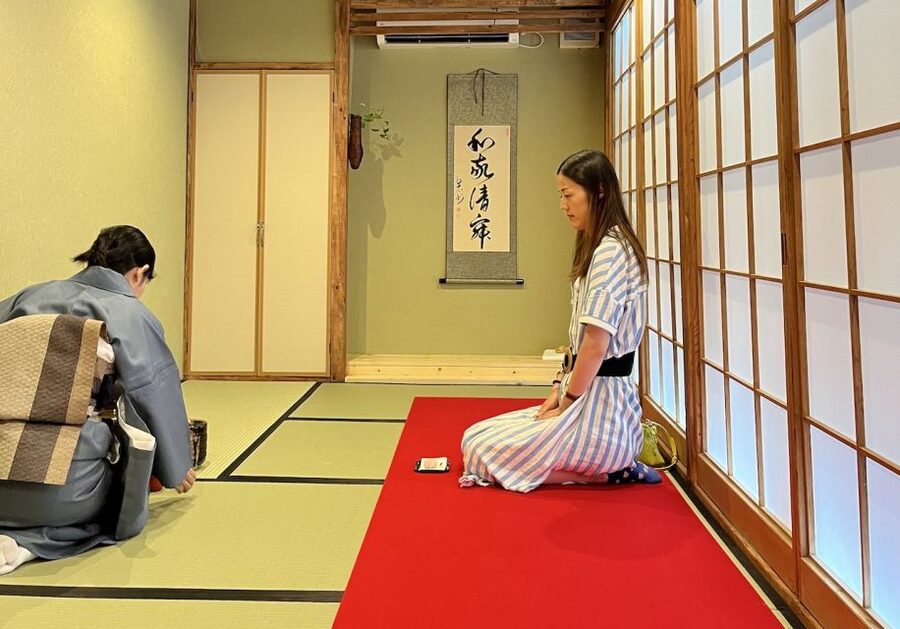
- You make your own bowl of matcha: After watching the instructor, you whisk powdered green tea yourself using authentic tea tools.
- English guidance is built in: The Japanese instructors explain the ceremony, history, symbolism, and basic manners in English.
- The tatami room changes the pace: This peaceful traditional setting feels far removed from the busy streets near Dotonbori.
- Seasonal sweets come with the tea: The small Japanese confection helps soften matcha’s strong, earthy flavor.
- The experience is short but active: In 45 minutes, you receive an introduction, watch a demonstration, make tea, and taste it.
- The meeting point needs care: Use Google Maps and search for tea ceremony osaka the osaka. The venue is on the second floor at Osaka-shi Chuo-ku Dotonbori 1-chome Higashi 5-26.
Why This Osaka Tea Ceremony Works for First-Time Visitors
Japanese tea ceremony can seem formal from the outside. There are set movements, careful handling of bowls and utensils, and manners that are not always obvious to someone visiting Japan for the first time.
This experience gives you enough explanation to make those details understandable. The instructor discusses the meaning and background of the ceremony before beginning the demonstration. That matters because the ritual is not simply about drinking green tea. The careful gestures, the order of service, and the way the tools are handled all help create a moment of attention and respect.
I like the balance here. You are not expected to arrive with prior knowledge, and you are not left watching a performance without context. The instructors explain what they are doing, then guide you through the same basic process.
The experience has received a 4.9 out of 5 rating from 1,426 ratings, with especially strong praise for the instructors’ warmth, English, and patient teaching. Several instructors are named in the feedback, including Yuki, Akiko, Kazu, Mayumi, and Kana. You cannot request a particular instructor based on the information provided, but the repeated praise suggests a consistent teaching style.
More Tea Ceremonies in Osaka
- Tea Ceremony Experience in Osaka Doutonbori
★ 5.0 · 754 reviews - Osaka: Japanese Traditional Sweets Making and Tea Ceremony
★ 4.7 · 118 reviews - Samurai Show, Tea Ceremony, Japanese Traditional Activities
★ 5.0 · 56 reviews
Entering the Tatami Room in Dotonbori
The venue is located on the second floor at 大阪市中央区道頓堀1丁目東5-26, in the Dotonbori area of central Osaka. The coordinates are 34.6688508, 135.5063291.
Finding the entrance may take more time than you expect. The directions specifically warn that some people have trouble locating the place, so I would not leave this until the last minute. Search Google Maps for tea ceremony osaka the osaka, and allow extra time for the second-floor location.
The instructions also warn you not to arrive too early. There may be nowhere to sit while you wait. The best plan is to identify the building in advance, then arrive with enough time to find the correct entrance without turning your wait into an awkward hallway pause.
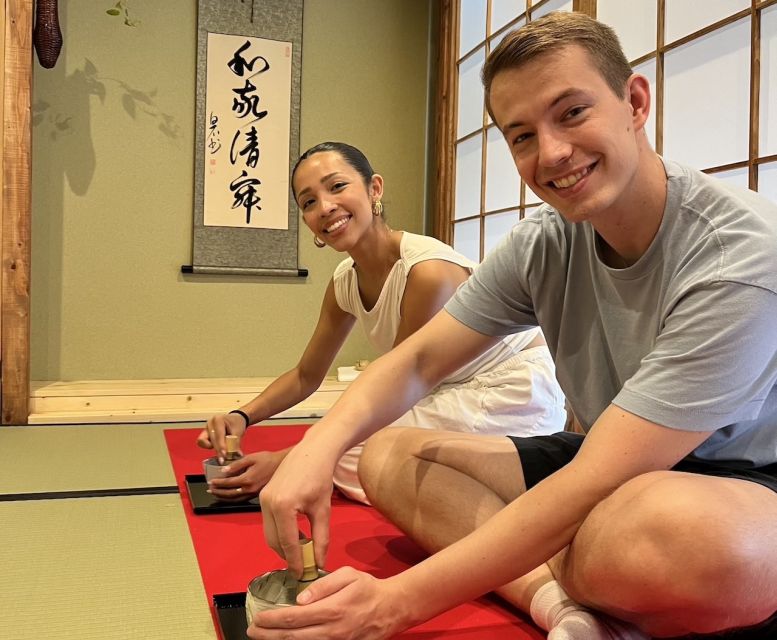
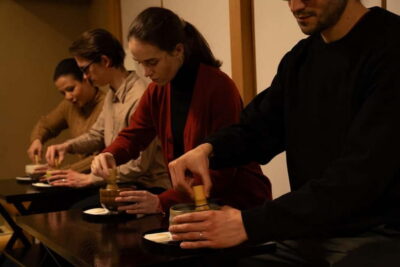
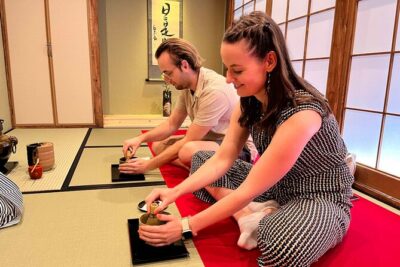
Once inside, the tatami room provides the right setting for the activity. It is simple, quiet, and traditional. This is not a large stage show or a busy cooking class. The atmosphere encourages you to pay attention to small movements and to the tea itself.
You should expect to sit on the floor for much of the session. One person described the sitting time as close to an hour, although the official duration is 45 minutes. Wear clothing that allows you to sit comfortably, and keep your belongings tidy since space in a traditional room may be limited.
Welcome, History, and Basic Manners
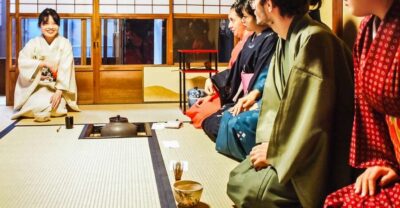
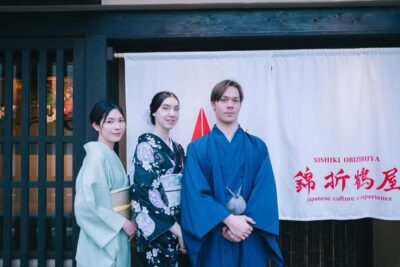
The first part begins with a welcome from the Japanese instructor, who wears a traditional kimono and speaks English. You receive an introduction to the tea ceremony’s meaning and history before the practical demonstration starts.
This opening is valuable because it gives the activity some cultural shape. You learn that the ceremony is built around more than a recipe for powdered tea. The instructor explains the conduct of serving tea and the meaning behind parts of the process, including the tools and tea bowls.
Kazu, one instructor praised for taking time with each part, has been noted for explaining the significance of the tea bowls as well as the ceremony itself. That kind of detail helps you see the objects as part of the experience rather than as decoration.
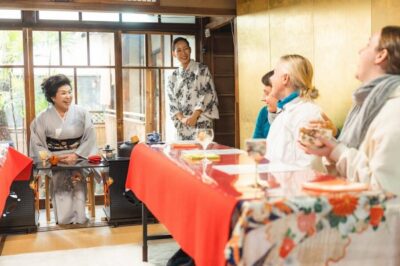
The tone appears informal enough for questions. Several people specifically appreciated being able to ask questions and receive patient answers. If you are curious about matcha, Japanese customs, or why each step happens in a particular order, this is a good point to speak up.
You do not need to memorize every manner before participating. The instructor demonstrates the basics first, and the session is designed as an introduction. Still, pay attention to the small instructions. Following them gives you a better sense of how the ceremony works and helps you take part respectfully.
Watching the Demonstration in Kimono
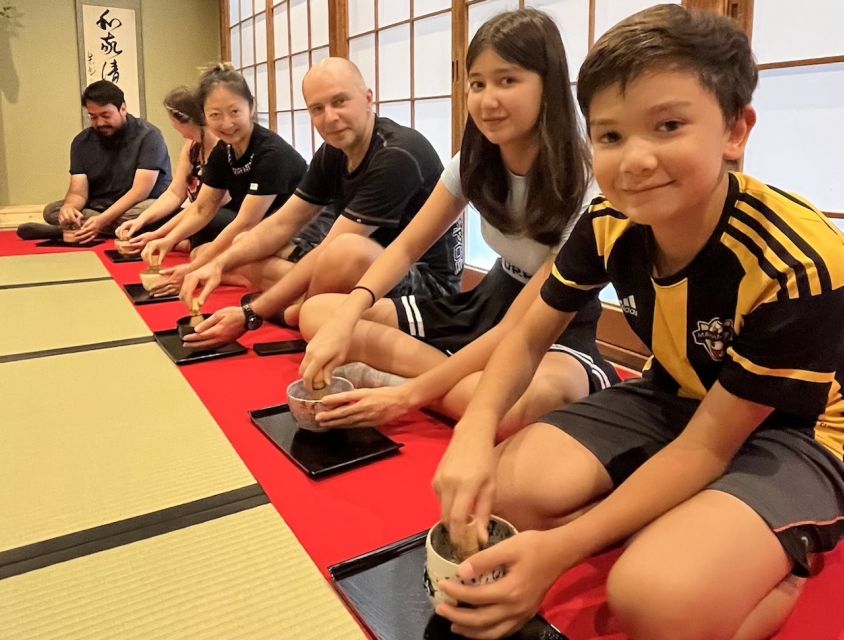
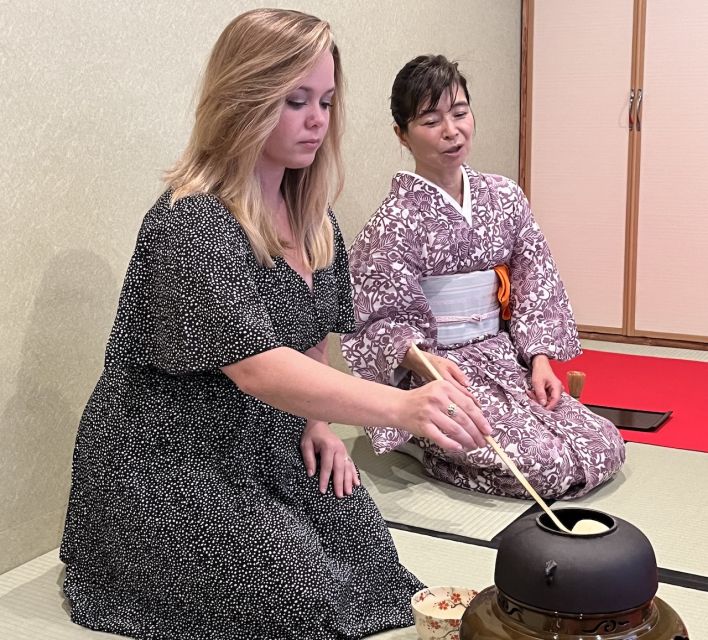
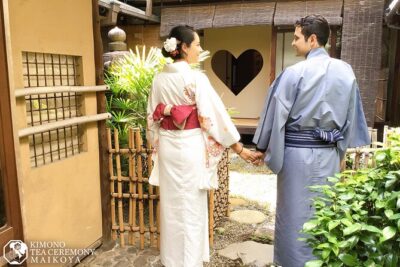
Next, the instructor performs a complete tea ceremony demonstration. The kimono, tatami room, traditional utensils, and deliberate movements give the presentation a strong sense of place.
The pace is intentionally calm. The instructor handles each tool with care, explains how tea is served, and shows the basic manners expected during the process. This is one of the most peaceful parts of the activity, particularly if you have just spent the day moving through central Osaka.
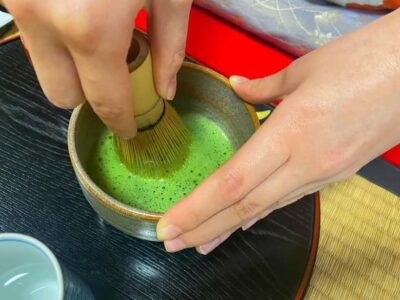
The demonstration also sets you up for the hands-on section. You can watch how the matcha powder is prepared, how water is combined with the tea, and how the whisk is used. Since the instructor explains each action in English, you are not left guessing when it is your turn.
The experience does not appear to demand perfect form. The teaching style described by people who took part is encouraging rather than strict. That is important for beginners. You can focus on learning the rhythm of the process instead of worrying about making a mistake in front of the group.
If you have already attended a formal tea ceremony in Kyoto or elsewhere in Japan, you may find this session introductory. For a first encounter, though, the demonstration provides a useful foundation without taking up an entire morning or afternoon.
A completely different kind of day out in Osaka:
- Osaka Go Karting Tour with Funny Costume
★ 5.0 · 2,658 reviews - Osaka Castle: Museum and Tower Entry Ticket
★ 4.5 · 2,380 reviews - Osaka: Shinsekai Food Tour with 13-15 Dishes at 5 Eateries
★ 4.8 · 2,204 reviews - Osaka Food Tour: 13 Dishes at 5 Local Eateries
★ 5.0 · 2,149 reviews
Making Matcha Yourself With Traditional Tools
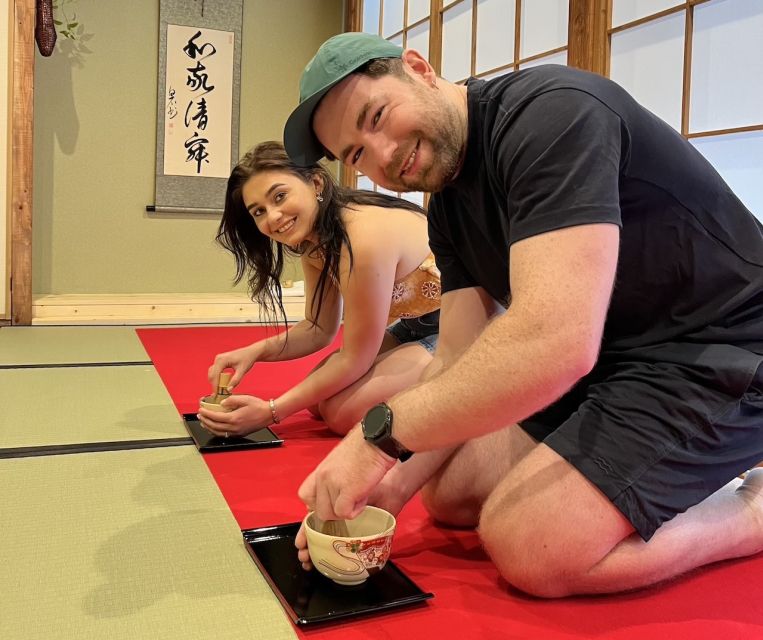
The most engaging part comes when you prepare your own bowl of matcha. You use traditional tea tools and follow the instructor’s directions as you make the drink yourself.
This turns the activity from a passive cultural presentation into something you remember through your hands. You feel the motion of whisking and see how the tea changes as it is prepared. Even if your technique is not perfect, you understand more about the work involved in making matcha.
Several people particularly enjoyed this step. It is simple enough for beginners, but active enough to keep the session from feeling like a lecture. The instructor remains nearby to offer guidance, which is useful when you are learning how to handle unfamiliar equipment.
You then drink the matcha you prepared. Matcha has a strong, grassy taste and a thicker texture than ordinary brewed green tea. If you are new to it, do not expect a mild cup of tea. The sweet served alongside it is there for a reason, and it helps balance the drink.
One person who enjoyed the ceremony admitted that they were not fully converted to matcha. That is a fair expectation. You do not need to become a matcha enthusiast for this experience to work. The point is to understand the drink and the tradition around it.
Some sessions may include more than one opportunity to drink matcha, depending on how the demonstration and group activity are arranged. One account described drinking matcha twice, once as part of the demonstration and again after making it personally. The core activity, however, is your own preparation and tasting.
Seasonal Sweets and the Taste of the Ceremony
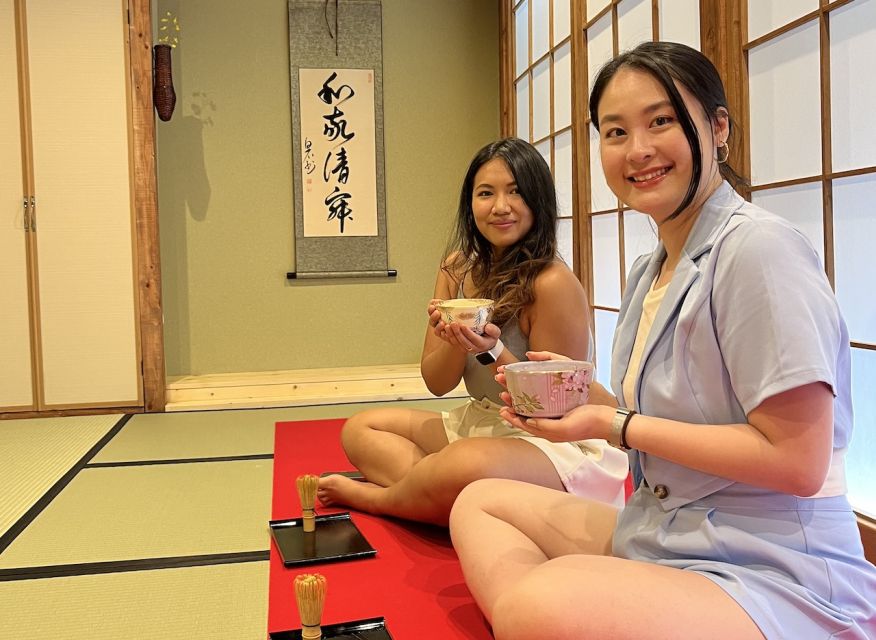
The Japanese confection is small, seasonal, and carefully paired with the tea. These are not described as a full snack or meal, so arrive having eaten if you need substantial food.
The sweets receive unusually warm praise. People describe them as delicate, delicious, and an excellent match for the powdered tea. Their sweetness gives your palate a break from matcha’s bitterness and helps you appreciate the traditional pairing.
For me, this is a good example of how a small detail can make a cultural activity more enjoyable. You are not simply told that tea and sweets belong together. You taste the reason for the pairing.
Food is not allowed in the venue apart from what is provided as part of the experience. You should not bring snacks into the room. The included items are matcha and confections, along with the entrance fee.
How Much Time and Value You Get for $25
At $25 per person, the experience offers a lot for a relatively modest price. You receive admission, the matcha, the confections, the instruction, the demonstration, and the chance to prepare the tea yourself.
The value comes from the teaching rather than from the quantity of food or the length of the session. This is a 45-minute cultural introduction, not a full-day workshop. You are paying for access to a traditional setting, English explanation, authentic tools, and direct participation.
I would consider it particularly good value if you want a structured activity between sightseeing stops. The Dotonbori location makes it easy to pair with time in central Osaka, and the quiet room gives you a change of pace from the city outside.
The short duration is also a strength for many schedules. You can fit it into a morning or afternoon without giving up half a day. On the other hand, people looking for a long, highly formal ceremony or advanced instruction may want something more specialized.
The booking terms add flexibility. You can cancel up to 24 hours ahead for a full refund, and you can reserve now and pay later. Starting times vary, so you need to check availability for your date.
Who Should Book This Experience
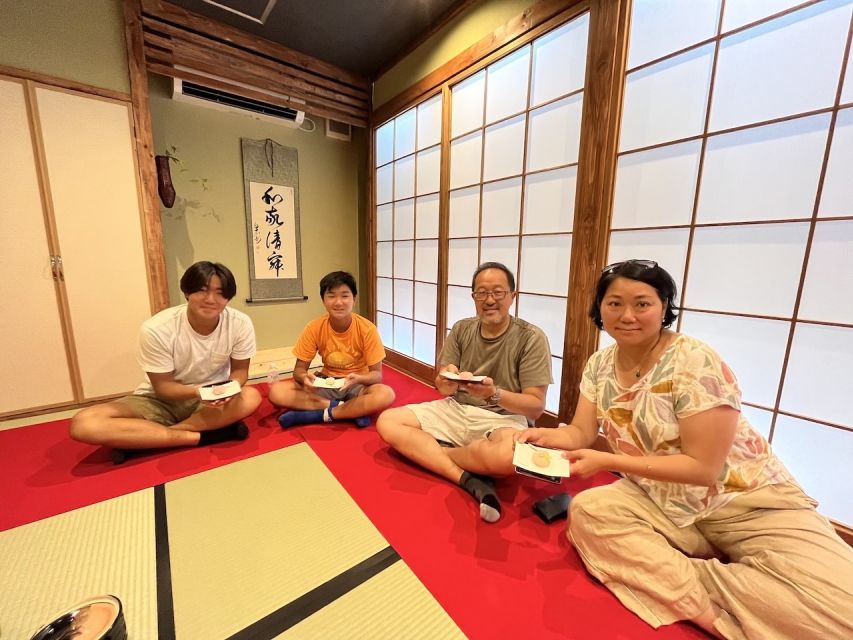
I would recommend this tea ceremony to first-time visitors who want a manageable introduction to Japanese culture. It works well for couples, families with eligible children, and small groups looking for something quieter than Osaka’s major attractions.
It also suits people who enjoy learning through participation. If you prefer to handle the tools, try the process, and taste the result, you will get more from this than from a demonstration alone.
The activity may be less suitable if you dislike sitting on the floor, have little interest in tea, or want a fast photo stop with minimal explanation. The calm pace is part of the appeal, but it may feel slow if you only want to check off a landmark.
Children require careful attention when booking. The supplied rules are not perfectly worded, but they state that children under 5 are not allowed, children aged 5 and above need their own ticket, and anyone bringing a child under 4 should contact the provider in advance. Because those statements conflict, I would confirm the age policy directly before paying.
Strollers, baby carriages, food, jumping, and loud noise are not allowed. That makes the session better suited to people who can manage a quiet indoor setting.
Practical Tips for a Smoother Visit
- Find the building before your appointment: The second-floor location can be easy to miss, so use Google Maps and the exact Japanese address.
- Arrive with a little extra time: You may need time to locate the entrance, but do not arrive so early that you are left waiting without a seat.
- Dress for floor seating: Loose, comfortable clothing will make the tatami-room session easier.
- Eat beforehand if needed: The confection is a tasting item, not a meal.
- Ask questions during the introduction: The instructors are prepared to explain the meaning and purpose of the ceremony.
- Do not worry about perfect whisking: The instructor demonstrates the process and guides you through your own bowl.
- Keep the atmosphere quiet: Noise is not allowed, and the calm setting is central to the experience.
Should You Book the Osaka Tea Ceremony?
I would book it if you want a short, well-explained cultural activity with real participation. The strongest features are the English-speaking Japanese instructors, the kimono and tatami setting, the chance to make matcha yourself, and the seasonal sweets that complete the tasting.
The $25 price is reasonable because the session gives you both cultural explanation and hands-on practice. It is especially useful as a quiet pause during a day around Dotonbori.
Skip it if floor seating is a serious problem, if you need a full meal, or if you already have extensive tea ceremony experience. For most first-time visitors to Japan, though, this is a friendly and focused way to learn why matcha preparation is treated with such care.
FAQ
How long does the Osaka tea ceremony last?
The scheduled duration is 45 minutes. Some people may experience the full visit as closer to an hour because of arrival and floor seating.
How much does the tea ceremony cost?
The price is $25 per person.
What is included in the price?
The entrance fee, matcha powdered green tea, and Japanese confections are included.
Is the experience conducted in English?
Yes. The host or greeter and the instructors provide English guidance, and an English audio guide is included.
Do I get to make matcha myself?
Yes. After watching a demonstration, you use traditional tea tools to prepare your own bowl of matcha and drink it.
Where is the meeting point?
The venue is on the second floor at Osaka-shi Chuo-ku Dotonbori 1-chome Higashi 5-26. The coordinates are 34.6688508, 135.5063291. Use Google Maps and search for tea ceremony osaka the osaka.
Are children allowed to participate?
The supplied age rules state that children under 5 are not allowed, while children aged 5 and above need their own ticket. The wording also asks anyone bringing a child under 4 to contact the provider, so confirm the policy before booking.
Can I cancel my reservation?
Yes. You can cancel up to 24 hours in advance for a full refund. You can also reserve now and pay later.
Just added around Osaka
- Osaka Food Tour with 10 Classic Japanese Tastings & Drinks★ 5.0 · 38 reviews
- Osaka: Highlights & Hidden Gems Private Walking Tour★ 4.7 · 38 reviews
- Kyoto private tour (Shore excursion available from Osaka or Kobe port)★ 5.0 · 39 reviews
- Osaka Private Day Trip – Enjoy Your First-Time Visit to Osaka!★ 5.0 · 39 reviews
- Kyoto & Nara & Uji: Full Day Sightseeing Tour from Osaka or Kyoto★ 4.5 · 39 reviews
- Authentic SUSHI Course Cooking Class★ 5.0 · 39 reviews
- Osaka: Mind & Spirit Balance Temple Reiki Healing★ 5.0 · 41 reviews
- Osaka: Gluten-Free Ramen and Gyoza Cooking Class★ 5.0 · 42 reviews
Tea Ceremony Experiences, compared.
Tea Ceremony in a Traditional Tea House in Kiyomizu
Read our review →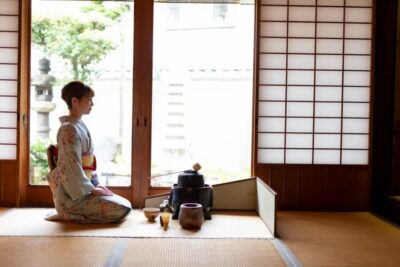
Browse the lists this tour appears in