
Reviewed · TEA CEREMONY EXPERIENCES
Samurai Show, Tea Ceremony, Japanese Traditional Activities
Osaka’s culture comes alive indoors. This 2.5-hour program combines a samurai performance with tea ceremony, calligraphy, traditional music, and hands-on practice. I like the way you do more than watch, especially during the tea and calligraphy sessions, and I also like the cheerful mix of serious tradition and playful sword practice. The main consideration is that samurai armor, kimono, and ninja options cost extra, so the basic price does not include every dress-up activity.
At $44.92 per person, this is a strong-value choice for families, first-time visitors, and anyone with a rainy afternoon in Osaka. The samurai show may feel theatrical rather than historically exact, and one program can run closer to three or four hours, so leave room in your schedule.
In This Review
- Key points to know before you book
- A lively introduction to Japanese culture in Osaka
- What happens during the 150-minute program
- The samurai show, sword practice, and comic timing
- Tea ceremony: the quiet center of the afternoon
- Calligraphy, personalized keepsakes, and beginner-friendly practice
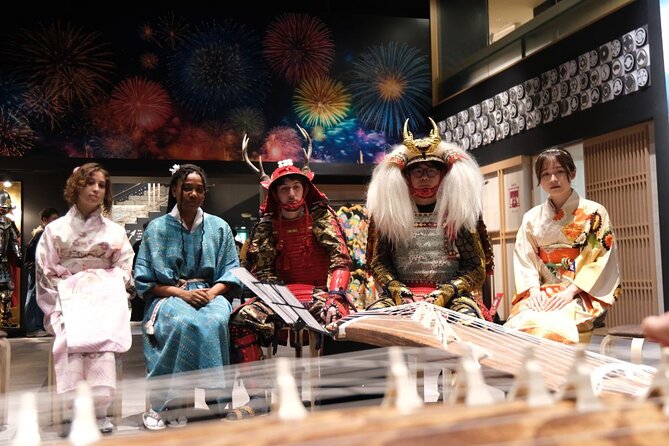
- Traditional instruments with a chance to play
- Costume upgrades and what the basic ticket includes
- Is $44.92 good value in Osaka?
- Who will enjoy this most?
- Practical planning for your Osaka visit
- Should you book the Samurai Show and Tea Ceremony?
- FAQ
- Where does the experience begin?
- Where does the experience end?
- How long does the program last?
- What activities are included?
- Are kimono and samurai armor included?
- What is the cancellation policy?
Key points to know before you book
- Three or more hours may be useful: The advertised duration is about 2 hours 30 minutes, but the activities can take longer if you try everything.
- You participate, not just watch: You can practice calligraphy, try Japanese instruments, learn tea ceremony steps, and join a safe samurai demonstration.
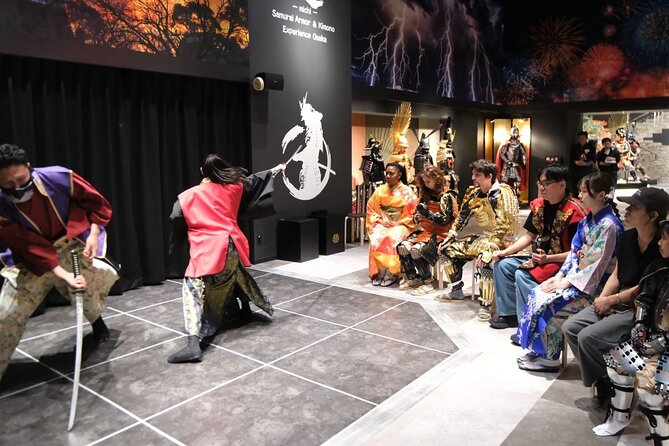
- The samurai show is the headline act: Expect dramatic movement, comedy, and audience participation with non-real swords.
- The tea ceremony is calm and instructive: It gives the afternoon a slower rhythm after the energetic performances.
- Extra costumes are not included: Kimono, samurai armor, and ninja experiences require an additional payment.
- The group is capped at 20 people: That keeps the workshop format more manageable than a large stage show.
A lively introduction to Japanese culture in Osaka
This experience takes place at Shinsaibashi ARTY Inn, at 2-chōme-17-3 Nishishinsaibashi in Chuo Ward. It is near public transportation and ends at the same place, which makes it easy to fit into a day around Shinsaibashi and Dotonbori.
I see the appeal right away. Osaka has temples, castles, museums, and historic streets, but those places usually ask you to look quietly. Here, you get to pick up a brush, handle an instrument, copy a character, and practice a few samurai movements. It is less like a formal lecture and more like a guided cultural workshop with stage entertainment added.
The venue is described as a large facility, with several activities arranged into a roughly 150-minute program. English interpretation is available around the activity areas, according to the detailed descriptions of the visit. That matters because tea ceremony and calligraphy rely on small instructions, and the experience works best when you understand not only what to do, but why you are doing it.
The overall tone is friendly and light. You should not expect a silent, museum-style presentation. The staff help people move between stations, explain the activities, take photographs, and encourage beginners. That makes this a particularly easy choice if you are traveling with children or with family members who may not usually seek out cultural programs.
More Samurai & Ninja Experiences in Osaka
- Samurai Training Experience KENDO in Osaka
★ 5.0 · 515 reviews - OSAKA NIGHT FUSION Japanese Taiko Kabuki Samurai Dance Show
★ 4.8 · 155 reviews - Osaka: Samurai Training Experience KENDO in Osaka
★ 5.0 · 111 reviews
What happens during the 150-minute program
The advertised visit lasts about 2 hours 30 minutes, with the central activities taking around 150 minutes. In practice, you may want three hours or more. One detailed account described spending three and a half to four hours enjoying the full range of activities, so do not schedule a train departure immediately afterward.
The order can vary, but the program generally brings together four main elements:
- Samurai performance and practice
- Traditional Japanese music
- Calligraphy
- Tea ceremony
Some accounts also describe two separate samurai performances and two music presentations. The exact schedule may depend on the day, so think of the program as a rotating series of activities rather than a single tightly fixed show.
That flexible format is useful. If one part appeals to you more than another, you can spend extra time asking questions, practicing, or taking photographs. The tradeoff is that the experience may feel less polished than a theater production with a precise start and finish.
The samurai show, sword practice, and comic timing
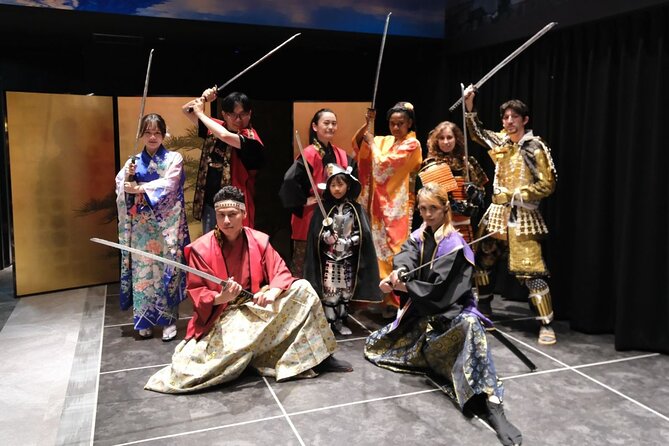
The samurai performance is the most theatrical section. You watch a staged battle, then have the chance to practice simple movements under supervision. The swords used for audience participation are not real swords, so this is designed as safe entertainment rather than martial arts training.
The show seems to work best when you treat it as playful theater. You may see dramatic sword movements, exaggerated reactions, and comic moments designed to involve the audience. Children especially may enjoy being invited into the action, and adults who are willing to look a little silly can have just as much fun.
I would not book this expecting a serious lesson in samurai warfare or a historically exact reconstruction. One account found the samurai section weaker than the tea, music, and calligraphy, and also noted that some objects were reproductions. That is a fair caution. The value is in the performance, participation, and atmosphere, not in examining museum-quality armor or weapons.
The program uses armor associated with Marutake Industries, a company known for samurai armor craftsmanship. However, the basic admission does not include wearing samurai armor. If dressing up is important to you, check the available upgrade before booking and budget separately.
The sword practice is a good example of the experience’s general approach. You do not simply hear about Japanese culture. You try a small part of it, with staff helping you follow the movements. The result is more memorable than a short explanation alone, even if the performance feels a little broad or over-the-top.
Tea ceremony: the quiet center of the afternoon
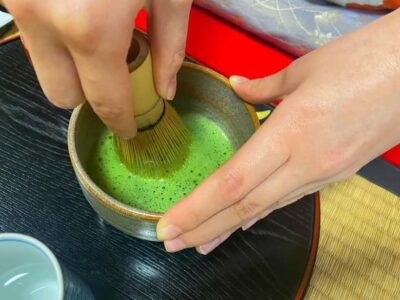
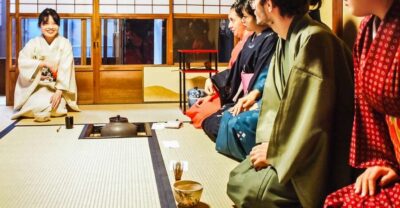
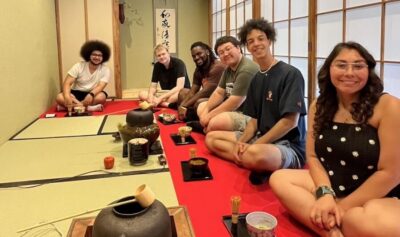
The tea ceremony provides a sharp change of pace. After the noise and movement of the samurai show and music sessions, you sit back and learn how green tea is prepared and served in a traditional manner.
This is not just a drink break. You learn the proper sequence and etiquette, and staff help you understand the meaning behind the gestures. For many people, this becomes the most useful cultural lesson because it shows how Japanese attention to movement, presentation, and hospitality works in practice.
The tea session also suits visitors who prefer a calmer activity. You do not need prior knowledge, artistic skill, or physical confidence. You simply follow the instructions and take your time.
The experience appears to use green tea, and the staff can answer questions as they guide you. The ceremony may feel brief if you already have a strong interest in Japanese tea culture, but for a first introduction it offers a clear and approachable starting point.
I especially like the contrast between the tea ceremony and the samurai performance. One asks you to watch fast movement and laugh along. The other asks you to slow down and notice details. That contrast gives the afternoon more shape than a series of similar demonstrations would.
More Tea Ceremonies in Osaka
- Osaka: Tea Ceremony Experience
★ 4.9 · 1,426 reviews - Tea Ceremony Experience in Osaka Doutonbori
★ 5.0 · 754 reviews - Osaka: Japanese Traditional Sweets Making and Tea Ceremony
★ 4.7 · 118 reviews - Osaka: Private Tea Ceremony and Calligraphy Experience
★ 5.0 · 50 reviews
Calligraphy, personalized keepsakes, and beginner-friendly practice
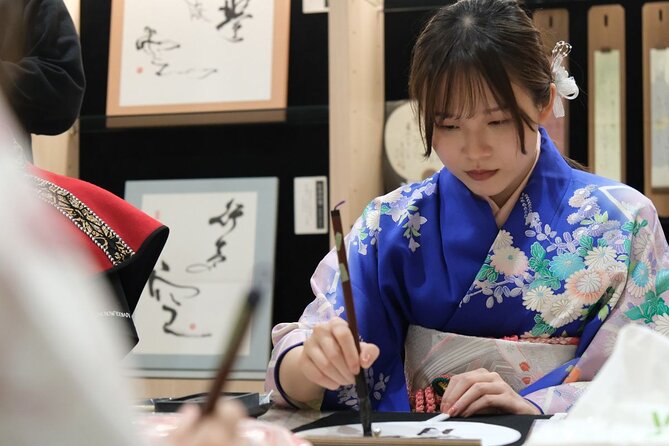
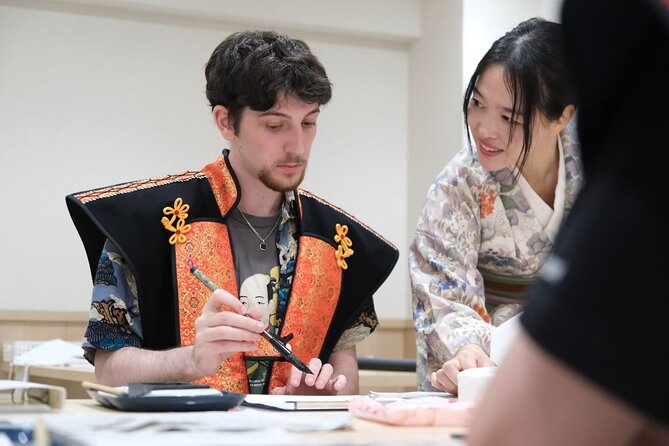
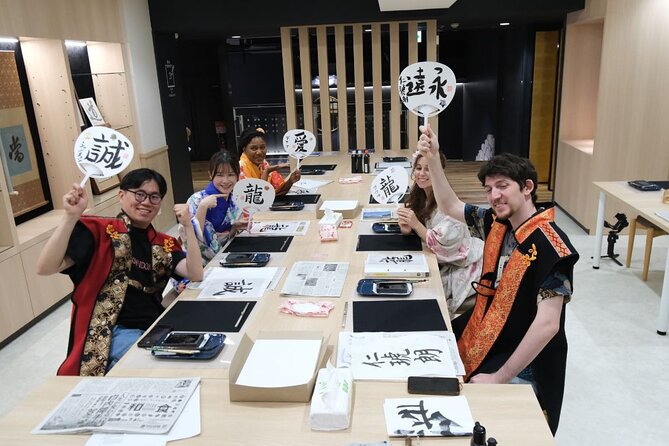
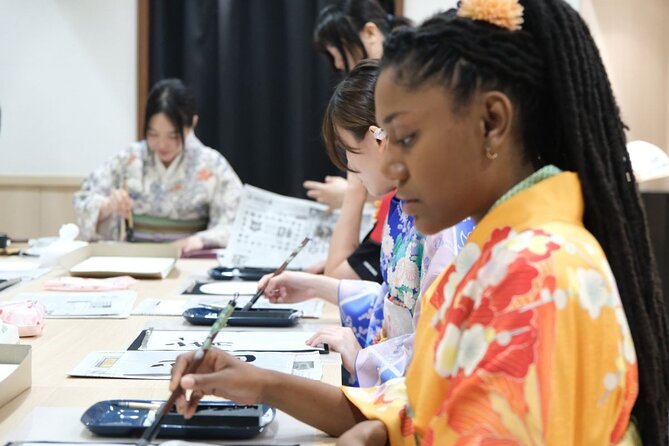
The calligraphy activity is one of the strongest reasons to choose this program. You learn how to hold and use the brush, practice Japanese writing, and create a piece of your own.
A detailed description of the activity says participants can take home a personalized fan. That gives the session a practical payoff. You leave with something connected to your visit, even if your brushwork is more enthusiastic than elegant.
Calligraphy also works well for mixed-age groups. Children can enjoy the novelty of the brush and ink, while adults may appreciate the chance to learn about the care given to each stroke. You do not need to read Japanese to enjoy the process, though an explanation of the characters can add meaning.
The staff help with the activity and with basic Japanese language practice. If you are trying to learn a few words during your time in Japan, this is a natural place to ask for help. Just remember that the program is an introduction, not a full calligraphy lesson. You will gain an experience and a keepsake rather than advanced writing skills.
Traditional instruments with a chance to play
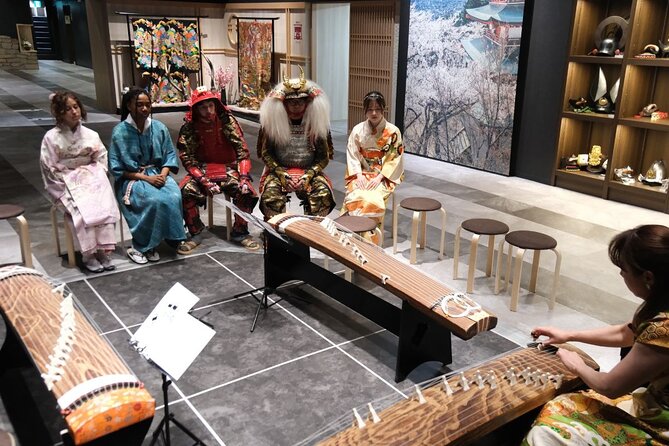
The music section adds another hands-on layer. You watch Japanese musicians perform on traditional instruments, then get a chance to try some of them yourself.
Descriptions of the program refer to instruments such as a Japanese guitar, Japanese flute, and a complex piano-like instrument. Another account mentions trying a harp. The precise instruments may vary, but the point is consistent: you are encouraged to participate, not merely sit through a concert.
This is a generous feature at the price. Traditional instruments can seem mysterious when you only hear them from a stage. Holding one and attempting a few notes gives you a better sense of the technique involved. You may also gain new respect for the performers after discovering that producing a pleasant sound is not as easy as it looks.
Do not worry about musical ability. The activity is built for beginners, and the amusing part is often the attempt. One visitor joked about needing to apologize to Japan after playing an instrument, which tells you something about the relaxed mood. The staff appear to make the activity comfortable rather than competitive.
Costume upgrades and what the basic ticket includes
The basic admission includes the tea ceremony, calligraphy, traditional music, and samurai performance. It does not include samurai armor, kimono, or ninja dress-up.
The kimono option can add a memorable visual element. One detailed account described attendants helping with the dressing, assisting with photographs, and providing socks and undergarments to keep. That option was priced separately at 5,000 yen in that account, though you should confirm the current amount and availability when booking.
A samurai armor option is also available separately. If you have always wanted a photograph in Japanese armor, this may be worth considering. If your main goal is learning and participation, the basic ticket already contains plenty.
The important point is to decide what kind of afternoon you want. The standard experience is a cultural activity program. The costume upgrades turn it into a photo-focused visit as well. Neither choice is automatically better, but you should not assume the advertised price includes the clothing.
Is $44.92 good value in Osaka?
At $44.92 per person, the price is reasonable for the number of activities included. You receive a live performance, guided tea ceremony, calligraphy practice, traditional music, and opportunities to try instruments and samurai movements.
That is stronger value than paying for a short stage show alone. It is also useful if you have limited time in Osaka and want several cultural activities under one roof. The indoor setting can be a real advantage on a wet day, although the stated policy says the activity requires good weather and may be rescheduled or refunded if poor weather causes cancellation. Check the day’s arrangements rather than assuming every session operates in all conditions.
The price becomes less attractive if you want professional costume photography or a serious historical presentation. Those goals may require an upgrade or a different type of attraction. The samurai armor is not part of the basic ticket, and some items used in the demonstrations are reproductions.
For most people, I would judge the value by participation rather than authenticity in the museum sense. You are paying for access to several guided activities, friendly help, and a fun introduction to cultural practices. At that level, the cost is fair.
Who will enjoy this most?
I would recommend this to families, couples, first-time visitors to Japan, and anyone who wants a structured cultural activity near central Osaka. The program has enough variety to keep children interested, while the tea and calligraphy sections give adults something more thoughtful to enjoy.
It is also a good fallback for a day when outdoor plans are uncertain, subject to the provider’s weather policy. The central location makes it easy to combine with time in Shinsaibashi or Dotonbori.
You may want to skip it if you are seeking a quiet, academic study of samurai culture. The atmosphere is energetic, the sword show is intentionally theatrical, and the activity areas can make the visit feel busy. It is also not the right choice if you have only a strict two-hour window, since the full program may run well beyond the advertised time.
A group limit of 20 people helps keep the format personal. It is still a group activity, but it should be easier to hear instructions and receive help than in a much larger attraction.
Practical planning for your Osaka visit
Your meeting point is Shinsaibashi ARTY Inn, 2-chōme-17-3 Nishishinsaibashi, Chuo Ward, Osaka, 542-0086. The experience ends there as well, so you do not need to arrange a separate return transfer.
Use the mobile ticket and keep your confirmation available at arrival. Confirmation is provided at booking, and the activity is near public transportation.
Most people can participate, and the maximum group size is 20. If you are booking for a family or a larger party, the staff have experience helping groups move through the activities, but you should still allow extra time.
Cancellation is free up to 24 hours before the start time for a full refund. Changes or cancellations inside that 24-hour window are not accepted, and the local Osaka time is used for the cut-off.
Should you book the Samurai Show and Tea Ceremony?
I would book it if you want a broad, hands-on introduction to Japanese culture rather than one formal performance. The tea ceremony and calligraphy offer genuine cultural value, while the music and samurai sections keep the pace lively. The friendly staff, English support, and family-friendly format add to the appeal.
Book the basic version if you mainly want to participate and learn. Add kimono or samurai armor only if dressing up and photographs are central to your plans.
My main advice is simple: leave more time than the advertised 2 hours 30 minutes, and keep your expectations realistic about the samurai show. It is playful stage entertainment, not a historical reenactment. For $44.92, though, the mix of demonstrations, practice, and keepsakes makes this a worthwhile Osaka activity, especially when you want culture you can touch and try.
FAQ
Where does the experience begin?
It begins at Shinsaibashi ARTY Inn, 2-chōme-17-3 Nishishinsaibashi, Chuo Ward, Osaka, 542-0086, Japan.
Where does the experience end?
The activity ends back at the meeting point.
How long does the program last?
The listed duration is approximately 2 hours 30 minutes, with the main program taking about 150 minutes. You may want to allow three hours or more because some visits take longer when all activities are included.
What activities are included?
The basic experience includes a tea ceremony, calligraphy, traditional Japanese music, and a samurai performance.
Are kimono and samurai armor included?
No. Samurai armor, kimono, and ninja options are not included in the basic ticket and require separate payment.
What is the cancellation policy?
You can cancel at least 24 hours before the experience for a full refund. Cancellations or changes made less than 24 hours before the start time are not accepted for a refund.
Just added around Osaka
- Osaka Food Tour with 10 Classic Japanese Tastings & Drinks★ 5.0 · 38 reviews
- Osaka: Highlights & Hidden Gems Private Walking Tour★ 4.7 · 38 reviews
- Kyoto private tour (Shore excursion available from Osaka or Kobe port)★ 5.0 · 39 reviews
- Osaka Private Day Trip – Enjoy Your First-Time Visit to Osaka!★ 5.0 · 39 reviews
- Kyoto & Nara & Uji: Full Day Sightseeing Tour from Osaka or Kyoto★ 4.5 · 39 reviews
- Authentic SUSHI Course Cooking Class★ 5.0 · 39 reviews
- Osaka: Mind & Spirit Balance Temple Reiki Healing★ 5.0 · 41 reviews
- Osaka: Gluten-Free Ramen and Gyoza Cooking Class★ 5.0 · 42 reviews
Tea Ceremony Experiences, compared.
Tea Ceremony in a Traditional Tea House in Kiyomizu
Read our review →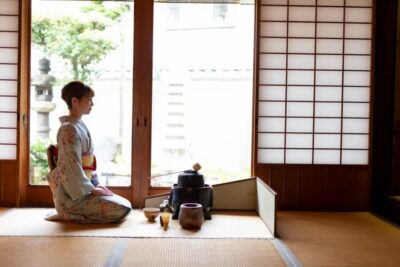
Browse the lists this tour appears in