
Reviewed · TEA CEREMONY EXPERIENCES
Kyoto: Table-Style Tea Ceremony at a Kyo-Machiya
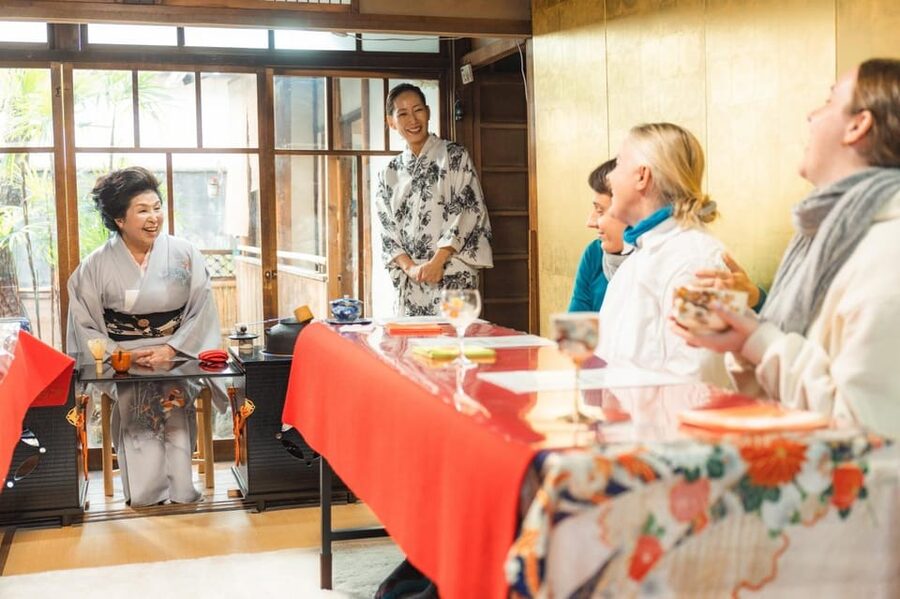
Slow down for matcha. This 90-minute experience brings you into a more than 100-year-old Kyoto townhouse in Fushimi, where you learn tea ceremony manners, prepare your own matcha, try calligraphy, and explore a traditional home. I especially like the chair-and-table setup, which makes the ceremony far easier than kneeling on the floor, and the warm, patient English-speaking hosts who guide you through each step. The main consideration is location: you will need a train ride from central Kyoto, though Fushimi’s sake shops, restaurants, and easy rail connections make the trip worthwhile.
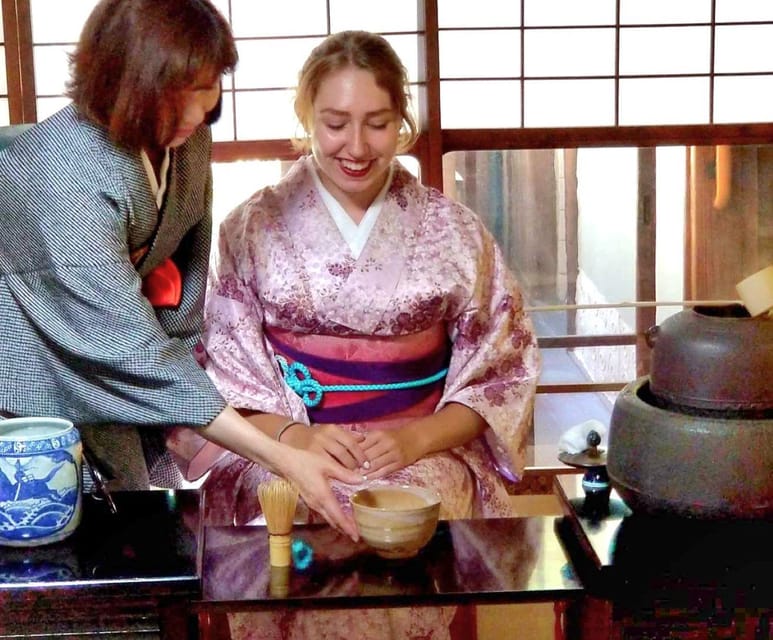
The optional kimono rental adds real charm, especially for photos in the garden and around the old house. I also like that this is not only a demonstration. You take part by whisking tea, arranging flowers, writing your name in Japanese, and following the small gestures that give the ceremony its meaning. The house has stairs and the activity is not suitable for wheelchair users, so check that the setting works for you before booking.
In This Review
- Key Points At A Glance
- Why The Chair Setup Matters
- Finding The Machiya In Fushimi
- Entering A More Than 100-Year-Old Kyoto Home
- Learning The Ceremony Before You Try It
- Making Your Own Frothy Matcha
- Calligraphy, Names, And A Personal Keepsake
- Flower Arranging And The Extra Cultural Touches
- Kimono Rental: Worth The Added Cost?
- Building A Day Around Fushimi
- Who Will Get The Most From It?
- Practical Booking Advice
- Should You Book This Kyoto Tea Ceremony?
- FAQ
- Do I have to sit on the floor during the tea ceremony?
- How long does the tea ceremony experience last?
- Is kimono rental included?
- What activities are included besides the tea ceremony?
- How do I reach the townhouse from Kyoto?
- Is the experience suitable for wheelchair users?
Key Points At A Glance
- A floor-free tea ceremony: Sit at tables and chairs instead of kneeling on tatami, a welcome touch for anyone with stiff knees or limited comfort.
- A real old Kyoto townhouse: Walk through a more than 100-year-old machiya with traditional architectural details, Buddhist and Shinto altars, and antiques.
- More than a tea demonstration: Prepare frothy matcha, taste sweets, try calligraphy, arrange flowers, and learn basic Japanese etiquette.
- Fushimi makes a useful day-trip base: The southern Kyoto district is known for sake and sits within easy reach of Fushimi Inari, Uji, Osaka, and Nara.
- Kimono changes the feel: The optional rental includes dressing help and gives you a memorable way to take photos around the house and garden.
- A welcoming English-language activity: The hosts explain the customs carefully and leave plenty of room for questions.
Why The Chair Setup Matters
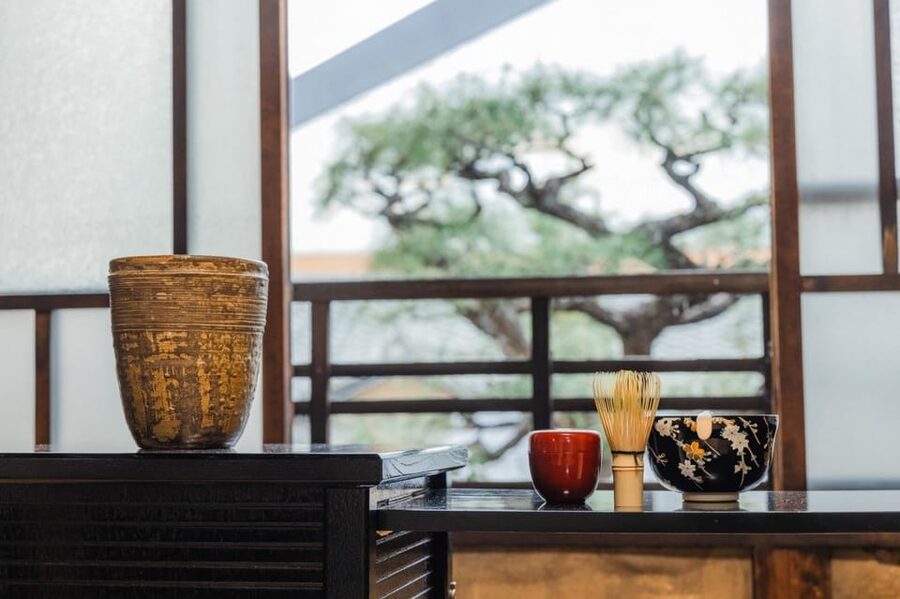
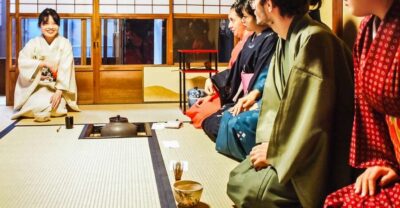
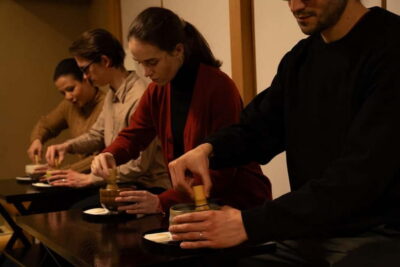
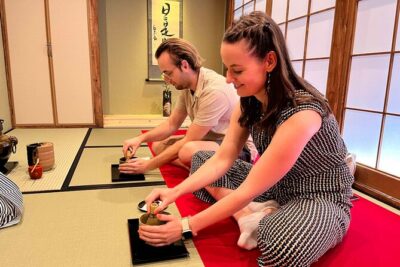
Traditional tea ceremony can involve sitting formally on the floor for long periods. That is part of the classic image, but it is not comfortable for everyone. Here, you take part at a table, using a chair, so you can focus on the tea, the gestures, and the explanations instead of worrying about your knees.
This setup also makes the activity a good choice for families and older adults who want a cultural experience without a physically demanding format. It does not remove the ceremony’s manners or visual beauty. You still learn how to handle the bowl, observe the host, appreciate the sweets, and prepare matcha with a bamboo whisk.
The format is adapted for an English-speaking audience, but it does not feel like a quick photo stop. The hosts explain the background of tea ceremony, the Japanese spirit behind it, and the reasons for its manners. A PowerPoint presentation helps put the movements into context before you try them yourself.
You should expect a friendly introduction rather than a silent, formal ritual from beginning to end. That is a strength for first-time visitors. You can ask questions and understand what you are doing, instead of copying movements without knowing why they matter.
More Tea Ceremonies in Kyoto
- Kyoto: Tea Ceremony in a Traditional Tea House in Kiyomizu
★ 4.9 · 3,519 reviews - Kyoto: Tea Ceremony Ju-An at Jotokuji Temple
★ 4.9 · 3,207 reviews - Kyoto: 45-Minute Tea Ceremony Lesson Experience
★ 4.3 · 2,378 reviews
Finding The Machiya In Fushimi
The townhouse sits in southern Kyoto, in the Fushimi area. From Kintetsu Kyoto Station, take an express train toward Kintetsu Momoyama-Goryo-mae Station. The train ride is about 15 minutes, with the full trip from central Kyoto generally taking around 20 to 25 minutes.
From Keihan Gion-Shijo Station, ride to Fushimi-Momoyama Station. From JR Momoyama Station, head northwest, pass Gokogu Shrine, and continue toward the Otesuji shopping arcade.
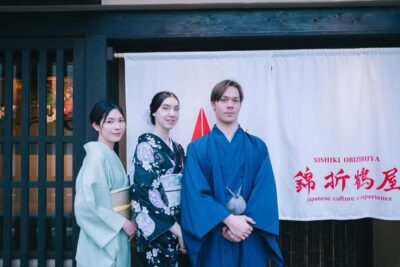
Once you reach Otesuji, walk west for about three minutes. Turn right near Mizuho Bank or the Rakuten mobile shop. Continue for about two minutes and look for an old townhouse with a blue curtain. Guides wearing kimono wait near the entrance.
The directions are usable, but this is not a major station-front attraction with a large sign. Give yourself a little extra time, especially if you are navigating Kyoto’s rail system for the first time. The shopping arcade is a helpful landmark, and arriving early gives you a chance to look around Fushimi before the ceremony.
Fushimi is a sensible place to pair with this activity. It is known for sake, and you will find casual restaurants and shopping streets nearby. You can make this a half-day outing rather than traveling all the way back to central Kyoto after the tea ceremony.
Entering A More Than 100-Year-Old Kyoto Home
The machiya is part of the experience, not just a room used for the ceremony. From the outside, it may look modest. Inside, you get a glimpse of the kind of townhouse that shaped everyday Kyoto life.
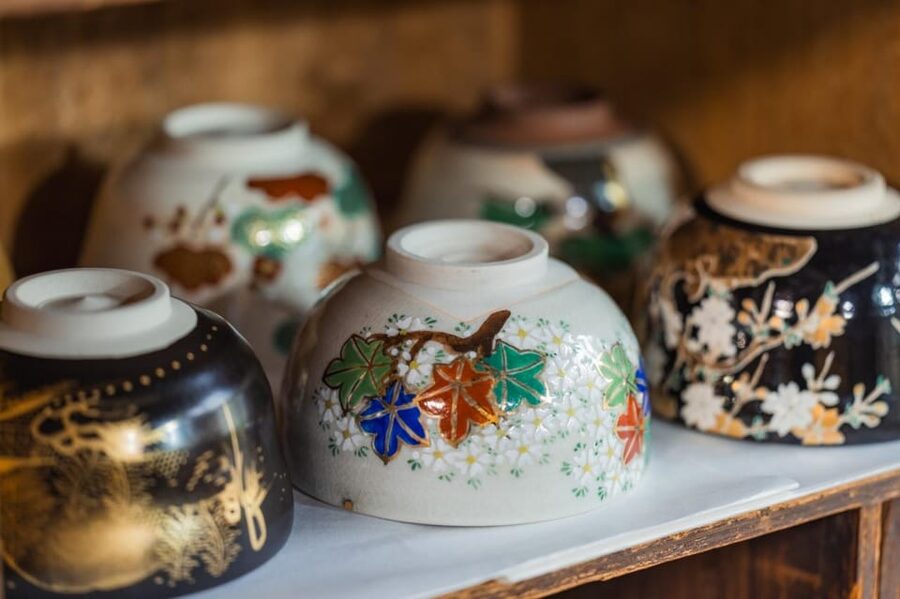
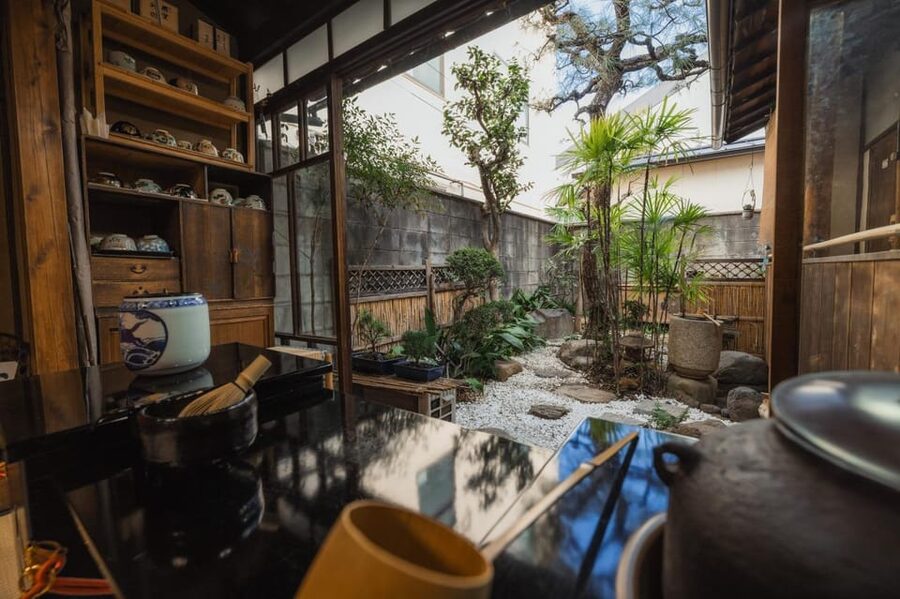
Take time to notice the architecture as you move through the property. Traditional details, old household objects, Buddhist and Shinto altars, and antiques give the visit a sense of place. The house is not presented as a museum behind glass. You are welcomed into it as a working cultural setting.
The garden adds another layer. You learn how to purify yourself at a stone basin, following a custom associated with visiting a shrine. This short lesson helps explain why washing and preparation matter in Japanese religious and cultural spaces.
You can also take photos around the house and garden. Umbrellas, folding fans, and a katana sword are available as photo props. Used with care, these objects make the photography part feel connected to the setting rather than like a generic costume session.
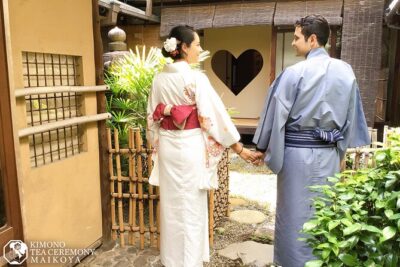
The kimono option makes the photos more special. You choose from a selection of garments, and the hosts help dress you. Several people have found the dressing process as enjoyable as the tea itself because the staff take time to make the outfits look polished.
If you select kimono rental, arrive 30 minutes before the scheduled start. The extra time is required for changing and preparation. Pregnant participants should not choose the kimono option, for health and safety reasons.
Learning The Ceremony Before You Try It
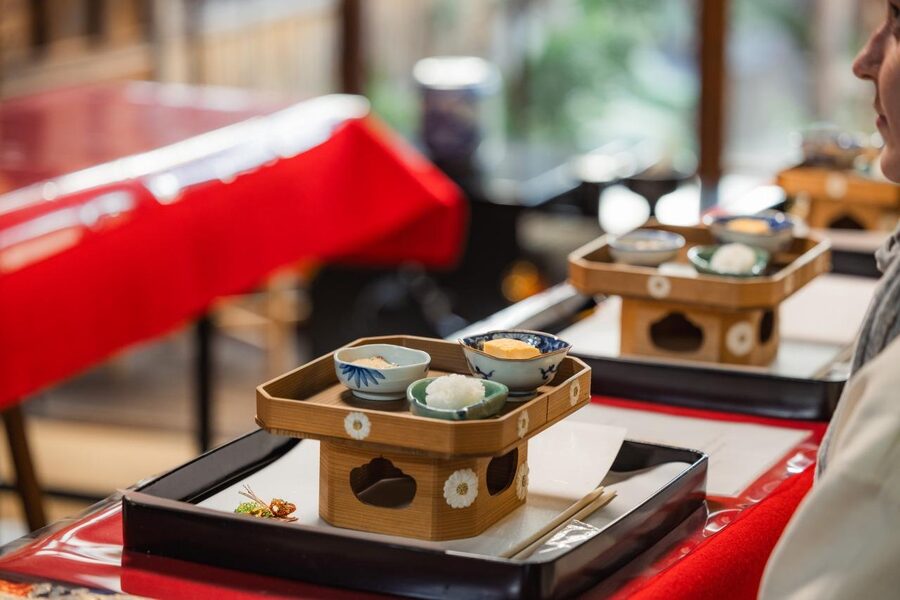
A tea ceremony has many small actions. How you enter, where you sit, how you receive the bowl, and how you show respect all matter. Without explanation, those details can seem fussy. With context, they become a way of paying attention to the person who prepared the tea and to the objects being used.
The English-speaking instructor introduces the development of tea ceremony in Japan and explains its central ideas. You learn about manners and the Japanese spirit behind the practice before taking part.
The demonstration is worth watching closely. The slow movements are not simply decorative. They create a calm rhythm and show respect for the tea utensils, the sweets, the room, and the people sharing the moment.
You do not need prior knowledge of Japanese culture. The instructions are designed for beginners, and the hosts guide you patiently. This is particularly useful for teenagers and families, since the experience gives young people something active to do rather than asking them to sit quietly through a long lecture.
A completely different kind of day out in Kyoto:
- PERFECT KYOTO 1-Day Bus Tour
★ 5.0 · 13,518 reviews - Kyoto: Fushimi Inari, Kinkakuji, Bamboo Grove 1 Day Bus Tour
★ 4.8 · 4,316 reviews - Kyoto Geisha Walking Tour: Gion District & Hidden Gems
★ 4.7 · 3,273 reviews - Kyoto: Gion Magical Night Walking Tour with Geisha Trivia
★ 4.9 · 2,393 reviews
Making Your Own Frothy Matcha
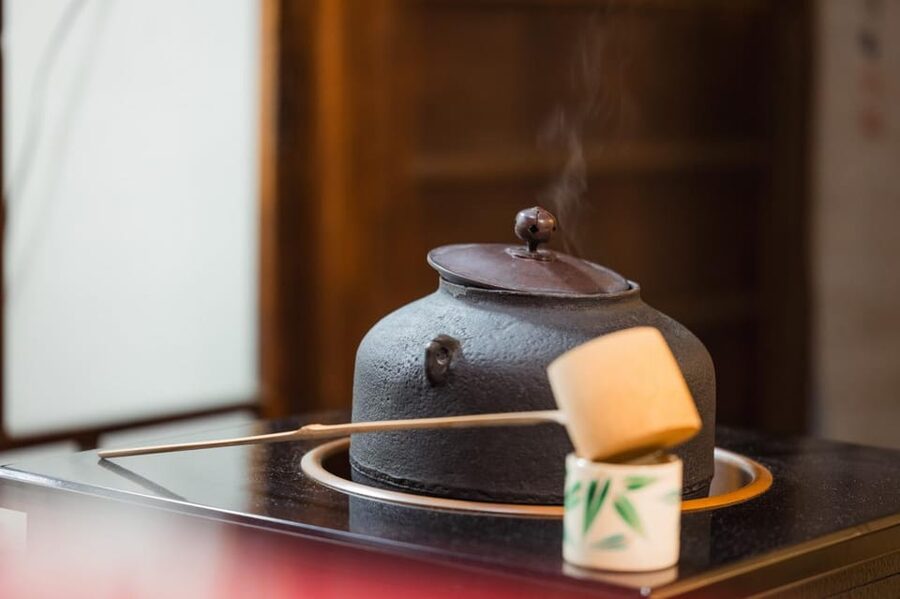
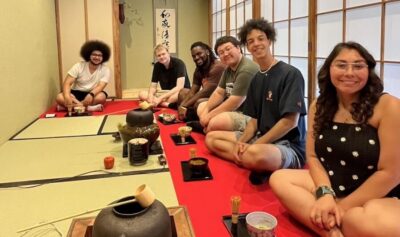
The hands-on matcha lesson is the heart of the activity. You use a bamboo whisk to make your own creamy, frothy tea. The motion takes practice, and the hosts show you how to handle the whisk so you can create the right texture.
This is more satisfying than simply drinking a prepared bowl. You get a sense of the care behind a cup of matcha, and you can compare your result with the host’s technique. Do not worry about making a perfect bowl on your first attempt. The point is to learn the movement and enjoy the process.
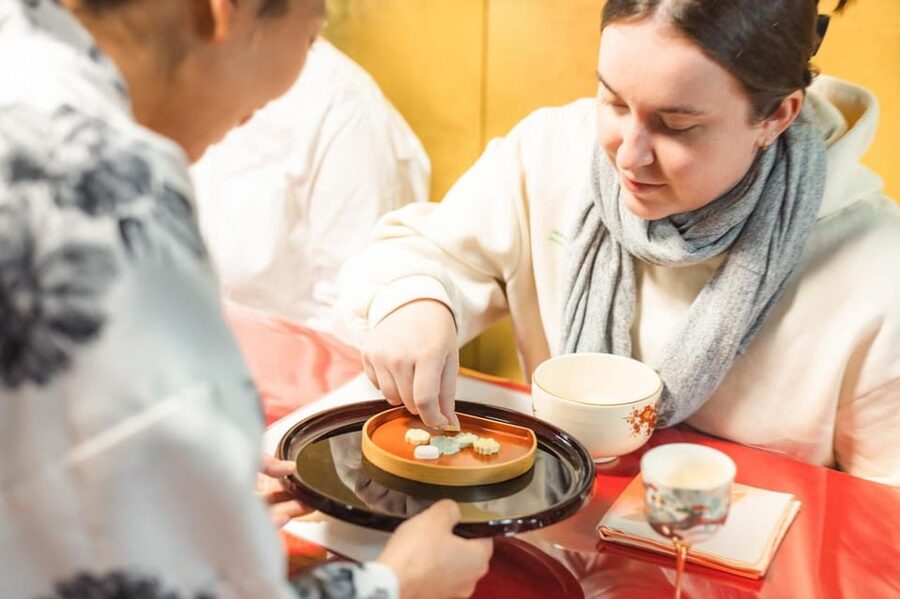
Traditional sweets accompany the tea. Their sweetness balances matcha’s sharp, grassy flavor, and the pairing helps explain why Japanese tea ceremony includes food even though the focus is on the drink.
A welcome drink is also provided. Depending on the arrangement, this may be sake, juice, or Japanese tea. If you do not drink alcohol, juice is available, so the opening portion works for a mixed-age group.
The included tea service, sweets, and hands-on preparation make the $45 price reasonable. You are paying not only for a bowl of tea, but also for instruction, access to the townhouse, cultural activities, and the time of several hosts. The value is strongest if you take part in the full program rather than treating it as a short demonstration.
Calligraphy, Names, And A Personal Keepsake
Toward the end, you write your name in Japanese. You may work with hiragana, katakana, or kanji, depending on the activity and the guidance provided. The hosts help you understand how your name can be represented and guide your brushwork.
This is a fun change of pace after the careful tea movements. Calligraphy requires a steady hand, but nobody expects professional results. You leave with something personal rather than another disposable souvenir.
A hanging scroll or envelope with your name written in Japanese kanji or hiragana is included. That small keepsake gives the experience a lasting connection to your visit. It also makes the activity appealing for children and teenagers, who often enjoy seeing their names transformed into Japanese characters.
Some participants receive their names in more than one writing style. Ask questions if you are curious about the differences, since the calligraphy portion is one of the easiest times to engage directly with the hosts.
Flower Arranging And The Extra Cultural Touches
Flower arranging is included as another hands-on activity. It adds variety to the schedule and shows that Japanese aesthetics are not limited to tea. You work with the arrangement of flowers and learn how presentation, balance, and simplicity can shape an object.
The program may also include latte art using thick tea. This is a playful modern touch within a traditional setting. It gives you another photo opportunity and keeps the 90-minute session from feeling repetitive.
The combination is unusually broad for a short cultural activity. In one visit, you learn etiquette, watch a formal tea service, prepare matcha, taste sweets, arrange flowers, practice calligraphy, and explore a historic townhouse. The pace is active, but the hosts are described as careful rather than hurried.
That variety is also the main reason to choose this experience instead of a more formal tea ceremony. If you want a strict, highly specialized study of tea ceremony, this may feel introductory. If you want a friendly first look at several Japanese traditions, the range works very well.
Kimono Rental: Worth The Added Cost?
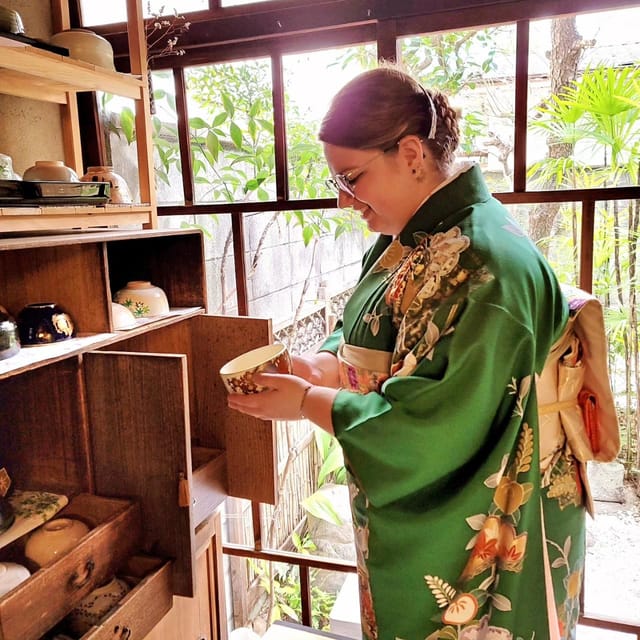
The kimono option is not necessary for learning the tea ceremony, but it changes the mood of the visit. The clothing makes the ceremony feel more ceremonial and gives you attractive photos in the garden and around the house.
The dressing is handled by the hosts, who help you choose and put on the garment. Some visitors also receive hairstyling, adding to the finished look. Plan on arriving 30 minutes early, since the clothing preparation happens before the 90-minute session.
I would recommend the option for couples, families, and anyone who wants photographs as part of the memory. It is also a good choice if wearing traditional clothing is one of your main reasons for booking.
You may prefer to skip it if your schedule is tight or you dislike restrictive clothing. The tea ceremony itself remains worthwhile without a kimono, and you still receive the tea, sweets, matcha lesson, calligraphy, and other cultural activities included in the basic experience.
Building A Day Around Fushimi
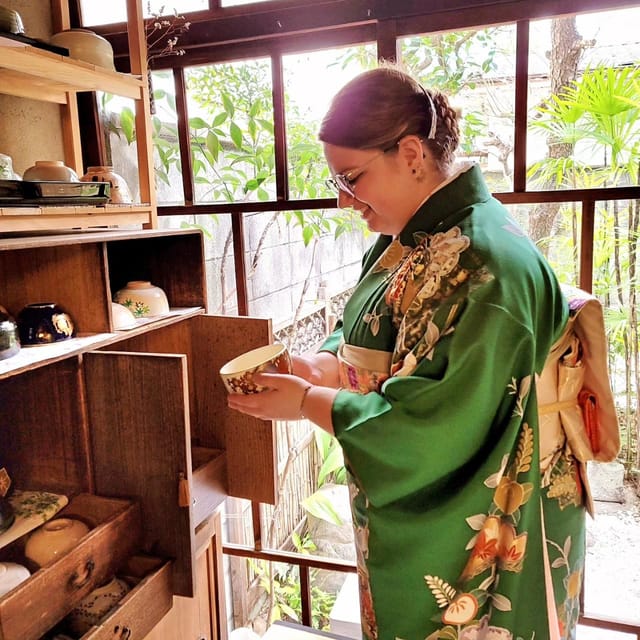
This activity works best when you treat Fushimi as part of the day. The area is famous for sake, so you can eat, shop, and explore before or after the ceremony. The Otesuji arcade makes it easy to find casual places for a meal.
Fushimi Inari Shrine is another practical pairing. The shrine is about 15 minutes from Keihan Fushimi Inari Station, and you can arrange your rail route around the ceremony. Uji, known for tea, is also about 20 minutes away by train.
The location is convenient for longer regional plans too. Osaka is about 40 minutes by express train, while Nara takes about 50 minutes. Those connections do not mean you should cram everything into one day, but they make the experience easy to add to a wider Kansai itinerary.
I would avoid scheduling the tea ceremony immediately before a distant timed attraction. Trains, station transfers, and finding the townhouse take some attention. A relaxed Fushimi day gives you room to enjoy the neighborhood instead of watching the clock.
Who Will Get The Most From It?
You should consider this activity if you want a first introduction to Japanese tea ceremony with clear English explanations. It suits couples, families, solo visitors, and small groups, with private and small-group formats available.
It is especially friendly for anyone who cannot comfortably sit on the floor. The chair setup removes a common obstacle without removing the main customs and gestures.
The activity also suits people who want photographs, a souvenir, and several cultural experiences in one booking. The kimono, garden, calligraphy, flower arranging, and old house create plenty to remember.
It may not suit you if you use a wheelchair, since the historic townhouse has stairs and the activity is not wheelchair accessible. It is also less suitable if your main goal is a long, highly formal tea ceremony with no additional activities. This program is broad, welcoming, and hands-on rather than austere.
English is the stated operating language, and the hosts are praised for clear explanations and friendly help. One account also noted that French explanations were available, but you should confirm language availability when booking if that matters to you.
Practical Booking Advice
The experience costs $45 per person and lasts 90 minutes. For Kyoto, that is a fair price for a hosted cultural session in a historic home, especially because traditional sweets, welcome drinks, calligraphy, and the matcha preparation are included.
Kimono rental is an option rather than part of the standard price. Check the booking choices carefully, since the kimono selection may require opening the availability options twice. If you choose it, arrive 30 minutes early.
The activity offers free cancellation up to 24 hours before the start time and a reserve-now, pay-later option. Those terms help if your Kyoto schedule is still shifting.
Try to arrive with enough time to locate the blue-curtained townhouse. There is no hotel pickup or drop-off, so you handle the train and walking route yourself.
Should You Book This Kyoto Tea Ceremony?
I would book it if you want a warm, accessible introduction to Japanese culture rather than a formal lesson in tea alone. The chair setup is practical, the old machiya gives the experience a genuine sense of place, and the hosts put real care into explaining each activity.
Choose the kimono option if photos and traditional dress matter to you, and pair the visit with Fushimi’s sake district, Fushimi Inari, or Uji. Skip it only if you need step-free access or want a very strict ceremony with little audience participation.
At $45, this is a strong-value Kyoto experience. You leave with new skills, a personal calligraphy keepsake, a better sense of Japanese manners, and a pleasant reason to see southern Kyoto.
FAQ
Do I have to sit on the floor during the tea ceremony?
No. The experience uses tables and chairs, so you can take part without sitting on the floor.
How long does the tea ceremony experience last?
The main experience lasts 90 minutes. If you select the kimono option, arrive 30 minutes early for dressing and preparation.
Is kimono rental included?
Kimono rental is available only if you select that option when booking. The hosts help you put on the kimono, and some activities include hairstyling.
What activities are included besides the tea ceremony?
You can enjoy traditional sweets, a welcome drink, hands-on matcha preparation with a bamboo whisk, Japanese calligraphy, flower arranging, and photos around the townhouse and garden.
How do I reach the townhouse from Kyoto?
From Kintetsu Kyoto Station, take an express train to Kintetsu Momoyama-Goryo-mae Station. From Keihan Gion-Shijo Station, use Fushimi-Momoyama Station. You can also arrive at JR Momoyama Station, then walk toward the Otesuji shopping arcade and turn near Mizuho Bank or the Rakuten mobile shop.
Is the experience suitable for wheelchair users?
No. The activity is not suitable for wheelchair users. Pregnant participants are also asked not to wear a kimono for health and safety reasons.
Just added around Kyoto
- Kyoto: Private Customizable Day Trip by Car★ 5.0 · 38 reviews
- Kyoto: Gion Night Walking Tour with Geisha Insight★ 5.0 · 39 reviews
- Kyoto: Full Day Bike Tour★ 4.9 · 39 reviews
- Private Japanese Calligraphy in Kyoto – Learn Shodō with a Master★ 5.0 · 39 reviews
- Kyoto: Gion Evening Walk with Hidden Gems, Geisha & Sake★ 5.0 · 41 reviews
- Experience a tea ceremony in an authentic tearoom, in Kyoto!★ 4.5 · 41 reviews
- Kyoto Private Photo Shoot & Tour by SnapKyoto★ 5.0 · 41 reviews
- The Way of Tea: Kyoto Crafts, Hidden Temples & Wabi-Sabi Walk★ 5.0 · 41 reviews
Tea Ceremony Experiences, compared.
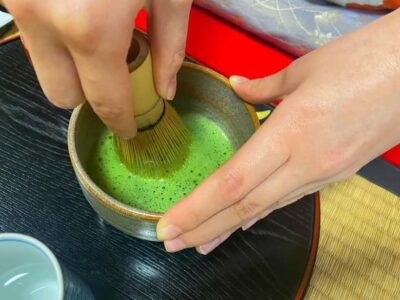
Tea Ceremony in a Traditional Tea House in Kiyomizu
Read our review →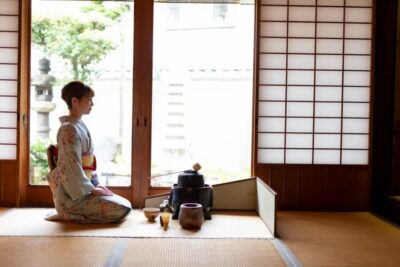
Browse the lists this tour appears in