
Reviewed · TEA CEREMONY EXPERIENCES
Tea Ceremony Experience in Osaka Doutonbori
Osaka’s loudest street hides a quiet ritual. This 45-minute tea ceremony near Dotonbori gives you hands-on matcha practice, a short lesson in Japanese customs, and traditional sweets without asking you to spend half a day in a formal tea house. I especially like the small-group format and the option for children to drink caffeine-free matcha milk. The main consideration is that the shared plan is brief and informal, so it will not feel like a long, highly staged ceremony.
The setting is practical rather than secluded: you meet above a building at 1-chome Higashi-5-26 in Dotonbori, close to public transportation and the bright streets of central Osaka. Hosts such as Kazu, Mai, and Soda have been praised for making the lesson calm, friendly, and easy to follow. Check the address carefully, because the Google Maps pin can be misleading and the word Higashi is important.
In This Review
- Key points to know before booking
- A quiet room above Dotonbori
- What happens during the 45-minute class
- Why the small-group format improves the lesson
- The ceremony’s best feature: participation
- A useful cultural pause in a busy itinerary
- How much value do you get for $20.69?
- A few practical points that can save you trouble
- Who should book this tea ceremony?
- Should you book the Osaka Dotonbori tea ceremony?
- FAQ
- How long does the tea ceremony experience last?
- How much does the experience cost?
- Where does the tea ceremony take place?
- How should I find the meeting point?
- Does the activity end at the meeting point?
- Can children take part?
- How many people can join the class?
- Can I cancel for a full refund?
Key points to know before booking
- You make your own matcha: Watch the host prepare tea, then whisk and drink your own bowl.
- The class is near Dotonbori: It is easy to pair with sightseeing, food, and shopping in central Osaka.
- The mood is calm and friendly: The ceremony offers a quiet pause from the noise outside.
- Small groups matter: The maximum is 15 people, with many sessions running smaller than that.
- Children have a caffeine-free option: Matcha milk is available for children, but children under five need advance contact and may not be accepted.
- The price is modest: At $20.69 per person, it is a low-cost way to take part in a genuine Japanese cultural activity.
A quiet room above Dotonbori
Dotonbori is famous for bright signs, crowded sidewalks, giant food displays, and late-night energy. This experience places you right in that central district, but the ceremony itself changes the pace almost immediately. You go to the second floor of Tea Ceremony Osaka The Osaka, where the activity begins and ends.
That contrast is one of the best reasons to book. You do not need to spend time traveling out to a distant garden or temple district. Instead, you can eat takoyaki nearby, walk along the canal, and then step into a quieter room for a lesson in tea culture.
The meeting address deserves close attention. Use Google Maps and search for tea ceremony osaka the osaka. The correct address is 1-chome Higashi-5-26, not the more easily confused 1-5-26. The word Higashi, meaning east, is part of the address. A mistaken map pin could cost you valuable time before a short class.
The exact room details are not heavily described, so you should think of this as a convenient urban teaching space rather than a grand historic tea house. That is not a flaw for most people. You are paying for instruction and participation, not elaborate architecture or a long formal production.
More Tea Ceremonies in Osaka
- Osaka: Tea Ceremony Experience
★ 4.9 · 1,426 reviews - Osaka: Japanese Traditional Sweets Making and Tea Ceremony
★ 4.7 · 118 reviews - Samurai Show, Tea Ceremony, Japanese Traditional Activities
★ 5.0 · 56 reviews
What happens during the 45-minute class
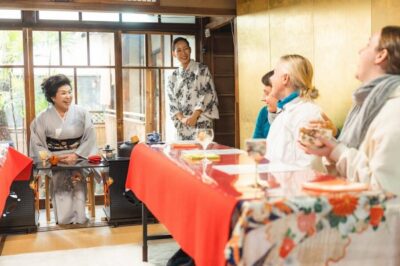
The experience follows a clear sequence. First, the host introduces the tea ceremony and explains its cultural meaning. Japanese tea practice has been shaped as an art form since the 16th century, and the lesson gives you enough background to understand why the movements, tools, and manners matter.
You will learn that tea ceremony is not simply a method for making green tea. The way the tea is prepared, offered, received, and enjoyed reflects care, respect, and attention to the moment. One lesson also covers the way the ceremony created a setting where people could meet on more equal terms, including members of the samurai class who used tea gatherings for conversation and strategy.
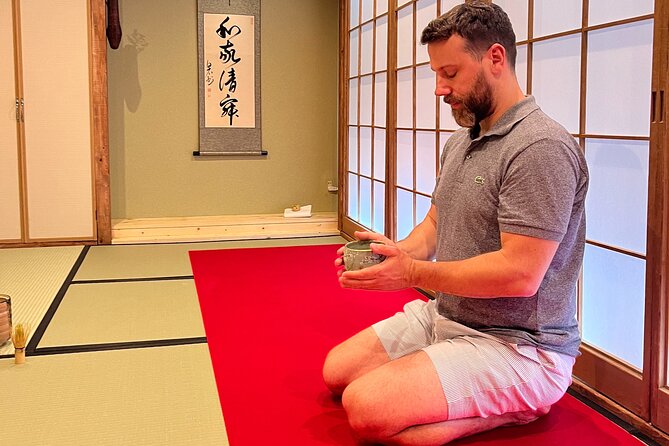
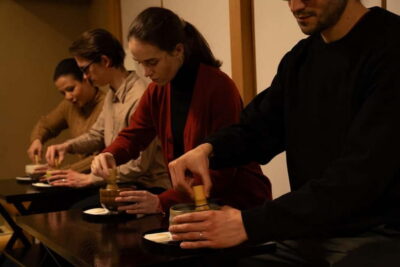
Next, you watch the host prepare matcha. This demonstration is useful because the ritual can seem mysterious if you only see the finished bowl. The teacher shows the proper use of the tools and the order of preparation, serving, and drinking.
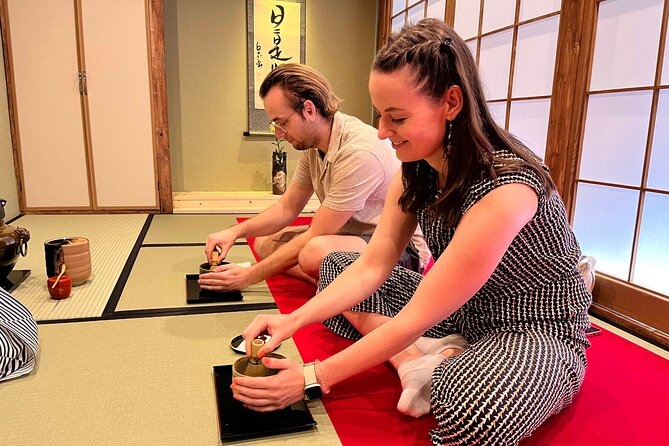
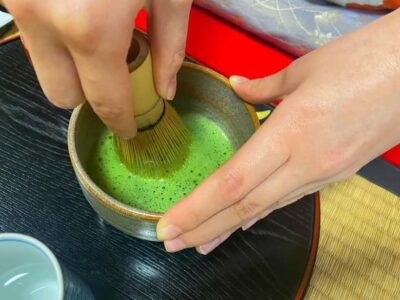
Then comes the most enjoyable part: you prepare your own matcha. You get to handle the equipment, whisk the tea, and drink what you make. This is more memorable than simply watching a performance, especially if you have never used a bamboo whisk before.
The lesson also covers tea etiquette. You learn how the tea should be served and received, rather than treating it like an ordinary café drink. That extra guidance gives the activity substance. You leave with a better sense of why the ceremony has such a careful rhythm.
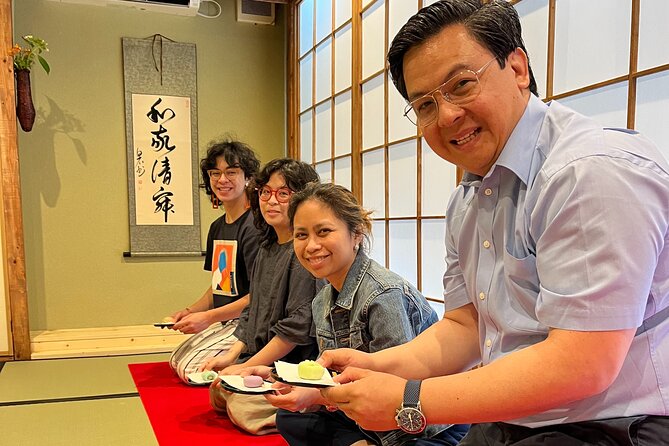
Traditional Japanese sweets accompany the tea. These are not just decoration. Sweet flavors balance matcha’s grassy, slightly bitter taste and help you understand the usual pairing. The sweets may reflect the season, adding a small cultural detail to the tasting.
The advertised duration is approximately 45 minutes. One description calls a session about an hour, so allow a little flexibility if the class runs longer. Still, this is a compact activity. You can fit it between sightseeing plans without giving up a full morning or afternoon.
Why the small-group format improves the lesson
The shared plan is intended for people who want to take part with others. The maximum group size is 15, but many sessions appear to be much smaller. Several accounts describe groups of only two couples, six people, or a similarly intimate number.
That difference matters. In a large crowd, a tea demonstration can become something you watch from a distance. With fewer people, you have more room to follow the hand movements, ask questions, and receive help when making your own bowl.
The hosts are a major part of the experience. Kazu is described as warm, relaxed, and funny, including playful sound effects during the foot-shuffling movement used in the ceremony. Mai has been praised for explaining the history, preparation, and drinking customs in a clear way. Soda is remembered for creating a calm and reflective session.
The teaching style appears friendly rather than stiff. That is helpful if you worry about making an etiquette mistake. You can ask questions and learn through practice instead of trying to copy every movement perfectly on your first attempt.
English-language instruction is available, and one tea master has been praised for speaking very good English. The exact host may vary, but the experience is designed to explain the cultural background as well as the physical steps.
The ceremony’s best feature: participation
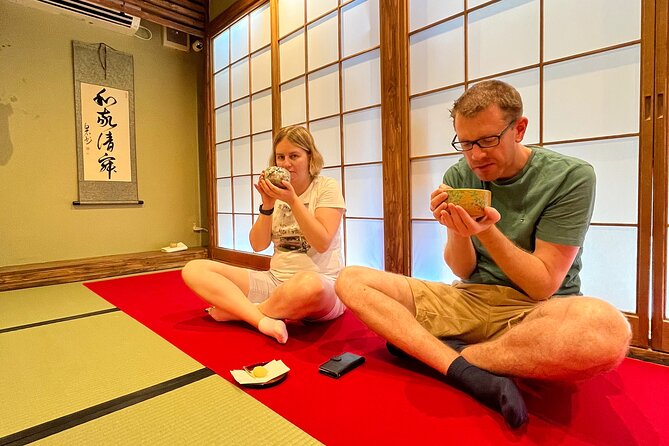
I would choose this experience over a purely demonstrational tea show. Watching an expert prepare matcha is pleasant, but making the tea yourself gives you a reason to pay attention to every step.
You will likely notice how much difference small movements make. The whisking technique affects the texture, and the order of actions gives the process its calm pace. Even if your tea does not look as polished as the host’s, that is part of the fun.
The interactive structure also works well for families. Adults can learn the etiquette and history while children take part in whisking and tasting. The children’s caffeine-free matcha milk is a thoughtful option, although you should contact the provider before bringing a child under five. Children under five may not be allowed into the regular plan, even when an adult has purchased a ticket.
This is also a good choice if you are curious about matcha but unsure whether you like it. You taste the drink in a traditional setting rather than ordering a large modern matcha beverage. The included sweet helps soften the flavor and makes the tasting more approachable.
A completely different kind of day out in Osaka:
- Osaka Go Karting Tour with Funny Costume
★ 5.0 · 2,658 reviews - Osaka Castle: Museum and Tower Entry Ticket
★ 4.5 · 2,380 reviews - Osaka: Shinsekai Food Tour with 13-15 Dishes at 5 Eateries
★ 4.8 · 2,204 reviews - Osaka Food Tour: 13 Dishes at 5 Local Eateries
★ 5.0 · 2,149 reviews
A useful cultural pause in a busy itinerary
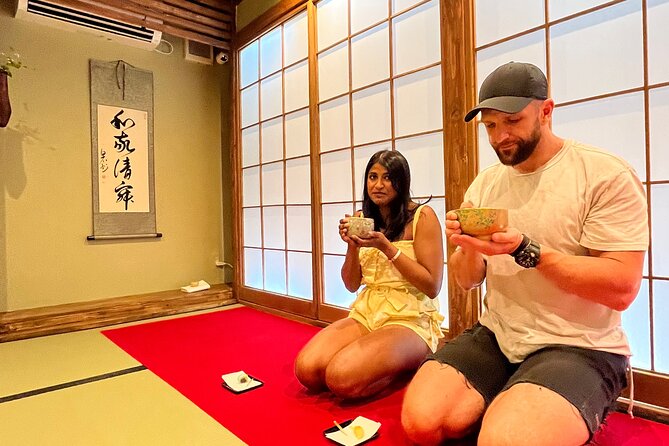
Osaka is easy to enjoy at full speed. You can spend the day moving between markets, department stores, shrines, and restaurants. This tea class gives you 45 minutes to slow down and notice a different side of the city.
Several descriptions focus on the contrast between the calm ceremony and the busy streets just outside. That contrast is not an incidental detail. It is what makes the experience work so well in Dotonbori. You get a cultural lesson without leaving the center of the action.
I would schedule it during the middle of a sightseeing day if you need a breather, or near the end of your trip when you want one last meaningful activity. One person found it a fitting way to spend the final day of a three-and-a-half-week visit to Japan. The class is short enough to fit before an evening meal or after a morning walk.
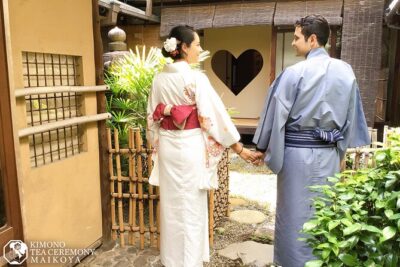
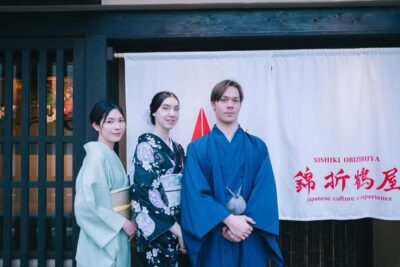
The activity also suits first-time visitors who want cultural context without committing to a full formal ceremony. You do not need to change into traditional clothing, and the class focuses on understanding and trying the ritual rather than performing it perfectly.
How much value do you get for $20.69?
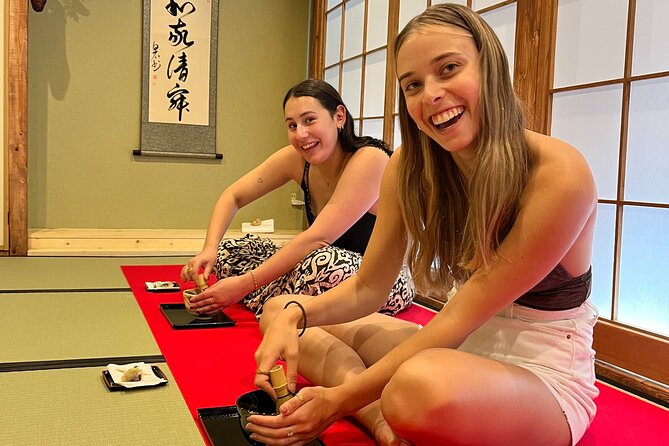
At $20.69 per person, the cost is reasonable for a central Osaka activity that includes instruction, matcha, sweets, and your own preparation time. The value is strongest if you want an activity rather than another snack stop or a quick photo.
You are also paying for access to a teacher who has more than a decade of experience. The host’s explanation is central to the class, since the meaning behind the movements is what turns whisking green tea into a cultural experience.
The price is less compelling if you are seeking a formal, extended ceremony in a historic setting. This class is short, urban, and shared. It offers a practical introduction, not a full-day study of tea schools, architecture, or seasonal ceremony design.
For families, the value depends on the children’s ages. Older children can participate, while the under-five policy requires advance contact and may prevent younger children from joining. Confirm this before booking so the low price does not turn into a wasted reservation.
A few practical points that can save you trouble
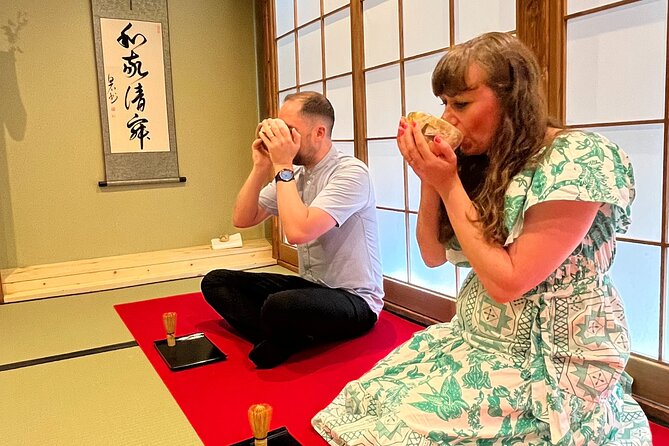
Your mobile ticket should be confirmed when you book. The activity begins and ends at the same meeting point, which makes the logistics simple. You do not need to arrange a separate return transfer.
The location is near public transportation, but the address issue is worth repeating. Search by the experience name in Google Maps and verify that the listing shows Dotonbori 1-chome Higashi-5-26. Do not rely blindly on the address link supplied through a booking platform.
The class has free cancellation up to 24 hours before the local start time. If you cancel later, you do not receive a refund, and changes made within that 24-hour window are not accepted. Since the activity is short and usually easy to fit into a day, booking it early in your Osaka planning makes sense, but keep the deadline in mind.
The experience is capped at 15 people. That is a reasonable maximum for a hands-on lesson, though the actual feel will depend on the size of your scheduled group. If personal attention is your top priority, try to choose a time that suits your schedule rather than simply taking the first available slot.
Who should book this tea ceremony?
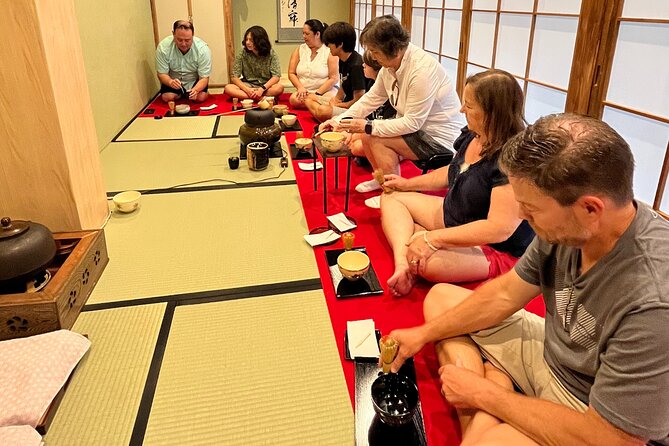
I recommend it for first-time visitors to Japan, couples, families with children old enough to participate, and anyone who wants a calm cultural activity close to Osaka’s main entertainment district.
It is especially useful if you have limited time. You can learn the basic etiquette, hear why the ceremony matters, watch a proper preparation, and make your own tea in less than an hour.
It also suits people who prefer an informal class to a highly polished stage performance. The hosts are praised for being patient, warm, and engaging, and the chance to ask questions adds real value.
I would hesitate only if you want a long, silent, highly formal ceremony or a historic tea-house setting. You should also reconsider if your group includes a child under five and you cannot confirm acceptance in advance.
Should you book the Osaka Dotonbori tea ceremony?
Yes, if you want an affordable and hands-on introduction to Japanese tea culture in a convenient part of Osaka. The combination of explanation, demonstration, personal practice, sweets, and a small-group setting gives you more than a quick matcha tasting.
The strongest reasons to book are the friendly hosts, the chance to make your own tea, and the peaceful contrast with Dotonbori outside. Just check the map carefully, confirm arrangements for children under five, and keep your expectations realistic. This is a short urban lesson, not an elaborate traditional retreat.
For $20.69, it is an easy activity to add to an Osaka itinerary, and you may leave with more than a pleasant memory. You may also feel ready to whisk a bowl of matcha at home.
FAQ
How long does the tea ceremony experience last?
The advertised duration is approximately 45 minutes. One description refers to an experience lasting about an hour, so allow a little extra time in case the session runs longer.
How much does the experience cost?
The listed price is $20.69 per person.
Where does the tea ceremony take place?
It takes place at Tea Ceremony Osaka The Osaka on the second floor of a building at 1-chome Higashi-5-26, Dotonbori, Chuo Ward, Osaka 542-0077.
How should I find the meeting point?
Use Google Maps and search for tea ceremony osaka the osaka. The correct address includes Higashi, written as 1-chome Higashi-5-26. The address link from the booking platform may point to a different map location.
Does the activity end at the meeting point?
Yes. The activity ends back at the same place where it begins.
Can children take part?
The experience is family-friendly, and caffeine-free matcha milk is available for children. If you have a child under five, contact the provider in advance because children in that age group may not be allowed to join the regular plan.
How many people can join the class?
The maximum group size is 15 participants. The shared plan is designed for people who want to experience the ceremony with other participants.
Can I cancel for a full refund?
Yes, if you cancel at least 24 hours before the local start time. Cancellations or changes made less than 24 hours before the start are not refunded or accepted.
Just added around Osaka
- Osaka Food Tour with 10 Classic Japanese Tastings & Drinks★ 5.0 · 38 reviews
- Osaka: Highlights & Hidden Gems Private Walking Tour★ 4.7 · 38 reviews
- Kyoto private tour (Shore excursion available from Osaka or Kobe port)★ 5.0 · 39 reviews
- Osaka Private Day Trip – Enjoy Your First-Time Visit to Osaka!★ 5.0 · 39 reviews
- Kyoto & Nara & Uji: Full Day Sightseeing Tour from Osaka or Kyoto★ 4.5 · 39 reviews
- Authentic SUSHI Course Cooking Class★ 5.0 · 39 reviews
- Osaka: Mind & Spirit Balance Temple Reiki Healing★ 5.0 · 41 reviews
- Osaka Afternoon Walking Tour with Osaka River Cruise★ 3.5 · 42 reviews
Tea Ceremony Experiences, compared.
Tea Ceremony in a Traditional Tea House in Kiyomizu
Read our review →
Browse the lists this tour appears in