
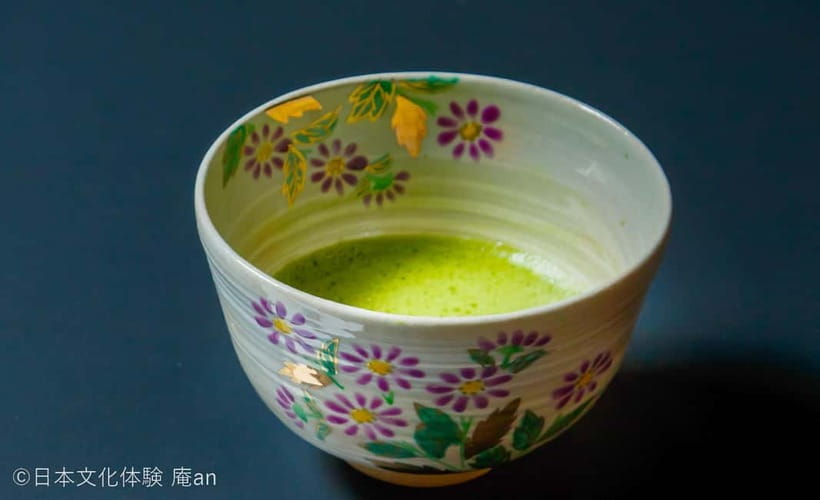
Reviewed · TEA CEREMONY EXPERIENCES
Osaka: Japanese Traditional Sweets Making and Tea Ceremony
Slow down with sweets and tea in central Osaka. This 95-minute experience gives you two appealing ways to meet Japanese culture: you shape seasonal nerikiri from Kyoto-made bean paste, then prepare Uji matcha and enjoy it with your work. I like the small, hands-on format and the excellent value at $18 per person. I also like that the sweets change with the season, giving repeat visitors a reason to return.
The main consideration is language. The instructor speaks Japanese, with English translation provided as much as possible, so you should request English support in advance. The class has worked well for families and international visitors, but instructions may not always be printed or delivered fully in English.
In This Review
- Key details before you book
- Why nerikiri makes a better souvenir than a snack
- The 95-minute schedule, step by step
- What the tea ceremony feels like here
- The instructors and language question
- A good Osaka activity for families and couples
- The $18 price and what it really covers
- Getting to Higobashi without losing time
- The best parts and the fair warnings
- Should you book the Osaka sweets and tea class?
- FAQ
- How long does the Osaka sweets and tea experience last?
- How much does the experience cost?
- What sweets will I make?
- What ingredients are used?
- Is English available?
- Where is the meeting point?
- Is the building accessible by elevator?
Key details before you book
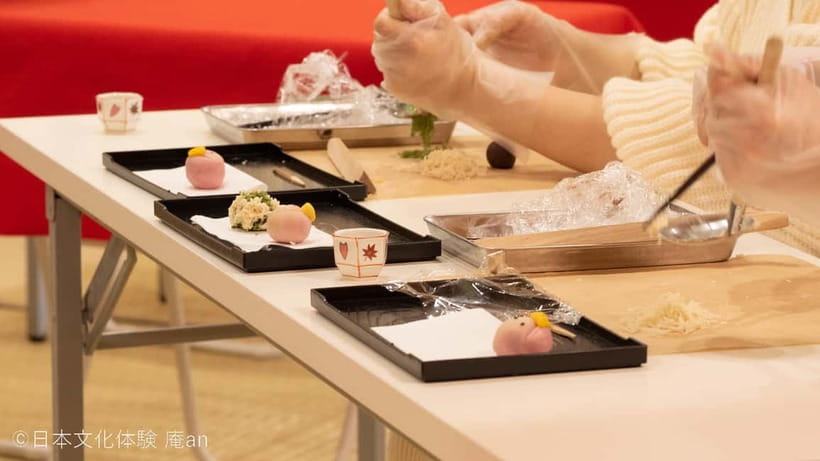
- Two seasonal sweets: You make a flower-shaped nerikiri and a kinton nerikiri, both using white or red bean paste from long-established Kyoto shops.
- A real matcha lesson: You see matcha ground into powder, learn about tea customs, and prepare your own tea with Uji matcha.
- Strong value: At $18, the price covers the 95-minute experience and required tools, making it an inexpensive cultural activity in Osaka.
- Central meeting point: The venue is one minute from Exit 10 of Higobashi Station, with several other stations within walking distance.
- Friendly teaching style: Instructors including Maiko, Jun, Mihiko, and others have been praised for patience, warmth, humor, and clear explanations in Japanese and English.
- A few practical limits: The building has no elevator, late arrivals cannot be accommodated, and a take-out box costs an extra 100 JPY.
Why nerikiri makes a better souvenir than a snack
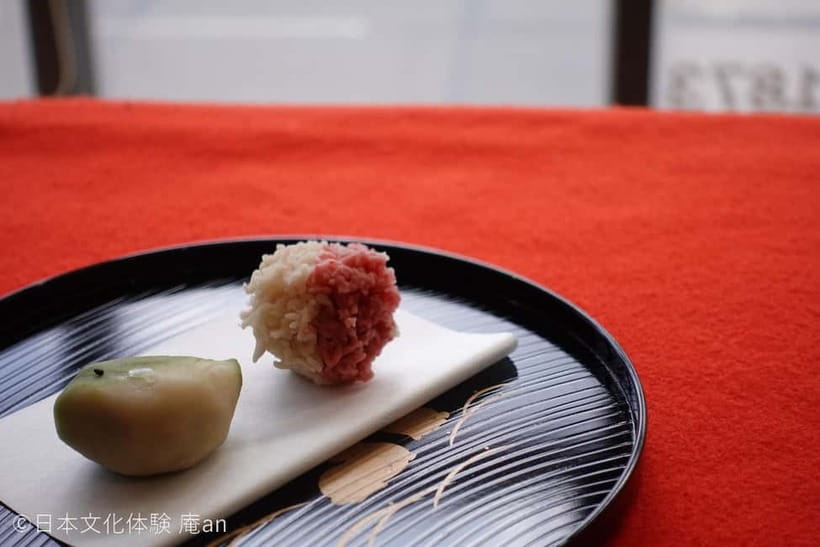
Japanese sweets are not only about sugar. In a tea setting, wagashi are designed to balance the bitterness of matcha and reflect the season through color and shape. Nerikiri is a refined sweet made from white bean paste, shaped into flowers, fruit, or other seasonal forms.
That makes the first part of this class more interesting than a simple cooking demonstration. You are not just watching someone work. You color the paste, handle it yourself, and try to create a finished form with your own hands.
The paste comes from established shops in Kyoto, which matters because the main ingredient is also the main flavor. High-quality bean paste has a smooth texture and gentle sweetness. It is not the same as a heavily frosted Western dessert. The taste is quiet and clean, which is exactly why it works beside matcha.
You make two sweets. The first is a flower-shaped nerikiri. The second is a kinton nerikiri, another style of wagashi with a more textured, decorative appearance. The exact colors and designs match the season, so the class can feel different at another time of year.
I like this format because it gives you room to be creative without asking you to master a difficult recipe. You receive guidance on the shaping process, but the final look still belongs to you. Some pieces may look polished. Others may look charmingly homemade. Both are edible.
More Tea Ceremonies in Osaka
- Osaka: Tea Ceremony Experience
★ 4.9 · 1,426 reviews - Tea Ceremony Experience in Osaka Doutonbori
★ 5.0 · 754 reviews - Samurai Show, Tea Ceremony, Japanese Traditional Activities
★ 5.0 · 56 reviews
The 95-minute schedule, step by step
The activity begins with an explanation of traditional Japanese sweets. This opening gives you the basic context before the paste reaches your hands. You learn what nerikiri is and how it fits with tea, then move into the making process.
The first sweet is the flower-shaped nerikiri. You begin by coloring the white bean paste, then shape it into the seasonal design. Coloring is an important part of the activity because the appearance carries much of the sweet’s meaning. Small changes in color can suggest a flower, fruit, or seasonal scene.
Next comes the kinton nerikiri. Making two different forms is a smart choice. One sweet introduces you to a smooth, shaped design, while the other gives you a different texture and method. You get enough practice to understand the basics without spending the whole session repeating one task.
The listed schedule places a break at about 55 minutes. At around 65 minutes, the focus shifts from sweets to tea. This division helps the class feel varied. You are using your hands during the first section, then slowing down for observation and ritual.
The tea portion begins with an explanation of Japanese tea customs. You also see a demonstration of matcha being ground into powder. That small detail adds useful context because matcha does not begin as the bright green powder you see in a café bowl. The demonstration connects the drink in front of you with the work behind it.
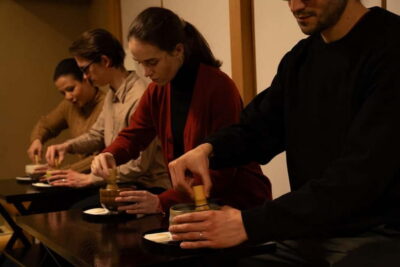
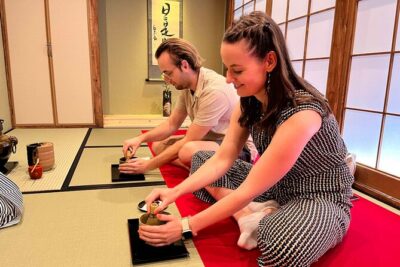
You then take part in the tea ceremony experience and prepare your own matcha using single-origin Uji matcha. The pace is described by several participants as calm and friendly, rather than stiff or intimidating. One particularly useful part is learning the proper way to drink tea and express appreciation in Japan.
At about 85 minutes, the formal activity ends, followed by eating and drinking time. The full room departure is scheduled for 95 minutes. You should treat that timing seriously, especially if you have a train, restaurant reservation, or evening show afterward.
What the tea ceremony feels like here
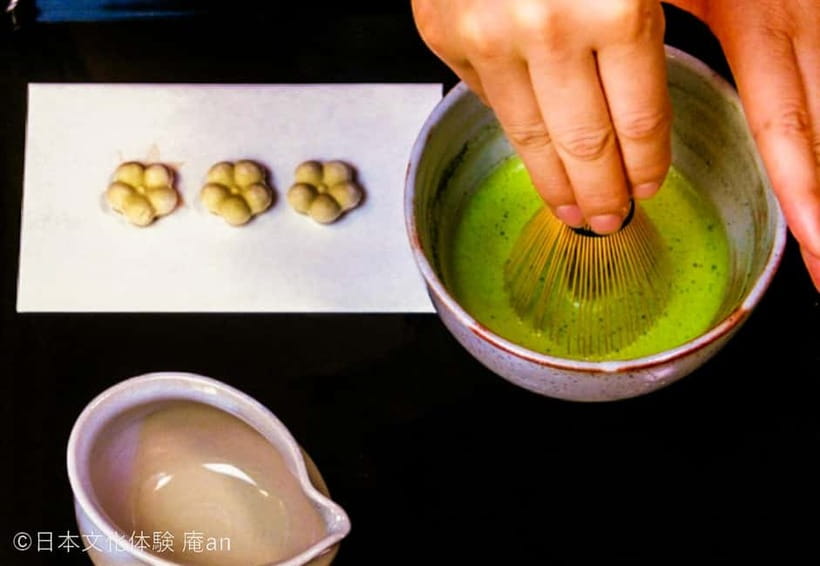
This is a practical introduction to tea culture, not a long formal ceremony in a historic temple. That distinction matters. If you want a highly traditional presentation with strict silence and elaborate etiquette, this may feel casual.
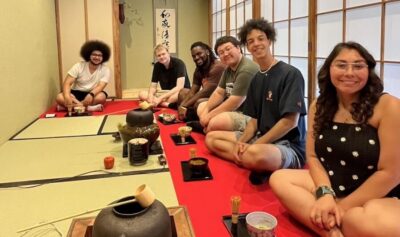
For many people, the casual approach is the advantage. You can ask questions, follow the instructor’s movements, and learn without worrying about making a serious mistake. One participant described it as a relaxed tea ceremony that suited a small class particularly well.
You prepare the matcha yourself and drink it with the sweets you made earlier. The pairing is the heart of the experience. The bean paste gives you sweetness, while the matcha brings a grassy bitterness and a more concentrated taste. Together, they make sense in a way that each item alone may not.
The single-origin Uji matcha is another good feature. Uji, near Kyoto, is closely associated with Japanese tea production, and using it gives the activity a clear regional connection. You are not simply drinking generic green tea. You are learning how matcha is prepared and served in a setting built around it.
The picture time near the end is also useful. Your sweets may not survive a full day in your bag, but a photograph will. If you want to take them away, a sweets box is available for 100 JPY.
The instructors and language question
The teaching style appears to be one of the strongest parts of the activity. Maiko is described as cheerful and enthusiastic, while Jun is praised for patient explanations. Mihiko, despite being described as a beginner in English, handled the movement between Japanese and English well. Other instructors were noted for warmth, humor, and the ability to include everyone.
That does not mean every session will be fully bilingual. The official language is Japanese, and English translation is provided as much as possible. You should contact the provider ahead of time if you want English support.
One important practical detail is that instructions may be spoken in Japanese during a session. A family with children enjoyed the activity despite this, but found that English instructions would have helped. Another participant booked the night before and did not have time to request translation, yet still received clear explanations in both languages.
My advice is simple: request English assistance early, and arrive ready to watch demonstrations closely. Sweets making is visual, so you can follow hand movements even when a phrase is unclear. Still, asking for language support is the best way to get the full cultural explanation.
A completely different kind of day out in Osaka:
- Osaka Go Karting Tour with Funny Costume
★ 5.0 · 2,658 reviews - Osaka Castle: Museum and Tower Entry Ticket
★ 4.5 · 2,380 reviews - Osaka: Shinsekai Food Tour with 13-15 Dishes at 5 Eateries
★ 4.8 · 2,204 reviews - Osaka Food Tour: 13 Dishes at 5 Local Eateries
★ 5.0 · 2,149 reviews
A good Osaka activity for families and couples
The class suits people who want to do something together rather than sit through a lecture. Children aged 10 and 12 enjoyed making the sweets, and the hands-on work gives younger participants a clear goal. Very young children who sit on a parent’s lap are free only if they are under two years old.
Couples can also get a lot from the format. One session had only two participants and became a private class, with the instructor giving calm explanations and answering questions about tea traditions. The activity does not depend on a large group to create energy.
Solo visitors should also feel comfortable booking. The instructors are expected to include all participants, and the tools are provided. You do not need to bring specialist equipment or prior cooking experience.
I would be less likely to recommend it to someone seeking a full meal. These are refined sweets, not lunch. You receive what you make and drink the matcha, but you should plan another meal before or after.
The $18 price and what it really covers
At $18 per person, this is one of the easier cultural activities to fit into an Osaka budget. The fee includes the experience and the required tools. You make two sweets, see matcha grinding, take part in tea preparation, and have time to eat and drink at the end.
The value is especially good if you care about participation. Many cultural activities give you a demonstration and a photo. Here, you actually color and shape the paste, prepare the matcha, and learn basic tea manners.
There are two small extra costs. A take-out box is 100 JPY, and an experience completion certificate is 300 JPY. Neither is required. I would consider the box if you want to protect the sweets for a short time, but the certificate is mainly for people who enjoy keeping a record of activities.
The score of 4.7 from 118 ratings supports the idea that the price matches the experience. The praise is not focused on luxury or elaborate surroundings. It centers on friendly teaching, tasty sweets, useful cultural explanations, and the chance to try something with your own hands.
Getting to Higobashi without losing time
The meeting point is especially convenient for a central Osaka activity. It is one minute from Exit 10 of Higobashi Station on the Osaka Metro Yotsubashi Line.
You can also reach it from several other stations:
- Five minutes from Exit 7 of Watanabebashi Station on the Keihan Nakanoshima Line
- Seven minutes from Exit 10 of Yodoyabashi Station on the Osaka Metro or Keihan lines
- Ten minutes from Exit 11-5 of Kitashinchi Station on the JR Tozai Line
- Fifteen minutes from the South Central Gate of Osaka Station
The address area can be easy to miss. One participant got lost because the building appeared as a gray structure that was not obvious on Google Maps. Give yourself extra time, use the provided map link and coordinates, and do not assume that being close to the station means the entrance will be instantly clear.
If you drive, you need to use nearby coin-operated parking. Parking is not included, and the activity does not hold the event for late arrivals. This is one of those Osaka bookings where arriving early is worth more than trying to cut the connection close.
The building has no elevator, so you need to use stairs to reach the venue. That is important for anyone with mobility concerns, heavy luggage, or a stroller.
The best parts and the fair warnings
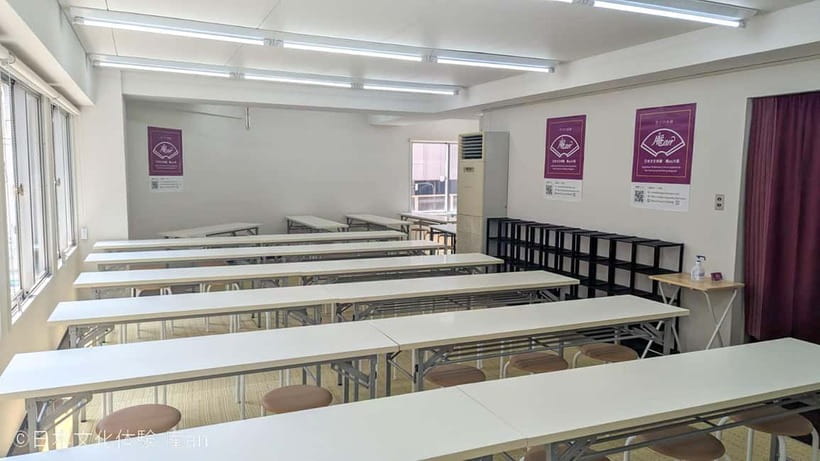
The greatest strength is the balance between making and learning. You spend the first section creating something, then use it in the tea portion. That gives the class a clear purpose rather than dividing it into unrelated activities.
The second strength is the teaching. The repeated praise for patience and friendliness is meaningful because tea etiquette can feel unfamiliar. A good instructor makes the small gestures understandable and keeps the mood relaxed.
The main weakness is inconsistency in language support. English may be very good with one instructor and more limited with another. The provider says translation will be supplied as much as possible, not guaranteed in every moment.
The setting is also functional rather than grand. The appeal comes from the activity, ingredients, and instruction, not from a famous building or an ornate tea room. If you want a polished photo backdrop, keep your expectations modest.
Cancellation is free up to 24 hours before the start time, and you can reserve now while paying later. That helps if your Osaka schedule is still shifting. But the provider does not compensate you for travel expenses if the booking is canceled, and people who are not participating cannot enter the venue.
Should you book the Osaka sweets and tea class?
I would book this experience if you want an affordable, hands-on introduction to Japanese food culture. It is particularly well suited to couples, families with older children, solo visitors, and anyone who wants a calm break from sightseeing.
Book it for the seasonal nerikiri, the Kyoto bean paste, the Uji matcha, and the patient instruction. Request English help before you arrive, allow extra time to find the gray building, and remember that the class is a relaxed cultural workshop rather than a formal temple ceremony.
At $18, the risk is low and the experience gives you more than a tasting. You leave having shaped two sweets, prepared matcha, learned a few tea customs, and gained a better sense of why Japanese sweets are made to look like the season.
FAQ
How long does the Osaka sweets and tea experience last?
The experience lasts 95 minutes. The scheduled activity ends around 85 minutes, followed by eating and drinking time before room departure at 95 minutes.
How much does the experience cost?
The price is $18 per person. The experience and required tools are included.
What sweets will I make?
You will make two seasonal Japanese sweets: a flower-shaped nerikiri and a kinton nerikiri.
What ingredients are used?
The activity uses white or red bean paste produced by long-established shops in Kyoto. The tea is single-origin Uji matcha.
Is English available?
The official activity language is Japanese. English translation is provided as much as possible, and you should contact the provider ahead of time if you would like English assistance.
Where is the meeting point?
The venue is one minute from Exit 10 of Higobashi Station on the Osaka Metro Yotsubashi Line. It is also within walking distance of Watanabebashi, Yodoyabashi, Kitashinchi, and Osaka Station.
Is the building accessible by elevator?
No. There is no elevator, and you need to use stairs to reach the venue.
More Dessert Tours
- Matcha Making Class in Osaka with Authentic Japanese Sweets Set
★ 5.0 · 509 reviews - Osaka: Matcha Making Experience with Japanese Sweets
★ 5.0 · 146 reviews - Matcha Making Class in Tokyo with Authentic Japanese Sweets Set
★ 5.0 · 744 reviews - Tokyo: Matcha Making Experience with Mochi Sweets in Asakusa
★ 4.9 · 388 reviews
Just added around Osaka
- Osaka Food Tour with 10 Classic Japanese Tastings & Drinks★ 5.0 · 38 reviews
- Osaka: Highlights & Hidden Gems Private Walking Tour★ 4.7 · 38 reviews
- Kyoto private tour (Shore excursion available from Osaka or Kobe port)★ 5.0 · 39 reviews
- Osaka Private Day Trip – Enjoy Your First-Time Visit to Osaka!★ 5.0 · 39 reviews
- Kyoto & Nara & Uji: Full Day Sightseeing Tour from Osaka or Kyoto★ 4.5 · 39 reviews
- Authentic SUSHI Course Cooking Class★ 5.0 · 39 reviews
- Osaka: Mind & Spirit Balance Temple Reiki Healing★ 5.0 · 41 reviews
- Osaka: Gluten-Free Ramen and Gyoza Cooking Class★ 5.0 · 42 reviews
Tea Ceremony Experiences, compared.
Tea Ceremony in a Traditional Tea House in Kiyomizu
Read our review →
Browse the lists this tour appears in