
Reviewed · WORKSHOPS
Matcha Making Class in Osaka with Authentic Japanese Sweets Set
Slow down with a bowl of green tea. This one-hour Osaka class gives you a hands-on introduction to matcha, from its background and production to the proper way to whisk it at home. I like the friendly English-speaking instruction, and I like the small group limit of six, which gives the teacher time to correct your technique. The main drawback is finding the entrance, since a few people needed extra time to locate the building.
The class costs $21.89 per person, a fair price for a cultural activity that includes matcha, Japanese sweets, equipment, ingredients, and direct instruction. Morning and afternoon sessions make it easy to fit around Osaka sightseeing, though the short format means this is an introduction, not a full-length formal tea ceremony.
In This Review
- Key Points Before You Book
- A Calm Tea Break in Higashishinsaibashi
- The Opening Lesson: Matcha Beyond the Green Color
- Whisking Your Own Cup, Step by Step
- Why the Japanese Sweets Matter
- A One-Hour Schedule That Fits Osaka
- What Makes the Small Group Worthwhile
- Getting There Without Losing the Start Time
- Is $21.89 a Fair Price?
- Who Will Enjoy This Matcha Class Most?
- Small Details That Improve the Experience
- My Verdict: Book It for a Friendly Introduction
- FAQ
- How long does the matcha-making class last?
- Where does the class meet?
- Where does the experience end?
- Is the class taught in English?
- Are matcha and Japanese sweets included?
- Do I need previous matcha-making experience?
- How many people can join the class?
- Can I cancel for a full refund?
Key Points Before You Book
- You make your own matcha: The instructor guides you through each step and helps fix common mistakes.
- Classes are limited to six people: The small group keeps the lesson personal and relaxed.
- Japanese sweets are included: The sweets balance matcha’s strong, slightly bitter flavor.
- English instruction is provided: Hosts use clear explanations, visuals, and even short quizzes.
- The class lasts about one hour: It fits neatly into a morning or afternoon in Osaka.
- The address is in Higashishinsaibashi: Use the mobile ticket and allow extra time to find the entrance.
A Calm Tea Break in Higashishinsaibashi
The class begins at Matcha Making Osaka, at 1-chōme-16-20 Higashishinsaibashi, Chuo Ward. This puts you in a useful part of central Osaka, close to public transportation and within reach of the city’s major shopping and food areas.
You meet at the class location and return there when the session ends. There is no hotel pickup or drop-off, so you need to make your own way to the address. That is simple in principle, but the entrance can take some hunting. One practical tip is to check the provider’s YouTube short before you go, especially if you are arriving close to the start time.
The mobile ticket is handy. Still, I would save the address and confirmation on your phone before setting out. Osaka’s streets can be easy to navigate once you are on the right block, but finding a particular doorway in a busy commercial district is another matter.
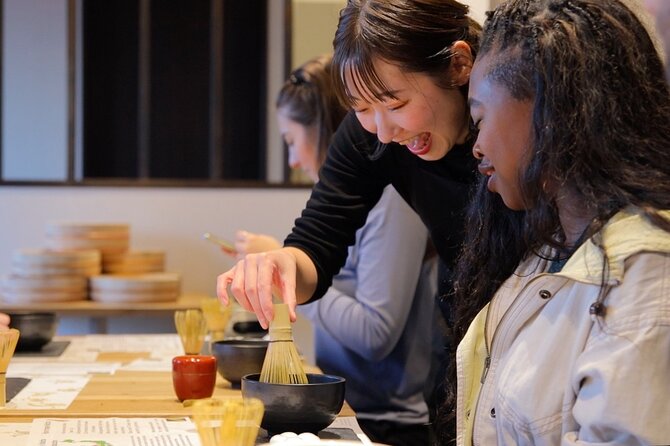
The room is designed for a small class rather than a large show. With no more than six people, you are not left watching a teacher from the back of the room. You can ask questions, show your whisking, and receive help as you work.
More dessert tours:
- Osaka: Matcha Making Experience with Japanese Sweets
★ 5.0 · 146 reviews - Osaka: Japanese Traditional Sweets Making and Tea Ceremony
★ 4.7 · 118 reviews - Matcha Making Class in Tokyo with Authentic Japanese Sweets Set
★ 5.0 · 744 reviews
The Opening Lesson: Matcha Beyond the Green Color
The session begins with an explanation of what matcha is and how it is made. You learn about the tea’s background, production, and place in Japanese tea culture before preparing your own cup.
This opening matters because matcha is not simply green tea poured into a cup. The powder is whisked directly into water, so the preparation affects the texture, strength, and taste. A rushed or uneven mix can leave clumps. The class gives you a reason for each step instead of asking you to copy movements without context.
The teaching style is casual and friendly. Instructors have used visuals and short quizzes to make the information easier to remember. That approach works well for you if you want more than a quick demonstration but do not want a long lecture.
Past classes have included instructors named Momo, Fuko, Matty, and Yui. The praise for these teachers centers on clear English, warmth, energy, and a relaxed manner. Fuko, in particular, used a quiz to help explain the background of matcha, while Momo was described as especially welcoming. Yui received praise for being easy to understand and for guiding the practical portion clearly.
You should not expect every class to have the same instructor. The useful point is that the teaching style is built for beginners, and the hosts are prepared to explain the process in English.
Whisking Your Own Cup, Step by Step
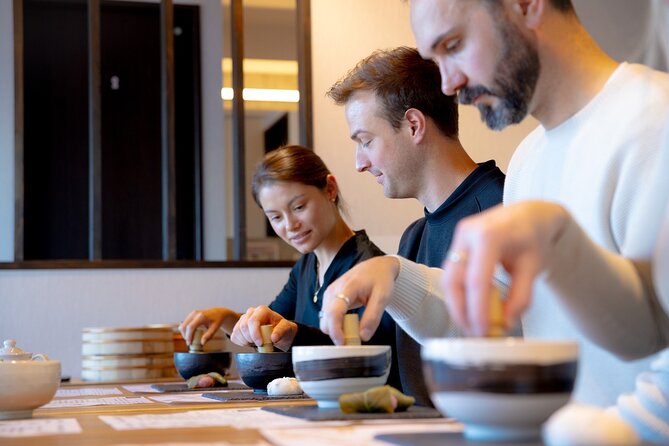
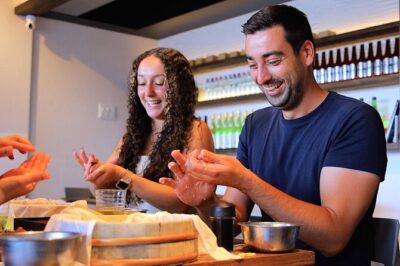
The heart of the experience is making the matcha yourself. The equipment and ingredients are prepared for you, so you can focus on the method rather than figuring out what to buy or how to set up.
Your teacher walks you through the process and watches as you work. If your technique needs adjusting, you receive direct help. That hands-on correction is the best reason to choose this class over simply ordering matcha at a café.
You learn how to prepare a proper cup at home, including the small details that can make a difference. The lesson is aimed at ordinary use, not only ceremonial display. If you already enjoy matcha but have never learned the correct method, this is likely the most useful part of the hour.
The tone is not stiff. You get an introduction to the tea ceremony and its customs, but the session remains accessible and informal. You can ask questions, try the technique, and enjoy the process without worrying about making a perfect first attempt.
That balance is important. A formal tea ceremony can be beautiful, but it may give you little chance to handle the tools yourself. Here, the focus is participation. You leave with a basic method you can repeat at home, even if your first bowl is not café-perfect.
Why the Japanese Sweets Matter
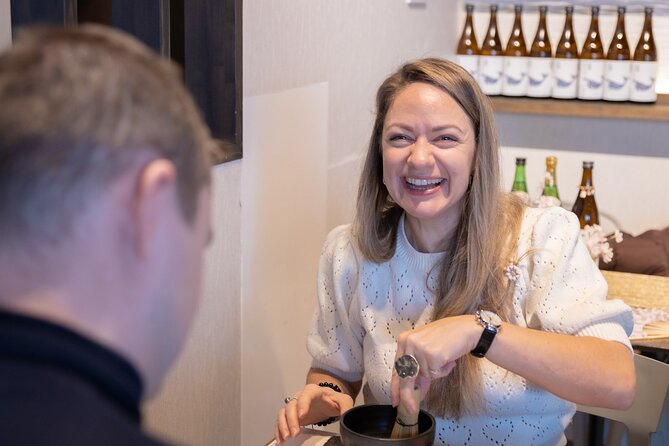
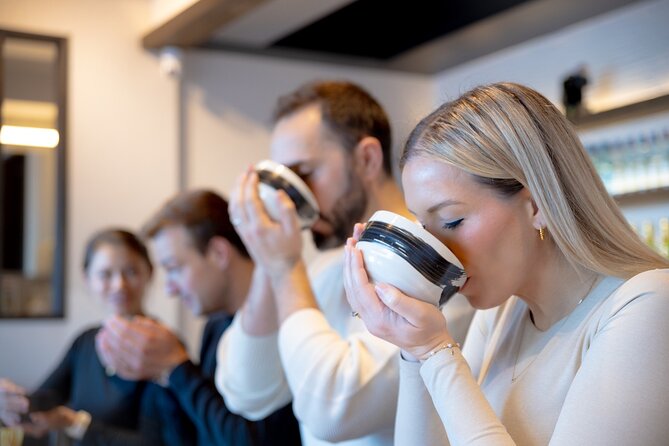
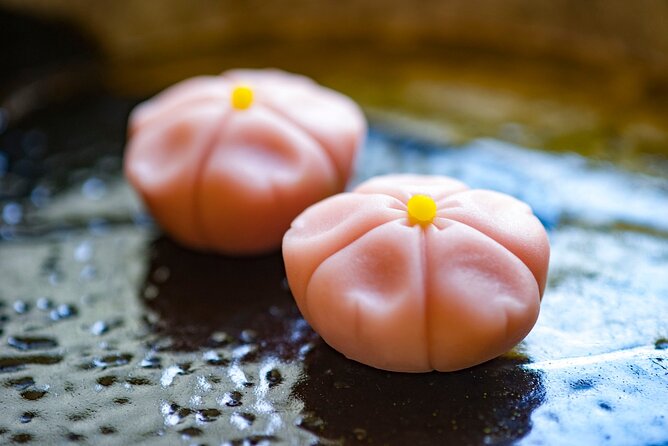
Matcha has a strong flavor, with bitterness and a deep vegetal quality that may surprise you if you usually drink sweetened tea. The Japanese sweets served with it are not just decoration. Their sweetness helps balance the tea and makes the tasting more comfortable for beginners.
The set is included in the $21.89 price, along with the matcha and instruction. Previous classes have included small treats that were praised for their flavor. The exact sweets can vary, so you should think of them as a seasonal or class accompaniment rather than a fixed menu.
This pairing also gives you a simple lesson in Japanese taste. A sweet bite followed by matcha changes how the tea feels. You can notice the contrast more clearly than you might if you drank the tea alone.
If you already love matcha, the sweets make the class more enjoyable without taking over the activity. If you are unsure about matcha, they soften the first impression. One class even received praise from someone who did not usually like matcha, which says something about the approachable format.
A few more Osaka experiences worth weighing up
- Sushi Making Osaka Roll and Authentic Japanese Sushi Class
★ 5.0 · 1,220 reviews - Osaka: Ramen and Gyoza Cooking Class in Dotonbori
★ 5.0 · 378 reviews - Osaka Sushi Making Class – Hands-On Nigiri & Rolls (Same-Day OK)
★ 5.0 · 352 reviews - Osaka Cooking Class: Okonomiyaki &Japanese cuisines experience
★ 5.0 · 261 reviews
A One-Hour Schedule That Fits Osaka
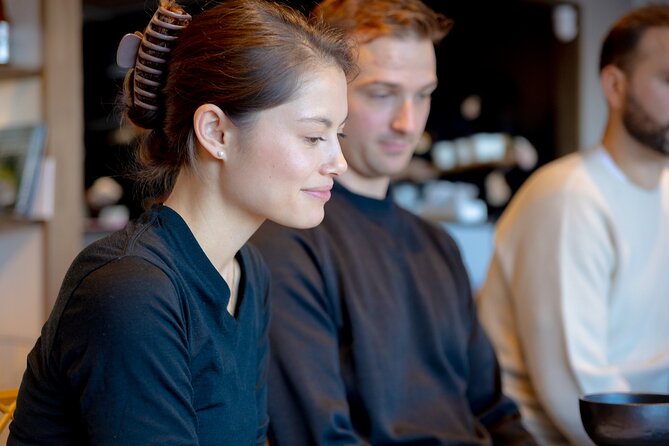
Morning and afternoon start times give you flexibility. You can book the class before a day of sightseeing, or use it as a quiet break after exploring the city.
At about one hour, the experience is easy to fit between other plans. You are not giving up half a day, and the class ends back at the starting point. That makes it useful for a short Osaka stay, a rainy afternoon, or a day when you want a slower activity between meals and shopping.
The short duration also sets a clear limit. This is not a long study of tea production, a multi-course Japanese cooking lesson, or an elaborate ceremony with many formal stages. You receive a focused introduction, one practical preparation, the sweets, and time for questions and photos.
I see that as a strength for most visitors. You get enough explanation to understand what you are doing, then enough practice to make the lesson memorable. If you want advanced tea training, you will need a longer or more specialized course.
What Makes the Small Group Worthwhile
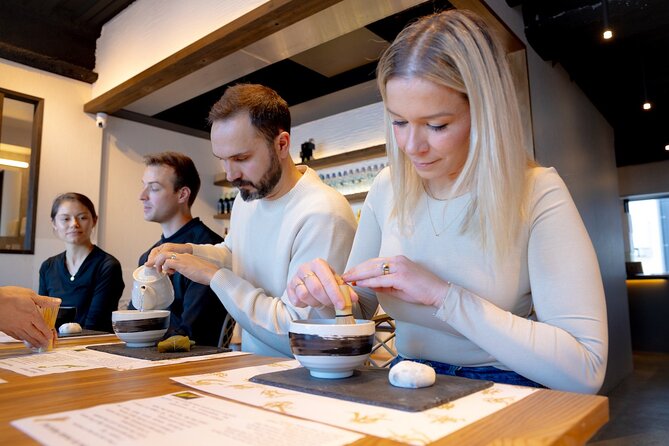
The maximum of six people is a major benefit. Matcha preparation involves movement, timing, and texture, so personal attention is more useful here than it would be in a simple talk.
A small group also keeps the room calm. You can take photos, listen to the teacher, and enjoy the tea without the noise and distance of a large tour. Solo visitors should feel comfortable booking, since the activity is designed for individuals as well as groups.
For families, the quiz and hands-on work may help keep younger participants involved, though the supplied information does not give a minimum age. I would confirm age rules directly if you are booking for children.
The intimate format does mean places may fill quickly. The activity was booked five or more times in the previous week, and it has received a two-time TripAdvisor Best of the Best award. Those details suggest steady demand, so booking ahead makes sense if your Osaka schedule is tight.
Getting There Without Losing the Start Time
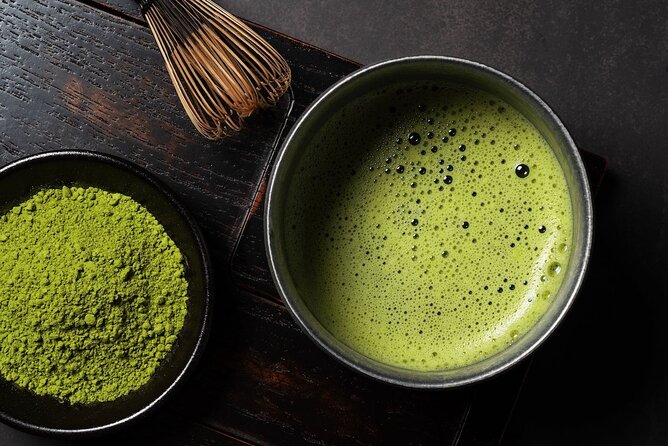
The meeting point is near public transportation, but the building entrance may not be obvious. This is the one practical issue I would take seriously.
Allow extra time to find the exact location. Do not plan to arrive at the neighborhood one minute before the start and expect the doorway to reveal itself. Have the full address ready, keep your mobile ticket open, and check the recommended video before leaving.
The experience does not include transportation. You handle the trip to and from Higashinsaibashi, and the class ends at the same point. Service animals are allowed, which is useful information for visitors who need that accommodation.
Free cancellation is available if you cancel at least 24 hours before the local start time. A cancellation made less than 24 hours in advance is not refunded, and late changes are not accepted. That policy is reasonable for a small class, but you should check your Osaka plans before booking.
Is $21.89 a Fair Price?
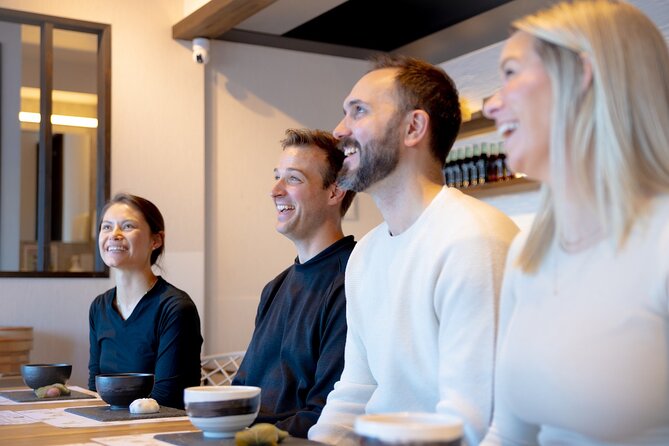
Yes, for the right kind of cultural activity. At $21.89, you are paying for more than a drink. The price includes a teacher, prepared tools and ingredients, matcha, Japanese sweets, and the chance to practice the method yourself.
The value is strongest if you want to understand matcha beyond its popularity in cafés and desserts. You learn enough to buy powder with more confidence and prepare it properly at home. The class also gives you a quiet cultural pause in a city better known for bright signs, crowded shopping streets, and constant food choices.
The value is less clear if you only want to taste matcha. You could likely find tea elsewhere without taking a class, but that would not provide the guided technique or explanation.
At one hour, the cost also compares well with longer paid attractions that require more planning. You can enjoy the class without committing a full morning or afternoon, and the small group keeps the instruction personal.
Who Will Enjoy This Matcha Class Most?
I would recommend it to you if any of these descriptions fit:
- You love matcha but have never prepared it correctly.
- You want a short cultural activity in central Osaka.
- You prefer doing something hands-on rather than watching a performance.
- You are traveling alone and want an easy small-group experience.
- You enjoy Japanese sweets and food pairings.
- You want an English-language introduction to tea culture.
- You need a flexible morning or afternoon activity.
It also works well for couples, friends, and small families. The relaxed teaching style takes pressure off beginners, and the quiz and visuals add variety to the lesson.
I would hesitate only if you want a long, formal tea ceremony or a detailed course on tea farming and regional production. This is a friendly introduction, not professional training.
Small Details That Improve the Experience
Arrive early enough to find the building. That is the most useful advice from the practical side of this activity.
Keep your phone available for the mobile ticket and location information. You may also want to take photos during the class, since the experience includes time to remember the occasion visually.
Come ready to participate. The point is not simply to drink a prepared bowl. You will get more from the hour if you listen to the explanation, try the whisking yourself, and ask about the steps you find difficult.
Do not worry about having prior knowledge. No experience is required, and the class is built around clear guidance. Even people who already drink matcha regularly can benefit from learning the proper preparation.
My Verdict: Book It for a Friendly Introduction
I would book this class if I wanted a practical, low-cost cultural activity in Osaka. The small group, English-speaking hosts, and direct instruction give it more value than a simple matcha tasting, while the sweets make the lesson welcoming for newcomers.
The location requires a little patience, and the one-hour format will not satisfy someone seeking a formal, detailed tea ceremony. For most people, though, that short length is exactly the appeal.
Book it if you want to slow down, learn a useful Japanese skill, and enjoy a properly prepared cup with a sweet accompaniment. Just allow extra time to find the entrance, and cancel at least 24 hours ahead if your plans change.
FAQ
How long does the matcha-making class last?
The class lasts approximately one hour.
Where does the class meet?
The meeting point is Matcha Making Osaka at 1-chōme-16-20 Higashishinsaibashi, Chuo Ward, Osaka, 542-0083, Japan.
Where does the experience end?
The activity ends back at the meeting point.
Is the class taught in English?
Yes. An English-speaking instructor is included.
Are matcha and Japanese sweets included?
Yes. The experience includes matcha with Japanese sweets.
Do I need previous matcha-making experience?
No. Prior experience is not required.
How many people can join the class?
The class has a maximum of six participants.
Can I cancel for a full refund?
Yes, if you cancel at least 24 hours before the experience start time. Cancellations made less than 24 hours in advance are not refunded, and late changes are not accepted.
Just added around Osaka
- Osaka Food Tour with 10 Classic Japanese Tastings & Drinks★ 5.0 · 38 reviews
- Osaka: Highlights & Hidden Gems Private Walking Tour★ 4.7 · 38 reviews
- Kyoto private tour (Shore excursion available from Osaka or Kobe port)★ 5.0 · 39 reviews
- Osaka Private Day Trip – Enjoy Your First-Time Visit to Osaka!★ 5.0 · 39 reviews
- Kyoto & Nara & Uji: Full Day Sightseeing Tour from Osaka or Kyoto★ 4.5 · 39 reviews
- Authentic SUSHI Course Cooking Class★ 5.0 · 39 reviews
- Osaka: Mind & Spirit Balance Temple Reiki Healing★ 5.0 · 41 reviews
- Osaka: Gluten-Free Ramen and Gyoza Cooking Class★ 5.0 · 42 reviews
Workshops, compared.
Sushi Making Tokyo Roll and Authentic Japanese Sushi Class
Read our review →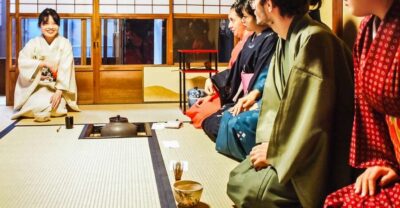
Roll and Authentic Sushi Making Class in Asakusa
Read our review →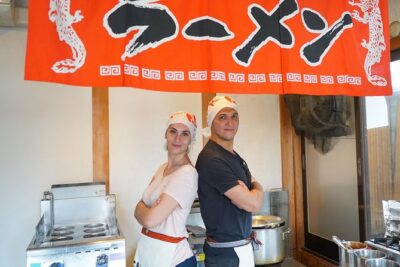
Ramen Cooking Class at Ramen Factory in Kyoto
Read our review →
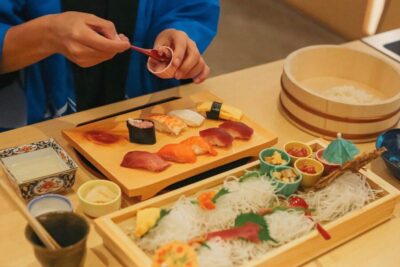
Sushi Making Class in a Happi Coat near a Famous Spot
Read our review →
Sushi Making Osaka Roll and Authentic Japanese Sushi Class
Read our review →Browse the lists this tour appears in