
Reviewed · TRADITIONAL CRAFT WORKSHOPS
Tokyo Shinjuku Chopsticks Making Class
Make something you can use. This one-hour Shinjuku workshop turns two plain wooden sticks into a personal Japanese souvenir, using a traditional kanna hand plane. I like the hands-on work and the fact that you leave with chopsticks you made yourself, not another shop-bought trinket.
I also like the wide choice of wood, the clear step-by-step teaching, and the friendly English-speaking staff, including instructors such as Masa, Tom, Yuki, Nana, and Ken. The main caution is crowding: with up to 32 people, busy sessions can feel rushed, and premium wood or engraving costs extra.
In This Review
- Key points to know before booking
- Why making chopsticks in Shinjuku works so well
- Choosing the wood before the work begins
- Turning square sticks into usable chopsticks
- Sanding, oiling, and the final finish
- Personalizing the pair with engraving
- A good family activity, with a few physical demands
- English guidance and the pace of the room
- What the $20 price really buys you
- Timing, meeting point, and booking advice
- Who should book this chopstick workshop?
- Should you book it?
- FAQ
- How long does the chopstick-making class last?
- Where does the activity begin?
- Where does the activity end?
- Do I need woodworking experience?
- What tool do I use to make the chopsticks?
- Are different types of wood available?
- Can I have my chopsticks engraved?
- What is the cancellation policy?
Key points to know before booking
- You shape raw wood with a traditional kanna, rather than simply decorating finished chopsticks.
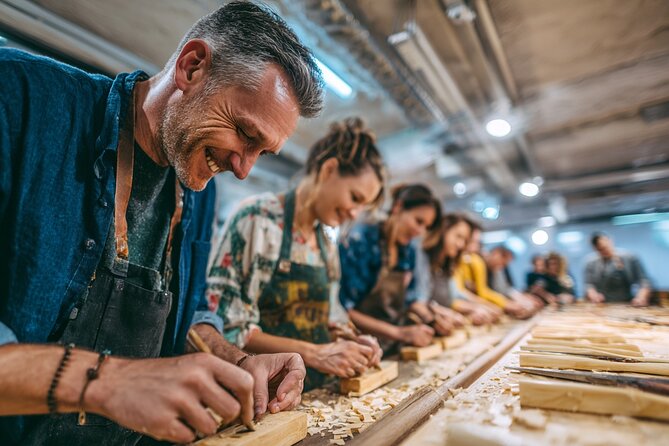
- The one-hour class suits beginners, with staff guiding you through planing, sanding, and oiling.
- Two wood types are included, while more unusual or premium choices require an additional payment.
- Engraving costs 2,000 yen, so budget extra if you want names or lettering added.
- The class works well for families, including multigenerational groups, but some woods require real hand strength.
- The meeting point is in Nishishinjuku, and checking the exact address before setting out is wise.
Why making chopsticks in Shinjuku works so well
Tokyo offers no shortage of souvenirs. You can buy ceramics, snacks, fans, knives, and printed goods on nearly every major shopping street. Making your own chopsticks gives you a different kind of keepsake: small, useful, and tied to an hour of your trip.
The class is held at 7-chome-4-5 Nishishinjuku, Shinjuku City, Tokyo 160-0023. The activity begins and ends at this meeting point, and it is near public transportation. Since the supplied directions have caused confusion for some people, I would not rely on memory alone. Check the booking confirmation and map details before you leave your hotel.
At $20 per person, the price is reasonable for a one-hour craft activity in central Tokyo, especially if you value instruction and a finished item. It is less attractive if you see the class mainly as a cheap way to buy chopsticks. You can find finished pairs for less, but you will not get the satisfaction of shaping them yourself.
More Craft Workshops in Tokyo
- Kintsugi Experience: Art of Golden Joinery in Tokyo
★ 5.0 · 467 reviews - Authentic Pure Gold Kintsugi Workshop with Master Taku in Tokyo
★ 5.0 · 217 reviews - Tokyo: Knife Making Workshop (Sharpening, Engraving)
★ 4.9 · 153 reviews
Choosing the wood before the work begins
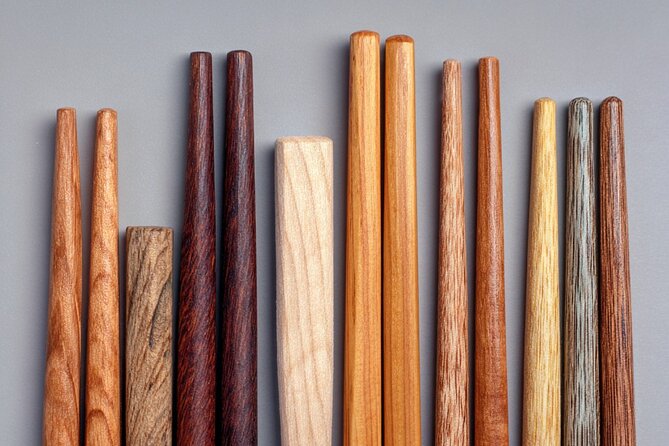
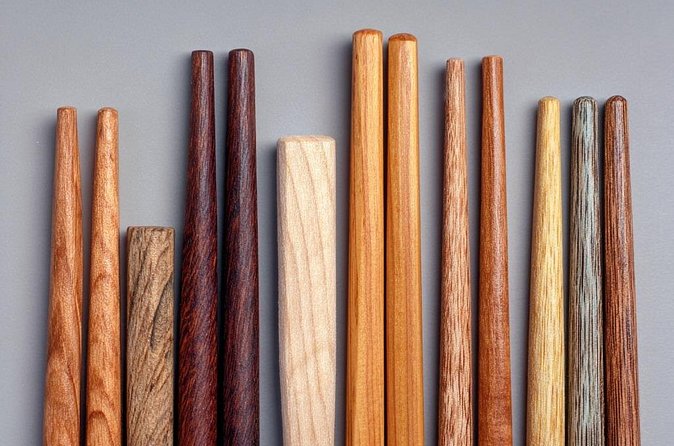
The first meaningful choice is the wood. You can select from several types, each with its own color, texture, scent, and working feel. Two wood options are included in the basic fee. Premium woods are available for a small upgrade, though the extra cost can add up.
This choice matters more than it may seem. A softer wood may be easier for a first attempt, while a harder or more unusual wood can produce a striking final pair but require more effort. One family found that certain woods demanded noticeable muscle, particularly during the planing stage.
I suggest asking the instructor which included wood is easiest for beginners before paying for an upgrade. If the appearance of the premium wood matters greatly to you, the extra charge may be worthwhile. If your priority is simply taking home a good pair, the standard choices should do the job.
The wood selection also gives the activity a useful connection to Japanese craft. You are not just adding a design to a mass-produced object. You are handling natural material and responding to its grain. That small decision makes the finished chopsticks feel more personal.
Turning square sticks into usable chopsticks
The central tool is the kanna, a small traditional Japanese hand plane. You use it to shave thin layers from the raw wood and gradually bring the sticks toward their final shape.
The process is simple in theory but takes a little practice. You need to hold the wood securely, position the blade correctly, and apply steady pressure. If you push too hard, you may remove more wood than intended. If you work too lightly, progress can be slow.
The instructors first demonstrate the motion, then guide you as you try it yourself. Staff members are available to answer questions and help if you get stuck. Masa was praised for patience when a first attempt went wrong, and several instructors, including Tom and Yuki, were noted for explaining the process clearly in English.
That support is important because the work is not entirely effortless. One person who had woodworking experience still found the blade and wood choice made a difference. A few sessions have also had tools that felt less than sharp, which can make the planing stage harder than expected.
Do not treat a mistake as a disaster. The staff may help you correct the shape, and one instructor allowed a participant to try again after an unsuccessful first piece. The point is not to produce factory-perfect chopsticks at speed. It is to learn how the tool behaves and finish something you shaped with your own hands.
Sanding, oiling, and the final finish
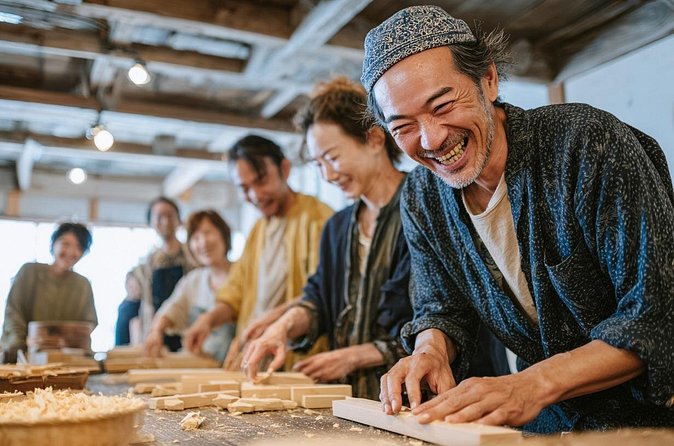
Once the main shape is complete, you smooth the chopsticks with sandpaper. This is the quieter part of the class, but it makes a major difference. Planing leaves small ridges and rough sections, while sanding gives the chopsticks a more comfortable surface.
You may need to check the tips and edges carefully. Chopsticks should feel pleasant in the hand and at the mouth, so this stage rewards patience. If you hurry, you may carry rough patches into the final finish.
The last steps include oiling the wood. The oil brings out the grain and gives the chopsticks a finished look. The class therefore covers more than one woodworking technique: cutting or shaving, surface smoothing, and basic finishing.
You also get the satisfaction of keeping the wood shavings. That detail may sound minor, but it adds a charming record of the process. The shavings show how much material came off your original sticks, and they make a fun extra memento for children.
A completely different kind of day out in Tokyo:
- Mt Fuji and Hakone 1-Day Bus Tour Return by Bullet Train
★ 5.0 · 26,383 reviews - 1-Day Tokyo Bus Tour
★ 5.0 · 14,250 reviews - Tokyo: TOKYO SKYTREE® Admission ticket
★ 4.5 · 11,192 reviews - Tokyo: teamLab Planets TOKYO Digital Art Museum Entry Ticket
★ 4.6 · 9,779 reviews
Personalizing the pair with engraving
The basic activity produces handmade chopsticks, but engraving is an optional extra. The charge is 2,000 yen, and you can have the pair personalized with a name or other lettering.
I understand why many people choose it. A name turns a handmade souvenir into a clear reminder of the person who made it, and it can make the pair feel more suitable as a gift. Several families chose engraving for a lasting memory.
Still, you should know about the cost before you arrive. Some people feel engraving would be a fair part of the base price, particularly since the workshop already charges separately for premium wood. Consider it a nice add-on, not an essential part of the class.
If you are traveling with children, engraving may help them feel more connected to the finished item. If you are watching your spending, the shaped, sanded, and oiled chopsticks are already the main reward.
A good family activity, with a few physical demands
This is one of the more accessible craft activities for a mixed-age group. A multigenerational family ranging from ages 10 to 84 enjoyed it, and another family found that every member could take part. You do not need previous woodworking skills.
Children can take pride in making a practical object, while adults may appreciate the calm focus of the work. The class also gives families something to do together without requiring advanced Japanese language skills. English-speaking staff have been praised repeatedly, with names such as Nana, Mauro, Mimi, Yin, Shae, Kiwa, and Katana appearing among the helpful instructors.
There is a physical side, however. Planing takes some pressure and repeated movement. Harder woods can be tiring, and you may need staff assistance if your hands or arms tire. The activity is not described as wheelchair-accessible, so anyone with specific mobility needs should confirm arrangements before booking. Service animals are allowed.
Because the maximum group size is 32, the room can feel crowded at popular times. One visitor found a midday session harder because a limited number of instructors had to assist many people at once. If you can choose your appointment, a quieter time may give you more direct help.
English guidance and the pace of the room
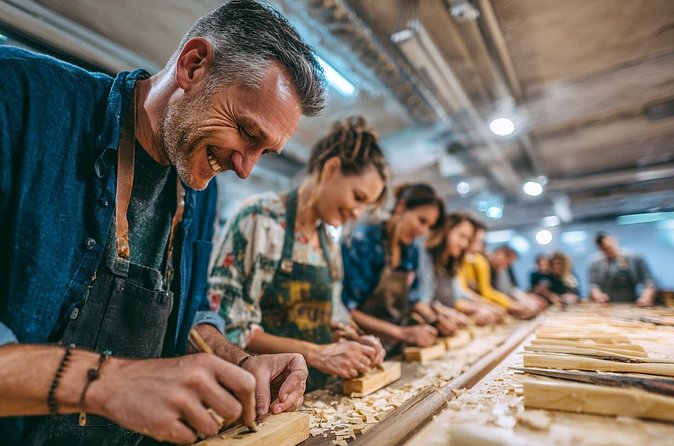
The teaching is designed for international visitors. The instructions cover how to shave the wood, sand it, and apply oil, and staff can explain the steps in good English.
The quality of attention may depend on how full the class is. In a quieter session, you can ask for help as soon as the blade catches or the shape begins to drift. In a crowded session, instructors may need to move between many workstations.
The setup is meant to handle groups, with four tables and several workstations. That makes it practical for couples, families, and small groups who want to sit together. It also explains why the activity can accommodate many people, though a full room may reduce the personal feel.
Some people have found the class very efficient and well arranged. Others felt the explanations of technique were brief or inconsistent when the room was full. My advice is simple: watch the demonstration closely, ask how much wood to remove before making a major cut, and do not be shy about requesting help.
What the $20 price really buys you
The $20 fee covers about one hour of instruction and the materials needed to make your chopsticks. For a central Tokyo activity, that is a fair price if you want a creative break from sightseeing and a souvenir with a story.
The value drops if you add every available extra without planning. Premium wood costs more, and engraving adds 2,000 yen. Ask about all upgrades before choosing your materials so the final bill does not surprise you.
I would compare this activity with a standard shopping stop. A purchased pair may cost less and look more polished. The workshop gives you something different: a short lesson in handcraft, direct contact with wood, and a finished pair that carries the marks of your own effort.
The final result may not be perfectly symmetrical. That is part of the charm, but it is worth setting realistic expectations. You are learning a traditional technique in a short class, not completing an apprenticeship in Japanese woodworking.
Timing, meeting point, and booking advice
The class lasts approximately one hour, so it fits neatly between major Shinjuku sights, shopping, or a meal. Since the activity ends where it starts, you do not need to arrange a separate return transfer.
A mobile ticket is provided, and booking confirmation arrives at the time of booking. The experience has free cancellation if you cancel at least 24 hours before the start time. Changes or cancellations inside that 24-hour window are not accepted, and the amount paid is not refunded.
Pay close attention to the address. The meeting point is in Nishishinjuku, and conflicting location information has caused at least one person serious trouble. Leave enough time to confirm you are heading to 7-chome-4-5 Nishishinjuku rather than relying on a vague search result.
The workshop is near public transportation, but the available information does not specify the nearest station or exact walking time. Use the confirmed address and map before setting out.
Who should book this chopstick workshop?
I would recommend it to you if you want a short, practical cultural activity rather than a lecture or sightseeing stop. It works especially well for:
- Families looking for an activity everyone can attempt
- First-time visitors who want a handmade souvenir
- Couples who enjoy making something together
- Children and teens who like tools and creative work
- Anyone curious about traditional Japanese woodworking
- Visitors with a free hour in the Shinjuku area
I would be more cautious if you dislike upselling, have limited hand strength, or expect a quiet private lesson. The class can feel hectic at full capacity, and premium wood and engraving increase the price.
Should you book it?
Yes, if the idea of using a Japanese hand plane appeals to you. The strongest part of this activity is the direct work: you feel the grain, learn a real technique, and take home something useful. The friendly English-speaking staff, including Masa, Tom, Yuki, Nana, and Ken, add confidence for beginners.
Before booking, accept three limits. The session is short, some tools or woods may make the work harder, and the best-looking materials and engraving cost extra. Confirm the Nishishinjuku address, choose an included wood if you want to keep costs low, and book a time when the room may be less crowded.
For $20, this is a worthwhile Tokyo activity for families and curious makers. It is not the right pick for someone seeking a polished luxury souvenir with no effort. The charm comes from the shaving, sanding, small mistakes, and final result that plainly belongs to you.
FAQ
How long does the chopstick-making class last?
The activity lasts approximately one hour.
Where does the activity begin?
It begins at 7-chome-4-5 Nishishinjuku, Shinjuku City, Tokyo 160-0023, Japan.
Where does the activity end?
The activity ends back at the meeting point.
Do I need woodworking experience?
No. The class is designed to be beginner-friendly, and no previous skills are needed.
What tool do I use to make the chopsticks?
You use a traditional Japanese kanna, a small hand plane, to shape the raw wood.
Are different types of wood available?
Yes. You can choose from several wood types with different textures, scents, and colors. Two types are included, while premium woods require an additional charge.
Can I have my chopsticks engraved?
Yes. Engraving is available for an additional 2,000 yen.
What is the cancellation policy?
You can cancel for a full refund at least 24 hours before the experience start time. Cancellations or changes made less than 24 hours before the start time are not accepted, and no refund is provided.
Just added around Tokyo
- Tokyo 6hr Instagram Highlights Private Tour with Licensed Guide★ 5.0 · 38 reviews
- Tokyo Small Group Tour with Guide★ 4.5 · 38 reviews
- Tokyo Sumo Experience with Live Show & Audience Challenge★ 5.0 · 38 reviews
- Japanese Food Cooking Class in Asakusa, Tokyo★ 5.0 · 39 reviews
- Very popular in Harajuku♡Animal petting zoo★ 4.6 · 39 reviews
- Ramen Making from Scratch with Tokyo Mom(Vegan Option Available)★ 5.0 · 39 reviews
- Tokyo JDM Night: 600hp C63s AMG Edition 1 (Private)★ 4.9 · 39 reviews
- Tokyo: Kimono Rental inside Shinjuku Gyoen National Garden★ 4.9 · 39 reviews
Traditional Craft Workshops, compared.
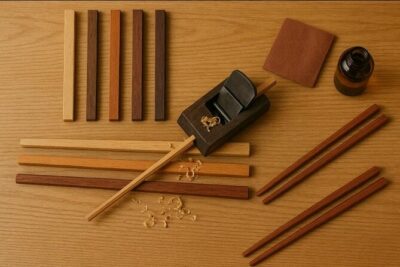
Chopsticks Making Workshop in Gion with Engraving Option
Read our review →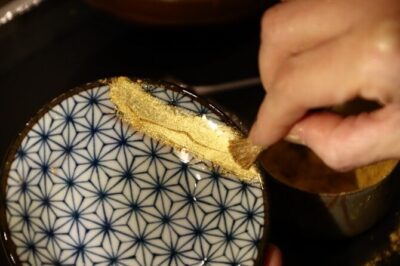
Kintsugi Experience: Art of Golden Joinery in Tokyo
Read our review →
Authentic knife making experience at a blacksmith in Kyoto
Read our review →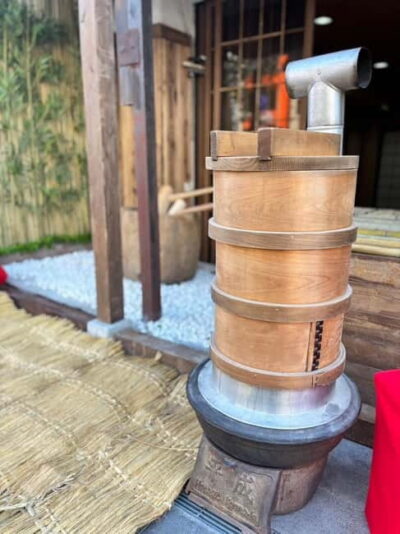
Traditional Mochi Pounding Experience with Tasting
Read our review →
Authentic Pure Gold Kintsugi Workshop with Master Taku in Tokyo
Read our review →
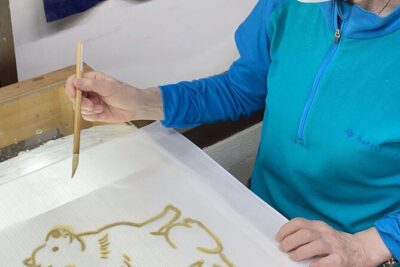
Roketsu dyeing experience: M course Roketsu Dyeing Experience
Read our review →
Browse the lists this tour appears in